
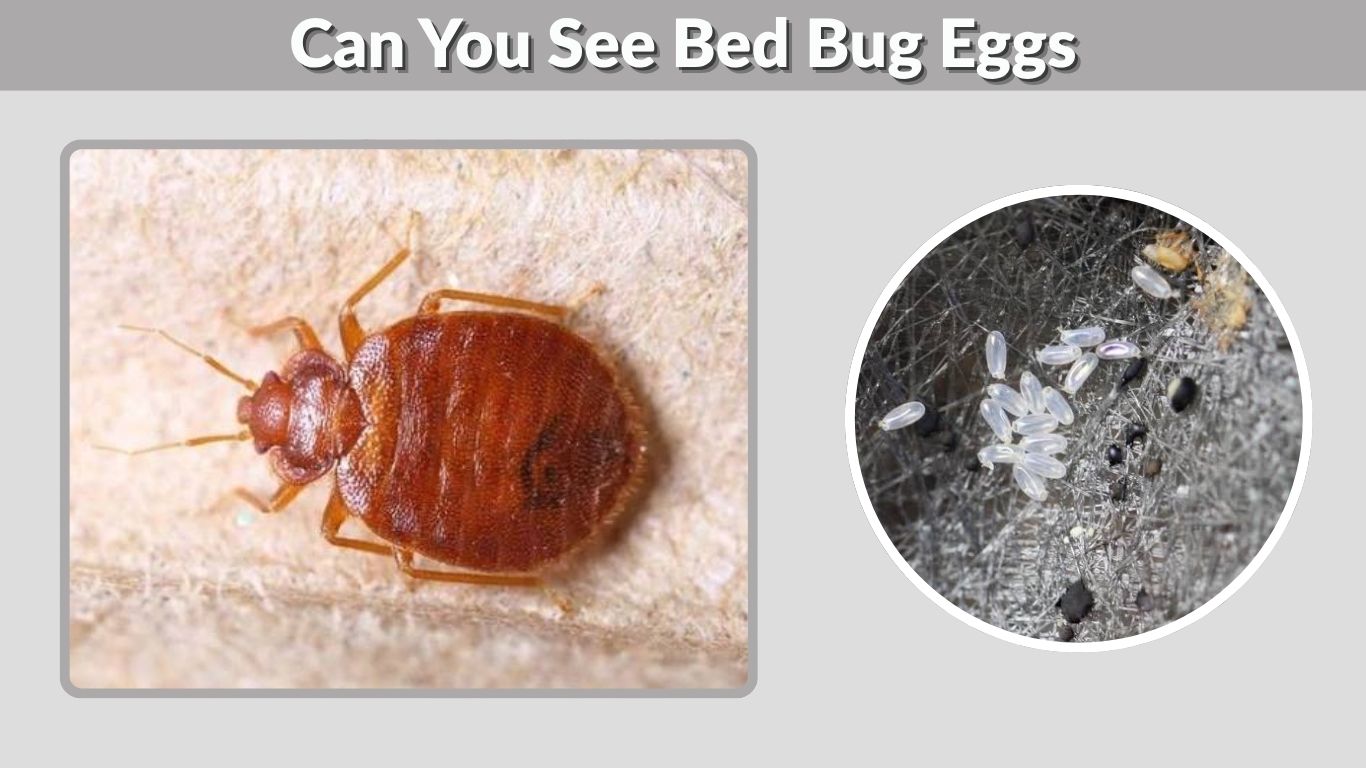
Bed bug eggs are tiny, pale-colored, and often hidden in places most people overlook. Finding them early can help prevent a small bed bug problem from becoming a serious infestation. But can you see bed bug eggs without a magnifying glass?
Yes, bed bug eggs are visible to the naked eye. They measure approximately 1 millimeter long and look like miniature white grains of rice. However, their small size and hidden locations make them difficult to identify. Understanding their appearance, reproduction, survival, and removal methods can help you detect and control these pests effectively.
Can You See Bed Bug Eggs With the Naked Eye?
You can see bed bug eggs without special equipment, although spotting them can be challenging. Their small size, pale color, and tendency to stick to hidden surfaces make them easy to overlook. A flashlight and magnifying glass can make identification easier, particularly when inspecting mattress seams, furniture joints, and other narrow spaces.
What Do Bed Bug Eggs Look Like?
Bed bug eggs are oval, slightly elongated, and usually pearl-white or cream-colored. Each egg measures approximately 1 millimeter in length, making it comparable to a tiny speck of rice. They have a smooth outer surface and a small cap at one end through which the young bed bug eventually emerges.
Freshly laid eggs appear whitish and may be slightly translucent. As they develop, internal structures can become visible under magnification. Empty eggshells are often more transparent and may remain attached to surfaces after the nymphs hatch.
How to Identify Bed Bug Eggs
Identifying bed bug eggs requires examining their size, color, shape, and location. Unlike ordinary dust or debris, bed bug eggs are attached to surfaces by a sticky substance produced by the female during egg laying.
Common identification characteristics include:
- Size: Approximately 1 millimeter long.
- Color: Pearl-white, cream, or slightly translucent.
- Shape: Small, elongated, and oval.
- Texture: Smooth, with a protective outer shell.
- Location: Usually attached to cracks, fabric seams, or furniture joints.
Finding multiple eggs alongside dark fecal spots, shed skins, or live bed bugs strongly suggests an active infestation.
Where Do Bed Bugs Lay Their Eggs?
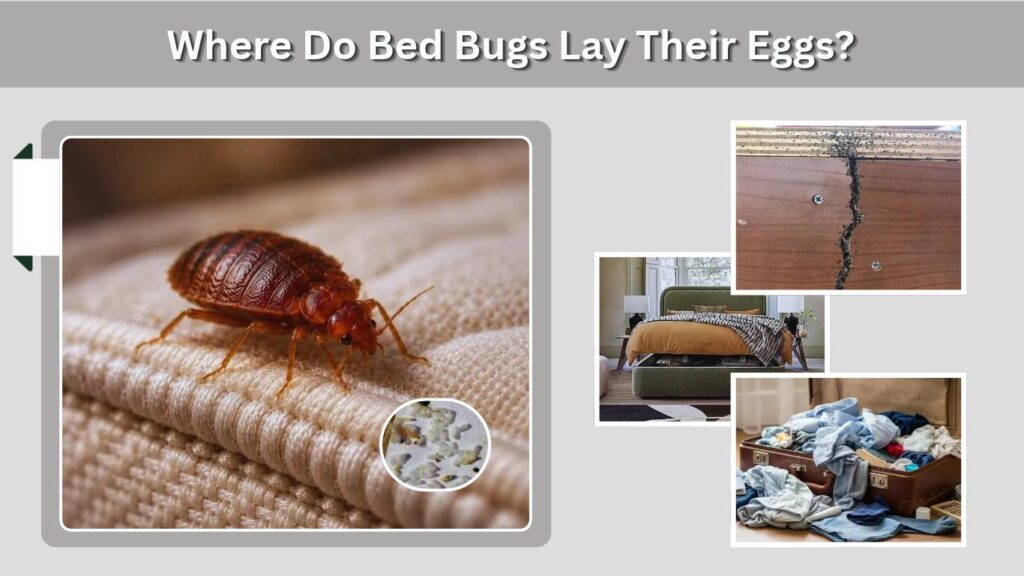
Female bed bugs prefer protected locations near places where people sleep or rest. These hiding spots provide shelter from disturbance and allow newly hatched nymphs to locate a blood meal. Eggs may be deposited individually or close together, often making them difficult to discover during ordinary household cleaning.
Mattress Seams and Box Springs
Mattress seams are among the most common places to discover bed bug eggs. Females can attach their eggs to stitching, fabric folds, labels, and other protected areas.
Box springs also provide numerous hiding places, including their internal wooden frames and fabric coverings. Carefully inspecting these locations with a flashlight may reveal eggs, shed skins, and other evidence of infestation.
Bed Frames and Furniture
Wooden bed frames, headboards, and nearby furniture provide additional egg-laying locations. Small cracks, screw holes, and joints offer protection from light and movement.
Bed bugs may also lay eggs inside couches, chairs, bedside tables, and drawers. Heavily infested rooms can contain eggs farther from the bed, including behind baseboards and loose wallpaper.
Clothing, Luggage, and Other Belongings
Bed bug eggs can occasionally be attached to clothing, luggage, backpacks, and other personal belongings. This allows infestations to spread when contaminated items are moved between locations.
However, bed bugs generally prefer stationary, sheltered spaces for egg laying. Clothing worn regularly is not their usual breeding location, although belongings stored near an infestation may become contaminated.
How Many Eggs Can a Bed Bug Lay?
Female bed bugs have a remarkable reproductive capacity, which explains why an infestation can grow rapidly when left untreated. Their egg production depends on temperature, age, access to blood meals, and successful mating. A healthy, well-fed female can produce hundreds of eggs throughout her adult life.
How Many Eggs Do Bed Bugs Lay Per Day?
A female bed bug commonly lays approximately 1 to 5 eggs per day under favorable conditions. Egg production can vary, and females do not necessarily lay the same number every day.
Throughout her lifetime, a female may produce approximately 200 to 500 eggs when conditions support continued feeding and reproduction.
Even one mated female can potentially establish a new infestation if she enters a suitable environment with regular access to a blood source.
When Can Bed Bugs Start Laying Eggs?
Female bed bugs must become adults, mate, and obtain blood meals before producing eggs. Under favorable conditions, a female may begin laying eggs within several days after mating and feeding.
The development from egg to reproductive adult can take approximately five to eight weeks under favorable conditions, although temperature and feeding opportunities can extend this period.
This reproductive cycle allows multiple generations of bed bugs to develop within a home when an infestation remains uncontrolled.
Can Bed Bugs Lay Eggs in Your Skin?
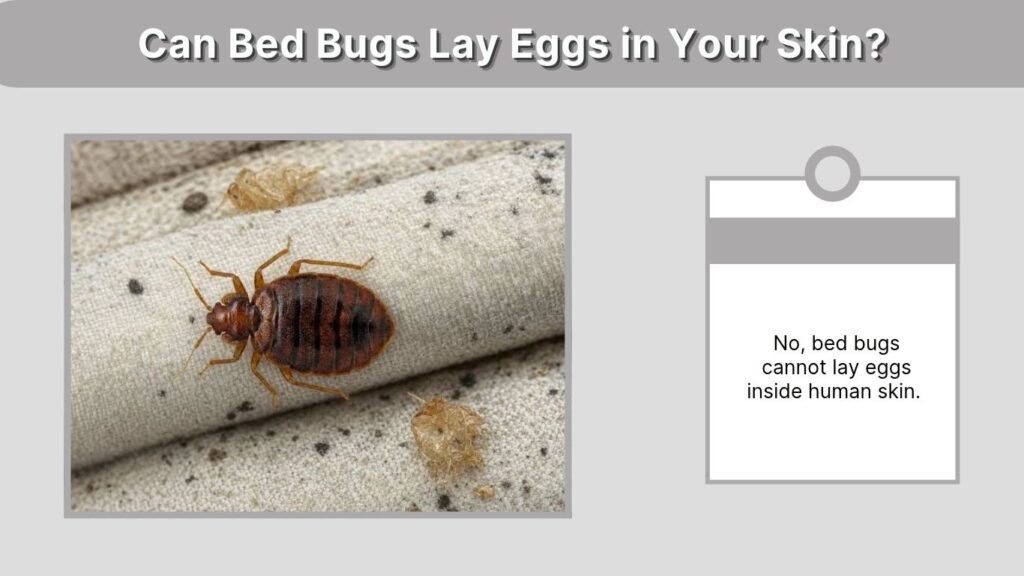
No, bed bugs cannot lay eggs inside human skin. Unlike certain parasitic organisms, bed bugs do not burrow beneath the skin or use the human body as a location for egg development.
Bed bugs are external blood-feeding insects. They approach exposed skin, insert their specialized mouthparts to obtain blood, and return to protected hiding places afterward.
They do not deposit eggs beneath the skin, inside bite marks, or within human tissue.
Can Bed Bugs Lay Eggs on Humans?
Bed bugs do not normally lay eggs directly on humans. Their preferred egg-laying locations are protected surfaces such as mattress seams, bed frames, furniture joints, and nearby crevices.
Although a bed bug may temporarily crawl across someone’s body or clothing, humans are not suitable locations for its eggs.
Can Bed Bugs Lay Eggs in Your Hair?
Bed bugs are not adapted to living or reproducing in human hair. Unlike head lice, they do not normally cling to hair or attach eggs to individual strands.
They may occasionally crawl through hair while searching for exposed skin, but they generally return to furniture or nearby hiding places after feeding.
If you discover insects or eggs attached to hair, consider other possibilities, including head lice, rather than assuming they are bed bugs.
How Long Can Bed Bug Eggs Live?
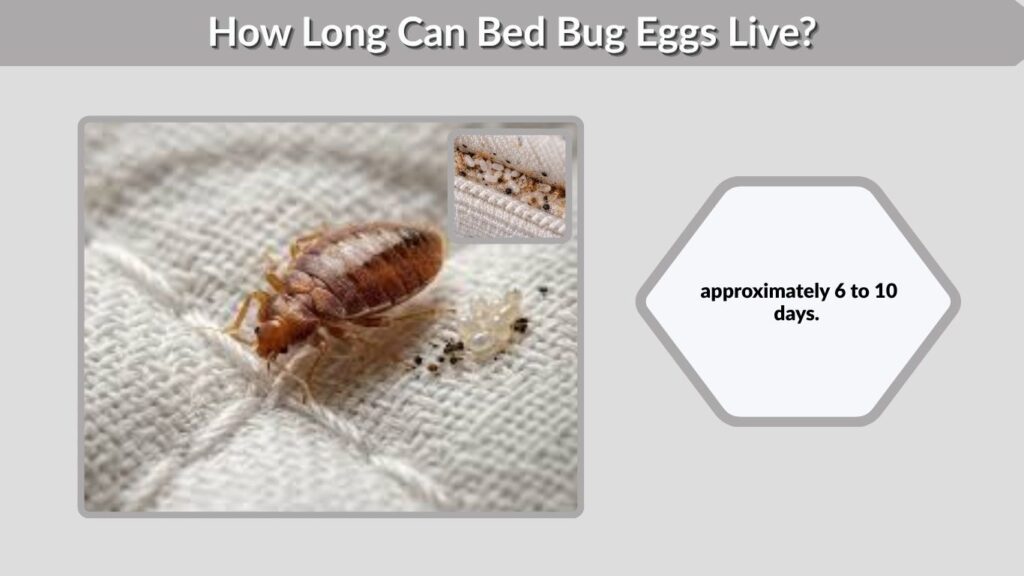
Bed bug eggs generally hatch within one to two weeks under favorable conditions. However, their development depends on temperature and environmental conditions. Cooler environments can slow development, allowing viable eggs to remain unhatched longer than expected.
Understanding how long bed bug eggs survive is important when planning treatments and follow-up inspections.
How Long Can Bed Bug Eggs Survive Without Hatching?
Under typical indoor conditions, bed bug eggs often hatch within approximately 6 to 10 days. Some may take around two weeks or longer, depending on the surrounding temperature.
Cooler conditions can delay hatching, and viable eggs may occasionally persist for several weeks.
However, bed bug eggs do not normally remain dormant for many months in ordinary indoor environments. Extended survival without feeding is primarily associated with hatched nymphs and adult bed bugs.
Can Bed Bug Eggs Survive Without Blood?
Yes. Bed bug eggs do not require blood meals to develop because the developing embryo receives nutrients already contained within the egg.
After hatching, however, the young bed bug must eventually obtain blood to progress through its next developmental stage.
This distinction explains why eggs can continue developing even when no people are present, while the development of newly hatched nymphs depends on finding a suitable host.
Can Bed Bug Eggs Survive Cold Temperatures?
Bed bug eggs can tolerate some cool conditions, but sufficiently low temperatures maintained for an appropriate duration can kill them.
Cold environments may slow development without immediately destroying the eggs. Ordinary winter weather or briefly placing belongings outdoors cannot guarantee elimination.
Controlled freezing can work for suitable items, but temperatures must be measured and maintained long enough to kill all developmental stages.
How Can You Kill Bed Bug Eggs?
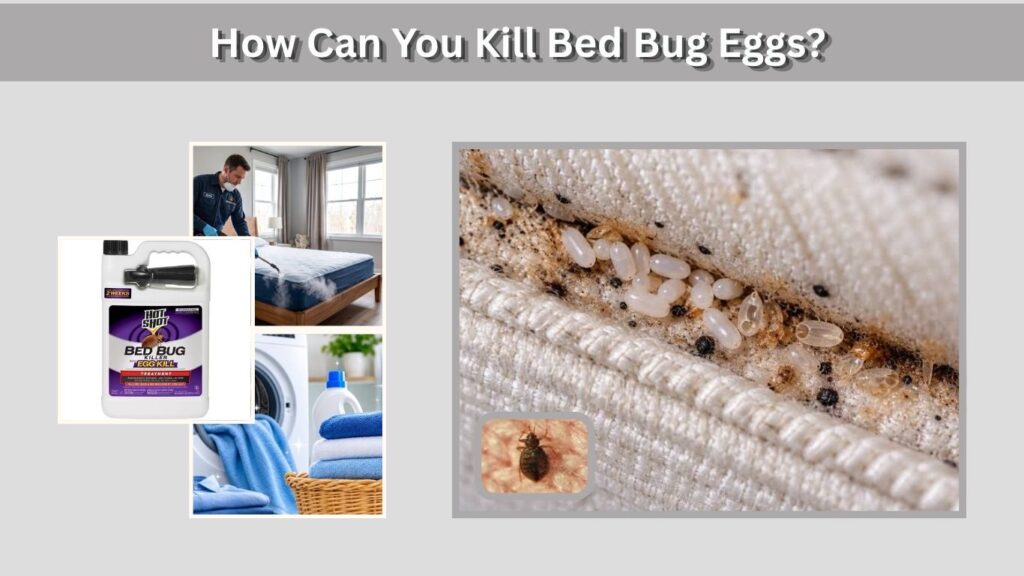
Eliminating bed bug eggs requires reaching the protected spaces where they are deposited. Many conventional insecticides primarily affect mobile insects and may not reliably destroy every egg. Combining heat, physical removal, appropriate pesticide treatments, and continued monitoring provides a more effective approach than relying on a single method.
1. Use High Heat
Heat is one of the most reliable ways to destroy bed bug eggs. A household clothes dryer operating on high heat for approximately 30 minutes can kill eggs in clothing, bedding, and other dryer-safe belongings.
For larger infestations, professional heat treatments can raise temperatures throughout furniture and rooms. Effective treatment depends on maintaining lethal temperatures in the actual locations where eggs are hiding.
2. Apply Steam to Suitable Surfaces
Steam can kill bed bug eggs when sufficient heat reaches them directly. It is useful for appropriate mattress seams, bed frames, upholstered furniture, and other heat-tolerant surfaces.
Use a suitable steam cleaner with controlled pressure to avoid scattering insects. Keep steam away from electrical outlets and materials that may be damaged by moisture or heat.
3. Vacuum Infested Areas
Vacuuming helps remove visible eggs, live bed bugs, and shed skins from accessible surfaces. Concentrate on mattress seams, furniture joints, baseboards, and other likely hiding places.
After vacuuming, seal and dispose of the collected contents outdoors. Because eggs can remain firmly attached or hidden deep inside crevices, vacuuming should not be the only control method.
4. Use Proper Bed Bug Treatments
Select a pesticide specifically registered and labeled for bed bug control. If the goal is to destroy eggs, verify that the product has an approved egg-killing claim.
Follow all label directions and restrictions. Avoid applying household chemicals, rubbing alcohol, or unapproved insecticides to bedding or skin.
Professional pest-control services may be necessary when eggs and insects are scattered throughout multiple rooms.
FAQs
1. Can You See Bed Bug Eggs on a Mattress?
Yes, bed bug eggs are visible on mattresses, particularly along seams, stitching, labels, and fabric folds. They appear as tiny, pearl-white oval structures approximately 1 millimeter long. Because they blend into light-colored fabric, using a flashlight and magnifying glass can help you identify them.
2. How Many Eggs Can One Bed Bug Lay at Once?
Female bed bugs generally deposit eggs individually, although several may be placed close together. A female commonly produces around 1 to 5 eggs per day under favorable conditions. Over her lifetime, she may lay hundreds of eggs, depending on feeding opportunities and environmental conditions.
3. Can Bed Bug Eggs Survive Without Humans?
Yes, bed bug eggs can continue developing without humans present because they contain the nutrients necessary for embryonic growth. However, newly hatched nymphs eventually require blood meals to develop. Removing people from an infested room temporarily does not guarantee that the eggs or infestation will disappear.
4. Can Heat Kill Bed Bug Eggs?
Yes, sufficient heat kills bed bug eggs. A clothes dryer on high heat for approximately 30 minutes is effective for suitable fabrics. Professional heat treatments and properly applied steam can also work. The important factor is ensuring that lethal temperatures reach the eggs for sufficient time.
5. What Do Dead or Hatched Bed Bug Eggs Look Like?
Hatched bed bug eggs usually appear as empty, whitish, translucent shells with an opening at one end. Dead, unhatched eggs may resemble viable eggs, making visual identification difficult. Finding empty eggshells alongside other infestation signs can indicate that bed bugs have recently reproduced nearby.
