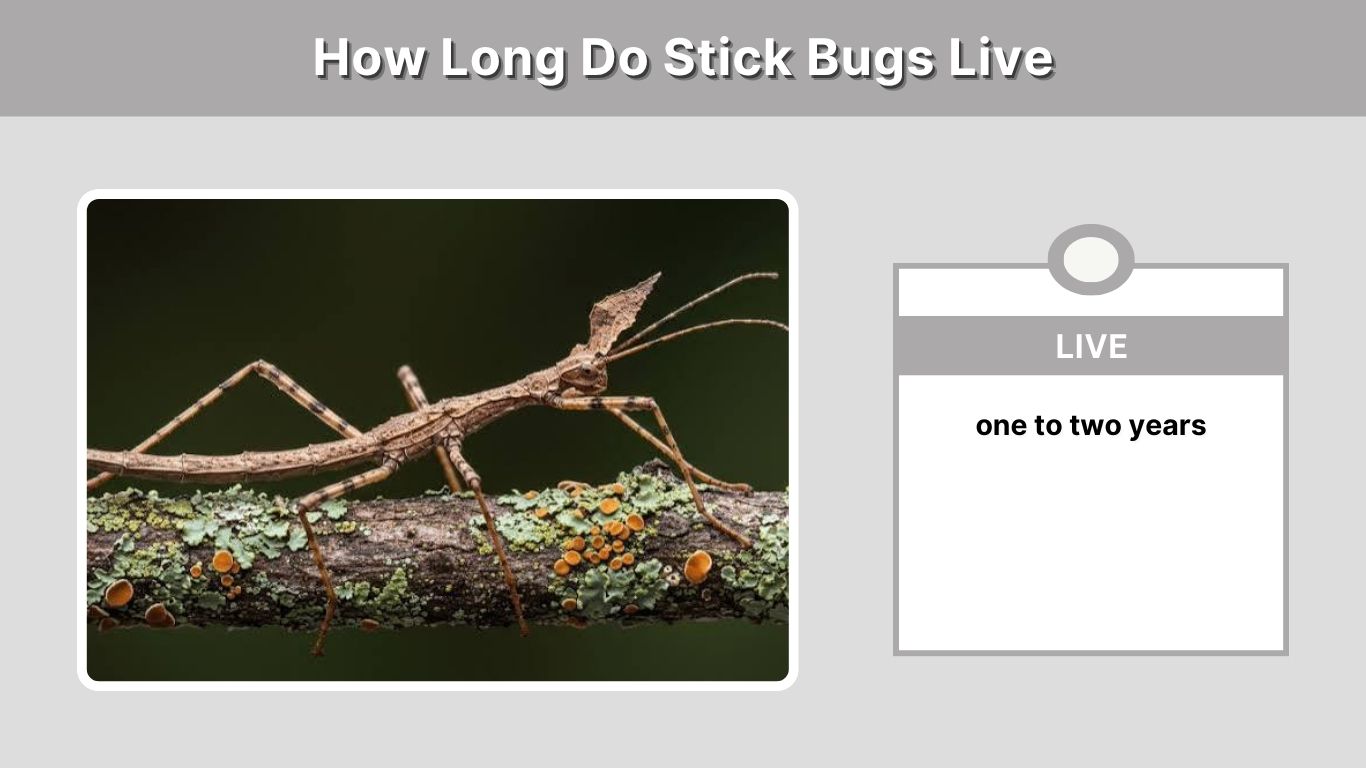
Most stick bugs live for approximately one to two years, although their exact lifespan depends heavily on the species. Smaller species may complete their life cycle in less than a year, while some larger walking sticks can survive for 18 months or longer. Females also tend to outlive males. Diet, temperature, humidity, molting success, genetics, and enclosure quality all influence how long a pet stick insect lives.
Average Stick Bug Lifespan
There are thousands of stick and leaf insect species, so no single lifespan applies to all of them. As a broad estimate, many species live between 10 months and two years from hatching to death.
| Stick bug | Approximate lifespan |
| Australian walking stick | 10–12 months |
| Indian stick insect | Around 12–16 months |
| Lord Howe Island stick insect | 12–18 months |
| New Guinea walking stick | 12–18 months |
| Touch-Me-Not stick insect | 1–2 years |
| Some long-lived phasmids | Potentially two years or more |
The San Diego Zoo gives a general lifespan of one to two years for stick insects, while noting that maturity may take anywhere from three to 12 months depending on the species.
Do Female Stick Bugs Live Longer?
Female stick bugs generally live longer than males. Females are usually larger, take longer to mature, and may continue living for months while producing eggs. Males are commonly smaller, mature more quickly, and have a shorter adult period.
However, the difference varies by species. A healthy male from one long-lived species may outlive a female from a naturally short-lived species. The Phasmid Study Group also notes that males generally have shorter lifespans than females.
Lifespan of Common Pet Stick Bugs
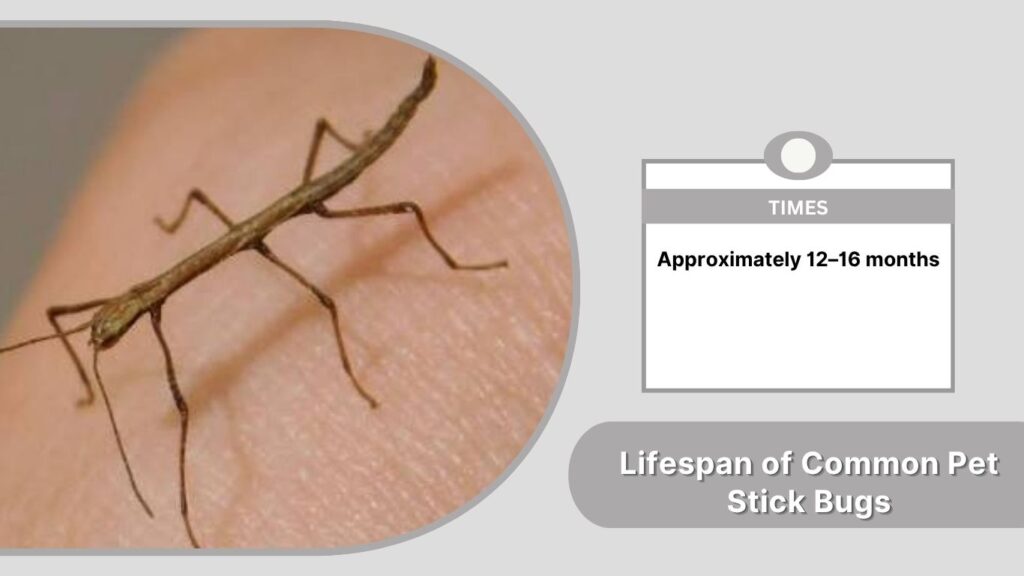
Knowing the species is essential when estimating how long a pet walking stick will live. Common names such as “stick bug” may refer to many unrelated phasmids with different development rates.
Indian Stick Insect
The Indian stick insect, Carausius morosus, is one of the most commonly kept pet species. Its entire life cycle may last approximately 12–16 months, including around four months as a growing nymph and roughly eight months as an adult under suitable conditions.
Females can reproduce without males through parthenogenesis. They may continue laying eggs for several months, so an owner can unexpectedly end up with many offspring.
Australian Walking Stick
The Australian walking stick, often referring to the giant prickly stick insect or Macleay’s spectre, commonly lives for around 10–12 months. Females measure approximately four to five inches, while males are usually smaller.
A female’s heavier body and curved, leaf-like appearance make her look very different from the thinner, winged male.
Lord Howe Island Stick Insect
The Lord Howe Island stick insect is a large, heavy-bodied species sometimes called the tree lobster. It may live for approximately 12–18 months, mature at around seven months, and reach up to seven inches in length.
Its eggs develop slowly and may require six to nine months to hatch. Therefore, the period from egg laying to the death of the resulting adult can extend well beyond two years.
Touch-Me-Not Stick Insect
The Touch-Me-Not stick insect may live for one to two years. It can take approximately eight to ten months to become a full-grown adult, and females may continue producing eggs over an extended period.
Stick Bug Life Cycle
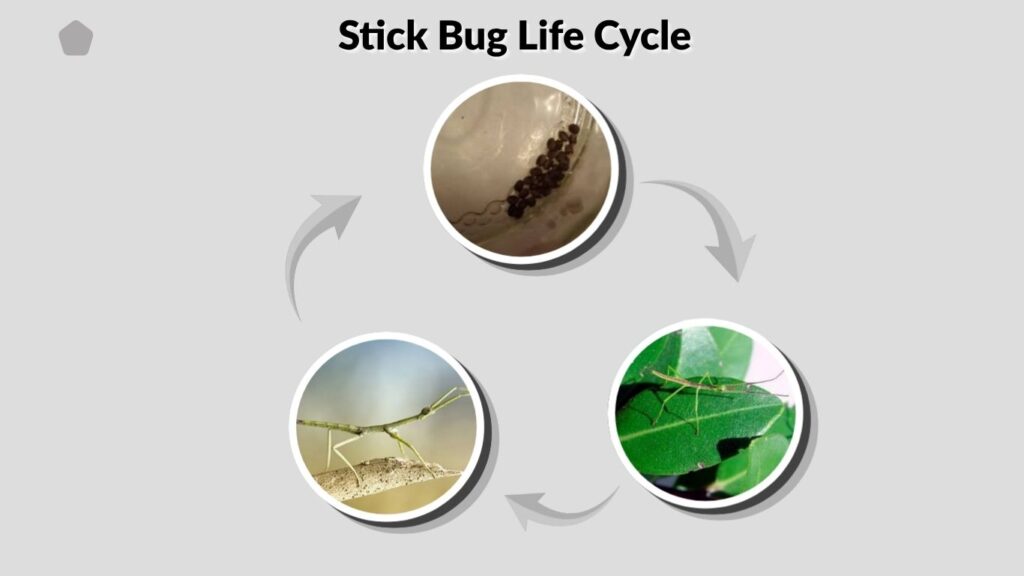
Stick bugs undergo incomplete metamorphosis. They do not pass through a caterpillar-like larval stage or form a pupa. Instead, a young stick insect resembles a miniature adult and gradually grows through repeated molts.
Egg Stage
Female walking sticks normally drop their eggs individually onto the ground, although some species glue, bury, or attach them to plants. The eggs often resemble seeds, helping them remain concealed in leaf litter.
Incubation can take several months. Across different species, stick insect eggs may require approximately three to 18 months to hatch. Temperature, moisture, genetics, and seasonal conditions affect the incubation period.
Nymph Stage
A newly hatched walking stick is called a nymph. It begins feeding on leaves and sheds its exoskeleton several times as it grows.
Stick insects need enough vertical space to hang upside down during a molt. A cramped enclosure or a fall during molting can produce bent legs, damaged antennae, deformities, or death. The Australian Museum recommends providing enough room for a nymph to hang approximately three body lengths above the enclosure floor.
Adult Stage
After its final molt, the insect becomes a sexually mature adult and no longer grows. Adults concentrate on feeding, mating, and reproduction.
Temperate walking sticks may complete one generation each year. For example, many North American species lay eggs during late summer or fall, die when freezing weather arrives, and leave their eggs to hatch the following spring.
What Affects a Stick Bug’s Lifespan?
Even members of the same species do not always live for the same amount of time. Husbandry conditions can influence survival significantly.
Correct Food
Stick bugs are herbivores, but each species accepts a particular range of host plants. Common foods include bramble, rose, oak, privet, eucalyptus, hawthorn, and acacia.
The correct foliage should remain available at all times. Leaves must be fresh and free from insecticides, herbicides, fungicides, and other chemicals. Pesticide exposure can quickly kill a stick insect.
Temperature and Humidity
Conditions should match the species’ natural environment. Excessive heat can cause dehydration, while temperatures that are too low may reduce activity, feeding, and development.
Humidity supports successful molting, but an enclosure that remains excessively wet may develop mold. Good ventilation and species-appropriate misting are more important than keeping every surface constantly damp.
Molting Space
Molting is one of the most dangerous periods in a stick bug’s life. The insect hangs from a branch or mesh surface, breaks through its old skin, and expands its new exoskeleton.
An enclosure should be at least three times the insect’s body length in height. Avoid touching or moving a walking stick during or shortly after a molt because its new body is soft and easily damaged.
Cleanliness and Ventilation
Remove dead leaves, droppings, mold, and spoiled food regularly. Secure water containers around plant stems so nymphs cannot fall inside and drown.
The enclosure should provide airflow without allowing small insects to escape. Overcrowding can interfere with feeding and molting and may increase injuries.
Signs That a Stick Bug Is Aging
An elderly stick bug may gradually become less active. Possible signs include:
- Moving more slowly than usual
- Losing grip and falling frequently
- Eating less food
- Damaged or worn feet and antennae
- Reduced egg production
- Spending more time near the enclosure floor
- Difficulty climbing or righting itself
A brief refusal to eat does not always indicate old age. Stick insects commonly reduce activity before molting. Sudden weakness may also result from dehydration, unsuitable temperature, pesticide exposure, infection, or a failed molt.
How Long Are Stick Bugs?
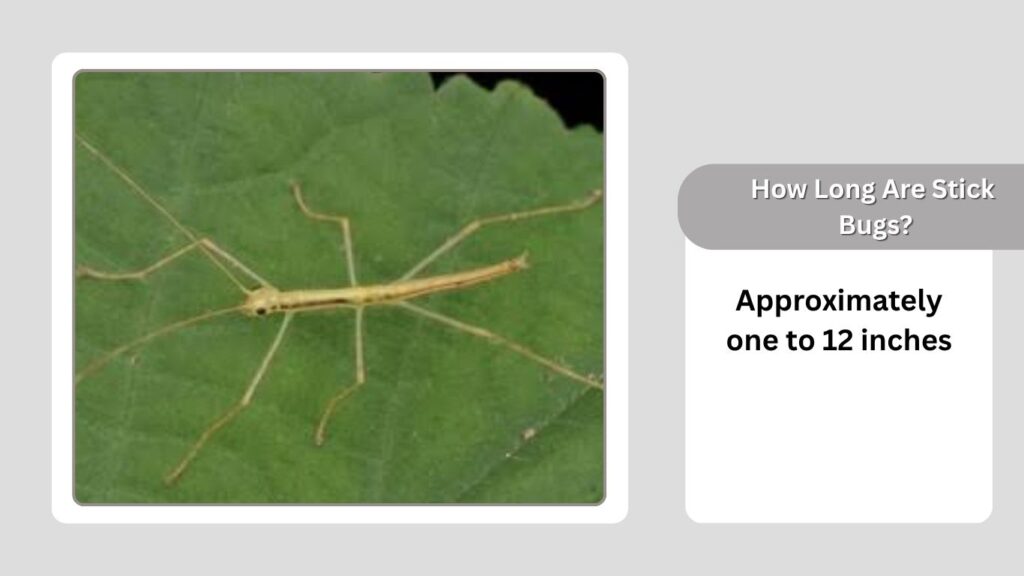
The word “long” may refer to body size rather than lifespan. Most stick insects measure approximately one to 12 inches, although males are generally smaller than females.
Some of the world’s largest species have exceptionally long bodies and legs. Claims of a two-foot-long walking stick usually include fully extended legs rather than body length alone. An insect with a long tail-like projection may instead be an aquatic water stick insect, wasp, or another unrelated insect.
FAQs
How long do stick bugs live as pets?
Most pet stick bugs live for approximately 10 months to two years. Their species, age when purchased, sex, diet, temperature, humidity, and molting success all affect longevity. Buying a young nymph usually provides more time with the insect than purchasing an unknown adult.
How long does an adult stick bug live?
The adult period can last several months to more than a year, depending on the species. Indian stick insects may spend roughly eight months as adults, while some larger species have longer development and adult periods. Females commonly survive longer than males.
How long can stick bugs live without food?
Stick bugs should never intentionally be left without fresh foliage. A healthy adult may survive a brief interruption, but young nymphs can weaken and dehydrate quickly. Replace wilted or rejected leaves immediately and verify that the plant is suitable for the species.
How long do stick bugs mate?
Mating may last several hours, and certain pairs can remain attached much longer. A male may continue riding on a female after mating, partly preventing competing males from reaching her. The smaller insect seen on a large female’s back is usually a male, not her baby.
Can a stick bug live for three years?
A lifespan approaching three years is possible in some unusually long-lived phasmids, but it is not typical for common pet species. Most finish their lives within one or two years. Lifespan estimates should always be based on the insect’s scientific name rather than its appearance alone.