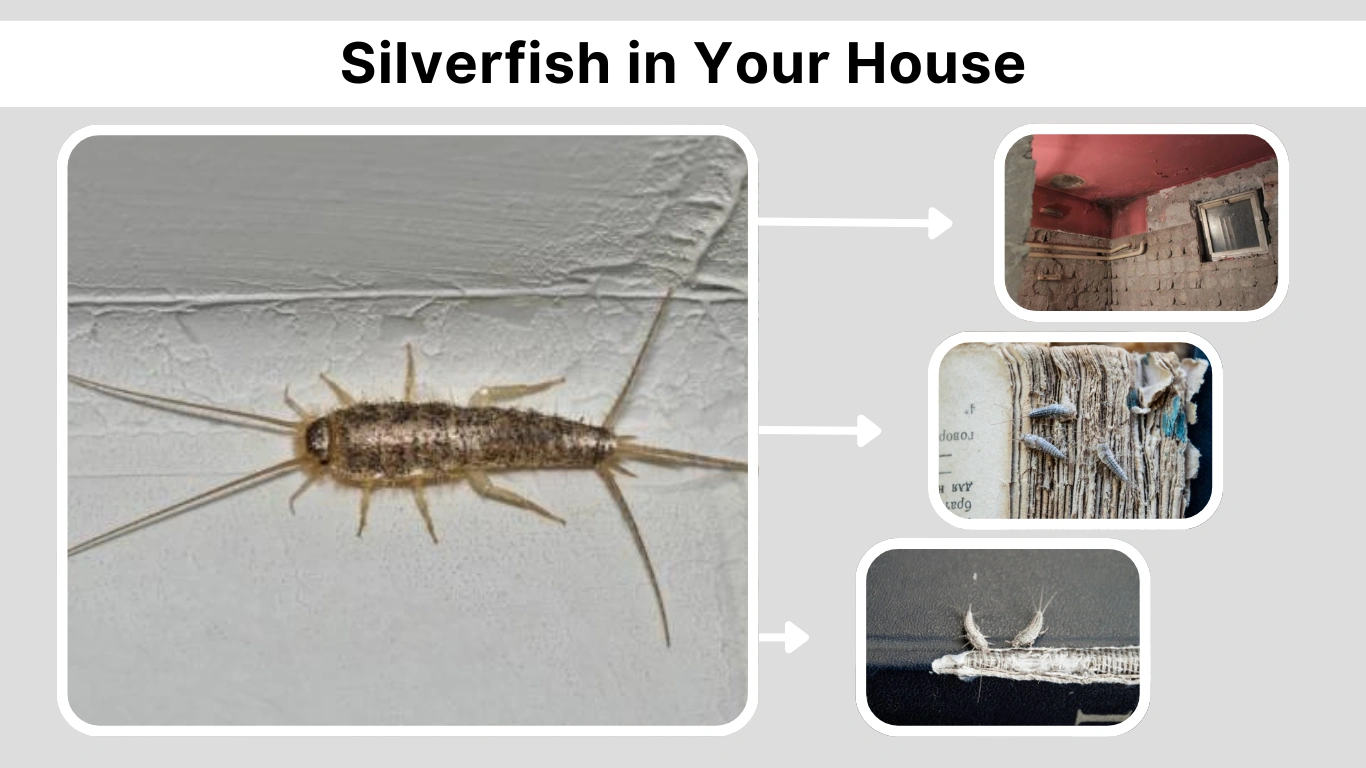
Silverfish are common household pests that thrive in dark, damp areas—and many homeowners don’t realize they’re living alongside them until one darts across the bathroom floor. These quick, silvery insects are attracted to moisture, clutter, and certain foods found in most homes. This guide explains why silverfish appear, what causes them, how they get inside, and the most effective ways to remove and prevent them.
Silverfish Identification

Silverfish are often mistaken for other insects, so proper identification helps you confirm what you’re dealing with. They have several key defining features:
- Shiny, silver or gray, teardrop-shaped body
- Approximately ½ to 1 inch long
- Moves quickly with a darting, fish-like motion
- Long antennae and three distinctive rear bristles
- Wingless
- Prefers warmth, darkness, and humidity
- Commonly found in bathrooms, kitchens, basements, closets, and attics
These characteristics set them apart from similar pests like firebrats or baby centipedes.
What Causes Silverfish in a House

Silverfish don’t appear “out of nowhere”—they enter homes because the environment suits their survival needs. Several major factors contribute to an infestation:
Moisture & Humidity
Silverfish absolutely depend on moisture. High-humidity environments such as bathrooms, basements, laundry rooms, and kitchens create perfect conditions for them to live, hide, and reproduce. Leaky pipes, condensation, poor ventilation, and damp building materials can all attract silverfish.
Food Sources Readily Available
Silverfish consume carbohydrates—especially starches and sugars. This includes:
- Book pages
- Wallpaper glue
- Cardboard
- Cereal, oats, flour, and pasta
- Clothing containing starch
- Paper documents
- Adhesives on boxes
A cluttered home with lots of paper products provides ideal feeding grounds.
Warm, Undisturbed Spaces
Silverfish love places where they can hide untouched. Storage rooms, boxes, attic corners, and behind baseboards offer safety and warmth.
Entry Points From Outside
They enter through cracks in walls, tiny gaps in foundations, loose siding, or openings near drainage pipes. They may also hitchhike in old books, cardboard boxes, or secondhand items.
Why You Have Silverfish in the House
Understanding why your house specifically has silverfish helps you fix the root cause. The most common reasons include:
- Elevated humidity levels above 50%
- Leaky pipes or damp indoor air
- Cluttered storage, especially cardboard and paper
- Accessible food sources like grains or pet food
- Warm temperatures between 70–80°F
- Dark, quiet living spaces such as closets and basements
Many people notice “so many silverfish” during humid seasons, after rainstorms, or when ventilation is poor. If you are finding dead silverfish, it usually indicates they are dehydrating due to reduced humidity or dying from pesticide treatment.
Habitat & Behavior

Silverfish follow predictable habits that explain their sightings and population growth.
Preferred Conditions
They need moist air and steady warmth to survive. Areas with 70–75% humidity instantly draw them in. Damp basements, steamy bathrooms, and poorly ventilated laundry rooms are prime habitats.
Nocturnal Movement
Silverfish come out mostly at night. This is why homeowners often see them only briefly when turning on a bathroom light. Their nocturnal habits allow them to feed and reproduce while staying out of sight.
Reproduction & Grouping
Although often said to “nest,” silverfish actually do not build nests. Instead, they gather in clusters where conditions are ideal—usually along baseboards, behind walls, or inside cardboard boxes. Females can lay dozens of eggs, which explains sudden bursts in population.
Are Silverfish Dangerous or Bad in the House?
Silverfish are not dangerous to humans—they don’t bite, sting, or carry diseases. However, their presence is still problematic.
Damage to Belongings
They can destroy paper goods, books, photos, wallpaper, packaging, and stored fabrics. Their feeding trails leave small holes and surface etching.
Food Contamination
Silverfish can get into pantries and contaminate dry goods such as flour, cereal, or oats.
Allergy Concerns
Some people develop mild allergic reactions to silverfish scales or droppings, especially in bedrooms or storage spaces.
Are They Beneficial?
While silverfish occasionally eat mold and crumbs, their destructive habits outweigh any positives. It’s best to eliminate or control them rather than let them roam.
Species & Color Variations

Silverfish don’t always look identical. Here are common variations found indoors:
Gray or Standard Silverfish
The most familiar type—metallic gray, slender, and fast.
Brown Silverfish
Darker, sometimes confused with firebrats but still moisture-loving.
Black Silverfish
Smaller and darker, often seen in damp basements or older homes.
Four-Lined Silverfish
Distinguished by subtle lines along the body; prefers stored paper or books.
Giant Silverfish
Not a separate species, but larger due to abundant food and humidity.
Bugs Often Mistaken for Silverfish
Homeowners frequently confuse silverfish with:
- Firebrats
- House centipedes
- Earwigs
- Bristletails
- Brown crawling insects without antennae
VS Comparison Table: Silverfish vs Similar Bugs
| Feature | Silverfish | Firebrats | House Centipedes | Earwigs |
| Color | Silver/Gray | Brown/Flecked | Yellow/Brown | Dark Brown |
| Antennae | Long | Long | Long | Short |
| Speed | Very Fast | Fast | Very Fast | Slow |
| Legs | 6 | 6 | Many | 6 |
| Common Areas | Damp rooms | Hot areas | All rooms | Moist areas |
How Silverfish Get Into the House

Silverfish invade homes through tiny entry points and environmental opportunities. Common routes include:
- Cracks in walls and baseboards
- Gaps under doors or around windows
- Damaged siding
- Plumbing or drainage openings
- Cardboard boxes, books, or secondhand items
Once inside, they spread through bathrooms, closets, attics, and basements as they search for food and moisture.
How to Get Rid of Silverfish in Your House
Eliminating silverfish requires a combination of moisture reduction, food control, sealing entry points, and targeted treatments. A multi-step approach produces the best long-term results.
Step-by-Step Strategy
- Reduce humidity with ventilation and dehumidifiers
- Repair leaks, dripping pipes, or condensation problems
- Remove boxes, piles of paper, and clutter
- Store dry goods, grains, and pet food in airtight containers
- Vacuum frequently, especially in corners and baseboards
- Seal cracks around floors, walls, and plumbing access
- Use natural or chemical treatments to kill existing silverfish
- Monitor with sticky traps to track progress
This layered method disrupts habitat, food access, and reproduction cycles simultaneously.
Natural Ways to Kill or Remove Silverfish
If you prefer low-toxicity, environmentally friendly options, several natural treatments can effectively reduce silverfish populations:
Diatomaceous Earth (DE)
A fine mineral powder that dehydrates silverfish when they crawl through it. Apply along baseboards, under sinks, behind appliances, and inside closets.
Boric Acid
Highly effective against silverfish. Use sparingly in cracks, behind toilets, and under cabinets. Keep away from pets and children.
Cedar Oil and Cedarwood Blocks
The scent repels silverfish, making it useful in closets, drawers, and storage boxes.
Essential Oils
Clove oil, lavender oil, and citrus oils can repel silverfish when sprayed in problem areas.
Salt or Baking Soda
These can help draw moisture away from hiding spots or act as mild desiccants.
Chemical Control Options
For larger infestations, chemical treatments deliver faster, more powerful results.
Insecticidal Sprays
Residual sprays containing pyrethroids can be applied around baseboards, plumbing areas, and behind appliances.
Insecticidal Dusts
Silica dust, boric acid dust, and commercial dusts are effective in wall voids, attic spaces, and cracks.
Professional Pest Control
Severe or recurring infestations often require a licensed exterminator. Professionals can treat inside wall cavities, crawl spaces, and high-risk moisture zones more thoroughly.
Chemical treatment should always be combined with moisture control for long-term success.
How to Prevent Silverfish in the House
Prevention is the most important long-term strategy—once moisture levels and food sources are controlled, silverfish rarely return.
Control Moisture
Use dehumidifiers in basements, fix plumbing leaks, run bathroom exhaust fans, and improve airflow to keep humidity below 50%.
Seal Entry Points
Caulk cracks along walls, baseboards, flooring, and around pipes. Install door sweeps and repair worn window screens.
Improve Storage Practices
Replace cardboard with plastic bins, keep paperwork organized, and avoid long-term storage in damp areas such as basements or garages.
Reduce Food Availability
Store cereals, pasta, rice, and pet food in sealed containers. Clean up crumbs and sweep frequently.
Maintain Cleanliness
Vacuum regularly, especially in hidden corners where silverfish hide. Clean bookshelves, closets, and storage areas often.
By disrupting habitat and access to food, you make your home inhospitable to silverfish.
Finding Silverfish in Your House (Common Situations)
Seeing Dead Silverfish
This can indicate a drying environment, successful treatment, or accidental poisoning from dusts or sprays. It usually means conditions are becoming less favorable for them.
Finding One vs. Many
One silverfish may just be a drifter, but seeing multiple—especially at night—suggests a breeding population nearby.
Nighttime Sightings
Since silverfish are nocturnal, sudden sightings when turning on bathroom lights or entering a basement at night usually reveal their natural behavior, not necessarily a heavy infestation.
Should You Kill Silverfish in the House?
You don’t have to kill silverfish for health reasons—they are not harmful. However, they cause enough property damage to justify removal. Killing individual silverfish won’t solve an infestation; instead, focus on eliminating humidity, sealing cracks, removing clutter, and treating the source population.
Silverfish Nesting in House (Myth vs. Reality)
Silverfish do not construct nests the way ants or bees do. Instead, they cluster in ideal environments: dark, moist cracks, inside boxes, beneath sinks, and behind baseboards. They reproduce slowly but steadily, so persistent moisture provides them a long-term habitat.
Complete Silverfish Treatment Guide
A full treatment plan includes:
- Inspection — Identify humid zones, leaks, and clutter.
- Moisture Reduction — Fix leaks, ventilate, dehumidify.
- Sanitation — Remove cardboard, paper piles, and old boxes.
- Exclusion — Seal cracks and structural gaps.
- Elimination — Use natural or chemical treatments as needed.
- Monitoring — Check traps and watch for recurring signs.
This multi-layered approach keeps silverfish from returning.
FAQs
What attracts silverfish to my house?
Silverfish are attracted to moisture, warmth, and starchy food sources. Rooms with high humidity—like bathrooms, basements, and kitchens—are ideal for them. Paper piles, cardboard boxes, old books, and accessible pantry foods also draw them in and help them thrive.
Are silverfish harmful to humans?
Silverfish do not bite or sting and carry no diseases harmful to humans. However, they can trigger mild allergies in some people and damage belongings such as books, photographs, wallpaper, and stored clothing. Their presence indicates moisture issues that should be addressed.
How do I permanently get rid of silverfish?
Permanent removal requires reducing humidity below 50%, sealing cracks, eliminating food sources, and applying natural or chemical treatments. Consistent prevention—like ventilation, airtight food storage, and decluttering—is essential to keep them from coming back.
Why do I see silverfish suddenly?
Silverfish are nocturnal, so you often don’t notice them until their population grows or moisture levels rise. A sudden sighting can mean increased humidity, recent rain, or that you turned on lights during their active feeding hours.
Are silverfish in every house?
Not every home has silverfish, but they are common in buildings with moisture problems, poor ventilation, or large amounts of paper storage. Homes with dry, well-ventilated environments rarely have silverfish infestations.