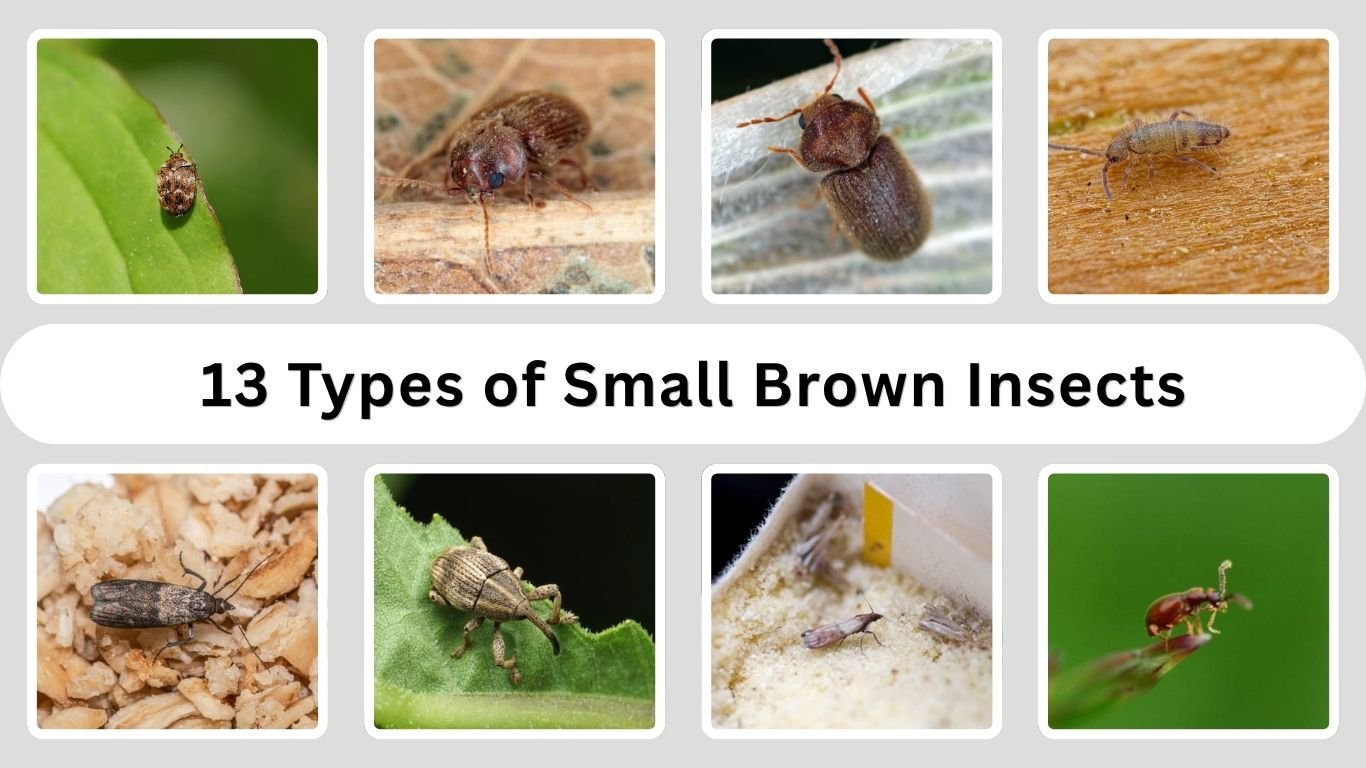
Small brown insects are commonly found in homes, often hiding in pantries, carpets, furniture, and dark corners. While many of them are harmless, some can damage fabrics, contaminate food, or cause irritation. Identifying these insects is the first step to controlling and preventing infestations.
In this guide, you’ll find 13 common types of small brown insects, along with simple identification details, behavior, habitat, and potential risks. This will help you quickly recognize what you’re dealing with and take the right action.
1. Carpet Beetle

Carpet beetles are tiny, brownish insects commonly found in homes, especially in areas with natural fibers. While the adults are mostly harmless, their larvae can damage fabrics, carpets, and stored items. They often go unnoticed until signs of damage appear.
Identification
- Small, oval-shaped body (2–4 mm long)
- Brown, black, or mottled patterns with tiny scales
- Larvae are hairy and elongated, often called “woolly bears”
- Slow-moving and usually found near light sources (adults)
Habitat
Carpet beetles are commonly found indoors in places where natural fibers are present. They prefer dark, undisturbed areas such as closets, under furniture, and inside storage boxes. Outdoors, they may live in bird nests or on flowers, but they easily enter homes through windows and doors.
Behavior
Adult carpet beetles feed on pollen and are often seen near windows. The larvae, however, are the destructive stage, feeding on wool, silk, leather, and even pet hair. They avoid light and tend to hide in cracks or fabric folds. Infestations usually develop slowly and may go unnoticed for a long time.
Risk
Carpet beetles are not dangerous to humans, but they can cause significant damage to household items. Their larvae can ruin clothing, upholstery, and carpets. In some cases, the tiny hairs of larvae may cause mild skin irritation or allergic reactions in sensitive individuals.
2. Drugstore Beetle

Drugstore beetles are small brown insects commonly found in stored food products and household items. Despite their name, they are not limited to pharmacies and can infest a wide range of dried goods. They are known for their ability to chew through packaging and contaminate food supplies.
Identification
- Tiny, oval-shaped body (2–3.5 mm long)
- Reddish-brown color with a smooth, humpbacked appearance
- Head is hidden from above by the thorax
- Fine grooves (striations) on wing covers
Habitat
Drugstore beetles thrive in warm, dry environments where stored food is available. They are often found in kitchens, pantries, and storage areas. Common hiding places include flour bags, spice containers, cereal boxes, and even non-food items like books or dried plants.
Behavior
These beetles are strong fliers and are often attracted to light sources. Both adults and larvae feed on a variety of materials, including grains, spices, pet food, and even paper or glue. They can quickly spread throughout a home if food sources are not properly sealed.
Risk
Drugstore beetles are not harmful to humans directly, but they contaminate food and make it unsafe to consume. Their presence can lead to food waste and repeated infestations if not controlled properly. They can also damage non-food items like books and packaging materials.
3. Cigarette Beetle

Cigarette beetles are small, light brown insects known for infesting stored tobacco and dried food products. They are very similar to drugstore beetles but have slight differences in appearance and behavior. These pests are common in homes, warehouses, and storage facilities.
Identification
- Small, oval-shaped body (2–3 mm long)
- Light brown to reddish-brown color
- Smooth wing covers without grooves
- Antennae have a serrated (saw-like) appearance
Habitat
Cigarette beetles prefer warm environments and are typically found in stored products. Common locations include kitchens, pantries, and areas where tobacco, spices, or dried herbs are kept. They can also infest packaged foods and organic materials.
Behavior
These beetles are active fliers and are attracted to light. Both larvae and adults feed on a wide variety of dried materials, including tobacco, flour, spices, and pet food. They can easily penetrate packaging, making infestations difficult to contain.
Risk
Cigarette beetles do not bite or harm humans directly, but they contaminate stored goods. Infested food must be discarded, leading to waste. Their ability to spread quickly and infest multiple items makes them a persistent household pest.
4. Brown House Moth

The brown house moth is a small, brown-colored insect commonly found indoors. It is known for damaging natural fabrics and stored food products. Unlike some other moths, it prefers darker areas and is less attracted to light, making infestations harder to notice.
Identification
- Small wingspan (about 10–15 mm)
- Brown wings with darker spots or patterns
- Slender body with folded wings at rest
- Larvae are creamy-white with a brown head
Habitat
Brown house moths are typically found in dark, undisturbed areas inside homes. Common locations include closets, cupboards, attics, and storage boxes. They prefer places where fabrics, grains, or dried organic materials are stored.
Behavior
Adult moths are less active in bright light and tend to hide during the day. The larvae are the damaging stage, feeding on wool, feathers, cereals, and other stored items. They create silken tubes or cases where they live and feed, often going unnoticed.
Risk
These moths are not harmful to humans but can cause damage to clothing, carpets, and stored food. Infestations may result in holes in fabrics and contamination of pantry items. Early detection is important to prevent widespread damage.
5. Indian Meal Moth

The Indian meal moth is a common pantry pest known for infesting stored food products. It is easily recognized by its two-toned wings and is frequently found in kitchens. This insect can quickly spread and contaminate a wide range of dry goods.
Identification
- Wingspan of about 16–20 mm
- Forewings are two-toned: pale gray and reddish-brown
- Slender body with long antennae
- Larvae are small, whitish caterpillars
Habitat
Indian meal moths are commonly found in kitchens and food storage areas. They infest items such as flour, rice, cereal, nuts, and dried fruits. They can also be found in pet food containers and poorly sealed packages.
Behavior
Adult moths are active fliers and are often seen near lights or ceilings. The larvae crawl through food products, leaving behind silk webbing. They may also wander away from food sources to pupate in cracks and corners.
Risk
Indian meal moths are not dangerous to humans, but they contaminate food with webbing and waste. Infested products must be discarded, leading to food loss. Their rapid reproduction can make infestations difficult to control if not addressed early.
6. Weevil (Grain Weevil)

Grain weevils are small brown insects that commonly infest stored grains and dry food products. They are known for their distinctive snout and are a frequent problem in kitchens and food storage areas.
Identification
- Small, elongated body (3–5 mm long)
- Reddish-brown to dark brown color
- Long snout (rostrum) extending from the head
- Elbowed antennae attached to the snout
Habitat
Grain weevils are typically found in stored grains such as rice, wheat, corn, and pasta. They thrive in pantries, storage bins, and warehouses. These insects often enter homes through infested food packages purchased from stores.
Behavior
Female weevils lay eggs inside grains, where larvae develop and feed from within. Adults emerge by boring holes out of the grain. They are slow movers and usually stay close to their food source, making infestations localized but persistent.
Risk
Grain weevils do not bite or harm humans directly, but they spoil food by feeding and reproducing inside it. Infested grains become unsuitable for consumption, leading to waste. If not controlled, they can spread to other stored food items.
7. Flour Beetle

Flour beetles are tiny brown insects often found in processed grain products. They are one of the most common pantry pests and can quickly infest flour, cereals, and other dry foods.
Identification
- Small, flat body (3–4 mm long)
- Reddish-brown color
- Long, slender shape with visible segmentation
- Antennae gradually enlarge toward the tip
Habitat
Flour beetles are commonly found in kitchens, pantries, and food storage areas. They prefer processed foods like flour, cereal, crackers, and baking mixes. They can live in packaging, cracks, and corners near food sources.
Behavior
Both adults and larvae feed on stored food products. Unlike weevils, they do not develop inside grains but feed externally. They are active crawlers and may spread throughout storage areas in search of food.
Risk
Flour beetles do not pose a direct health risk, but they contaminate food with waste and secretions. Infested products often develop an unpleasant odor and must be discarded. Their presence can lead to repeated infestations if not managed properly.
8. Spider Beetle

Spider beetles are small, brown insects that resemble tiny spiders due to their round bodies and long legs. They are often found in stored food and organic materials, making them a common household pest.
Identification
- Small, round or oval body (2–4 mm long)
- Reddish-brown to dark brown color
- Long, thin legs giving a spider-like appearance
- Smooth, shiny body surface
Habitat
Spider beetles are typically found in dark, undisturbed areas such as pantries, basements, and storage rooms. They infest a wide range of materials, including grains, dried foods, animal products, and even debris like dead insects.
Behavior
These beetles are mostly nocturnal and prefer to stay hidden during the day. Both larvae and adults feed on various organic materials. They are slow movers and tend to remain close to their food source but can spread if conditions are favorable.
Risk
Spider beetles are not harmful to humans directly, but they contaminate food and stored items. Their presence can indicate poor storage conditions. Infestations may lead to food waste and require thorough cleaning to eliminate.
9. Booklouse (Psocid)

Booklice are tiny, soft-bodied brown insects commonly found in damp environments. Despite their name, they are not true lice and do not live on humans. They are often seen in homes with high humidity.
Identification
- Very small size (1–2 mm long)
- Pale brown or grayish color
- Soft body with a large head
- Wingless or with very small wings
Habitat
Booklice thrive in humid areas such as bathrooms, kitchens, and basements. They are often found on books, paper, cardboard, and stored food. Moldy or damp materials provide ideal conditions for their growth.
Behavior
These insects feed mainly on mold, fungi, and starchy materials. They are attracted to moisture and will multiply quickly in humid environments. Booklice are slow-moving and often cluster in areas with visible mold.
Risk
Booklice do not bite or harm humans, but they can damage books, wallpaper, and stored goods. Their presence usually indicates excess moisture or mold issues in the home. Controlling humidity is key to preventing infestations.
10. Bed Bug

Bed bugs are small, brown insects that feed on human blood, usually at night. They are common household pests and are often found in sleeping areas. Their presence can cause discomfort and difficulty sleeping.
Identification
- Small, oval, flat body (4–7 mm long)
- Reddish-brown color, especially after feeding
- Wingless with visible segmented body
- Swollen and elongated after a blood meal
Habitat
Bed bugs are typically found in mattresses, bed frames, headboards, and furniture. They hide in cracks, seams, and crevices close to sleeping areas. They can also spread to luggage, clothing, and other personal items.
Behavior
Bed bugs are nocturnal and come out at night to feed on exposed skin. They hide during the day and can survive for long periods without feeding. They spread easily through travel and second-hand furniture.
Risk
Bed bugs do not transmit diseases, but their bites can cause itching, redness, and allergic reactions. Infestations can lead to stress, sleep disturbances, and discomfort. Professional treatment is often required to eliminate them.
11. Flea

Fleas are tiny brown insects that feed on the blood of animals and humans. They are commonly associated with pets but can infest homes if not controlled properly. Their bites can be irritating and uncomfortable.
Identification
- Very small size (1–3 mm long)
- Dark brown, laterally flattened body
- Long hind legs adapted for jumping
- Wingless with a hard outer body
Habitat
Fleas are commonly found on pets, bedding, carpets, and upholstery. They prefer warm environments where hosts are available. Eggs and larvae often develop in hidden areas like rugs, cracks, and pet resting spots.
Behavior
Fleas are strong jumpers and quickly move between hosts. They feed on blood multiple times a day. Their life cycle includes eggs, larvae, pupae, and adults, allowing them to multiply rapidly under favorable conditions.
Risk
Fleas can bite humans and animals, causing itching and skin irritation. In some cases, they may transmit diseases or parasites. Infestations can spread quickly and require thorough cleaning and treatment of both pets and the home.
12. Ant (Pharaoh Ant)

Pharaoh ants are tiny, light to medium brown insects that commonly infest homes. They are known for forming large colonies and are often found in kitchens and food storage areas. These ants are persistent and can be difficult to eliminate once established.
Identification
- Very small size (1.5–2 mm long)
- Light brown to yellowish color
- Slender body with a segmented appearance
- Antennae are elbowed
Habitat
Pharaoh ants prefer warm, humid environments and are often found indoors. Common locations include kitchens, bathrooms, wall voids, and behind appliances. They build nests in hidden areas such as cracks, crevices, and insulation.
Behavior
These ants form large colonies with multiple queens, allowing them to spread quickly. They follow scent trails to food sources and are especially attracted to sugary and greasy foods. Disturbing their nests can cause colonies to split and spread further.
Risk
Pharaoh ants do not pose a serious threat to humans but can contaminate food and surfaces. In sensitive environments like hospitals, they may spread bacteria. Their ability to multiply rapidly makes them a challenging pest to control.
13. Cockroach Nymph

Cockroach nymphs are the immature stage of cockroaches and are often mistaken for small brown insects. They resemble adult cockroaches but are smaller and lack fully developed wings. Their presence usually indicates a larger infestation.
Identification
- Small, oval-shaped body (varies by species)
- Brown to dark brown color
- Wingless or with undeveloped wings
- Similar in shape to adult cockroaches
Habitat
Cockroach nymphs are commonly found in warm, dark, and moist environments. Typical hiding places include kitchens, bathrooms, drains, and behind appliances. They stay close to food and water sources.
Behavior
Nymphs are active mostly at night and hide during the day. They feed on a wide range of organic materials, including food scraps and waste. As they grow, they molt several times before becoming adults.
Risk
Cockroach nymphs can contaminate food and surfaces with bacteria. Their droppings and shed skins may trigger allergies or asthma. A visible presence often signals a larger infestation that requires immediate attention.