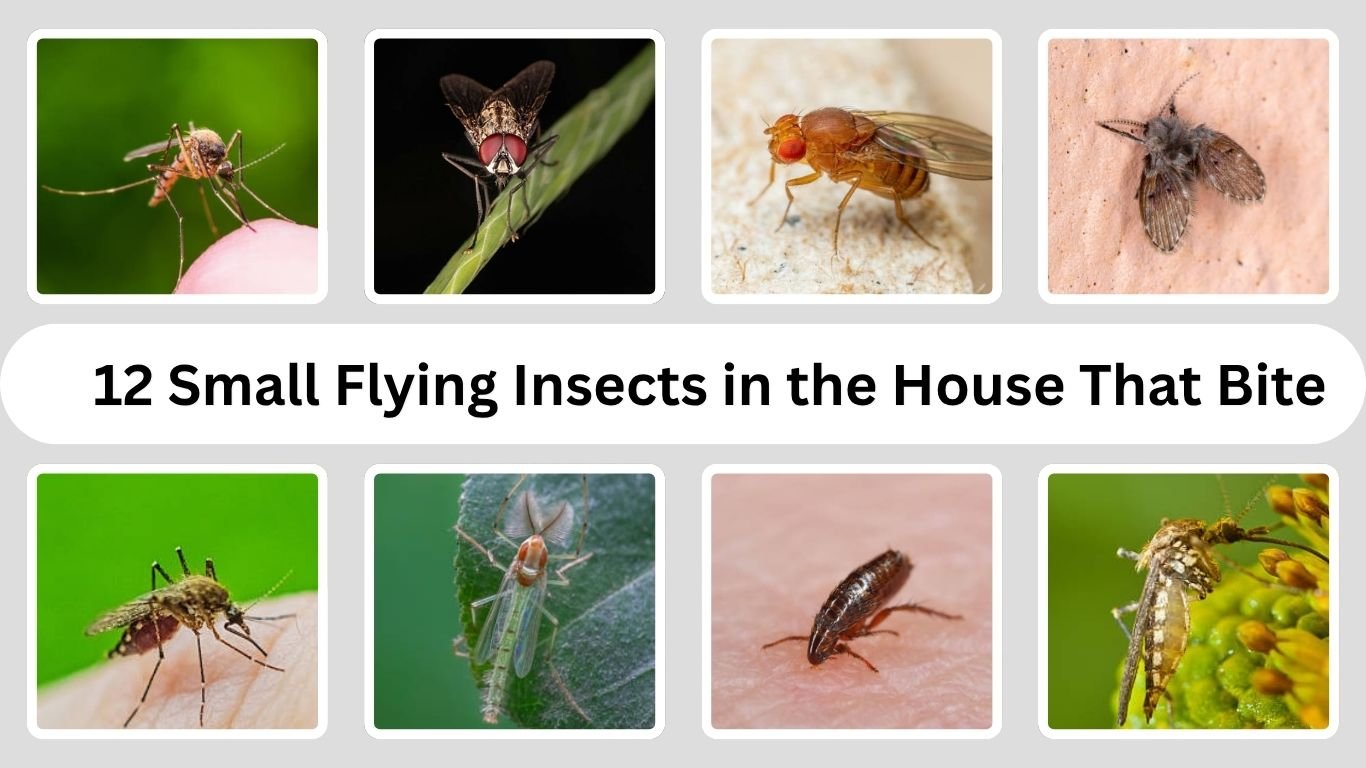
Small flying insects inside the house can be more than just annoying—they can also bite and cause discomfort or even health problems. These insects are often attracted by moisture, food, and warm indoor environments, making homes an easy target for infestation.
In this guide, you’ll find 12 common small flying insects that bite or behave like biting pests in homes. Each insect is explained with simple details about identification, behavior, habitat, and dangers, helping you recognize and manage them effectively.
1. Mosquito

Mosquitoes are one of the most common flying insects found inside homes, especially in warm and humid regions. They are well known for their biting behavior and ability to spread diseases, making them one of the most harmful household pests.
Identification
- Small, slender body
- Long legs and narrow wings
- Needle-like mouthpart (proboscis)
- Usually gray or brown
- Produces a buzzing sound
Biting Behavior
Only female mosquitoes bite humans and animals because they need blood to develop their eggs. They use their sharp proboscis to pierce the skin and draw blood. Their bites often cause itching, redness, and mild swelling, which can be irritating.
Habitat & Activity
Mosquitoes are commonly found in areas with standing water such as buckets, drains, flower pots, and water tanks. Indoors, they rest in dark, cool places like corners, under furniture, or behind curtains. They are most active during early morning and evening.
Dangers
Mosquitoes are dangerous because they can transmit serious diseases such as dengue, malaria, and chikungunya. Even a small number of mosquitoes indoors can pose health risks. Preventing breeding and avoiding bites is important for maintaining a safe home environment.
2. House Fly

House flies are common flying insects often found inside homes, especially around food and waste. While they do not bite like mosquitoes, they can still be harmful due to their role in spreading germs and bacteria.
Identification
- Small, gray or black body
- One pair of wings
- Large red compound eyes
- Short antennae
- Fast movement
Feeding Behavior
House flies feed on liquid or semi-liquid substances. They are attracted to food, garbage, and decaying matter. Since they cannot chew, they release digestive fluids to soften food before consuming it, which increases contamination risk.
Habitat & Activity
House flies are commonly found in kitchens, garbage areas, and near uncovered food. They prefer warm environments and are active during the daytime. Indoors, they rest on walls, ceilings, and surfaces close to food sources.
Dangers
Although house flies do not bite, they can carry harmful bacteria from dirty places to food and surfaces. This can lead to diseases such as food poisoning, diarrhea, and infections, making them an unhealthy presence in homes.
3. Fruit Fly

Fruit flies are tiny flying insects commonly seen around ripe or rotting fruits and vegetables. They multiply quickly and can become a nuisance in kitchens if food is left exposed.
Identification
- Very small body
- Light brown or tan color
- Red eyes
- Transparent wings
- Slow flying movement
Feeding Behavior
Fruit flies are attracted to sugary and fermented foods. They feed on overripe fruits, vegetables, and liquids like juice or vinegar. Their larvae grow inside these food sources, making infestations spread quickly.
Habitat & Activity
Fruit flies are usually found in kitchens, near fruit bowls, garbage bins, and drains. They prefer moist environments where organic material is present. They are active during the day and often hover around food.
Dangers
Fruit flies do not bite humans, but they can contaminate food by laying eggs on it. Their presence indicates poor food storage or hygiene. Although not highly dangerous, they can still spread bacteria and create an unhygienic environment indoors.
4. Drain Fly

Drain flies, also known as moth flies, are small insects commonly found in bathrooms and kitchens. They are weak fliers and often appear near drains, where they breed and multiply quickly.
Identification
- Very small, fuzzy body
- Gray or brown color
- Wings covered with tiny hairs
- Moth-like appearance
- Slow, weak flight
Feeding Behavior
Drain flies feed on organic matter found in dirty water, sewage, and decaying material inside drains. Their larvae grow in the slimy buildup inside pipes, which provides them with enough nutrients to survive.
Habitat & Activity
These flies are mostly found around sinks, showers, and floor drains. They prefer damp, dirty environments where organic buildup exists. Drain flies are usually active at night and rest on walls near their breeding areas during the day.
Dangers
Drain flies do not bite humans, but they can spread bacteria from contaminated areas. Their presence often indicates poor sanitation in drains. Large infestations can create an unpleasant and unhygienic indoor environment.
5. Gnat

Gnats are tiny flying insects often seen hovering in groups indoors, especially near plants or moist areas. Some species can bite, while others are mainly a nuisance due to their constant presence.
Identification
- Very small, delicate body
- Long legs and thin wings
- Usually black or dark-colored
- Weak flying ability
- Often seen in swarms
Feeding Behavior
Gnats have different feeding habits depending on the species. Some feed on plant juices, fungi, or organic matter, while biting gnats feed on blood. This makes certain types irritating to humans.
Habitat & Activity
Gnats are commonly found near houseplants, damp soil, drains, and standing water. They prefer humid conditions and multiply quickly in moist environments. Indoors, they are active during the day and often gather around light sources.
Dangers
Biting gnats can cause itching and skin irritation similar to mosquito bites. Even non-biting types can contaminate food and surfaces. Their rapid reproduction makes them difficult to control once they spread inside the home.
6. Midge

Midges are tiny flying insects often confused with mosquitoes. Some species bite and can cause skin irritation, while others are harmless. They are usually found in groups and can become a nuisance indoors.
Identification
- Very small, slender body
- Long legs and narrow wings
- Gray or black color
- One pair of wings
- Often seen in swarms
Biting Behavior
Certain types of midges, especially biting midges, feed on blood. Their bites can cause itching, redness, and discomfort. Unlike mosquitoes, their bites may feel sharper and can irritate the skin for longer periods.
Habitat & Activity
Midges are commonly found near damp areas, such as bathrooms, kitchens, and places with standing water. They prefer humid conditions and are often active during the evening or night. Indoors, they gather around lights and moist surfaces.
Dangers
Biting midges can cause allergic reactions and skin irritation. In some cases, they may also transmit diseases to animals. Even non-biting species can become annoying due to their swarming behavior inside homes.
7. Flea

Fleas are tiny, wingless insects that can still move quickly by jumping. Although they do not fly, they are often included among biting household pests because they spread easily and bite humans and pets.
Identification
- Very small, dark brown body
- Wingless insect
- Flattened body shape
- Strong hind legs for jumping
- Hard outer covering
Biting Behavior
Fleas bite humans and animals to feed on blood. Their bites often appear as small red spots and can cause intense itching. Multiple bites may occur in clusters, especially around the legs and ankles.
Habitat & Activity
Fleas are usually found on pets, bedding, carpets, and furniture. They thrive in warm indoor environments and can spread quickly throughout a home. They remain hidden in fabrics and come out to feed when a host is nearby.
Dangers
Flea bites can cause allergic reactions and skin infections from scratching. They can also transmit diseases and parasites to animals and, in rare cases, to humans. Their rapid reproduction makes infestations difficult to control.
8. Biting Midge

Biting midges are extremely small flying insects known for their painful bites. They are often called “no-see-ums” because of their tiny size, making them hard to notice until they bite.
Identification
- Very tiny, almost invisible body
- Slender shape
- Gray or dark color
- One pair of wings
- Weak but persistent flight
Biting Behavior
Biting midges feed on blood, and their bites can be quite painful compared to their size. They pierce the skin and cause red, itchy bumps. In some cases, bites may lead to swelling or allergic reactions.
Habitat & Activity
They are commonly found in damp indoor and outdoor areas, especially near water sources. Inside homes, they may enter through windows and gather in humid spaces. They are most active during early morning and evening.
Dangers
Biting midges can cause severe itching and discomfort. In some regions, they may also transmit diseases to animals. Their small size makes them difficult to detect and avoid, increasing their nuisance level indoors.
9. Sand Fly

Sand flies are tiny flying insects known for their biting habit and ability to spread diseases. They are mostly active at night and can enter homes, especially in warm climates.
Identification
- Very small, hairy body
- Light brown or sandy color
- Long legs
- Narrow wings held upright
- Weak, hopping flight
Biting Behavior
Female sand flies bite to feed on blood. Their bites can be painful and often cause itching, redness, and irritation. Bites may appear in clusters and can take time to heal.
Habitat & Activity
Sand flies prefer warm, humid environments and are often found in cracks, walls, and dark indoor spaces. They are most active at night and tend to rest during the day in cool, shaded areas.
Dangers
Sand flies are known to transmit diseases such as leishmaniasis. Their bites can also cause skin irritation and allergic reactions. Due to their small size, they can easily enter homes and remain unnoticed.
10. Black Fly

Black flies are small, dark-colored insects known for their biting behavior. They are commonly found in areas with running water and can enter homes, especially in regions close to rivers or streams.
Identification
- Small, compact body
- Dark black or gray color
- Short antennae
- Broad wings
- Hump-backed appearance
Biting Behavior
Female black flies bite to feed on blood. Their bites can be painful and may cause swelling, itching, and irritation. Unlike mosquitoes, they cut the skin to draw blood, which can lead to more noticeable discomfort.
Habitat & Activity
Black flies are usually found near flowing water where they breed. Indoors, they may enter through open windows or doors. They are most active during the daytime, especially in warm weather.
Dangers
Black fly bites can cause strong allergic reactions in some people, including swelling and itching. In rare cases, they may transmit diseases to animals. Their painful bites make them a significant nuisance.
11. Stable Fly

Stable flies are biting flies that resemble house flies but feed on blood. They are commonly found near animals but can also enter homes and bite humans.
Identification
- Similar to house fly in appearance
- Gray body with dark markings
- One pair of wings
- Forward-pointing proboscis
- Medium-sized insect
Biting Behavior
Both male and female stable flies bite and feed on blood. Their bites are sharp and painful, often felt immediately. They usually bite exposed skin, especially on the legs and ankles.
Habitat & Activity
Stable flies are often found near animal waste, farms, and decaying organic matter. They can enter homes from nearby outdoor areas. They are active during the day and tend to rest on walls or surfaces when not feeding.
Dangers
Stable flies can cause painful bites and irritation. They may also transmit diseases to animals and occasionally to humans. Their presence indoors can be uncomfortable, especially in areas close to livestock or waste.
12. Phorid Fly

Phorid flies, also known as scuttle flies, are small flying insects often found in homes near decaying organic matter. They are known for their quick, irregular movement and tendency to run across surfaces rather than fly continuously.
Identification
- Very small body
- Light brown or black color
- Hump-backed appearance
- Short wings
- Runs quickly in a zigzag pattern
Feeding Behavior
Phorid flies feed on decaying organic material, food waste, and sometimes fungi. They are attracted to rotting matter, garbage, and even dead insects. Their feeding habits often bring them into contact with bacteria.
Habitat & Activity
These flies are commonly found in kitchens, drains, garbage areas, and damp places. They prefer moist environments where organic matter is present. Indoors, they are active throughout the day and often seen running on surfaces.
Dangers
Phorid flies do not bite humans, but they can spread bacteria from contaminated sources to food and surfaces. Their presence usually indicates poor sanitation or hidden decay, making them an unhygienic pest in homes.
FAQs
What small flying insect bites the most in homes?
Mosquitoes are the most common biting insects found inside homes. They actively seek human blood, especially during early morning and evening. Their bites cause itching and can also spread serious diseases, making them the most harmful among household flying insects.
Are all small flying insects in the house dangerous?
No, not all small flying insects are dangerous. Some, like fruit flies and drain flies, do not bite but can still spread bacteria. Others, like mosquitoes and biting midges, can bite and pose health risks. It depends on the type of insect present.
Why do flying insects come inside the house?
Flying insects usually enter homes in search of food, moisture, warmth, or breeding places. Open doors, windows, standing water, and food waste attract them. Poor sanitation and humidity can also increase their presence indoors.
How can I prevent biting insects indoors?
To prevent biting insects, remove standing water, keep your home clean, and use window screens. Closing doors at night, using repellents, and maintaining proper hygiene can significantly reduce their entry and breeding inside your home.
Do small insect bites cause serious health problems?
Some insect bites are harmless and only cause itching, but others can lead to serious health issues. Insects like mosquitoes and sand flies can transmit diseases, while repeated bites may cause allergic reactions or skin infections if scratched excessively.