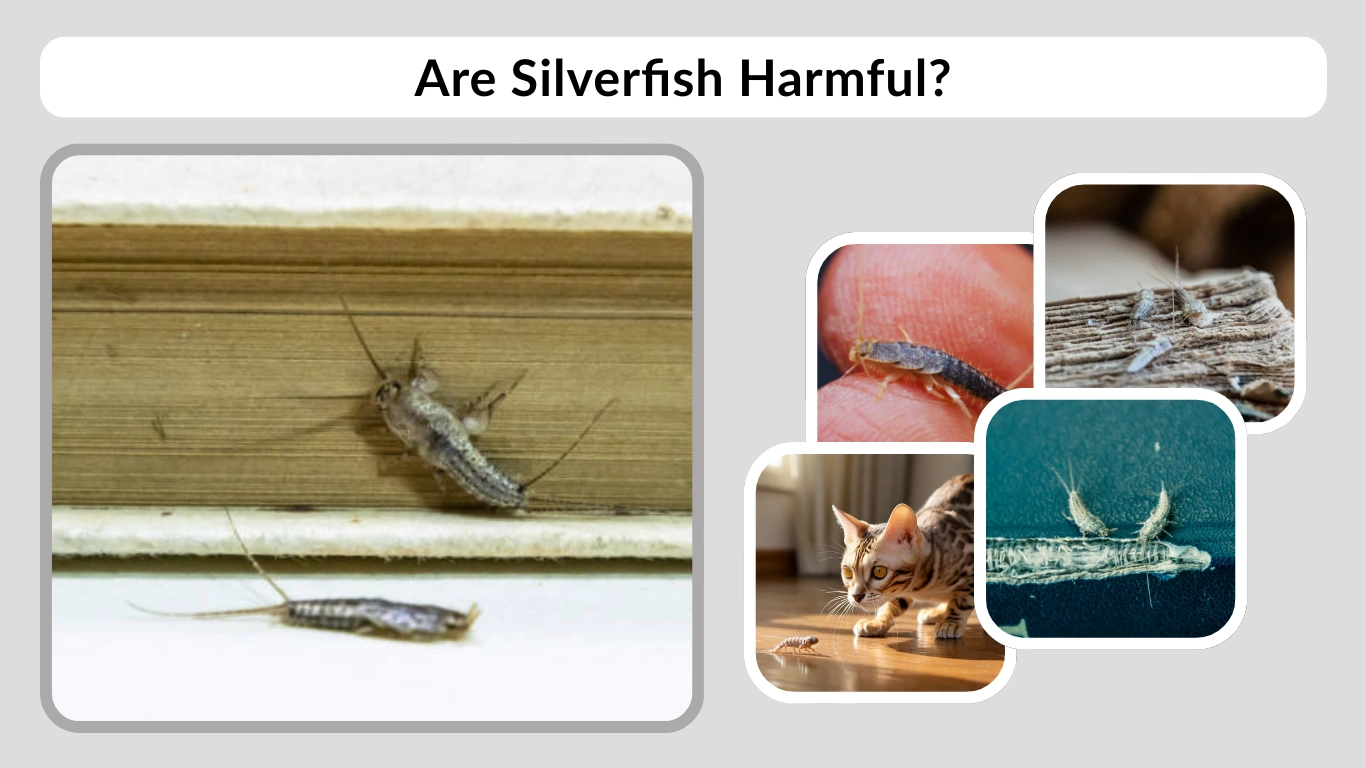
Silverfish are common household insects that often appear in bathrooms, basements, closets, and kitchens. Their fast, darting movements and metallic, scale-like bodies can make them seem more dangerous than they truly are. While silverfish do not bite, sting, or spread diseases, they can cause very specific types of damage—especially to clothing, paper, and stored goods. Understanding how silverfish behave and what risks they pose helps you protect your home, health, and pets more effectively.
Identification
- Silvery-gray, metallic-looking scales
- Flat, teardrop-shaped bodies (12–19 mm long)
- Long antennae and three tail-like bristles
- Fast, darting motion resembling a fish
- Found in damp, humid, low-light environments
- Feed on starch, glue, paper, and fabrics
Are Silverfish Harmful to Humans?

Silverfish are not considered harmful to humans. They do not bite, transmit parasites, or carry diseases. They avoid human contact and are more likely to hide than confront anything larger than themselves. Even though they are visually unsettling, they cannot harm your body.
However, some indirect risks do exist. In homes with chronic moisture problems, silverfish may coexist with mold, dust mites, or fungi—conditions that can trigger allergies or respiratory irritation. In rare cases, a buildup of their shed skins or scales may contribute to minor allergic reactions in sensitive individuals. Still, these cases are uncommon and typically associated with long-term, poorly controlled infestations.
Silverfish Bites — Are They Harmful?
A persistent myth suggests silverfish bite people, but this is completely false. Silverfish do not have the mouthparts needed to pierce human skin. Any marks people attribute to “silverfish bites” almost always come from unrelated skin irritation, insect bites from other pests, or minor rashes. Rather than harming your body, silverfish cause damage to household items. Their jaws are designed for scraping soft materials—not biting flesh.
Are Silverfish Harmful to Your Health?
Silverfish themselves do not cause illness, but the conditions that attract them can. Damp, poorly ventilated areas—especially those containing mildew or mold—can affect indoor air quality. Silverfish thrive in these humid environments, making them indicators of moisture problems rather than direct health threats. In rare cases, their shed skins may contribute to minor allergies, particularly in individuals who are sensitive to dust, mites, or environmental allergens.
Overall, their impact on human health is indirect and manageable with proper humidity control and cleanliness.
Are Silverfish Harmful to Pets?

Silverfish are generally harmless to pets such as cats, dogs, and rabbits. They are not poisonous and do not carry toxins or parasites. If a pet eats a silverfish, it typically causes no more than mild digestive upset—similar to eating any small insect.
Pets & Silverfish Breakdown
- Cats: Often chase and eat silverfish without harm.
- Dogs: Occasionally ingest silverfish while sniffing around.
- Rabbits: Rarely interact with silverfish, but not at risk.
- Other Animals: No known toxic effects from accidental ingestion.
The only concern arises when pets ingest silverfish from moldy or unsanitary environments, where secondary contamination—not the insect itself—could pose a risk.
Are Silverfish Harmful to Plants or Succulents?
Silverfish rarely harm healthy plants. They prefer carbohydrates, starches, paper, and fabric over living vegetation. In most homes, plants—especially succulents—are not at risk.
They may occasionally feed on:
- Seedlings
- Mold on plant soil
- Dying or decaying plant matter
Succulents are almost never targeted because they do not contain the starch-rich materials silverfish prefer.
Are Silverfish Harmful to Clothes and Belongings?

Silverfish are notorious for damaging items that contain starches, sugars, or cellulose. They chew irregular holes and scrape surfaces, leaving subtle but destructive damage.
Items at risk include:
- Clothing (cotton, linen, rayon, silk)
- Books and paper documents
- Wallpaper and glue
- Cardboard boxes
- Stored foods like oats, flour, and pasta
They do not chew through plastic or metal but can infiltrate fabric drawers, closets, or pantries if left undisturbed.
How Silverfish Harm Homes
Silverfish do not cause structural damage like termites, but they can contribute to ongoing home deterioration.
Potential household impacts:
- Damage to insulation paper
- Scraping wallpaper paste
- Feeding on book bindings and archival materials
- Contaminating stored goods
- Indicating high moisture levels that may encourage mold
Left untreated, a growing infestation can become expensive, especially if valuable documents or clothing are affected.
Are Clothes Moths and Silverfish Harmful to Humans?

| Feature | Silverfish | Clothes Moths |
| Harm to Humans | No | No |
| Harm to Clothes | Yes (starches, glue) | Yes (natural fibers) |
| Bites | None | None |
| Health Risks | Rare allergies | Rare allergies |
| Common Locations | Damp areas | Closets, wardrobes |
Both insects damage belongings—neither harms humans directly.
How to Prevent Silverfish Infestations
- Reduce humidity with dehumidifiers
- Fix leaks and moisture sources
- Increase ventilation in bathrooms and basements
- Store clothing and papers in sealed containers
- Reduce clutter, especially cardboard and old books
- Keep floors, corners, and closets clean
Moisture control is the most effective long-term strategy.
Natural & Chemical Control Methods

Natural Options:
- Diatomaceous earth
- Boric acid
- Essential oils (cedar, clove, lavender)
- Sticky traps
- Vacuuming and sanitation
Chemical Options:
- Residual insecticides (walls, cracks, baseboards)
- Professional-grade perimeter treatments
Chemical control is best used for large or persistent infestations.
When to Call a Professional
Call a pest control expert if:
- You see frequent silverfish despite treatments
- Books, clothing, or stored goods show widespread damage
- Humidity issues persist even after repairs
- You find silverfish alongside mold or other pests
A professional inspection can pinpoint hidden breeding areas, leaks, or structural moisture problems.
FAQs
Do silverfish bite humans?
No—silverfish cannot bite or sting. They lack the mouthparts needed to pierce skin. Any marks assumed to be “bites” usually come from unrelated causes like allergies, rashes, or other insects.
Are silverfish dangerous to pets?
No. Silverfish are not toxic. If pets eat them, they may experience mild digestive discomfort at worst.
Can silverfish harm babies or children?
Silverfish are not harmful to babies. They do not bite or spread disease. Their presence may indicate humidity issues, which should be addressed for overall indoor health.
Can silverfish damage clothes or books?
Yes—silverfish can chew holes in fabrics and destroy books, papers, photos, and wallpaper glue. This is their most significant form of harm.
Are silverfish harmful if swallowed?
Accidentally eating a silverfish is not dangerous. They are not poisonous and do not carry pathogens.