Silverfish are small, wingless insects often found in dark, damp areas of homes. While they may seem harmless at first glance, their long life span and steady reproduction can quickly lead to persistent infestations. Understanding the silverfish life cycle helps explain why these insects are so difficult to eliminate and why early control is important. From tiny eggs hidden in cracks to fast-moving adults, each stage plays a role in how silverfish survive, grow, and spread indoors.
What Is a Silverfish?
Silverfish (Lepisma saccharina) are primitive insects known for their silvery-gray color, flattened bodies, and fish-like movements. They belong to the order Zygentoma and are considered one of the most ancient insect groups still living today. Unlike many insects, silverfish do not have wings and do not undergo complete metamorphosis.
These pests are commonly found in bathrooms, basements, kitchens, attics, and storage areas where moisture is high and light is low. They feed on carbohydrates such as paper, glue, book bindings, fabrics, and food crumbs. Because they hide well and move quickly, infestations often go unnoticed until damage becomes visible.
Overview of the Silverfish Life Cycle

The silverfish life cycle follows a pattern known as incomplete metamorphosis. This means silverfish develop through three main stages: egg, nymph, and adult. There is no pupal stage like in butterflies or beetles. Instead, young silverfish look like smaller versions of adults and gradually grow through repeated molting.
One of the most unusual traits of silverfish is that they continue to molt even after reaching adulthood. Their entire life cycle is slow compared to many household insects, but their long life span—often several years—allows populations to persist in hidden indoor environments. Temperature, humidity, and food availability strongly influence how quickly silverfish develop.
Silverfish Reproduction Process
Mating Behavior
Silverfish reproduce through indirect fertilization. Males deposit a small packet of sperm, called a spermatophore, which the female then picks up. Courtship often involves brief chasing and antenna contact. Mating usually occurs in secluded, dark areas where silverfish already hide.
Reproduction can take place year-round indoors if temperature and humidity remain stable. This ability to breed continuously makes heated homes ideal environments for silverfish populations to grow slowly but steadily.
Egg-Laying Habits
After mating, females lay eggs in tiny cracks, crevices, behind baseboards, under flooring, inside wall voids, and within stored papers or fabrics. Eggs are often laid singly or in small clusters, making them very difficult to detect.
A single female can lay dozens of eggs over time. The exact number varies depending on environmental conditions, especially moisture levels. Higher humidity significantly improves egg survival and hatching success.
Silverfish Egg Stage
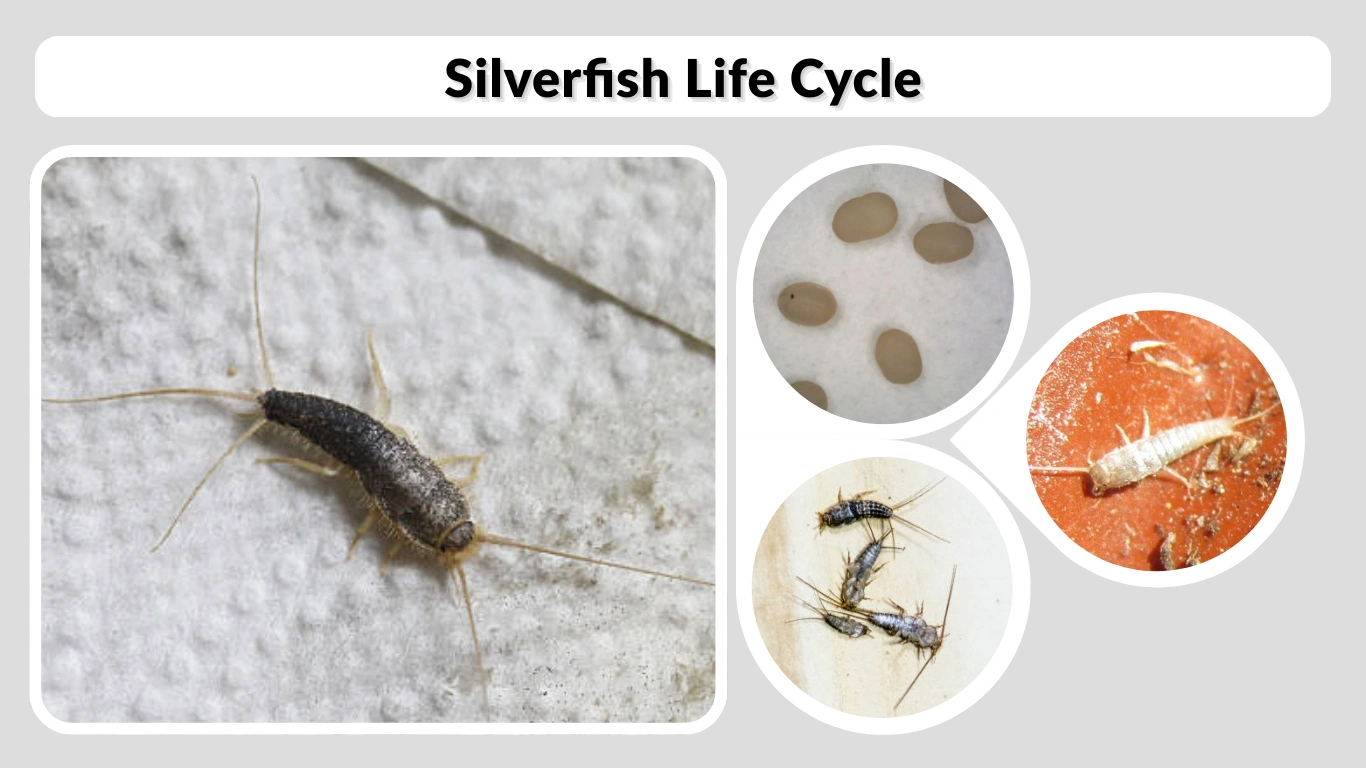
Silverfish eggs are extremely small, oval-shaped, and whitish to pale yellow in color. Because of their size and hidden placement, eggs are rarely seen during infestations. Under favorable indoor conditions, eggs typically hatch within a few weeks, though cooler or drier environments can slow this process.
Eggs require moisture to survive. In dry conditions, many fail to hatch, which is why silverfish are strongly associated with damp locations. Once hatched, the young silverfish immediately begin searching for food and shelter.
Silverfish Nymph Stage
Newly hatched silverfish are called nymphs. They look similar to adults but are much smaller, softer, and often lighter in color. As they grow, they repeatedly shed their outer skin in a process known as molting. Each molt allows the nymph to increase in size and develop more defined scales and body shape.
Silverfish nymphs feed on the same materials as adults, including starches, cellulose, and sugars found in household items. The nymph stage is the longest part of the life cycle. It can last several months to over a year, depending on temperature, humidity, and food availability. During this time, silverfish may molt many times before reaching maturity.
Silverfish Adult Stage
Once silverfish complete the nymph stage, they become fully mature adults. Adult silverfish are typically 12–19 mm long, flattened, and covered in fine silvery scales that give them a metallic shine. They have long antennae and three distinctive bristles at the rear of the body. Unlike many insects, silverfish do not stop growing after maturity.
Adults remain highly active at night and spend daylight hours hiding in cracks, wall voids, behind bookshelves, under sinks, and inside cardboard boxes. They are capable of surviving long periods without food, which allows them to persist even in relatively clean homes.
Silverfish Molting and Growth Process

Silverfish are unusual among insects because they continue to molt throughout their entire lives, even after reaching adulthood. A silverfish may molt 40 to 60 times over its lifespan. Each molt allows limited growth and helps repair minor injuries.
Molting makes silverfish vulnerable to dehydration and predators, so they usually hide in protected areas during this process. Because molting never truly stops, older silverfish can become larger and live far longer than most common household insects.
How Long Is the Silverfish Life Cycle?
The complete silverfish life cycle—from egg to reproductive adult—can take anywhere from several months to over a year. In warm, humid indoor environments, development is much faster. In cooler or drier conditions, growth slows significantly.
Silverfish are also known for their exceptional longevity. Many individuals live two to five years, and some may survive even longer under ideal indoor conditions. This long life span is a major reason why silverfish infestations can persist despite occasional treatments.
Environmental Factors That Affect Development
Temperature and Humidity
Silverfish thrive in warm, humid environments. High humidity speeds up egg hatching, nymph development, and adult activity. When humidity drops, development slows, and mortality increases. Dry air alone can dramatically reduce silverfish survival.
Seasonal changes can affect population growth, but indoor heating and plumbing leaks often create stable microclimates that support year-round development.
Food Availability
Silverfish feed on a wide range of materials, including paper, glue, wallpaper paste, fabrics, dandruff, and stored foods. When food is abundant, nymphs grow faster and adults reproduce more successfully. In low-food environments, silverfish can survive on very small amounts of organic material, allowing them to persist unnoticed.
Silverfish Life Cycle Inside Homes
Inside homes, all stages of the silverfish life cycle can occur simultaneously. Eggs are hidden deep in cracks, nymphs remain close to food and moisture sources, and adults roam wider areas at night. This overlapping of generations allows populations to rebuild even after partial control efforts.
Bathrooms, kitchens, laundry rooms, basements, and book storage areas are especially favorable. Signs of an active life cycle include yellow stains, shed skins, damaged paper products, and frequent nighttime sightings.
Silverfish vs Firebrat Life Cycle

Although silverfish and firebrats are closely related, their life cycles differ slightly.
| Feature | Silverfish | Firebrat |
| Preferred temperature | Cool to warm, humid areas | Very warm, hot environments |
| Egg development | Slower | Faster |
| Habitat | Bathrooms, basements, bookshelves | Boiler rooms, ovens, attics |
| Life span | Up to several years | Generally shorter |
Firebrats develop more quickly but are restricted to hotter environments, while silverfish can thrive across a wider range of household conditions.
Why Understanding the Silverfish Life Cycle Matters
Knowing how silverfish grow and reproduce helps explain why infestations are difficult to eliminate. Eggs are well hidden and resistant to many surface treatments. Nymphs and adults overlap in the same spaces, allowing populations to rebound.
Effective control depends on disrupting multiple stages at once—reducing humidity, removing food sources, and using targeted treatments that affect both juveniles and adults.
How to Interrupt the Silverfish Life Cycle
Moisture Control
Lowering indoor humidity is one of the most powerful ways to disrupt the silverfish life cycle. Dehumidifiers, proper ventilation, and repairing leaks make environments less suitable for eggs and nymphs.
Habitat Reduction
Sealing cracks, removing clutter, storing papers and fabrics in sealed containers, and vacuuming regularly removes egg-laying sites and food sources.
Targeted Treatment Methods
Desiccant dusts dry out silverfish at all life stages. Insect growth regulators interfere with molting and development. Traps help monitor activity and reduce adult numbers.
Common Myths About Silverfish Growth
Many people believe silverfish come from drains, but they actually enter from wall voids and hidden spaces. Others think silverfish appear overnight, when in reality populations build slowly over months. It is also a myth that only dirty homes get silverfish—humidity matters far more than cleanliness.
FAQs
How many stages are in the silverfish life cycle?
The silverfish life cycle has three main stages: egg, nymph, and adult. Silverfish do not have a pupal stage. Instead, young silverfish resemble small adults and grow larger through repeated molting.
How long do silverfish eggs take to hatch?
Under warm, humid indoor conditions, silverfish eggs usually hatch within two to six weeks. Cooler temperatures and dry air can significantly slow hatching or prevent eggs from developing successfully.
How long do silverfish live indoors?
Silverfish are among the longest-living household insects. Many live two to five years indoors, and some may survive even longer when moisture and food are consistently available.
Do silverfish molt as adults?
Yes. Unlike most insects, silverfish continue to molt even after becoming adults. They may molt dozens of times throughout their lives, which allows them to keep growing and repairing their outer bodies.
What kills silverfish at each life stage?
Dry conditions are deadly to eggs and nymphs. Desiccant dusts, insect growth regulators, and moisture reduction are effective against developing silverfish, while traps and targeted insecticides help control active adults.