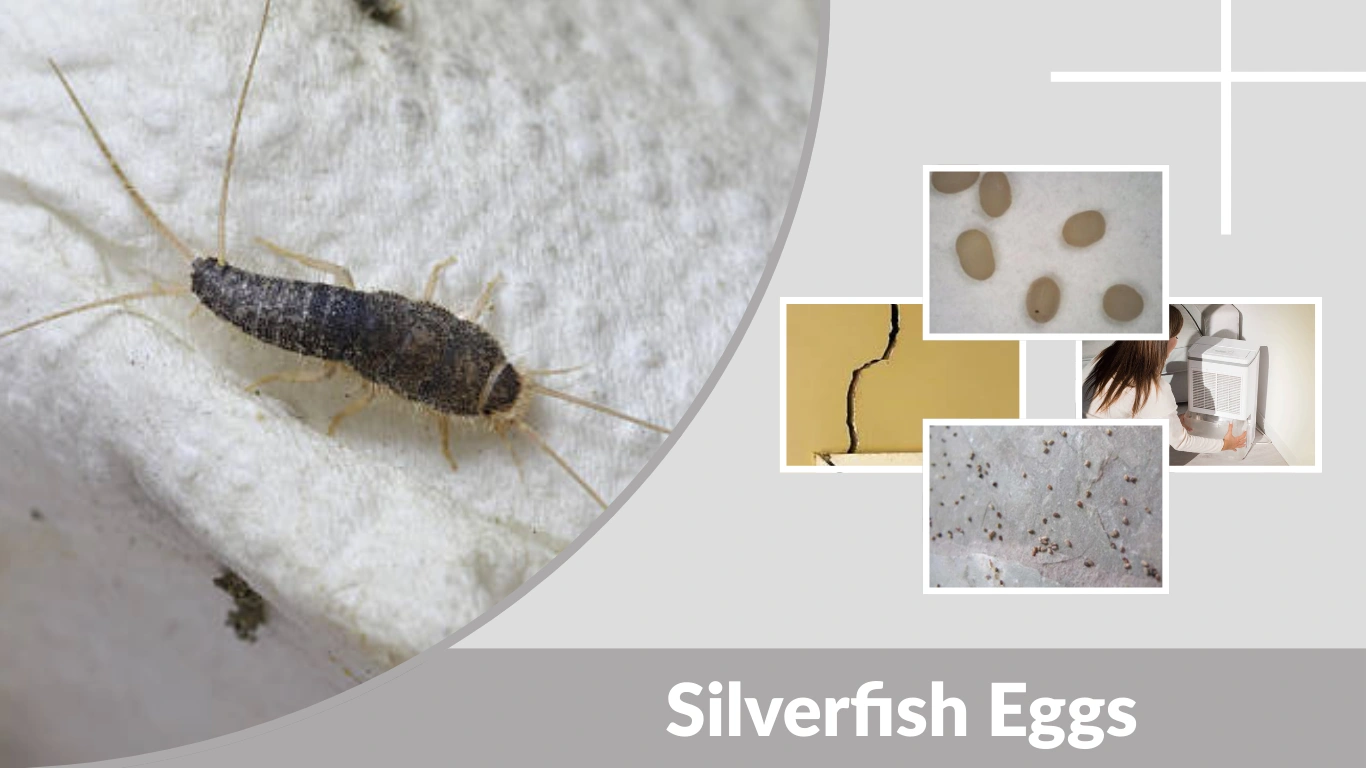
Silverfish eggs are rarely noticed, yet they are one of the clearest signs that silverfish are actively breeding inside a home. Because silverfish hide their eggs in narrow cracks, dark corners, and humid spaces, infestations often grow quietly for months before people realize insects are present. Understanding what silverfish eggs look like, where they are laid, and how they develop helps homeowners detect problems early and protect books, clothing, and stored items from damage.
What Are Silverfish Eggs?
Silverfish eggs are tiny reproductive capsules laid by female silverfish to produce the next generation. After mating, females deposit eggs individually or in small clusters in protected locations where moisture is stable and food will be nearby once the young hatch.
Silverfish do not build visible nests. Instead, they tuck eggs deep into cracks in walls, under baseboards, inside book bindings, behind wallpaper, or within storage boxes. These hidden placements protect the eggs from light, dryness, and disturbance. Depending on environmental conditions, a single female can lay dozens of eggs over her lifetime, allowing populations to build gradually without attracting attention.
Egg-laying is strongly influenced by humidity. Silverfish eggs dry out easily, so females select damp areas such as bathrooms, basements, kitchens, and laundry rooms. When indoor moisture remains high, eggs survive more easily, increasing the chance that an infestation will become established.
What Do Silverfish Eggs Look Like?
Silverfish eggs are extremely small, making them difficult to notice without close inspection. They are usually oval or slightly round in shape and range from about 0.8 to 1 millimeter in length. To the naked eye, they often appear as tiny pale dots rather than clearly defined eggs.
Freshly laid eggs are typically whitish, translucent, or soft yellow. As they mature, they may darken slightly, becoming cream-colored or light brown just before hatching. The surface is smooth and somewhat glossy, which can make eggs resemble fine grains of rice, tiny beads, or specks of dried glue.
Because of their size and color, silverfish eggs are commonly mistaken for dust, mold flecks, termite eggs, or paint debris. They are rarely found in obvious piles. Instead, they tend to be scattered in cracks, tucked into seams, or hidden along rough surfaces where they blend easily into the background.
How to Identify Silverfish Eggs

Correct identification is important, as many household insects leave behind small particles that look similar.
- Very small oval or round shape – barely visible without magnification
- Whitish, translucent, or pale yellow color – not dark or heavily pigmented
- Smooth, slightly shiny surface – not fibrous or powdery
- Hidden placement – inside cracks, seams, or protected corners
- Close to moisture and feeding areas – near paper, fabrics, or damp walls
Finding eggs repeatedly in the same area, especially when silverfish or shed skins are also present, strongly suggests active breeding.
Where Do Silverfish Lay Eggs in Homes?
Bathrooms and Kitchens
Bathrooms and kitchens are among the most common egg-laying sites because they provide steady moisture. Females often deposit eggs under sinks, behind toilets, beneath cabinets, around drains, and inside plumbing gaps. Cracks in tile grout, loose baseboards, and areas behind appliances also offer protected egg-laying surfaces.
The combination of warmth, humidity, and nearby food sources such as paper products and organic debris makes these rooms ideal for egg survival.
Bedrooms, Closets, and Storage Areas
Silverfish frequently lay eggs in areas where food materials are stored. Bookshelves, filing cabinets, closets, cardboard boxes, and clothing storage areas all provide both shelter and nourishment for newly hatched silverfish.
Eggs may be tucked into the spines of books, under stacks of paper, within folded fabrics, or behind wallpaper seams. Storage spaces that are rarely disturbed are especially attractive, as they reduce the chance of eggs being crushed or removed.
Basements, Attics, and Wall Voids
Basements and attics often hold the main breeding population. These spaces are typically dark, humid, and undisturbed, allowing eggs to develop safely. Silverfish may lay eggs inside foundation cracks, insulation, behind electrical boxes, or under flooring.
From these hidden zones, young silverfish can spread into living areas, which is often when homeowners begin to notice activity.
Silverfish Egg Lifecycle and Hatching Process

After eggs are laid, development begins immediately. Under favorable conditions, silverfish eggs usually hatch within two to six weeks. Higher humidity and warm temperatures speed up development, while dry or cool environments slow it.
When eggs hatch, the young silverfish that emerge are tiny, pale versions of adults. They already resemble adult silverfish in shape but lack full coloration and size. As they grow, they molt repeatedly, gradually darkening and developing the familiar silvery sheen.
Because silverfish grow slowly and live for several years, populations can increase quietly. Eggs may continue hatching over long periods, creating overlapping generations that make infestations persistent if conditions are not changed.
Silverfish Eggs vs Other Insect Eggs
Silverfish eggs are often confused with the eggs or debris of other household pests. Comparing their appearance and placement can help with correct identification.
- Silverfish eggs vs termite eggs: Termite eggs are usually found in large clusters inside nests and resemble tiny white grains of rice. Silverfish eggs are more scattered, hidden in cracks, and not grouped in obvious piles.
- Silverfish eggs vs cockroach egg cases: Cockroaches lay eggs in protective capsules called oothecae, which are much larger and brownish. Silverfish do not produce egg cases, and their eggs are tiny and individual.
- Silverfish eggs vs moth eggs: Moth eggs are often attached to fabrics or walls in visible groupings. Silverfish eggs are usually tucked into crevices and rarely seen on open surfaces.
- Silverfish eggs vs bed bug eggs: Bed bug eggs are white and about the size of a pinhead but are commonly glued to surfaces near sleeping areas. Silverfish eggs are usually hidden deeper and spread across wider household zones.
- Silverfish eggs vs ant eggs: Ant eggs are found inside nests and are rarely visible in living spaces. Silverfish eggs may appear scattered near feeding areas inside the home.
What Finding Silverfish Eggs Indicates

Discovering silverfish eggs means silverfish are not just passing through your home—they are actively reproducing. Eggs indicate a hidden breeding population living nearby, often inside walls, under flooring, or within stored materials.
Egg findings usually point to long-term moisture problems or stable food sources that are supporting survival. Because eggs are laid in protected areas, their presence suggests that silverfish have already established safe harborages where they can continue multiplying unless conditions are changed.
Are Silverfish Eggs Harmful?
Silverfish eggs themselves are not harmful to humans. They do not bite, sting, or carry known diseases. However, they signal the beginning of future damage. Once eggs hatch, the young silverfish immediately begin feeding on paper, fabrics, adhesives, and organic materials.
As populations increase, the risk of damage to books, documents, wallpaper, clothing, and stored food rises. Eggs therefore represent the early stage of an infestation that can quietly expand if left untreated.
How to Remove and Kill Silverfish Eggs Safely
The safest way to remove silverfish eggs is through thorough cleaning and environmental control. Vacuuming cracks, baseboards, shelves, and storage areas helps physically remove eggs, newly hatched insects, and shed skins. Vacuum bags should be sealed and discarded promptly.
Surfaces can then be wiped with warm soapy water, vinegar solutions, or mild disinfectants to remove remaining eggs. Heat, dryness, and airflow are effective natural controls, as silverfish eggs cannot survive in dry conditions. Dehumidifiers and fans significantly reduce egg survival rates.
Sealing cracks and crevices with caulk helps prevent females from laying new eggs in protected spaces. While chemical insecticides may kill exposed insects, they are often less effective against hidden eggs unless combined with moisture control and structural sealing.
How to Prevent Silverfish From Laying Eggs

Preventing egg-laying means making your home unsuitable for silverfish reproduction.
- Reduce indoor humidity with dehumidifiers and proper ventilation
- Fix leaks and condensation issues around plumbing and windows
- Seal cracks, seams, and wall gaps where eggs are hidden
- Store books, papers, and clothing in airtight plastic containers
- Vacuum dark and undisturbed areas regularly
- Limit cardboard storage and replace it with sealed bins
Consistent prevention greatly reduces the likelihood that eggs will survive and hatch.
When Silverfish Eggs Mean You Have an Infestation
Finding a single egg may be accidental, but discovering eggs repeatedly or in multiple locations usually means silverfish are breeding inside your home. The presence of baby silverfish, shed skins, or widespread adult sightings further confirms infestation.
Professional inspection may be helpful when eggs continue to appear despite cleaning and moisture reduction. Persistent egg findings often indicate that main breeding sites exist inside wall voids or under flooring where home treatments are less effective.
FAQs
What do silverfish eggs look like?
Silverfish eggs are extremely small, oval, and pale in color. They are usually whitish, translucent, or light yellow and measure about one millimeter. Because of their tiny size, they often look like dust specks or fine grains rather than obvious eggs.
Where do silverfish usually lay their eggs?
Silverfish lay eggs in dark, humid, and protected places such as cracks in walls, under baseboards, behind wallpaper, inside book bindings, under sinks, and within storage boxes containing paper or fabric materials.
How long do silverfish eggs take to hatch?
Under favorable warm and humid conditions, silverfish eggs typically hatch within two to six weeks. Cooler or drier environments can slow development and reduce the survival rate of eggs.
Can you easily see silverfish eggs?
Silverfish eggs are difficult to see without close inspection. They are often hidden deep inside cracks and seams, and their pale color blends into surfaces. Most people only notice them when cleaning or examining problem areas closely.
Does finding silverfish eggs mean infestation?
Yes. Finding silverfish eggs almost always indicates active breeding and an established population nearby. Eggs are one of the earliest and strongest signs of a developing silverfish infestation.