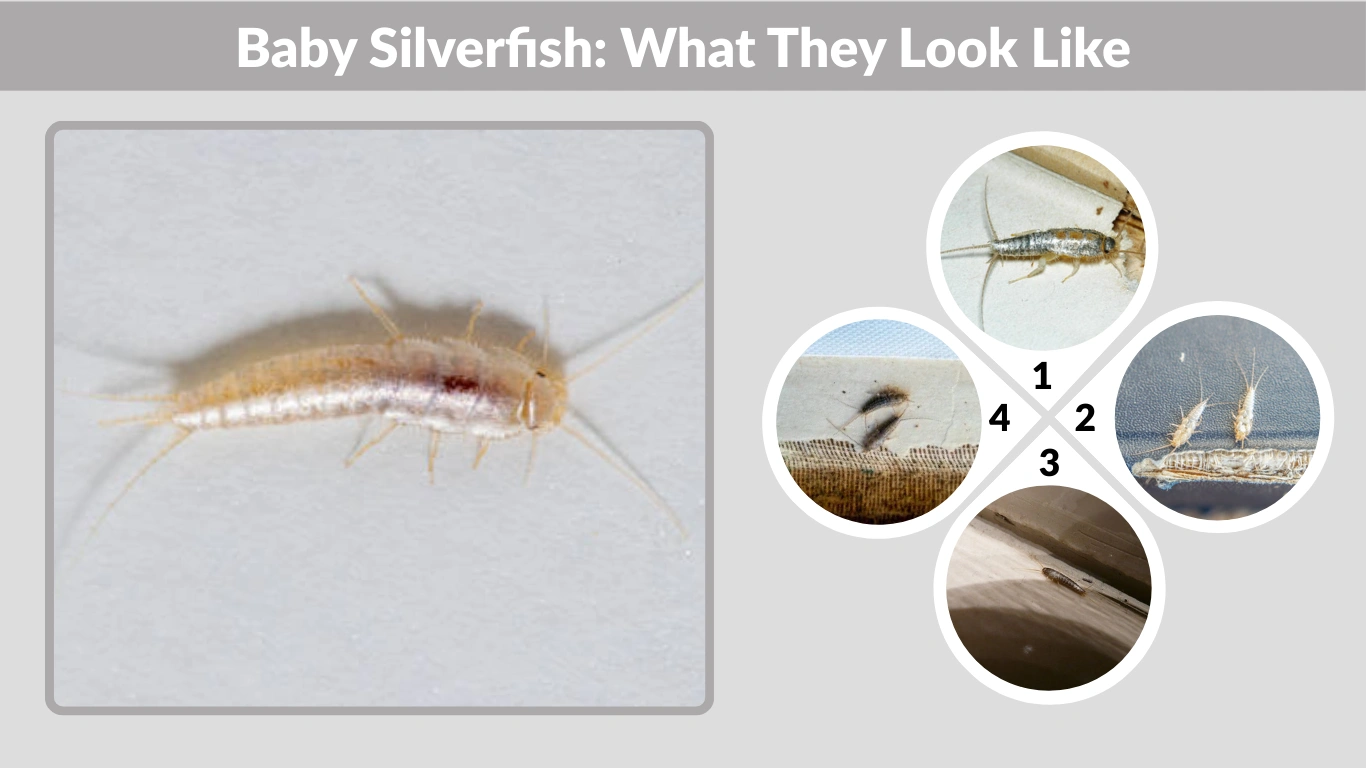
Baby silverfish are often overlooked because of their tiny size and pale appearance, yet they are one of the earliest warning signs of a growing silverfish infestation. Many people first notice silverfish babies in bathrooms, beds, or storage areas and mistake them for other household insects. Understanding what a baby silverfish looks like, how big it is, where it hides, and how it develops is essential for early detection and control. This guide explains how to identify baby silverfish and what their presence means for your home.
What Is a Baby Silverfish?
A baby silverfish is the juvenile stage of the silverfish insect, commonly called a nymph. Unlike many insects that pass through a larval stage, silverfish hatch from eggs looking like very small versions of adults. They do not have wings at any point in their lives and gradually grow larger through a series of molts.
Newly hatched baby silverfish are extremely small, soft-bodied, and pale. At this stage, they remain hidden in cracks, wall voids, and damp storage areas where moisture and food sources are nearby. Because of their size and light color, they are often confused with booklice, young cockroaches, or other tiny household bugs.
As baby silverfish grow, they shed their outer skin multiple times. With each molt, their bodies become firmer, darker, and more silver in appearance. This slow development allows silverfish populations to remain unnoticed for months before larger adults are ever seen.
What Do Baby Silverfish Look Like?
Baby silverfish look almost identical to adult silverfish, except they are much smaller and lighter in color. Their bodies are flat and elongated with a carrot-shaped outline that tapers toward the tail. Even at a young age, they have long antennae and three fine bristle-like filaments extending from the rear.
In their earliest stage, baby silverfish are usually white, cream, or very light gray. Because their outer covering has not hardened, they may appear almost translucent under bright light. Over time, their scales develop and their bodies turn darker gray and eventually metallic silver.
Lighting and movement often affect how people describe them. When disturbed, baby silverfish move quickly across surfaces in a wriggling motion. This fast, darting behavior is one of the clearest signs that a tiny insect may be a silverfish baby rather than a slow-moving pantry pest.
Baby Silverfish Size and Identification

Size and structure are key factors when identifying a baby silverfish. Their small proportions and undeveloped coloring make them easy to misidentify without close observation.
Key identification features of baby silverfish include:
• Usually about 2–4 mm long when newly hatched
• Soft, pale white to light gray body
• Elongated, teardrop or carrot-shaped form
• Three thin tail filaments at the rear
• Long forward-facing antennae
• Wingless at all life stages
• Fast crawling, fish-like movement
• Gradual darkening and silvering as they grow
Careful inspection of these features helps confirm whether a tiny insect is truly a silverfish baby or another household species.
Baby Silverfish vs Other Small Household Bugs

Baby Silverfish vs Bed Bugs
Baby silverfish and bed bugs are frequently confused, especially when insects are found near sleeping areas. However, baby silverfish have long antennae, tapered bodies, and visible tail filaments, while bed bugs are oval, flat, and lack tail bristles. Bed bugs also move slowly compared to the quick, darting motion of baby silverfish.
Another major difference is habitat. Baby silverfish prefer moist, hidden areas such as bathrooms, basements, and wall cracks. Bed bugs concentrate around mattresses, headboards, and furniture seams where humans sleep.
Baby Silverfish vs Booklice
Booklice are another insect commonly mistaken for silverfish babies. Booklice are much rounder, usually translucent, and lack the distinctive three-tail filament structure. They also move more slowly and are often seen clustered around moldy paper, books, or damp shelves.
Silverfish babies, by contrast, are longer, more flexible in shape, and more likely to scatter quickly when disturbed.
House Centipede “Silverfish Baby” Myth
Many people believe house centipedes are silverfish babies, but this is a myth. House centipedes are entirely different insects with long legs, segmented bodies, and visible jointed movement. Silverfish babies never develop legs that extend far from the body and always retain their smooth, flattened appearance.
Where Do Baby Silverfish Hide in Homes?
Baby silverfish stay close to moisture because their bodies dry out easily. This is why they are most often found in bathrooms, basements, laundry rooms, and kitchens. Cracks behind tiles, gaps under sinks, and wall voids provide ideal hiding places where humidity remains stable.
They also seek shelter near food sources. Paper products, cardboard boxes, book bindings, fabric fibers, and wallpaper paste all provide nutrition. Areas with stored items and limited airflow allow baby silverfish to feed and grow with minimal disturbance.
Because they avoid light, most baby silverfish remain hidden during the day. Homeowners usually notice them at night when turning on bathroom or bedroom lights, revealing quick-moving insects that scatter toward dark crevices.
Common Places You’ll See Baby Silverfish

Baby silverfish sightings usually occur in specific moisture-rich or storage-heavy areas of the home.
The most common places include:
• Baby silverfish in bathroom corners and floor edges
• Around drains, tubs, and under sinks
• Inside bed frames, headboards, and nearby wall gaps
• Closets, drawers, and book storage shelves
• Laundry rooms and behind appliances
• Basements and crawl spaces
• Under baseboards and wallpaper seams
• Around cardboard boxes and stored papers
Do Baby Silverfish Jump or Bite?
Do Baby Silverfish Jump?
Baby silverfish do not jump. They do not have enlarged hind legs like fleas or springtails, and they cannot leap into the air. Instead, they move by rapidly crawling in a side-to-side, fish-like motion. This quick, gliding movement often gives the illusion of jumping, especially when they suddenly change direction.
Their speed is a defensive behavior that helps them escape light and predators. When bathroom or bedroom lights are turned on, baby silverfish usually dart toward cracks, drains, or baseboards rather than jumping.
Do Baby Silverfish Bite Humans?
Baby silverfish do not bite humans or pets. Their mouthparts are designed for scraping soft materials such as paper, glue, fabric fibers, and starch residues. They are not capable of piercing skin, and they do not feed on blood.
Although harmless to people, baby silverfish can still damage household items. Their feeding activity contributes to holes in books, wallpaper, clothing, and stored materials, which is why early identification is important.
How Many Babies Do Silverfish Have?
Silverfish reproduce slowly compared to many insects, but their long lifespan makes infestations persistent. Female silverfish lay small batches of eggs in hidden cracks, behind baseboards, under flooring, and inside wall voids where humidity remains high.
On average, a single female can lay between 2 and 20 eggs at a time, repeating this process multiple times throughout her life. Over several years, one silverfish can produce dozens of offspring. The eggs usually hatch within two to six weeks, depending on temperature and moisture.
Because baby silverfish look like tiny adults, infestations often go unnoticed until multiple generations are already present. This quiet reproduction is one of the main reasons silverfish populations become established before homeowners realize there is a problem.
Why You Are Seeing Baby Silverfish

The appearance of baby silverfish usually indicates that adults are breeding somewhere inside the home. Several environmental factors support their development.
Common reasons baby silverfish appear include:
• High indoor humidity and condensation
• Hidden adult breeding colonies
• Plumbing leaks or damp walls
• Abundant paper, fabric, or cardboard
• Poor airflow and ventilation
• Warm, dark shelter zones
• Lack of regular inspection and cleaning
Seeing babies often means the infestation is not new and should be addressed promptly.
Are Baby Silverfish a Sign of Infestation?
Early Infestation Stage
Occasionally finding one or two baby silverfish may indicate an early infestation. At this stage, adults may be confined to a single moisture-rich area such as a bathroom or basement. Early detection allows homeowners to control humidity, seal cracks, and begin targeted treatment before populations spread.
Established Infestation Stage
Frequent sightings of baby silverfish in multiple rooms usually signal an established infestation. This means eggs are hatching in hidden areas, and colonies may exist inside walls, floors, or storage spaces. At this point, professional inspection and integrated control methods are often necessary to fully resolve the problem.
What to Do If You Find Baby Silverfish
The first step is reducing moisture. Use exhaust fans, repair leaks, and run dehumidifiers in bathrooms, basements, and laundry rooms. Without humidity, baby silverfish struggle to survive.
Next, remove potential food and shelter. Discard cardboard, store papers in sealed containers, and vacuum baseboards, shelves, and cracks thoroughly. This removes eggs, shed skins, and feeding debris.
If sightings continue, targeted treatments such as silica dust, boric acid, or residual insecticides in cracks and voids may be necessary. When baby silverfish are widespread or persistent, professional pest control provides the most reliable solution.
FAQs
What does a baby silverfish look like?
A baby silverfish looks like a tiny version of an adult. It has a pale white to light gray body, long antennae, and three fine tail filaments. Its shape is flat and tapered, and it moves quickly in a fish-like motion when disturbed.
How small are baby silverfish?
Newly hatched baby silverfish are usually about 2 to 4 millimeters long. They are soft-bodied and often appear almost translucent. As they molt and grow, they gradually become larger, darker, and more metallic in color.
Why am I finding baby silverfish in my bathroom?
Bathrooms provide ideal conditions for silverfish reproduction. Constant moisture, warmth, and hidden cracks allow eggs to hatch safely. Finding baby silverfish in bathrooms often indicates an active breeding site nearby, such as behind tiles, under sinks, or inside wall voids.
Can baby silverfish live in beds?
Baby silverfish do not live in mattresses like bed bugs, but they may hide in bed frames, headboards, and nearby wall gaps. They are attracted to darkness, humidity, and microscopic food debris, which is why they sometimes appear near sleeping areas.
How many babies do silverfish produce?
A female silverfish lays small batches of eggs several times throughout her life. Over the years, one silverfish can produce dozens of babies. Eggs hatch within weeks, allowing populations to grow quietly and steadily inside hidden household spaces.