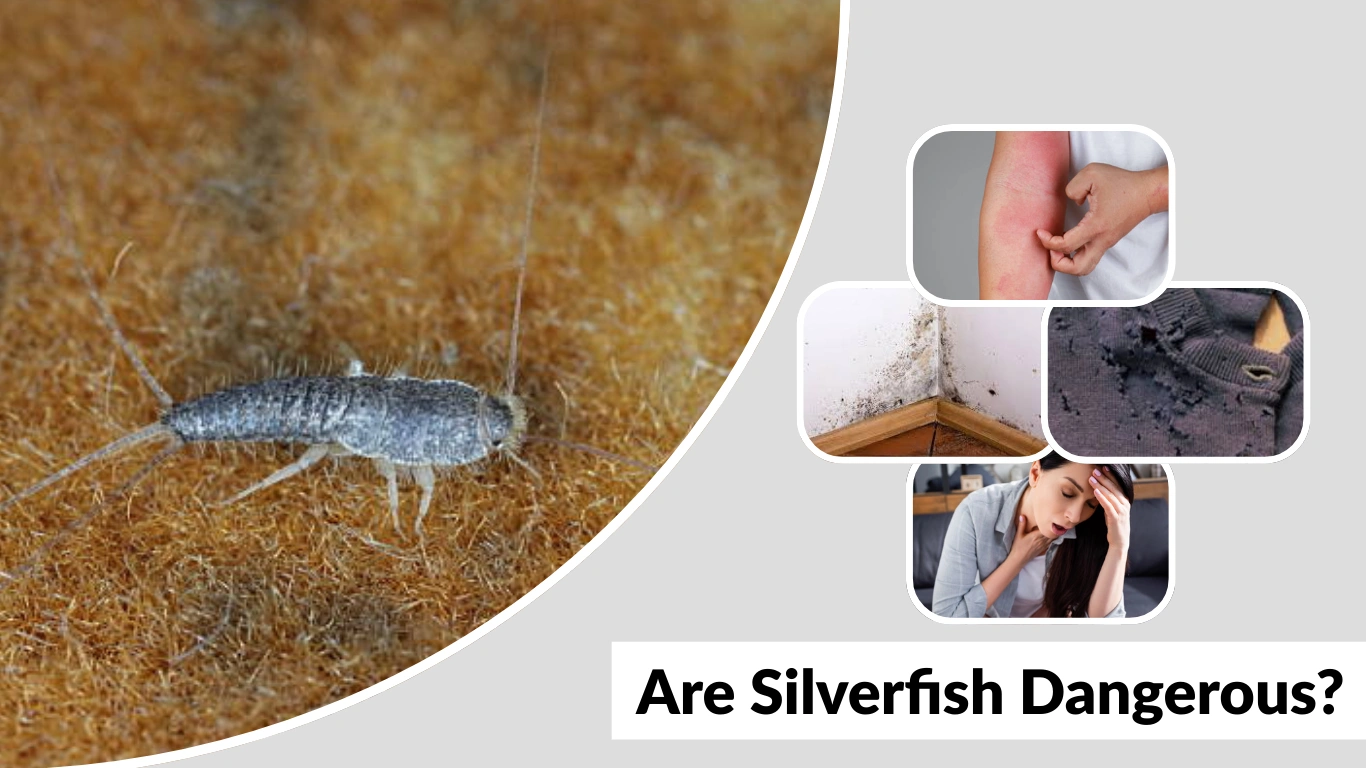
Silverfish are small, fast-moving insects that often appear in bathrooms, basements, kitchens, and storage areas. Their sudden movements and snake-like shape cause many people to panic and wonder, are silverfish dangerous to humans or pets? While silverfish are not aggressive insects, their presence raises concerns about bites, contamination, and health risks. Understanding how dangerous silverfish really are, what myths surround them, and what real problems they cause can help homeowners respond correctly and avoid unnecessary fear.
What Are Silverfish and Why They Alarm People
Silverfish are wingless insects with flat, carrot-shaped bodies covered in silvery scales. They move quickly, avoid light, and hide in cracks, wall gaps, and damp areas. Most sightings happen at night when lights are turned on and silverfish scatter across floors or sinks. This sudden appearance often makes people think silverfish are harmful or dangerous.
They survive on starches and proteins found in paper, glue, fabrics, book bindings, and even food crumbs. Because they live in bathrooms, basements, laundry rooms, and behind walls, people associate them with unsanitary conditions. Their unusual appearance, combined with the damage they cause to household items, leads many homeowners to believe silverfish insects are dangerous pests rather than nuisance insects.
Are Silverfish Dangerous to Humans?

Do silverfish bite people?
Silverfish do not normally bite humans. Their mouthparts are designed to scrape soft materials like paper, glue, and mold, not human skin. In extremely rare cases, a silverfish might nibble soft skin if trapped, but this is not a true defensive bite and does not inject venom. Even if contact happens, silverfish bites are not dangerous and do not transmit toxins.
Can silverfish harm human health?
Silverfish are not known to carry or spread diseases to humans. They do not feed on blood, and they are not vectors like mosquitoes or fleas. However, they can still affect human health indirectly. Shed skins, droppings, and tiny body fragments can contribute to indoor dust. In sensitive individuals, this may worsen allergies or asthma symptoms, especially in damp environments where silverfish populations grow.
Silverfish can also contaminate stored food and paper products. While this is not medically dangerous, it can create hygiene concerns and increase the risk of mold growth in affected areas.
Are silverfish dangerous to babies or sensitive individuals?
Silverfish are not directly dangerous to babies, elderly people, or those with weak immune systems. However, large infestations may worsen respiratory discomfort in people with asthma or dust allergies. The stress caused by repeated sightings and damage to personal belongings can also affect mental well-being. For sensitive households, silverfish are not dangerous insects, but they are still an important pest problem.
Health Effects Commonly Mistaken for Danger
Silverfish are often blamed for problems they don’t directly cause. Many of the “dangerous” effects associated with silverfish are actually side effects of infestations rather than true medical threats.
- Mild skin irritation caused by dust, not silverfish bites
- Allergy symptoms linked to shed skins and droppings
- Asthma flare-ups in humid, infested homes
- Fear from sudden nighttime sightings
- Stress caused by ongoing infestations and property damage
These issues make silverfish feel dangerous, even though they are not toxic, venomous, or disease-carrying insects.
Are Silverfish Bugs Dangerous to Pets?

Are silverfish dangerous to cats?
Silverfish are not poisonous to cats. If a cat catches or eats a silverfish, it usually causes no harm. In rare cases, swallowing insects could cause minor stomach upset, but silverfish do not carry venom or toxins that would seriously injure cats. The greater risk often comes from pesticides, not the silverfish themselves.
Are silverfish dangerous to dogs?
Silverfish are also not dangerous to dogs. Dogs may eat insects out of curiosity, and silverfish generally pass through the digestive system without causing illness. As with cats, problems are far more likely to come from chemical treatments used to control pests rather than from silverfish.
Are silverfish dangerous to other household pets?
Birds, reptiles, and small mammals are not harmed by silverfish. In fact, some reptiles naturally eat insects. The main concern for exotic pets is maintaining clean, dry environments to prevent infestations rather than fearing the insects themselves.
Can Silverfish Actually Cause Damage in Homes
Although silverfish are not dangerous to people or pets, they can be destructive. Silverfish feed on materials containing starches and cellulose. This includes books, wallpaper glue, cardboard, photographs, clothing fibers, and stored documents. Over time, infestations can cause noticeable damage to valuable items.
They may also damage food packaging and contaminate dry goods such as flour, cereals, and pet food. In libraries, offices, and long-term storage spaces, silverfish can quietly destroy important materials. This is the area where silverfish become a serious problem—not through bites or disease, but through persistent property damage.
Why People Think Silverfish Are Dangerous

Silverfish are often misunderstood insects. Their appearance alone can make them seem threatening. They move in a fast, snake-like way, hide in dark cracks, and suddenly run across sinks or floors when lights are turned on. This unexpected behavior creates fear, even though silverfish are not aggressive or harmful.
- Their metallic, scale-covered bodies resemble stinging or biting insects
- Sudden nighttime sightings trigger panic
- Damage to books, clothes, and wallpaper feels serious and invasive
- Their presence in damp areas links them to mold and decay
- They are often confused with truly dangerous pests
Because they appear in private spaces like bedrooms, bathrooms, and storage areas, silverfish create a sense of contamination that makes people assume they are dangerous.
How Dangerous Are Silverfish Compared to Other Pests
When compared to common household pests, silverfish rank very low in actual danger. They do not bite like bed bugs, sting like wasps, spread disease like cockroaches, or destroy structures like termites. They are classified as nuisance pests rather than health-threatening insects.
Cockroaches can carry bacteria and worsen asthma. Bed bugs feed on blood and cause skin reactions. Termites compromise building integrity. Spiders may bite defensively, and some species are venomous. Silverfish, by contrast, do none of these things. Their impact is almost entirely limited to contamination concerns and slow property damage.
This comparison helps clarify that while silverfish are unwanted and unpleasant, they are not medically dangerous insects.
When Silverfish Become a Serious Problem
Silverfish become a serious concern when populations grow large and remain untreated. Heavy infestations mean constant activity behind walls, inside cabinets, and among stored belongings. In these situations, damage accelerates and dust from shed skins increases.
Homes with asthma sufferers, allergy-sensitive individuals, or extensive paper storage may experience greater problems. Libraries, offices, museums, and archives treat silverfish seriously because of the destruction they cause to documents and textiles.
So while silverfish are not physically dangerous, they become serious pests when ignored. At that point, professional control is often necessary to protect property and indoor air quality.
Should You Be Concerned If You See Silverfish

Seeing a single silverfish is not dangerous, but it should not be ignored.
- One sighting usually means others are hidden
- Repeated sightings suggest an established infestation
- Damage to books or fabrics is a warning sign
- Moisture problems often accompany silverfish activity
- Early control prevents long-term issues
Concern is justified not because silverfish are harmful to people, but because infestations rarely stay small.
How to Reduce Risk From Silverfish in the Home
The best way to reduce any risk from silverfish is to make your home less attractive to them. Moisture control is the most important factor. Repair leaking pipes, use bathroom fans, improve ventilation, and consider dehumidifiers in basements and laundry rooms.
Seal cracks around baseboards, windows, and plumbing lines. Store books, clothing, and documents in dry, sealed containers. Avoid keeping cardboard boxes in damp spaces. Vacuum regularly in closets, behind appliances, and along wall edges.
By removing humidity, food sources, and hiding places, you greatly reduce silverfish survival. Early prevention stops minor sightings from becoming major infestations.
FAQs
Are silverfish dangerous to humans?
Silverfish are not dangerous to humans. They do not spread disease, inject venom, or normally bite people. However, large infestations may worsen allergies or asthma due to shed skins and dust. Their main impact is nuisance and property damage rather than direct health risk.
Are silverfish dangerous to dogs and cats?
Silverfish are not dangerous to pets. If cats or dogs eat them, it rarely causes harm. Silverfish are not toxic or venomous. The greater risk to pets usually comes from pest control chemicals, not from the insects themselves.
Are silverfish bites dangerous?
Silverfish almost never bite humans. Their mouthparts are not designed for biting skin. In rare accidental contact, there is no venom, poison, or medical danger. Any irritation is usually minor and does not require medical treatment.
Why are silverfish considered dangerous by some people?
Silverfish are often seen as dangerous because of their appearance, fast movements, and the damage they cause to personal belongings. Their association with damp, hidden spaces also makes people assume they carry disease, even though they do not.
How dangerous are silverfish compared to other insects?
Compared to pests like cockroaches, bed bugs, termites, and stinging insects, silverfish are among the least dangerous. They are nuisance pests rather than health threats. Their main risk is slow damage to household items, not harm to people or pets.