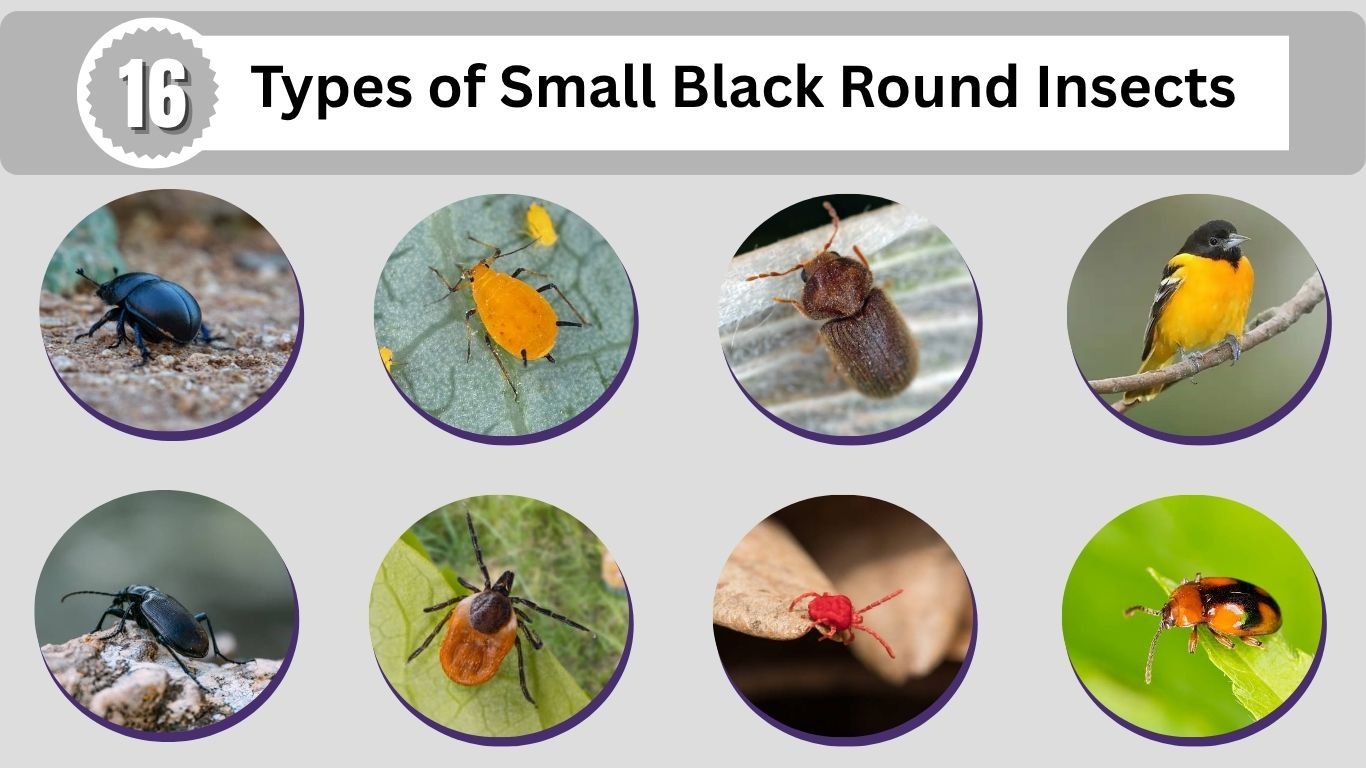
Small black round insects are commonly found in homes, gardens, forests, farms, and storage areas around the world. Some species are harmless scavengers or beneficial predators, while others may damage plants, fabrics, stored foods, or household materials. Their compact round bodies often make them difficult to identify without closely observing their size, behavior, and habitat. From beetles and aphids to ticks and mites, these insects vary greatly in diet and lifestyle. This guide explores 16 types of small black round insects, helping you recognize them through their appearance, habitat, behavior, diet, and lifespan.
1. Carpet Beetle

Carpet Beetles are tiny black round insects commonly found inside homes, especially near carpets, clothing, furniture, and stored fabrics. Although adult beetles are usually harmless, their larvae can damage natural fibers such as wool, silk, leather, and fur. These insects are among the most common household pests and are often noticed near windows, carpets, or fabric storage areas during warm seasons.
Identification
- Small round or oval-shaped black beetle
- Usually measures between 2–5 mm long
- Hard shiny body with smooth wing covers
- Some species may have brown or patterned markings
- Short antennae and six small legs
- Slow-moving adults often found near windows
- Larvae are hairy and brown with bristle-like tails
Habitat and Distribution
Carpet Beetles are commonly found in homes, apartments, museums, warehouses, and storage spaces where natural fibers are present. They prefer dark hidden areas such as carpets, closets, upholstered furniture, air vents, and storage boxes. These insects are distributed worldwide and thrive in both warm and temperate climates. Adult beetles may also live outdoors on flowers and enter homes through windows, doors, and cracks. Infestations are especially common in neglected storage areas where fabric materials remain undisturbed for long periods.
Behavior and Diet
Adult Carpet Beetles mainly feed on pollen and flower nectar outdoors, while larvae are responsible for household damage. Larvae feed on wool, fur, feathers, silk, leather, pet hair, and dead insects. They prefer dark undisturbed environments where food sources are available. Carpet Beetle larvae can create holes in fabrics and damage stored clothing or carpets over time. Adults are attracted to light and are often seen crawling near windowsills. Although they do not bite humans, larval hairs may occasionally cause skin irritation in sensitive individuals.
Lifespan
The lifespan of a Carpet Beetle varies depending on temperature, humidity, and food supply. The complete life cycle from egg to adult may take several months to over a year. Females lay eggs near food sources, and larvae spend the longest portion of the life cycle feeding and growing. Adults generally live only a few weeks after emerging. Warm indoor environments can support continuous breeding and multiple generations throughout the year.
2. Black Ladybug

The Black Ladybug is a small round beetle known for its glossy black body and compact shape. Unlike the more familiar red ladybugs, black species may have red, orange, yellow, or no visible spots at all. These beetles are beneficial insects because they feed on plant pests such as aphids and mites. Black Ladybugs are commonly found in gardens, forests, and agricultural areas where prey insects are abundant.
Identification
- Small round or dome-shaped black beetle
- Smooth shiny wing covers
- Usually measures between 3–8 mm long
- Some species have red, orange, or yellow spots
- Short antennae and six small legs
- Hard shell-like body structure
- Slow-moving when resting but capable of quick flight
Habitat and Distribution
Black Ladybugs are commonly found in gardens, farms, forests, grasslands, and around flowering plants. They prefer environments where aphids, mites, and soft-bodied insects are plentiful. These beetles are distributed across many parts of North America, Europe, Asia, and other temperate regions. During warm seasons, they are often seen on leaves, stems, flowers, and shrubs while searching for prey. In colder weather, groups of ladybugs may gather inside tree bark, rock crevices, or even homes to overwinter safely.
Behavior and Diet
Black Ladybugs are active predators that feed mainly on aphids, scale insects, mites, and small insect eggs. Both adults and larvae help naturally control garden pests, making them highly beneficial for agriculture and home gardening. They are most active during daytime and often move between plants while hunting. When threatened, some species release a yellow defensive fluid with an unpleasant smell to discourage predators. Black Ladybugs are harmless to humans and do not damage plants.
Lifespan
The average lifespan of a Black Ladybug ranges from several months to about one year depending on climate and food availability. Females lay clusters of eggs near pest colonies, and larvae hatch within a short period before beginning to feed. The larvae pass through several growth stages before pupating and emerging as adults. Warm temperatures and abundant prey help support faster development and higher survival rates throughout the active season.
3. Pill Bug

The Pill Bug is a small black or dark gray round insect-like crustacean commonly found in moist environments. Although often called a bug, it is actually more closely related to shrimp and crabs than true insects. Pill Bugs are famous for curling into a tight ball when threatened, which helps protect their soft undersides from predators. They are harmless scavengers that help break down decaying organic material in nature.
Identification
- Small oval or round dark gray to black body
- Segmented armored shell-like exterior
- Usually measures between 8–15 mm long
- Seven pairs of legs beneath the body
- Two short antennae on the head
- Capable of rolling into a tight ball for defense
- Hard plate-like body segments with smooth texture
Habitat and Distribution
Pill Bugs are commonly found in gardens, forests, compost piles, under rocks, logs, flower pots, and damp basements. They prefer moist environments because they require humidity to survive. These creatures are distributed worldwide in temperate and humid regions. Outdoors, they hide in dark damp places during the day and become more active at night. They are especially common in areas with decaying leaves, wood, and rich organic matter.
Behavior and Diet
Pill Bugs are scavengers that feed mainly on decaying plant material, dead leaves, fungi, and rotting wood. Their feeding helps recycle nutrients back into the soil, making them beneficial for ecosystems and composting. When disturbed, they roll into a protective ball to avoid predators and dehydration. Pill Bugs are slow-moving and non-aggressive creatures that do not bite, sting, or damage healthy household structures. In very large numbers, they may occasionally feed on tender seedlings and soft garden plants.
Lifespan
The average lifespan of a Pill Bug ranges from two to five years depending on moisture, temperature, and food availability. Females carry eggs in a special pouch beneath their bodies until young pill bugs hatch. Juveniles molt several times as they grow into adults. Moist environments with abundant decaying organic matter greatly improve survival and reproduction rates throughout their life cycle.
4. Black Vine Weevil

The Black Vine Weevil is a small black round beetle commonly known for damaging garden plants and ornamental shrubs. Adult weevils feed on leaves, while their larvae attack plant roots beneath the soil. These insects are especially troublesome in gardens, nurseries, and greenhouses where they can seriously weaken plants. Their dark color, oval body, and slow movement make them easy to recognize on leaves and containers during nighttime.
Identification
- Small oval-shaped black beetle with hard wing covers
- Rough textured body with tiny grooves or bumps
- Usually measures between 8–12 mm long
- Short snout-like mouthpart typical of weevils
- Six sturdy legs designed for crawling
- Adults cannot fly despite having wing covers
- Cream-colored larvae with brown heads live in soil
Habitat and Distribution
Black Vine Weevils are commonly found in gardens, greenhouses, nurseries, flower beds, and landscaped areas. They prefer ornamental plants such as rhododendrons, azaleas, yews, strawberries, and heucheras. This species is widely distributed across Europe, North America, and many temperate regions worldwide. Adults hide in soil, mulch, or leaf litter during daytime and become active at night. Moist soil and dense vegetation provide ideal conditions for breeding and larval development.
Behavior and Diet
Adult Black Vine Weevils feed on leaf edges, creating distinctive notched or scalloped damage. Larvae live underground and feed on plant roots, crowns, and tubers, often causing more serious damage than adults. Heavy infestations may weaken or kill plants, especially container-grown ornamentals. These beetles are nocturnal and usually remain hidden during daylight hours. Because adults cannot fly, infestations often spread through transported plants and soil. Birds, ground beetles, and parasitic nematodes naturally help control their populations.
Lifespan
The Black Vine Weevil usually completes one generation per year, although development speed depends on climate and temperature. Females lay eggs in soil near host plants, and larvae hatch within weeks before feeding on roots through autumn and winter. Pupation occurs in the soil during spring, followed by adult emergence in late spring or summer. Adults may survive for several months while continuing to feed and reproduce during warm weather.
5. Spider Beetle

The Spider Beetle is a tiny black round beetle named for its spider-like appearance with long legs and a rounded body. These insects are common household pests often found in stored food products, old buildings, warehouses, and nests of birds or rodents. Although small, Spider Beetles can contaminate stored goods and become a nuisance indoors. Their shiny body and unusual shape make them easy to distinguish from other household beetles.
Identification
- Small round or globular black beetle
- Long thin legs resembling a spider
- Shiny smooth body surface
- Usually measures between 1–5 mm long
- Small head with short antennae
- Humped body shape with narrow thorax
- Slow-moving and often active at night
Habitat and Distribution
Spider Beetles are commonly found in homes, food storage areas, warehouses, barns, museums, and old buildings. They prefer dark undisturbed places where dried organic material is available. These beetles are distributed worldwide and are especially common in temperate regions. Indoors, they hide in cracks, cupboards, ceilings, insulation, and stored products. They are often associated with bird nests, rodent nests, grains, spices, dried pet food, and other stored materials.
Behavior and Diet
Spider Beetles are scavengers that feed on dried organic matter including grains, cereals, seeds, spices, dried fruits, pet food, and animal remains. They are mainly nocturnal and search for food during nighttime hours. Because they can survive on many different materials, they adapt well to indoor environments. Spider Beetles are not dangerous to humans and do not bite or sting, but they may contaminate food supplies with waste and shed body parts. Their slow movement and hidden lifestyle often allow infestations to remain unnoticed for long periods.
Lifespan
The lifespan of a Spider Beetle depends on species, temperature, and food availability. The complete life cycle from egg to adult usually takes several weeks to a few months. Females lay eggs near food sources, and larvae feed on dried materials before pupating. Warm indoor conditions may support multiple generations throughout the year, allowing infestations to grow steadily if food remains available.
6. Black Carpet Beetle

The Black Carpet Beetle is a small dark round beetle commonly found inside homes where it damages fabrics, stored products, and natural fibers. Unlike many household pests, the adult beetles are usually harmless, but the larvae can seriously damage carpets, clothing, upholstery, and stored materials. These beetles are among the most destructive carpet beetle species because their larvae feed on a wide variety of animal-based products.
Identification
- Small oval-shaped shiny black beetle
- Usually measures between 3–5 mm long
- Hard smooth wing covers with dark glossy appearance
- Short antennae and six legs
- Adults are fast-moving and attracted to light
- Larvae are brown, elongated, and covered with stiff hairs
- Larval tails often have longer bristle-like hairs
Habitat and Distribution
Black Carpet Beetles are commonly found in homes, apartments, warehouses, museums, and storage areas. They prefer dark hidden places such as carpets, closets, air vents, attics, upholstered furniture, and storage boxes. This species is distributed worldwide and adapts well to indoor environments. Adult beetles may also live outdoors on flowers and enter buildings through open windows and cracks. Infestations are especially common in areas containing wool, fur, feathers, leather, or stored dry food products.
Behavior and Diet
Adult Black Carpet Beetles feed mainly on pollen and nectar outdoors, while larvae are responsible for household damage. Larvae consume wool, silk, fur, feathers, leather, pet hair, dead insects, and stored grains. They prefer dark undisturbed areas where food sources remain available for long periods. Damage often appears as irregular holes in fabrics and carpets. Adults are commonly seen near windows because they are attracted to sunlight. Although these beetles do not bite humans, larval hairs may occasionally trigger allergic skin reactions in sensitive individuals.
Lifespan
The Black Carpet Beetle usually completes its life cycle within several months to over a year depending on temperature and food availability. Females lay eggs near suitable food sources, and larvae spend the longest stage feeding and growing. After pupation, adults emerge and live for only a few weeks. Warm indoor conditions can support continuous breeding and multiple generations throughout the year, especially in undisturbed storage areas.
7. Flea Beetle

The Flea Beetle is a tiny black round beetle known for its strong jumping ability and plant-feeding habits. These insects are common garden and agricultural pests that attack vegetables, flowers, and field crops. Their small size and rapid jumping movements make them difficult to catch or control. Flea Beetles are especially harmful to young seedlings because heavy feeding can quickly weaken or destroy tender plants.
Identification
- Small oval or round shiny black beetle
- Usually measures between 1–4 mm long
- Strong enlarged hind legs for jumping
- Smooth hard wing covers with glossy appearance
- Some species may have metallic or striped markings
- Short antennae and six legs
- Creates tiny round holes in leaves known as “shot-hole” damage
Habitat and Distribution
Flea Beetles are commonly found in gardens, farms, greenhouses, grasslands, and agricultural fields. They prefer areas with abundant leafy plants and vegetables such as cabbage, radish, tomato, potato, eggplant, and mustard crops. These beetles are distributed worldwide, especially in temperate and warm climates. Adults often overwinter in soil, mulch, or plant debris before emerging during spring. They become most active during warm sunny weather when young plants are growing rapidly.
Behavior and Diet
Flea Beetles feed mainly on leaves, chewing many small holes that weaken plant growth and reduce crop quality. Young seedlings are particularly vulnerable because severe feeding can kill them quickly. Larvae of some species feed underground on roots and stems, while adults attack foliage above ground. When disturbed, Flea Beetles jump suddenly using their powerful hind legs, similar to fleas. Birds, spiders, predatory beetles, and parasitic insects naturally help reduce their populations outdoors.
Lifespan
The Flea Beetle generally lives for several weeks to a few months depending on species, climate, and food supply. Females lay eggs in soil near host plants, and larvae hatch before feeding on roots or underground plant tissues. After pupation in the soil, new adults emerge and continue feeding on leaves. Warm climates may support multiple generations during a single growing season, leading to rapid population growth during summer months.
8. Fungus Beetle

The Fungus Beetle is a small black round beetle commonly found in damp environments where fungi and decaying organic matter grow. These beetles play an important ecological role by helping break down rotting wood, mold, and fungi in forests and gardens. Although they may occasionally appear indoors in moist areas, they are generally harmless to humans and household structures.
Identification
- Small oval or round black beetle
- Smooth shiny or slightly textured body
- Usually measures between 2–6 mm long
- Hard wing covers with compact shape
- Short antennae and six legs
- Some species may have brown or reddish markings
- Slow-moving and commonly found near fungi or damp wood
Habitat and Distribution
Fungus Beetles are commonly found in forests, gardens, compost piles, greenhouses, decaying logs, and damp basements. They prefer moist habitats where fungi, mold, and rotting organic material are abundant. These beetles are distributed worldwide and are especially common in humid environments. Outdoors, they are often seen beneath bark, inside decaying wood, or around mushrooms and moldy plant matter. Indoors, they may appear in damp storage areas, crawl spaces, or locations affected by moisture problems.
Behavior and Diet
Fungus Beetles feed mainly on fungi, mold, spores, and decaying organic matter. Their feeding helps recycle nutrients and supports natural decomposition processes in ecosystems. Most species are slow-moving and remain hidden in dark damp areas during daylight hours. Unlike many household pests, Fungus Beetles do not damage healthy wood, fabrics, or living plants. Large indoor populations may indicate excess moisture or mold growth in a building. Natural predators include spiders, centipedes, birds, and predatory beetles.
Lifespan
The lifespan of a Fungus Beetle depends on species, temperature, and moisture conditions. Most species complete their life cycle within several weeks to a few months. Females lay eggs near fungal growth or decaying organic material where larvae hatch and feed before pupating. Warm humid conditions support faster development and larger populations, especially in environments with abundant fungi and moisture.
9. Minute Pirate Bug

The Minute Pirate Bug is a tiny black round insect known for its role as a beneficial predator in gardens and agricultural fields. Despite its small size, it is highly effective at controlling pests such as aphids, mites, thrips, and insect eggs. These insects are commonly found on flowers and crop plants where prey is abundant. Although helpful to gardens, they may occasionally bite humans with a mild pinching sensation.
Identification
- Tiny oval-shaped black insect with compact body
- Usually measures between 2–5 mm long
- Black body with small white or pale wing patches
- Flattened rounded appearance
- Six legs and short antennae
- Fast-moving predator often found on flowers
- Nymphs are wingless and yellow-orange before darkening
Habitat and Distribution
Minute Pirate Bugs are commonly found in gardens, farms, grasslands, orchards, and flowering landscapes. They prefer areas with abundant small insects and flowering plants where prey populations are high. This species is widely distributed across North America and many temperate regions worldwide. They are especially common during warm spring and summer months when crops and flowers attract pest insects. Outdoors, they are often seen on leaves, blossoms, shrubs, and agricultural plants.
Behavior and Diet
These insects are aggressive predators that feed on aphids, thrips, mites, whiteflies, insect eggs, and tiny caterpillars. They use their sharp piercing mouthparts to suck fluids from prey. Minute Pirate Bugs are highly valued in agriculture because they naturally reduce harmful pest populations without damaging plants. They are active hunters during daylight hours and move quickly between flowers and leaves. Although harmless overall, they may occasionally bite exposed human skin, causing temporary irritation similar to a tiny pinprick.
Lifespan
The Minute Pirate Bug generally lives several weeks to a few months depending on climate and prey availability. Females lay eggs inside plant tissues, and young nymphs hatch before gradually developing into adults through several molting stages. Warm temperatures and abundant prey help support faster growth and multiple generations throughout the growing season.
10. Clover Mite

The Clover Mite is a tiny black or dark reddish round mite commonly found around lawns, gardens, and sunny building walls. Although extremely small, large numbers may invade homes during warm weather, especially in spring and autumn. These mites are harmless to humans and pets because they do not bite or spread diseases. However, crushed mites can leave reddish stains on walls, curtains, carpets, and furniture.
Identification
- Tiny round or oval-shaped dark body
- Usually dark red, brown, or nearly black in appearance
- Measures less than 1 mm long
- Very long front pair of legs often mistaken for antennae
- Soft-bodied with eight legs like other mites
- Slow-moving and often seen in large groups
- Leaves red stains when crushed
Habitat and Distribution
Clover Mites are commonly found in lawns, gardens, flower beds, and around building foundations. They prefer sunny environments with abundant grass, clover, and other low-growing plants. These mites are distributed worldwide and are especially common in temperate climates. During cooler parts of spring and autumn, they may enter homes through cracks around windows, doors, and foundations. Indoors, they are often seen crawling on walls, windowsills, curtains, and furniture near sunny areas.
Behavior and Diet
Clover Mites feed mainly on grasses, clover, lawn plants, and ornamental vegetation by sucking plant fluids. Their feeding rarely causes serious plant damage, although heavy populations may create silvery streaks on leaves. These mites reproduce rapidly and may form large visible colonies around buildings. They are harmless to humans and do not bite, sting, or infest food supplies. Because they are attracted to warmth and sunlight, indoor invasions commonly occur on sunny sides of buildings.
Lifespan
The Clover Mite has a relatively short life cycle that may be completed within several weeks under favorable conditions. Females can reproduce without mating, allowing populations to grow quickly during mild temperatures. Eggs are often laid in cracks, bark, or protected outdoor surfaces. Multiple generations may occur during spring and autumn, while extremely hot summer temperatures often reduce activity and survival rates.
11. Black Tick

The Black Tick is a small dark round parasite commonly found in forests, grassy fields, gardens, and areas with wildlife. It survives by attaching to animals or humans and feeding on blood. Some species, such as the blacklegged tick, are known for transmitting diseases including Lyme disease. Because of their tiny size and dark coloration, ticks can be difficult to notice until attached to skin or fur.
Identification
- Small flat oval-shaped dark brown or black body
- Usually measures between 1–5 mm before feeding
- Enlarges significantly after feeding on blood
- Eight legs like other arachnids
- Hard outer body surface in many species
- Small head with piercing mouthparts
- Slow-moving when crawling on surfaces or skin
Habitat and Distribution
Black Ticks are commonly found in forests, grasslands, gardens, leaf litter, and areas with deer, rodents, birds, or pets. They prefer humid environments with tall grass and shaded vegetation where hosts frequently pass by. These ticks are distributed across North America, Europe, and many temperate regions worldwide. They are most active during spring, summer, and early autumn when temperatures are mild and humidity is high. Ticks often wait on grass blades or shrubs until a host brushes past.
Behavior and Diet
Ticks are parasitic feeders that survive by attaching to mammals, birds, reptiles, or humans and consuming blood. They detect hosts through body heat, movement, and carbon dioxide. After attaching, they may remain feeding for several days before dropping off. Some species can transmit bacteria, viruses, and parasites that cause diseases in humans and animals. Black Ticks are not capable of jumping or flying and usually crawl onto hosts from vegetation.
Lifespan
The Black Tick usually completes its life cycle over two to three years depending on species and environmental conditions. Eggs hatch into larvae, which feed before developing into nymphs and later adults. Each stage typically requires a blood meal before molting into the next phase. Cold temperatures, humidity, and host availability strongly influence survival and development rates throughout the life cycle.
12. Shiny Spider Beetle

The Shiny Spider Beetle is a tiny black round beetle known for its glossy body and long spider-like legs. It is commonly found in stored food areas, old buildings, warehouses, and animal nesting sites. Although harmless to humans, it can become a nuisance by contaminating stored products. Its unusual shape often causes people to mistake it for a small spider rather than a beetle.
Identification
- Small round shiny black or dark reddish body
- Long thin legs resembling a spider
- Glossy smooth surface with bulb-like abdomen
- Usually measures between 1–4 mm long
- Small head with short antennae
- Humped body shape with narrow thorax
- Slow-moving and mostly active at night
Habitat and Distribution
Shiny Spider Beetles are commonly found in homes, food storage rooms, barns, warehouses, museums, and old buildings. They prefer dark undisturbed areas containing dried organic material. These beetles are distributed worldwide and thrive in indoor environments with stored grains, seeds, pet food, feathers, or animal nests. They often hide in cracks, cupboards, insulation, ceilings, and storage containers where food remains available for long periods.
Behavior and Diet
These beetles are scavengers that feed on a wide variety of dry organic materials including grains, cereals, dried fruits, spices, pet food, dead insects, and rodent waste. They are mainly nocturnal and search for food during nighttime hours. Shiny Spider Beetles do not bite or sting humans, but infestations may contaminate stored food products. Because of their ability to survive on many materials, they can persist unnoticed indoors for long periods if food sources remain available.
Lifespan
The Shiny Spider Beetle usually completes its life cycle within several weeks to a few months depending on temperature and food availability. Females lay eggs near suitable food sources, and larvae hatch before feeding and pupating in hidden areas. Warm indoor conditions support faster development and may allow multiple generations throughout the year.
13. Drugstore Beetle

The Drugstore Beetle is a tiny black or dark brown round beetle commonly found in stored food products, spices, medicines, and dried plant materials. It is a well-known pantry pest capable of infesting a wide range of household goods. Despite its small size, large infestations can contaminate food and stored products. The beetle received its name because it was historically found feeding on medicinal herbs and pharmacy supplies.
Identification
- Small oval or cylindrical dark brown to black beetle
- Usually measures between 2–3.5 mm long
- Hard smooth body with fine hairs
- Head hidden beneath a hood-like thorax
- Six short legs and small antennae
- Adults are capable of flight
- Larvae are tiny white grubs with brown heads
Habitat and Distribution
Drugstore Beetles are commonly found in kitchens, food storage areas, warehouses, grocery stores, and old buildings. They infest dried foods such as flour, cereal, spices, pasta, grains, pet food, tea, tobacco, and herbs. This species is distributed worldwide and thrives in warm indoor environments. Infestations often begin when contaminated products are brought indoors. These beetles prefer dark hidden areas including cupboards, pantry shelves, storage containers, and cracks near food supplies.
Behavior and Diet
Adult Drugstore Beetles feed on a wide variety of dried organic materials, while larvae cause most of the product damage. They are capable of boring through cardboard, paper, and thin packaging materials to reach food sources. These beetles are active fliers and are often attracted to light during nighttime. Although harmless to humans, they can contaminate stored products with waste, shed skins, and dead insects. Their ability to survive on many materials makes them difficult to eliminate without proper storage and cleaning.
Lifespan
The Drugstore Beetle usually completes its life cycle within one to four months depending on temperature, humidity, and food supply. Females lay eggs directly on food materials, and larvae hatch before feeding and developing into pupae. Warm conditions allow rapid reproduction and multiple generations throughout the year indoors. Cooler temperatures slow their growth and reduce infestation levels.
14. Ground Beetle

The Ground Beetle is a small black round or elongated beetle commonly found in gardens, forests, farms, and beneath rocks or logs. Most species are beneficial predators that help control harmful insects such as caterpillars, slugs, and larvae. These beetles are fast runners and usually remain hidden during the day. Although their appearance may seem intimidating, Ground Beetles are harmless to humans and valuable for natural pest control.
Identification
- Small to medium-sized shiny black beetle
- Oval or slightly elongated hard body
- Usually measures between 5–25 mm long
- Strong legs designed for fast running
- Long antennae and powerful jaws
- Smooth or grooved wing covers
- Mostly active during nighttime hours
Habitat and Distribution
Ground Beetles are commonly found in gardens, forests, grasslands, farms, compost piles, and beneath stones or leaf litter. They prefer moist shaded environments where prey insects are abundant. These beetles are distributed worldwide and thrive in both rural and urban habitats. During daytime, they hide under logs, mulch, bark, and debris to avoid heat and predators. They become most active during spring and summer when insect populations increase.
Behavior and Diet
Most Ground Beetles are active predators that feed on caterpillars, slugs, insect eggs, larvae, worms, and other small invertebrates. They hunt mainly at night and rely on speed and strong jaws to capture prey. Some species may also consume seeds or decaying organic matter. Ground Beetles are beneficial insects because they naturally reduce populations of agricultural and garden pests. When threatened, certain species may release a strong-smelling defensive chemical to discourage predators.
Lifespan
The lifespan of a Ground Beetle varies by species, climate, and food availability. Many species live for one to three years, spending winter hidden underground or beneath debris. Females lay eggs in soil, and larvae hatch before feeding on small insects and other invertebrates. After pupation, adults emerge and continue hunting throughout warm seasons. Moist environments and abundant prey greatly improve survival and reproductive success.
15. Black Bean Aphid

The Black Bean Aphid is a tiny black round insect commonly found on beans, vegetables, flowers, and ornamental plants. These sap-feeding pests often gather in dense clusters on stems and leaf undersides, where they weaken plants and reduce growth. Large infestations can quickly spread through gardens and agricultural crops. Their dark rounded bodies and sticky honeydew deposits make them easy to identify on affected plants.
Identification
- Tiny soft-bodied black or dark green insect
- Rounded or pear-shaped body structure
- Usually measures between 1–3 mm long
- Long thin legs and antennae
- Often found clustered together on stems and leaves
- Winged and wingless forms may both appear
- Produces sticky honeydew on plant surfaces
Habitat and Distribution
Black Bean Aphids are commonly found in gardens, farms, greenhouses, and agricultural fields. They prefer bean plants but also infest spinach, beetroot, dock, nasturtium, and many ornamental flowers. This species is widely distributed across Europe, North America, Asia, and other temperate regions. Aphids thrive in warm weather with abundant plant growth and are most active during spring and summer. They are usually seen on tender shoots, flower buds, and the undersides of leaves where plant sap is richest.
Behavior and Diet
These aphids feed by piercing plant tissues and sucking sap from leaves and stems. Their feeding causes curling leaves, yellowing, weakened growth, and reduced crop production. Black Bean Aphids also produce honeydew, which attracts ants and encourages black sooty mold growth on plants. They reproduce rapidly and can form large colonies within a short period. Natural predators such as ladybugs, lacewings, hoverflies, and parasitic wasps help control their populations naturally in gardens and farms.
Lifespan
The Black Bean Aphid has a short but highly productive life cycle. Individual aphids may live only a few weeks, but colonies grow rapidly because females can reproduce without mating during warm seasons. Multiple generations develop each year, especially in mild climates with abundant host plants. Cooler autumn temperatures usually reduce activity, while overwintering eggs survive until spring returns.
16. Smooth Black Stink Bug

The Smooth Black Stink Bug is a small black round insect recognized for its shield-shaped body and glossy dark appearance. It belongs to the stink bug family and is commonly found in gardens, farms, forests, and grassy areas. Like other stink bugs, it produces a strong odor when disturbed as a defense mechanism against predators. Although some species may feed on plants, others help control harmful insects.
Identification
- Small shield-shaped shiny black body
- Smooth rounded appearance with hard outer shell
- Usually measures between 10–15 mm long
- Six legs and long segmented antennae
- Broad flattened body with pointed shoulders
- Produces a strong odor when threatened
- Winged adults capable of flight
Habitat and Distribution
Smooth Black Stink Bugs are commonly found in gardens, agricultural fields, forests, meadows, and around shrubs or crop plants. They prefer warm environments where food sources are abundant. This species is distributed across many temperate and tropical regions worldwide depending on the exact species type. During cooler months, adults may hide beneath bark, leaf litter, rocks, or occasionally enter buildings for shelter. They are most active during spring and summer when vegetation and insect populations increase.
Behavior and Diet
These insects feed using piercing mouthparts that allow them to suck fluids from plants, seeds, fruits, or occasionally small insects depending on the species. Some stink bugs are considered agricultural pests because their feeding can damage crops and fruits. When disturbed or threatened, Smooth Black Stink Bugs release a foul-smelling chemical from glands on their bodies to discourage predators. They are slow-moving insects that spend much of their time resting on leaves, stems, or fruit surfaces during daylight hours.
Lifespan
The Smooth Black Stink Bug generally lives several months to about one year depending on climate and environmental conditions. Females lay clusters of eggs on plant leaves, and young nymphs hatch before passing through several molting stages to become adults. Warm temperatures and abundant food support faster growth and multiple generations during the active season. Cooler weather slows development and encourages adults to seek protected overwintering locations.
FAQs
Are small black round insects harmful to humans?
Most small black round insects are harmless to humans and do not bite or sting. However, some species such as ticks may spread diseases, while pantry pests like Drugstore Beetles can contaminate stored food products.
Why are black round insects found inside homes?
Many of these insects enter homes searching for food, moisture, warmth, or shelter. Carpet Beetles, Spider Beetles, and Drugstore Beetles are especially common indoors because they feed on stored materials, fabrics, or dry foods.
How can I identify a black round insect?
Identification usually depends on body shape, size, habitat, movement, and feeding behavior. Some insects are shiny and smooth like beetles, while others have shield-shaped or segmented bodies. Looking closely at markings and behavior helps narrow down the species.
Are all black round beetles considered pests?
No, many black round beetles are beneficial. Ground Beetles and Black Ladybugs help control harmful garden pests by feeding on insects such as aphids, caterpillars, and larvae. Only some species damage plants, fabrics, or stored food.
How can I prevent infestations of black round insects?
Keeping homes clean, storing food in sealed containers, reducing indoor moisture, and vacuuming regularly can help prevent infestations. Outdoors, removing plant debris and maintaining healthy gardens can reduce populations of harmful species naturally.