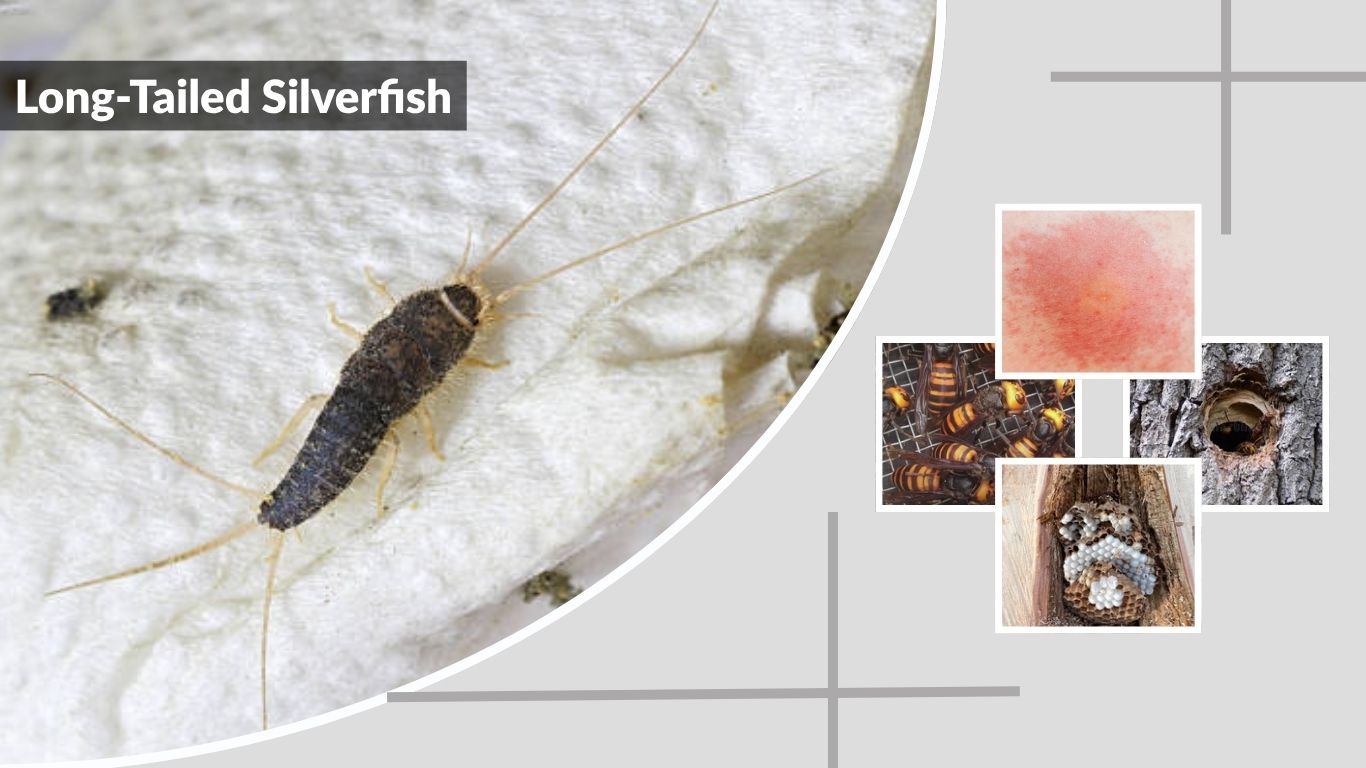
Long-tailed silverfish are increasingly becoming a common household pest in many parts of the world. Although they resemble traditional silverfish, they differ in appearance, behavior, habitat preferences, and their ability to survive in a wider range of environmental conditions. These insects are known for damaging paper products, books, wallpaper, and stored items. Because infestations can grow unnoticed for long periods, understanding how to identify long-tailed silverfish, where they hide, and why they enter homes is essential for effective prevention and control.
What Is a Long-Tailed Silverfish?
The long-tailed silverfish (Ctenolepisma longicaudata) is a wingless insect belonging to the order Zygentoma. It is closely related to the common silverfish but has become a growing concern in homes, offices, museums, and libraries due to its ability to thrive in a variety of indoor environments. Unlike traditional silverfish, it can survive in drier conditions, making infestations more widespread and difficult to control.
Scientific Classification
Long-tailed silverfish belong to the family Lepismatidae and are considered primitive insects that have existed for millions of years. Despite their ancient origins, they remain highly adaptable and successful in modern buildings.
Long-Tailed Silverfish Facts
Several characteristics help identify these insects:
- Long antennae
- Three extended tail filaments
- Gray to brown coloration
- Wingless body
- Fast-running movement
Why Are They Called Long-Tailed Silverfish?
Their name comes from the three elongated appendages extending from the rear of the body. These tail-like structures are noticeably longer than those of common silverfish, making identification easier when viewed closely.
Long-Tailed Silverfish Identification
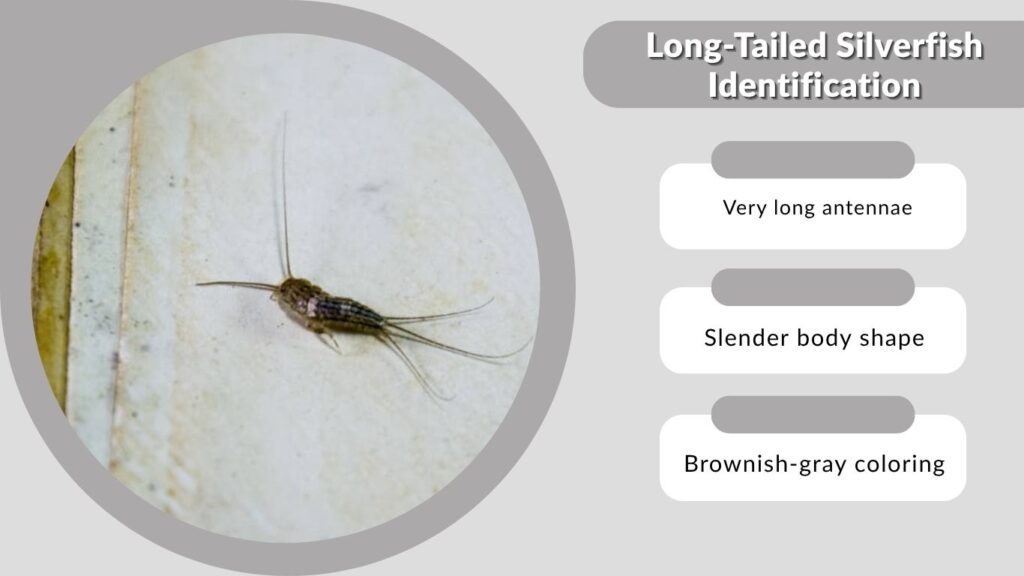
Proper identification is the first step toward controlling an infestation. Long-tailed silverfish are often mistaken for ordinary silverfish because both species share similar body shapes and behaviors. However, several physical characteristics help distinguish them. Careful observation of size, coloration, and tail length can help homeowners determine which species is present and choose the most effective management approach.
What Does a Long-Tailed Silverfish Look Like?
Adults typically measure between 0.5 and 0.75 inches in length, excluding their antennae and tail filaments. Their bodies are flattened and covered with tiny scales that create a gray or brown appearance.
Key Identification Features
Important traits include:
- Longer tails than common silverfish
- Very long antennae
- Slender body shape
- Brownish-gray coloring
- Quick, erratic movement
How to Identify Them Indoors
Long-tailed silverfish are often discovered near paper products, storage boxes, bookshelves, and wall voids. Because they avoid light, sightings usually occur during nighttime hours or when hidden areas are disturbed.
Silverfish vs Long-Tailed Silverfish
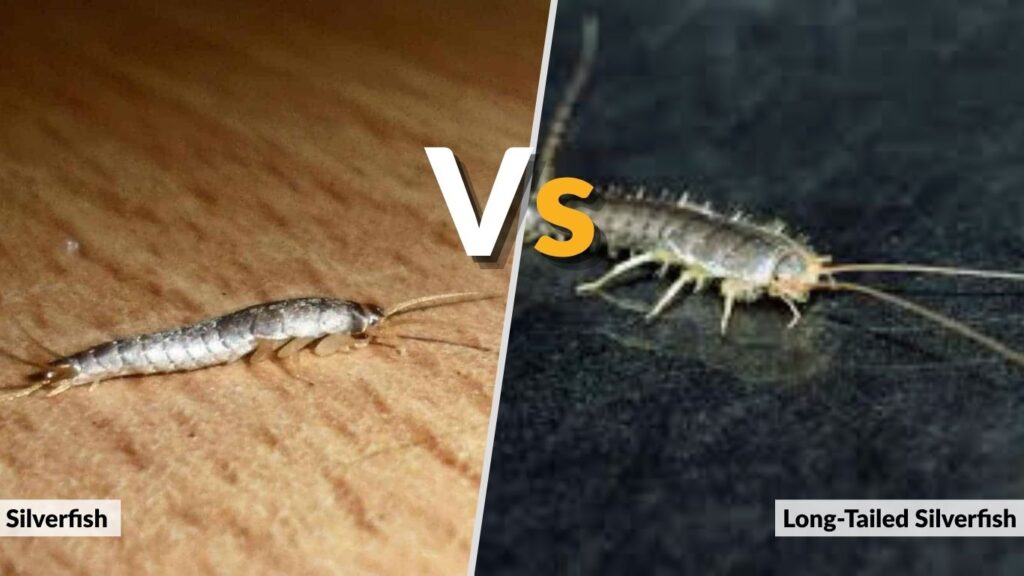
Although they belong to the same insect order, several differences separate common silverfish from long-tailed silverfish. Understanding these distinctions can help homeowners correctly identify infestations and better understand why certain control strategies may be necessary.
Physical Differences
Long-tailed silverfish generally have longer antennae and tail filaments than common silverfish. They also tend to appear slightly darker and larger in many cases.
Habitat Differences
Traditional silverfish strongly prefer humid environments such as bathrooms and basements. Long-tailed silverfish can survive in both humid and relatively dry conditions, allowing them to occupy a much wider range of indoor spaces.
Behavior Differences
Several behavioral differences exist:
- Long-tailed silverfish tolerate lower humidity.
- They spread more easily through buildings.
- They often inhabit wall voids.
- They can survive longer without moisture.
- They frequently infest storage areas.
These characteristics contribute to their increasing presence in homes and commercial buildings.
Long-Tailed Silverfish Habitat
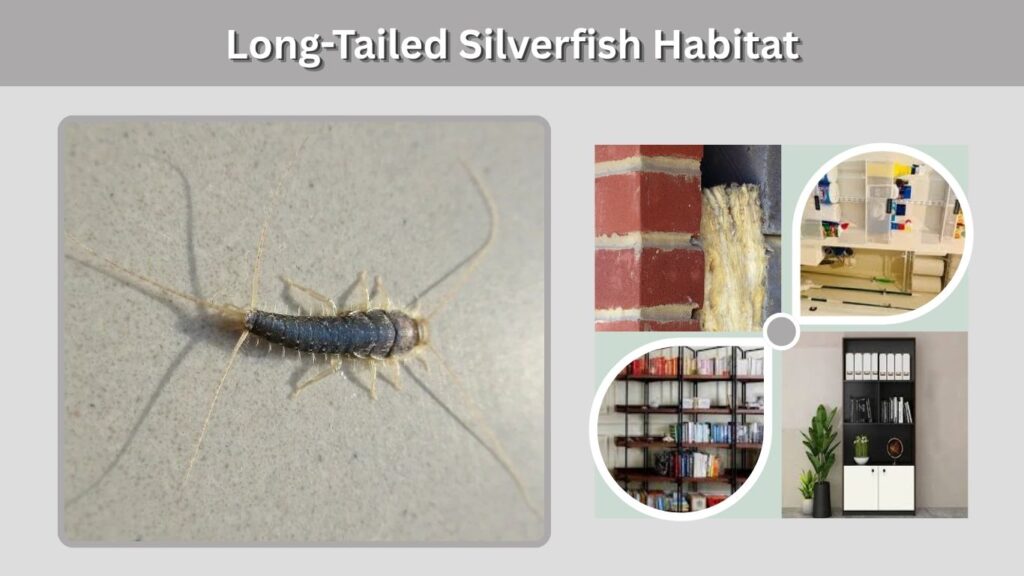
Long-tailed silverfish are highly adaptable insects capable of living in numerous indoor environments. Unlike common silverfish, which require high humidity levels, this species can survive in drier conditions. Their ability to exploit a wide range of hiding places makes infestations difficult to detect until populations become well established.
Where Do Long-Tailed Silverfish Live?
These insects commonly occupy homes, offices, warehouses, libraries, museums, and apartment buildings. They prefer dark, undisturbed locations that provide shelter and access to food sources.
Long-Tailed Silverfish in Houses
Within homes, they often hide behind walls, beneath flooring, inside storage areas, and around insulation. Because they are nocturnal, homeowners may remain unaware of their presence for extended periods.
Common Hiding Places
Long-tailed silverfish are frequently found in:
- Attics
- Basements
- Wall cavities
- Storage rooms
- Bookshelves
- Closets
- Utility spaces
These locations provide protection from disturbance while allowing easy access to materials they consume.
Long-Tailed Silverfish Reproduction
One reason long-tailed silverfish have become increasingly problematic is their ability to reproduce efficiently indoors. Their reproductive success allows populations to grow gradually over time, often without obvious warning signs. Understanding their life cycle helps explain why infestations can persist for extended periods and why early intervention is important.
Life Cycle
Long-tailed silverfish undergo gradual development rather than complete metamorphosis. Young insects resemble smaller versions of adults and continue molting as they mature.
The Role of Humidity
Although they tolerate dry conditions better than common silverfish, humidity still influences survival and reproduction. Moderate moisture levels help support development and increase the likelihood of population growth within buildings.
Are Long-Tailed Silverfish Dangerous?
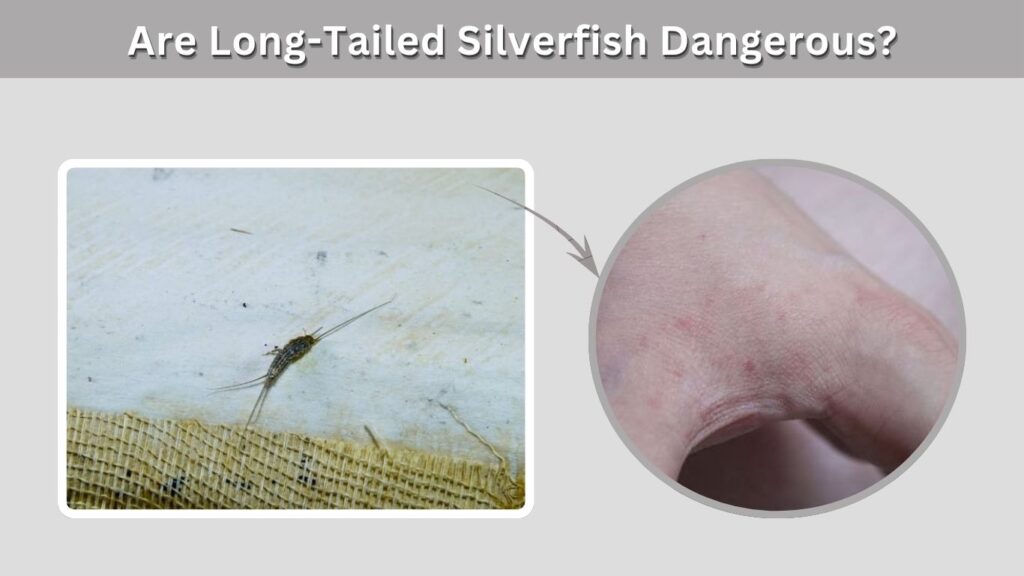
Many homeowners become concerned when they discover long-tailed silverfish indoors. Fortunately, these insects are not considered dangerous to humans or pets. However, they can become a serious nuisance due to their ability to spread throughout buildings and damage valuable materials. While they do not transmit diseases or cause structural damage, their feeding habits can lead to costly losses in homes, libraries, archives, and storage areas.
Do Long-Tailed Silverfish Bite?
Long-tailed silverfish do not bite humans. Their mouthparts are designed for feeding on carbohydrates, starches, and organic materials rather than piercing skin. They are generally harmless to people and avoid direct contact whenever possible.
Are They Poisonous?
These insects are not poisonous and do not produce venom. They pose no toxic threat to humans, pets, or household environments.
Risks to Humans and Pets
Although they are not dangerous, infestations may create concerns due to contamination of stored items and the damage they cause to personal belongings. Large populations can become difficult to manage without proper control measures.
What Damage Do Long-Tailed Silverfish Cause?
The primary concern associated with long-tailed silverfish is their ability to feed on a wide range of household materials. Because they can survive in hidden locations for extended periods, damage often goes unnoticed until it becomes significant. Their feeding habits make them especially problematic in homes containing books, documents, and stored paper products.
Damage to Household Items
Long-tailed silverfish commonly attack:
- Books
- Wallpaper
- Cardboard boxes
- Photographs
- Clothing containing natural fibers
Their feeding leaves behind irregular holes, scraping marks, and surface damage that can permanently affect valuable items.
Damage to Libraries and Archives
Museums, libraries, and archives face particular risks because long-tailed silverfish consume paper, adhesives, and other cellulose-based materials. Historic documents and rare books may suffer irreversible damage if infestations remain undetected.
Signs of an Infestation
Several indicators may suggest the presence of long-tailed silverfish:
- Shed skins
- Small feeding holes
- Yellowish stains
- Live insects at night
- Damage to paper products
Regular inspections can help identify infestations before populations become established.
How to Get Rid of Long-Tailed Silverfish
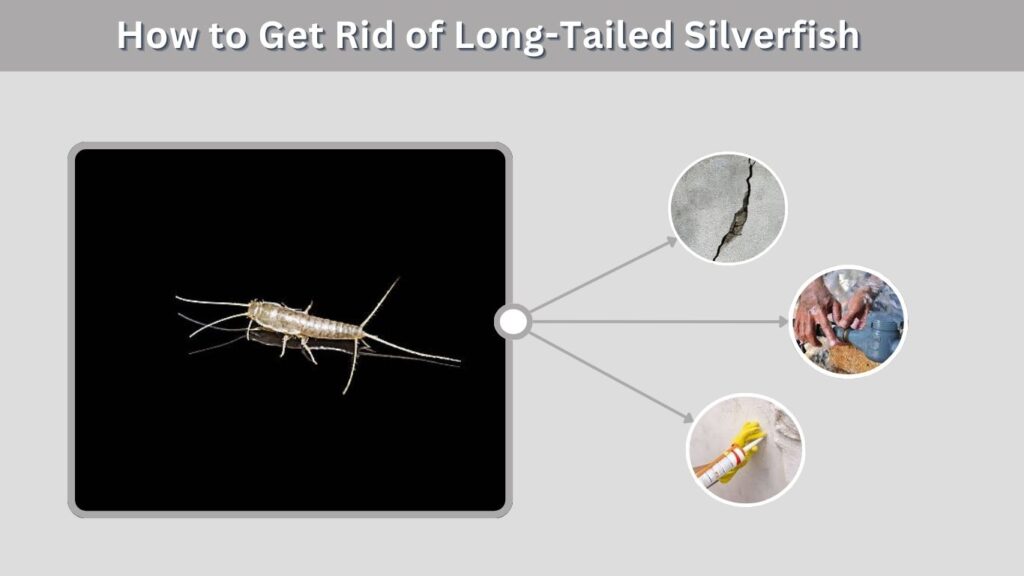
Effective control requires a combination of sanitation, environmental management, and monitoring. Because these insects hide in inaccessible locations, eliminating food sources and reducing favorable conditions are often more successful than relying on a single treatment method.
Reduce Food Sources
Removing materials that support silverfish populations can help reduce infestations. Important steps include organizing storage areas, reducing clutter, and protecting paper products from exposure.
Lower Humidity Levels
Although long-tailed silverfish tolerate drier conditions than common silverfish, moisture management remains beneficial. Dehumidifiers, proper ventilation, and leak repairs can help make indoor environments less attractive.
Seal Entry Points
Cracks, gaps, and openings around walls, floors, and utility lines may provide access to hidden spaces. Sealing these areas can help limit movement throughout the building.
Glue Traps and Sticky Traps
Monitoring devices are frequently used to detect and reduce long-tailed silverfish populations. While traps rarely eliminate large infestations on their own, they can help identify activity patterns and determine whether control efforts are working.
Are Glue Traps Effective?
Glue traps can capture individual insects as they travel through infested areas. Placement near walls, storage spaces, and known hiding locations often produces the best results.
Benefits of Sticky Traps
Sticky traps provide several advantages:
- Easy monitoring
- Non-toxic control
- Early infestation detection
- Population tracking
- Low maintenance
Regular inspection of traps can reveal whether additional control measures are necessary.
When Professional Treatment May Be Needed
Severe infestations often require professional pest management services. Experts can locate hidden populations, identify entry points, and recommend targeted treatment strategies based on the severity of the problem.
Prevention Tips
Preventing long-tailed silverfish is generally easier than eliminating an established infestation. Consistent housekeeping and environmental management significantly reduce the likelihood of future problems.
Moisture Control
Maintaining appropriate humidity levels remains one of the most effective preventive measures. Proper ventilation and prompt repair of leaks can help discourage insect activity.
Storage Recommendations
To reduce infestation risks:
- Store documents in sealed containers
- Organize cluttered areas
- Protect books and papers
- Inspect storage spaces regularly
- Keep areas clean and dry
Ongoing Monitoring
Periodic inspections and the use of monitoring traps help detect infestations early before populations become difficult to control.
FAQs
Why Are Long-Tailed Silverfish Becoming More Common?
Long-tailed silverfish are spreading in many regions because they can survive in a wider range of indoor conditions than common silverfish. Their ability to tolerate lower humidity levels allows them to infest homes, apartments, offices, and commercial buildings more easily.
Can Long-Tailed Silverfish Live in Dry Homes?
Yes. Unlike common silverfish, long-tailed silverfish can survive and reproduce in relatively dry environments. This adaptability allows them to thrive in rooms that would normally be unsuitable for traditional silverfish species.
How Long Do Long-Tailed Silverfish Live?
Long-tailed silverfish have a relatively long lifespan compared to many household insects. Under favorable conditions, they may live for several years while continuing to molt and grow throughout their lives.
What Attracts Long-Tailed Silverfish Indoors?
These insects are attracted to food sources such as paper, cardboard, books, wallpaper paste, natural fibers, and stored materials. They also seek dark hiding places where they can remain undisturbed during the day.
Do Long-Tailed Silverfish Damage Books and Documents?
Yes. Long-tailed silverfish can feed on paper, glue, and book bindings, causing holes, scraping marks, and other forms of deterioration. Libraries, archives, and homeowners with large collections of books may be particularly vulnerable to damage from infestations.