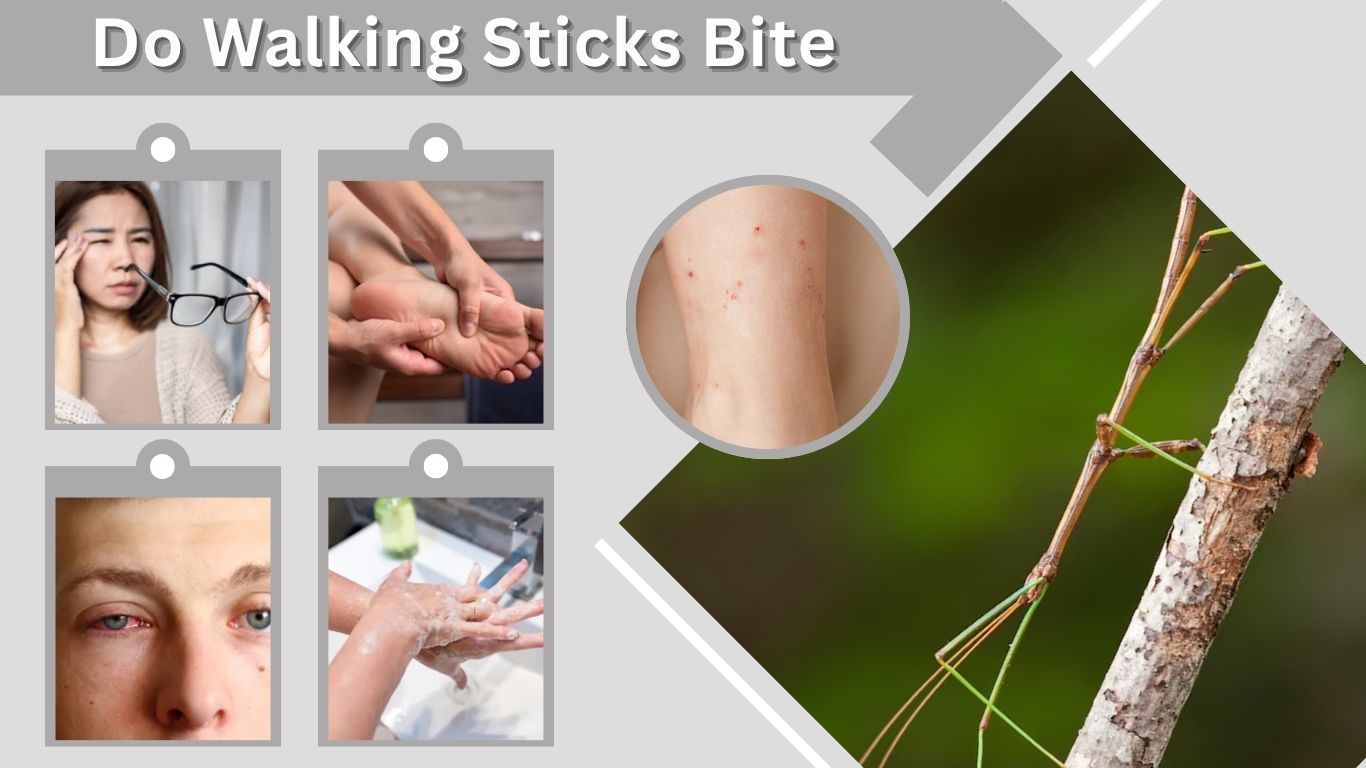
Walking sticks, also called stick insects or stick bugs, generally do not bite humans. They are slow-moving plant eaters with chewing mouthparts designed for feeding on leaves rather than piercing skin. Most species are harmless, nonvenomous, and unable to sting. However, large walking sticks may grip or scratch with their legs, while a few species—including the two-striped walking stick—can spray an irritating defensive chemical when threatened.
Can Walking Sticks Bite Humans?
Walking sticks possess chewing mouthparts, but they normally use them only to consume foliage. They do not feed on blood, hunt animals, or intentionally attack people. Texas A&M describes giant walking sticks as completely harmless, even though their feet may cling tightly to skin or clothing when handled.
A frightened walking stick usually relies on camouflage, remains motionless, drops from a branch, or attempts to escape. Biting is not considered a normal defense for common North American species.
| Question | Typical answer |
| Do walking sticks bite? | Generally no |
| Do they sting? | No |
| Are they venomous? | No |
| Can their legs scratch? | Sometimes |
| Can some species spray chemicals? | Yes |
| Are they dangerous to humans? | Usually not |
Do Walking Sticks Bite or Pinch?
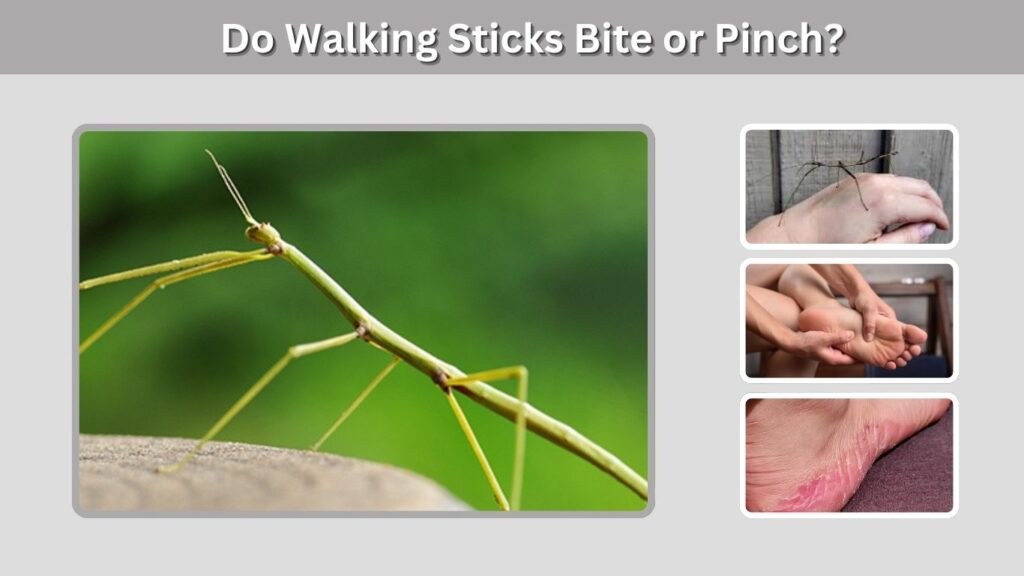
Although walking sticks normally do not bite, handling a large individual may feel uncomfortable. Their hooked feet are designed to hold onto branches, so an insect may grip firmly when placed on a hand or arm. Some species also have small spines along their legs that can scratch or create a pinching sensation.
Why Handling May Feel Like a Bite
A person may interpret the following sensations as a walking-stick bite:
- Sharp feet gripping the skin
- Leg spines rubbing against a finger
- Claws catching on body hair
- A scratch caused while removing the insect
- Irritation from a defensive secretion
These reactions are mechanical or chemical rather than true feeding bites. Avoid pulling an insect away forcefully because this can injure its fragile legs and scratch your skin.
Do Walking Sticks Sting?
Walking sticks do not have stingers. The pointed structures sometimes visible on the rear of a female are associated with reproduction and egg laying, not injecting venom.
They are also not poisonous to touch under ordinary circumstances. Nevertheless, some species have chemical defenses that make close handling unwise. The main concern is not a bite or sting but defensive liquid reaching the eyes, nose, or mouth.
Two-Striped Walking Stick Defensive Spray
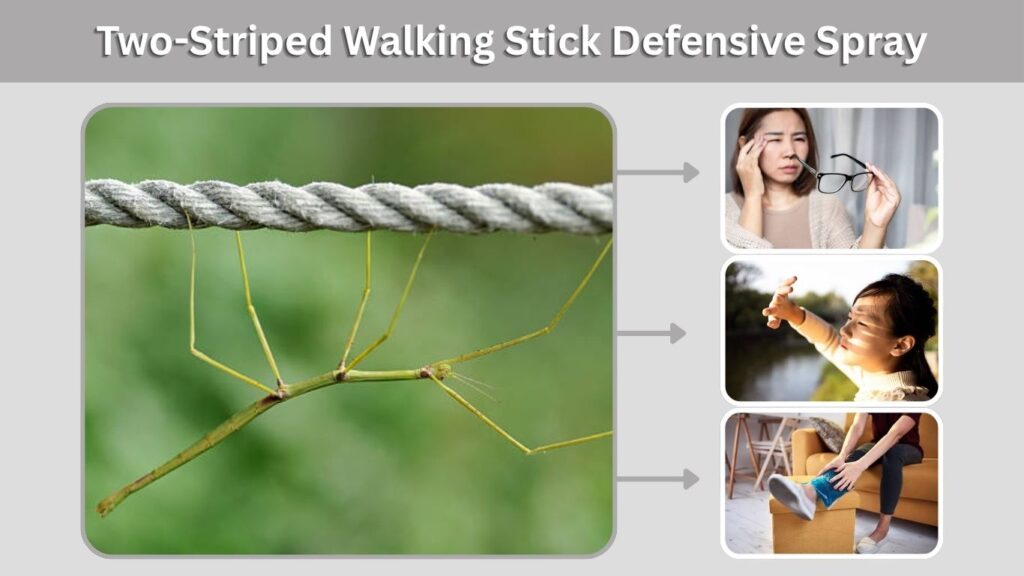
The southern two-striped walking stick, Anisomorpha buprestoides, is an important exception to the idea that all stick insects are completely harmless. It occurs primarily in the southeastern United States and has two pale stripes running along its dark body.
How the Spray Works
This species has defensive glands behind its head. When disturbed, it can direct a strong-smelling secretion toward a perceived predator. The liquid is painfully irritating to the eyes and other mucous membranes.
Mississippi State University reports that the insect may spray the substance approximately 15 inches or farther. This means that holding one near your face can be risky even when the insect never touches you.
Possible Symptoms
Exposure may cause:
- Immediate burning or eye pain
- Redness and watering
- Sensitivity to light
- Blurred vision
- Irritation of the nose or mouth
- Temporary difficulty keeping the eye open
A published medical report documented chemical conjunctivitis after exposure to the spray of a two-striped walking stick.
Are Giant Walking Sticks Dangerous?
Giant walking sticks can appear intimidating because some reach several inches in length. The giant walking stick found in Texas may approach seven inches, making it one of the longest insects in the United States. Despite its size, it is considered harmless to people.
A large species may hold tightly with its feet or push against your hand while attempting to escape. That behavior can feel stronger than expected, but it should not be confused with a venomous bite.
Do Northern Walking Sticks Bite?
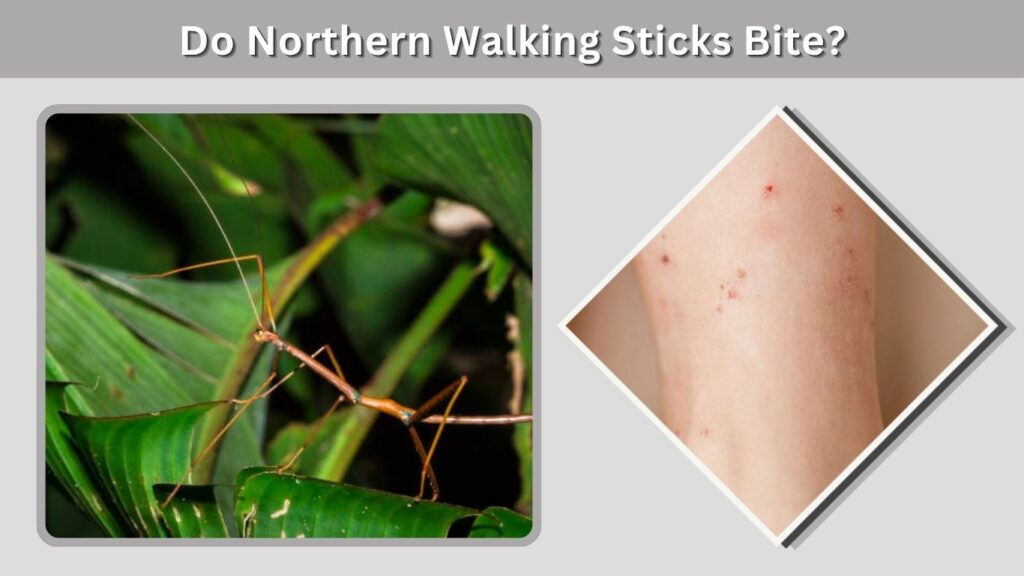
The northern or common walking stick, Diapheromera femorata, is a slender, twig-like species found across much of North America. It feeds on the leaves of trees and shrubs and is not considered a biting or stinging threat to humans.
When discovered around a home, it generally wandered indoors accidentally or arrived on a plant. There is normally no need for insecticide. It can be moved outdoors using a container, sheet of paper, or nearby twig.
Can Leaf Insects Bite?
Leaf insects belong to the same broader group as walking sticks. Like their stick-shaped relatives, they primarily feed on foliage and depend heavily on camouflage for protection. They are not known for biting people.
Large or spiny species may grip defensively when handled, and some phasmids can release unpleasant or irritating chemicals. Therefore, unfamiliar leaf and stick insects should be observed without placing them close to the face.
How to Handle a Walking Stick Safely
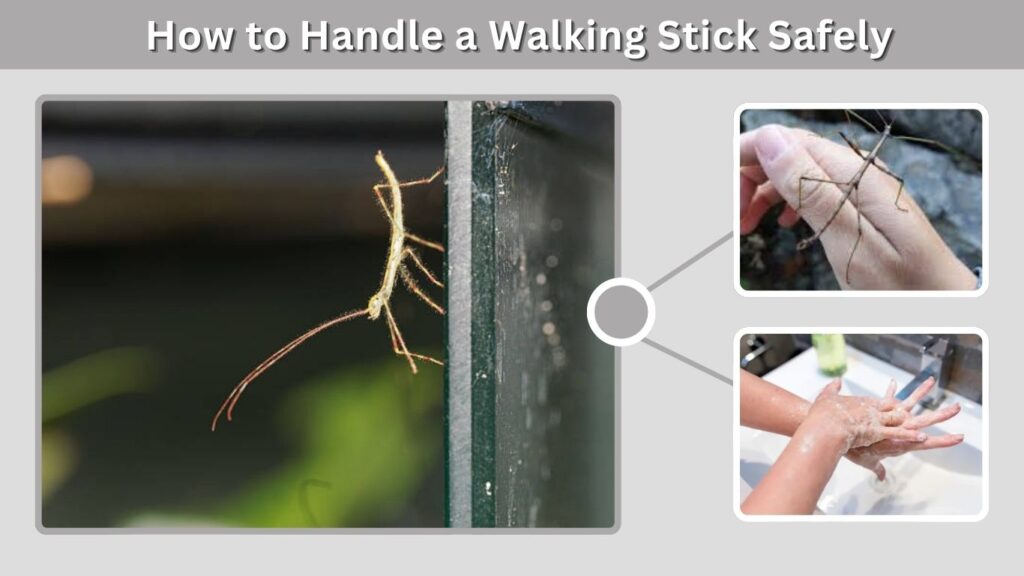
Most walking sticks can be observed safely when treated gently. Their legs can detach or break easily, so avoid grabbing them by a single limb.
Follow these precautions:
- Allow the insect to walk onto a twig or open hand.
- Do not squeeze its body.
- Keep it away from your eyes and face.
- Avoid handling brightly marked or two-striped species.
- Wash your hands after contact.
- Supervise children and pets around unfamiliar insects.
- Return wild walking sticks to nearby vegetation.
Using a cup and stiff piece of paper is the safest way to move one without direct contact.
What to Do After Contact
A walking stick gripping or scratching the skin rarely requires more than basic cleaning. Wash the area with soap and water and avoid rubbing it if mild irritation develops.
If Defensive Spray Gets in Your Eyes
Immediately rinse the affected eye with a gentle stream of clean water for at least 15 minutes. Hold the eyelid open while flushing and remove contact lenses if they do not wash out naturally. Seek prompt medical attention, particularly when pain, redness, light sensitivity, or blurred vision continues.
Do not rub the eye or apply oils, ointments, vinegar, or other household remedies.
FAQs
What happens if a walking stick bites you?
Walking sticks do not normally bite people. A painful sensation is more likely caused by their feet or leg spines gripping the skin. Wash a scratch with soap and water and monitor it for persistent swelling, redness, or discomfort.
Do walking stick bugs bite or sting?
They generally do neither. Walking sticks have no stinger and do not seek blood. Most are harmless herbivores, although some species can scratch with spiny legs or release irritating defensive chemicals when handled.
Are walking stick insects poisonous?
Walking sticks are not venomous and cannot inject poison through a bite. However, the two-striped walking stick and several related species produce defensive secretions that can irritate the skin, eyes, nose, or mouth.
Can a two-striped walking stick bite?
A two-striped walking stick is not considered a biting insect. Its significant defense is a chemical spray released from glands behind the head. Avoid touching it or bringing your face close enough to be sprayed.
Should you pick up a walking stick?
A common walking stick can usually be handled gently, but observation without touching is safer for both you and the insect. Avoid handling unfamiliar, brightly marked, spiny, or two-striped species because some have stronger physical or chemical defenses.