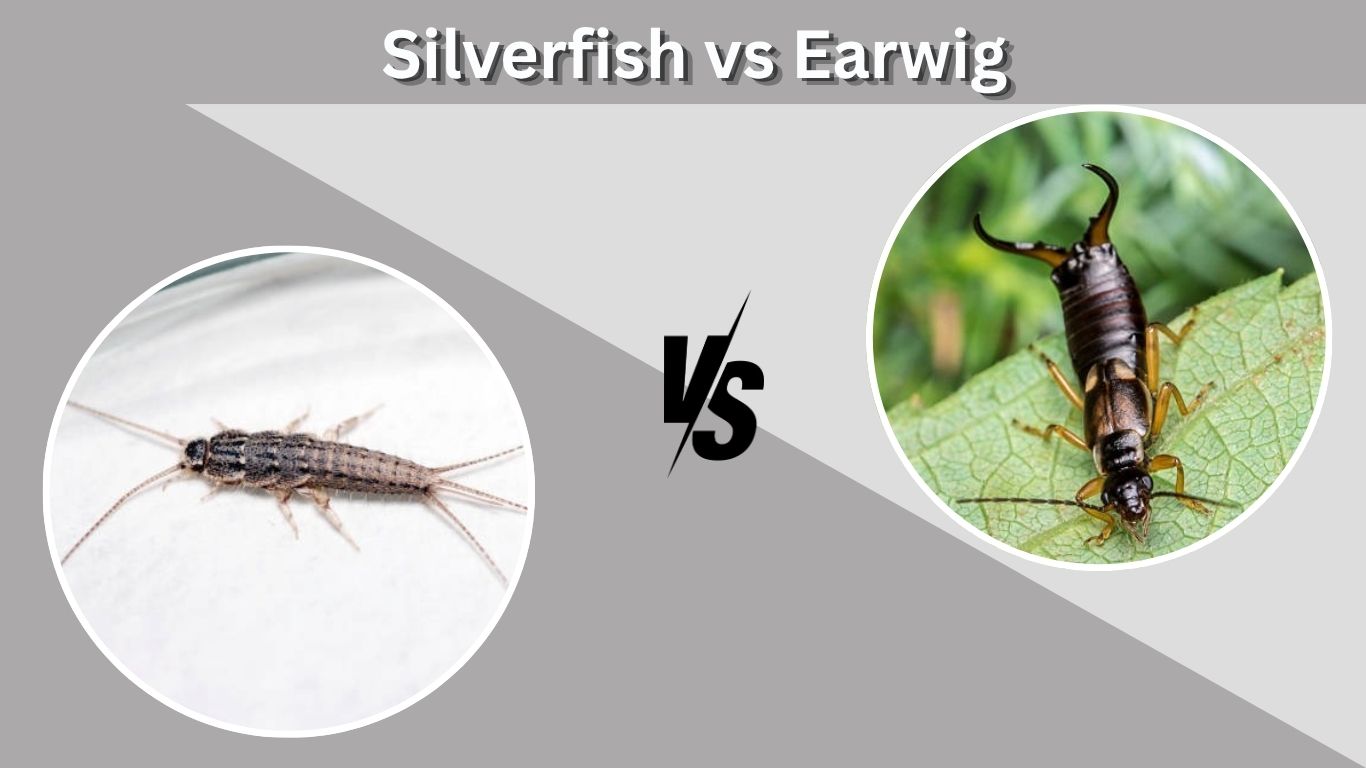
Silverfish and earwigs are two common household pests that are often confused because both thrive in damp environments and are primarily active at night. Despite some similarities, these insects differ significantly in appearance, behavior, habitat preferences, and the type of damage they cause. Understanding the differences between silverfish and earwigs can help homeowners identify infestations correctly and choose the most effective control methods. This guide compares their physical characteristics, habits, habitats, and potential risks to help you determine which pest you may be dealing with.
Silverfish vs Earwig Overview
Silverfish and earwigs belong to completely different insect groups and have distinct biological characteristics. While silverfish are ancient wingless insects known for their fish-like movement, earwigs are recognized by the pincers located at the end of their abdomen. Both species seek moisture and shelter, which often brings them into homes. Understanding their basic traits provides a useful foundation for identifying each pest and learning how they interact with indoor and outdoor environments.
What Is a Silverfish?
A silverfish is a small wingless insect known for its metallic appearance and quick, wriggling movement. These insects have existed for millions of years and are commonly found in humid areas of homes such as bathrooms, basements, and laundry rooms.
What Is an Earwig?
Earwigs are elongated insects recognized by the forceps-like pincers on their rear end. They are primarily outdoor insects but may enter homes while searching for moisture, food, or shelter during extreme weather conditions.
Why Are They Often Confused?
Many people confuse silverfish and earwigs because both are nocturnal, prefer moist environments, and move quickly when disturbed. However, their physical features make them relatively easy to distinguish once you know what to look for.
Silverfish vs Earwig Appearance
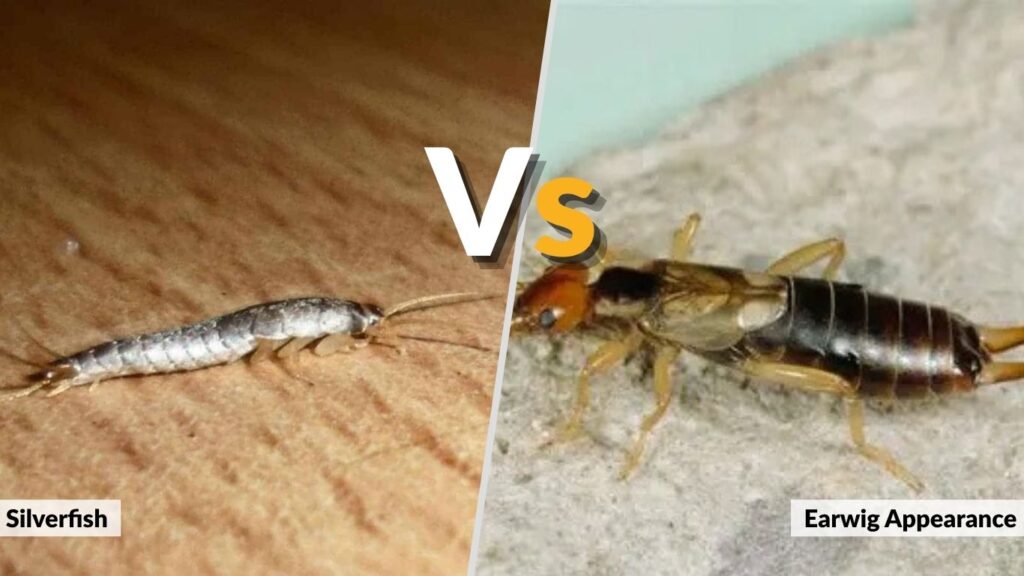
The easiest way to tell silverfish and earwigs apart is by examining their appearance. Their body shape, coloration, and distinctive features differ considerably. While silverfish have a sleek, fish-like form, earwigs possess noticeable pincers that immediately set them apart from most household insects. Careful observation of these physical traits can help homeowners identify infestations accurately and avoid unnecessary confusion.
Silverfish Identification
Silverfish have several recognizable characteristics:
- Silvery-gray coloration
- Carrot-shaped body
- Long antennae
- Three tail-like appendages
- Smooth, scale-covered appearance
These features contribute to their distinctive fish-like movement and appearance.
Earwig Identification
Earwigs can be identified by:
- Brown or reddish-brown body
- Rear pincers (cerci)
- Flattened body shape
- Segmented abdomen
- Long antennae
The pincers are the most obvious identifying feature and vary slightly between males and females.
Side-by-Side Appearance Comparison
Although both insects have elongated bodies and long antennae, silverfish appear more streamlined and lack pincers. Earwigs are generally larger, darker, and possess forceps that make identification much easier.
Habitat and Where They Live
Silverfish and earwigs prefer environments that provide moisture, shelter, and access to food. However, their preferred habitats differ considerably. Silverfish are primarily indoor pests that thrive in humid areas, whereas earwigs are usually found outdoors. Understanding where each insect lives can help homeowners locate infestations and identify the conditions that encourage their presence.
Where Silverfish Live
Silverfish commonly inhabit:
- Bathrooms
- Basements
- Attics
- Laundry rooms
- Kitchens
They often hide in cracks, behind baseboards, and inside storage boxes where humidity levels remain high.
Where Earwigs Live
Earwigs are more likely to be found in:
- Gardens
- Flower beds
- Mulch piles
- Under rocks
- Beneath logs
During periods of heavy rain or drought, they may occasionally move indoors seeking suitable shelter.
Which Pest Is More Common Indoors?
Silverfish are generally considered more common indoor pests because they spend their entire lives inside buildings. Earwigs typically remain outdoors and only enter structures temporarily when environmental conditions become unfavorable.
Silverfish vs Earwig Behavior
Behavioral differences provide another useful way to distinguish these insects. Both species are primarily active at night and prefer dark hiding places, but their feeding habits and daily activities differ significantly. Silverfish are scavengers that feed on materials rich in starch and carbohydrates, while earwigs consume a broader range of organic matter and may even prey on smaller insects.
Silverfish Behavior
Silverfish spend much of their time hiding in dark, humid areas. They are fast runners and quickly disappear into cracks when disturbed. Their feeding activity often goes unnoticed until damage becomes visible.
Earwig Behavior
Earwigs are more commonly observed outdoors, where they hide beneath debris during the day and emerge at night to feed. Although their pincers appear intimidating, they primarily use them for defense, mating, and capturing small prey.
Activity Patterns
Both insects prefer nighttime activity and avoid bright light. However, silverfish are almost exclusively associated with indoor environments, while earwigs maintain a stronger connection to outdoor habitats throughout most of their lives.
Silverfish vs Earwig Damage
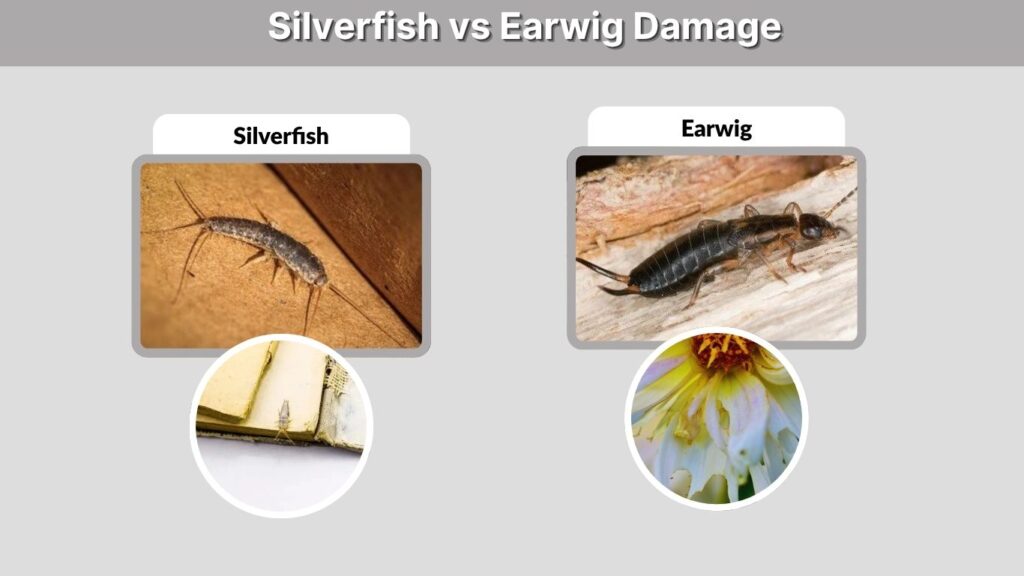
Although both insects can become nuisance pests, the type of damage they cause differs significantly. Silverfish are more likely to damage household belongings, while earwigs primarily affect outdoor plants and gardens. Understanding these differences helps homeowners determine which pest may be responsible for visible signs of damage and decide whether professional pest control measures are necessary.
Damage Caused by Silverfish
Silverfish feed on materials containing starches, sugars, and proteins. As a result, they may damage a variety of household items over time.
Common targets include:
- Books
- Wallpaper
- Cardboard boxes
- Clothing
- Paper documents
Damage often appears as irregular holes, scraping marks, or yellow stains on affected materials.
Damage Caused by Earwigs
Earwigs are more commonly associated with outdoor plant damage. They feed on leaves, flowers, fruits, and decaying organic matter.
Typical damage includes:
- Chewed leaves
- Damaged flower petals
- Holes in seedlings
- Surface feeding on fruits
- Injury to ornamental plants
Most earwig damage occurs in gardens and landscaped areas rather than inside homes.
Which Pest Causes More Damage?
Silverfish typically pose a greater threat to household belongings because they directly consume paper products, fabrics, and stored materials. Earwigs are generally more problematic for gardeners and homeowners with outdoor landscaping.
Do Silverfish or Earwigs Bite?
Many homeowners worry about whether these insects can bite humans. Fortunately, neither silverfish nor earwigs are considered dangerous pests. While earwigs possess noticeable pincers, serious injuries to people are extremely rare.
Can Silverfish Bite Humans?
Silverfish do not bite humans. Their mouthparts are designed for feeding on starchy materials and organic debris rather than piercing skin. They are considered harmless to people and pets.
Can Earwigs Bite Humans?
Earwigs do not possess true biting mouthparts capable of harming humans. However, they may use their pincers defensively if handled or trapped against the skin.
Are Earwig Pincers Dangerous?
Earwig pincers may produce a mild pinch in rare situations, but they do not inject venom or cause serious injury. Most encounters result in little more than temporary discomfort.
Silverfish vs Earwig Infestations
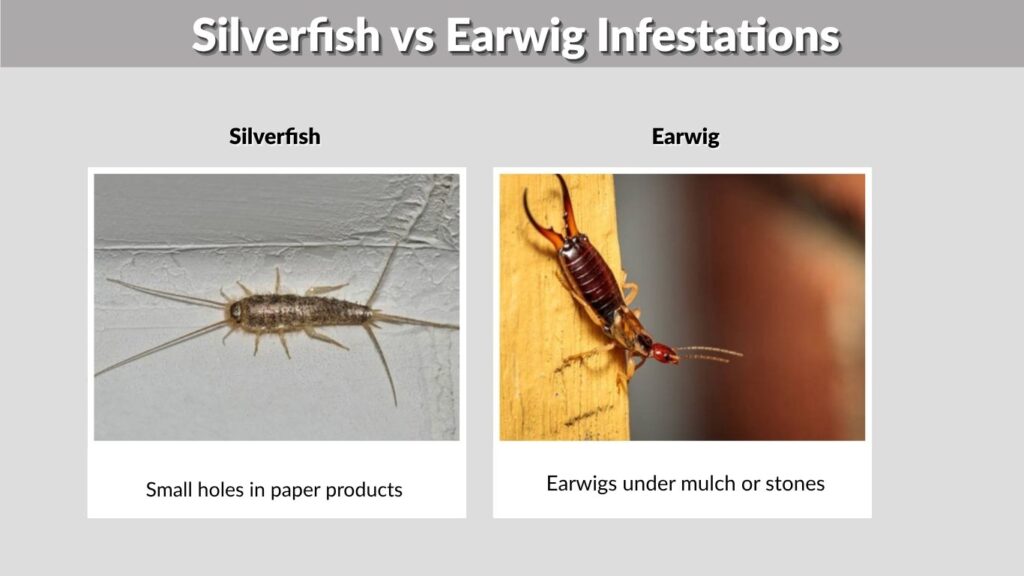
Identifying the signs of an infestation is essential for effective pest management. Because silverfish and earwigs occupy different environments and leave different evidence behind, recognizing these clues can help determine which insect is present.
Signs of a Silverfish Infestation
Common indicators include:
- Small holes in paper products
- Yellow stains on stored items
- Shed skins
- Tiny black droppings
- Frequent sightings in humid rooms
Silverfish often remain hidden during the day, making nighttime sightings especially important.
Signs of an Earwig Infestation
Earwig activity may be indicated by:
- Damaged garden plants
- Earwigs under mulch or stones
- Clusters near outdoor lights
- Increased activity after rain
- Occasional indoor sightings
Large populations are usually discovered outdoors rather than inside homes.
How to Identify the Pest in Your Home
The location of the insects often provides a valuable clue. Silverfish are typically found inside humid rooms, whereas earwigs are more likely to appear near gardens, foundations, and outdoor structures.
How to Get Rid of Silverfish and Earwigs
Effective control depends on addressing the environmental conditions that attract these pests. Moisture management, sanitation, and habitat modification can significantly reduce infestations and discourage future activity.
Silverfish Control Methods
Several strategies can help eliminate silverfish:
- Reduce indoor humidity
- Repair plumbing leaks
- Seal cracks and crevices
- Store paper products properly
- Improve ventilation
These measures make indoor environments less attractive to silverfish populations.
Earwig Control Methods
Earwig management often focuses on outdoor conditions:
- Remove excess mulch
- Reduce standing water
- Clear yard debris
- Trim dense vegetation
- Seal entry points
Limiting hiding places can greatly reduce earwig numbers around the home.
Prevention Tips
Long-term prevention involves maintaining a dry, clean environment both indoors and outdoors. Regular inspections and moisture control remain among the most effective ways to discourage both pests.
FAQs
Is a Silverfish Worse Than an Earwig?
It depends on the situation. Silverfish are more likely to damage household items, while earwigs primarily affect outdoor plants and gardens.
Do Earwigs Eat Silverfish?
Earwigs are opportunistic feeders and may consume small insects on occasion, but silverfish are not considered a major part of their diet.
Are Silverfish Dangerous?
Silverfish are not dangerous to humans, but they can damage books, papers, fabrics, and stored belongings.
Are Earwigs Dangerous?
Earwigs are generally harmless. Their pincers may cause a mild pinch if handled, but they are not venomous and do not spread disease.
Which Pest Is Harder to Eliminate?
Silverfish are often more challenging because they can live and reproduce entirely indoors. Earwig populations are usually easier to manage by modifying outdoor habitats.