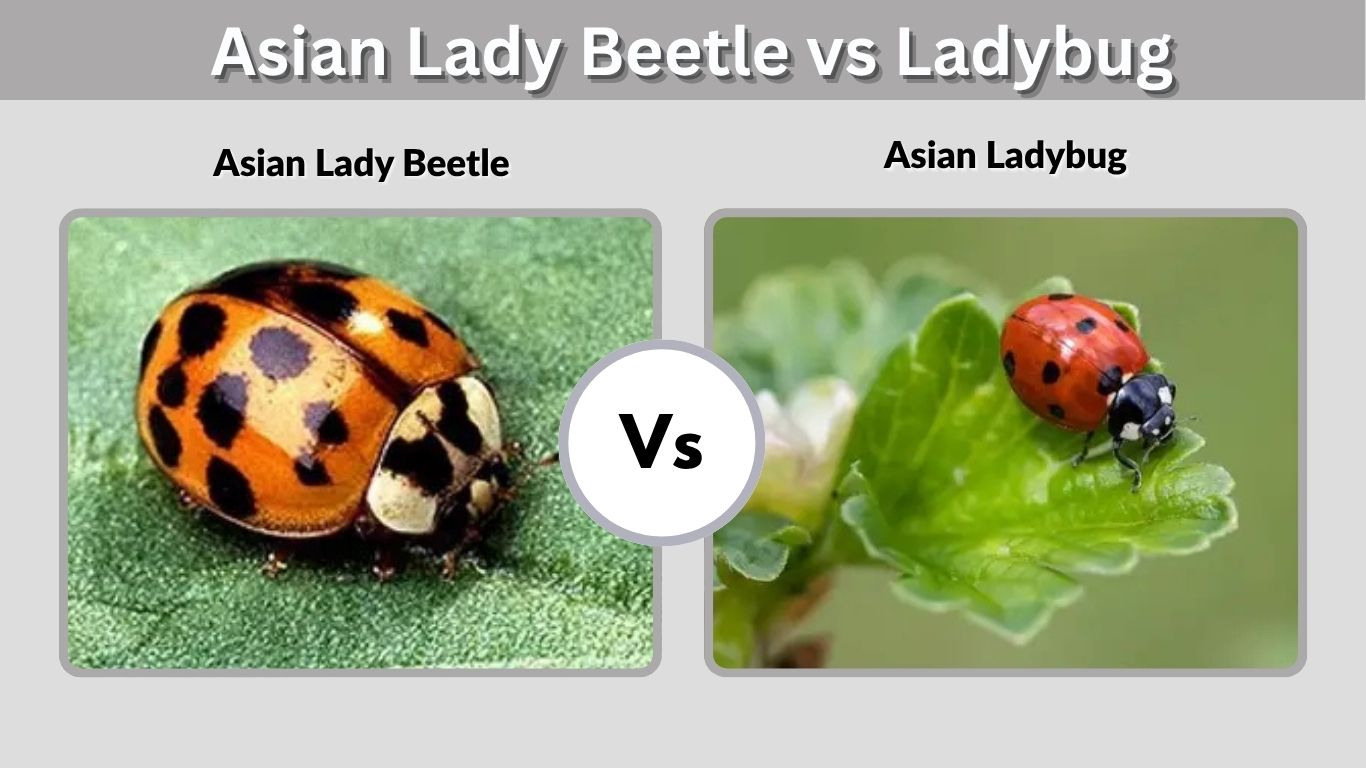
Asian lady beetles and ladybugs look very similar, but they are not always the same insect in everyday use. Both belong to the lady beetle family and both can eat garden pests like aphids. The main difference is that the multicolored Asian lady beetle often enters homes in large numbers, may release a yellow odor, and usually has a black “M” or “W” marking behind the head. Native ladybugs are usually less likely to invade homes and are often welcomed as garden helpers.
Asian Lady Beetle vs Ladybug: Quick Comparison
Many people use the word “ladybug” for almost any small red or orange beetle with black spots. Technically, ladybugs are lady beetles, not true bugs. The Asian lady beetle is also a type of lady beetle, but it behaves differently from many native species.
The multicolored Asian lady beetle is known for its wide color range. It can be orange, yellow, red, or sometimes dark. The number of spots can also vary. Some have many black spots, while others have faint spots or no visible spots at all. University of Minnesota Extension notes that the Asian lady beetle may range from orange to yellow to red or rarely black, and it can have fewer than 19 spots or no spots.
| Feature | Asian Lady Beetle | Common Ladybug/Native Lady Beetle |
|---|---|---|
| Color | Yellow, orange, red, or sometimes dark | Often red or orange |
| Spots | 0 to many spots; often variable | Depends on species |
| Head marking | Often black “M” or “W” behind head | Usually no bold “M” mark |
| Shape | Slightly larger and more oval | Often rounder and smaller |
| Indoor behavior | Often gathers inside homes | Usually stays outdoors |
| Odor | Can release yellow, smelly fluid | Less likely to be a nuisance |
| Bite | May pinch or bite lightly | Rarely bites people |
What Is an Asian Lady Beetle?
The Asian lady beetle usually refers to the multicolored Asian lady beetle, also called Harmonia axyridis. It was introduced in North America for biological control because it eats aphids and other soft-bodied plant pests. Outdoors, it can be helpful in gardens, orchards, and crop fields.
The problem starts when these beetles gather on buildings in fall and try to overwinter indoors. They are attracted to sunny walls, light-colored buildings, cracks, attics, wall voids, and window frames. Once inside, they do not usually damage the building, but they can become annoying because of their numbers.
Penn State Extension describes multicolored Asian lady beetles as slightly larger than native lady beetles, with adults around 7 mm long and 5.5 mm wide. Purdue Extension also notes that this species looks like most other lady beetles but varies dramatically in body color.
Asian Lady Beetle Identification
Look for these signs:
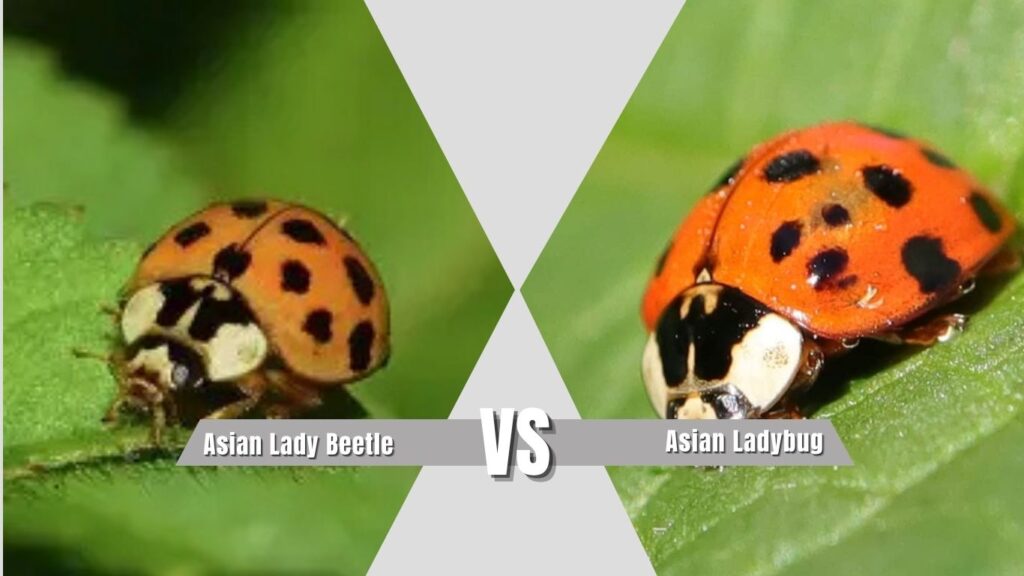
- Black “M” or “W” shape on the white area behind the head
- Orange, yellow, red, or reddish-orange body
- Spots that may be clear, faded, missing, or numerous
- More oval body shape
- Large groups gathering on sunny walls or windows
- Yellowish fluid or odor when disturbed
The “M” marking is one of the best clues. It may be thick, thin, broken, or shaped more like a “W,” depending on how the beetle is positioned.
What Is a Ladybug?
A ladybug is the common name for many species of lady beetles. In North America, there are many native lady beetles, including the convergent lady beetle, two-spotted lady beetle, twice-stabbed lady beetle, and others. These insects are usually considered beneficial because they eat aphids, scale insects, mites, and other small plant pests.
Native ladybugs are often seen in gardens, fields, trees, flowers, and vegetable patches. They usually do not become major indoor pests. A few may enter homes, but they are less famous for mass home invasions than Asian lady beetles.
Maryland Extension describes ladybug larvae as alligator-like, dark-colored, active hunters with orange or yellow markings. This is important because many people mistake larvae for pests, even though they are often beneficial aphid predators.
How to Tell Asian Lady Beetles from Ladybugs
The easiest way to separate Asian lady beetles from many common ladybugs is to look behind the head. Asian lady beetles often have a pale area with a black “M” or “W” marking. Other ladybugs may have black and white markings too, but they usually do not show the same bold “M” pattern.
Color alone is not enough. A red beetle with black spots is not automatically a native ladybug, and an orange beetle is not automatically an Asian lady beetle. Spot number is also not enough because Asian lady beetles can have many spots, few spots, or no spots.
Main Identification Clues
Use a combination of clues:
- Check for the black “M” or “W” mark behind the head
- Notice whether the beetle is oval rather than very round
- Look for large indoor groups in fall or winter
- Watch for yellow staining fluid when disturbed
- Compare body color and spot pattern
- Consider the season and location
If you find dozens or hundreds of beetles around windows, doors, attics, or sunny walls, they are more likely to be Asian lady beetles than native ladybugs.
Asian Lady Beetle vs Ladybug Larvae
Lady beetle larvae look very different from adult beetles. They do not look round, red, or cute. Most are long, dark, and somewhat spiky, often described as tiny alligators. Both Asian lady beetle larvae and native ladybug larvae can look intimidating, but they are usually beneficial predators.
Asian lady beetle larvae are often black or dark gray with orange markings. Native ladybug larvae can also be dark with orange or yellow markings, so larvae identification can be difficult without a close look.
| Larvae Feature | Asian Lady Beetle Larvae | Ladybug Larvae |
|---|---|---|
| Shape | Long, alligator-like | Long, alligator-like |
| Color | Dark gray or black with orange markings | Often dark with orange/yellow markings |
| Behavior | Hunts aphids and soft insects | Hunts aphids and soft insects |
| Garden role | Beneficial predator | Beneficial predator |
| Easy to identify? | Not always | Not always |
Do not kill lady beetle larvae in the garden just because they look strange. They are often eating aphids and protecting plants.
Asian Lady Beetle Bite vs Ladybug Bite
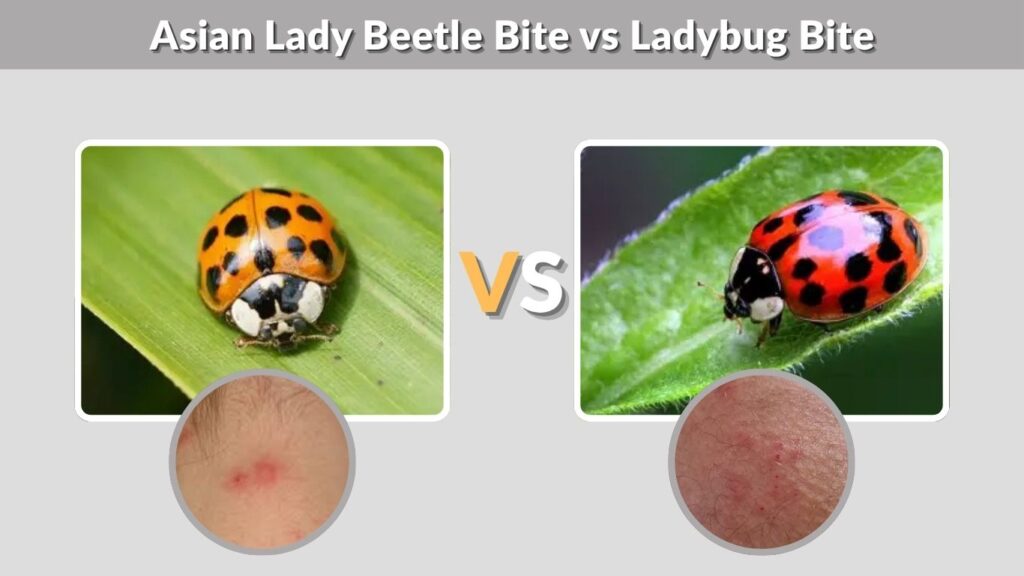
Asian lady beetles can sometimes bite or pinch human skin. Their bite is usually mild and not medically serious for most people. It may feel like a tiny pinch and may leave slight temporary irritation. They do not sting like bees or wasps.
Native ladybugs rarely bite people. Most are harmless and try to escape when disturbed.
The more common problem with Asian lady beetles is not the bite but the defensive fluid they release. When crushed or stressed, they may release a yellowish liquid from their leg joints. This behavior is called reflex bleeding. The fluid can smell unpleasant and may stain walls, curtains, clothing, or furniture.
Are Asian Lady Beetles Dangerous?
Asian lady beetles are not usually dangerous. However, they can be a nuisance indoors. Some people may experience irritation or allergies when large numbers are present. Pets may also drool or vomit if they try to eat many of them because the beetles taste bad and release defensive chemicals.
The best approach is to remove them gently without crushing them.
Why Do Asian Lady Beetles Come Inside?
Asian lady beetles enter homes mostly in fall as they search for protected overwintering sites. They often gather on sunny sides of buildings, especially light-colored homes, and then move into cracks and gaps.
Common entry points include:
- Gaps around windows and doors
- Cracks in siding
- Loose screens
- Roofline openings
- Utility pipe gaps
- Attic vents
- Chimney gaps
- Wall voids
- Door sweeps with gaps
Once indoors, they may appear near windows, lights, ceilings, and warm rooms. They do not usually reproduce indoors. They are mainly trying to survive winter and may become active again when indoor temperatures warm.
University of Illinois Extension notes that multicolored Asian lady beetles are generally larger than native lady beetles and commonly become noticeable when they seek overwintering shelter.
Are Ladybugs Good for Gardens?
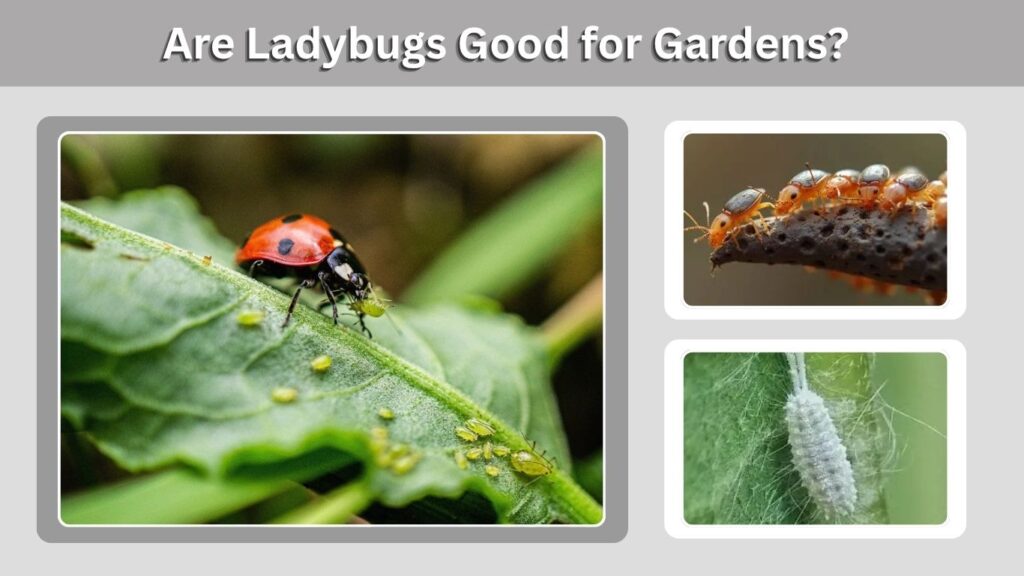
Yes, ladybugs are good for gardens. Both native ladybugs and Asian lady beetles eat aphids and other soft-bodied pests. This makes them helpful for roses, vegetables, fruit trees, flowers, and ornamental plants.
Ladybugs and their larvae may feed on:
- Aphids
- Scale insects
- Mealybugs
- Mites
- Small caterpillar eggs
- Other soft-bodied pests
However, the Asian lady beetle is a mixed case. It can be beneficial outdoors but annoying indoors. It may also compete with native lady beetles. So the goal is not always to destroy every Asian lady beetle outside, but to keep them out of the house and protect native insect diversity.
Asian Lady Beetle vs Native Ladybug
The phrase “real ladybug vs Asian lady beetle” usually means people are trying to separate native ladybugs from the invasive or nuisance Asian lady beetle. The word “real” can be misleading because Asian lady beetles are still real lady beetles. The better comparison is native ladybug vs Asian lady beetle.
Native ladybugs are often more balanced in the local ecosystem. Asian lady beetles can outcompete some native species and become dominant in certain areas. They also gather indoors more often, which is why homeowners dislike them.
| Trait | Native Ladybug | Asian Lady Beetle |
|---|---|---|
| Ecosystem role | Beneficial native predator | Beneficial predator but invasive/nuisance in many areas |
| Indoor nuisance | Usually low | Often high |
| Marking | Varies by species | Often black “M” or “W” |
| Color | Varies | Highly variable |
| Home invasion | Less common | Common in fall |
| Garden value | High | High outdoors, but problematic indoors |
Asian Lady Beetle vs Japanese Beetle
Asian lady beetles are sometimes confused with Japanese beetles, but they are very different insects. A Japanese beetle is not a ladybug. It has a shiny metallic green head and copper-brown wing covers. It damages plants by chewing leaves, flowers, and fruit.
Asian lady beetles are rounder, smaller, and often orange or red with black markings. They eat soft-bodied insects like aphids, not plant leaves.
| Feature | Asian Lady Beetle | Japanese Beetle |
|---|---|---|
| Body color | Orange, red, yellow, or dark | Metallic green and copper |
| Food | Aphids and small insects | Leaves, flowers, fruit |
| Garden role | Often beneficial | Plant pest |
| Shape | Dome-shaped lady beetle | Oval scarab beetle |
| Indoor issue | Can invade homes | Usually outdoor plant pest |
Carpet Beetle vs Asian Lady Beetle
Carpet beetles are another common indoor pest, but they do not look exactly like Asian lady beetles. Carpet beetles are usually much smaller and may appear mottled with brown, white, yellow, or black scales. Their larvae are fuzzy and can damage fabrics, wool, feathers, stored products, and natural fibers.
Asian lady beetles are larger, smoother, dome-shaped, and usually gather near windows or lights. They do not eat carpets, clothing, or stored fabrics.
If you see tiny beetles near windows and damaged wool or natural-fiber items, carpet beetles may be the issue. If you see orange or red beetles gathering in groups during fall or winter, Asian lady beetles are more likely.
How to Get Rid of Asian Lady Beetles Indoors
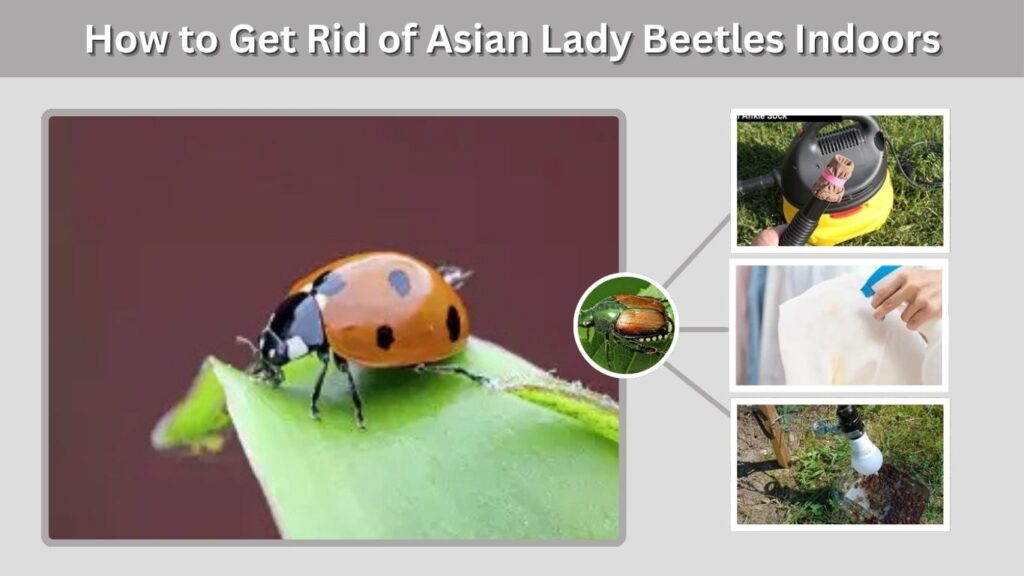
The best way to remove Asian lady beetles indoors is to vacuum them gently. Do not crush them, because crushing can release odor and stain surfaces. Use a vacuum hose, then empty the contents outside or seal the bag.
For small numbers, you can catch them with a cup and release them outdoors. For larger numbers, vacuuming is easier.
Indoor Removal Tips
Use these steps:
- Vacuum beetles instead of squashing them
- Empty the vacuum outside soon after use
- Wipe yellow stains gently with mild soap and water
- Avoid spraying indoor pesticides randomly
- Use window light traps if beetles keep gathering
- Seal cracks after removal to reduce future entry
Indoor sprays are usually not the best long-term solution because beetles may keep entering from hidden wall voids. Prevention works better.
How to Prevent Asian Lady Beetles
Prevention should happen before fall, because beetles enter homes when temperatures drop. The best control is sealing entry points before they get inside.
Prevention Checklist
- Caulk gaps around windows and doors
- Repair torn screens
- Install tight door sweeps
- Seal cracks in siding and trim
- Close gaps around pipes and utility lines
- Add fine mesh to vents where appropriate
- Check attic and roofline openings
- Reduce unnecessary outdoor lights during peak activity
- Inspect sunny walls in early fall
These steps also help keep out other pests such as stink bugs, boxelder bugs, and cluster flies.
Should You Kill Ladybugs or Asian Lady Beetles?
In the garden, it is usually better not to kill lady beetles because many of them eat pests. If they are outside and not causing a problem, leave them alone.
Inside the home, remove Asian lady beetles without crushing them. Vacuuming is the simplest method. If you are dealing with a large seasonal invasion every year, focus on sealing and exclusion instead of repeated indoor spraying.
FAQs
What is the main difference between an Asian lady beetle and a ladybug?
The main difference is that Asian lady beetles often have a black “M” or “W” marking behind the head and commonly invade homes in fall. Many native ladybugs do not have this marking and usually stay outdoors.
Do Asian lady beetles bite?
Yes, Asian lady beetles can sometimes bite or pinch, but the bite is usually mild. They are more annoying because they can release a smelly yellow fluid that may stain surfaces.
Are Asian lady beetles bad?
Asian lady beetles are helpful outdoors because they eat aphids, but they can be bad indoors because they gather in large numbers, release odor, stain surfaces, and may compete with native lady beetles.
How can I identify Asian lady beetle larvae vs ladybug larvae?
Both can look dark, long, and alligator-like with orange or yellow markings. Asian lady beetle larvae are often dark gray or black with orange markings, but larvae can be hard to identify by species without close inspection.
How do I get rid of Asian lady beetles in my house?
Vacuum them gently and empty the vacuum outside. Do not crush them because they may release odor and stains. To prevent future problems, seal cracks, repair screens, and close gaps around windows, doors, vents, and siding before fall.