
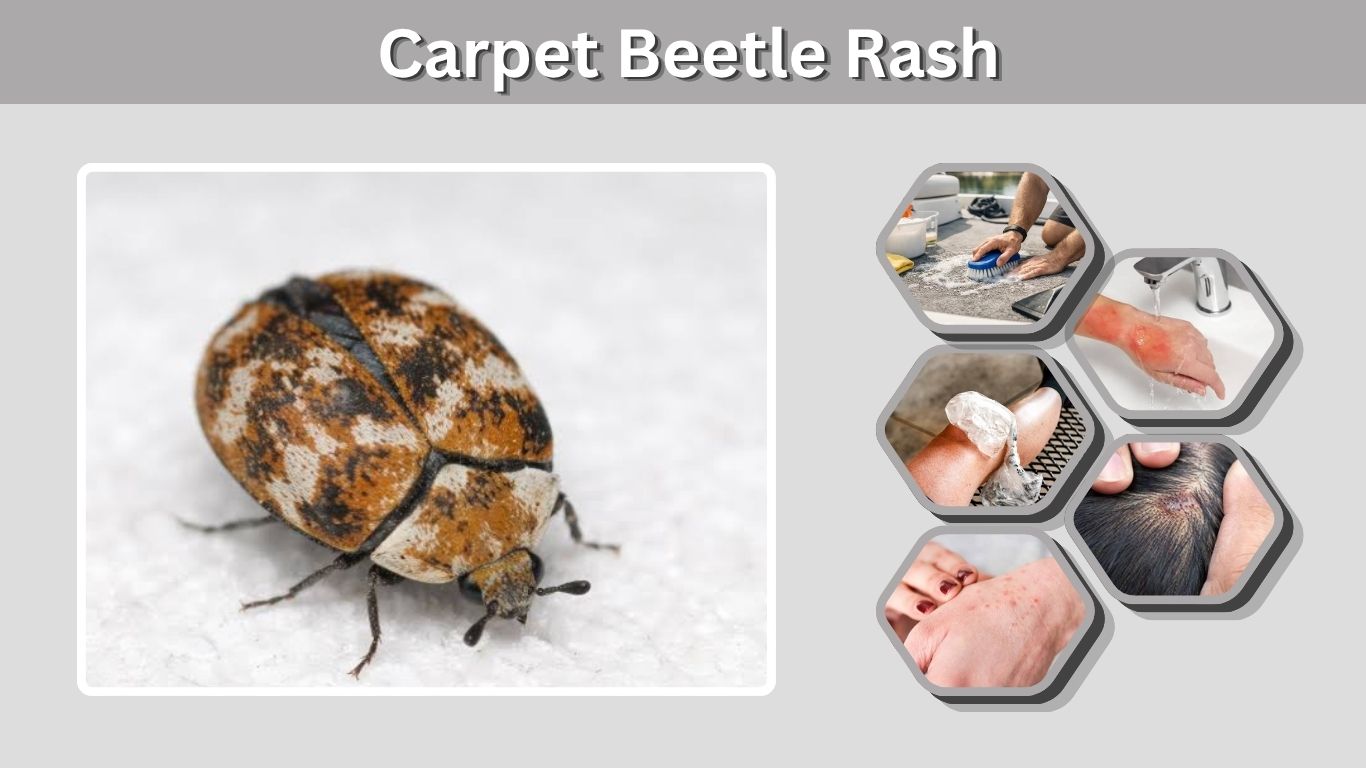
A carpet beetle rash is an itchy skin reaction that some people develop after exposure to tiny hairs shed by carpet beetle larvae. Although the bumps can resemble insect bites, carpet beetles do not bite humans. Their bristles can irritate the skin or trigger an allergic response, especially when they collect in bedding, clothing, carpets, or upholstered furniture. Knowing what the rash looks like, how to manage itching, and where to find larvae helps you address both the symptoms and the source without confusing the condition with bed bug bites or scabies.
What Is a Carpet Beetle Rash?
A carpet beetle rash is a form of skin irritation or hypersensitivity reaction associated with carpet beetle larvae. The condition is sometimes called carpet beetle dermatitis or dermestid dermatitis.
Unlike mosquitoes or bed bugs, carpet beetles do not feed on human blood. Instead, their larvae have tiny bristles that can detach and come into contact with human skin.
Can Carpet Beetles Cause a Rash?
Yes, carpet beetles can cause rashes in susceptible individuals. The reaction is usually associated with contact with larval hairs rather than the adult beetles themselves.
These hairs, known as hastisetae in certain species, can trigger immediate or delayed hypersensitivity reactions. Not everyone exposed develops symptoms, and some people are considerably more sensitive than others.
What Does a Carpet Beetle Rash Look Like?
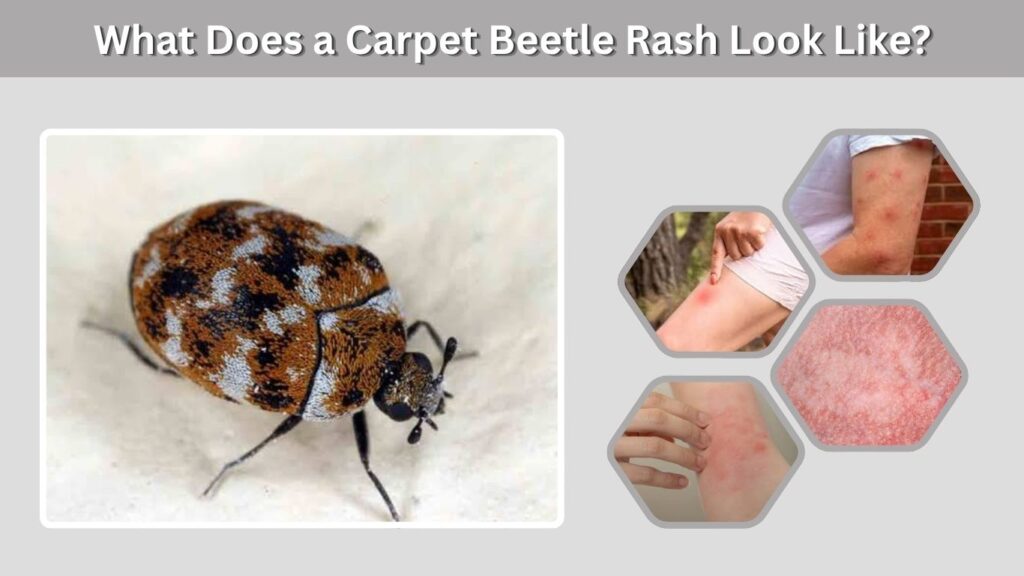
A carpet beetle skin rash may resemble small insect bites, an allergic skin eruption, or contact dermatitis. Its appearance depends on the individual’s sensitivity and the severity of exposure.
Symptoms can develop after contact with contaminated clothing, bedding, upholstery, or other household materials containing larval hairs.
Common Carpet Beetle Rash Symptoms
The most frequently reported symptoms include:
- Itchy bumps: Small, raised spots that may occur individually or in clusters.
- Redness or discoloration: Pink or red patches on lighter skin, sometimes appearing darker, brown, or purplish on darker skin.
- Small blisters: Some individuals develop tiny fluid-filled bumps.
- Swelling: Mild inflammation surrounding affected areas.
- Persistent itching: Irritation that may worsen with continued exposure.
Clinical reports describe itchy papules and occasionally small blisters associated with carpet beetle larvae.
Where Does Carpet Beetle Rash Appear?
Carpet beetle dermatitis can develop anywhere exposed to larval hairs.
Commonly affected areas may include the arms, legs, neck, back, abdomen, and areas beneath clothing. Exposure is possible when contaminated fabrics rub against the skin.
Rashes near the waistline, groin, or hairline are not specific to carpet beetles. Other skin conditions can affect these areas.
Can Pictures Identify Carpet Beetle Rash?
Carpet beetle rash pictures may show raised bumps, irritated patches, or scattered lesions. However, photographs alone cannot reliably identify the cause.
Eczema, scabies, bed bug bites, and other allergic reactions can look similar. Finding larvae or their shed skins in the environment provides more useful supporting evidence than the rash’s appearance alone.
What Causes Carpet Beetle Larvae Rash?
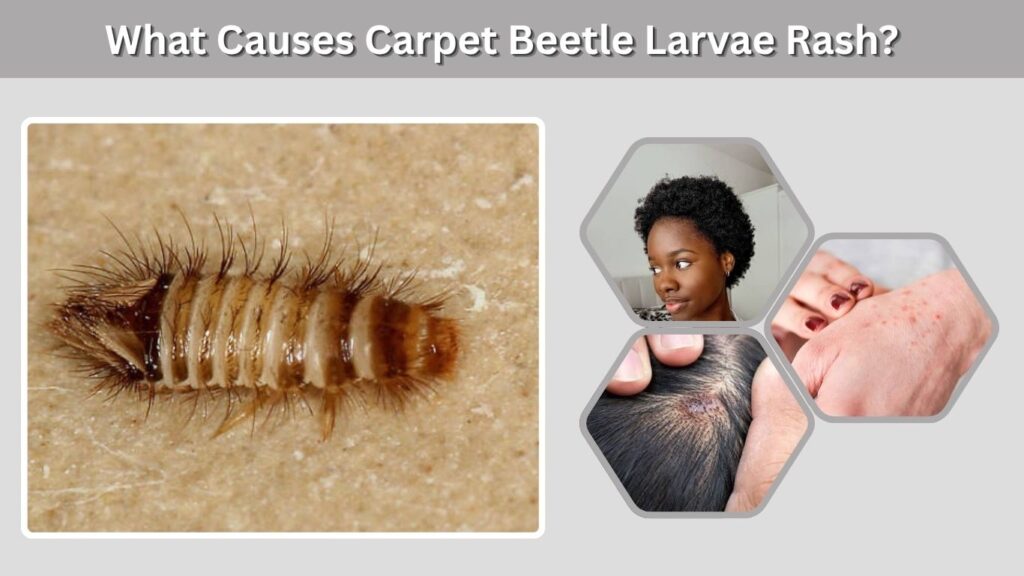
Carpet beetle larvae are the main cause of carpet beetle-related skin reactions. Their tiny hairs can become trapped in fabrics or accumulate in household dust.
In susceptible people, these hairs may provoke inflammation through direct exposure or an immune response.
Do Black and Varied Carpet Beetles Cause Rashes?
Larvae from several carpet beetle groups, including Anthrenus and Attagenus, have been associated with dermatitis.
Varied carpet beetle larvae are brownish, hairy, and commonly found among natural fibers. Black carpet beetle larvae are usually elongated, brown to dark brown, and also possess hairs.
Both may contribute to irritation, but finding a carpet beetle does not automatically mean it caused a person’s rash.
Carpet Beetle Rash vs. Bed Bug Bites
Carpet beetle dermatitis and bed bug bites may produce similar itchy bumps, but their causes differ significantly.
Carpet Beetle Rash
Carpet beetle dermatitis develops from exposure to larval hairs. The insects do not pierce the skin to feed.
Symptoms may occur where affected fabrics touch the body, including areas covered by clothing. Larvae, shed skins, and damage to natural-fiber materials are useful clues.
Bed Bug Bites
Bed bugs bite humans to obtain blood meals, commonly while people sleep. Their bites can produce itchy welts, sometimes arranged in lines or clusters.
Other signs include live bed bugs, dark fecal spots, or shed exoskeletons around mattresses and bed frames. Bite patterns alone are not reliable enough to confirm an infestation.
Carpet Beetle Rash vs. Scabies
Scabies is caused by microscopic mites that burrow into the skin.
It commonly causes intense nighttime itching, with rashes around finger webs, wrists, waist, and other skin folds. Tiny burrows may also be visible.
Unlike carpet beetle dermatitis, scabies is contagious through prolonged skin-to-skin contact and requires specific medical treatment.
How to Treat Carpet Beetle Rash
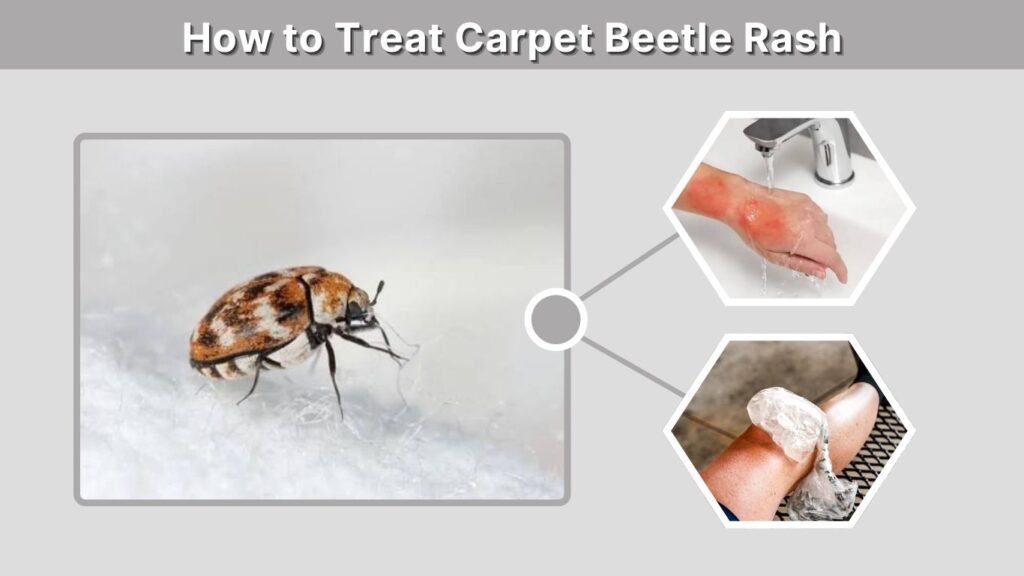
Treatment focuses on soothing inflammation, relieving itching, and preventing further exposure to larval hairs.
Most mild reactions can be managed with supportive care, although persistent or severe symptoms require medical evaluation.
Effective Carpet Beetle Rash Treatment Methods
1. Wash the affected skin: Gently clean exposed areas with lukewarm water and mild soap. Avoid vigorous rubbing.
2. Apply a cold compress: Hold a cool, damp cloth against irritated skin for 10–15 minutes to help relieve itching.
3. Use soothing products: Calamine lotion or fragrance-free moisturizer may reduce discomfort.
4. Consider hydrocortisone cream: Over-the-counter 1% hydrocortisone may help mild inflammation. Follow the product instructions and seek professional advice before applying it to the face or genital area.
5. Avoid scratching: Scratching can damage the skin and increase the risk of secondary infection.
6. Ask about antihistamines: A pharmacist or clinician can advise whether an oral antihistamine is appropriate for troublesome itching.
These approaches are consistent with dermatologists’ general recommendations for managing contact dermatitis.
How Long Does Carpet Beetle Rash Last?
The duration of a carpet beetle rash depends on exposure, skin sensitivity, and the severity of inflammation.
Individual itchy bumps may improve over several days. In a published investigation involving 11 affected individuals, lesions lasted approximately one week before gradually disappearing, although new bumps developed with continued exposure.
Some reactions can last longer, especially when larval hairs remain in clothing, bedding, or upholstery.
If a rash persists, repeatedly returns, or worsens despite cleaning and appropriate treatment, consult a healthcare professional rather than assuming carpet beetles are responsible.
How to Get Rid of Carpet Beetles and Prevent Rashes
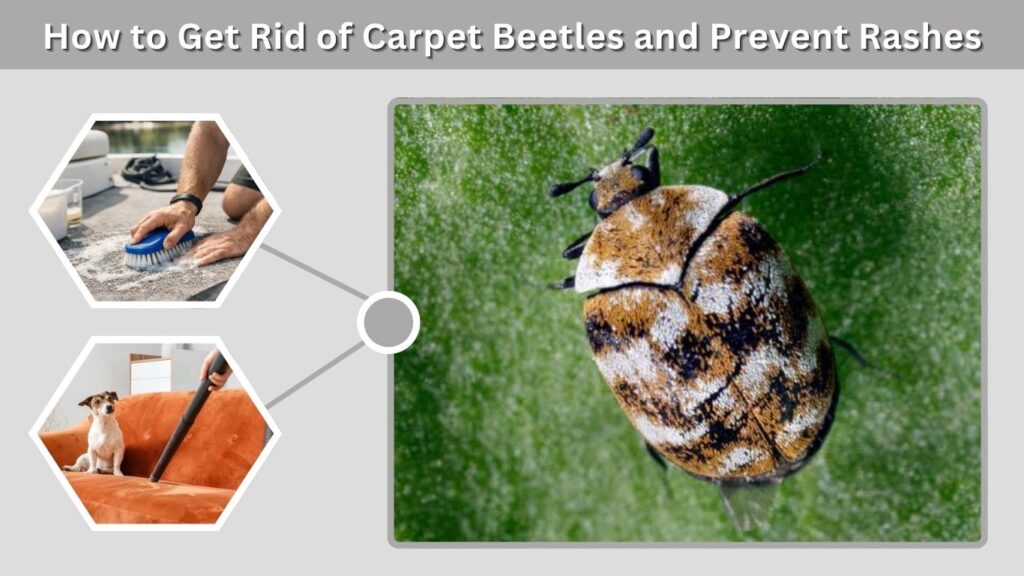
Controlling carpet beetles is important because treating the skin alone will not prevent repeated exposure.
Larvae commonly live in undisturbed areas containing natural fibers, animal hair, lint, feathers, and dead insects.
Steps to Prevent Carpet Beetle Dermatitis
- Vacuum thoroughly: Clean carpets, baseboards, closet corners, underneath furniture, and upholstered surfaces. Dispose of vacuum contents promptly.
- Wash affected fabrics: Launder potentially contaminated clothing and bedding according to their care labels.
- Inspect natural fibers: Check wool carpets, blankets, stored clothing, and feather-filled items for larvae or shed skins.
- Remove food sources: Clear accumulated pet hair, lint, dead insects, and other organic debris.
- Store clothing properly: Keep clean, unused woolens and vulnerable fabrics in sealed containers.
- Address infestations: Remove heavily infested materials and seek professional pest management when necessary.
University extension guidance emphasizes locating breeding sources and using careful sanitation as essential carpet beetle control measures.
Never apply household insecticides directly to the skin or use them on bedding unless the product specifically permits that application.
When Should You See a Doctor?
Many mild skin reactions improve once exposure stops. However, unexplained rashes should not automatically be diagnosed as carpet beetle dermatitis.
Seek medical advice if the rash is spreading, disrupting sleep, causing significant pain, or showing signs of infection such as pus, warmth, or worsening swelling.
A rash affecting the eyes or genital area also deserves medical assessment. Seek emergency care for breathing difficulties or swelling of the lips or tongue.
FAQs
1. Does Carpet Beetle Rash Itch?
Yes. Itching is one of the characteristic symptoms of carpet beetle dermatitis. The intensity varies among individuals. Some experience mild irritation, while susceptible people develop persistent itching and raised bumps after exposure to larval hairs.
2. Can Carpet Beetle Rash Appear on the Face?
Yes, exposure to larval hairs may affect facial skin. However, facial rashes have many possible causes. Avoid applying hydrocortisone to the face without professional advice, particularly near the eyes.
3. Can Only One Person Have a Carpet Beetle Rash?
Yes. Sensitivity varies, so one household member may react while others have no symptoms. This pattern has been documented in clinical investigations. However, having only one affected person does not establish carpet beetles as the cause.
4. Can Carpet Beetle Rash Affect Dogs?
Carpet beetles primarily infest household materials rather than living on pets. Dogs can develop skin irritation for numerous reasons, including fleas and allergies. Consult a veterinarian about persistent itching or rashes rather than assuming carpet beetles are responsible.
5. Is Carpet Beetle Rash Contagious?
No. Carpet beetle dermatitis itself is not contagious because it results from exposure to insect hairs rather than a skin infection. Multiple household members may react to the same environment, but the rash does not spread through ordinary person-to-person contact.
