
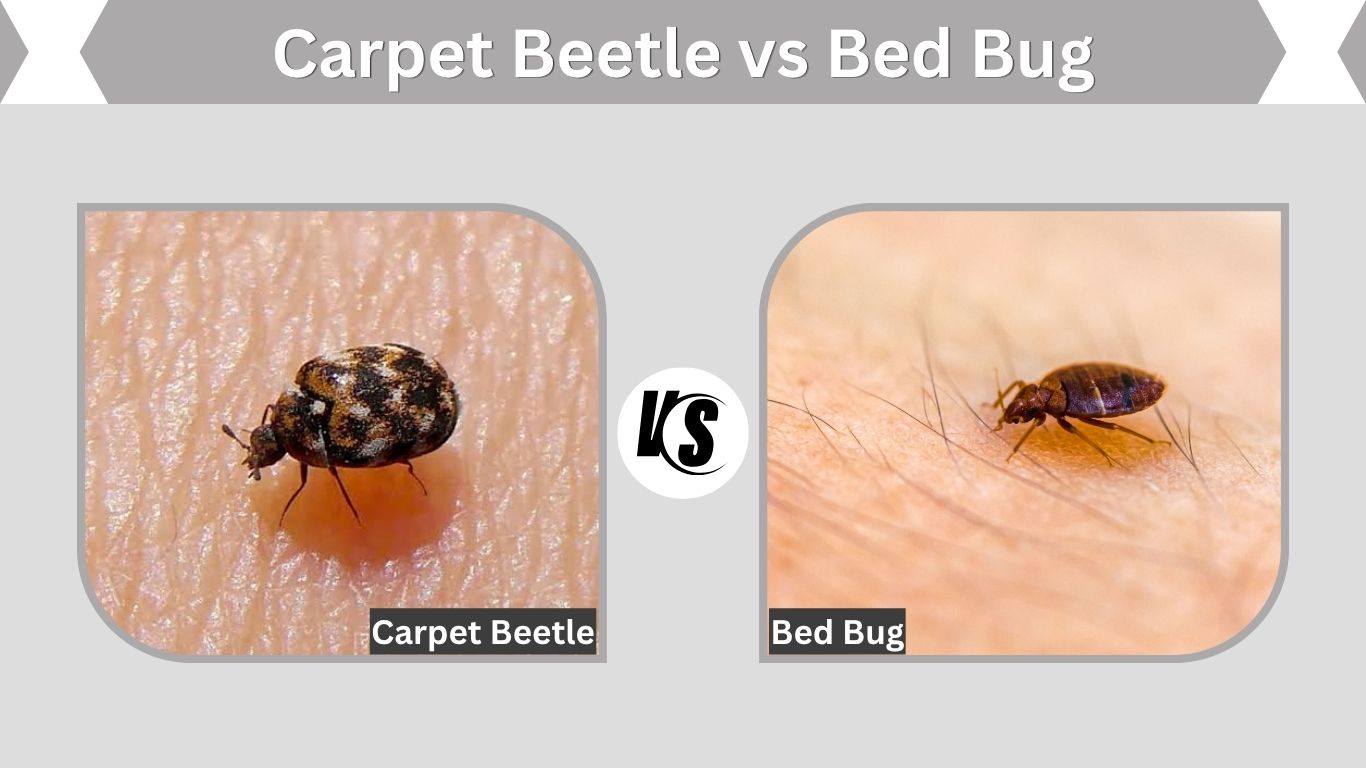
Carpet beetle vs bed bug identification can be confusing because both insects are small, commonly found indoors, and sometimes associated with itchy skin reactions. However, these household pests differ significantly in appearance, feeding habits, development, and the damage they cause. Carpet beetle larvae feed on natural fibers and may trigger skin irritation, while bed bugs bite humans and animals to obtain blood. Understanding their physical characteristics, shed skins, and hiding places can help you identify the correct pest and choose an effective treatment before the infestation becomes more serious.
Carpet Beetle vs Bed Bug: Key Differences
Carpet beetles and bed bugs belong to different insect groups and have distinct feeding behaviors. Carpet beetles primarily damage household fabrics, while bed bugs feed on blood. Although both can occur in bedrooms, their appearance and other signs usually provide useful identification clues.
| Feature | Carpet beetle | Bed bug |
| Adult size | Usually 2–6 mm | Usually 5–7 mm |
| Body shape | Rounded or elongated, dome-shaped | Broad, oval, flattened |
| Color | Black, brown, or mottled | Reddish-brown |
| Wings | Adults have functional wings | Cannot fly |
| Immature stage | Hairy larvae | Smooth-bodied nymphs |
| Bites humans | No | Yes |
| Main food | Natural fibers and animal materials | Blood |
| Common locations | Carpets, closets, upholstery | Beds, furniture cracks |
| Main damage | Fabric destruction | Bites and sleep disruption |
The U.S. Environmental Protection Agency describes adult bed bugs as flattened, oval insects approximately the size of an apple seed, while university extension resources describe carpet beetles as small, often rounded beetles with hairy larvae.
Carpet Beetle vs Bed Bug Appearance
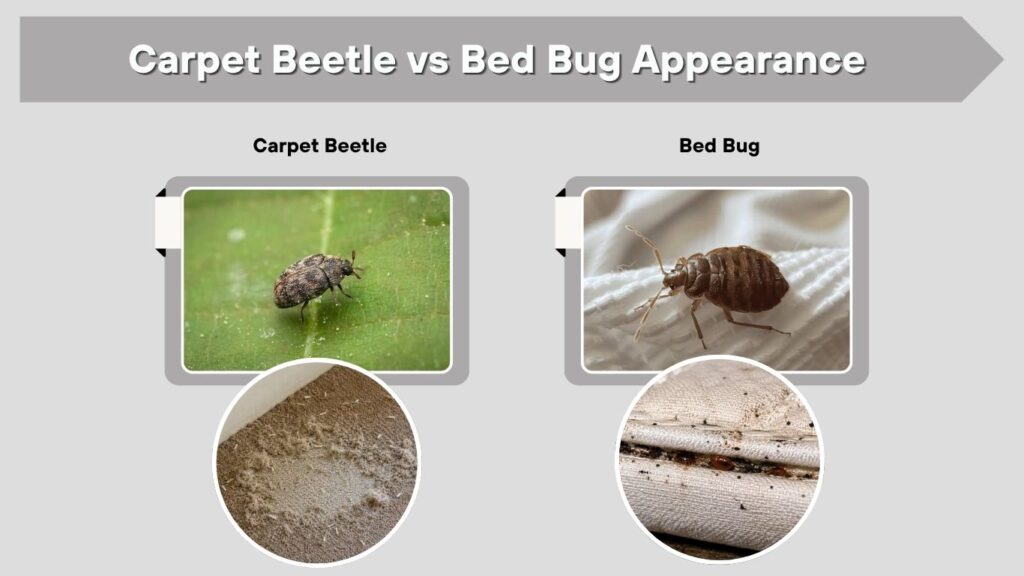
The easiest way to distinguish adult carpet beetles from bed bugs is by examining their body shapes, coloring, and visible physical features. Both insects are small, but their overall appearance differs considerably.
What Does a Carpet Beetle Look Like?
Adult carpet beetles generally have rounded or slightly elongated bodies with hard wing covers.
Varied carpet beetles often display mottled patterns of white, cream, brown, and black scales. Black carpet beetles are typically more elongated and uniformly dark.
Unlike bed bugs, adult carpet beetles have functional wings and may fly toward windows or lights.
They generally measure about 2–6 mm, depending on the species.
What Does a Bed Bug Look Like?
Adult bed bugs are reddish-brown, broadly oval insects with flattened bodies and visible abdominal segmentation.
They usually measure 5–7 mm long, although their appearance changes after feeding.
An unfed bed bug is relatively flat, while a recently fed individual becomes swollen and more elongated.
Bed bugs cannot fly or jump. Instead, they crawl between hiding places and feeding locations.
Carpet Beetle Larvae vs Bed Bug Larvae
One important identification difference involves immature insects. Carpet beetles develop through a larval stage, while bed bugs develop through several nymphal stages.
People often search for bed bug larvae, but technically, bed bugs do not have larvae. Their young are called nymphs and resemble smaller versions of adults.
What Do Carpet Beetle Larvae Look Like?
Carpet beetle larvae are elongated, segmented, and covered with visible hairs or bristles. Some species have distinctive tufts near the rear of their bodies.
Their coloring ranges from tan to dark brown, sometimes with alternating bands.
Larvae commonly hide beneath carpets, inside closets, and around upholstered furniture where suitable food is available.
They may feed for an extended period before becoming adults.
What Do Bed Bug Nymphs Look Like?
Bed bug nymphs are smaller and usually lighter-colored versions of adult bed bugs.
Newly hatched nymphs are pale yellow or nearly translucent. After feeding on blood, their abdomens may appear reddish or darker.
Unlike carpet beetle larvae, bed bug nymphs are not densely covered with conspicuous bristles.
They also have flattened, oval bodies rather than an elongated, caterpillar-like appearance.
The EPA identifies five nymphal stages before bed bugs reach adulthood.
Carpet Beetle Shell vs Bed Bug Shell
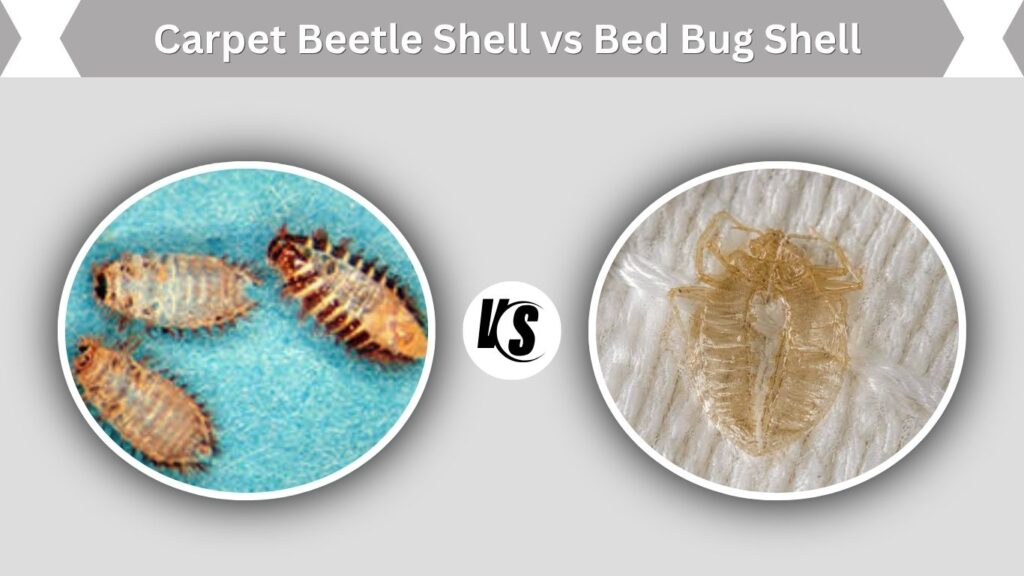
Both pests shed their outer coverings while developing. However, their discarded skins differ in shape, appearance, and texture.
Examining these remains can be especially useful when live insects are difficult to find.
Carpet Beetle Shed Skins
Carpet beetle larvae leave behind brownish, hollow skins as they grow.
These cast skins are generally elongated, visibly segmented, and covered with fine hairs or bristles. They may accumulate near carpets, stored fabrics, or furniture.
The presence of hairy skins and damage to natural fibers strongly suggests carpet beetle activity.
Bed Bug Shed Skins
Bed bugs also shed their outer coverings as nymphs develop.
Their discarded skins resemble pale, translucent bed bugs, complete with an oval body, six legs, and antennae.
These shells are commonly found in mattress seams, bed frames, headboards, and furniture crevices.
Unlike carpet beetle skins, bed bug cast skins are not densely hairy or worm-shaped.
Carpet Beetle Rash vs Bed Bug Bites
Skin irritation is one reason people confuse carpet beetles with bed bugs. Both can be associated with itchy bumps, but the reactions develop through different mechanisms.
Recognizing the difference is useful, although skin appearance alone cannot establish the cause.
Do Carpet Beetles Bite Humans?
No. Carpet beetles do not bite humans.
However, hairs from certain carpet beetle larvae can trigger allergic skin reactions known as carpet beetle dermatitis.
Affected individuals may develop itchy bumps, redness, or small blisters after contact with contaminated clothing, bedding, or other fabrics.
A study published in the CDC’s Emerging Infectious Diseases journal documented allergic skin reactions caused by carpet beetle larval hairs that resembled insect bites.
What Do Bed Bug Bites Look Like?
Bed bugs use specialized mouthparts to pierce the skin and feed on blood.
Their bites may cause itchy, swollen bumps, sometimes appearing in clusters or lines. However, reactions vary, and some individuals develop no visible marks.
The CDC notes that bite reactions may appear days after exposure and can resemble other insect bites.
Therefore, a rash cannot reliably distinguish carpet beetles from bed bugs. Physical evidence of insects is necessary for confident identification.
Black Carpet Beetle vs Bed Bug
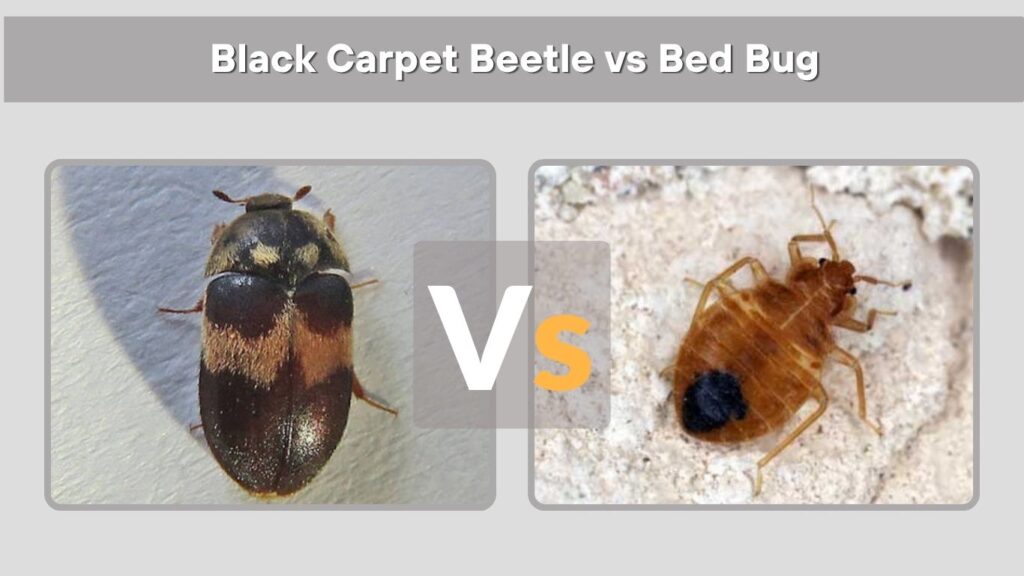
Black carpet beetles (Attagenus unicolor) are sometimes mistaken for bed bugs because both may appear dark brown or nearly black under poor lighting.
However, black carpet beetles generally have a more elongated, convex body shape with hard wing covers.
Bed bugs are flatter, wider, and show more obvious abdominal segmentation.
Black carpet beetle larvae are also hairy and elongated, unlike the flattened nymphs of bed bugs.
Their feeding habits provide another distinction. Black carpet beetle larvae damage wool, fur, feathers, and other suitable materials, while bed bugs seek blood meals.
How to Identify Carpet Beetles vs Bed Bugs in Your Home
Identifying which pest is present requires inspecting insects and the surrounding environment. Rather than relying exclusively on itching or small insects near the bed, look for additional physical evidence.
6 Steps to Identify the Correct Pest
1. Examine body shape: Carpet beetle adults are generally dome-shaped, while bed bugs have flatter, broader bodies.
2. Check for larvae: Hairy, elongated larvae point toward carpet beetles. Small, pale, oval nymphs may indicate bed bugs.
3. Inspect mattress seams: Look for live bed bugs, dark fecal spots, eggs, and pale cast skins.
4. Check natural-fiber materials: Search wool carpets, stored clothing, and upholstery for feeding damage and hairy larval skins.
5. Examine windowsills: Adult carpet beetles frequently appear around windows, especially when attracted to light.
6. Collect a specimen: Place a suspected insect in a sealed container or take a clear close-up photograph for expert identification.
The EPA recommends looking for physical infestation signs because other insects can easily be mistaken for bed bugs.
How to Get Rid of Carpet Beetles and Bed Bugs
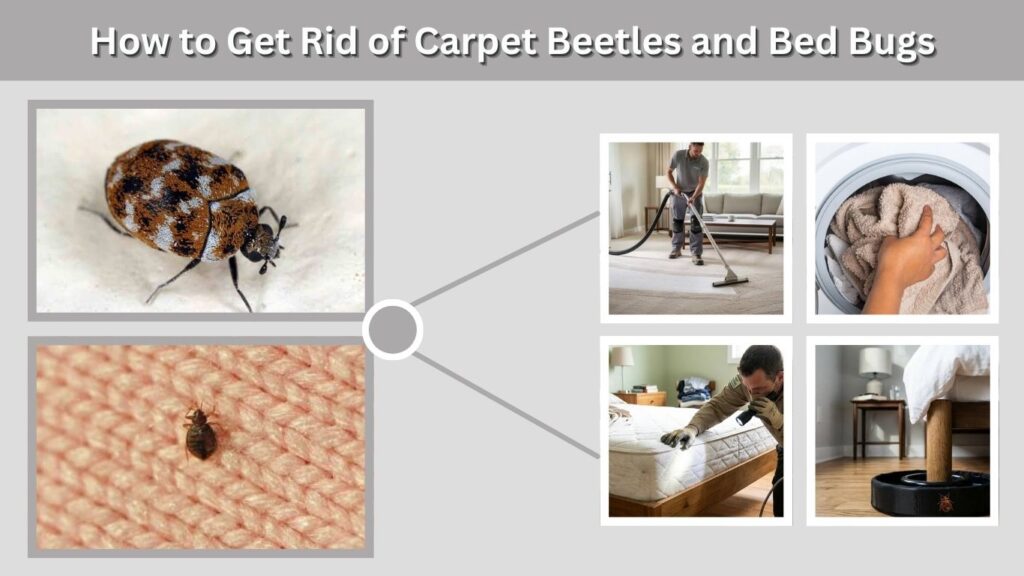
Treatment differs significantly because carpet beetles and bed bugs feed on different materials and occupy different hiding places.
Proper identification should come before pesticide treatment to avoid ineffective applications and unnecessary exposure.
Carpet Beetle Control Methods
- Vacuum carpets, closets, upholstery, and furniture edges thoroughly.
- Remove accumulated pet hair, lint, and dead insects.
- Wash or dry-clean affected clothing and fabrics.
- Store cleaned natural-fiber items in sealed containers.
- Find and eliminate hidden breeding sources.
- Inspect previously affected areas for recurring larvae.
Sanitation and removing infested materials are central to carpet beetle management.
Bed Bug Control Methods
- Inspect mattress seams, bed frames, and nearby furniture.
- Use bed bug-proof mattress and box spring encasements.
- Dry appropriate infested fabrics on high heat, following fabric-care instructions.
- Use bed leg interceptors to monitor activity.
- Reduce clutter around sleeping areas.
- Seek professional treatment when an infestation is confirmed or difficult to eliminate.
Avoid relying on household foggers or unverified home remedies. Bed bugs often hide in narrow cracks that ordinary surface treatments cannot reach.
FAQs
1. Can Carpet Beetles Be Mistaken for Bed Bugs?
Yes. Small carpet beetles and their larvae are sometimes mistaken for bed bugs, particularly when found near mattresses or furniture. However, carpet beetles usually have rounded adult bodies or hairy larvae, while bed bugs are flattened and oval.
2. Do Carpet Beetles and Bed Bugs Live Together?
Yes, both pests can occur in the same home because their food sources and living requirements differ. Finding carpet beetles does not prove that bed bugs are absent. Each insect should be identified independently before treatment.
3. Are Carpet Beetle Larvae Smaller Than Bed Bugs?
Often, but size alone is unreliable. Carpet beetle larvae vary by species and developmental stage. Bed bug nymphs are considerably smaller than adults. Body shape, hairs, coloration, and feeding evidence provide more dependable identification clues.
4. Can Carpet Beetle Rash Look Like Bed Bug Bites?
Yes. Carpet beetle dermatitis can produce itchy bumps that resemble bed bug bites. However, carpet beetles do not bite. Their larval hairs trigger irritation or allergic reactions, while bed bugs cause skin reactions through blood feeding.
5. Which Is Worse, Carpet Beetles or Bed Bugs?
Bed bugs generally create greater direct concerns for people because they feed on blood and can disrupt sleep. Carpet beetles mainly damage fabrics and stored materials, although their larval hairs may cause skin irritation in susceptible individuals.
