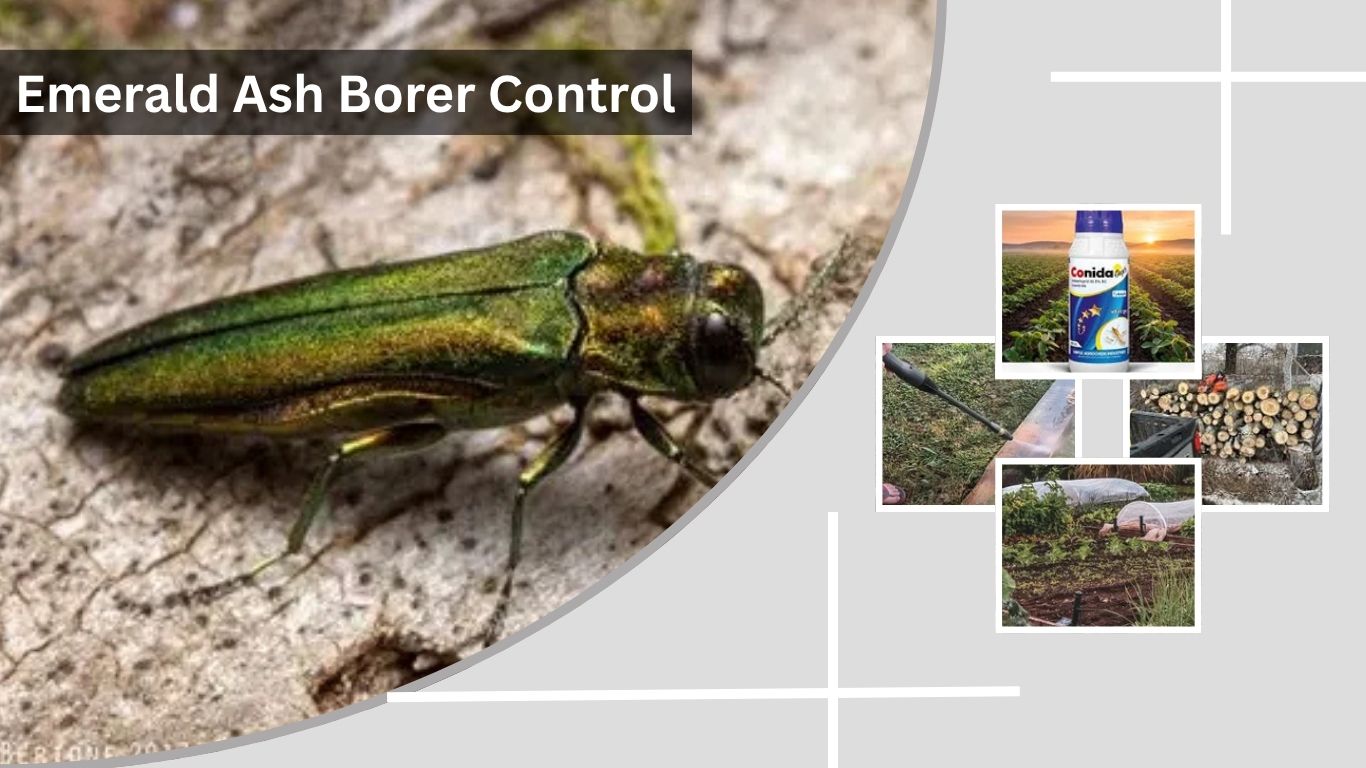
Emerald ash borer control requires more than applying a single pesticide. This invasive beetle is now too widespread for complete eradication, so current management focuses on protecting valuable ash trees, reducing local beetle populations, slowing human-assisted spread, and preserving future generations of ash. The right method depends on whether the affected trees are in a yard, along a street, or within a natural forest. Chemical treatments work best for selected trees, while biological and cultural controls support broader, long-term management.
Why Emerald Ash Borer Must Be Controlled
Emerald ash borer larvae feed beneath ash bark, damaging the tissues that carry water and nutrients. Repeated feeding produces winding galleries that gradually girdle branches and trunks. Without protection, attacked North American ash trees usually decline and die.
The pest threatens green, white, black, blue, pumpkin, and other ash species. Its effects include hazardous dead trees, removal expenses, lost urban shade, reduced forest diversity, and disruption of habitats associated with ash.
Main Emerald Ash Borer Control Methods
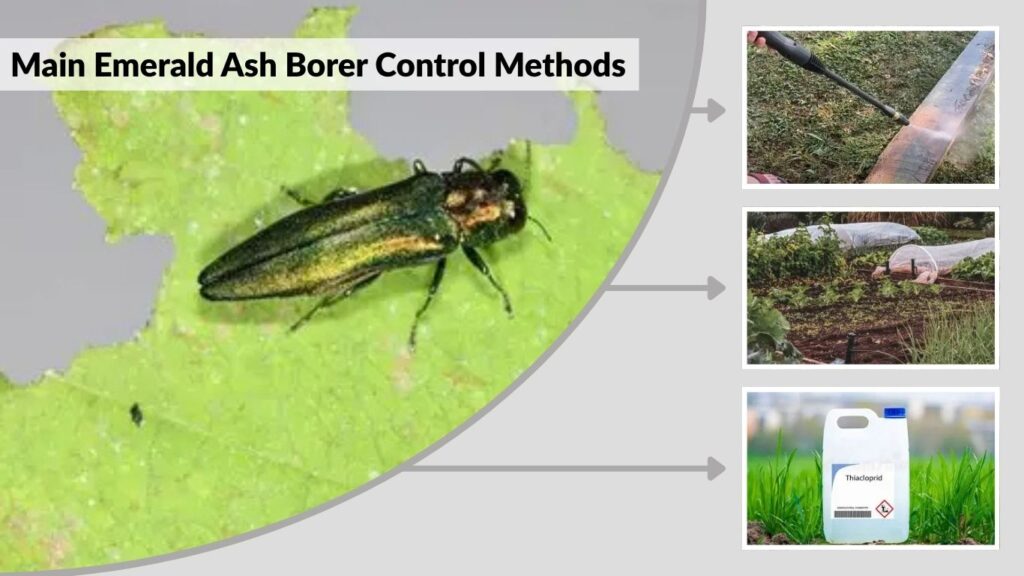
Effective control uses integrated pest management rather than relying on one tactic. Chemical treatment may save selected trees, while biological control, sanitation, monitoring, removal, and replanting address the pest across larger areas.
| Control method | Primary purpose | Best application |
| Systemic insecticides | Protect individual ash trees | Yards, streets and high-value landscapes |
| Biological control | Suppress beetle populations over time | Natural forests and established infestations |
| Tree removal | Eliminate hazardous or unsalvageable trees | Severely declining ash trees |
| Wood sanitation | Reduce movement of beetles in infested material | Firewood, logs and tree debris |
| Monitoring | Detect new infestations and measure spread | Communities, woodlands and uninfested areas |
| Tree replacement | Increase future forest resilience | Streets, parks, yards and forests |
No available method can eliminate emerald ash borer from the continent. USDA shifted from eradication to integrated management because the beetle had become too widespread for eradication with existing tools.
Chemical Control of Emerald Ash Borer
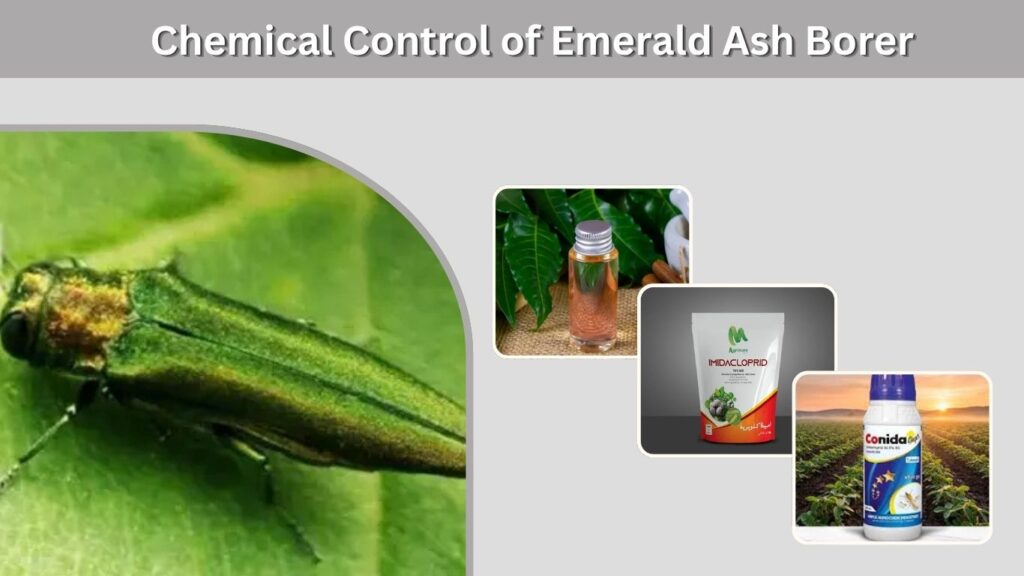
Systemic insecticides are the most dependable method for protecting healthy or lightly infested landscape ash trees. These chemicals move through the tree and kill adults feeding on leaves or larvae feeding beneath the bark.
Common Active Ingredients
Four active ingredients are commonly used for emerald ash borer management:
- Emamectin benzoate
- Imidacloprid
- Dinotefuran
- Azadirachtin
Emamectin benzoate is injected into the trunk by trained professionals and can provide reliable protection for approximately two years, sometimes longer. It may also help trees recover when emerald ash borer damage has caused no more than about 30% canopy thinning.
Imidacloprid is frequently applied to the soil, where it is absorbed by roots. It generally performs best on smaller, healthy trees. Dinotefuran can be applied to soil or, under certain labels, sprayed onto the lower bark. Azadirachtin is another systemic injection option. Product availability and permitted application methods vary by location.
When Chemical Control Works Best
Insecticides should preferably be used before visible damage develops. Some lightly infested trees can still be saved, but heavily declining trees have damaged vascular systems and may be unable to distribute systemic insecticides effectively.
Treatment is generally worthwhile when the tree:
- Has a mostly healthy canopy
- Has less than approximately 30% canopy thinning
- Is structurally sound
- Provides significant shade or landscape value
- Can receive repeated treatments
- Would be costly to remove and replace
Trees showing 60–70% canopy loss are normally beyond recovery and may present an increasing safety risk.
Choosing a Chemical Product
Choose products by their active ingredient and current label, not by brand name alone. A product marketed under the Bayer name, for example, may have changed its formulation or may not be registered for the same use in every state.
The label must specifically list emerald ash borer, ash trees, the application method, dosage, timing, and relevant environmental restrictions. Pesticide labels are legally enforceable instructions, so applying a product in a manner inconsistent with its label is unlawful.
Emerald Ash Borer Biological Control
Biological control uses the pest’s natural enemies to reduce emerald ash borer populations. It is particularly important in forests, where treating every ash tree with insecticide would be economically and environmentally impractical.
Parasitoid Wasps Used for Control
USDA programs have used four tiny, stingless parasitoid wasps:
- Tetrastichus planipennisi
- Spathius agrili
- Spathius galinae
- Oobius agrili
Some attack emerald ash borer larvae beneath the bark, while Oobius agrili attacks the beetle’s eggs. These insects are specialized biological control agents and are not the familiar social wasps that defend nests and sting people.
USDA’s rearing program has released millions of these parasitoids at approved sites. The objective is not immediate eradication but long-term suppression that may help ash seedlings, saplings, and surviving trees remain part of North American forests. Evaluating the full effect requires continued monitoring over many years.
Can Homeowners Release the Wasps?
Homeowners should not purchase or independently release parasitoids. Biological control releases require suitable infested sites, permits, correct species selection, careful timing, and follow-up monitoring.
Federal, state, provincial, university, and tribal programs typically coordinate releases. Residents can support these efforts by reporting suspected infestations and protecting healthy ash regeneration where local forestry guidance recommends it.
Cultural and Sanitation Control
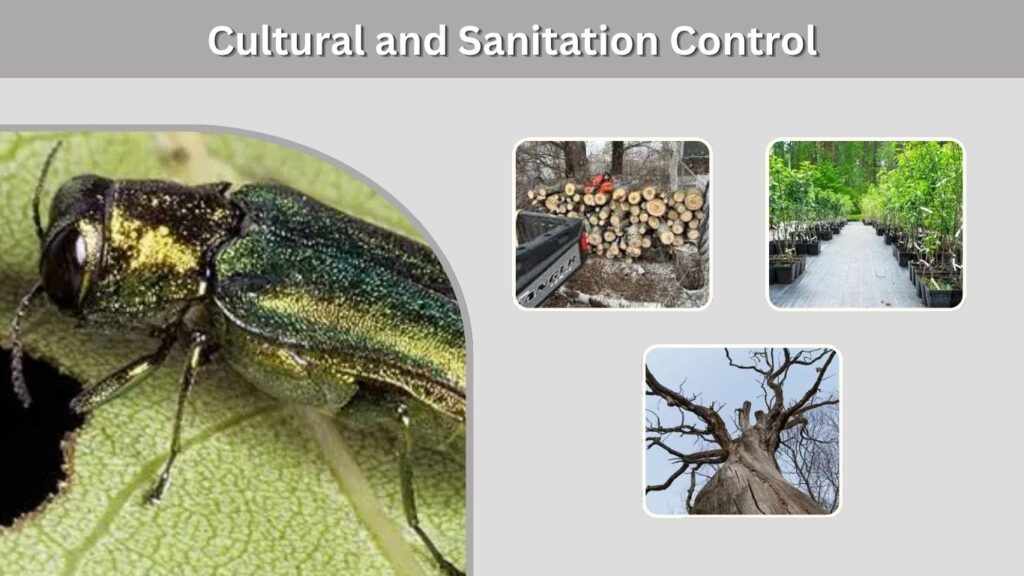
Cultural control does not cure an infested tree, but it can reduce avoidable spread and improve the safety of affected properties.
Do Not Move Infested Wood
Emerald ash borers can travel long distances inside firewood, logs, branches, nursery trees, and other ash material. Natural movement is generally much slower than human-assisted movement. Therefore, firewood should be purchased and burned locally, and ash waste should follow applicable state or regional rules.
Remove Unsalvageable Trees Safely
Ash trees with severe canopy decline, large dead branches, trunk defects, or extensive bark loss may need removal. Dead ash becomes brittle, making delayed removal more hazardous and difficult.
Where practical, removal during the dormant season can reduce the chance of moving active beetles during disposal. Chipping wood into pieces no larger than one inch in two dimensions is recognized in Minnesota guidance as sufficient to kill larvae, although local disposal requirements must always be checked.
Replant With Diverse Species
Avoid replacing every removed ash with a single tree species. Planting several locally suitable species reduces the possibility that another pest or disease will cause similarly widespread losses.
Species selection should account for available space, soil moisture, winter conditions, drought tolerance, overhead wires, roots, and the mature size of each tree.
Monitoring and Early Detection
Monitoring helps communities locate new infestations before widespread canopy decline occurs. Professionals may use traps, branch sampling, visual surveys, debarking, and records of declining ash trees.
Common warning signs include:
- Canopy thinning beginning near the top
- D-shaped adult exit holes
- S-shaped galleries beneath the bark
- Bark splitting
- Shoots growing from the lower trunk
- Increased woodpecker feeding
- Dead branches and sparse leaves
These signs are not always sufficient for confirmation because drought, disease, root damage, and other borers can produce similar symptoms. Suspected infestations should be reported to the appropriate local forestry, agriculture, or invasive-species agency.
Developing an Emerald Ash Borer Control Plan
A community or property-level control plan should begin with an inventory of ash trees. Each tree can then be assigned to treatment, monitoring, removal, or replacement.
A practical plan should include:
- Confirming which trees are true ash species
- Recording trunk size, health and location
- Identifying trees that create safety risks
- Selecting valuable trees for treatment
- Scheduling treatment and retreatment
- Budgeting for phased removal
- Arranging compliant wood disposal
- Replanting with diverse tree species
- Monitoring for new infestations
Communities can often reduce sudden expenses by removing declining trees gradually while treating selected healthy trees. This spreads costs over several years and preserves some canopy while replacement trees become established.
FAQs
Is emerald ash borer currently under control?
Emerald ash borer has not been eradicated and continues to threaten ash trees. Control programs aim to protect selected trees and suppress populations rather than eliminate the beetle. USDA currently emphasizes integrated management and biological control because continent-wide eradication is not feasible with available methods.
What is the most effective emerald ash borer control?
For valuable individual trees, professional trunk injection with emamectin benzoate is among the most consistently effective options. For natural forests, parasitoid wasps offer the most practical long-term strategy. Successful regional management combines treatment, biological control, monitoring, sanitation, removal, and diverse replanting.
Can emerald ash borer be controlled without chemicals?
Nonchemical methods can reduce spread and improve safety but cannot reliably protect an individual tree from attack. Biological control may suppress populations over time, while local firewood use, proper disposal, monitoring, removal, and replanting form important parts of a nonchemical forest-management strategy.
Does cutting down an infested tree control emerald ash borer?
Removal eliminates that tree as a future source of beetles only when the wood is handled correctly. Larvae can remain alive beneath the bark after cutting. Infested material should be chipped, processed, burned where permitted, or taken to an approved disposal facility without transporting it to uninfested areas.
Will controlled fire eliminate emerald ash borer?
Prescribed fire is not a standard treatment for protecting living ash trees or eradicating emerald ash borer from forests. Burning infested firewood may destroy insects in that specific material where burning is legal, but moving the wood before burning can spread the pest to new locations.