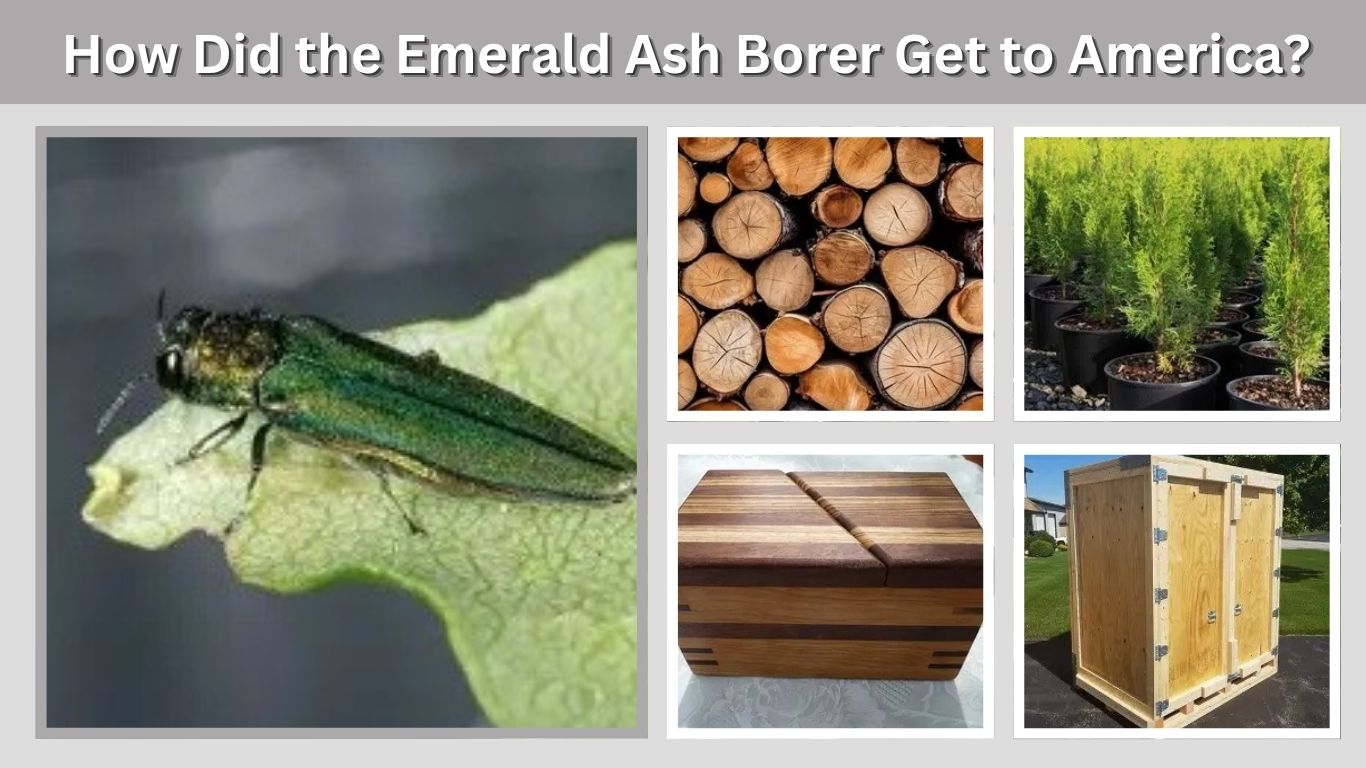
The emerald ash borer most likely reached America accidentally inside solid-wood packing material imported from Asia. Larvae can remain hidden beneath the surface of pallets, shipping crates, and wood used to brace cargo. Although the beetle was officially discovered near Detroit, Michigan, in 2002, tree-ring research indicates that it had probably been established there for several years before anyone recognized it. From the Detroit–Windsor region, the pest spread naturally and through the movement of infested wood.
Where Did the Emerald Ash Borer Come From?
The emerald ash borer, scientifically known as Agrilus planipennis, is native to parts of eastern Asia, including China, Korea, Japan, Mongolia, and eastern Russia. In its native range, it generally causes less severe damage because Asian ash species evolved alongside the beetle and have stronger natural defenses.
North American ash trees did not evolve with this insect. Most native ash species have limited resistance, allowing larvae to reproduce rapidly and damage the tissues beneath the bark that transport water and nutrients.
How Did the Emerald Ash Borer Get to the US?
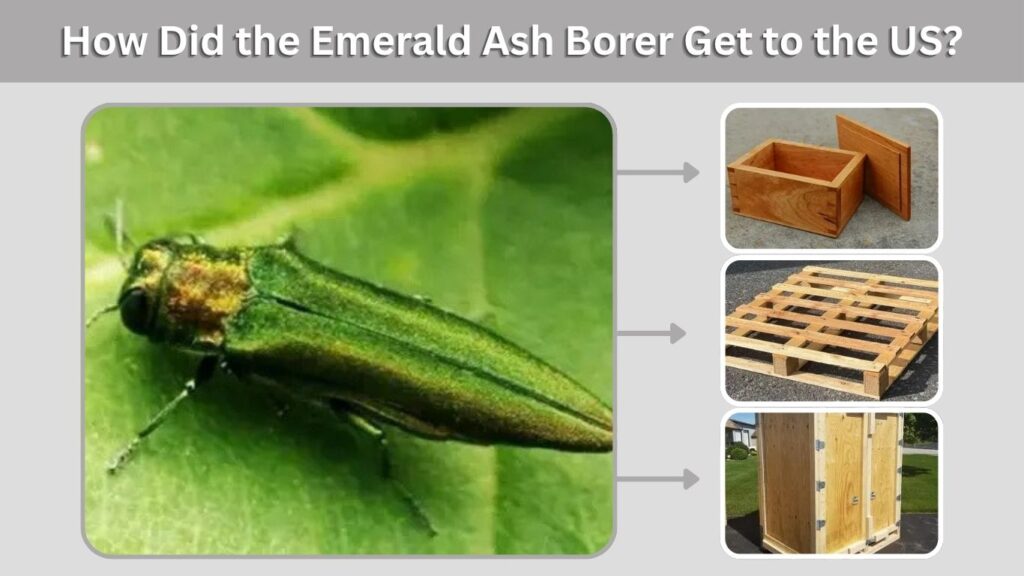
Scientists have not identified the exact ship, airplane, shipment, or port responsible for introducing emerald ash borer. However, the strongest evidence indicates that it arrived inside infested solid-wood packaging associated with goods imported from Asia.
Hidden Inside Wooden Packaging
International cargo is often transported using wooden materials such as:
- Pallets
- Shipping crates
- Wooden boxes
- Dunnage used to brace cargo
- Other untreated wood supports
Emerald ash borer eggs, larvae, or pupae could have been concealed inside ash wood used for one of these materials. Because larvae feed under the bark or within the outer wood, an infested pallet could appear normal from the outside.
After the shipment reached the Detroit area, adult beetles could have emerged from the wood and flown to nearby ash trees. Once they reproduced successfully, a permanent population began expanding through southeastern Michigan.
Was It Brought Here Intentionally?
There is no evidence that emerald ash borer was intentionally released. Its introduction is considered accidental. The beetle was probably an unnoticed passenger in commercial cargo rather than an insect deliberately imported for agriculture, research, or pest control.
When Did the Emerald Ash Borer Get Here?
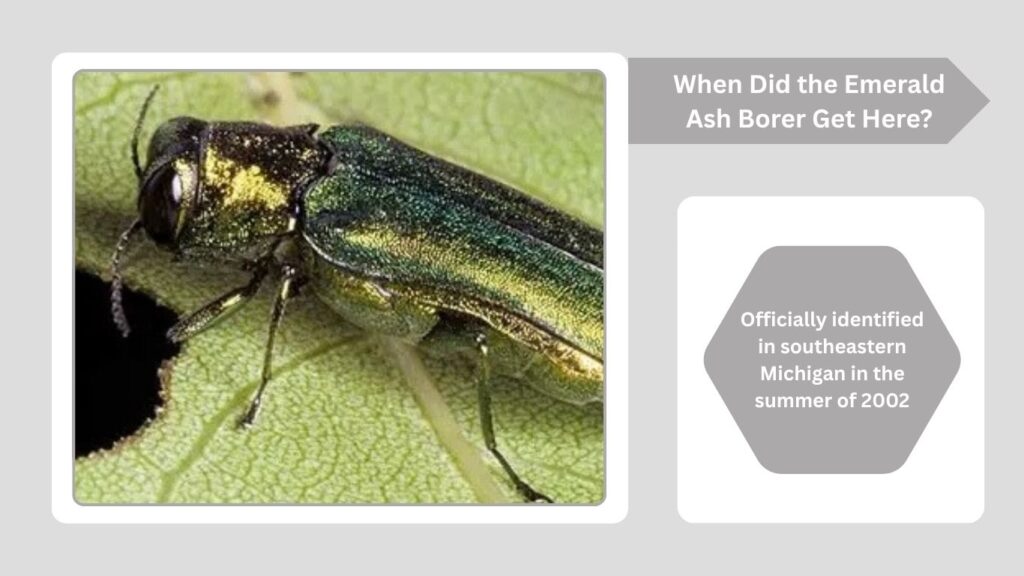
Emerald ash borer was officially identified in southeastern Michigan in the summer of 2002. It was found after experts investigated widespread decline and death among ash trees near Detroit. The insect was also confirmed across the border near Windsor, Ontario, during the same year.
However, 2002 was the year of discovery, not necessarily the year of arrival.
| Event | Approximate date |
| Probable introduction into Michigan | Late 1980s to mid-1990s |
| Ash mortality becomes increasingly visible | Late 1990s |
| Beetle identified in southeastern Michigan | 2002 |
| Confirmed near Windsor, Ontario | 2002 |
| Detected in northwestern Ohio | 2003 |
| Continued spread through the US and Canada | Following decades |
Scientists reconstructed the early infestation by examining when ash trees began declining and when larval galleries appeared in the wood. Their findings indicate that emerald ash borer had become established in Canton, Michigan, no later than the early to mid-1990s and possibly as early as the late 1980s.
Why Wasn’t It Detected Earlier?
Emerald ash borer is difficult to detect during the early stages of an infestation. Most of its life cycle occurs beneath the bark, where larvae cannot be seen during an ordinary inspection.
The first visible symptoms may include canopy thinning, bark splitting, shoots emerging from the trunk, increased woodpecker activity, and small D-shaped exit holes. By the time these signs become obvious, beetles may have already been reproducing in the area for several years.
Early ash decline was also difficult to diagnose because drought, disease, root damage, and native insects can produce similar symptoms. Emerald ash borer was not recognized as a major North American tree threat until experts collected and identified adult beetles in 2002.
How Did It Get to Canada?
Emerald ash borer was confirmed in southwestern Ontario in 2002, close to the original Michigan infestation. The Detroit River separates Detroit from Windsor, but it does not create an effective barrier against an insect that can fly or be transported in wood.
The Canadian infestation may have resulted from natural beetle movement, transported firewood or other ash material, or movement associated with regional trade. Available evidence connects the initial Canadian detection to the wider Detroit–Windsor infestation rather than proving a completely separate introduction from Asia.
How Did Emerald Ash Borer Spread Across America?
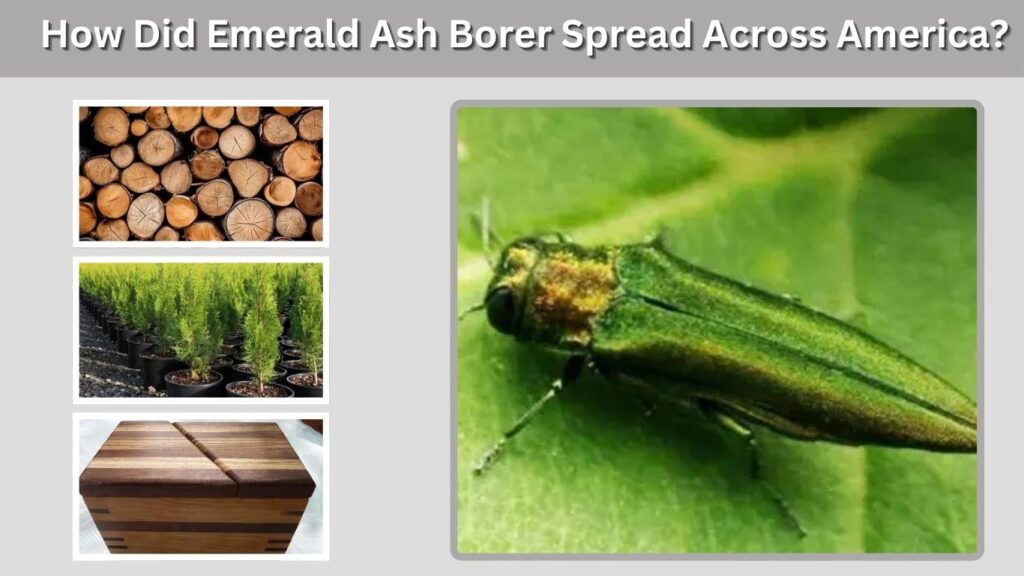
After becoming established, emerald ash borer spread through a combination of natural flight and human transportation. Adult beetles can fly to nearby trees, producing a gradual outward expansion. People can move the pest much farther in a single day.
Movement of Infested Firewood
Transporting firewood has been one of the most important causes of long-distance spread. Larvae can survive under the bark of cut logs. When that wood is taken to a campground, home, cabin, or another state, adults may emerge and begin a new infestation.
Human-assisted movement can create infestations tens or hundreds of miles from previously known populations, while typical natural dispersal occurs over much shorter distances.
Logs, Nursery Trees and Wood Products
The beetle may also travel in ash logs, branches, nursery stock, and wood that has not been processed sufficiently to kill the larvae. Regulations controlling the movement of potentially infested material are intended to reduce these long-distance jumps.
How to Get Rid of Emerald Ash Borer
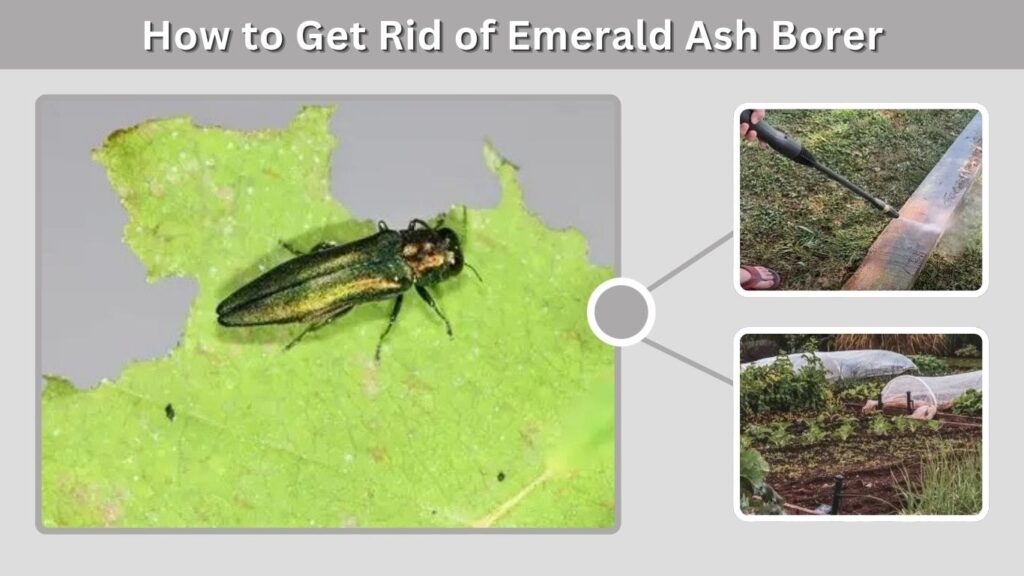
It is generally not possible for a homeowner to eliminate emerald ash borer from an entire community or region. Management focuses on protecting valuable trees, removing hazardous trees, slowing additional spread, and supporting long-term biological control.
Treat Healthy Ash Trees
Healthy and lightly infested ash trees may be protected with systemic insecticides. Common options include soil treatments and professional trunk injections. Treatment must be repeated according to the pesticide label and is most successful before substantial canopy decline develops.
Remove Severely Damaged Trees
Trees with extensive canopy loss or serious structural deterioration may be too damaged to save. Such trees should be evaluated by a qualified arborist because dead ash wood can become brittle and hazardous.
Cutting down the tree alone does not necessarily kill every larva. The wood must be chipped, processed, burned where permitted, or handled according to local regulations.
Support Biological Control
Government programs have released specialized parasitoid wasps that attack emerald ash borer eggs or larvae. These tiny wasps are intended to suppress beetle populations over time and support the survival of young ash trees. They are not a rapid cure for an individual infested tree, and releases should be managed by authorized programs.
Keep Firewood Local
Buying and burning firewood close to where it was harvested helps prevent hidden larvae from reaching uninfested areas. Ash logs, branches, and untreated firewood should not be transported outside regulated zones without authorization.
Which Trees Can Get Emerald Ash Borer?
Emerald ash borer primarily attacks true ash trees belonging to the genus Fraxinus. Susceptible North American species include green ash, white ash, black ash, blue ash, and other native ashes. Black ash trees can therefore become infested.
Oak trees are not ash trees and are not considered emerald ash borer hosts. Mountain ash also belongs to a different plant genus and is not a true ash. However, researchers have documented emerald ash borer reproduction in white fringetree, a close relative of ash in the olive family.
FAQs
How did the emerald ash borer originally enter America?
It most likely entered accidentally inside solid-wood pallets, crates, or cargo supports imported from Asia. Scientists have not identified the exact shipment, but research and the location of the original infestation strongly support wooden packaging as the introduction pathway.
How did the emerald ash borer get to Michigan?
The beetle probably emerged from infested Asian wood packaging delivered to the Detroit metropolitan area. Research indicates that the original population became established around Canton, Michigan, during the early to mid-1990s or possibly earlier.
When was emerald ash borer first found in America?
Emerald ash borer was officially identified in southeastern Michigan and nearby Ontario in 2002. Evidence from damaged trees shows that it had probably been living and reproducing in the region for several years before its discovery.
Can emerald ash borer be eliminated naturally?
There is no dependable natural home remedy that removes larvae from a living tree. Wood sanitation, local firewood use, tree removal, and agency-managed parasitoid wasps can reduce spread or populations, but valuable trees generally require approved insecticide treatment for reliable protection.
Can oak or mountain ash trees get emerald ash borer?
Oak trees and mountain ash are not typical emerald ash borer hosts because neither is a true Fraxinus ash. The beetle mainly attacks true ash species, although it has also been documented reproducing in white fringetree.