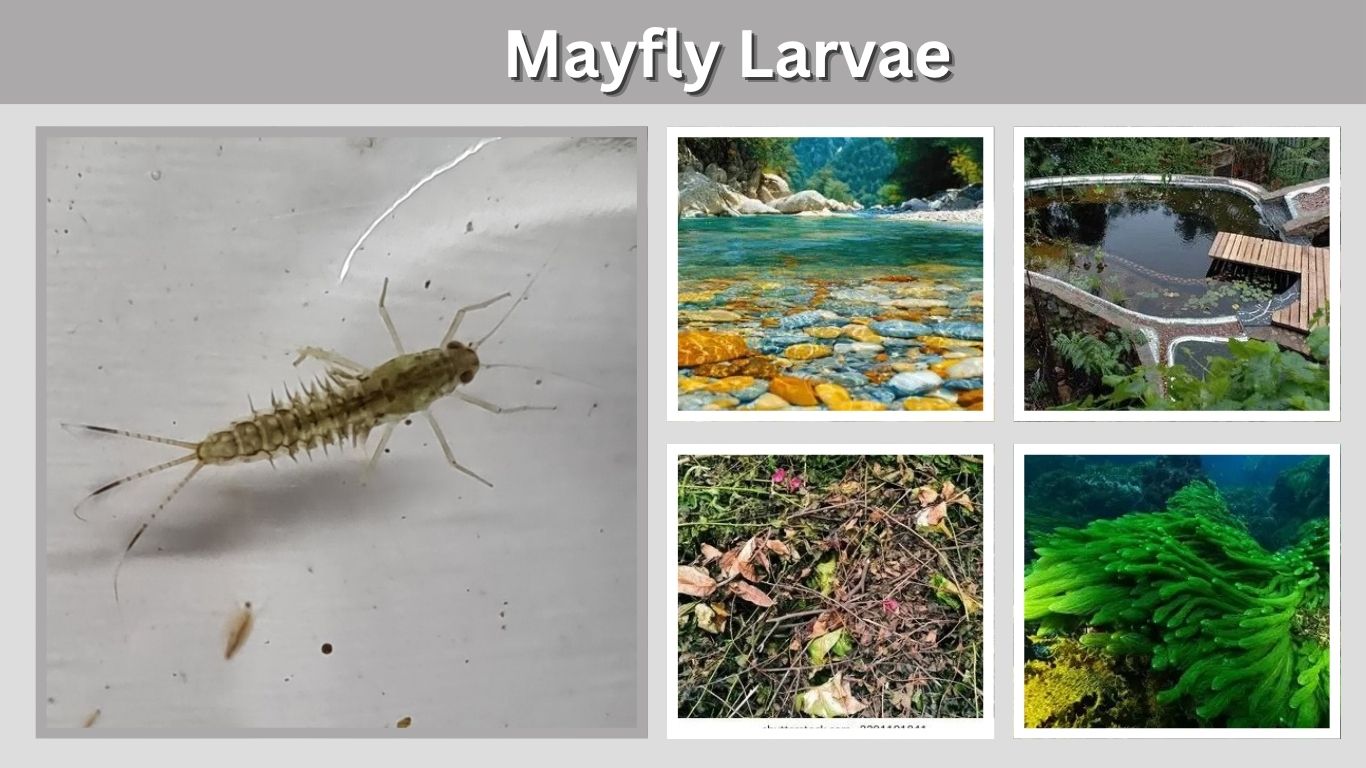
Mayfly larvae are aquatic insects that live in streams, rivers, lakes, and ponds before transforming into short-lived winged adults. Although people commonly call them larvae, the technically correct terms are mayfly nymphs or naiads because mayflies develop without a pupal stage.
Mayfly nymphs typically have two or three tails, visible gills along the abdomen, and six segmented legs. They play a major role in freshwater food webs by consuming algae and organic material while providing food for fish, amphibians, and other aquatic predators. Their presence can also provide useful information about water quality.
What Are Mayfly Larvae?
Mayflies belong to the insect order Ephemeroptera. Their development follows three principal stages: egg, aquatic nymph, and winged adult. Unlike butterflies, beetles, and true flies, they do not pass through a separate pupal stage.
The immature mayfly is therefore a nymph rather than a true larva. However, “mayfly larvae” remains a widely used informal name.
| Feature | Description |
| Scientific order | Ephemeroptera |
| Correct immature-stage name | Nymph or naiad |
| Habitat | Freshwater |
| Breathing method | Abdominal gills |
| Number of tails | Usually three, sometimes two |
| Diet | Algae, detritus, microorganisms, or small prey |
| Development time | Weeks to more than two years |
| Ecological role | Consumer, decomposer, and prey animal |
Mayfly nymphs spend most of their lives underwater. The familiar flying mayfly represents only the brief reproductive part of a much longer life cycle.
What Do Mayfly Larvae Look Like?
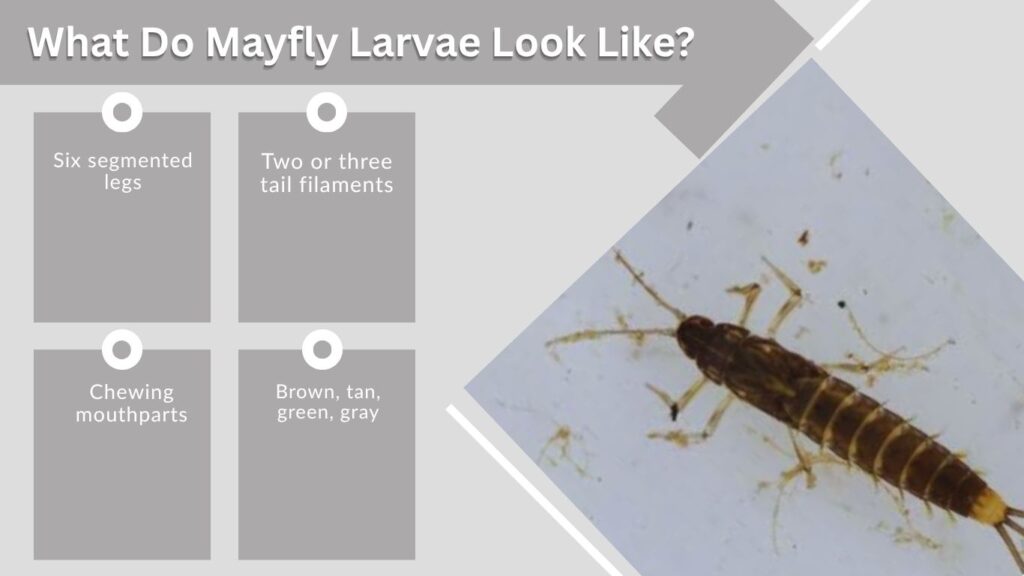
Mayfly nymphs usually have long, segmented bodies with six legs and two or three slender tails at the end of the abdomen. Their size, shape, and color vary widely among species.
Identification Features
- Long or flattened aquatic body
- Six segmented legs
- Two or three tail filaments
- Plate-like or feathery gills along the abdomen
- One claw at the end of each leg
- Chewing mouthparts
- Developing wing pads on older nymphs
- Brown, tan, green, gray, or yellowish coloring
The abdominal gills are among the most important identification features. They may look like small leaves, feathers, plates, forks, or fringed structures arranged along both sides of the abdomen. Most species have three tails, but some appear to have only two because the central filament is very short or absent.
Mayfly Larvae Size
There is no single size for every mayfly nymph. Small species may measure only a few millimeters, while large burrowing mayflies can exceed an inch before emergence.
Many commonly encountered families have mature nymphs measuring approximately 4–15 millimeters, excluding their tails. Size alone is not sufficient for identification because age, sex, and species all affect body length.
Where Do Mayfly Larvae Live?
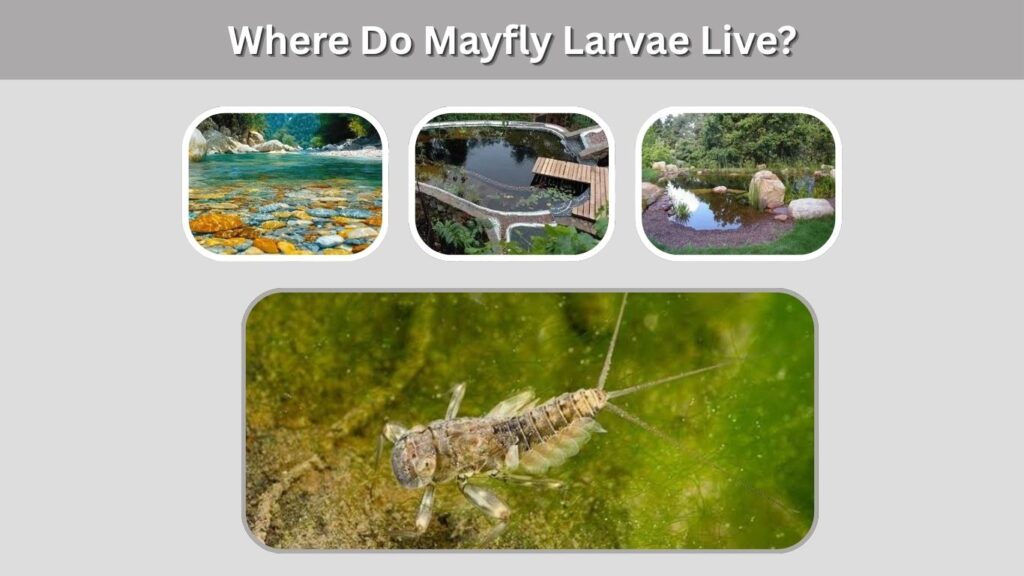
Mayfly nymphs are strictly aquatic and occur primarily in freshwater. Different species are adapted to specific water speeds, temperatures, oxygen levels, and bottom materials.
Common habitats include:
- Rocky streams
- Clear rivers
- Lakes and ponds
- Wetland pools
- Sandy river bottoms
- Muddy lake beds
- Submerged plants
- Leaf packs and woody debris
- Gravel beneath shallow water
Fast-water species often cling tightly to rocks in cool, oxygen-rich streams. Burrowing species dig into sand, silt, clay, or marl in quiet rivers and lakes. Swimming species move through open water or vegetation, while sprawlers hide among leaves, roots, and bottom debris.
Types of Mayfly Nymphs
Body shape and behavior reflect the conditions in which a mayfly lives. Aquatic researchers often group nymphs according to their movement and habitat.
Swimming Mayfly Nymphs
Swimming nymphs usually have slender, streamlined bodies resembling tiny fish. They move by rapidly bending the abdomen and tails from side to side.
Many small minnow mayflies belong to this group. They live in streams, rivers, and still-water margins, where they swim between plants, stones, and submerged debris.
Clinging and Flatheaded Nymphs
Clinging mayflies have flattened bodies and strong legs that help them remain attached to rocks in fast currents. Their low profile reduces the force of water pushing against them.
They commonly graze algae and other microscopic growth from stone surfaces. Their wide heads and flattened bodies distinguish them from slender swimming species.
Burrowing Mayfly Larvae
Burrowing mayflies live inside tunnels constructed in soft lake or river bottoms. Many have enlarged front legs and tusk-like jaws that help them dig through sand, silt, or clay.
Their feathery gills may create water movement through the burrow, helping provide oxygen and bringing suspended food particles within reach. Genera such as Hexagenia, Ephemera, and Ephoron contain well-known burrowing mayflies.
Crawlers and Sprawlers
Crawlers move over stones, plants, and organic debris. Sprawlers rest on the bottom or partially cover themselves with fine sediment and leaf material.
Their mottled colors help them blend into the substrate and avoid detection by fish and other predators.
What Do Mayfly Larvae Eat?
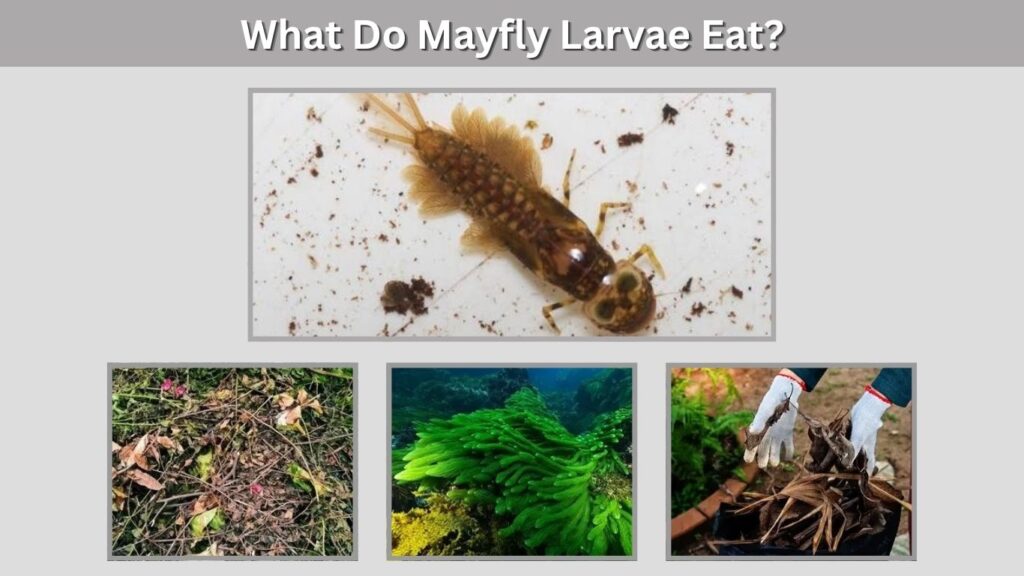
The diet varies among families and species. Most mayfly nymphs consume plant-based or decomposing material, but a smaller number prey on other aquatic organisms.
Common foods include:
- Algae
- Diatoms
- Microscopic plants
- Bacteria and fungi
- Decaying leaves
- Fine organic particles
- Plant debris
- Small aquatic invertebrates
Scrapers graze algae from rocks, while collector-gatherers pick up organic particles from the bottom. Filter feeders collect suspended food from flowing water, and shredders break down decomposing leaves. Predatory species may capture tiny insect larvae or other freshwater animals.
Because many consume decaying plant matter, mayfly nymphs contribute to decomposition and nutrient movement. However, describing every mayfly as a decomposer would be inaccurate because feeding habits differ considerably.
How Do Mayfly Larvae Breathe Underwater?
Mayfly nymphs breathe primarily through external gills located along the abdomen. Oxygen dissolved in the water moves across the thin gill surfaces and enters the insect’s respiratory system.
Some species rhythmically move or wave their gills. This movement increases water circulation and brings fresh oxygen into contact with the gill surfaces. Burrowing species may also pump water through their tunnels.
Gills vary in structure according to habitat. Fast-water species may have compact plates, while burrowers often possess large, feathery gills. These differences help each species survive under particular current and oxygen conditions.
How Long Do Mayfly Larvae Live?
The aquatic nymph stage accounts for most of a mayfly’s lifespan. It may last from several weeks to more than two years, depending on species, temperature, food, season, and habitat.
During this period, the nymph repeatedly sheds its outer skin as it grows. Some mayflies molt many times before reaching maturity.
When fully developed, the nymph rises toward the surface or crawls onto a rock, plant, or other object. It then transforms into a winged subimago. The subimago later molts again to produce the final reproductive adult—a unique feature among living winged insects.
Are Mayfly Larvae Indicators of Clean Water?
Mayfly nymphs are widely used in freshwater monitoring. Many species are sensitive to low dissolved oxygen, sedimentation, toxic pollutants, and other environmental disturbances.
Finding a varied mayfly community—especially together with stoneflies and caddisflies—often suggests that a stream has suitable habitat and relatively good water conditions. However, one nymph alone does not prove that the water is completely unpolluted. Different mayfly species have different tolerance levels.
Scientists evaluate the abundance, diversity, and identity of the entire macroinvertebrate community rather than relying on a single insect.
Mayfly Larvae vs. Stonefly Larvae
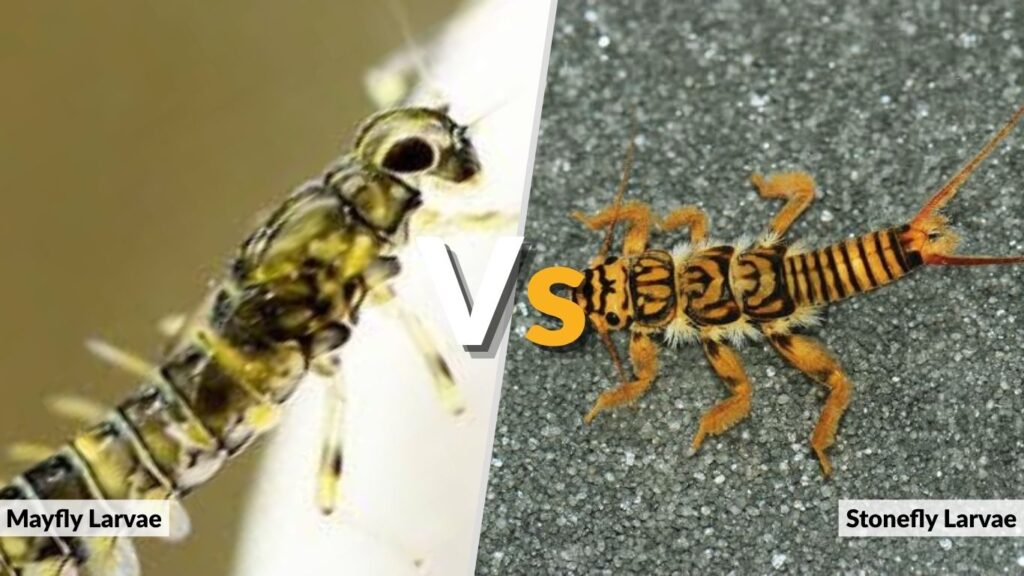
Mayfly and stonefly nymphs are frequently confused because both live underwater and have long tails.
| Feature | Mayfly nymph | Stonefly nymph |
| Tails | Usually three; sometimes two | Two |
| Abdominal gills | On the top or sides | Never plate-like along the abdomen |
| Foot claws | One per foot | Two per foot |
| Body shape | Slender, streamlined, or flat | Usually elongated and sturdy |
| Common habitat | Streams, rivers, lakes, and ponds | Mainly cool, flowing water |
The combination of abdominal gills and one claw on each foot reliably distinguishes mayflies from stoneflies. Stonefly gills, when present, occur around the thorax, leg bases, neck, or lower body instead.
Mayfly Larvae vs. Damselfly Larvae
Damselfly nymphs may also have three tail-like structures, but their appearance is noticeably different.
The three structures on a damselfly are broad, leaf-shaped external gills. Mayfly tails are much thinner, and their respiratory gills are positioned along the abdomen.
Damselfly nymphs are predators with a hinged lower jaw that shoots forward to capture prey. They also tend to have more robust heads and bodies than many mayfly nymphs.
What Eats Mayfly Larvae?
Mayfly nymphs are an important food source for many freshwater predators, including:
- Trout and other fish
- Dragonfly nymphs
- Stonefly nymphs
- Predatory aquatic beetles
- Crayfish
- Amphibians
- Water birds
- Other mayfly species
Fish feed on nymphs as they crawl along the bottom, drift with currents, or swim toward the surface to emerge. Their importance as fish food explains why artificial mayfly nymph patterns are widely used in fly fishing.
Can Mayfly Larvae Bite Humans?
Mayfly nymphs do not seek human blood and are not considered biting pests. Their chewing mouthparts are adapted to scrape algae, process organic material, or capture very small aquatic prey.
They should still be handled gently because they are delicate aquatic organisms. Return any collected specimens to the same water unless collection is permitted for scientific, educational, or fishing purposes.
FAQs
Are mayfly larvae and nymphs the same thing?
Yes, the terms usually describe the same immature insect. “Nymph” or “naiad” is technically more accurate because mayflies develop without a pupal stage. “Larva” remains common in informal descriptions.
Do mayfly larvae live only in clean water?
Many species prefer clean, oxygen-rich water and are sensitive to pollution. However, tolerance varies among species, so mayfly presence alone cannot provide a complete assessment of water quality.
How can you find mayfly larvae?
Look carefully beneath submerged stones, among aquatic plants, inside leaf packs, or in soft sediment. Avoid disturbing sensitive habitats unnecessarily, and return overturned stones to their original positions.
Can mayfly larvae fly?
No. The aquatic nymph has no functional wings. Older nymphs develop wing pads, but they cannot fly until they emerge from the water and transform into a winged subimago.
Are mayfly larvae good fishing bait?
Fish naturally consume mayfly nymphs, so they can be effective bait where collecting and using live aquatic insects is permitted. Artificial nymph patterns are a more practical option and avoid removing organisms from streams.