
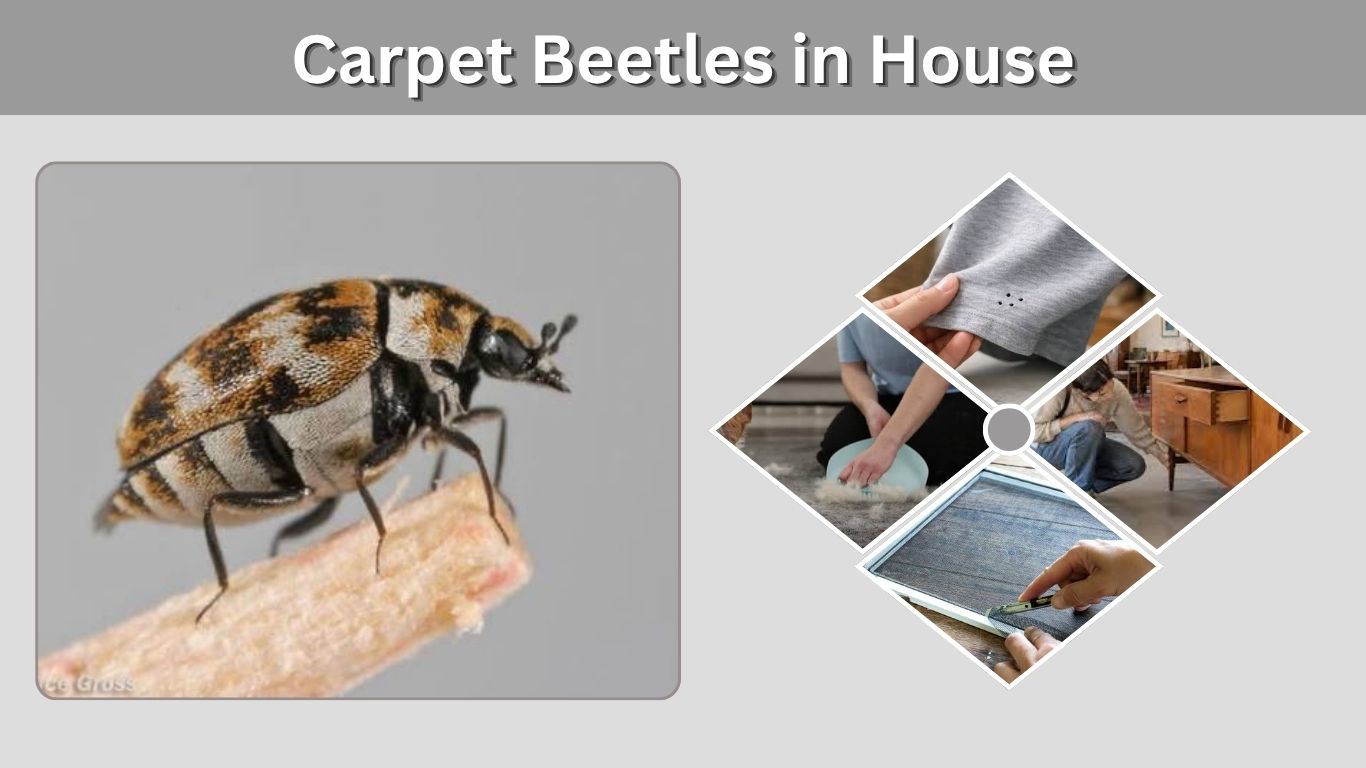
Finding carpet beetles in your house can be concerning, especially when you notice tiny beetles near windows, hairy larvae in closets, or unexplained holes in clothing. These common household pests often enter through open doors, windows, or infested belongings. Although adult carpet beetles are generally harmless, their larvae can damage natural fabrics and cause skin irritation in sensitive individuals. Understanding why carpet beetles appear indoors is the first step toward controlling them. This guide explains how they enter your house, where they hide, and how to eliminate infestations effectively.
Why Are Carpet Beetles in My House?
Carpet beetles enter houses primarily in search of suitable places to reproduce. Adults commonly live outdoors, where they feed on pollen and nectar. However, they can move indoors through openings or arrive accidentally on household items. Once inside, female beetles may lay eggs near materials their larvae can eat.
How Do Carpet Beetles Get in Your House?
Adult carpet beetles can fly, making it relatively easy for them to enter buildings through open windows and doors. They may also slip through damaged window screens or other small openings.
Sometimes, carpet beetles arrive on fresh flowers, secondhand furniture, rugs, or stored clothing. Their larvae can also be transported inside infested belongings.
Nearby bird nests and accumulated organic debris may provide additional sources from which beetles spread indoors.
What Attracts Carpet Beetles to Your House?
Several household conditions can encourage carpet beetles to settle and reproduce:
- Natural fabrics: Wool, silk, fur, and feathers provide food for larvae.
- Pet hair: Accumulated animal hair attracts feeding larvae.
- Dead insects: Larvae consume dead insects and other organic remains.
- Food debris: Some species feed on stored grains and other dried food materials.
- Dark storage spaces: Undisturbed closets and drawers provide suitable hiding places.
- Flower arrangements: Fresh flowers can accidentally introduce adult carpet beetles indoors.
These conditions make houses attractive even when regular cleaning is performed.
What Do Carpet Beetles Look Like in the House?
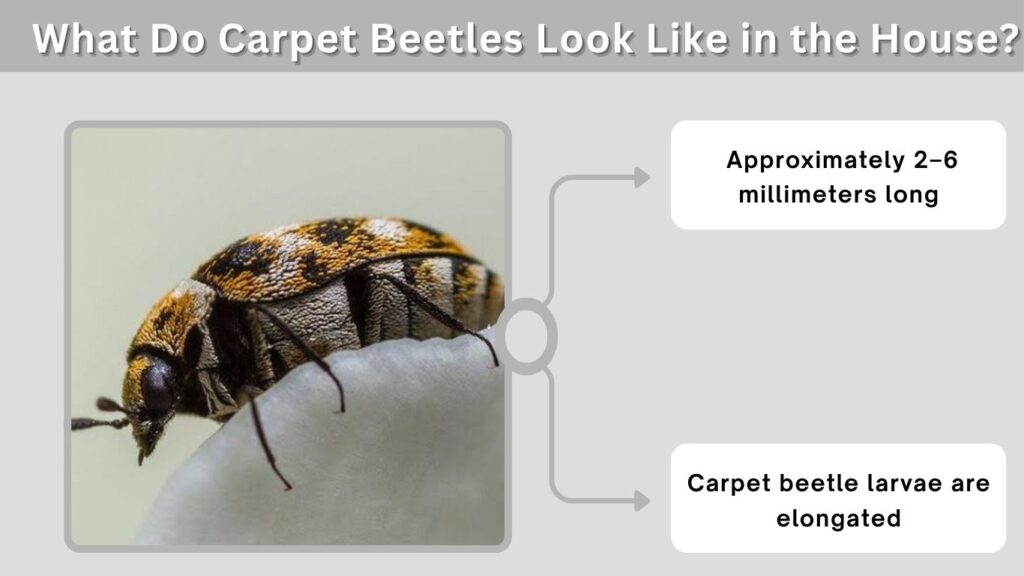
Carpet beetles are small insects belonging to the family Dermestidae. Their appearance varies depending on species and developmental stage. Adult beetles usually have compact, oval bodies, while larvae appear elongated and hairy. Correct identification helps distinguish them from other household pests.
Adult Carpet Beetles in House
Adult carpet beetles generally measure approximately 2–6 millimeters long, depending on the species. Their bodies may be black, brown, or covered with irregular white, yellow, and brown patterns.
The varied carpet beetle has a mottled appearance, while the black carpet beetle typically has a dark, relatively uniform body.
Adults are commonly discovered crawling along windowsills because they are attracted to light.
Carpet Beetle Larvae in House
Carpet beetle larvae are elongated, segmented insects covered with tiny hairs. Their colors range from light brown to dark brown, sometimes with visible stripes.
Unlike adults, larvae prefer dark, protected locations where suitable food is available.
Black carpet beetle larvae have elongated bodies with distinctive tufts of hair near the rear. Varied carpet beetle larvae are broader toward the back and often have alternating dark and light bands.
Where Do Carpet Beetles Hide in the House?
Carpet beetles can survive in numerous indoor environments. Their larvae prefer locations that provide food, shelter, and minimal disturbance. Since larvae avoid bright light, infestations frequently develop in places that homeowners rarely inspect or clean.
Common Carpet Beetle Hiding Places
The most common hiding locations include:
- Carpet edges: Beneath rugs and along baseboards.
- Closets: Inside stored clothing and fabric containers.
- Furniture: Under sofas, cushions, and upholstered chairs.
- Bedrooms: Around wool blankets and other natural-fiber bedding.
- Attics: Near abandoned bird or rodent nests.
- Storage rooms: Inside boxes containing wool, feathers, or other organic materials.
- Air vents: Around accumulated lint, hair, and insect debris.
Inspecting these locations helps identify potential breeding sites.
Can Carpet Beetles Live in a House Without Carpet?
Yes. Carpet beetles can infest houses without carpeting because larvae consume many materials besides carpet fibers.
Stored clothing, upholstered furniture, feathers, pet hair, and dead insects can support their development. Even homes with tile or hardwood flooring may experience infestations when suitable food accumulates in hidden locations.
Signs of Carpet Beetles in House
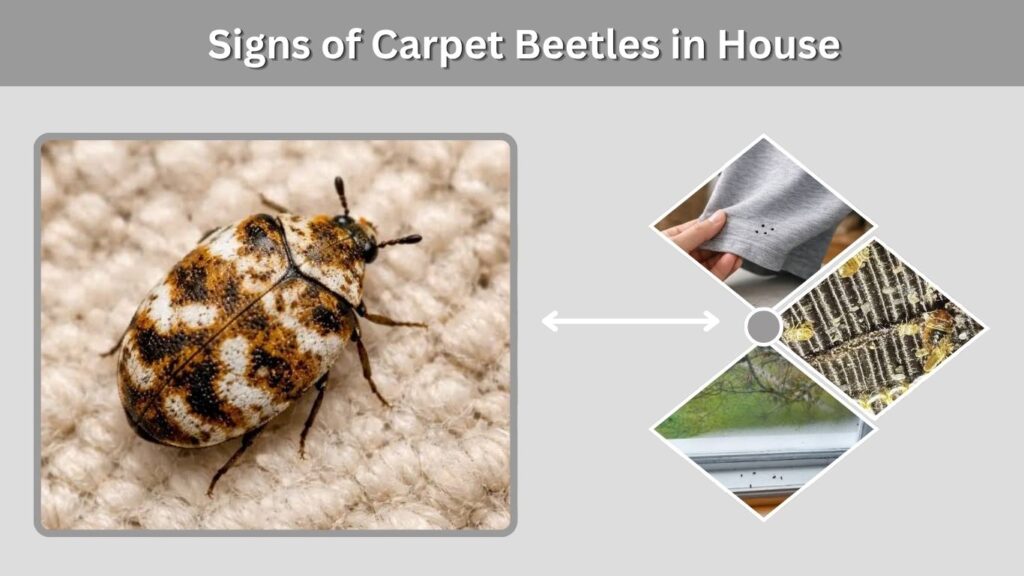
Recognizing the early signs of carpet beetles helps prevent expensive damage to clothing and household fabrics. While seeing an occasional adult beetle is relatively common, finding larvae, discarded skins, or damaged materials may indicate that an infestation is developing.
Common Signs of Carpet Beetle Infestation
Look for the following warning signs:
- Small holes in fabrics: Irregular damage appears on wool clothing, rugs, or blankets.
- Hairy larvae: Brown, bristly insects crawl along baseboards or inside closets.
- Shed larval skins: Empty, brownish skins collect around feeding sites.
- Adult beetles near windows: Small beetles gather around sunny windowsills.
- Tiny fecal pellets: Larvae leave small droppings near damaged materials.
- Unexplained skin irritation: Sensitive individuals may react to larval hairs.
Skin symptoms alone cannot confirm a carpet beetle infestation.
I Found One Carpet Beetle in My House: Should I Worry?
Finding one carpet beetle does not necessarily mean your home has an infestation. Adult beetles occasionally fly indoors from gardens or nearby vegetation.
However, repeated sightings, damaged fabrics, or multiple larvae suggest that beetles may be reproducing inside.
Inspect closets, furniture, and storage areas before deciding whether extensive treatment is necessary.
How to Get Rid of Carpet Beetles in House
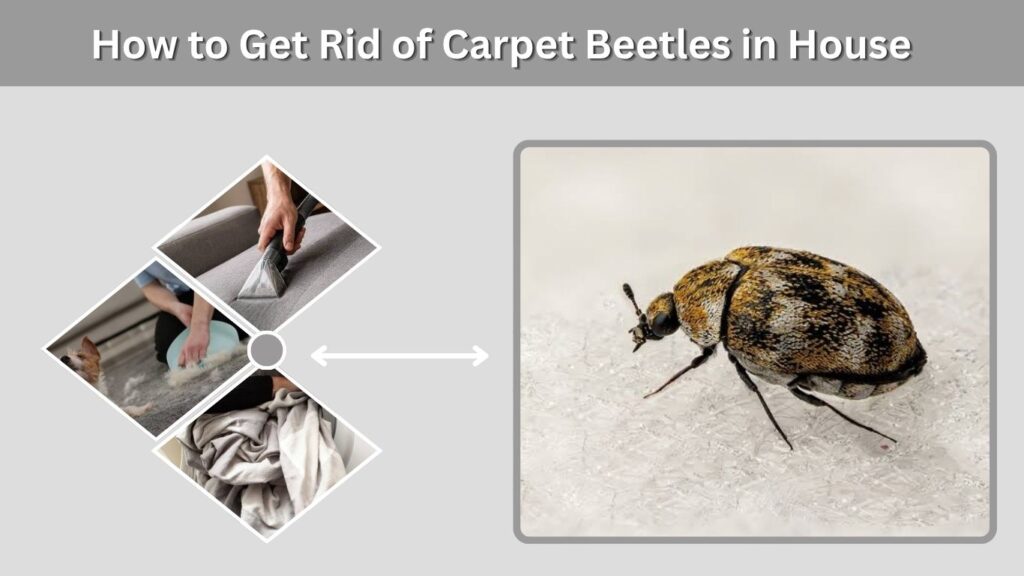
Eliminating carpet beetles requires finding their food sources and removing insects at different life stages. Vacuuming, fabric cleaning, and eliminating infested materials are usually the first steps. Serious infestations may require additional treatment to reach hidden larvae.
Vacuum Carpets and Furniture Thoroughly
Vacuum carpets, upholstered furniture, baseboards, and hard-to-reach corners. Pay particular attention to areas beneath furniture and along carpet edges.
Vacuuming removes larvae, eggs, shed skins, and organic debris. Empty the vacuum outside promptly after cleaning infested areas.
Repeat cleaning regularly until signs of infestation disappear.
Wash and Treat Infested Fabrics
Wash affected clothing and bedding using the hottest water permitted by their care instructions.
Professional dry cleaning can eliminate carpet beetles from delicate garments. A heated clothes dryer may also treat suitable fabrics.
After cleaning, store valuable natural-fiber clothing in airtight containers to prevent reinfestation.
Remove Carpet Beetle Larvae and Food Sources
Inspect hidden spaces for larvae and materials supporting their development.
Remove accumulated pet hair, dead insects, lint, and badly infested belongings. Check nearby stored textiles and furniture for additional activity.
If larvae originate from abandoned animal nests, arrange for their safe removal when appropriate.
Consider Professional Pest Control
Professional treatment may be necessary when cleaning fails to eliminate an established infestation.
Pest control specialists can locate concealed breeding sites and recommend targeted control methods.
Only use insecticides specifically labeled for carpet beetles and the intended treatment location. Never spray clothing, bedding, or skin with household insecticides.
How to Prevent Carpet Beetles in Your House
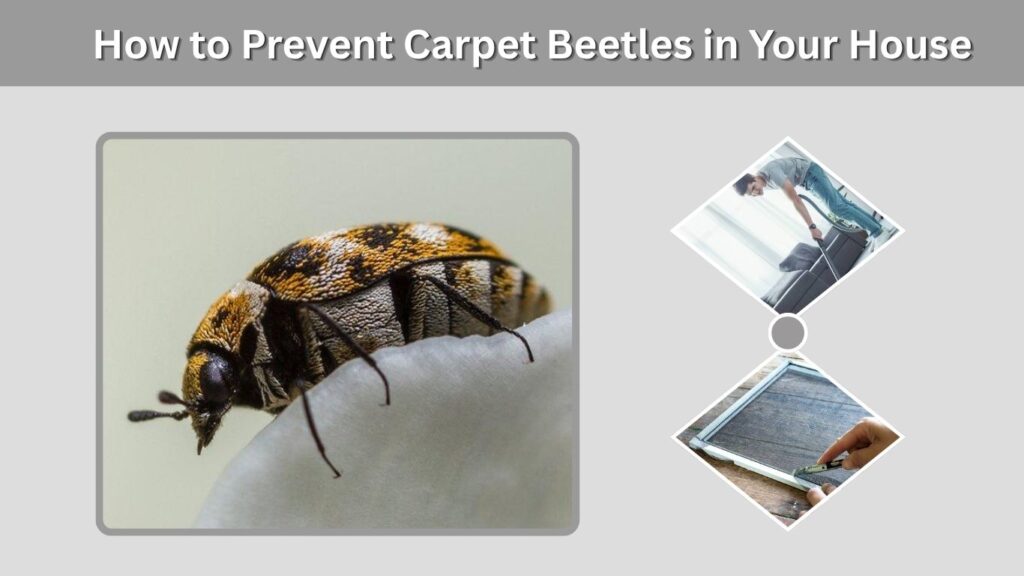
Long-term carpet beetle prevention depends on removing food sources and limiting opportunities for beetles to enter. Routine cleaning and careful storage are especially important for homes containing wool, fur, feathers, or other natural animal fibers.
Effective Carpet Beetle Prevention Tips
Follow these preventive practices:
- Vacuum carpets, furniture, and hidden corners regularly.
- Store clean wool clothing in sealed containers.
- Repair damaged window and door screens.
- Inspect cut flowers before bringing them indoors.
- Remove accumulated pet hair and lint.
- Examine secondhand furniture and rugs before use.
- Check stored fabrics periodically for larvae or damage.
These practices reduce the likelihood of repeated infestations.
Why Do I Keep Finding Carpet Beetles in My House?
Repeated sightings usually mean adult beetles are continuing to enter from outdoors or an indoor food source remains undiscovered.
Hidden larvae may be feeding beneath furniture, inside stored fabrics, or around accumulated organic debris.
Locating and removing these sources is more effective than repeatedly killing visible adult beetles.
FAQs
1. Is It Normal to Have Carpet Beetles in Your House?
Occasional adult carpet beetles are relatively common indoors, particularly near windows. However, finding numerous larvae or damaged clothing may indicate an active infestation. Inspect nearby fabrics and hidden spaces to determine whether the beetles are reproducing inside.
2. Can Carpet Beetles Fly Around the House?
Yes. Adult carpet beetles have functional wings and can fly indoors. They are often attracted to sunlight and may gather near windows. Their larvae cannot fly and typically crawl through hidden locations while searching for food and shelter.
3. Where Do Carpet Beetles Lay Eggs in a House?
Female carpet beetles generally lay eggs near suitable larval food sources. These may include wool clothing, upholstered furniture, carpets, stored animal materials, and accumulated organic debris. Hidden, undisturbed locations provide favorable conditions for newly hatched larvae to begin feeding.
4. Are Black Carpet Beetles Dangerous in the House?
Black carpet beetles do not bite or sting humans. However, their larvae can damage clothing, carpets, and other vulnerable belongings. Some people may also experience skin irritation associated with larval hairs. Early identification helps prevent additional household damage.
5. How Long Does It Take to Get Rid of Carpet Beetles?
Minor infestations may improve quickly after thorough cleaning and treatment of affected fabrics. Established infestations may require several weeks of monitoring and repeated cleaning. Successful elimination depends on finding all significant food sources and preventing additional beetles from entering.
