
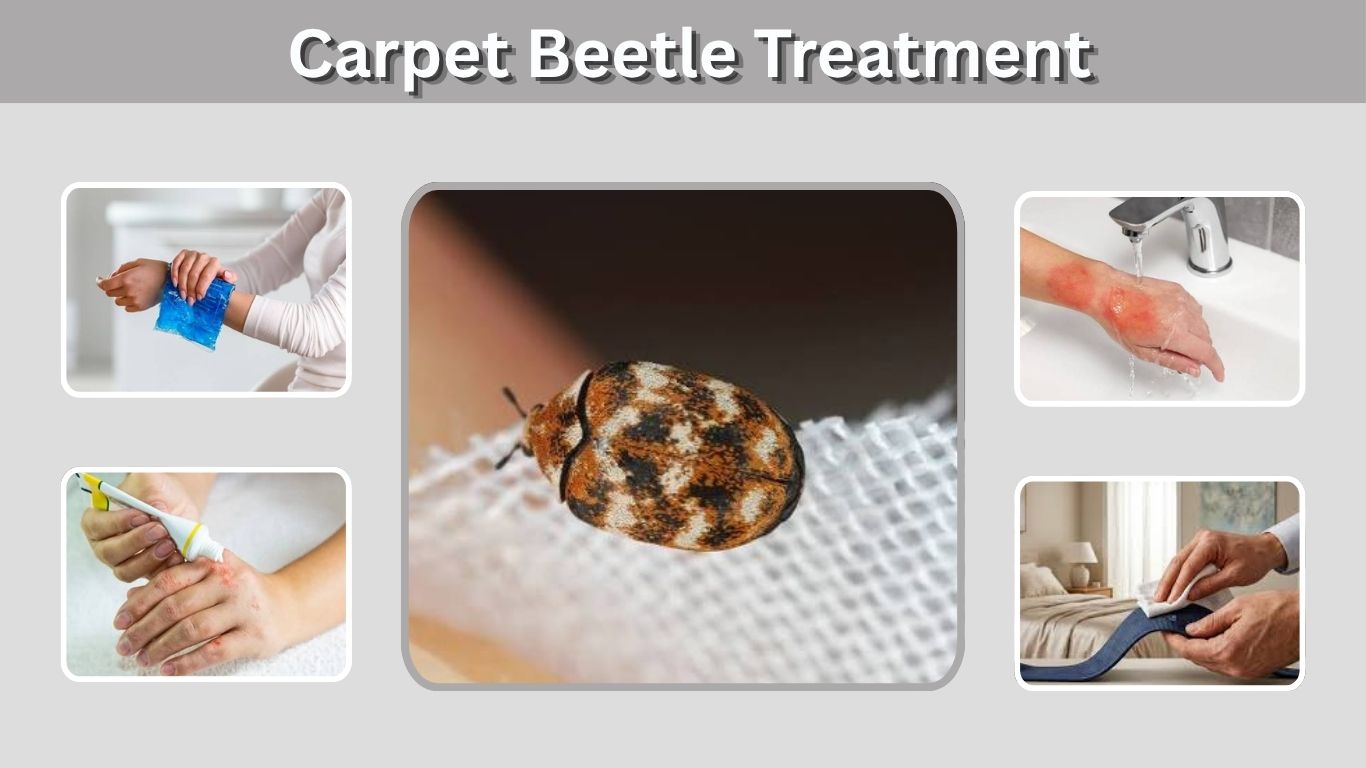
Carpet beetles can damage carpets, clothing, furniture, and other household fabrics if an infestation goes untreated. Their larvae feed on natural fibers, while their tiny hairs may cause allergic skin reactions in sensitive individuals. Fortunately, effective carpet beetle treatment can help eliminate these pests and prevent future infestations. From vacuuming and heat treatment to professional pest control, several methods can control carpet beetles at different life stages. This guide explains nine effective treatment methods, natural alternatives, carpet beetle dermatitis treatment, and practical prevention strategies for protecting your home.
What Is the Best Treatment for Carpet Beetles?
The best carpet beetle treatment combines thorough cleaning, removal of infested materials, and targeted pest control when necessary. Since carpet beetle larvae cause most household damage, treatment should focus on locating and eliminating their hiding places rather than simply killing visible adult beetles.
Signs You Need Carpet Beetle Treatment
Common signs of a carpet beetle infestation include:
- Damaged fabrics: Irregular holes appear in wool carpets, clothing, blankets, or upholstery.
- Hairy larvae: Small, brownish larvae are found in closets, carpets, or beneath furniture.
- Shed skins: Empty larval skins accumulate around infested materials.
- Adult beetles: Small, oval beetles appear near windows or inside rooms.
- Skin irritation: Sensitive individuals develop itchy bumps after exposure to larval hairs.
Finding a few adult beetles does not necessarily indicate a serious infestation. However, repeated larval sightings or damaged belongings suggest active feeding.
9 Effective Carpet Beetle Treatment Methods
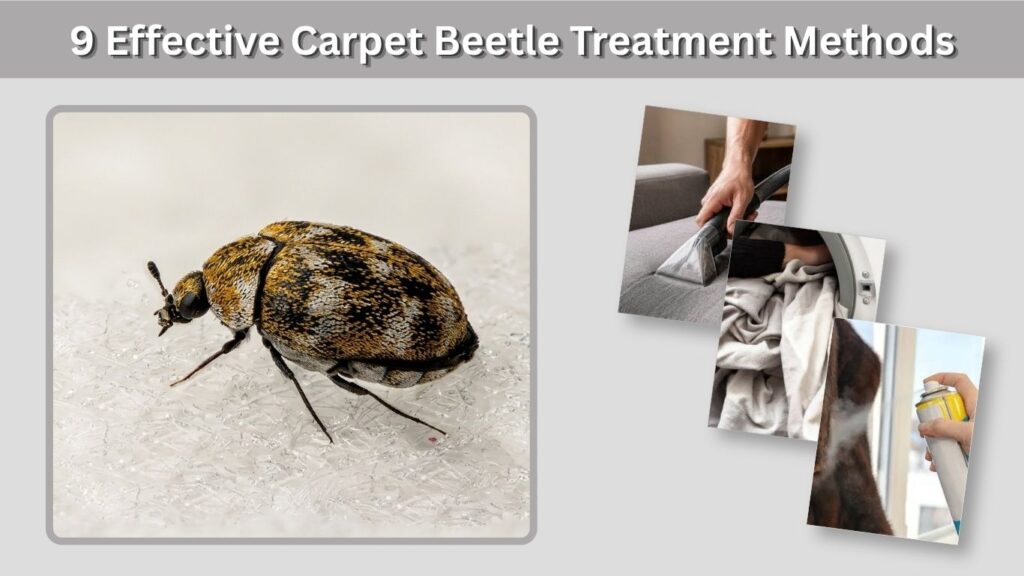
Different carpet beetle treatment methods work best under different infestation conditions. Minor problems often respond to cleaning and fabric treatment, while extensive infestations may require professional assistance. The following methods help eliminate carpet beetles, larvae, and their food sources.
1. Vacuum Carpets and Furniture Thoroughly
Vacuuming is one of the most effective carpet beetle home treatment methods. It physically removes larvae, eggs, shed skins, and the organic debris that supports their development.
Focus on carpet edges, upholstered furniture, baseboards, closets, and spaces beneath heavy furniture. Use a crevice attachment to reach narrow hiding places.
Empty the vacuum outside immediately after cleaning. Repeat regularly while monitoring for remaining larvae.
2. Wash Infested Clothing and Bedding
Hot laundering can eliminate carpet beetle larvae and eggs hiding inside washable fabrics. Follow each item’s care instructions and use the hottest permitted setting.
Dry cleaning is especially useful for delicate garments that cannot tolerate hot water.
Inspect wool sweaters, blankets, scarves, and stored clothing carefully before cleaning. Once treated, place clean items in sealed storage containers to prevent reinfestation.
3. Use Heat Treatment for Carpet Beetles
Heat treatment can destroy carpet beetles at different life stages when sufficient temperatures reach the insects.
A properly heated clothes dryer may effectively treat suitable fabrics. Professional heat treatment can also be considered for items that cannot be easily washed.
Avoid placing household belongings in ovens or exposing heat-sensitive materials to uncontrolled temperatures. Excessive heat can damage fabrics and create fire hazards.
4. Remove Carpet Beetle Larvae and Shed Skins
Carpet beetle larvae treatment is essential because larvae are responsible for most fabric damage. They frequently hide in dark locations containing pet hair, lint, feathers, or natural fibers.
Inspect closets, rugs, furniture seams, and storage containers. Remove larvae and discarded skins using a vacuum or careful cleaning.
Eliminating accumulated organic debris also removes important food sources, making the environment less suitable for continued development.
5. Apply Steam Cleaning Where Appropriate
Steam cleaning can help treat suitable carpets and upholstered furniture when the equipment delivers enough heat to affected areas.
Focus on carpet edges, furniture seams, and locations where larvae have been detected. Always follow manufacturer instructions to prevent moisture or heat damage.
Allow cleaned materials to dry thoroughly. Steam cleaning should supplement inspection and vacuuming rather than replace the removal of heavily infested items.
6. Use Carpet Beetle Treatment Sprays
Insecticide sprays labeled for carpet beetles may help control persistent infestations. These products are generally used in specific locations where larvae hide.
Suitable treatment areas may include carpet edges, baseboard cracks, and inaccessible spaces beneath furniture, depending on the product label.
Never spray insecticides directly onto clothing, bedding, pets, or skin. Cleaning and locating the infestation source remain essential even when chemical treatments are used.
7. Try Appropriate Natural Carpet Beetle Treatments
Nonchemical carpet beetle treatments can be useful for minor infestations. These approaches focus primarily on physically removing insects and making household materials less attractive to larvae.
Useful natural methods include:
- Frequent vacuuming: Removes larvae and accumulated food debris.
- Hot laundering: Kills insects in suitable washable fabrics.
- Professional dry cleaning: Treats delicate clothing without household insecticides.
- Freezing suitable items: Extended freezing under controlled conditions can kill carpet beetles.
- Airtight storage: Prevents beetles from accessing clean, protected fabrics.
Essential oils, vinegar, and cedar alone are not reliable solutions for established infestations.
8. Dispose of Severely Infested Materials
Some carpets, cushions, or stored textiles become too heavily infested to clean effectively.
When severe damage is present, removing the affected material may be the most practical option. Seal infested belongings before disposal to reduce the chance of spreading larvae throughout the home.
Inspect nearby objects because carpet beetle larvae may move between suitable feeding locations.
9. Hire a Professional Pest Control Service
Professional carpet beetle treatment may be necessary when larvae continue appearing despite extensive cleaning.
Pest control specialists can inspect hidden breeding sites, identify infestation sources, and apply appropriate treatments.
Professionals may recommend targeted insecticide applications, specialized fabric treatment, or additional cleaning. Successful control usually requires removing the source rather than relying on chemicals alone.
Carpet Beetle Larvae Treatment vs. Adult Beetle Treatment
Carpet beetle larvae and adults behave differently, so effective treatment requires understanding their life stages. Adult beetles often appear around windows, while larvae usually remain hidden near food sources. Eliminating visible adults alone does not necessarily stop an infestation.
Treating Carpet Beetle Larvae
Larvae primarily feed on animal-based materials such as wool, feathers, fur, and accumulated hair. Their feeding activity causes most household fabric damage.
Treatment should focus on cleaning affected materials, removing food sources, and inspecting hidden locations for additional larvae.
Treating Adult Carpet Beetles
Adult carpet beetles generally feed on pollen and nectar outdoors. They may enter houses through open windows and doors.
Vacuuming visible adults and maintaining intact window screens can reduce indoor sightings. However, treatment must still target the larvae to control an established infestation.
Carpet Beetle Dermatitis and Rash Treatment
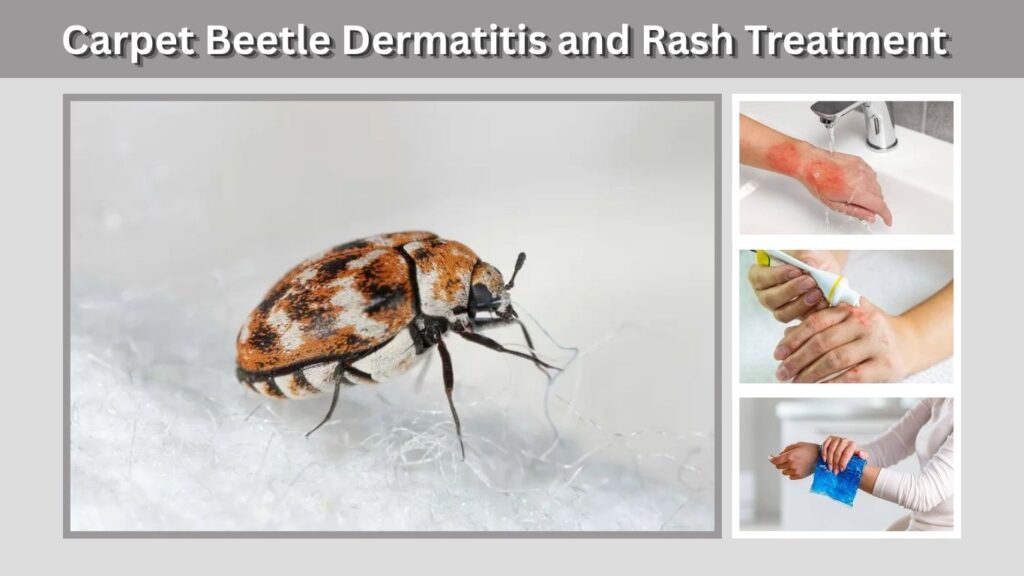
Carpet beetle dermatitis occurs when sensitive individuals react to hairs from carpet beetle larvae. Although carpet beetles do not bite humans, these hairs can produce itchy red bumps and allergic skin reactions. Managing the symptoms requires skin care and removing the source of exposure.
How to Treat Carpet Beetle Dermatitis
The following measures may help relieve mild skin irritation:
- Gently wash affected skin with mild soap and water.
- Apply cool compresses to reduce itching.
- Use calamine lotion for temporary relief.
- Consider over-the-counter 1% hydrocortisone cream as directed.
- Apply fragrance-free moisturizer to protect irritated skin.
- Avoid scratching to reduce the risk of infection.
Persistent, spreading, or severe rashes should be assessed by a healthcare professional. Similar symptoms can result from several unrelated skin conditions.
How Long Does Carpet Beetle Dermatitis Last?
Mild carpet beetle dermatitis may improve within several days after exposure stops, although some reactions persist longer.
Repeated contact with larval hairs can cause additional irritation. Cleaning clothing, bedding, and affected furniture is important for preventing recurring symptoms.
How Much Does Carpet Beetle Treatment Cost?
Carpet beetle treatment costs depend on infestation severity, property size, treatment method, and location. Small infestations may require only household cleaning, while severe problems may involve specialized equipment or professional pest control.
Professional Carpet Beetle Treatment Cost
In the United States, professional carpet beetle extermination commonly costs approximately 300–600, although difficult infestations may cost $1,200 or more.
These estimates vary by region and service provider. Additional expenses may include cleaning, follow-up visits, or replacing damaged fabrics.
Is DIY Carpet Beetle Treatment Cheaper?
DIY carpet beetle treatment can cost considerably less when the infestation is limited.
Vacuuming, laundering, and removing infested materials usually require fewer additional purchases than professional services. However, repeatedly using ineffective products can increase expenses without resolving the underlying problem.
How to Prevent Carpet Beetle Infestations
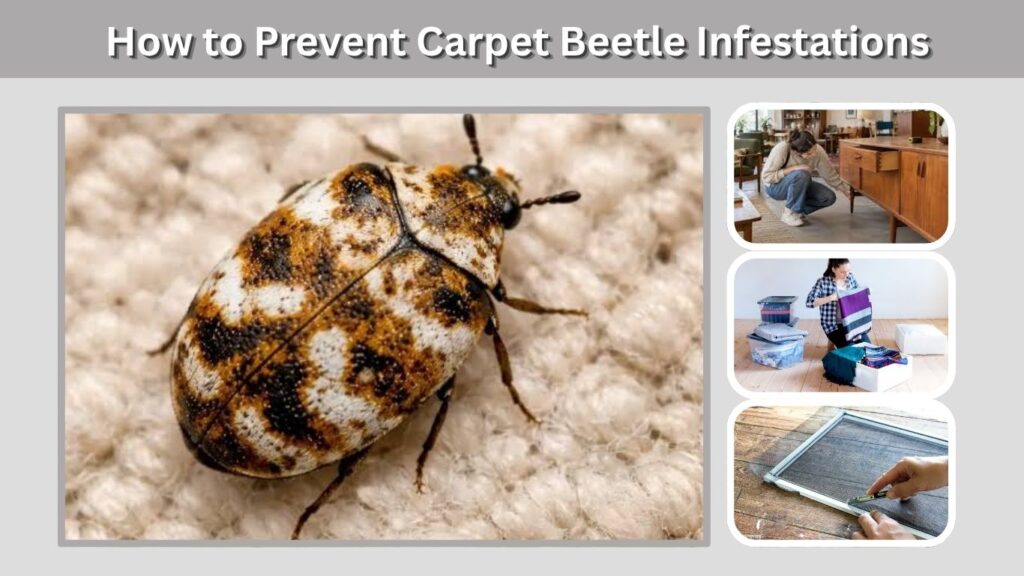
Preventing carpet beetles requires consistent cleaning and proper storage practices. These insects thrive in quiet locations containing lint, shed hair, and vulnerable fabrics. Regular household maintenance makes it harder for larvae to establish and maintain infestations.
Effective Carpet Beetle Prevention Tips
Follow these preventive measures:
- Vacuum carpets and furniture regularly.
- Store clean wool clothing in airtight containers.
- Remove accumulated lint, dust, and pet hair.
- Inspect secondhand furniture before bringing it indoors.
- Repair damaged window screens.
- Check closets and storage areas periodically.
- Remove abandoned insect or animal nesting materials safely.
When using chemical products, follow all label instructions and keep children and pets away from treated areas for the required period. No pesticide should be assumed to be completely pet-safe.
FAQs
1. What Is the Most Effective Carpet Beetle Treatment?
The most effective approach combines thorough vacuuming, hot laundering or dry cleaning, and removal of infested materials. Targeted insecticides may help with persistent infestations. Finding and eliminating larval food sources is essential because treating visible beetles alone rarely provides complete control.
2. Can Heat Treatment Kill Carpet Beetle Larvae?
Yes. Sufficient heat can kill carpet beetle larvae, eggs, and adults. A heated clothes dryer may work for compatible fabrics. Successful treatment depends on reaching effective temperatures throughout the material without damaging the item being treated.
3. Is There a Pet-Safe Carpet Beetle Treatment?
Vacuuming, laundering, and removing infested materials are useful pesticide-free options for households with pets. Chemical treatments require additional precautions. Always follow product labels, prevent pet exposure during application, and ensure treated areas are safe before allowing animals to return.
4. Will Bed Bug Treatment Kill Carpet Beetles?
Some insecticides labeled for bed bugs may also control carpet beetles, but effectiveness depends on the active ingredient and product instructions. Never assume a bed bug product is suitable for carpet beetles unless the label specifically permits that use.
5. How Long Does Carpet Beetle Treatment Take to Work?
Vacuuming and laundering can remove or kill exposed beetles immediately. Complete infestation control may require repeated inspections and cleaning over several weeks. Hidden larvae and untreated food sources can allow the infestation to continue despite initial treatment.
