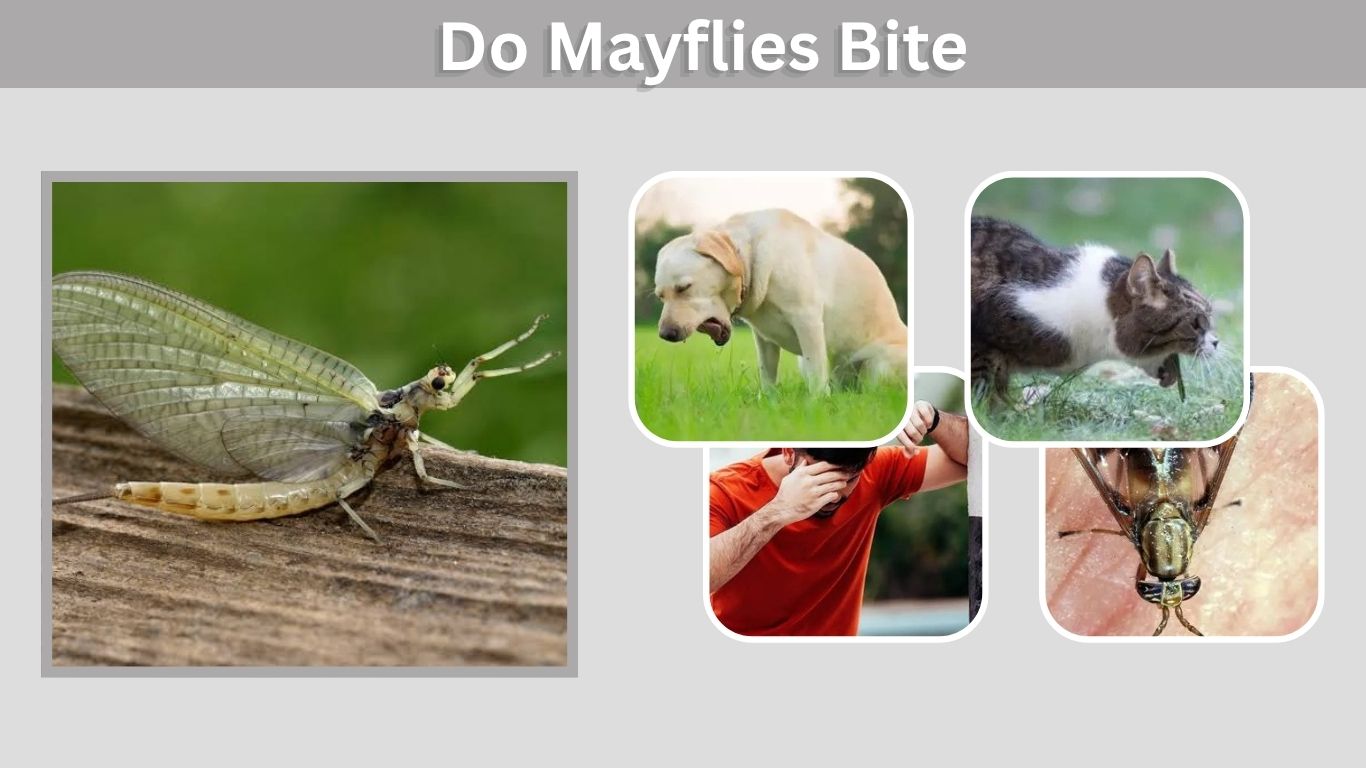
Mayflies often appear in enormous swarms around lakes, rivers, bridges, streetlights, and waterfront homes. Their long tails, upright wings, and sudden seasonal emergence can make them look alarming. However, mayflies do not bite or sting humans, dogs, or other animals. Adult mayflies have greatly reduced mouthparts and generally cannot feed at all. They spend their brief winged lives mating and laying eggs. Their aquatic nymphs have chewing mouthparts, but they feed mainly on algae, organic material, and tiny aquatic organisms—not people. If you develop an itchy mark near a mayfly swarm, another insect is probably responsible.
Do Mayflies Bite?
No, adult mayflies do not bite humans. Their mouthparts are vestigial, meaning they are reduced and nonfunctional. Most adults cannot eat solid food or drink blood.
Once a mayfly leaves the water, its main purpose is reproduction. Males gather in mating swarms, females mate and deposit eggs, and both die shortly afterward. Depending on the species, the adult stage may last from a few minutes to several days.
Mayflies may land on your clothing, hair, or skin during a large emergence, but they cannot deliberately pierce the skin. Their legs may feel slightly scratchy, especially when many insects are present, but this is not biting.
Can Mayflies Sting?
Mayflies cannot sting. They do not have stingers, venom glands, or defensive structures comparable to those of bees, wasps, or hornets.
The long filaments extending from the abdomen may look like stingers, but they are harmless tails called cerci. Most mayflies have two or three of these slender filaments. They help with balance and movement rather than defense.
Why Can’t Adult Mayflies Bite?
Adult mayflies are highly specialized for a very short reproductive life. Their digestive systems and mouthparts are reduced because they do not need to search for food after emerging.
The adult relies on energy collected while it lived underwater as a nymph. This stored energy supports flying, mating, and egg-laying.
Adult Mayfly Characteristics
- Mouthparts: Reduced and generally nonfunctional
- Diet: Adults usually do not eat
- Main activity: Mating and reproduction
- Adult lifespan: Minutes to several days
- Defense: No bite, sting, or venom
- Risk to people: Harmless nuisance
This short, nonfeeding adult stage explains why mayflies can emerge in enormous numbers without damaging crops, food, clothing, or buildings.
Do Mayfly Nymphs Bite?
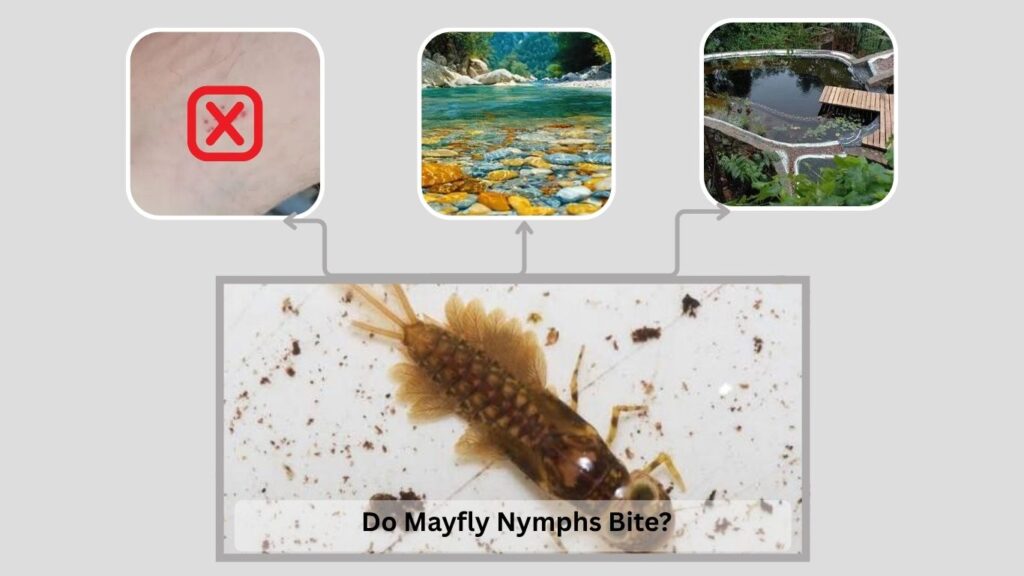
Mayfly nymphs, sometimes informally called mayfly larvae, have functional chewing mouthparts. However, they are not human-biting insects.
The nymphs live underwater in streams, rivers, lakes, ponds, and wetlands. Most feed by scraping algae from rocks or collecting fine organic particles from the bottom. Some consume decaying leaves, fungi, bacteria, and microscopic organisms. A few species may feed on very small aquatic animals.
Even predatory mayfly nymphs are not adapted to attack people. Their mouthparts are small, and they do not seek blood or defend territories by biting swimmers.
Are Mayfly Nymphs Dangerous to Swimmers?
No. Mayfly nymphs normally hide beneath stones, among aquatic plants, in sand, or inside muddy burrows. They usually attempt to escape when disturbed.
You may occasionally see one attached to a rock or swimming through shallow water. It can be handled carefully for observation, although returning it to the water quickly is important because its gills require moisture.
Do Giant Mayflies Bite?
Giant mayflies do not bite. Species commonly described as giant mayflies may have bodies approaching an inch long, with tails and wings making them appear significantly larger.
Despite their size, their adult mouthparts are just as reduced as those of smaller mayflies. They cannot bite, sting, inject venom, or feed on blood.
Large species may gather around lakes, buildings, roads, bridges, and outdoor lights. Their numbers can create slippery surfaces, unpleasant odors, and cleanup problems, but they do not physically attack people.
Do Mayflies Bite Dogs or Other Pets?
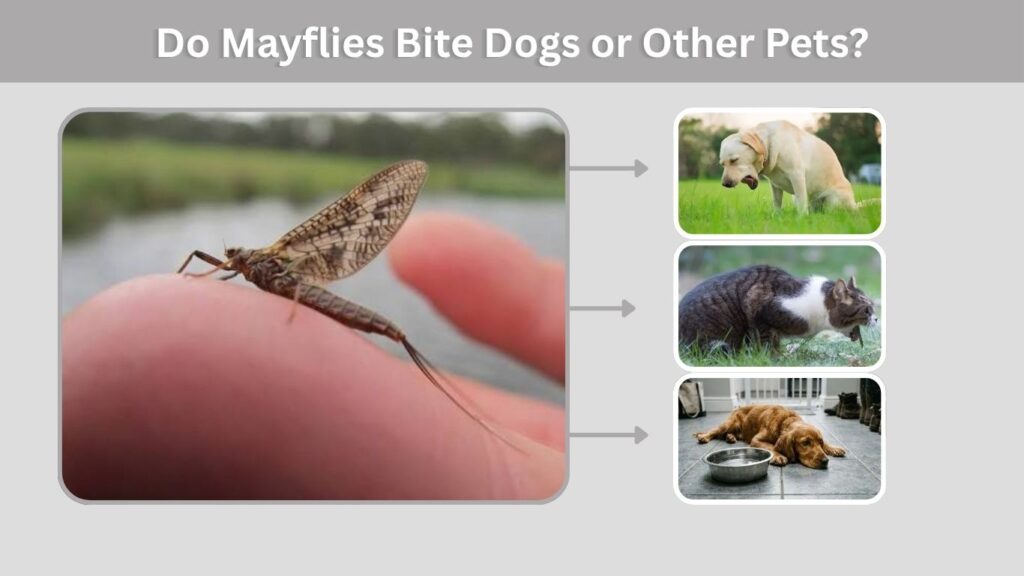
Mayflies do not bite dogs, cats, horses, livestock, or other pets. They may land on an animal’s fur during a mass emergence, but they cannot feed on it.
Dogs and cats may chase or eat mayflies. Consuming a small number is generally unlikely to cause a serious problem, but eating a large quantity could result in stomach upset.
Possible signs of digestive irritation include:
- Vomiting
- Diarrhea
- Reduced appetite
- Drooling
- Abdominal discomfort
Contact a veterinarian if a pet develops severe or persistent symptoms, especially after consuming many insects. A bite-like mark on a pet is more likely to come from a flea, mosquito, tick, biting midge, or another arthropod.
What Does a Mayfly Bite Look Like?
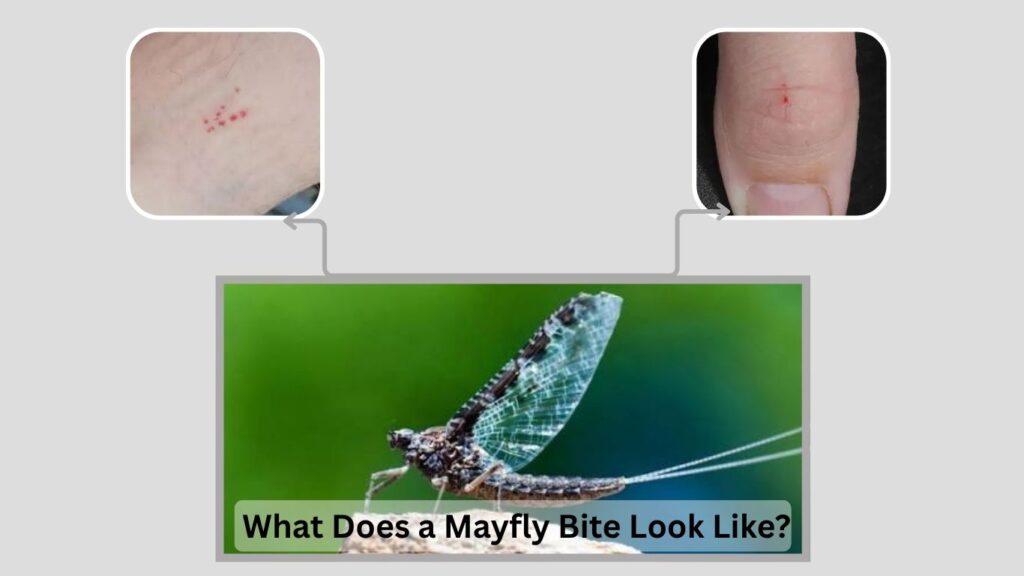
There is no characteristic mayfly bite because mayflies do not bite. A red, itchy, swollen, or painful spot noticed after being near mayflies was probably caused by something else.
Possible causes include:
- Mosquitoes
- No-see-ums or biting midges
- Black flies
- Deer flies
- Horse flies
- Fleas
- Ticks
- Chiggers
- Bed bugs
- Skin irritation or an allergic reaction
Mayfly swarms often occur near water, which is also where mosquitoes, black flies, and biting midges may be abundant. This overlap can create the false impression that the mayflies caused the bites.
Mayflies vs. Other Biting Insects
Mayflies can be distinguished from common biting insects by their appearance and behavior.
| Feature | Mayfly | Mosquito | No-see-um | Black fly |
| Bites people | No | Yes | Yes | Yes |
| Body shape | Slender with long tails | Slender with long legs | Extremely small and fly-like | Small and hump-backed |
| Wings | Large and held upright | Narrow and held over body | Small and often difficult to see | Broad and clear |
| Common habitat | Freshwater and nearby lights | Standing water and vegetation | Damp soil and aquatic areas | Flowing streams and rivers |
| Adult diet | Usually does not feed | Females may drink blood | Females may drink blood | Females may drink blood |
The easiest clue is the mayfly’s two or three long tails and triangular wings held vertically above the body.
Why Do Mayflies Land on People?
A mayfly landing on you is not trying to bite. Several factors may cause it to land on clothing or skin.
Attraction to Light
Adult mayflies are strongly attracted to artificial lights. They may gather around porch lamps, illuminated windows, streetlights, and brightly lit buildings near water.
A person standing beneath a light may become a convenient resting surface.
Confusion During Large Emergences
Hundreds or thousands of adults may emerge simultaneously. In such crowded conditions, mayflies frequently collide with people, vehicles, buildings, and one another.
Resting Before Mating
Mayflies may rest briefly on walls, plants, clothing, or other surfaces while completing their final molt or waiting to join a mating swarm.
None of these behaviors involves feeding on human skin.
Are Mayflies Dangerous?
Mayflies are harmless to humans, pets, plants, and buildings. They do not spread known human diseases, damage stored food, or create permanent household infestations.
However, mass emergences can create indirect problems. Dead mayflies may accumulate on roads, sidewalks, docks, roofs, and vehicles. Large piles can become slippery and develop an unpleasant odor as they decompose.
They may also:
- Block outdoor lighting
- Cover windows and doors
- Enter homes through damaged screens
- Accumulate around waterfront businesses
- Distract drivers near bridges and lakes
- Trigger mild irritation in sensitive individuals
These effects make mayflies a seasonal nuisance rather than a biting pest.
What to Do if You Think a Mayfly Bit You
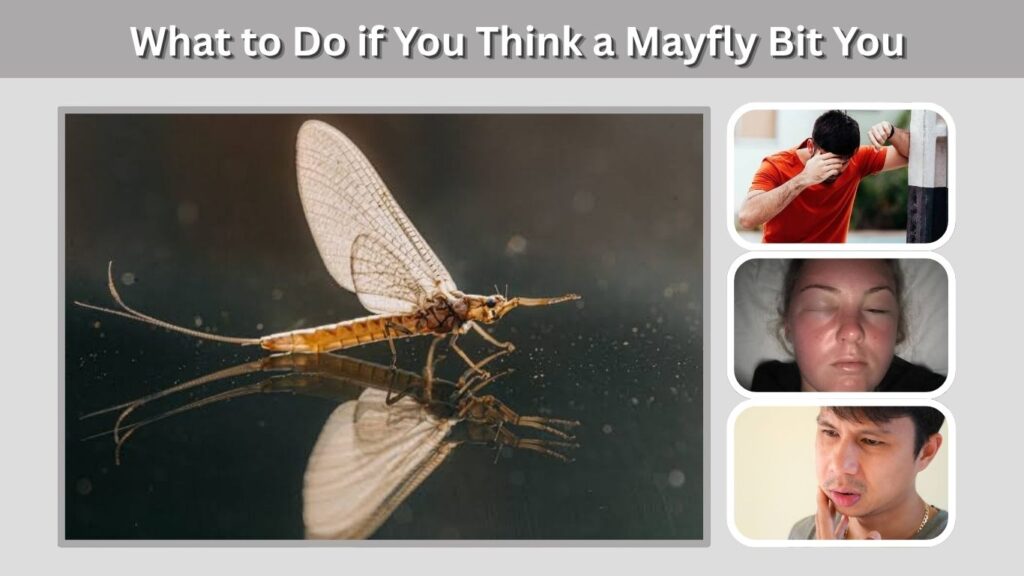
First, remember that mayflies cannot bite. Inspect the surrounding area for mosquitoes, midges, fleas, or other biting insects.
Wash the affected skin gently with soap and water. Apply a cold pack wrapped in cloth for approximately 10 minutes to reduce discomfort and swelling. Avoid scratching because broken skin can become infected.
Seek medical attention when you experience:
- Difficulty breathing
- Facial or throat swelling
- Widespread hives
- Dizziness
- Severe or increasing pain
- Rapidly spreading redness
- Pus or other signs of infection
These symptoms could indicate an allergic reaction, infection, or contact with another organism.
How to Keep Mayflies Away From Your Home
Mayflies cannot be completely prevented in areas near productive lakes and rivers. Their aquatic nymphs may live far from the property, and adults can fly toward lights after emerging.
Reduce Outdoor Lighting
Turn off unnecessary exterior lights during peak emergence periods. Replace bright white bulbs with less attractive, warmer-colored lighting when appropriate.
Close curtains or blinds at night so indoor lighting is less visible from outside.
Repair Screens and Seal Openings
Inspect window screens, door screens, vents, and weatherstripping. Repair holes and close doors promptly to prevent adults from entering.
Remove Mayflies Safely
Use a vacuum to collect insects found indoors. Sweep outdoor accumulations before they become wet, compacted, or slippery.
Avoid spraying large amounts of insecticide. Mayflies are temporary visitors, and broad treatment may kill beneficial insects without stopping new adults from arriving.
Why Mayflies Are Beneficial
Although mayfly swarms can be inconvenient, the insects are important parts of freshwater ecosystems. Their aquatic nymphs process algae, microorganisms, and decaying organic material.
They also provide food for:
- Trout and other fish
- Frogs and salamanders
- Dragonfly nymphs
- Birds
- Bats
- Spiders
- Predatory aquatic insects
Many mayfly species are sensitive to pollution and low oxygen. A diverse mayfly population can therefore be a positive sign of relatively healthy freshwater habitat.
FAQs
Do mayflies bite or sting humans?
No. Adult mayflies have reduced mouthparts and cannot bite. They also have no stinger or venom. Their long abdominal filaments are harmless tails rather than defensive structures.
Why do people think mayflies bite?
Mayflies often emerge near water where mosquitoes, black flies, and biting midges are also active. A person may notice a bite while surrounded by mayflies and incorrectly assume that one of them caused it.
Can mayfly larvae bite swimmers?
Mayfly nymphs have chewing mouthparts, but they do not seek or bite people. They feed mainly on algae, microorganisms, decaying material, and, in some species, tiny aquatic prey.
Do mayflies carry diseases?
Mayflies are not known to spread diseases to humans or pets. They do not drink blood or move repeatedly between people and contaminated food.
Should I kill mayflies around my home?
Killing them is generally unnecessary. Adults live briefly and disappear naturally after mating. Reducing outdoor lighting, repairing screens, and sweeping or vacuuming accumulated insects are safer and more effective responses.