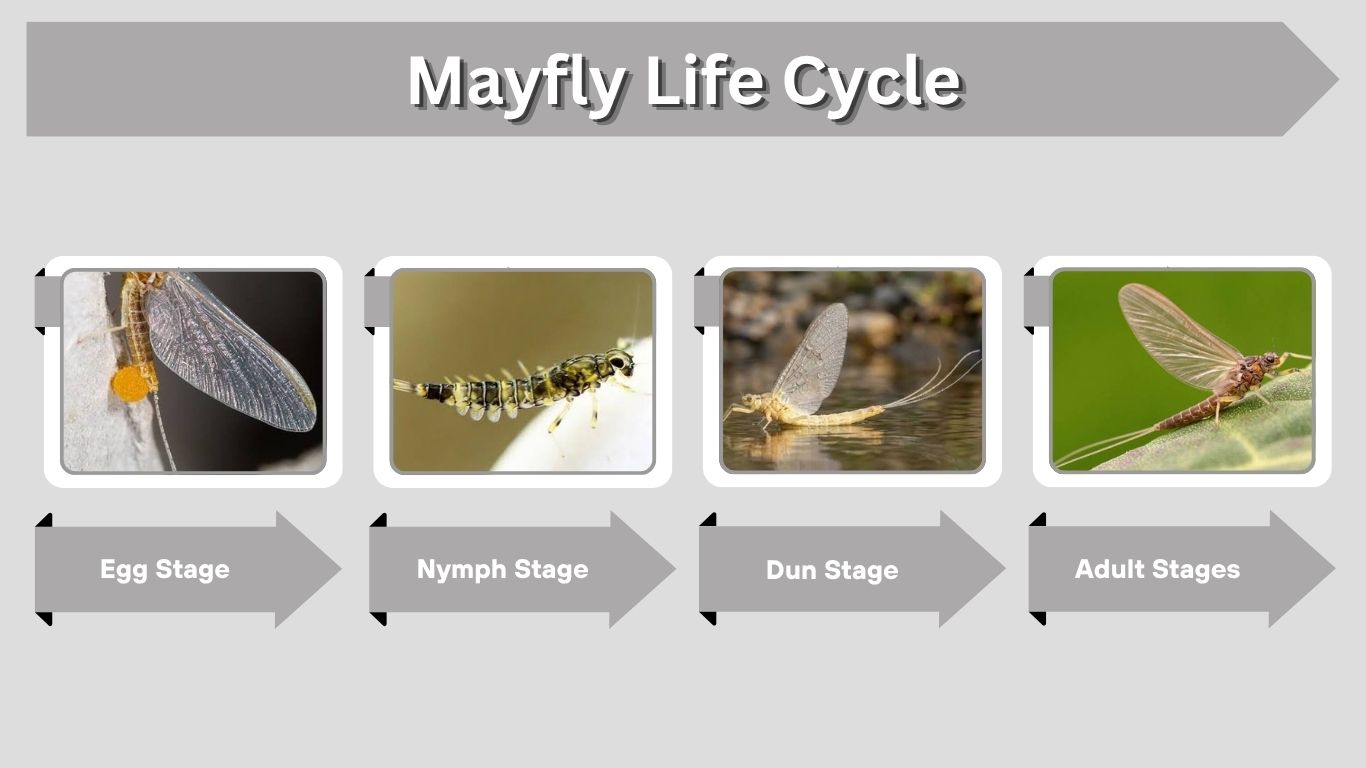
The mayfly life cycle includes four recognizable stages: egg, aquatic nymph, subimago, and mature adult. Unlike butterflies and beetles, mayflies do not pass through a pupal stage. They spend nearly their entire lives underwater as nymphs before emerging as winged insects for a brief period of mating and egg-laying. Mayflies are also unique because their first winged form molts one final time before becoming a reproductive adult. Depending on the species and environmental conditions, the complete life cycle may take several weeks, one year, or multiple years.
What Are the Stages of a Mayfly Life Cycle?
Mayflies belong to the insect order Ephemeroptera. Their development is usually described as incomplete metamorphosis because there is no inactive pupal stage between the aquatic nymph and winged adult.
However, mayflies have an unusual extra winged stage called the subimago. This produces the following four-stage sequence:
- Egg
- Aquatic nymph or naiad
- Subimago or dun
- Mature adult or imago
Mayflies are the only living insects known to molt again after developing functional wings.
| Life-cycle stage | Typical location | Approximate duration |
| Egg | Freshwater or underwater substrate | Days to months |
| Nymph | Streams, rivers, lakes, or ponds | Weeks to several years |
| Subimago | Water surface and nearby vegetation | Minutes to about two days |
| Adult | Air and vegetation near water | Hours to several days |
These durations vary considerably among species, temperatures, habitats, and seasons.
Stage 1: Mayfly Eggs
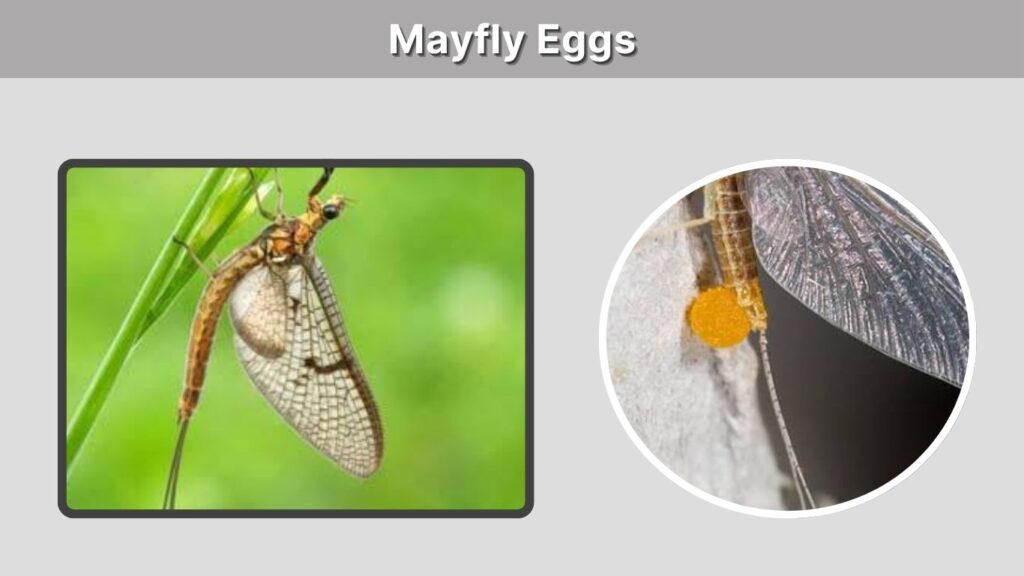
The mayfly life cycle begins when a female deposits her eggs in freshwater. Depending on the species, she may release them while flying over the surface, dip her abdomen into the water, land on the surface, or crawl underwater to attach them to submerged objects.
Where Are Mayfly Eggs Laid?
Most eggs sink toward the bottom after entering the water. Some develop sticky coatings or adhesive structures that help them attach to stones, aquatic plants, wood, or sediment instead of being carried away by currents.
The female may die soon after laying her eggs because reproduction is the final purpose of her short adult stage.
How Long Do Mayfly Eggs Take to Hatch?
Egg development may require days, weeks, or months. Temperature is a major influence: warmer conditions often speed development, while colder water may delay it.
Some species enter a dormant egg stage that allows them to survive winter, drought, or other unfavorable conditions. Once development is complete, a tiny aquatic nymph emerges.
Stage 2: Aquatic Mayfly Nymph
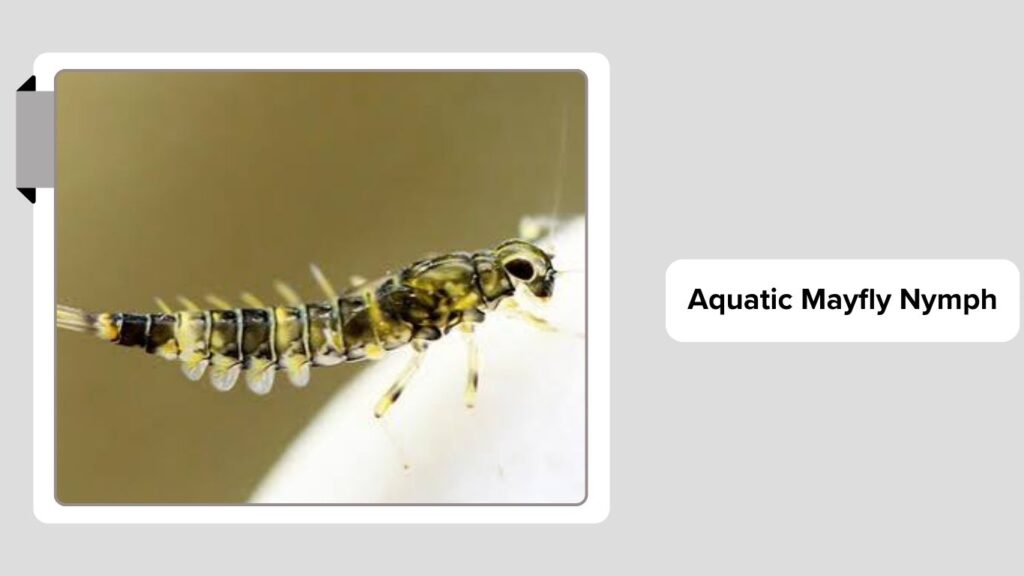
The nymph stage accounts for most of a mayfly’s complete lifespan. Mayfly nymphs are sometimes called larvae, but nymph or naiad is more technically accurate because the insect does not undergo complete metamorphosis.
Nymphs generally have:
- Six segmented legs
- Two or three tail filaments
- External gills along the abdomen
- Chewing mouthparts
- Developing wing pads as they mature
They live among stones, sand, mud, leaf litter, aquatic vegetation, and submerged wood.
What Do Mayfly Nymphs Eat?
Most mayfly nymphs consume algae, diatoms, microorganisms, decaying plant material, and fine organic particles. Some scrape food from stones, while others collect particles from the bottom or filter them from moving water.
A smaller number of species are predators that consume tiny aquatic animals. Mayfly nymphs are also important prey for trout and many other freshwater fish.
How Long Does the Nymph Stage Last?
Many mayflies in temperate regions spend approximately one year underwater. However, some fast-developing species complete this stage within weeks or months, while others require two years or longer. Mayfly life cycles can therefore range from several weeks to several years.
Burrowing mayflies in the genus Hexagenia commonly have one- or two-year cycles. Research in the St. Marys River found a Hexagenia limbata population emerging two years after the eggs were deposited.
Molting During the Nymph Stage
A growing nymph repeatedly sheds its rigid outer covering. The exact number of molts varies among species and is also influenced by temperature, food, and water conditions.
With each molt, the nymph becomes larger and its wing pads become more visible. When it is ready to emerge, the wing pads often appear dark and swollen.
Stage 3: Subimago or Dun
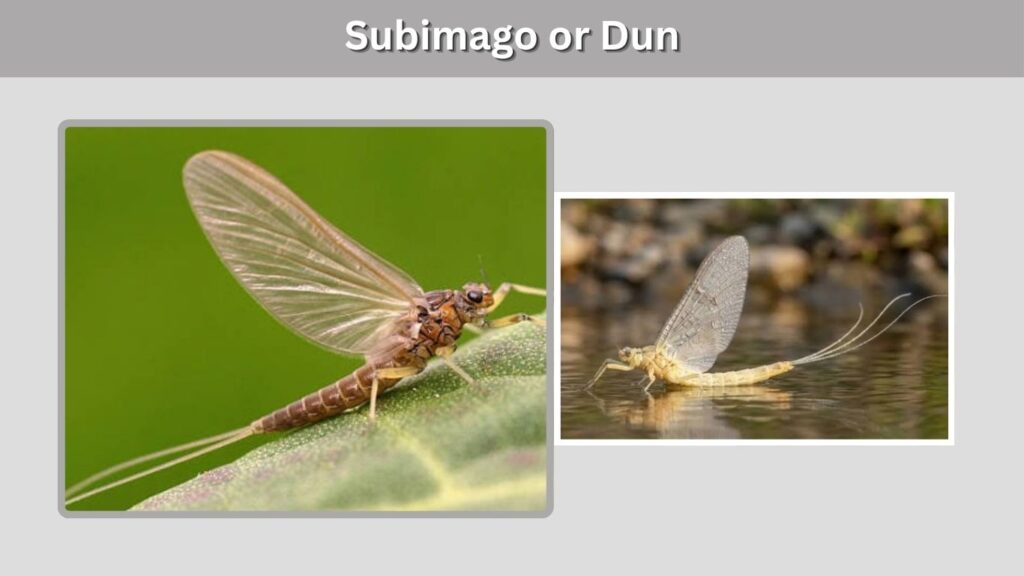
The mature nymph swims or floats toward the surface, or crawls onto a stone, stem, or other object. It then splits its outer skin and emerges as a winged subimago.
Fly fishers call this stage the dun. It resembles an adult mayfly but is not yet fully mature.
How to Recognize a Subimago
A subimago generally has:
- Cloudy or smoky wings
- A dull-colored body
- Fine hairs covering the wings
- Shorter legs and tails than the final adult
- Functional wings that allow it to leave the water
The hairy wings may help repel water during emergence, allowing the insect to escape from the surface quickly. Emerging from the water is dangerous because mayflies are vulnerable to fish, birds, and other predators.
How Long Does the Subimago Stage Last?
The subimago may last only minutes or hours in some species. In others, it can continue for approximately one or two days.
The insect usually flies to vegetation, bridge supports, buildings, or another dry surface. It then sheds its skin one final time and becomes a sexually mature adult.
Stage 4: Adult Mayfly or Imago
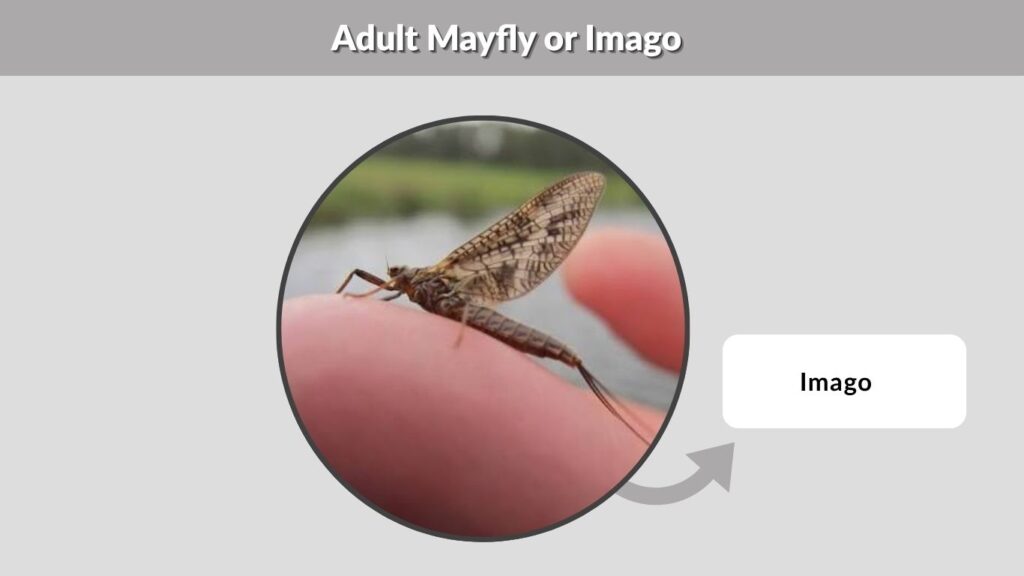
The final stage is called the imago, or mature adult. Anglers commonly call this form a spinner.
Compared with the subimago, a mature adult usually has:
- Clearer, shinier wings
- A smoother body
- Longer legs and tail filaments
- Fully developed reproductive organs
- Stronger flight suited to mating swarms
Adult mayflies generally have reduced, nonfunctional mouthparts and do not eat. They rely on energy stored during the nymph stage. Their remaining time is devoted almost entirely to mating and egg-laying.
Mayfly Mating Swarms
Adult males often form swarms above water, shorelines, trees, roads, or other visual landmarks. They repeatedly rise and fall in the air while waiting for females.
A female enters the swarm and mates with a male, sometimes during flight. She then returns to the water and deposits her eggs, beginning the cycle again.
How Long Do Adult Mayflies Live?
Most adults live for less than two hours to approximately three days, although the exact lifespan depends on the species and weather conditions. Some mayflies complete emergence, mating, and egg-laying in a single day.
Their brief adult lives explain the name Ephemeroptera, which refers to the insects’ short-lived winged stage.
Mayfly Life-Cycle Timeline
A typical one-year cycle may look like this:
| Period | Development |
| Summer | Females deposit eggs in water |
| Late summer or fall | Eggs hatch into small nymphs |
| Fall through spring | Nymphs feed, grow, and molt underwater |
| Spring or summer | Mature nymphs rise and emerge |
| Minutes to two days later | Subimagos molt into adults |
| Hours to days later | Adults mate, lay eggs, and die |
This is only a general example. Some species produce multiple generations per year, while others require two or more years to complete one generation.
Female and Male Mayfly Life Cycles
Males and females pass through the same egg, nymph, subimago, and adult stages. Their roles differ mainly after reaching maturity.
Adult males usually develop especially long front legs and large upward-facing eyes that help them locate females in mating swarms. They may die shortly after mating.
Females often have fuller abdomens containing eggs. After mating, they must survive long enough to locate suitable water and release their eggs. Depending on the species, the female may deposit hundreds or thousands of eggs.
Blue-Winged Olive and Baetis Life Cycle
Blue-winged olives are small mayflies commonly associated with the genus Baetis and related groups. Many have relatively rapid development, and some populations can produce more than one generation in a year.
Their streamlined nymphs live in flowing water and are strong swimmers. When ready to emerge, they rise through the water column, shed their nymphal skin, and become duns at or near the surface.
This emergence can produce intense feeding activity among trout, making blue-winged olives important to fly fishers.
Hexagenia and Burrowing Mayfly Life Cycle
Hexagenia mayflies spend their nymph stage inside U-shaped burrows in soft lake or river sediment. The nymphs use feathery gills to circulate oxygen-rich water through their burrows.
After one or two years of development, mature nymphs leave the bottom and swim toward the surface. Large numbers may emerge simultaneously, creating dense clouds of subimagos and adults around lakes, roads, and waterfront buildings.
These mass emergences can cover surfaces and appear on weather radar, but they also provide an enormous seasonal food source for fish, birds, and other wildlife.
Why the Mayfly Life Cycle Matters in Fly Fishing
Understanding the four stages helps anglers choose an artificial fly that resembles what fish are currently eating.
- Nymph patterns imitate mayflies living or drifting underwater.
- Emerger patterns represent nymphs moving toward the surface.
- Dun patterns imitate newly emerged subimagos resting on the water.
- Spinner patterns represent mature adults, especially dead or dying females after egg-laying.
Trout may focus intensely on one stage during a hatch. Matching the size, shape, and position of the natural insects can therefore be more important than simply choosing any mayfly-shaped lure.
FAQs
How many stages are in the mayfly life cycle?
Mayflies have four recognizable stages: egg, aquatic nymph, winged subimago, and mature adult. They do not have a pupal stage.
How long is the complete mayfly life cycle?
The complete cycle can last from several weeks to several years. Many temperate species take approximately one year, while some burrowing mayflies require two years.
Why do mayflies have two winged stages?
The subimago provides a transitional stage between aquatic life and the final reproductive adult. Its hairy wings may help it escape the water without becoming trapped on the wet surface.
Do adult mayflies eat?
Most adult mayflies do not eat because their mouthparts and digestive systems are reduced. They depend on stored energy and live mainly to mate and lay eggs.
Where do mayflies lay their eggs?
Females place or release their eggs in freshwater, including streams, rivers, lakes, and ponds. The eggs usually sink and may attach to underwater plants, stones, wood, or sediment.