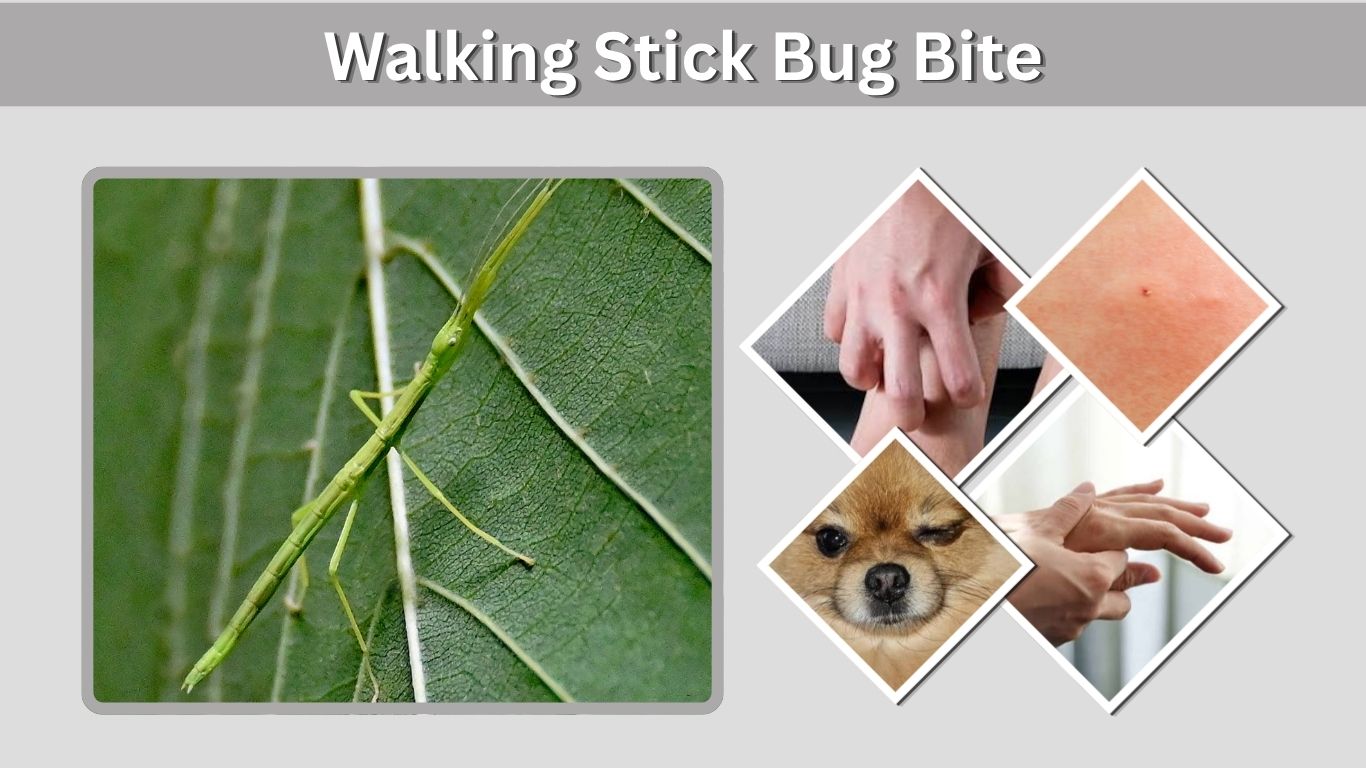
A walking stick bug may look intimidating because of its long body and unusual twig-like appearance. However, walking stick insects do not normally bite or sting humans. Their mouthparts are designed for chewing leaves, and they depend mainly on camouflage to escape danger. Most species are safe to observe and gently handle. The greater concern is that a few walking stick species can release an irritating defensive spray, especially when picked up, squeezed, or threatened.
Do Walking Stick Bugs Bite?
Walking stick bugs rarely, if ever, bite people. They are herbivorous insects that feed on leaves rather than blood, skin, or other animals.
Most walking sticks respond to danger by freezing, swaying like a branch, dropping to the ground, or pretending to be dead. University of Georgia Extension describes stick insects as harmless to humans.
A large walking stick may grip your hand with its legs. Species with sharp leg spines can also scratch or pinch the skin while struggling to escape. This may feel uncomfortable, but it is not the same as a venomous or blood-feeding bite.
Can Walking Stick Bugs Sting?
Walking stick bugs do not have stingers. They cannot sting like bees, wasps, or ants.
Some people describe any painful contact with an insect as a sting, but a walking stick’s possible defenses include gripping, kicking, scratching, or releasing chemicals—not injecting venom through a stinger.
What Does a Walking Stick Bug Bite Look Like?
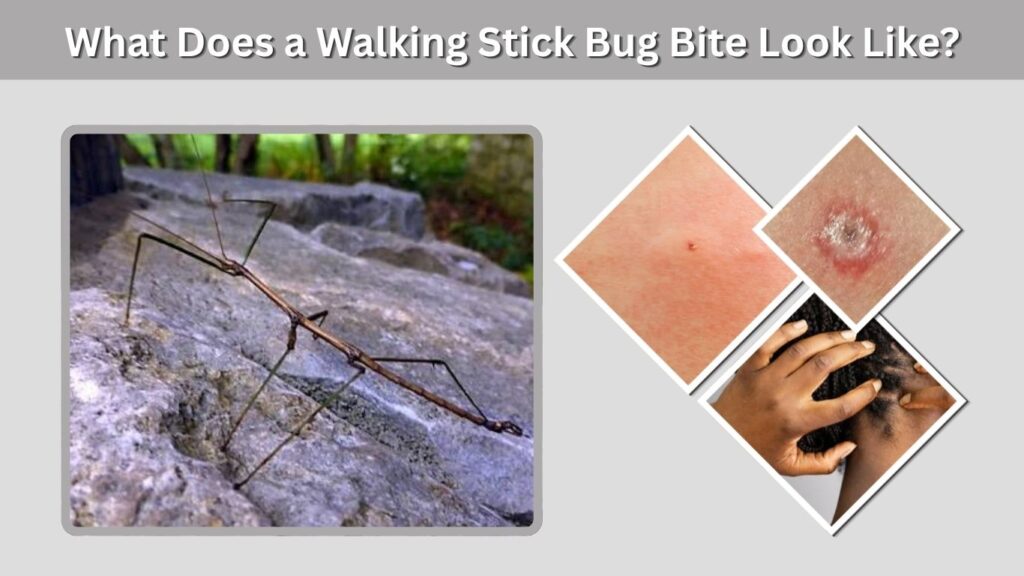
Because ordinary walking stick bugs do not normally bite humans, there is no typical walking stick bug bite mark.
A red bump, itchy welt, clustered rash, or swollen spot found after sleeping is more likely to have another cause. Possibilities include mosquitoes, fleas, bed bugs, mites, skin irritation, or an allergic reaction.
Possible signs that the skin was only scratched by a walking stick include:
- A thin, shallow red mark
- Mild temporary tenderness
- Light irritation where a spiny leg made contact
- No central puncture wound
- No spreading pattern of bites
Do not assume that unexplained marks are walking stick bites simply because a walking stick was found nearby.
Are Walking Stick Bugs Dangerous?
Most walking stick bugs are not dangerous to humans. They do not hunt people, drink blood, spread through bedding, or actively attack when approached.
However, certain species have stronger defensive abilities. The most notable example is the two-striped walking stick, scientifically known as Anisomorpha buprestoides.
Two-Striped Walking Stick Defensive Spray
The two-striped walking stick has glands located behind its head that can release a strong-smelling defensive liquid. It can direct this spray accurately and may reach a target more than a foot away.
The spray irritates sensitive tissues, including the eyes, nose, and mouth. Eye exposure may produce severe burning, pain, redness, swelling, tearing, and temporary problems with vision. Mississippi State University Extension reports that the effects can be painful and may continue for several days, although lasting injury is uncommon when exposure is treated promptly.
Both male and female two-striped walking sticks can release the substance. Most other walking stick species do not possess this same spraying ability.
Walking Stick Bug Bite Symptoms
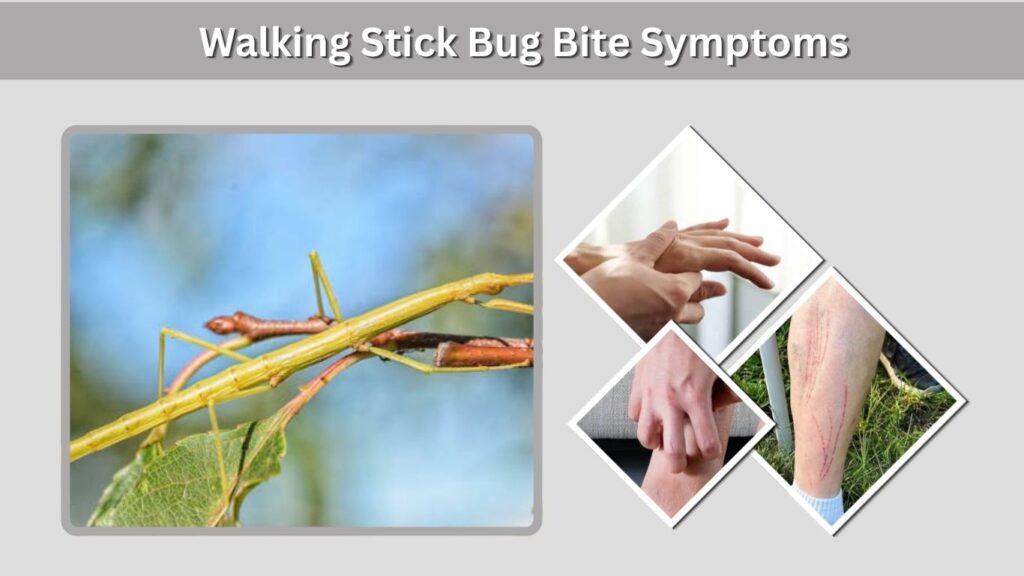
A true bite from a common walking stick is extremely unlikely. Symptoms reported after contact are more likely to result from a scratch, defensive grip, or chemical spray.
| Type of contact | Possible symptoms |
| Gentle handling | Usually no symptoms |
| Spiny leg scratch | Mild redness or tenderness |
| Strong defensive grip | Brief pinching discomfort |
| Spray on skin | Burning or irritation |
| Spray in the nose or mouth | Irritation and discomfort |
| Spray in the eye | Severe burning, tearing, swelling, redness, or blurred vision |
Symptoms involving the eyes should be treated more seriously than a mild skin scratch.
What to Do After Contact With a Walking Stick Bug
Treatment depends on whether the insect scratched the skin or released defensive spray.
Treating a Minor Scratch
For a minor scratch or pinching injury:
- Wash the area with soap and clean water.
- Check for broken skin.
- Apply a cold compress if the area feels sore.
- Avoid scratching or repeatedly touching it.
- Monitor for worsening redness, swelling, warmth, or pain.
A superficial scratch should normally improve without special treatment.
Treating Defensive Spray on the Skin
If a walking stick releases liquid onto your skin:
- Move away from the insect.
- Wash the exposed skin thoroughly with soap and water.
- Remove contaminated clothing.
- Avoid touching your face or eyes before washing your hands.
- Seek medical advice if burning, blistering, or irritation continues.
Do not apply bleach, strong chemicals, vinegar, or other home remedies to the exposed area.
Treating Defensive Spray in the Eye
Begin rinsing the eye immediately. Remove contact lenses and flush the affected eye with plenty of room-temperature water for at least 15 to 20 minutes. Encourage blinking during rinsing and do not rub the eye.
Seek urgent medical care when:
- Pain is severe
- Vision is blurred or reduced
- Redness or swelling continues
- Tearing remains intense
- The person cannot comfortably open the eye
- Symptoms persist after thorough rinsing
Poison Control advises obtaining an urgent eye examination when pain, visual changes, redness, swelling, or tearing persists after irrigation. Severe symptoms require immediate emergency evaluation.
Can a Walking Stick Bug Harm a Cat or Dog?
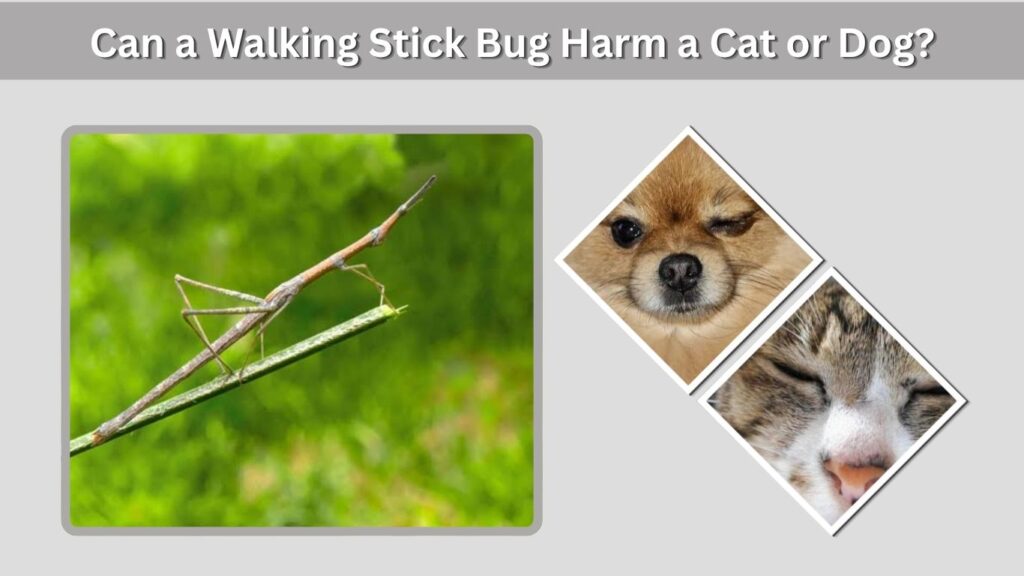
Most walking stick insects are not poisonous when briefly touched by a pet. However, an inquisitive cat or dog may provoke a two-striped walking stick and receive defensive spray in its eyes, nose, or mouth. Pets are among the animals commonly exposed because they sniff, paw at, or bite unfamiliar insects.
Possible signs include:
- Squinting or closed eyes
- Excessive tearing
- Pawing at the face
- Drooling
- Sneezing
- Red eyes
- Mouth irritation
- Refusal to eat or drink
Rinse exposed eyes or skin carefully with clean water and contact a veterinarian if symptoms are severe or continue. Do not force water into an animal’s mouth or apply human eye medication unless instructed by a veterinarian.
Is a Water Walking Stick Bug the Same Insect?
An aquatic insect sometimes called a water walking stick is usually a water scorpion in the genus Ranatra. Despite its stick-like shape, it is not the same as a plant-eating walking stick insect.
Water scorpions are aquatic predators with piercing mouthparts. They may deliver a painful defensive bite if handled. By contrast, true walking stick insects belong to the order Phasmatodea and use chewing mouthparts to eat leaves.
Avoid picking up an unidentified stick-shaped insect found in a pond, marsh, or container of water with your bare hands.
How to Handle a Walking Stick Safely
Most walking sticks do not need to be handled. If one must be moved, place a branch or sheet of paper in front of it and allow it to climb aboard.
Follow these precautions:
- Do not squeeze or restrain the insect.
- Keep it away from your eyes and face.
- Never pull it by its legs or antennae.
- Wash your hands after handling it.
- Prevent children and pets from playing with unfamiliar species.
- Move it outdoors near shrubs or trees.
Walking stick legs are fragile and may break when the insect is pulled from a surface.
FAQs
Will walking stick bugs bite humans?
Walking stick bugs do not normally bite humans. They eat leaves and use camouflage to avoid threats. A large or spiny species may grip or scratch the skin when handled, but this behavior is defensive and should not be confused with a blood-feeding or venomous bite.
Do walking stick bugs bite or sting?
They generally do neither. Walking sticks do not have stingers, and their chewing mouthparts are intended for plant material. Some species can scratch with spiny legs, while the two-striped walking stick can spray an irritating defensive chemical.
Are walking stick bug bites poisonous?
Ordinary walking stick bugs do not normally produce bites, and most species are not poisonous or venomous. The primary safety concern involves defensive secretions from certain species. These secretions can irritate the skin, eyes, nose, and mouth without being injected through a bite.
Can walking stick bugs bite cats?
A walking stick is unlikely to bite a cat. However, a threatened two-striped walking stick may spray a cat that paws at or bites it. Eye exposure can cause pain, tearing, redness, and squinting, requiring careful rinsing and possible veterinary attention.
Is a walking stick bite similar to a bed bug bite?
No. Bed bugs are blood-feeding insects that can leave itchy skin marks, while walking sticks are leaf-eating insects that do not normally bite people. Unexplained bumps appearing after sleep should not be blamed on a walking stick without evidence identifying the actual cause.