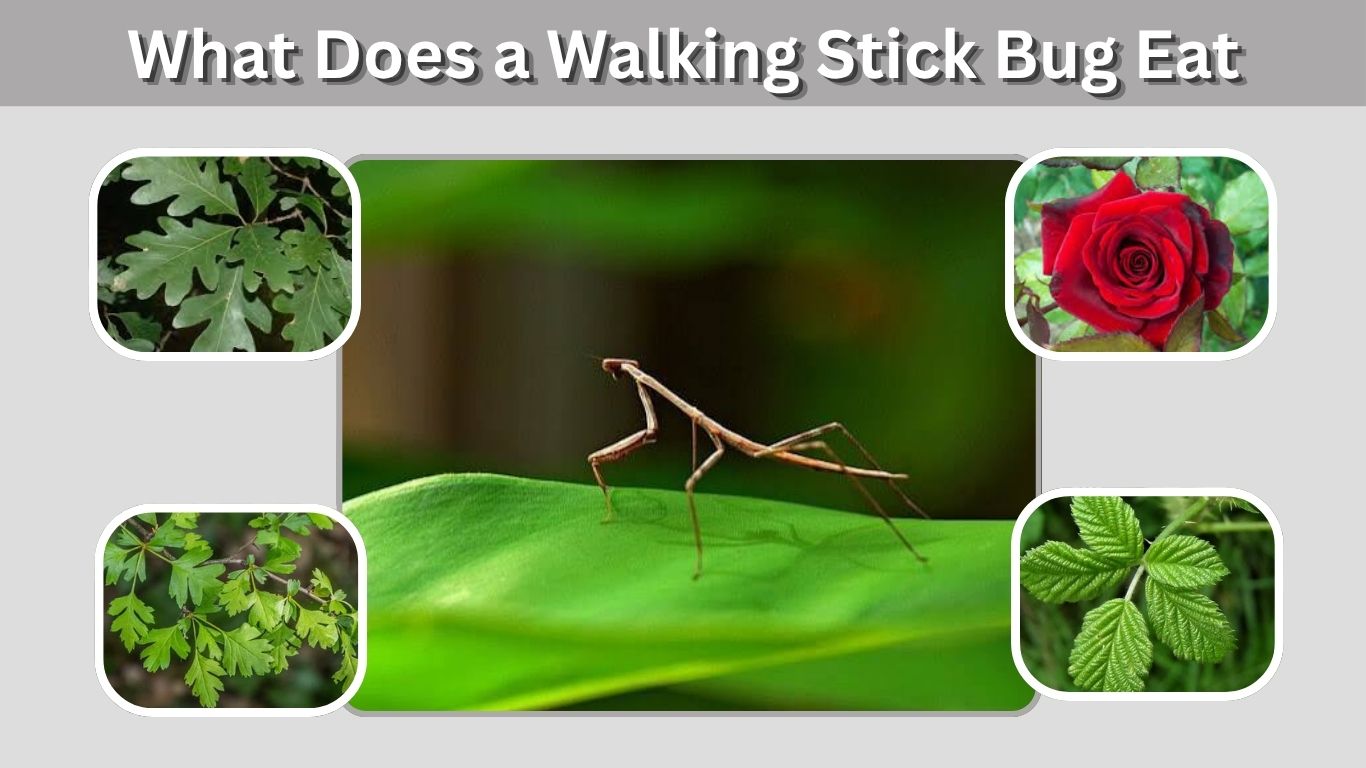
Walking stick bugs, also called stick insects or phasmids, are plant-eating insects that feed mainly on fresh leaves. However, different species prefer different host plants, so one walking stick may happily eat oak while another accepts only eucalyptus or bramble. Pet owners should identify the exact species before choosing its diet. Below are 10 leaves commonly eaten by walking stick bugs, along with practical feeding and safety advice.
What Do Walking Stick Bugs Eat?
Walking stick bugs are herbivores. Their chewing mouthparts allow them to cut small sections from the edges of leaves, often leaving irregular holes or scalloped margins.
Most species feed at night and remain motionless among branches during the day. Some are generalists that accept several plants, while others are specialists with a limited natural diet. Research has shown that walking sticks can distinguish between plant species and may even select leaves according to age, quality, and previous feeding experience.
| Food plant | Commonly accepted by |
| Bramble | Many captive stick insects |
| Rose | Indian and several tropical species |
| Oak | Indian and various temperate species |
| Hawthorn | Indian and several European species |
| Privet | Indian walking sticks |
| Ivy | Indian walking sticks |
| Eucalyptus | Many Australian species |
| Raspberry | Several bramble-feeding species |
| Hazel | Some European and Australian species |
| Hibiscus | Indian and some tropical species |
Acceptance is never guaranteed. Always confirm that a plant is suitable for your particular species.
10 Foods Walking Stick Bugs May Eat
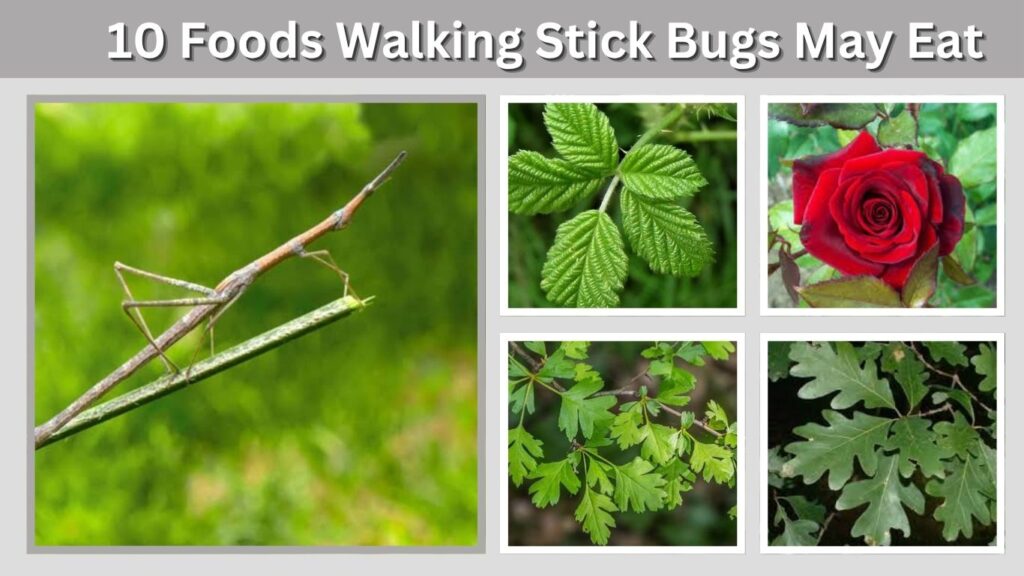
The safest food is usually the host plant on which the species naturally occurs or the plant recommended by its breeder. Introduce unfamiliar leaves gradually while continuing to provide a food the insect already accepts.
1. Bramble Leaves
Bramble, including blackberry leaves, is one of the most widely used foods for captive walking stick bugs. Many commonly kept species readily accept it, and the plant remains available through much of the year in mild climates.
Choose healthy, green leaves from areas free of pesticide spraying. Both young and mature leaves may be offered, although very soft new growth can wilt quickly. Raspberry and some related plants may work as alternatives for bramble-feeding species.
2. Rose Leaves
Rose leaves are accepted by Indian walking sticks and several other species. They are useful when bramble is unavailable, but garden roses are frequently treated with insecticides, fungicides, or systemic chemicals.
Only use leaves from a plant you know has never been chemically treated. Avoid bouquets and florist roses because their treatment history is normally unknown. UC Integrated Pest Management lists roses among the plants eaten by Indian walking sticks.
3. Oak Leaves
Oak is another common food for various walking stick species. Indian walking sticks may eat it, and several temperate species naturally feed on oak trees.
Fresh oak leaves are easiest to obtain during spring and summer. Some insects prefer younger foliage, while others accept mature leaves. Avoid collecting leaves that show signs of disease, heavy pollution, pesticide exposure, or extensive insect damage.
4. Hawthorn Leaves
Hawthorn is commonly offered to Indian stick insects and several European species. Its small leaves and branching stems also create useful climbing and hiding structures inside an enclosure.
Select fresh branches from an untreated location. Hawthorn has sharp thorns, so trim dangerous points before placing it in the habitat. Secure cut stems carefully to prevent the insect from being injured or trapped.
5. Privet Leaves
Indian walking sticks often accept privet leaves. Because privet is evergreen or semi-evergreen in many regions, it can provide food when deciduous plants have lost their leaves.
Not every walking stick species can eat privet. Offer it only when it is listed as an appropriate host plant for your insect. Never assume that a leaf is safe merely because another species accepts it. Indian walking sticks have been documented feeding on privet and many other landscape plants.
6. Ivy Leaves
Ivy is another potential food for Indian walking sticks and certain other species. Its availability during winter makes it useful where bramble and oak become difficult to find.
Wash the leaves with clean water and inspect them for mites, spiders, eggs, and chemical residue. Ivy should not automatically be given to every phasmid because host-plant tolerance varies considerably among species.
7. Eucalyptus Leaves
Eucalyptus is an important natural food for many Australian stick insects, including spiny leaf insects and several large phasmids. Australian sources note that many native stick insects feed on eucalyptus foliage.
Offer fresh, untreated eucalyptus branches suited to the particular species. Some Australian walking sticks may accept alternatives such as bramble or rose, but eucalyptus is often the preferred choice and may support more natural growth and coloration.
8. Raspberry Leaves
Raspberry belongs to the same plant family as blackberry and may be accepted by several species that normally eat bramble. Its leaves can be a useful seasonal substitute or a way to add safe variety.
Acceptance should be tested carefully. Continue providing the established host plant until you have seen clear feeding damage and normal droppings after offering raspberry. Do not switch a newly hatched nymph abruptly to an unfamiliar food.
9. Hazel Leaves
Hazel is eaten by some walking stick species, particularly those that accept a range of deciduous shrubs and trees. It may also serve as an alternative for certain phasmids usually maintained on bramble, oak, or eucalyptus.
Use fresh leaves and replace them before they become dry or discolored. Because hazel is not suitable for every species, verify it through a breeder, reliable care sheet, or species-specific husbandry guide before feeding.
10. Hibiscus Leaves
Indian walking sticks and some tropical species may eat hibiscus leaves. The plant produces broad, soft foliage that is relatively easy for both adults and larger nymphs to chew.
Hibiscus sold at garden centers may contain systemic pesticides that remain inside the plant for an extended period. Home-grown, untreated plants are the safest option. UC guidance includes hibiscus among the many plants consumed by Indian walking sticks.
How to Feed a Pet Walking Stick Bug
Offer complete leafy branches rather than individual loose leaves. Branches stay fresh longer, provide climbing surfaces, and allow the insect to feed in a natural position.
Place the cut ends in a narrow container of water. Completely seal the opening around the stems with mesh, cotton, or another secure material so adults and nymphs cannot fall into the water and drown.
Replace the leaves when they become dry, wilted, moldy, or mostly eaten. Fresh foliage should be available at all times because walking sticks normally graze throughout the night.
Lightly misting the foliage can provide drinking droplets, but the enclosure should not remain soaked. Poor ventilation combined with excessive moisture encourages mold.
Foods and Plants to Avoid
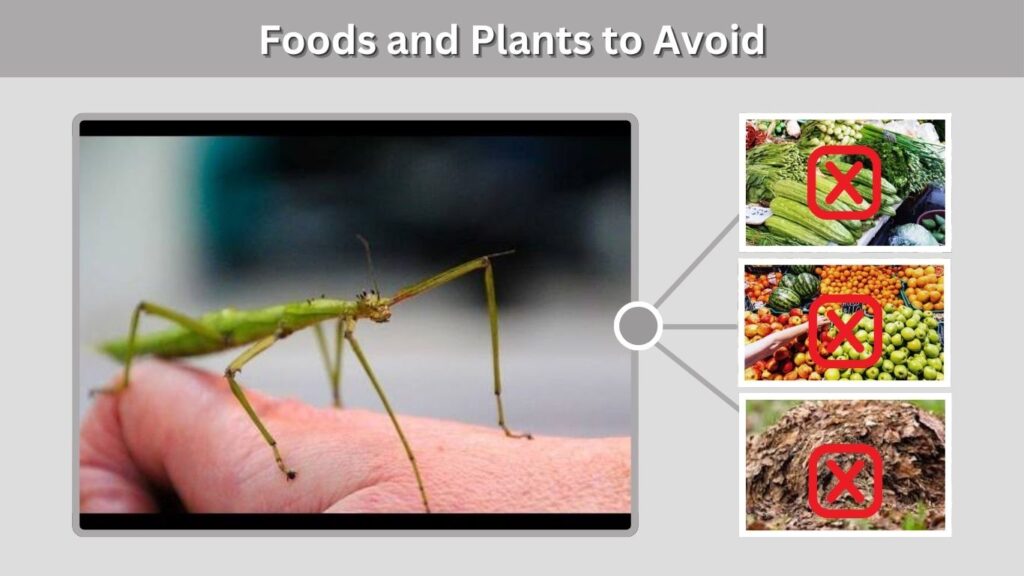
Do not give a walking stick random leaves, fruits, vegetables, or houseplants. A plant that is edible to humans or another animal may be unsuitable for a phasmid.
Avoid:
- Leaves treated with pesticides or herbicides
- Plants collected beside busy roads
- Florist flowers and commercial bouquets
- Moldy, dry, or rotting foliage
- Plants that cannot be confidently identified
- Leaves from locations regularly sprayed for pests
- Lettuce as a replacement for the correct host plant
Chemical residues can kill walking stick bugs. Collect foliage only from places with a known treatment history, and rinse it with clean water before feeding. Pesticide avoidance is especially important because phasmids feed directly on plant tissue.
Do Walking Stick Bugs Eat Other Insects?
Walking stick bugs do not normally hunt or eat other insects. They are plant feeders rather than predators and receive their nutrition from leaves.
Many walking sticks do, however, eat their own shed exoskeleton after molting. This behavior allows them to recycle nutrients and may remove evidence that could reveal their location to predators.
FAQs
How often does a walking stick bug eat?
Walking stick bugs may feed every night when fresh leaves are available. Their consumption varies with species, size, temperature, age, and reproductive condition. A healthy insect may also stop feeding shortly before molting, so a brief reduction in appetite is not always a problem.
Can walking stick bugs eat lettuce?
Lettuce is not an appropriate primary food for most walking stick species. It lacks the qualities of their natural host foliage and may contain pesticide residue. Provide fresh branches from a confirmed host plant such as bramble, rose, oak, privet, or eucalyptus instead.
Do baby walking stick bugs eat the same food as adults?
Nymphs generally eat the same host plants as adults, but they may prefer softer young leaves. Very small nymphs sometimes struggle to begin feeding on tough, unbroken foliage. Lightly tearing a leaf edge may expose a softer surface without changing their normal diet.
How do I know whether my walking stick is eating?
Look for fresh bite marks along leaf edges and small droppings on the enclosure floor. Many walking sticks feed after dark, so owners rarely see them eating. Photographing the leaves in the evening can make new feeding damage easier to identify the following morning.
How long can a walking stick bug go without food?
A healthy adult may survive briefly without feeding, particularly before a molt, but fresh leaves should always be available. Nymphs can weaken and dehydrate quickly. Replace unsuitable or dried foliage promptly rather than testing how long the insect can survive without food.