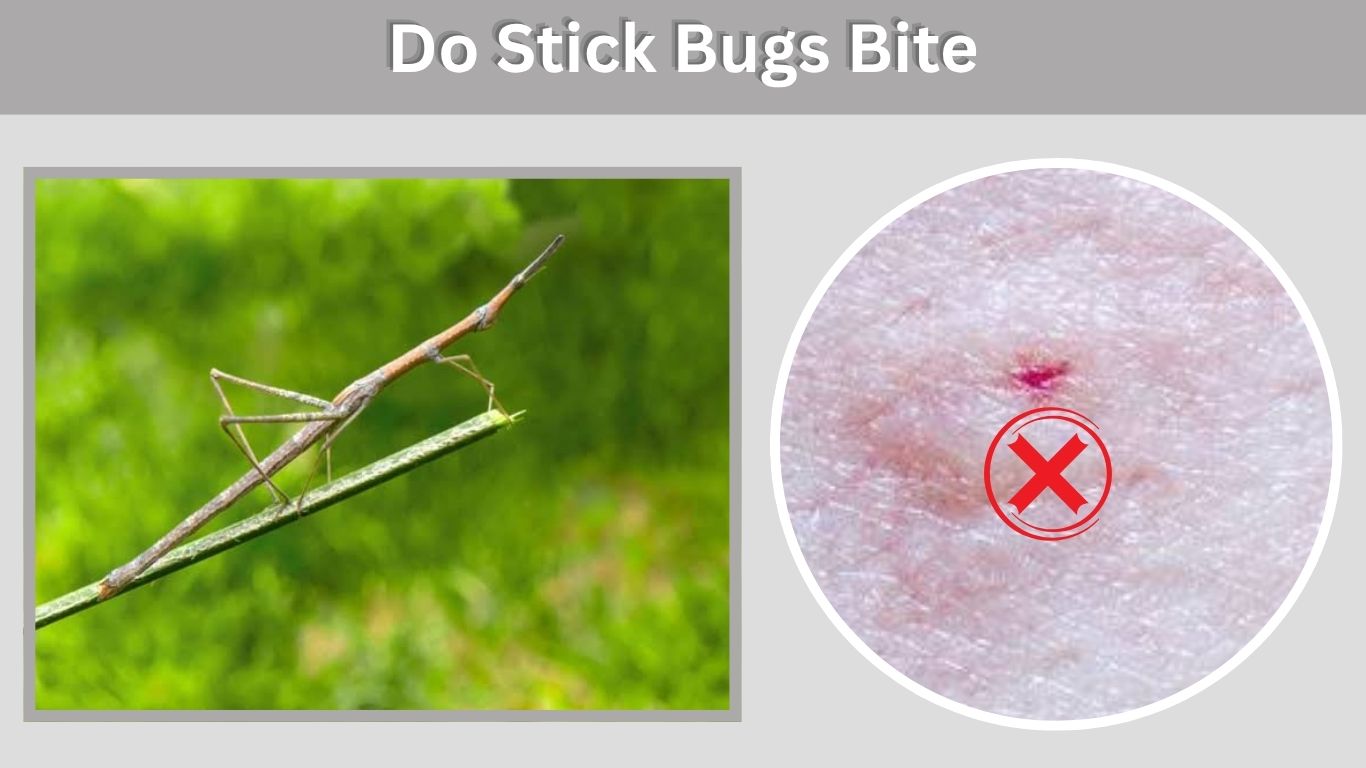
Stick bugs, also called walking sticks or stick insects, rarely bite people and do not actively attack humans. They are slow-moving herbivores whose chewing mouthparts are designed for eating leaves rather than piercing skin. Most commonly encountered species are considered harmless, although a large or frightened individual could potentially give a minor defensive nip when handled roughly.
Stick insects cannot sting and do not feed on blood. However, certain species have sharp leg spines or can spray irritating defensive chemicals, so they should still be handled carefully.
Can Stick Bugs Bite Humans?
A typical stick bug is extremely unlikely to bite a person. Its first response to danger is usually to remain motionless, blend into vegetation, sway like a twig, drop to the ground, or escape rather than fight.
Stick insects have mandibles, or chewing jaws, because they need to cut through leaves. These mouthparts technically allow them to pinch, but most species do not use them against people. A defensive nip is more likely with a large insect that is trapped, squeezed, or forcibly handled.
| Possible risk | How common is it? | Likely effect |
| Bite or nip | Extremely uncommon | Mild, brief pinch |
| Sting | Impossible | Stick insects have no stinger |
| Scratch from claws | Occasionally | Light irritation |
| Prick from leg spines | Possible in spiny species | Sharp pinch or small scratch |
| Defensive spray | Limited to certain species | Burning eyes or irritated skin |
Why Stick Bugs Usually Do Not Bite
Walking sticks are plant-eating insects. Their natural diet includes leaves from plants such as oak, bramble, eucalyptus, rose, privet, and other species-specific host plants. They do not hunt prey or seek blood from humans and animals.
They Depend on Camouflage
Most stick bugs resemble twigs, stems, bark, or leaves. This camouflage allows them to avoid being noticed by birds, reptiles, mammals, and predatory insects.
When disturbed, a stick bug may freeze and hold its legs close to its body. Some also rock gently from side to side, imitating a branch moving in the wind. These behaviors usually allow the insect to avoid confrontation without biting.
They Are Not Naturally Aggressive
Stick insects are generally calm and slow. Even when picked up, many simply walk across the person’s hand while searching for a higher perch.
They may become defensive if squeezed, restrained by the legs, or repeatedly disturbed. Allowing the insect to climb onto a hand is safer than grabbing its body. The Australian Museum recommends coaxing a stick insect onto the hand rather than forcibly picking it up.
Do Stick Bugs Sting?
Stick bugs do not sting. They have no stinger and cannot inject venom in the way that bees, wasps, or certain ants can.
The end of a stick insect’s abdomen may sometimes look pointed, especially in females with egg-laying structures. These structures are not stingers and are not used to attack people.
A walking stick’s feet also have tiny claws or gripping structures. These may feel slightly prickly or ticklish as the insect walks across bare skin, but this sensation is not a sting.
Can Spiny Stick Bugs Hurt You?
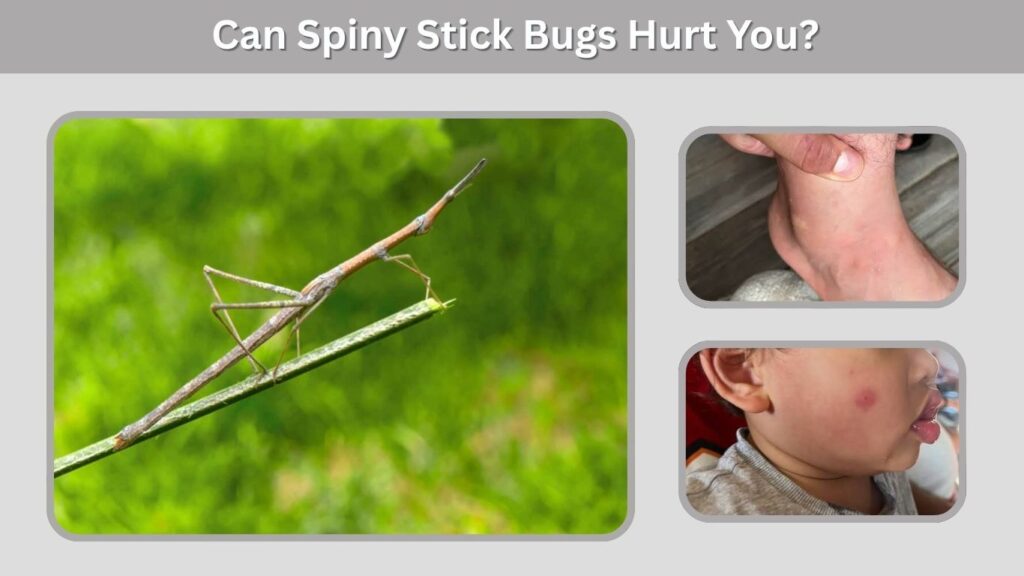
Some species have sharp spines along their bodies or legs. The Australian spiny leaf insect, also known as the giant prickly stick insect, may raise its abdomen and use its spined rear legs defensively.
These legs can clamp together when the insect feels threatened. The spines may prick or scratch the skin, especially if a large adult is held tightly. This is a mechanical injury rather than a venomous bite or sting. Care guides therefore recommend gently allowing these insects to walk onto the hand.
Although the injury is usually minor, children should handle large or heavily spined species only under adult supervision.
Do Walking Stick Bugs Spray Chemicals?
A small number of walking stick species produce defensive chemicals. This is more concerning than biting because the spray can irritate the eyes, nose, mouth, and other sensitive tissues.
Two-Striped Walking Stick
The two-striped walking stick, Anisomorpha buprestoides, occurs in the southeastern United States. It can accurately spray a strong-smelling chemical from glands located behind its head.
The spray can travel approximately 15 inches or farther and may cause severe eye pain, redness, tearing, light sensitivity, or temporary vision problems. Documented exposures have included conjunctivitis and corneal injury.
Never bring an unfamiliar walking stick close to your face. Keep children and curious pets away from boldly marked black-and-orange walking sticks, particularly in areas where the two-striped species occurs.
What Does a Stick Bug Bite Look Like?
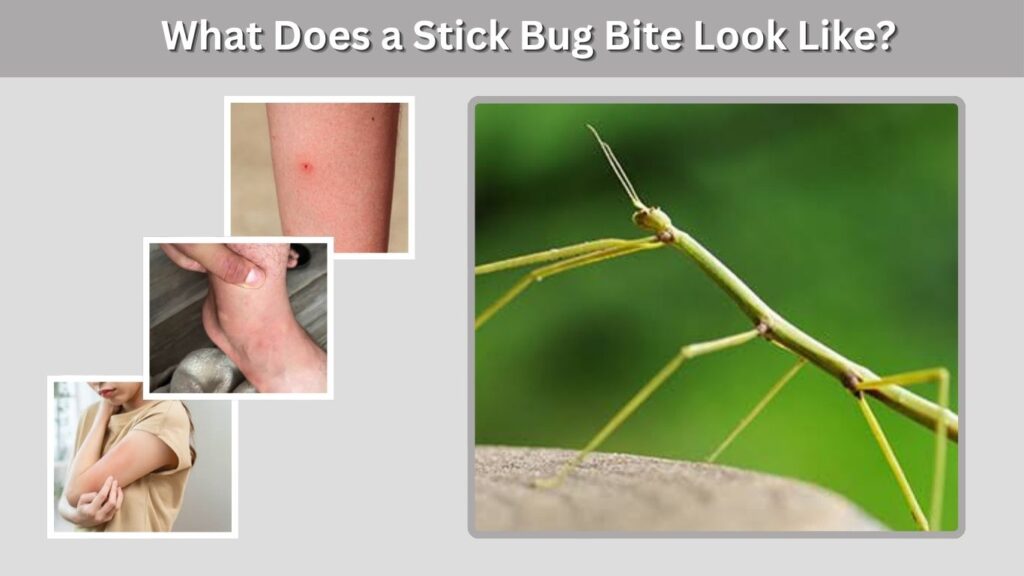
Because genuine stick bug bites are exceptionally uncommon, there is no distinctive walking-stick bite pattern. A minor nip or scratch might leave:
- A tiny red spot
- Mild tenderness
- A shallow scratch
- Brief burning or irritation
- Little or no swelling
Stick insects do not inject venom through their mouths. Therefore, a large, itchy cluster of bumps, spreading rash, blister, or intensely painful wound is more likely to have another cause.
Mosquitoes, fleas, bed bugs, biting flies, assassin bugs, spiders, ants, and other arthropods may be responsible for marks mistakenly blamed on a walking stick.
Walking Stick Bug vs Water Stick Bug
A water stick insect is not a true stick insect. Water stick insects belong to the family Nepidae and are aquatic predators related to water scorpions. Their slender bodies make them resemble walking sticks, but they catch small aquatic animals with grasping front legs.
Their long tail-like structure is a breathing tube, not a stinger. They are generally docile, but predatory aquatic bugs have piercing mouthparts and should not be handled carelessly.
True walking sticks live primarily on plants, eat leaves, and belong to the order Phasmatodea.
What to Do After a Nip or Scratch
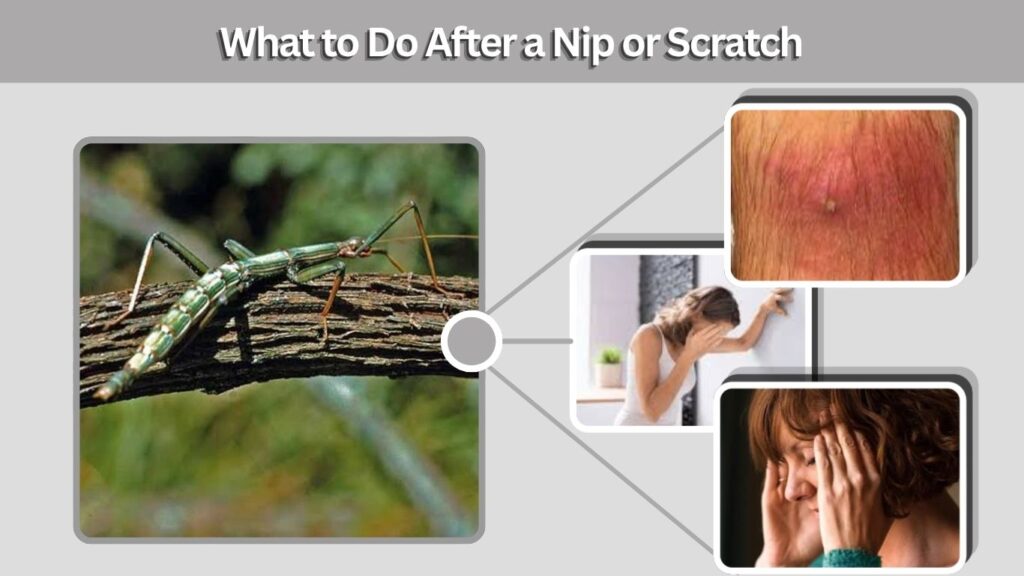
Wash the affected skin gently with soap and water. Apply a cold cloth or wrapped ice pack for 10–20 minutes if there is minor pain or swelling. Avoid scratching the area, as damaged skin can become infected.
Seek medical attention when there is:
- Severe or increasing pain
- Significant swelling
- Pus, warmth, or spreading redness
- Dizziness or breathing difficulty
- An injury directly involving the eye
- Persistent symptoms after chemical exposure
If a walking stick sprays into the eyes, begin rinsing immediately with clean running water for at least 15–20 minutes. Remove contact lenses when possible and seek urgent medical or poison-control advice if pain, redness, blurred vision, or light sensitivity continues.
How to Handle a Stick Bug Safely
Place an open hand in front of the insect and gently encourage it to step onto you. Do not pull it from a branch, grip its legs, squeeze its abdomen, or place it close to your face.
Keep handling sessions brief because stick insects have delicate legs and can be injured more easily than they can injure a person. Wash your hands after handling the insect or cleaning its enclosure.
FAQs
Do green stick bugs bite?
Green stick bugs generally do not bite people. Their green coloration helps them hide among leaves, and they normally depend on camouflage rather than aggression. A frightened large individual might give a minor defensive nip, but this is exceptionally uncommon.
Can a walking stick bug bite hurt?
A possible nip from a large walking stick would usually feel like a brief pinch. It is unlikely to cause a serious wound because walking sticks are not venomous and do not feed on humans. Spines or defensive chemicals may cause more discomfort than the mouthparts.
Are stick bugs poisonous?
Most stick bugs are not poisonous to touch. However, some species contain unpleasant chemicals or release irritating defensive secretions. Avoid eating them, touching your eyes after handling them, or allowing an unidentified insect near your face.
Are stick bugs dangerous to pets?
Most walking sticks pose little danger to pets, but a defensive spray from certain species may injure a dog’s or cat’s eyes. Pets may also harm the insect or become sick after eating an unfamiliar species. Keep them separated.
Should you pick up a walking stick?
You can gently handle many common species, but avoid grabbing them. Let the insect walk onto your hand and keep it away from your face. Do not handle a brightly colored, spiny, or unidentified species unless you know its defensive abilities.