
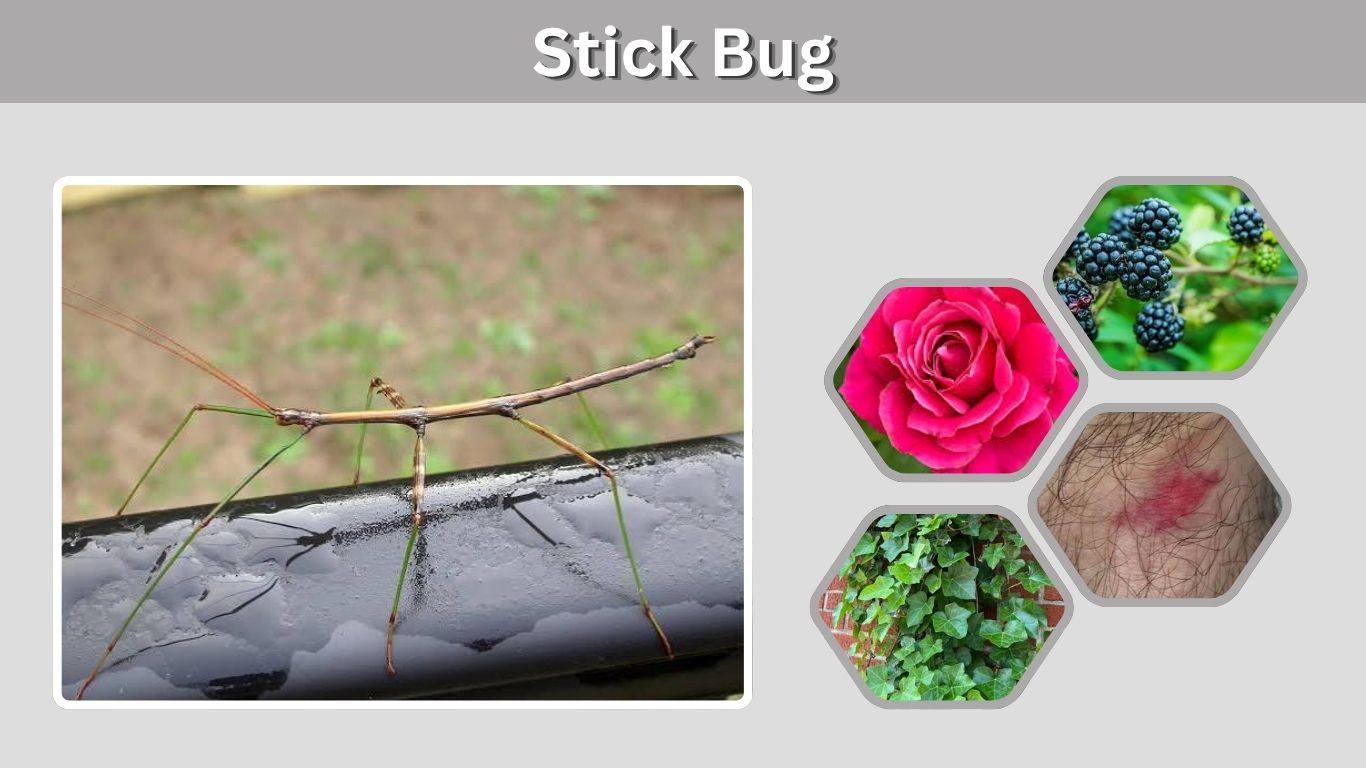
A stick bug is a remarkable insect that resembles a twig, branch, or plant stem. Also known as a walking stick or stick insect, it relies on camouflage to avoid predators rather than running away or fighting. Stick bugs are generally harmless herbivores that spend their nights feeding on leaves and their days hiding among vegetation. They occur in forests, gardens, woodlands, and tropical habitats around the world. Although some species grow surprisingly large, most stick bugs pose no danger to humans or pets.
What Is a Stick Bug?
Stick bugs belong to the insect order Phasmatodea. Members of this group are commonly called phasmids and include both stick insects and leaf insects.
Their long bodies, thin legs, and plant-like colors make them difficult to distinguish from real branches. Thousands of species exist, with the greatest diversity occurring in warm tropical regions.
| Feature | Description |
| Scientific order | Phasmatodea |
| Common names | Stick bug, walking stick, stick insect |
| Diet | Leaves and plant material |
| Activity | Mostly nocturnal |
| Main defense | Camouflage |
| Life cycle | Egg, nymph, and adult |
| Typical lifespan | Several months to about two years |
| Human danger | Usually harmless |
What Does a Stick Bug Look Like?
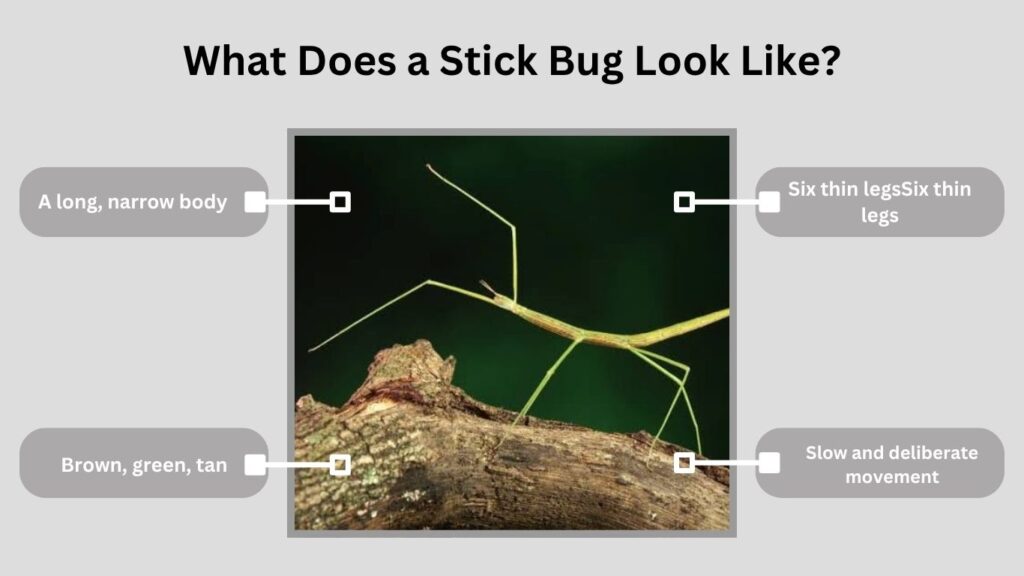
Stick bugs have long, slender bodies supported by six narrow legs. Their heads are relatively small, and they have two antennae that help them detect their surroundings.
Their appearance differs among species. Some look like smooth green stems, while others resemble rough brown branches covered with bumps, thorns, or bark-like markings.
Stick Bug Identification
Common identification features include:
- A long, narrow body
- Six thin legs
- Two noticeable antennae
- Brown, green, tan, gray, or black coloration
- Slow and deliberate movement
- A body resembling a twig or stem
- Wings in some adult species
- Spines or rough projections in certain species
Females are often larger and heavier than males. Male stick bugs are usually slimmer and may have better-developed wings.
How Big Can Stick Bugs Get?
Stick bugs vary considerably in size. Small species may measure only a few inches long, while giant stick bugs can exceed 12 inches when their legs are included.
Some of the world’s longest insects are stick bugs. Their impressive length does not make them dangerous, however. Even giant species are usually gentle plant-eaters that depend on camouflage for protection.
Well-known large species include the Goliath stick insect, giant walking stick, and several Southeast Asian phasmids. The Lord Howe Island stick insect is shorter and heavier, with a thick, dark body that differs from the appearance of most slender walking sticks.
How Stick Bugs Use Camouflage
Camouflage is the stick bug’s primary defense against birds, reptiles, spiders, and mammals. Its body shape and color allow it to blend into branches and foliage.
Blending With Plants
Green stick bugs hide among living stems and leaves, while brown species resemble dry twigs or bark. Some have spots and uneven textures that imitate moss, lichen, or damaged wood.
A resting stick bug may extend its front legs beside its antennae, making its body appear like one continuous branch. It can remain motionless for hours to avoid attracting attention.
Why Do Stick Bugs Dance?
Stick bugs sometimes sway rhythmically from side to side. This behavior is occasionally described as dancing, but it is generally part of their camouflage.
The movement may imitate a twig or leaf moving in the wind. By matching the motion of nearby vegetation, the insect can remain disguised while walking or changing its position.
Other Defensive Behaviors
When camouflage fails, a stick bug may:
- Freeze completely
- Drop from a branch
- Pretend to be dead
- Kick with its legs
- Spread brightly colored wings
- Release an unpleasant odor
- Spray an irritating defensive substance
The exact defense depends on the species.
Where Do Stick Bugs Live?
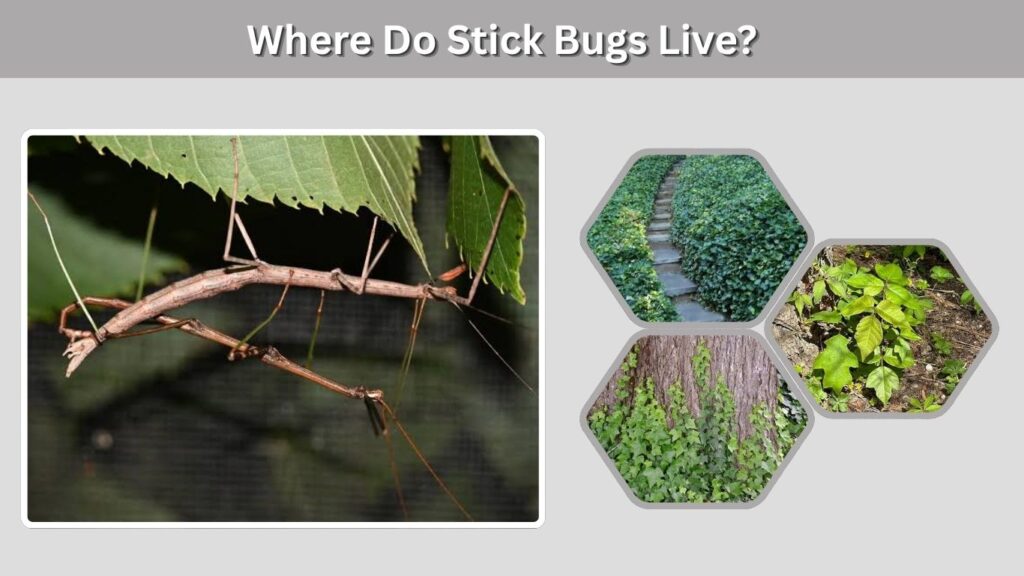
Stick bugs inhabit forests, woodlands, shrublands, grasslands, gardens, and plantations. They are especially common in tropical and subtropical regions where vegetation remains available throughout much of the year.
During daylight hours, they hide on branches, under leaves, or against tree bark. Most become active after dark, when they can feed while avoiding many visual predators.
Stick bugs are found in:
- North and South America
- Australia
- Southeast Asia
- India
- Africa
- Parts of Europe
- Pacific islands
Australian and Indonesian stick bugs are especially diverse. Florida also has native walking sticks, including species capable of releasing defensive sprays.
What Do Stick Bugs Eat?
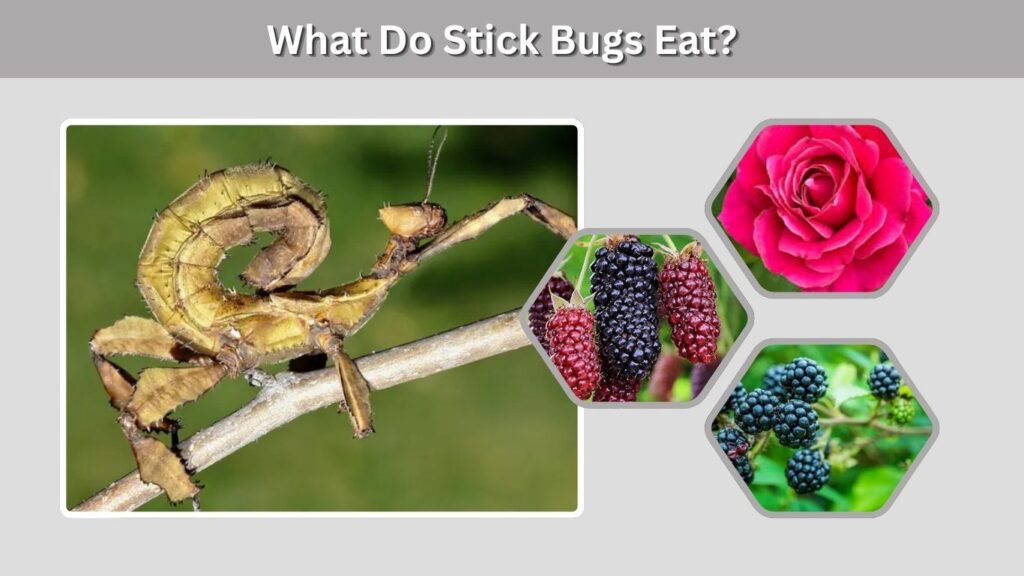
Stick bugs are herbivores. They eat leaves rather than hunting insects or other animals. Their chewing mouthparts are designed to cut through soft plant tissue.
Common Food Plants
Depending on the species, a stick bug may feed on:
- Oak
- Rose
- Blackberry
- Raspberry
- Bramble
- Privet
- Ivy
- Hazel
- Hawthorn
- Eucalyptus
- Guava
Some stick bugs eat leaves from many plants, while others require a specific host plant. A species should never be given an unfamiliar plant unless it is known to be safe.
Do Stick Bugs Damage Plants?
A small number of stick bugs usually causes little noticeable damage. However, a large population may remove substantial foliage from trees, shrubs, or garden plants.
Nonnative species can become agricultural or environmental pests if released into areas where they lack natural predators. Pet stick bugs should therefore never be released outdoors.
Do Stick Bugs Bite?
Stick bugs do not normally bite humans. Their mouthparts are intended for chewing leaves, and they have no reason to attack people.
A large stick bug may grip skin with its legs when frightened. Species with spines can produce a mild scratch or pinching sensation, but this is not a true feeding bite.
Stick bugs do not drink blood, spread through beds, or infest people. They are more likely to freeze, escape, or fall to the ground when disturbed.
Are Stick Bugs Poisonous or Dangerous?
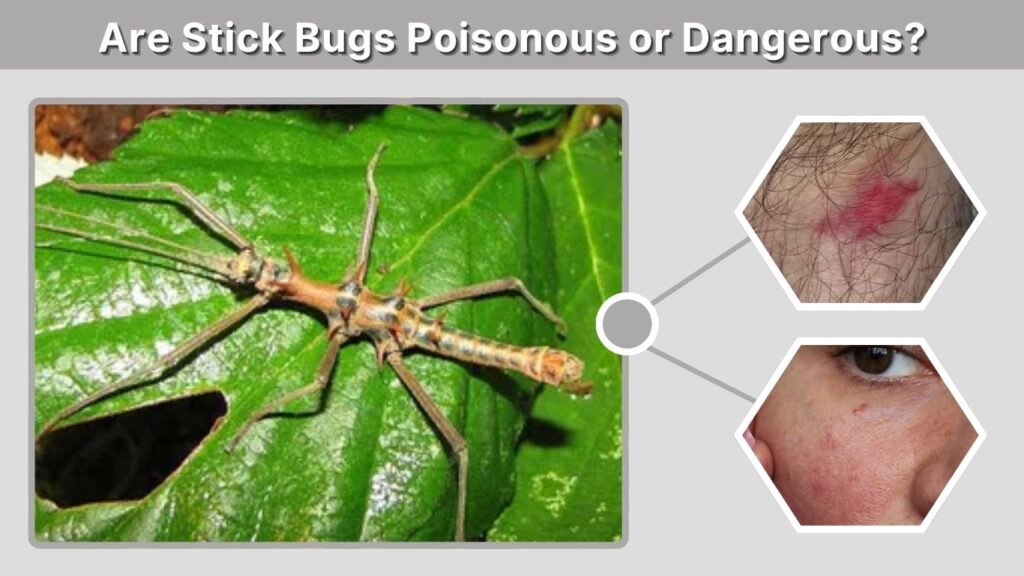
Most stick bugs are neither poisonous nor venomous. They are generally safe to observe and gently handle.
However, several species use defensive chemicals. The two-striped walking stick found in the southeastern United States can direct an irritating spray toward the face of a predator. The liquid may cause burning, redness, tearing, and temporary vision problems if it enters the eyes.
Avoid placing an unfamiliar stick bug close to your face. If defensive fluid reaches the eyes, rinse them thoroughly with clean water and seek medical attention if pain or vision changes continue.
Can Stick Bugs Fly?
Some stick bugs can fly, while others are completely wingless. Wing development depends on the species, age, and sex of the insect.
Adult males are often stronger flyers because their bodies are lighter. Females may have full-sized wings, reduced wings, or no wings at all. In certain species, the wings are used primarily to startle predators by revealing bright colors.
Young stick bugs, called nymphs, generally cannot fly because their wings have not fully developed.
Stick Bug Eggs and Life Cycle
Stick bugs undergo incomplete metamorphosis. Their life cycle includes the egg, nymph, and adult stages. They do not develop through a caterpillar or pupal stage.
Eggs
Stick bug eggs are small, hard, and often resemble seeds. Females commonly drop them one at a time onto the ground, where they become hidden among soil and leaf litter.
Depending on the species and environmental conditions, eggs may take several months or more than a year to hatch.
Some female stick bugs reproduce without mating through parthenogenesis. Eggs produced this way can develop into offspring, which are usually female.
Nymphs
Newly hatched stick bugs are called nymphs rather than larvae. They look like miniature adults but are smaller and lack developed wings.
Nymphs grow by shedding their exoskeleton several times. A stick bug must hang freely during molting so it can pull itself out of its old skin and allow its new body to harden.
How Long Do Stick Bugs Live?
Many stick bugs live for approximately six months to two years. Their lifespan depends on the species, climate, diet, predators, and living conditions.
Females often live longer than males. Some species spend a large part of their life developing inside the egg before hatching.
Stick Bug vs. Praying Mantis
Stick bugs and praying mantises may both use camouflage, but their behavior and diet are very different.
| Feature | Stick Bug | Praying Mantis |
| Diet | Leaves | Insects and small animals |
| Front legs | Thin walking legs | Folded grasping legs |
| Head | Small | Triangular and mobile |
| Movement | Slow and swaying | Alert with rapid strikes |
| Main purpose of camouflage | Avoid predators | Ambush prey |
| Scientific order | Phasmatodea | Mantodea |
A stick bug is a peaceful plant-eater, while a praying mantis is an active predator.
Can You Keep a Stick Bug as a Pet?
Stick bugs can make quiet and interesting pets. They do not need a large amount of space, but their enclosure must be tall enough for safe molting.
A suitable enclosure should provide:
- Fresh leaves from an appropriate food plant
- Good airflow
- Suitable humidity
- Stable temperature
- Vertical climbing branches
- Enough hanging space for molting
- Regular waste removal
Place cut branches in water to keep them fresh, but cover the container opening so the insect cannot fall in and drown. Handle stick bugs carefully because their legs can break if pulled.
FAQs
What is a group of stick bugs called?
There is no widely accepted special collective name used scientifically for a group of stick bugs. They may simply be described as a group, colony, or population of stick insects. Unlike bees or ants, most stick bugs do not live in organized social colonies.
Are stick bugs dangerous to humans?
Most stick bugs are harmless. They do not sting, actively attack, or normally bite people. A few species can spray irritating defensive chemicals, so unfamiliar walking sticks should be kept away from the eyes and handled only when necessary.
Do stick bugs eat other bugs?
No. Stick bugs are herbivores that eat leaves and other plant material. They do not hunt mosquitoes, flies, spiders, or garden pests. A praying mantis may look somewhat similar, but it is a predator that eats other animals.
Can stick bugs regrow their legs?
Young stick bugs can sometimes partially regenerate a lost leg during later molts. The new leg may initially be smaller than the original. Adult stick bugs no longer molt, so they are generally unable to replace a leg after reaching maturity.
What should you do after finding a stick bug?
Leave it on the plant whenever it is safe to do so. An indoor stick bug can be encouraged to climb onto paper or a small branch and then moved outside. Never pull it by the legs because they are fragile.
