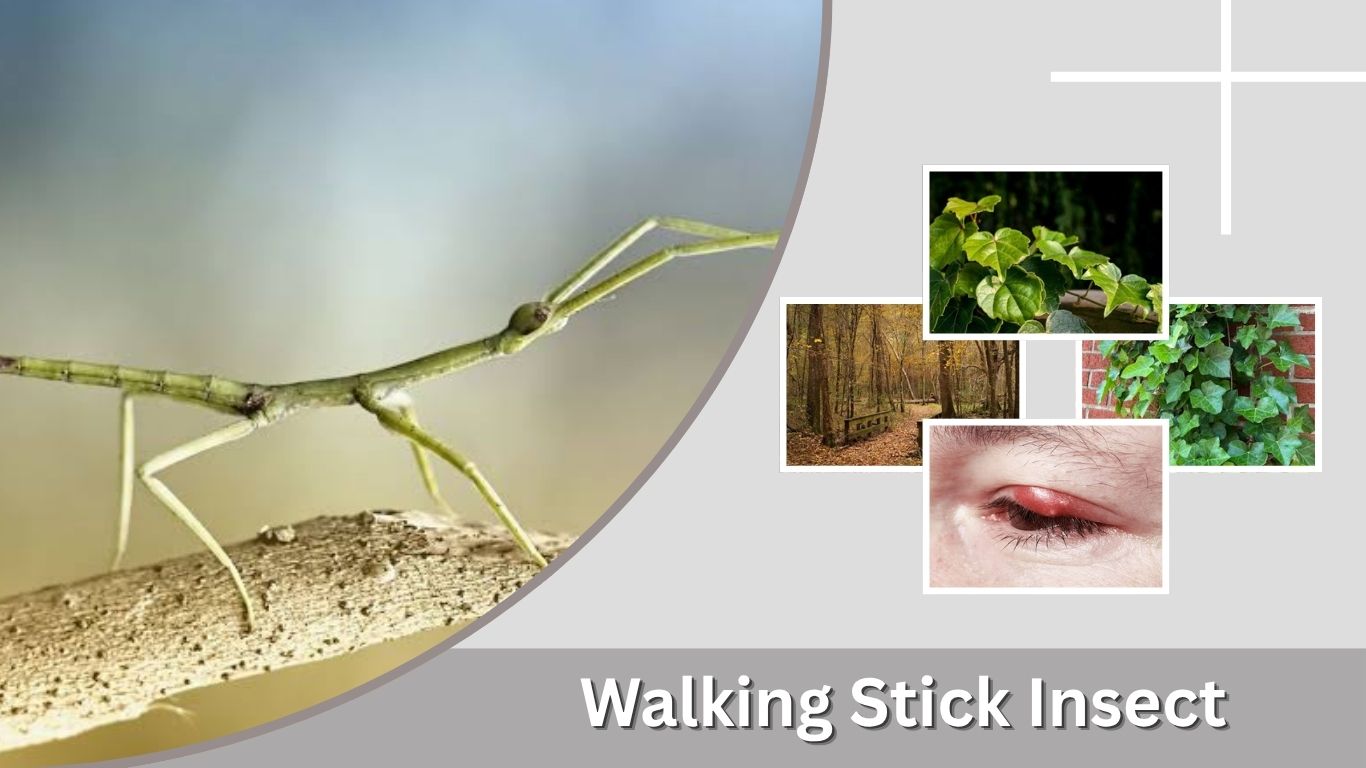
Walking stick insects are remarkable creatures known for looking almost exactly like twigs or small branches. Their thin bodies, slow movements, and natural brown or green colors allow them to disappear among plants. Also called stick insects, stick bugs, or walking sticks, these insects are primarily active at night and spend much of their time feeding on leaves. Although their unusual appearance can seem intimidating, most walking stick insects are harmless to people and pets.
What Is a Walking Stick Insect?
A walking stick insect is a plant-eating insect belonging to the order Phasmatodea. Members of this group are called phasmids and include both stick insects and leaf insects.
There are thousands of walking stick species found around the world. Most live in tropical and subtropical environments, although several species also occur in temperate regions of North America, Europe, Asia, and Australia.
Walking sticks rely on camouflage rather than speed or aggression. Their bodies imitate twigs, stems, bark, thorns, or leaves, helping them avoid detection by birds, reptiles, spiders, and small mammals.
Walking Stick Insect Facts
| Feature | Description |
| Scientific order | Phasmatodea |
| Other names | Stick insect, stick bug, phasmid |
| Diet | Leaves and plant material |
| Activity | Mainly nocturnal |
| Main defense | Camouflage |
| Life cycle | Egg, nymph, and adult |
| Risk to humans | Usually harmless |
| Common colors | Brown, green, gray, tan, and black |
What Does a Walking Stick Insect Look Like?
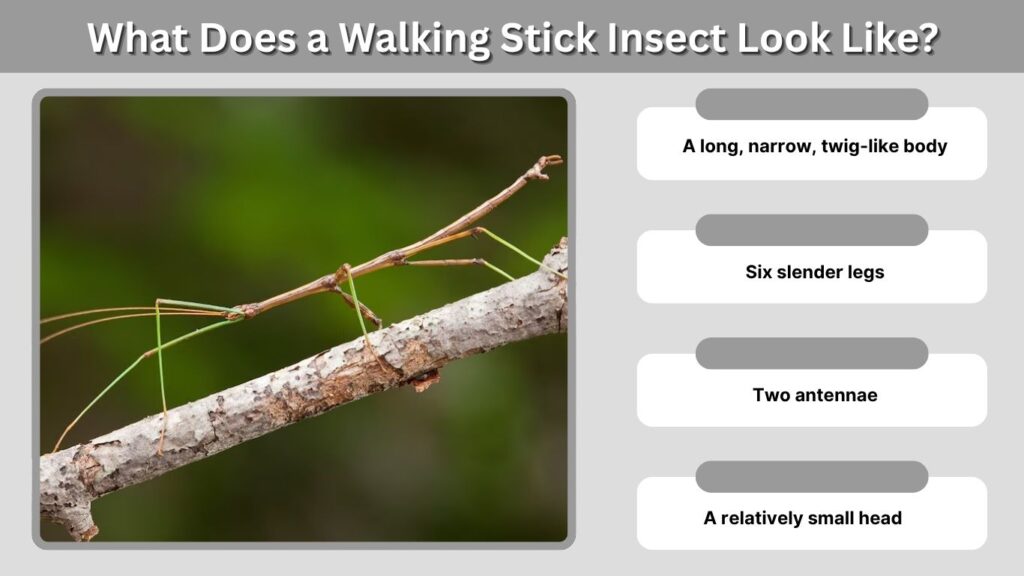
Walking stick insects have long, narrow bodies that resemble small branches. Their legs are usually thin and extended away from the body, making them difficult to recognize when resting among plants.
Some species have smooth bodies, while others have bumps, ridges, spines, or leaf-like structures. These features help them match the vegetation in their natural habitat.
Identification Features
A walking stick insect can be identified by the following characteristics:
- A long, narrow, twig-like body
- Six slender legs
- Two antennae
- A relatively small head
- Brown, green, gray, tan, or black coloration
- Slow, swaying movements
- Wings in some adult species
- Spines or bumps in certain species
- A body that closely matches branches or stems
Walking stick size varies significantly. Small species may be only a few inches long, while giant walking stick insects can grow much longer. Females are generally larger and heavier than males.
How Walking Stick Insects Use Camouflage
A walking stick insect blends into its environment by copying the appearance and movement of plant material. Camouflage is its most important survival adaptation.
Twig-Like Appearance
Brown and gray walking sticks usually resemble dry branches or tree bark. Green species are more likely to hide among fresh stems and leaves. Some insects even have irregular markings that imitate moss, lichen, or damaged wood.
When resting, a walking stick may stretch its front legs forward and hold them beside its antennae. This posture makes its entire body appear like one continuous twig.
Swaying Behavior
Walking stick insects sometimes move gently from side to side while walking. This swaying behavior may imitate a branch moving in the wind.
They may also remain completely motionless when they sense danger. Predators that depend on movement to locate prey can easily overlook a motionless walking stick.
Other Defense Methods
Camouflage is not their only defense. Depending on the species, a threatened walking stick may:
- Drop from a branch
- Pretend to be dead
- Spread its wings suddenly
- Expose brightly colored areas
- Kick with spiny legs
- Release an unpleasant odor
- Spray an irritating defensive liquid
Where Do Walking Stick Insects Live?
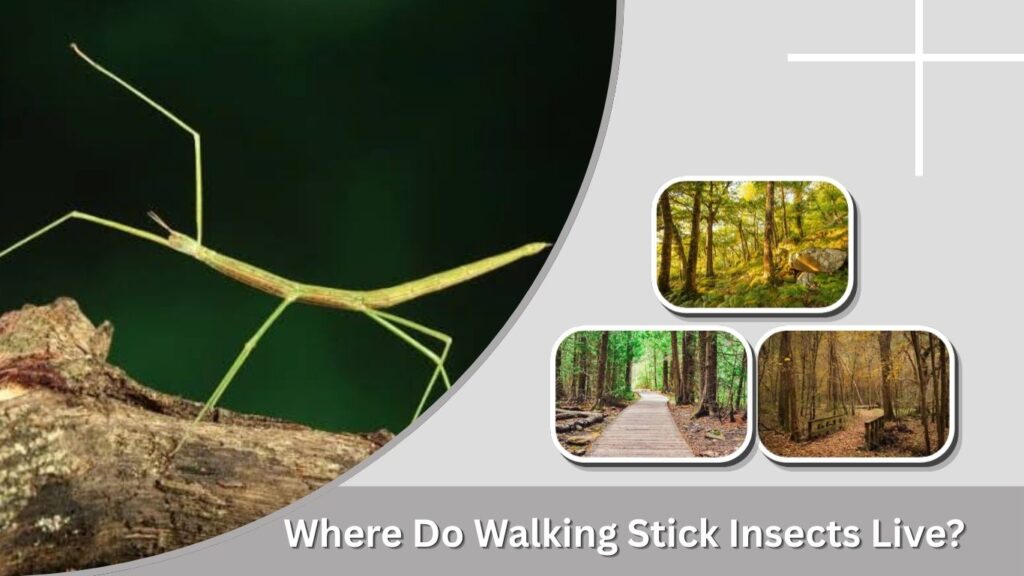
Walking stick insects live in forests, woodlands, gardens, grasslands, shrublands, and areas with abundant vegetation. They are especially diverse in warm, humid tropical forests.
During the day, walking sticks commonly remain hidden among leaves, branches, or tree bark. They become more active after sunset, when they can feed with a lower risk of being noticed by daytime predators.
Walking stick insects are found in many regions, including:
- North and South America
- Southeast Asia
- India
- Australia
- Africa
- Southern Europe
- Pacific islands
The northern walking stick is one of the better-known North American species. Indian, Vietnamese, and Australian walking sticks are also commonly kept as pets.
What Do Walking Stick Insects Eat?
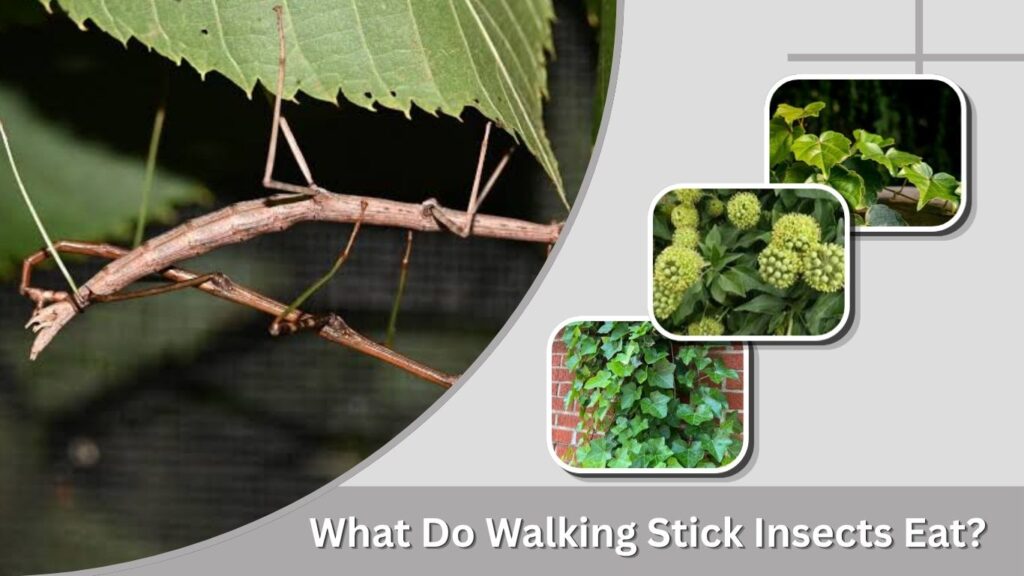
Walking stick insects are herbivores, meaning they feed on plants. They do not normally hunt or eat other insects.
They have chewing mouthparts that allow them to bite pieces from leaves. Most feeding occurs at night.
Common Food Plants
The exact diet depends on the species, but walking sticks may eat leaves from:
- Oak
- Rose
- Bramble
- Blackberry
- Raspberry
- Privet
- Ivy
- Hazel
- Hawthorn
- Eucalyptus
- Guava
Some walking sticks accept many different plants, while others feed on only a limited number of host species.
Do Walking Sticks Damage Plants?
One or two walking sticks rarely cause serious plant damage. However, large populations may remove significant amounts of foliage from trees, shrubs, gardens, or ornamental plants.
Introduced walking stick species can become problematic when released into an environment where they have few natural predators.
Do Walking Stick Insects Bite?
Walking stick insects do not normally bite humans. Their mouthparts are designed to chew leaves, not attack people or animals.
Most species are calm and prefer to hide, freeze, or move away when disturbed. A large walking stick may grip a person’s hand or clothing with its legs, and species with sharp leg spines can cause mild discomfort.
A defensive grip or scratch should not be confused with a bite. Walking sticks do not feed on blood and do not actively pursue people.
When handling one, allow it to walk onto your hand. Never pull it forcefully from a branch because its delicate legs can break.
Are Walking Stick Insects Poisonous?
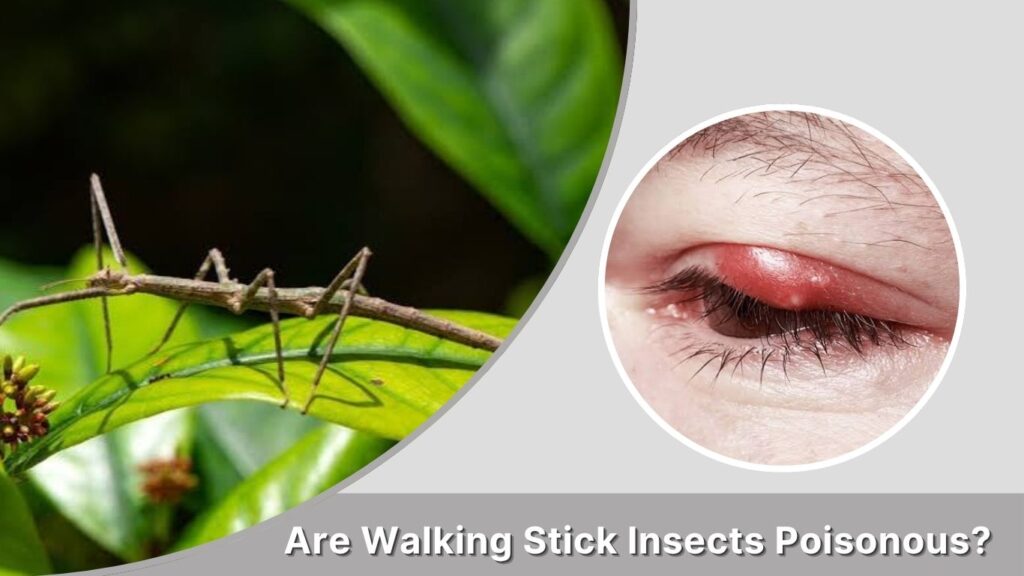
Most walking stick insects are not poisonous or venomous. Touching them is generally safe, provided they are handled carefully.
However, several species can release defensive chemicals. The two-striped walking stick, found in parts of the southeastern United States, can spray an irritating liquid toward a perceived threat.
The secretion may cause:
- Burning or irritation of the eyes
- Temporary blurred vision
- Redness
- Tearing
- Discomfort on sensitive skin
Avoid holding an unfamiliar walking stick close to your face. If defensive liquid enters the eyes, rinse them with clean water and seek medical attention if irritation continues.
Walking Stick Insect Life Cycle
Walking stick insects undergo incomplete metamorphosis. Their life cycle has three stages: egg, nymph, and adult. They do not pass through a caterpillar or pupal stage.
Eggs
Walking stick eggs are small, hard, and often resemble seeds. Females may drop their eggs individually onto the ground, where they become hidden in soil and leaf litter.
Eggs can take several months to hatch. In some species, development may take more than a year depending on temperature, humidity, and seasonal conditions.
Some female walking sticks can produce offspring without mating. This reproductive process is called parthenogenesis. The offspring produced from unfertilized eggs are usually female.
Nymphs
Newly hatched walking sticks are called nymphs. They look like miniature adults but are smaller and do not have fully developed wings.
Nymphs shed their exoskeleton several times as they grow. This process is known as molting. Young walking sticks may sometimes regrow part of a lost leg during later molts.
Adults and Lifespan
After completing their final molt, walking sticks become adults and stop growing. Adults focus mainly on feeding and reproduction.
The lifespan of a walking stick insect depends on its species and environment. Many live for approximately six months to two years. Larger captive species may live longer when provided with suitable food, temperature, humidity, and care.
Walking Stick Insect vs. Praying Mantis
Walking sticks and praying mantises may both have long bodies and excellent camouflage, but they are not the same type of insect.
| Feature | Walking Stick Insect | Praying Mantis |
| Diet | Leaves and plants | Insects and other animals |
| Front legs | Long and slender | Folded, powerful grasping legs |
| Head | Small | Triangular and highly mobile |
| Behavior | Slow and defensive | Alert and predatory |
| Main strategy | Avoid detection | Ambush prey |
| Scientific order | Phasmatodea | Mantodea |
Walking stick insects use their branch-like appearance to avoid predators. Praying mantises use camouflage to approach and capture prey.
Walking Stick Insect Care
Walking stick insects can be kept in captivity, but their needs vary by species. The enclosure should be tall enough for the insect to hang upside down while molting.
Provide fresh leaves from a plant that is safe for the particular species. Place cut branches in water, but cover the water container so the insect cannot fall inside and drown.
The enclosure also needs:
- Good ventilation
- Suitable temperature
- Appropriate humidity
- Climbing branches
- Fresh food leaves
- Regular removal of waste
- Enough vertical molting space
Avoid collecting or releasing nonnative walking sticks. Introduced species may reproduce quickly and damage local plants.
FAQs
Are walking sticks insects?
Yes. Walking sticks are true insects belonging to the order Phasmatodea. They have six legs, antennae, and a body divided into a head, thorax, and abdomen. Their twig-like appearance is a form of camouflage rather than an indication that they are part of a plant.
Can walking stick insects fly?
Some adult walking stick insects can fly, but many species are wingless. In winged species, males are often stronger flyers because they are lighter and slimmer than females. Some females have small wings that are mainly used for defensive displays instead of sustained flight.
Are walking stick insects beneficial?
Walking sticks are important members of natural ecosystems. They consume plant material and serve as food for birds, reptiles, spiders, and mammals. Their droppings also help return nutrients to the soil, although unusually large populations may damage trees or garden plants.
Can you keep a walking stick insect as a pet?
Yes, several walking stick species are kept as pets because they are quiet and relatively easy to observe. Owners must provide the correct food plants, humidity, ventilation, and enclosure height. Local regulations should be checked because keeping nonnative species may be restricted.
What should you do if you find a walking stick?
Leave it on the plant whenever possible. If it is indoors, allow it to climb onto a piece of paper or a small branch, then place it outside near suitable vegetation. Avoid grabbing its legs because they are fragile and may break easily.