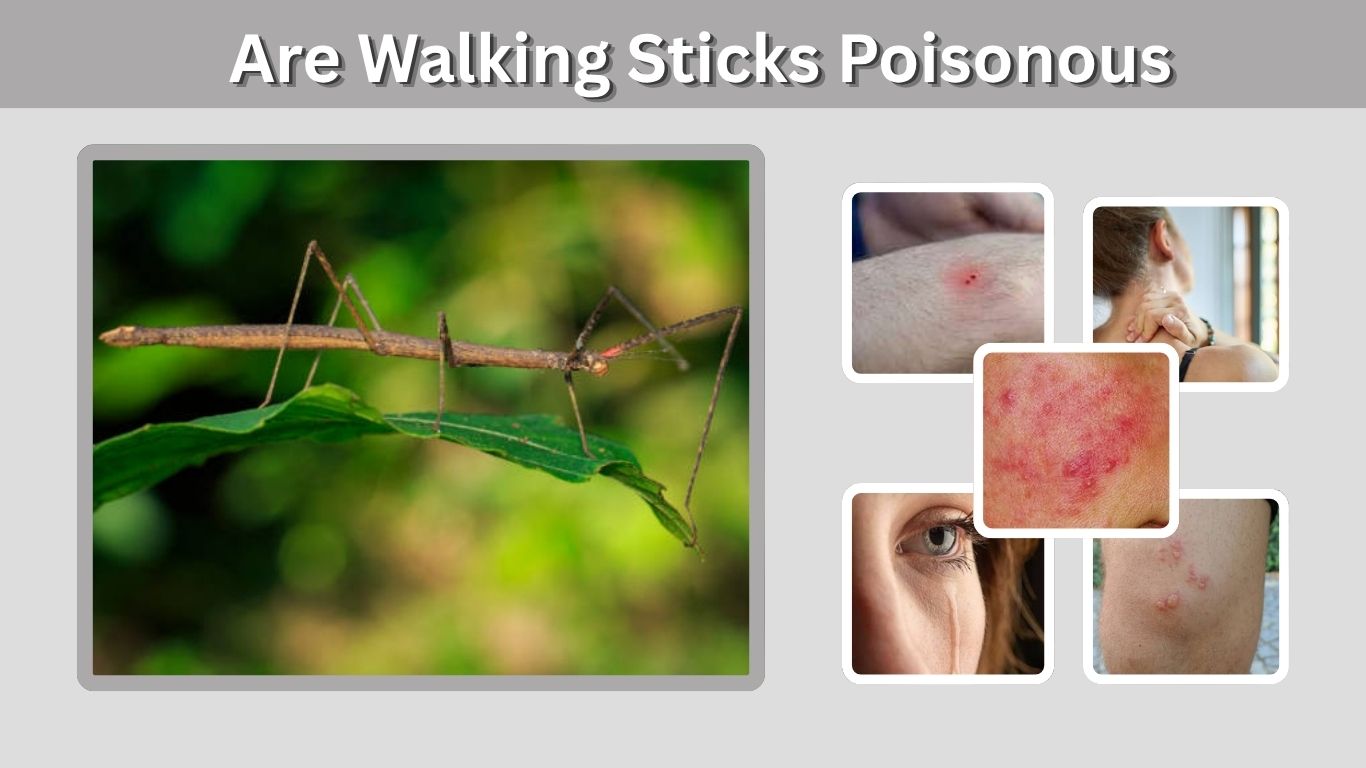
Most walking sticks, stick bugs, and stick insects are not poisonous, venomous, or dangerous to humans. They are plant-eating insects that rely mainly on twig-like camouflage to avoid predators. However, certain two-striped walkingsticks can release a powerful defensive spray capable of causing intense eye irritation and temporary vision problems. Therefore, ordinary walking sticks are generally harmless, but striped species should be observed without touching or placing them near your face.
Are Walking Sticks Poisonous?
Most walking stick insects are harmless herbivores. They eat leaves and do not hunt animals, drink blood, or use venom to capture prey. Their long bodies, narrow legs, and brown or green coloring help them blend into branches and vegetation.
Calling walking sticks “poisonous” is generally inaccurate. A poisonous animal harms another animal when its tissues or secretions are eaten or touched. Most walking sticks do not present this type of danger to people.
| Question | Answer |
| Are most walking sticks poisonous? | No |
| Are they venomous? | Most do not inject venom |
| Do they have stingers? | No |
| Do they normally bite humans? | No |
| Can some species spray chemicals? | Yes |
| Which species requires caution? | Two-striped walkingsticks |
| Main risk | Chemical spray entering the eyes |
Why Are Some Walking Sticks Considered Dangerous?
Walking sticks use several defenses when camouflage fails. Depending on the species, they may freeze, sway like a branch, drop to the ground, spread their wings, kick with spiny legs, or release unpleasant-smelling chemicals.
Most of these behaviors are harmless. The main exception is a group of thick-bodied insects called two-striped walkingsticks, also known as musk mares or devil’s riding horses.
The Two-Striped Walkingstick
The southern two-striped walkingstick, Anisomorpha buprestoides, is found from Texas through Florida to South Carolina. It has a stout, wingless body with noticeable dark stripes running lengthwise along its back. A smaller male is often seen riding on a much larger female.
Unlike slender walking sticks that rely almost entirely on camouflage, this species has chemical glands inside its thorax. Openings behind the head allow it to direct defensive fluid toward an approaching predator.
Is a Two-Striped Walking Stick Poisonous?
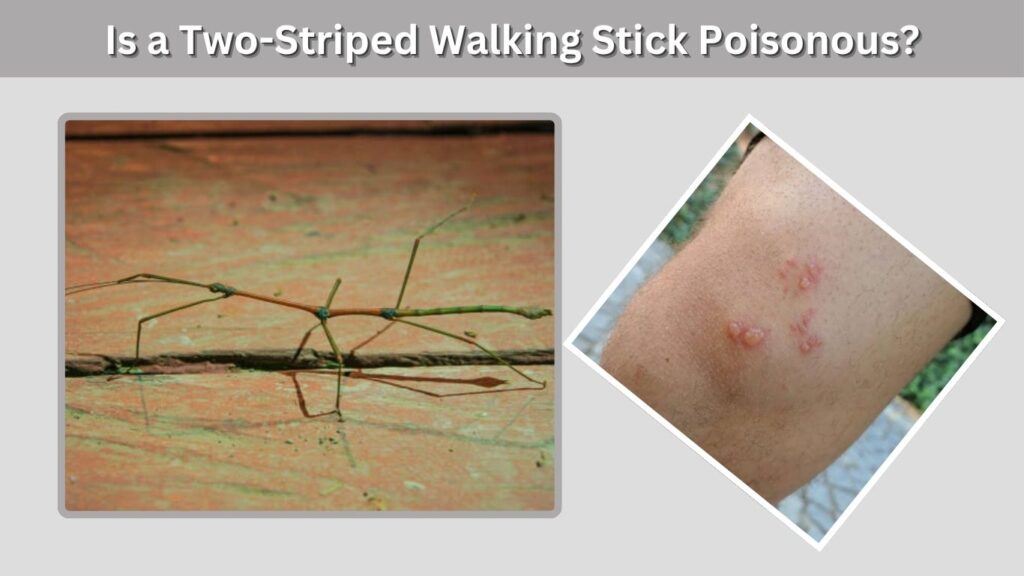
A two-striped walkingstick is not poisonous in the same way as a toxic mushroom or poisonous frog. It does not sting or inject venom through a bite. Nevertheless, its defensive secretion contains active chemicals that can damage sensitive tissue.
The southern species produces substances including anisomorphal and related terpene compounds. Different populations may produce slightly different chemical mixtures.
For practical safety, the insect should be treated as chemically hazardous around the eyes, even though “poisonous” is not the most technically accurate description.
How Does Walking Stick Spray Work?
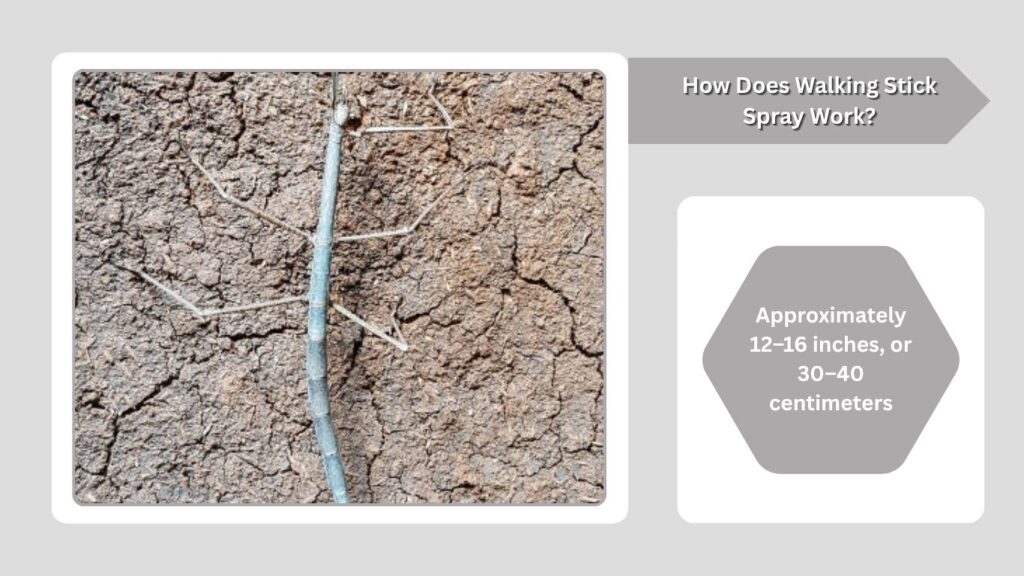
The defensive glands of the southern two-striped walkingstick are functional even in newly hatched nymphs. The insect may spray when it is pinched, tapped, grabbed, repeatedly prodded, or approached closely by a perceived predator.
It can accurately direct the secretion approximately 12–16 inches, or 30–40 centimeters. Larger females may discharge several times before their chemical supply is depleted.
This means that someone does not necessarily need to pick up the insect to be exposed. Bringing the face close for a photograph or allowing a pet to investigate it may be enough to trigger a defensive response.
Walking Stick Spray Symptoms
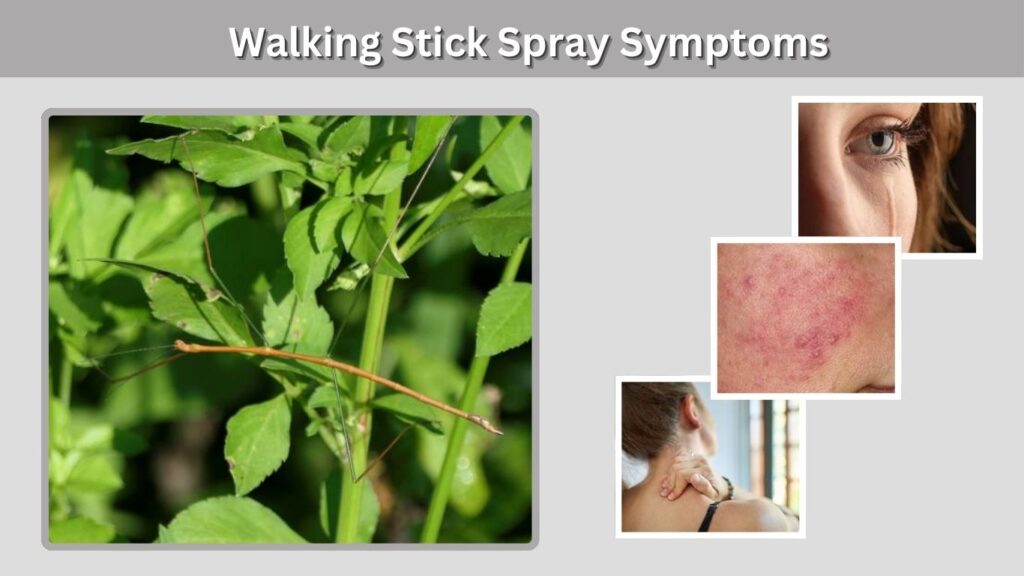
When two-striped walkingstick spray reaches the eyes, reported symptoms include:
- Immediate, intense burning pain
- Severe redness
- Excessive tearing
- Sensitivity to light
- Blurred or reduced vision
- Inflammation of the conjunctiva
- Corneal irritation or injury
Published medical reports document chemical conjunctivitis and damage to both the corneal and conjunctival surfaces following direct exposure.
Symptoms may improve over several hours, but some cases have involved visual impairment or sensitivity lasting several days. The severity depends on exposure amount, response time, and individual circumstances.
What to Do if Spray Enters Your Eye
Immediately rinse the affected eye with large amounts of clean water. Do not rub it, since rubbing may increase irritation or damage the corneal surface.
Seek prompt medical attention when pain is severe or persistent, or when there is light sensitivity, blurred vision, reduced vision, or continued redness. University of Florida guidance specifically recommends medical evaluation when decreased vision or light sensitivity occurs.
Do Walking Sticks Bite or Sting?
Walking sticks do not have stingers. They possess chewing mouthparts, but these are designed for cutting leaves rather than biting people.
A large stick insect might theoretically pinch when restrained, but biting is not a normal defense. Larger species with spiny legs may kick, scratch, or clamp their legs around a finger if handled roughly. These injuries are mechanical scratches rather than poisonous bites.
The northern walkingstick and giant walkingstick, for example, primarily depend on camouflage. Giant walkingsticks have spines on their middle and hind legs, but they are plant feeders rather than aggressive insects.
Are Leaf Bugs Poisonous?
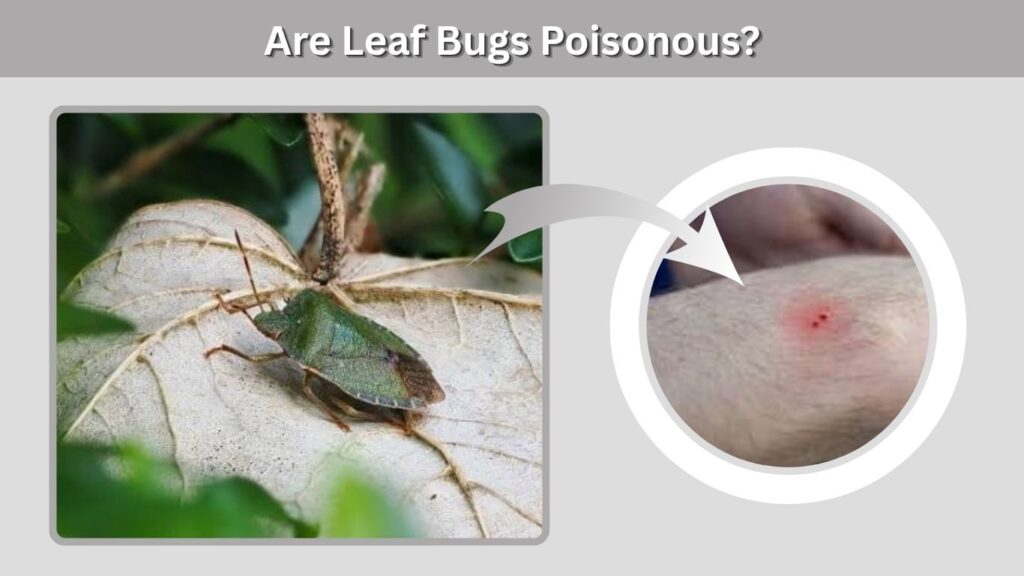
True leaf insects belong to the same order as walking sticks and use flattened, leaf-shaped bodies for camouflage. They are plant feeders and are not generally considered poisonous or dangerous to people. Stick and leaf insects may vary greatly in shape and color, but they share the same plant-eating lifestyle.
However, “leaf bug” is an imprecise name. It may also refer to unrelated insects such as leaf-footed bugs, assassin bugs, or other true bugs. Some assassin bugs can deliver a painful defensive bite, so identification should be based on body shape and mouthparts rather than the word “leaf.”
Are Stick Bugs Poisonous to Dogs?
Most ordinary walking sticks are not recognized as a common poisoning threat to dogs. The more serious risk is a curious dog approaching a two-striped walkingstick and receiving spray directly in its eyes.
A published veterinary case described a dog that developed tearing, eyelid spasms, swelling, and corneal ulceration after approaching an Anisomorpha walkingstick. The symptoms eventually resolved following veterinary treatment.
Contact a veterinarian promptly when a pet develops:
- Sudden eye pain
- Squinting or inability to open the eye
- Heavy tearing
- Swelling around the eye
- Persistent pawing at the face
- Redness or cloudiness
- Apparent vision difficulty
Do not allow dogs or cats to sniff, bite, paw at, or play with a striped walkingstick.
How to Handle a Walking Stick Safely
Most walking sticks can be observed safely without direct contact. Handling is also risky for the insect because its long legs can break when pulled or squeezed.
To move one, place a container, branch, or piece of cardboard in front of it and allow it to climb aboard. Keep the insect below face level and release it near shrubs or trees.
A striped, thick-bodied walkingstick should not be handled directly. Keep children and pets away, and avoid poking it to make it move or spray.
FAQs
Are stick bugs poisonous if touched?
Most stick bugs are not poisonous to touch. Nevertheless, handling should be limited because some species release defensive chemicals and others have spiny legs. Never touch your eyes after handling an unidentified walking stick.
Is a walking stick bite poisonous?
Walking sticks do not inject poison or venom through a bite. They rarely bite people, and their chewing mouthparts are adapted for eating leaves. A minor pinch or scratch would not normally involve venom.
Which walking stick is poisonous?
No common walking stick is truly poisonous in the usual sense. However, northern and southern two-striped walkingsticks produce defensive sprays that can seriously irritate or injure the eyes.
Can walking sticks spray humans?
Two-striped walkingsticks can spray people when they feel threatened. The secretion can travel about 12–16 inches, so avoid placing your face close to one even without touching it.
Are walking sticks safe around children?
Most species are harmless, but children should not handle unidentified walking sticks. Two-striped species can spray eye-irritating chemicals, while large or spiny species may scratch when squeezed.