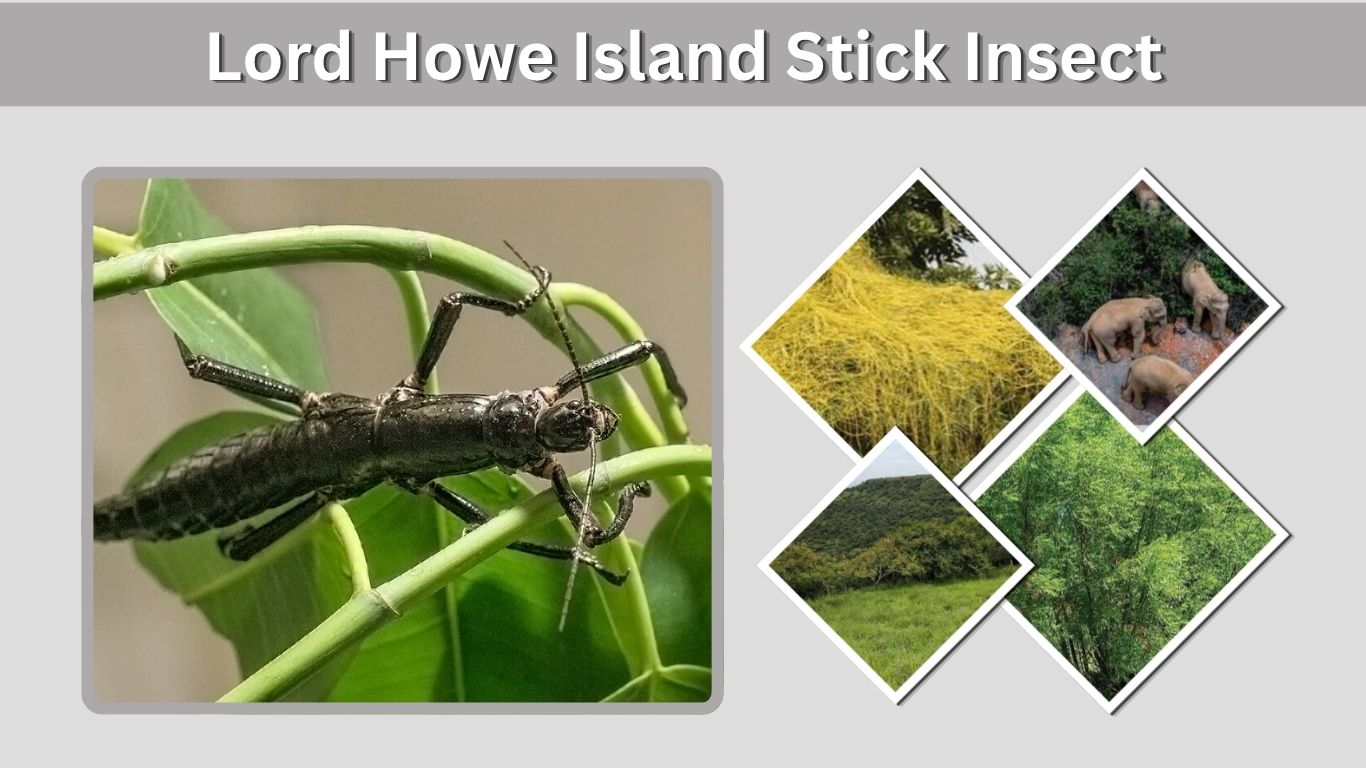
The Lord Howe Island stick insect is a large, flightless insect found naturally only within Australia’s Lord Howe Island Group. Also called the Lord Howe Island phasmid, land lobster, or tree lobster, it has one of the most remarkable survival stories in conservation. Scientists believed it had become extinct after invasive rats reached Lord Howe Island, but a tiny population was rediscovered on the remote volcanic outcrop of Ball’s Pyramid in 2001.
Lord Howe Island Stick Insect Classification
The scientific name of the Lord Howe Island stick insect is Dryococelus australis. It belongs to the stick-insect order Phasmatodea and is the only species in the genus Dryococelus.
| Classification | Name |
| Kingdom | Animalia |
| Phylum | Arthropoda |
| Class | Insecta |
| Order | Phasmatodea |
| Family | Phasmatidae |
| Genus | Dryococelus |
| Species | Dryococelus australis |
Although local people called it a “tree lobster,” it is not related to marine lobsters. The nickname refers to its unusually large, heavy body and glossy, armor-like appearance.
What Does the Lord Howe Island Stick Insect Look Like?
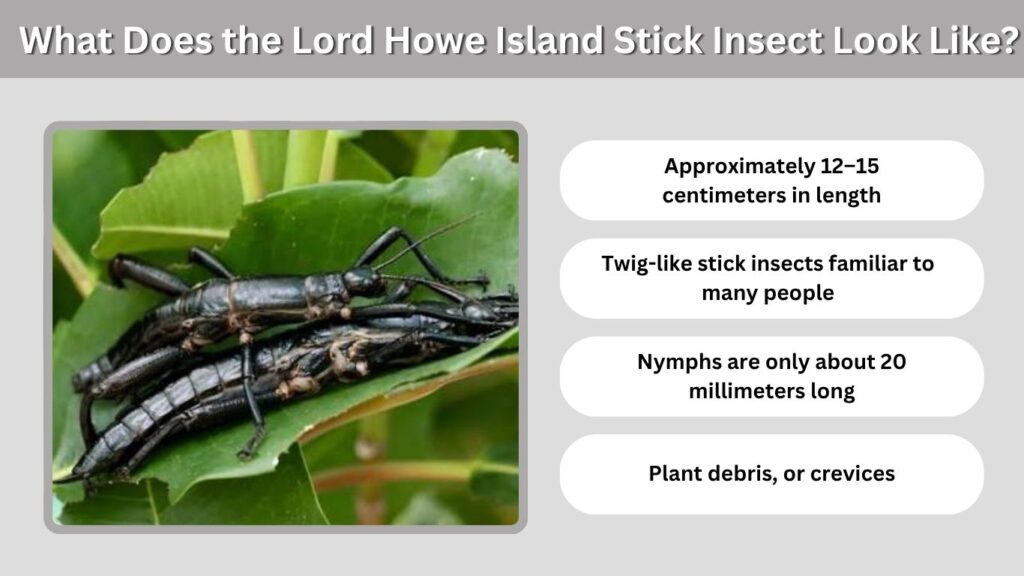
This species is much thicker and more robust than the thin, twig-like stick insects familiar to many people. Fully grown individuals may reach approximately 12–15 centimeters in length, making them among the largest and heaviest flightless insects.
Adult Characteristics
Adults have a broad, segmented body with six strong legs, long antennae, and a shiny dark-brown or nearly black exoskeleton. They do not possess wings and cannot fly.
Females generally have broader abdomens and an egg-laying structure called an ovipositor. Males are usually more slender, with longer antennae and enlarged hind legs.
Nymph Characteristics
Newly hatched nymphs are only about 20 millimeters long. They are thin and bright green, which helps them blend into fresh vegetation. As they grow and molt, their bodies become thicker and gradually change from green to brown and finally glossy black.
Young insects are commonly active during daylight, while adults are mainly nocturnal. During the day, adults rest together inside protected shelters, plant debris, or crevices.
Where Does the Lord Howe Island Stick Insect Live?
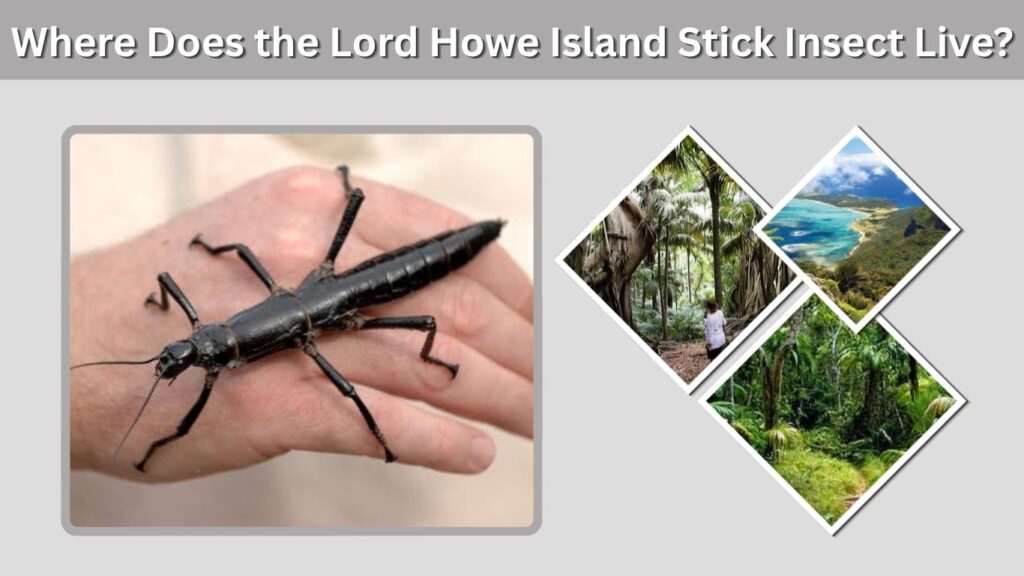
Historically, these insects lived in the moist forests of Lord Howe Island, where they were once abundant. Today, the remaining natural population survives on Ball’s Pyramid, a steep volcanic sea stack approximately 23 kilometers southeast of the main island.
Ball’s Pyramid rises sharply from the Tasman Sea and provides very little vegetation. The insects occupy small areas where host plants grow and where rock crevices, soil, and plant debris provide daytime shelter and places for eggs to develop.
| Life requirement | Natural resource |
| Food | Leaves of suitable shrubs |
| Daytime shelter | Rock cavities and plant debris |
| Egg development | Moist soil or ground substrate |
| Protection | Dense vegetation and narrow crevices |
| Activity period | Mainly nighttime for adults |
The extremely limited habitat makes the wild population vulnerable to storms, drought, plant loss, invasive weeds, disease, and accidental disturbance.
What Do Lord Howe Island Stick Insects Eat?
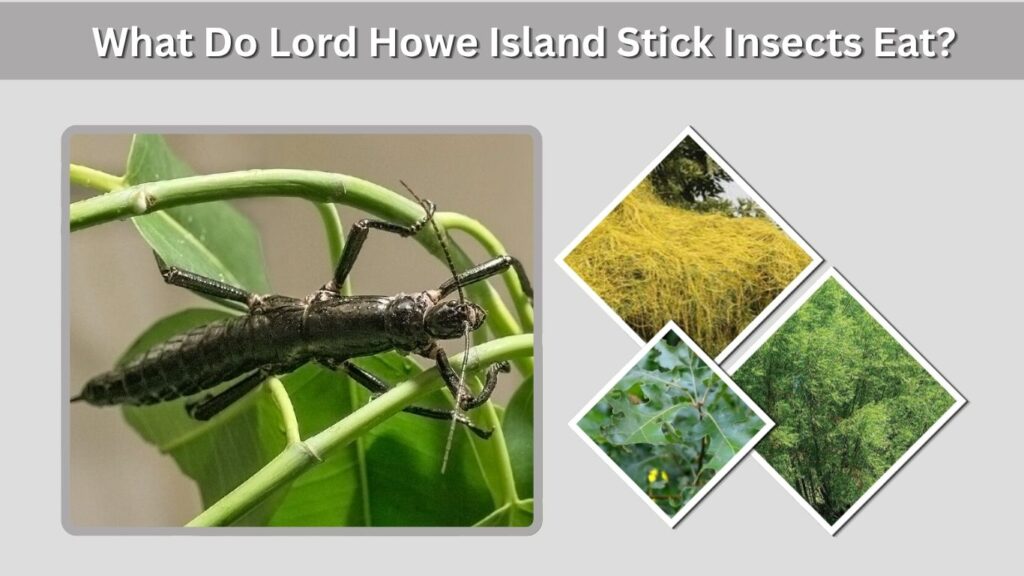
The wild population depends heavily on the Lord Howe Island tea tree, Melaleuca howeana. The insects emerge at night to eat its leaves before returning to sheltered places during daylight.
Their reliance on a very small number of host plants creates a serious conservation risk. Coast morning glory can invade the available habitat and compete with or overwhelm the tea-tree shrubs on which the insects depend. Habitat-management teams have therefore been controlling this weed around known phasmid locations on Ball’s Pyramid.
In conservation breeding facilities, keepers may provide carefully selected alternative plants when the natural host plant is unavailable. However, feeding a large captive colony is challenging because these insects consume substantial amounts of foliage and can be selective about what they accept.
Lord Howe Island Stick Insect Life Cycle
The life cycle begins when a female deposits eggs into soil or drops them onto the ground. Females can reproduce after mating, but the species is also capable of parthenogenesis, allowing females to produce offspring without male fertilization.
Eggs and Hatching
The eggs develop in the ground substrate before small green nymphs emerge. Incubation can be lengthy, and successful hatching depends on suitable moisture, temperature, and substrate conditions.
A female may produce up to approximately 300 eggs during her lifetime. However, not every egg hatches, and young nymphs remain vulnerable to disease, unsuitable humidity, and food shortages.
Growth and Molting
Nymphs grow by shedding their old exoskeletons. They typically molt several times, becoming larger and darker after each stage. One current zoo breeding account reports that nymphs may molt about seven times before reaching adulthood.
Adulthood may be reached at roughly six to twelve months, depending on temperature and breeding conditions. Their total lifespan is usually estimated at around 12–24 months, with official sources reporting some variation between captive populations.
Why Was the Lord Howe Island Stick Insect Thought Extinct?
The species was once common on the main island. In 1918, the steamship Makambo ran aground near Lord Howe Island, allowing black rats to reach the shore. The rats spread across the island and preyed on native animals, including the eggs and young of the stick insect.
The phasmid disappeared rapidly and was considered extinct by the early twentieth century. Dead specimens discovered on Ball’s Pyramid during the 1960s suggested that a surviving population might exist, but no living individuals were confirmed until 2001.
Researchers exploring Ball’s Pyramid eventually found living insects clustered around a small patch of vegetation. This rediscovery occurred more than 80 years after the last confirmed sightings on Lord Howe Island.
Conservation and Captive Breeding
In 2003, two breeding pairs were collected from Ball’s Pyramid to establish captive populations. Melbourne Zoo became central to the breeding and research program, producing thousands of descendants and sharing eggs or individuals with selected institutions.
The insect remains critically endangered because the natural population is tiny and restricted to a small area. Recent estimates have placed the wild population in the tens rather than hundreds or thousands.
A February 2026 expedition recorded phasmids at two locations on Ball’s Pyramid. Seven males and females were collected under a scientific permit and transferred to Melbourne Zoo to improve the genetic diversity of the captive population.
Lord Howe Island is now considered rodent-free, removing the main obstacle that previously prevented the insect’s return. However, the species has not yet been widely re-established there. The Lord Howe Island Board is consulting the community and developing plans for a carefully managed future reintroduction.
Major Threats
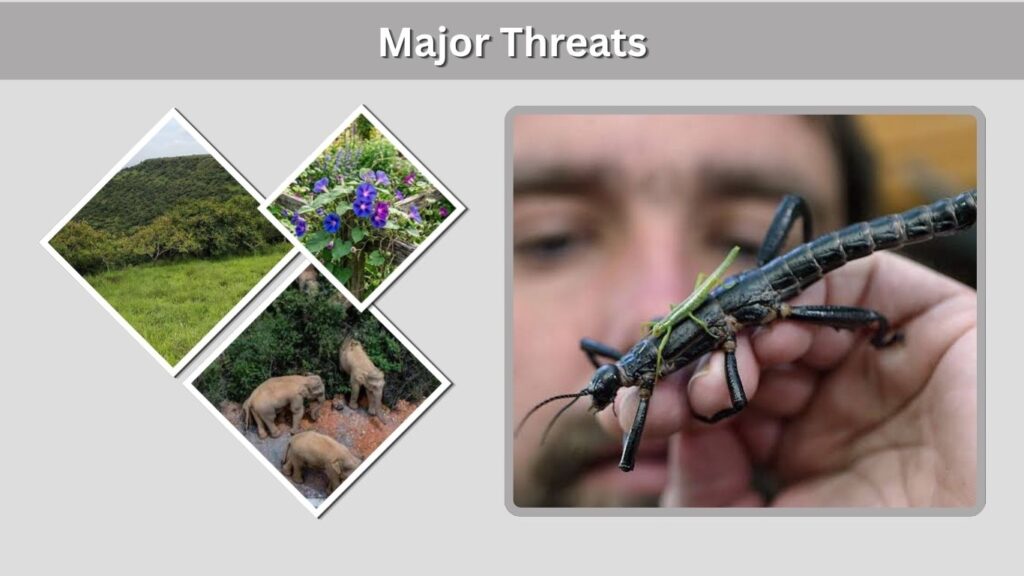
The Lord Howe Island stick insect still faces several serious risks:
- Extremely small wild population
- Very limited geographic range
- Invasive morning-glory vines
- Loss or damage to host plants
- Disease and low genetic diversity
- Severe storms and other unexpected events
- Accidental introduction of rats or other predators
Because all wild individuals occupy Ball’s Pyramid, one major environmental disaster could affect much of the natural population. Captive colonies serve as insurance against complete extinction.
FAQs
Is the Lord Howe Island stick insect extinct?
No. It disappeared from the main Lord Howe Island and was presumed extinct for decades, but living insects were rediscovered on Ball’s Pyramid in 2001. A small wild population remains there, while conservation colonies are maintained by selected zoos.
Why is it called a tree lobster?
The name comes from its large size, thick body, powerful legs, and glossy exoskeleton. It resembles a land-dwelling lobster more than the slender, twig-like appearance associated with many other stick insects.
How large is the Lord Howe Island stick insect?
An adult generally grows to around 12–15 centimeters long. Females normally have broader bodies than males. Its heavy, robust build makes it one of the most impressive flightless insects in the world.
Can Lord Howe Island stick insects fly?
No. Both males and females are wingless. They move by climbing and walking through vegetation, and adults usually remain hidden during daylight before emerging to feed at night.
Are Lord Howe Island stick insects returning to the main island?
Reintroduction planning is underway, but a full return has not yet occurred. With Lord Howe Island now rodent-free, officials are assessing habitat, risks, genetics, community views, and the safest method for establishing a new wild population.