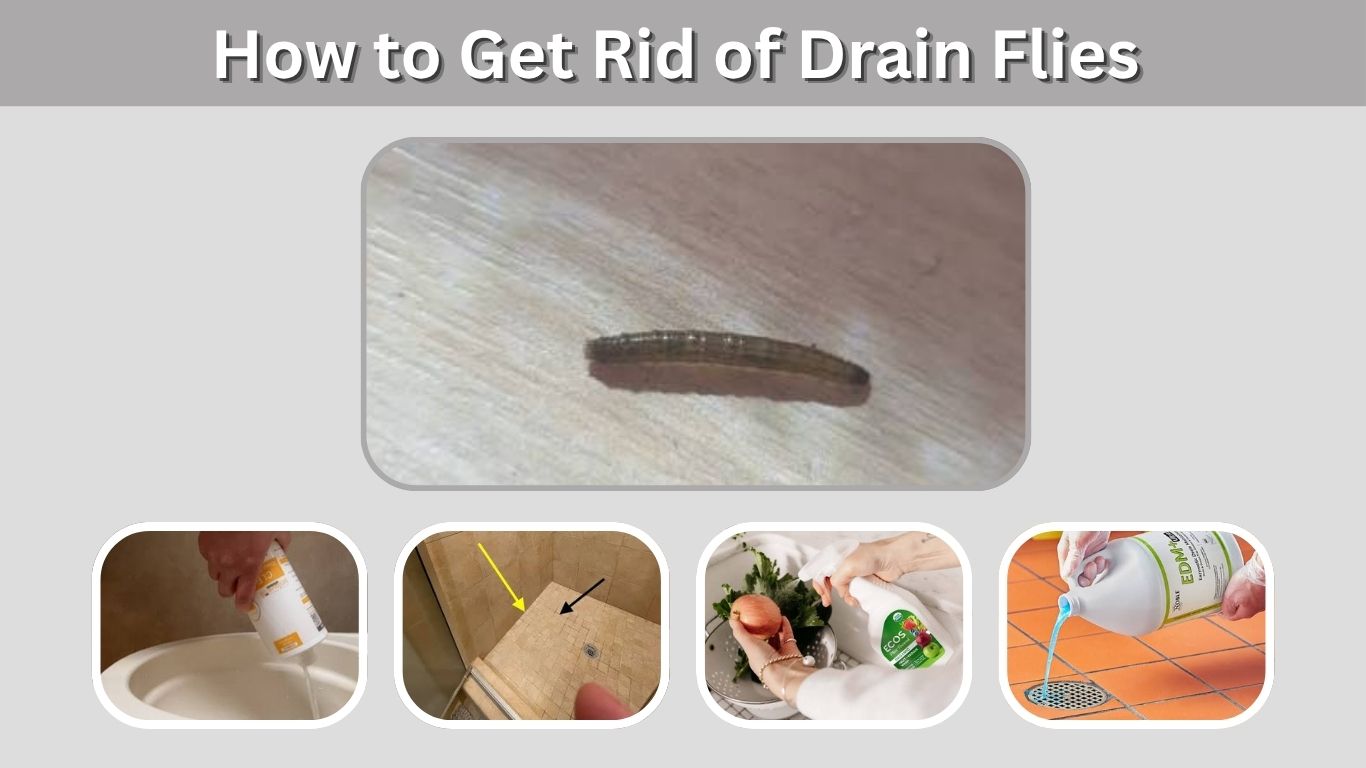
Drain flies are small, fuzzy insects that reproduce in moist organic buildup inside sinks, toilets, showers, and floor drains. Killing the adults may reduce their numbers temporarily, but it will not end an infestation while eggs and larvae remain inside the pipes. The most effective solution is to locate every breeding site, scrub away the organic film, and correct the moisture problem supporting them. With thorough cleaning and continued monitoring, most household drain fly infestations can be controlled within one to three weeks.
How to Identify a Drain Fly Infestation
Drain flies, also called moth flies or sewer flies, are approximately 1/16 to 1/4 inch long. Their hairy bodies and broad wings make them resemble tiny moths. They are weak fliers and normally make short, hopping movements around sinks, bathroom walls, toilets, and other damp areas.
Common Signs of Drain Flies
Look for the following signs:
- Small, fuzzy flies resting near a drain
- Several flies appearing in the same room each day
- Tiny worms moving inside a toilet or shower drain
- Black, gray, or cream-colored larvae in drain slime
- Organic buildup around a stopper or drain cover
- Flies gathering around a rarely used plumbing fixture
- Persistent sewage odors or unusually slow drainage
Small flies near a sink are not necessarily drain flies. Fruit flies usually gather near fermenting food and garbage, while fungus gnats are commonly associated with moist houseplant soil.
Test the Suspected Drain
Dry the drain opening before going to bed. Place clear tape over part of the opening with the sticky side facing downward, leaving some space for airflow. Check it the following morning for trapped adult flies.
You can also place a transparent cup upside down over the drain. Repeat the test for several nights because adults may not emerge every evening. Test all nearby drains rather than assuming the closest one is the only source.
How to Get Rid of Drain Flies Quickly
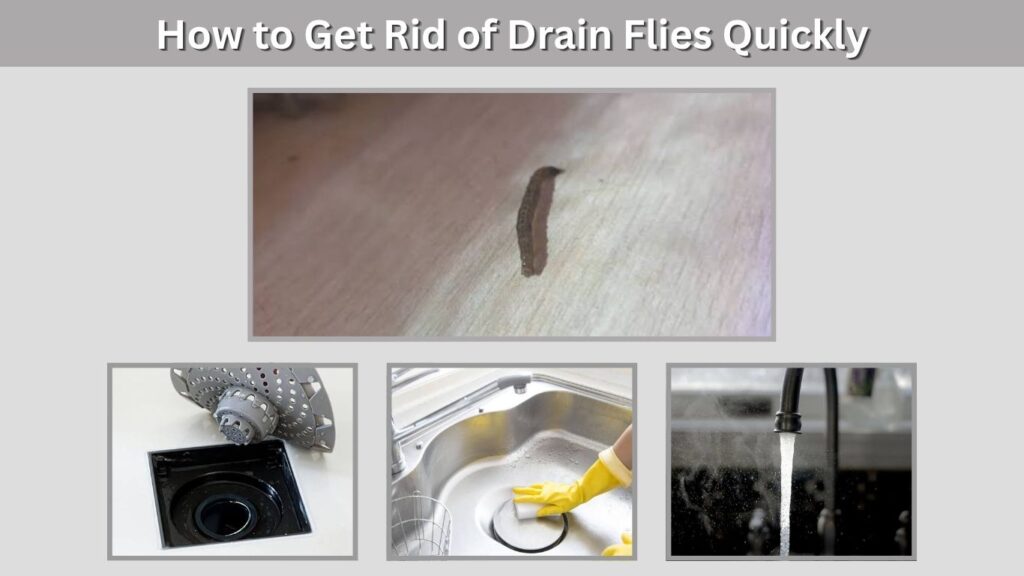
Removing adult flies is helpful, but the main treatment must reach the eggs and larvae. They live within a gelatinous layer of hair, grease, soap residue, food particles, bacteria, and other organic material coating the pipe walls.
Step 1: Remove Visible Debris
Take off the drain cover, stopper, or strainer. Use a drain tool to pull out hair, grease, food waste, and other solid debris. Clean both sides of the drain cover and inspect the overflow opening.
Wear gloves and place the removed material directly into a sealed garbage bag. Do not push it farther down the pipe.
Step 2: Scrub the Drain
Insert a stiff, long-handled drain brush as deeply as practical. Scrub the sides of the pipe to break apart the organic film where larvae feed.
Focus on areas around bends, stoppers, garbage-disposal guards, and overflow openings. Simply pouring liquid down the center may leave much of this film untouched.
Step 3: Flush the Pipe
Flush loosened material away using hot tap water. Avoid pouring boiling water into toilets, porcelain fixtures, RV plumbing, or pipes that could crack or become damaged by sudden temperature changes.
If the drain remains slow after cleaning, a blockage may be trapping debris and moisture. A plumber may need to clear or inspect it.
Step 4: Apply a Drain Treatment
Use an enzyme-based or microbial drain gel labeled for organic drain buildup. These treatments remain on pipe surfaces longer than thin liquids and help digest the material supporting larvae.
Follow the product’s directions regarding quantity, contact time, ventilation, and repeated applications. Confirm that the product is compatible with septic systems, garbage disposals, or RV holding tanks when applicable.
Step 5: Trap the Adult Flies
Reduce the remaining adult population with sticky traps or a simple vinegar trap. Pour apple cider vinegar into a small bowl, add one or two drops of dish soap, and place it near the affected drain.
Traps cannot remove larvae or clean the pipe. They should only support the main cleaning process.
Step 6: Repeat and Monitor
Continue inspecting and cleaning the affected drains for at least one to two weeks. Adult flies may still emerge after the first treatment because existing pupae are more difficult to eliminate.
A steady decline is a good sign. If numbers remain unchanged, look for another breeding source.
How to Get Rid of Drain Fly Larvae
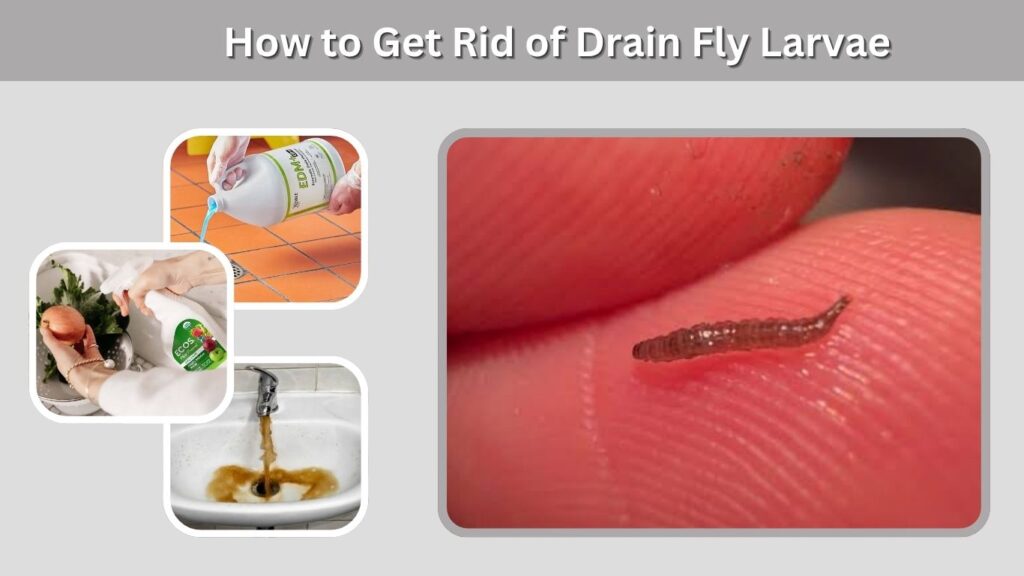
Drain fly larvae resemble tiny segmented worms. They may be cream, gray, translucent, brown, or black, with a darker breathing tube at one end. They normally remain in moist organic material rather than swimming freely in clean water.
What Kills Drain Fly Larvae?
The most effective options include:
- Scrubbing away their organic food source
- Enzyme or microbial drain treatments
- Hot tap water for flushing loosened debris
- Removing standing water and sewage deposits
- Repairing leaks that create constant moisture
- Professional treatment for inaccessible breeding areas
Household insect sprays may kill exposed larvae but are unlikely to penetrate drain slime. They can also create unnecessary chemical exposure around kitchens, bathrooms, children, and pets.
Does Bleach Kill Drain Fly Larvae?
Bleach can kill larvae it contacts, but it is not the most reliable solution. It often runs down the center of a pipe without removing the film attached to its walls. The infestation can then return.
Never mix bleach with vinegar, ammonia, acids, drain openers, or other cleaning products. Dangerous fumes or chemical reactions may result.
Does Baking Soda and Vinegar Work?
Baking soda and vinegar produce a fizzing reaction that may loosen light residue. However, they do not reliably remove thick organic buildup or eliminate an established drain fly infestation.
Physical scrubbing followed by a properly labeled drain treatment generally produces better results.
Getting Rid of Drain Flies in Specific Areas
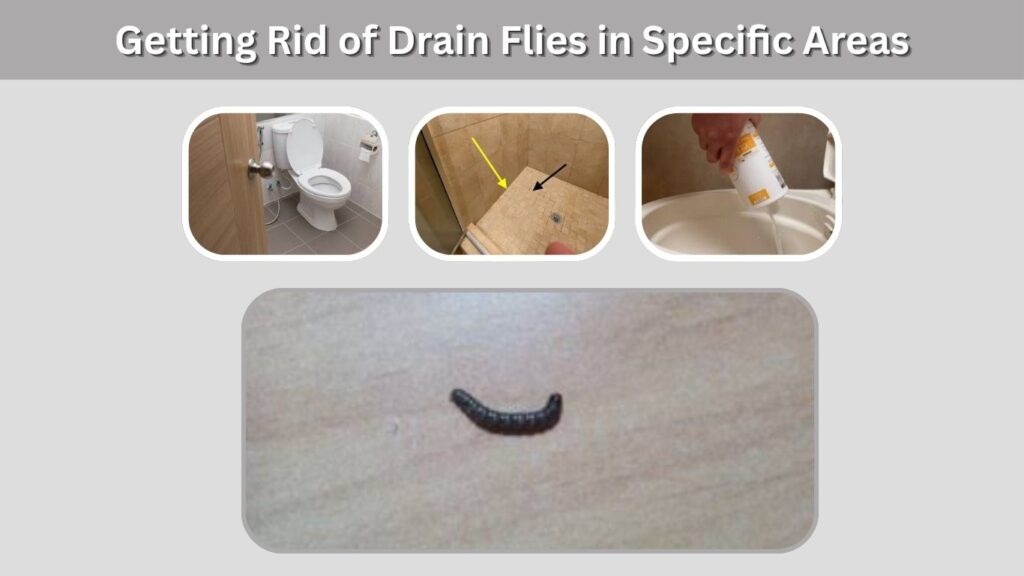
Different plumbing fixtures can require slightly different cleaning methods. Treat the visible location while also examining nearby drains, damaged seals, and hidden moisture. Adult drain flies can move between fixtures, so the place where they rest may not be where the larvae are developing.
Drain Fly Larvae in a Toilet
Larvae may develop under the toilet rim, inside contaminated rim jets, around a failed wax seal, or in an unused bowl. Clean beneath the rim and inspect the toilet’s connection to the floor.
If black worms continue appearing after repeated cleaning, or if the bathroom smells like sewage, contact a plumber. A damaged seal, cracked sewer pipe, or septic problem may be responsible.
Drain Fly Larvae in a Shower
Remove the shower drain cover and extract all trapped hair. Scrub the cover, pipe walls, and overflow opening before applying an appropriate treatment.
Inspect the surrounding grout and caulk for cracks. Larvae found in shower grout may indicate that water is collecting beneath the surface. Damaged grout or leaking plumbing must be repaired to remove the hidden breeding area.
Drain Flies in an RV Shower
Use only cleaners approved for the RV’s plumbing and wastewater system. Clean the shower drain, P-trap, gray-water tank, and any accessible hoses. Empty and rinse the gray-water tank at an authorized facility.
Avoid corrosive chemicals that could damage seals, valves, flexible pipes, or tank components. Persistent larvae may indicate residue inside the gray-water system or a failed trap seal.
Drain Flies in the Kitchen Sink
Clean the strainer, garbage-disposal guard, stopper, and sink overflow. Food particles beneath rubber disposal components are commonly overlooked.
Keep grease, food scraps, and sugary liquids out of the drain. Clean recycling containers and garbage bins as well, since fruit flies can resemble drain flies and may be breeding nearby.
Can Drain Fly Larvae Get Inside Your Skin?
Drain fly larvae do not normally bite, burrow through healthy skin, or intentionally infest people. They are adapted to feeding on decomposing organic material in wet environments.
Rare cases involving larvae in the human body have been reported, but suspected cases require professional identification. If a worm-like organism appears in a wound, stool, urine, or body opening, do not apply bleach, insecticide, or drain cleaner. Preserve the specimen if possible and seek medical advice.
How to Prevent Drain Flies From Returning
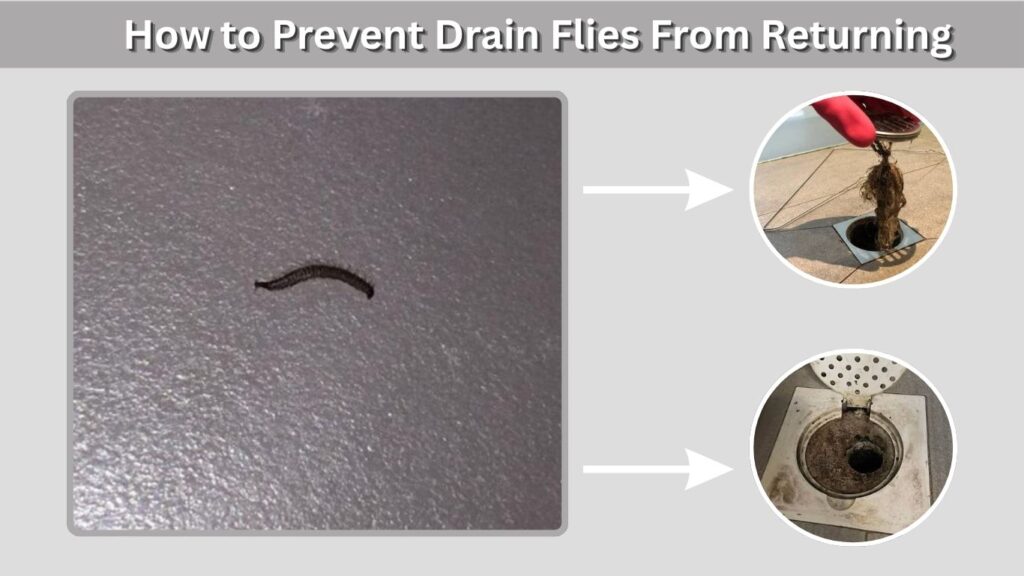
Prevention means keeping drains free of organic residue and correcting the conditions that allow standing moisture. Pay special attention to guest bathrooms, basements, garages, and other places containing drains that are rarely used.
Prevention Checklist
- Remove hair and debris from drain covers weekly.
- Clean garbage disposals and overflow openings.
- Keep food scraps and cooking grease out of sinks.
- Run water through infrequently used drains.
- Repair leaking faucets, pipes, and toilet seals.
- Maintain water inside plumbing traps.
- Keep floors, grout, and cabinets beneath sinks dry.
- Empty and wash mop buckets and drip trays.
- Investigate persistent sewage odors promptly.
- Monitor drains with tape if adult flies return.
When to Call a Professional
Contact a pest-control professional or plumber when drain flies remain active after two weeks of thorough cleaning. Professional help is also appropriate if flies emerge from walls, larvae repeatedly enter the toilet, or the infestation involves inaccessible pipes.
Sewage odors, wastewater leaks, loose toilets, damaged grout, or multiple affected rooms may indicate a plumbing or sewer problem. Treating the insects without repairing that underlying problem will provide only temporary relief.
FAQs
How long does it take to get rid of drain flies?
A small infestation may decline within several days, but complete elimination often takes one to three weeks. Existing eggs and pupae may continue developing after the first cleaning.
Why do I keep seeing one random drain fly?
One occasional fly may have emerged from a rarely used drain or traveled from another room. Test nearby drains and inspect damp areas if sightings continue.
Can I pour boiling water down the drain?
Very hot tap water can help flush loosened debris, but boiling water may damage certain pipes, seals, toilets, and porcelain fixtures. Physical cleaning is more important than extreme heat.
Do drain flies come from the sewer?
They can develop in sewage-contaminated material, but most household infestations originate in organic buildup inside drains. Repeated infestations accompanied by sewage odors should be inspected by a plumber.
What is the fastest way to eliminate an infestation?
Locate every breeding drain, remove debris, scrub the pipe walls, apply a suitable enzyme treatment, and trap the remaining adults. Treating only the visible flies will not eliminate the infestation.