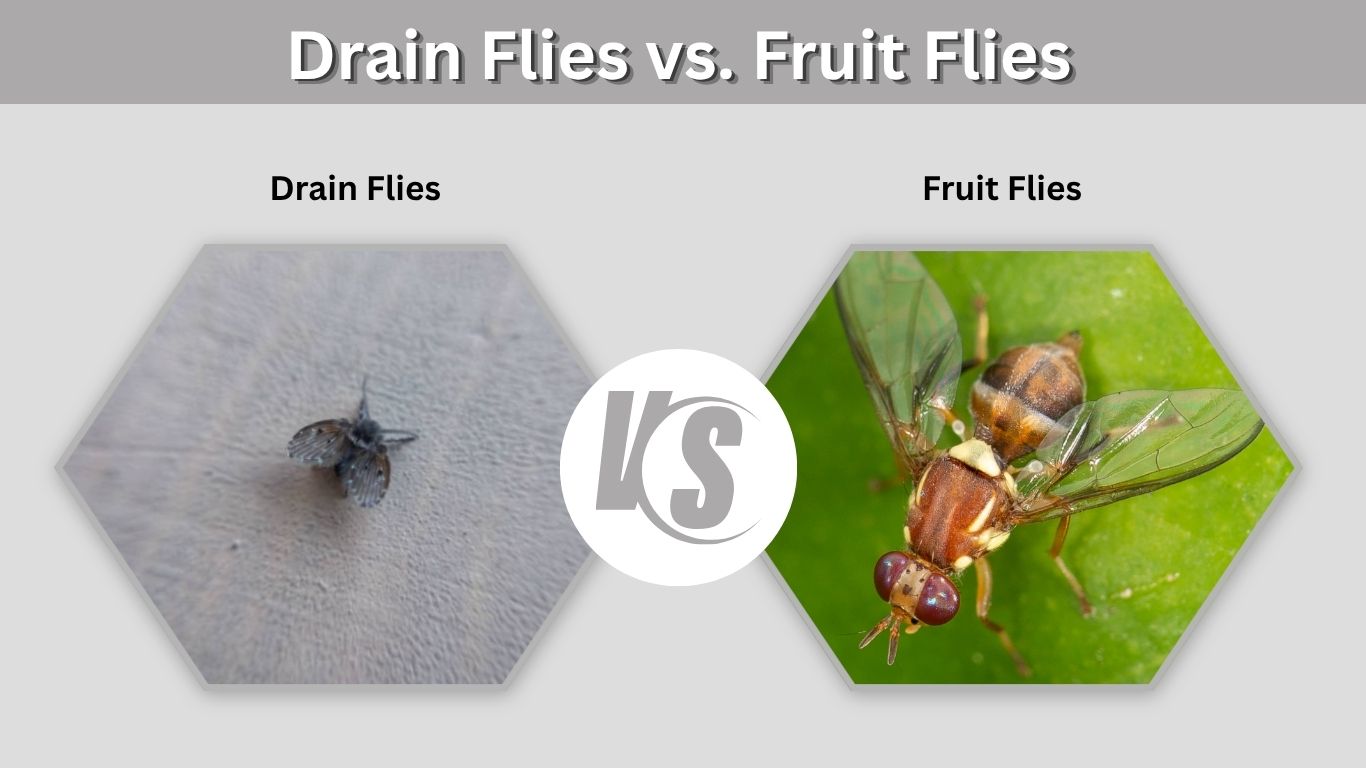
Drain flies and fruit flies are tiny household pests, but they originate from different breeding sources and require different treatments. Drain flies are fuzzy, moth-like insects commonly associated with organic slime inside plumbing. Fruit flies have smoother tan bodies, frequently possess red eyes, and reproduce around fermenting food or drink. Fungus gnats form a third look-alike group connected with damp houseplant soil. Correct identification is essential because traps may catch adults temporarily, but lasting control requires eliminating the material where their larvae develop.
Drain Flies vs. Fruit Flies: Quick Comparison
Both insects are approximately one-eighth of an inch long, so size alone is not a reliable identification feature. Examine their body shape, wings, movement, location, and breeding source.
| Feature | Drain fly | Fruit fly | Fungus gnat |
| Appearance | Fuzzy and moth-like | Smooth, rounded body | Slender and mosquito-like |
| Color | Gray, brown, or black | Tan, yellow-brown, or dark | Gray or black |
| Eyes | Small and dark | Often bright red | Dark |
| Wings | Broad and hairy | Clear and smooth | Narrow and clear |
| Movement | Short, weak flights | Active hovering flight | Runs and flies around plants |
| Main source | Drain slime and sewage residue | Fermenting food and drinks | Damp potting soil |
| Common room | Bathroom, basement, or kitchen | Kitchen, pantry, or bar | Rooms containing plants |
What Do Drain Flies Look Like?
Drain flies belong to the family Psychodidae and are also called moth flies, filter flies, or sewer flies. Their broad, hairy wings give them the appearance of tiny moths.
Drain Fly Identification
- Approximately 1/16–1/8 inch long
- Gray, brown, or nearly black
- Body and wings covered with fine hairs
- Broad, rounded, or heart-shaped wings
- Wings held roof-like over the body
- Short, hopping flights
- Frequently rests on walls near plumbing
Drain flies are weak fliers. They usually remain close to the drain, floor opening, sewage leak, or other wet breeding source from which they emerged.
Where Drain Flies Breed
Drain fly larvae develop in wet, gelatinous organic material. Potential sources include:
- Sink and shower drains
- Floor drains
- Garbage disposals
- Overflow openings
- Sewage lines
- Condensate pans
- Sump pits
- Septic systems
- Wet mop buckets
- Areas beneath leaking appliances
- Standing water containing organic debris
They do not develop in clean water alone. Larvae feed on microorganisms and decomposing material within the slime coating a consistently wet surface.
What Do Fruit Flies Look Like?
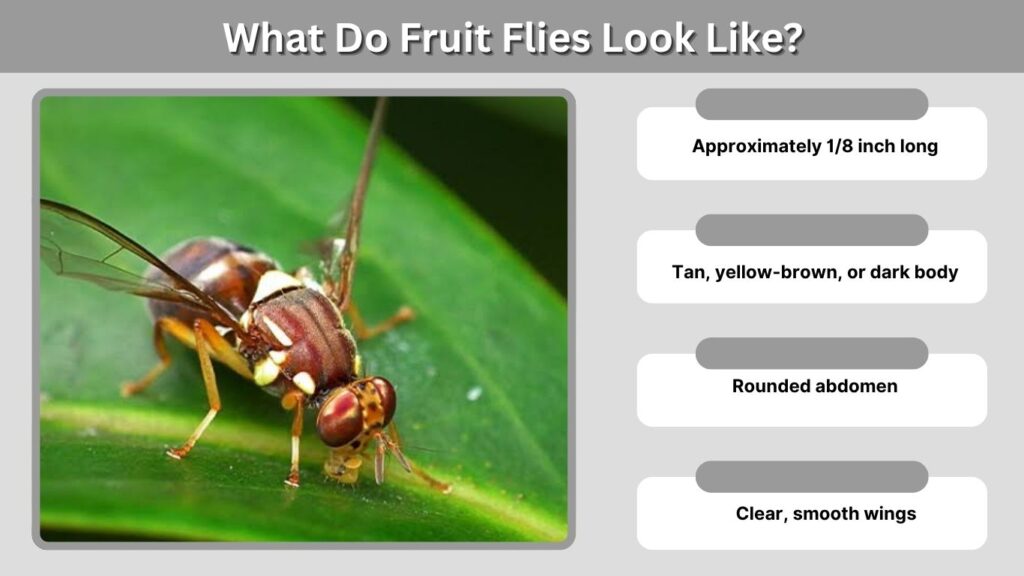
Household fruit flies are commonly called vinegar flies. The most familiar species belong to the genus Drosophila and are attracted to yeasts developing in fermenting organic material.
Fruit Fly Identification
- Approximately 1/8 inch long
- Tan, yellow-brown, or dark body
- Rounded abdomen
- Clear, smooth wings
- Often has prominent red eyes
- Flies actively around food and containers
- May hover near faces, glasses, or countertops
Not every fruit fly has easily visible red eyes. Lighting, species, and the insect’s small size can make the eyes appear dark without magnification.
Where Fruit Flies Breed
Fruit flies can reproduce in:
- Overripe or damaged fruit
- Rotting vegetables
- Empty beverage containers
- Wine, beer, juice, or vinegar residue
- Recycling bins
- Garbage disposals
- Trash and compost containers
- Dirty mops or cleaning cloths
- Syrup beneath appliances
- Food residue beneath cabinets
- Organic buildup inside drains
Fruit flies can breed in a dirty drain, so finding small flies around a sink does not automatically prove they are drain flies. Their physical appearance and other nearby food sources must also be examined.
What Do Fungus Gnats Look Like?
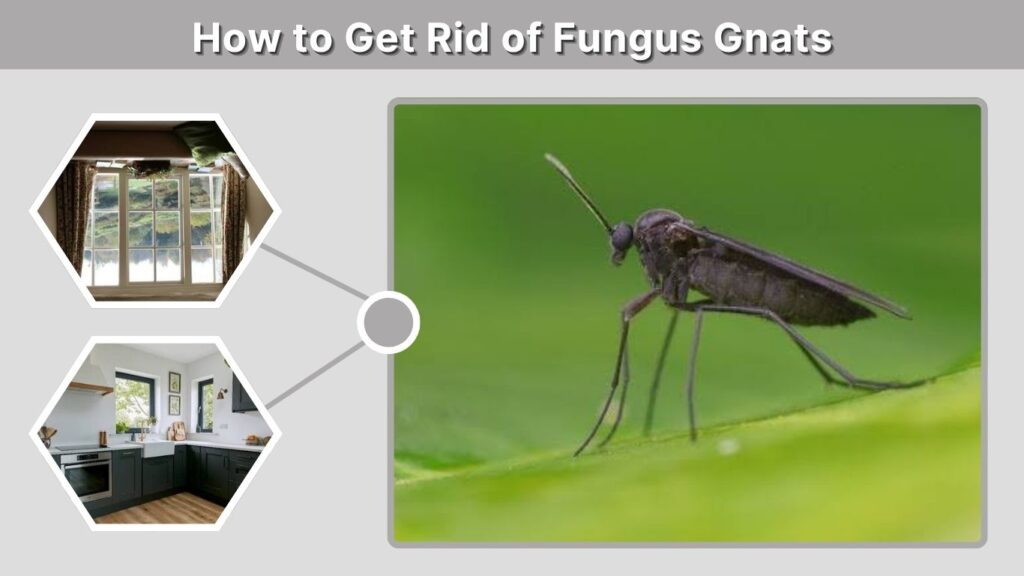
Fungus gnats are slender, dark insects with long legs and antennae. They resemble tiny mosquitoes more closely than either fruit flies or drain flies.
Fungus Gnat Identification
- Approximately 1/16–1/8 inch long
- Thin gray or black body
- Long legs and threadlike antennae
- Narrow, transparent wings
- Frequently walks across potting soil
- Flies near houseplants and windows
- Usually appears after frequent watering
Their larvae live in moist growing media and feed on fungi, decaying plant material, and sometimes tender roots. Overwatering and organic fertilizers can encourage them.
How to Find the Breeding Source
Adult traps can reveal where insects are active, but locating larvae provides stronger evidence. Inspect the room carefully instead of treating every drain automatically.
Testing a Drain
Place a piece of clear tape over part of the drain opening with the sticky side facing downward. Do not seal the entire opening, because emerging insects need airflow and space to reach the tape.
Check the tape the following morning. Fuzzy adult flies attached beneath it suggest activity inside that drain. Repeat the test over several nights because adults may not emerge every day.
You can also place a transparent cup or container over the opening overnight. Adult drain flies may collect inside it.
Testing Other Sources
Check fruit, onions, potatoes, recycling, beverage bottles, trash cans, compost containers, and the hidden spaces beneath appliances. For fungus gnats, place a yellow sticky card near each houseplant and inspect the soil for small translucent larvae with dark heads.
How to Get Rid of Drain Flies
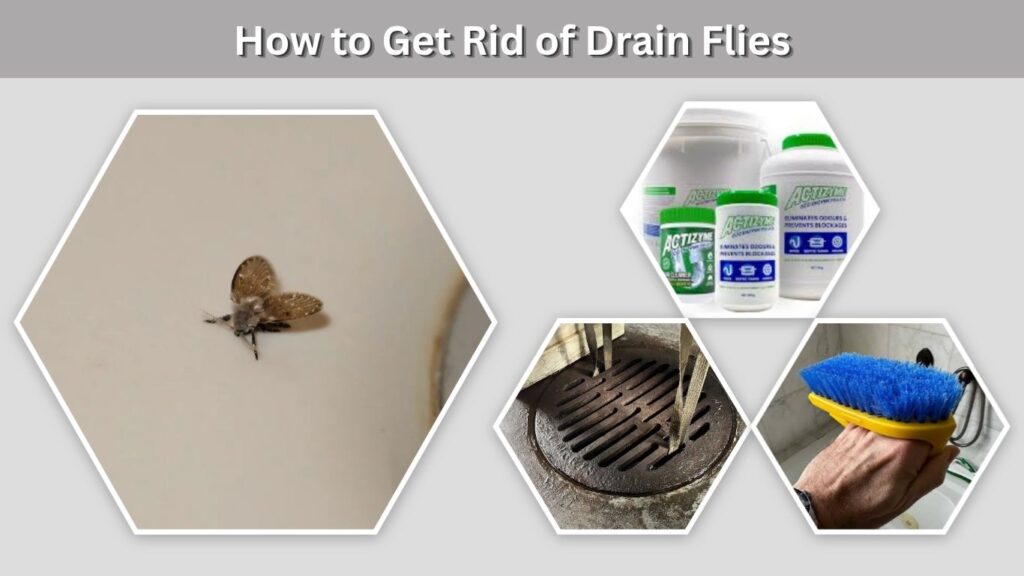
Successful control depends on removing the organic film containing eggs and larvae. Killing visible adults does not clean the breeding site.
Drain Fly Treatment
- Identify every active drain or wet source.
- Remove the drain cover when safe and accessible.
- Scrub the interior walls with a stiff drain brush.
- Clean the disposal, overflow opening, and drain edges.
- Apply an enzyme or microbial drain cleaner according to its label.
- Repair plumbing leaks and maintain water in drain traps.
- Repeat cleaning until adult activity stops.
- Use sticky traps or a vacuum to remove remaining adults.
University of Minnesota Extension recommends physically removing the gelatinous buildup with a stiff-bristled brush.
Pouring boiling water or bleach into a drain may kill some organisms temporarily, but it frequently fails to remove the film where larvae live. Never mix bleach with ammonia, acids, vinegar, or other drain products because dangerous gases can form.
A persistent infestation involving multiple floor drains may indicate a broken sewer pipe, failed seal, or hidden wastewater leak. This requires a plumber or pest-management professional.
How to Get Rid of Fruit Flies
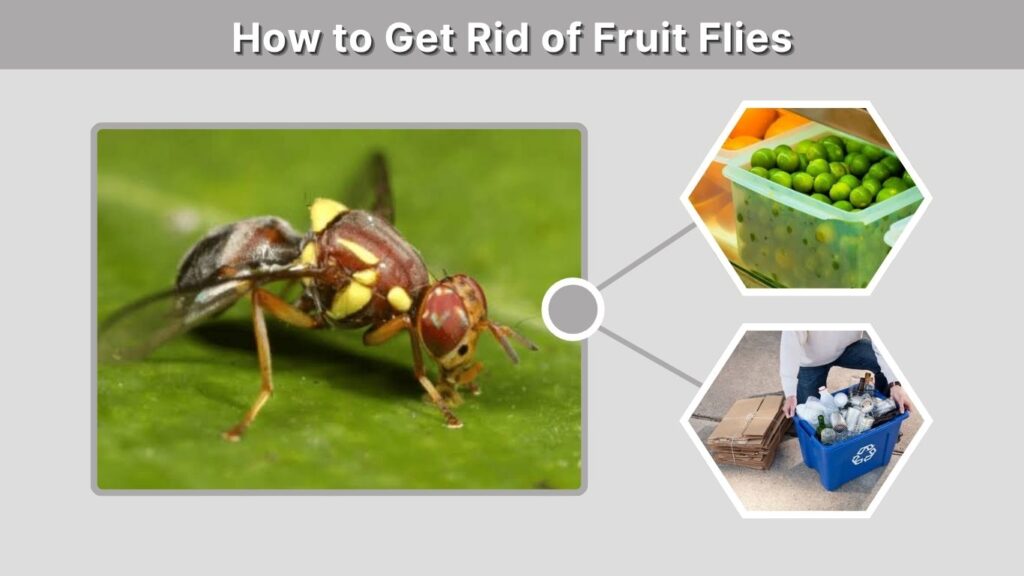
Fruit fly control begins by removing fermenting materials throughout the room. A single forgotten container can maintain an infestation.
Fruit Fly Treatment
- Refrigerate ripe fruit
- Discard damaged produce
- Inspect stored potatoes and onions
- Empty and wash recycling containers
- Clean trash and compost bins
- Rinse beverage bottles and cans
- Wipe spills beneath appliances
- Clean garbage disposals and drains
- Wash mops, cloths, and sponges
- Store food in sealed containers
A vinegar trap can reduce adult numbers. Place apple cider vinegar and a small drop of dish soap in a container near the activity. However, traps cannot eliminate larvae developing in hidden residue.
Continue sanitation after adults disappear because eggs and immature flies may still be present.
How to Get Rid of Fungus Gnats
Allowing the upper layer of potting soil to dry between watering disrupts the moist conditions larvae prefer. Adjust watering according to the plant’s needs rather than allowing it to wilt.
Fungus Gnat Treatment
- Remove dead leaves from the soil
- Empty standing water from saucers
- Improve drainage
- Use yellow sticky cards for adults
- Repot severely infested plants
- Replace decomposing potting material
- Apply a labeled Bacillus thuringiensis israelensis product if needed
- Quarantine new plants before bringing them indoors
Adult sticky traps and soil treatment work best together because they target different life stages.
Why Are Small Flies in the Bathroom?
Fuzzy flies resting around a shower, sink, or floor drain are probably drain flies. Bathrooms provide moisture and plumbing deposits but usually lack the fermenting food preferred by fruit flies.
However, fruit flies may enter a bathroom when trash contains food, drink, or personal-care residue. Slender flies around potted plants are more likely fungus gnats.
Numerous smooth, humpbacked flies running across surfaces may be phorid flies. A large phorid infestation can indicate deeply decaying material or a sewer-line problem and may require professional inspection.
Are These Flies Dangerous?
Drain flies, fruit flies, and fungus gnats do not normally bite people. They are primarily nuisance pests.
Fruit flies and drain flies can move between unsanitary breeding material and household surfaces, making prompt sanitation advisable. Large drain fly populations may also signal plumbing or sewage conditions that should be corrected.
Avoid using excessive indoor insecticide. Removing the breeding material is generally more effective than spraying adults, and pesticide labels must always be followed.
FAQs
Are drain flies and fruit flies the same?
No. Drain flies are fuzzy, moth-like insects that usually breed in plumbing slime. Fruit flies are smooth-bodied flies associated with fermenting food and beverages.
Which flies commonly appear in a bathroom?
Drain flies are the most likely, especially when they rest near sinks, showers, or floor drains. Fungus gnats may appear if plants are present.
Can fruit flies breed in drains?
Yes. Fruit flies can reproduce in fermenting organic residue inside a dirty drain, although produce, trash, and beverage containers are more typical sources.
Does vinegar kill drain flies?
Vinegar traps may catch some adults but do not remove the organic film supporting larvae. The drain must be physically scrubbed and maintained.
How long does it take to eliminate small flies?
Adult numbers may fall within several days after every breeding source is removed. Complete control can take one to three weeks because immature stages may continue developing.