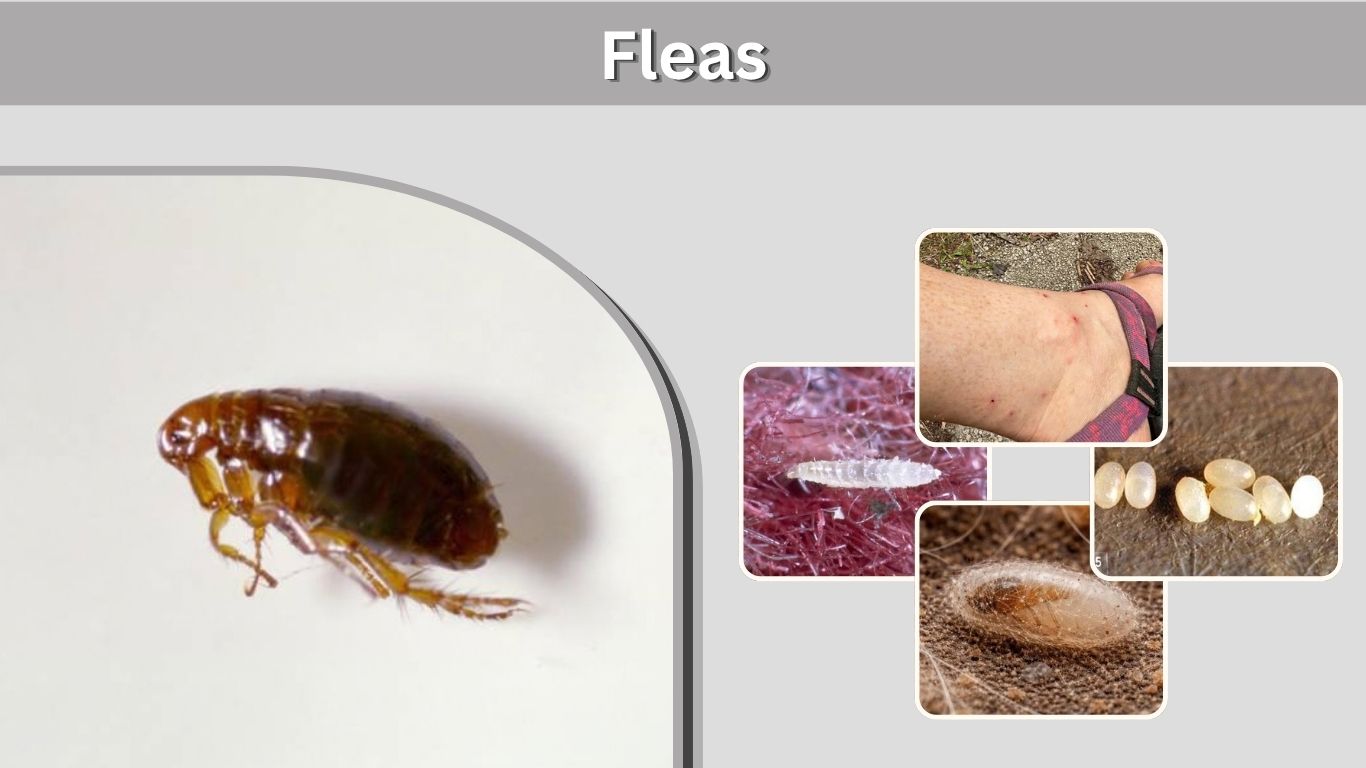
Fleas are tiny, wingless insects that survive by feeding on the blood of animals and sometimes humans. They are best known for their powerful jumping ability, itchy bites, and ability to multiply quickly inside homes. Dogs and cats are common hosts, but flea eggs and larvae can also develop in carpets, bedding, furniture, and floor cracks. Understanding what fleas look like, how their life cycle works, and where they hide makes it much easier to recognize an infestation and control it effectively.
What Is a Flea?
A flea is a small parasitic insect adapted to living on or near warm-blooded animals. Adult fleas feed on blood, while immature stages develop away from the host in protected areas of the environment. Fleas do not have wings, but their strong hind legs allow them to jump considerable distances relative to their tiny body size.
What Does a Flea Look Like?
Adult fleas are extremely small and usually appear reddish-brown to dark brown. Their bodies are flattened from side to side, which helps them move through animal fur.
They also have hard outer bodies and long hind legs designed for jumping. Because they move quickly and are only a few millimeters long, fleas can be difficult to catch with your fingers.
A flea seen on a pet may look like a tiny dark speck that suddenly disappears into the fur.
Where Fleas Usually Live
Adult fleas spend much of their time feeding on animal hosts, but most of the flea life cycle occurs in the surrounding environment.
Common flea locations include:
- Pet bedding
- Carpets and rugs
- Sofas and upholstered furniture
- Floorboard cracks
- Areas underneath furniture
- Kennels and pet resting places
- Shaded outdoor areas used by animals
This is why treating only the visible fleas on a pet may not completely eliminate an infestation.
What Do Flea Bites Look Like?
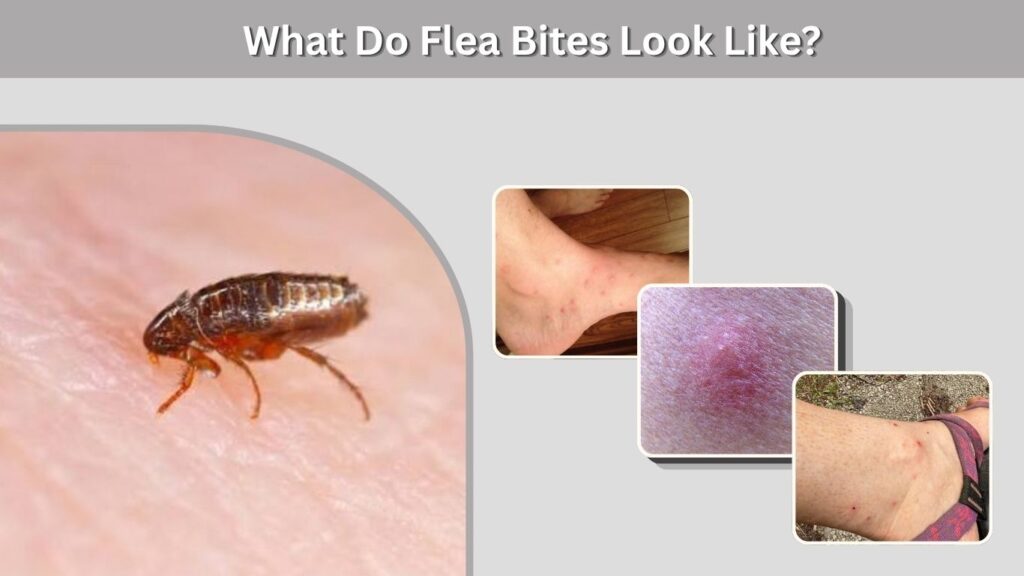
Flea bites are usually small, red, itchy bumps that may appear alone or in groups. Humans often notice them around the ankles and lower legs because fleas living near floors can easily reach these areas. Bite reactions vary significantly, and some people develop more noticeable redness or itching than others.
Flea Bites on Humans
Fleas may bite humans when an infested animal or another suitable host is nearby. The bites often produce intense itching because the body reacts to flea saliva introduced during feeding.
Typical features can include:
- Small red bumps
- Itching around the bite
- Several bites close together
- Redness surrounding the area
- Bites around ankles or legs
Scratching repeatedly can damage the skin and increase the possibility of secondary infection.
Flea Bites vs. Other Bug Bites
Flea bites can resemble mosquito bites, bed bug bites, and bites from other insects. Location and circumstances can provide useful clues.
Flea bites are particularly common around the ankles and lower legs, while bed bug bites may occur on many exposed areas of the body after sleeping. However, appearance alone is not always enough for definite identification.
Finding fleas, flea dirt, or other signs in the home can provide stronger evidence.
Flea Life Cycle
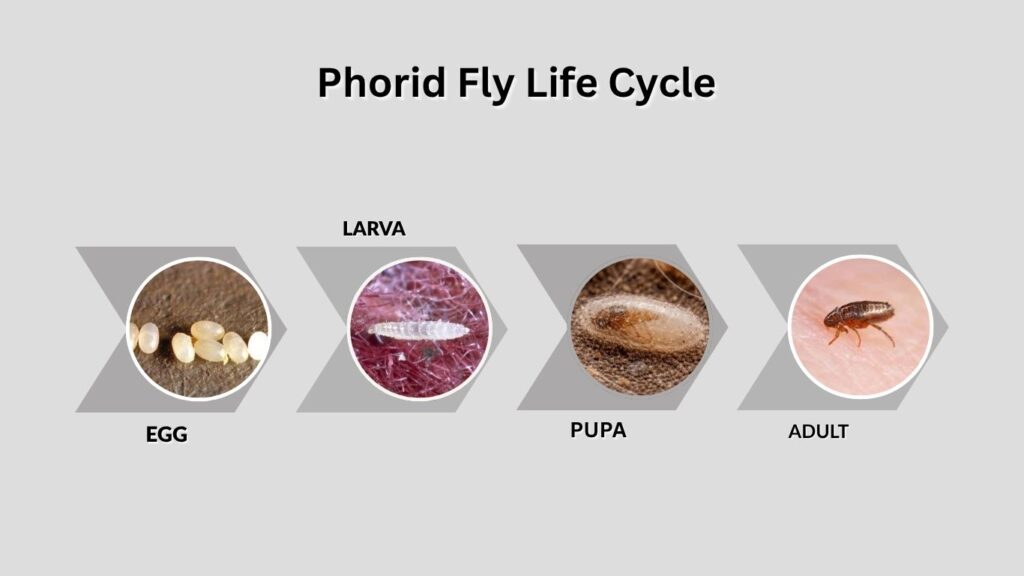
Fleas pass through four main stages: egg, larva, pupa, and adult. Understanding this cycle is important because the adults seen jumping on pets represent only part of an infestation. Eggs, larvae, and pupae may remain throughout the home, allowing new adults to continue appearing even after visible fleas have been removed.
1. Flea Eggs
Adult female fleas lay tiny eggs after feeding. These eggs are not strongly attached to an animal’s fur, so many fall into carpets, bedding, furniture, and other places where pets spend time.
Flea eggs are extremely small and pale, making them difficult to notice without careful inspection.
2. Flea Larvae
The eggs hatch into worm-like flea larvae that avoid bright light and seek protected areas.
Larvae may develop in:
- Carpet fibers
- Pet bedding
- Floor cracks
- Under furniture
- Dark corners
- Protected outdoor areas
They feed on organic debris, including material associated with adult flea waste.
3. Flea Pupae
After developing, larvae form protective cocoons and enter the pupal stage.
This stage can make flea control more difficult because the developing flea is protected inside its cocoon. Adults can emerge when environmental conditions and signs of a nearby host are suitable.
4. Adult Fleas
Adult fleas seek a host and begin feeding on blood. Once established on a suitable animal, they can continue feeding and reproducing.
This cycle means successful flea control usually requires attention to both animals and the surrounding environment.
What Is Flea Dirt?
Flea dirt is the common name for the dark waste produced by adult fleas after feeding. It often appears as tiny black or reddish-brown specks in an animal’s fur or bedding. Finding flea dirt can be one of the easiest ways to detect fleas when the adult insects themselves are moving too quickly to see.
How to Identify Flea Dirt
Check areas where flea activity is often concentrated, such as around a pet’s neck, lower back, tail base, and belly.
You can look for:
- Black pepper-like specks
- Dark particles close to the skin
- Specks inside pet bedding
- Fleas moving between hairs
One commonly used identification method is placing collected specks on a damp white paper towel. Flea dirt containing digested blood may create a reddish-brown stain as it becomes wet.
How Do Fleas Get Into a House?

Fleas are often introduced by animals. A pet may pick up fleas outdoors or after contact with another infested animal and then carry them indoors. Wildlife and stray animals living near a property can also contribute to flea activity around yards, porches, crawl spaces, or other sheltered areas.
Common Sources of Fleas
Potential sources include:
- Dogs and cats
- Stray animals
- Rodents
- Wildlife around the property
- Previous animal occupants
- Flea-infested furniture or bedding
- Outdoor resting areas
A home may occasionally develop flea problems even without a current pet, particularly when rodents or wildlife are involved or when flea pupae remain from a previous infestation.
How to Check Your Home for Fleas
A flea infestation is easier to manage when discovered early. Inspect pets and the places where they sleep or spend the most time. Fleas frequently concentrate around resting areas because eggs fall from the host into these locations.
Signs of a Flea Infestation
Watch for:
- Pets scratching frequently
- Adult fleas in fur
- Flea dirt on pets
- Small jumping insects
- Unexplained bites around ankles
- Fleas in pet bedding
- Increased activity around carpets or furniture
A flea comb can help separate the fur and collect adult fleas or flea dirt from a pet’s coat.
How to Get Rid of Fleas in the House
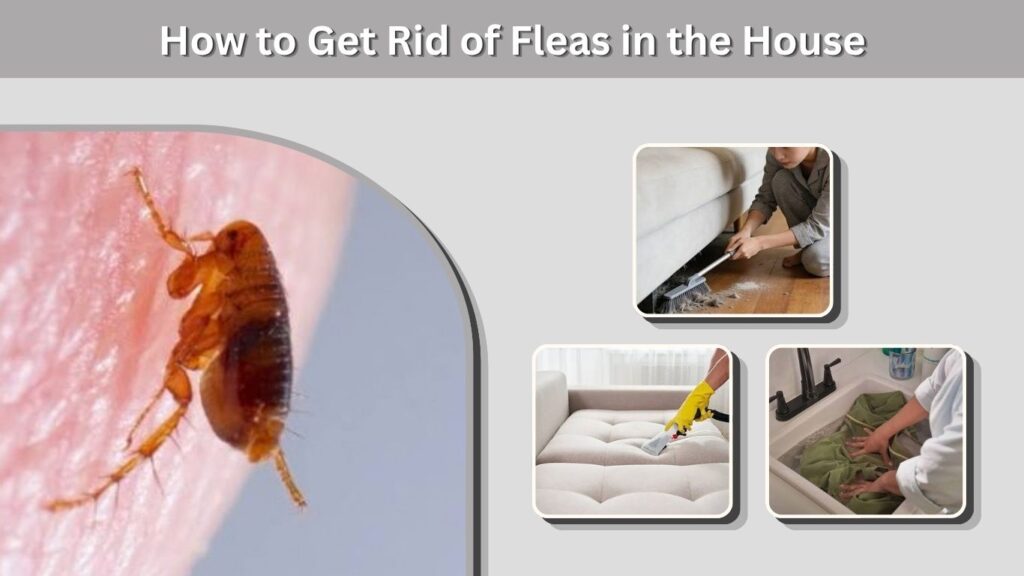
Flea control usually requires treating the infestation as a complete life-cycle problem. Removing adults without addressing immature stages may allow the infestation to continue. Consistent cleaning of areas where pets rest is particularly important because large numbers of flea eggs and larvae can accumulate there.
Clean Flea-Prone Areas Thoroughly
Environmental cleaning may include:
- Vacuuming carpets frequently
- Vacuuming beneath furniture
- Cleaning sofa cushions and upholstery
- Washing pet bedding
- Cleaning cracks around floors
- Emptying the vacuum contents promptly
- Keeping pet resting areas clean
Repeated cleaning helps remove eggs, larvae, flea dirt, and some developing fleas.
Treat Pets Appropriately
If a dog or cat has fleas, treating the animal is an important part of controlling the infestation.
Use flea-control products specifically labeled for the species, age, and size of your pet, and follow the directions carefully. A veterinarian can help select an appropriate treatment, especially for young, elderly, pregnant, or medically vulnerable animals.
Never assume a flea product intended for dogs is safe for cats.
Treat All Affected Areas
Focus on locations where pets spend the most time rather than treating only open floor areas.
Pet beds, rugs, upholstered furniture, crates, and floor edges can all contain developing fleas. Continued cleaning over time is usually necessary because new adults may emerge from protected pupae after treatment begins.
How to Prevent Fleas
Flea prevention involves limiting opportunities for fleas to establish themselves on pets and inside the home. Regular pet checks and environmental cleaning can make an infestation easier to detect before large numbers of fleas develop.
Flea Prevention Tips
Useful habits include:
- Check pets regularly for fleas.
- Use veterinarian-recommended flea prevention when appropriate.
- Wash pet bedding regularly.
- Vacuum carpets and rugs.
- Keep pet sleeping areas clean.
- Limit contact with stray animals.
- Address rodent problems around the home.
- Maintain outdoor areas where pets rest.
- Inspect newly acquired secondhand pet bedding or furniture.
Consistency is particularly important because fleas can reproduce rapidly when conditions are favorable.
Can Fleas Live Without Pets?
Fleas are strongly associated with animal hosts, but removing a pet does not necessarily make an established infestation disappear immediately. Immature flea stages may remain in carpets, flooring, furniture, or bedding, while emerging adults may temporarily bite humans as they search for another suitable host.
Why Fleas May Remain After a Pet Leaves
Flea pupae are protected within cocoons and can remain hidden until conditions encourage adult emergence.
For this reason, a previously infested home may continue showing flea activity after the original animal host has been removed. Environmental cleaning and continued monitoring may still be necessary.
When a Flea Problem Needs Professional Help
Small flea problems may sometimes be controlled through consistent pet treatment and household cleaning. More severe infestations can be difficult because flea eggs, larvae, and pupae may be distributed through many rooms or hidden areas.
Signs the Infestation May Be Severe
Professional pest control may be worth considering when fleas continue appearing despite repeated cleaning and appropriate pet treatment.
Persistent activity may indicate that breeding areas have been missed, wildlife or rodents are contributing to the problem, or a large population of immature fleas remains in the environment.
A coordinated approach that addresses animals, indoor areas, and possible outdoor sources generally provides the most effective long-term control.
FAQs
1. Can fleas live on humans?
Fleas can bite humans and feed on their blood, but common pet fleas generally prefer animal hosts such as cats and dogs. Humans are more commonly bitten when fleas are present in the surrounding environment.
2. How can you tell if you have fleas?
Common signs include jumping insects, flea dirt on pets, increased pet scratching, fleas found with a flea comb, and unexplained itchy bites, especially around the ankles and lower legs.
3. What do flea eggs look like?
Flea eggs are extremely small, smooth, and pale or whitish. They can be difficult to see and commonly fall from animals into bedding, carpets, furniture, and floor cracks.
4. How long does it take to get rid of fleas?
The time needed depends on the severity of the infestation and how much of the flea life cycle is present. New adults may continue emerging after cleaning begins, so repeated treatment and environmental cleaning are often required.
5. Can fleas survive in carpets?
Yes. Flea eggs and larvae can develop within carpet fibers, while pupae may remain protected there before adults emerge. Frequent vacuuming is therefore an important part of household flea control.