
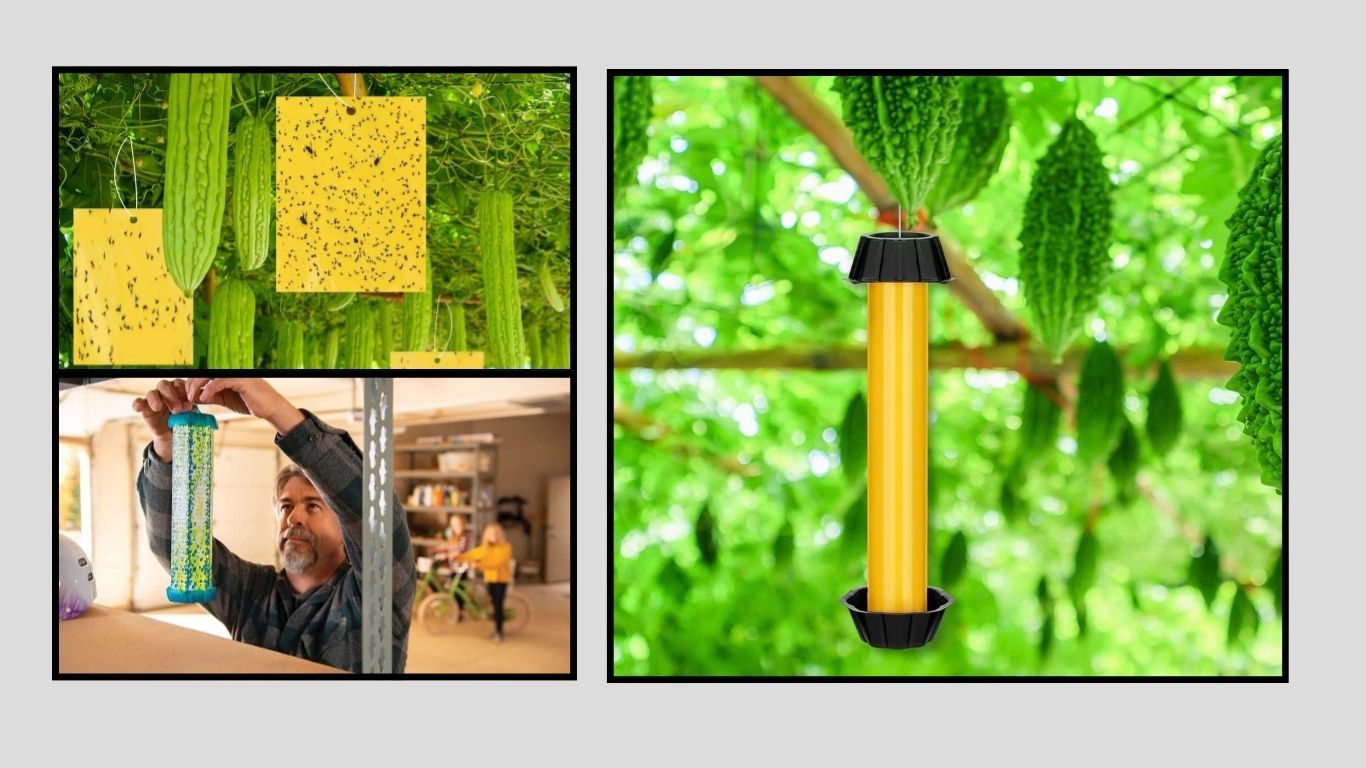
Sticky fly traps offer a simple, low-maintenance way to capture houseflies, fruit flies, gnats, mosquitoes, and other small flying insects without relying on sprays. They can be placed near windows, doors, kitchens, plants, patios, garages, and other areas where flies tend to gather. In this guide, we review the 9 best sticky fly traps based on adhesive strength, coverage, ease of placement, indoor or outdoor suitability, and overall convenience. These options are useful for homes, gardens, patios, and everyday pest-control needs.
1. Sticky Fly Traps for Indoor & Outdoor Use
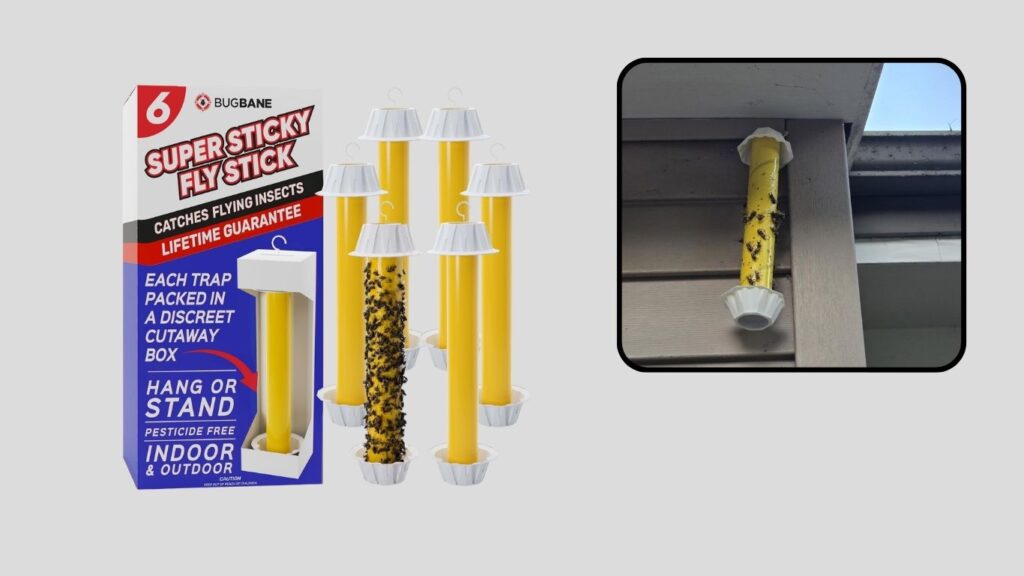
This Sticky Fly Trap is a straightforward option for controlling common flying insects around the home, patio, garage, or garden. Its adhesive surface captures flies when they land, providing passive control without requiring electricity or complicated equipment. The simple design also makes it convenient for placing near doors, windows, trash areas, and other locations where flying insects frequently gather.
Key Features
- Strong adhesive surface for trapping flying insects
- Suitable for both indoor and outdoor placement
- Non-electric design with no cords or batteries required
- Useful for houseflies and other small flying pests
- Easy to position near windows, doors, patios, and garages
- Provides continuous passive trapping once installed
- Simple disposable design for convenient cleanup
Why It’s Best for Simple Everyday Fly Control
One of the biggest advantages of this trap is its simplicity. There is no need to mix solutions, operate a device, or constantly monitor the trap. Once positioned in an active fly area, the sticky surface continues working as insects land on it.
This makes it particularly useful in kitchens, garages, porches, sheds, and outdoor sitting areas where occasional fly problems can become irritating. Multiple traps can also be placed around different problem zones for broader coverage.
Adhesive Performance & Placement Flexibility
The effectiveness of any sticky trap depends heavily on where it is placed. Installing this trap close to common fly travel routes can improve capture rates considerably. Bright windows, entryways, waste areas, and sheltered outdoor locations are often useful positions.
Its lightweight construction also makes relocation simple. If fly activity shifts to another part of the property, the trap can be positioned closer to the new hotspot without needing a permanent installation.
Overall Verdict: A Convenient Low-Maintenance Option
This Sticky Fly Trap is well suited for users who want a basic, chemical-free trapping method that requires very little effort after installation. Its indoor and outdoor versatility adds practical value, while the adhesive design provides continuous capture without electricity.
For routine fly management around homes, patios, garages, and similar spaces, it offers a convenient way to reduce nuisance insects while keeping the setup simple and easy to maintain.
2. RESCUE! TrapStik for Flies – 4 Pack
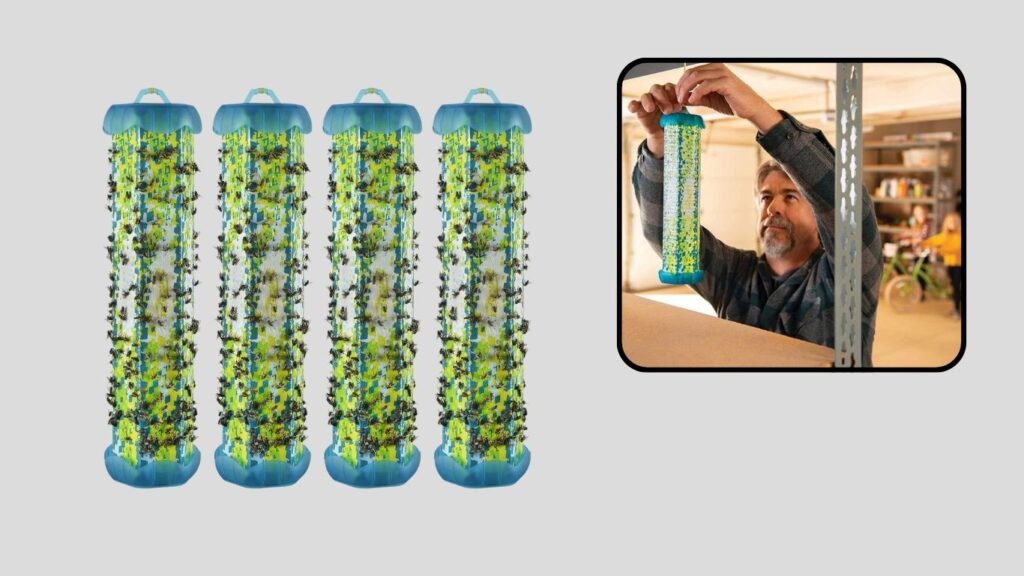
The RESCUE! TrapStik for Flies is designed for convenient, passive fly control without requiring electricity, sprays, or complicated maintenance. This four-pack provides multiple traps that can be positioned around different problem areas, making it useful for patios, garages, sheds, porches, and other locations where flies gather. Its vertical sticky design provides plenty of adhesive surface for capturing insects throughout the day.
Key Features
- Four TrapStik units included
- Large adhesive trapping surface
- No electricity or batteries required
- Designed for common nuisance flies
- Suitable for multiple locations around a property
- Simple hanging-style installation
- Disposable after the adhesive surface becomes full
Why It’s Best for Multi-Area Fly Control
Having four individual traps provides greater placement flexibility than relying on a single sticky catcher. One can be positioned near a garage, another around a porch, and additional traps near other known fly hotspots.
This arrangement can be especially helpful when flies enter from several locations or are attracted to different parts of an outdoor living space.
Adhesive Performance & Everyday Convenience
The TrapStik works continuously once installed. Flies that make contact with the adhesive become trapped, allowing the system to operate without constant attention.
Strategic placement can significantly improve results. Areas with noticeable fly movement are generally more productive than locations where insects rarely travel. Keeping traps sheltered from excessive dirt and moisture can also help preserve their sticky surface.
Overall Verdict: Excellent for Multiple Problem Areas
The RESCUE! TrapStik 4-Pack is particularly useful for households that need more than one trapping location. Its passive operation, generous adhesive area, and multi-pack configuration make it convenient for patios, garages, sheds, and other recurring fly hotspots. For users who prefer simple trapping rather than powered equipment, this package offers practical coverage with minimal ongoing effort.
3. Black Flag Fly Stick – 6 Pack
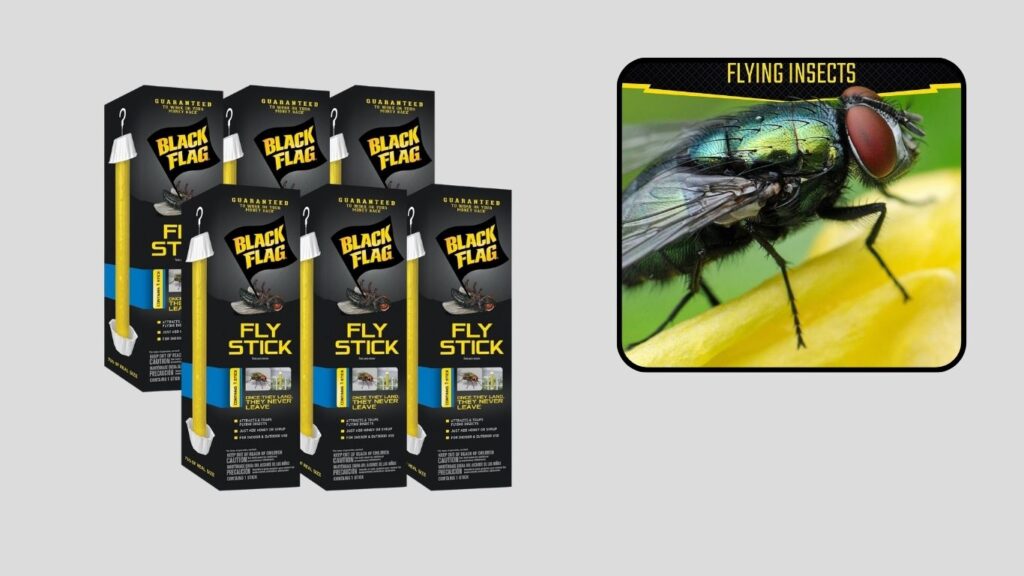
The Black Flag Fly Stick provides a classic sticky trapping approach in a convenient six-pack. Each trap uses an exposed adhesive surface to catch flies that land on it, allowing continuous passive control without electricity. The larger pack size makes it especially useful for households, garages, workshops, barns, and other areas where several fly-catching stations may be beneficial.
Key Features
- Six individual fly sticks included
- Sticky adhesive capture surface
- No electrical power required
- Convenient for indoor or sheltered areas
- Provides passive, continuous fly trapping
- Easy to distribute around multiple hotspots
- Disposable design simplifies cleanup
Why It’s Best for High-Coverage Placement
The six-pack configuration is the biggest advantage of this option. Instead of depending on one trap to cover an entire area, users can place several fly sticks in locations where insects are most active.
This makes the product especially useful for larger spaces or homes where fly activity occurs near several doors, windows, waste areas, or utility spaces.
Trapping Performance & Ease of Use
The sticky surface requires no activation beyond proper placement. Flies simply land on the trap and become captured, allowing it to continue working throughout the day.
The effectiveness of sticky traps generally improves when they are placed near established fly routes. Users can position individual sticks in different areas and compare activity, then concentrate traps where the highest number of flies are being captured.
Overall Verdict: A Practical Value Pack
The Black Flag Fly Stick 6-Pack is a sensible choice for users who want straightforward fly trapping across several locations. Its simple design requires little maintenance, and the multi-pack format allows broad coverage without using electrical devices.
For garages, utility spaces, sheltered patios, and other areas with recurring fly activity, these sticks offer an uncomplicated way to maintain several active trapping points at once.
4. Catchmaster Window Fly Traps – Indoor Sticky Strips
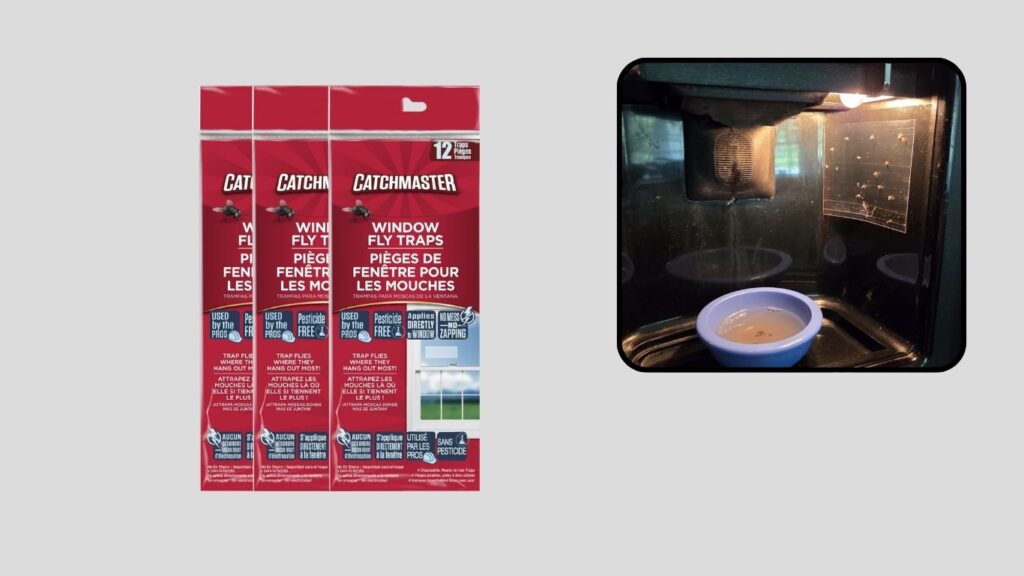
Catchmaster Window Fly Traps are designed specifically for indoor areas where flies frequently gather around glass and natural light. Instead of hanging prominently in the room, these adhesive strips can be positioned on windows where flies naturally travel. Their discreet format makes them particularly useful for kitchens, bedrooms, offices, and living areas where a less noticeable trap is preferred.
Key Features
- Designed specifically for window placement
- Clear, discreet sticky-strip format
- Useful for common indoor flying insects
- No electricity or batteries required
- Easy peel-and-place installation
- Suitable for kitchens and living areas
- Disposable after the strip becomes full
Why It’s Best for Discreet Indoor Use
Flies often move toward windows because they are attracted to light. Placing sticky traps directly in these high-traffic areas takes advantage of that natural behavior.
The low-profile strip design is also more discreet than traditional hanging flypaper. That makes it a better fit for visible indoor spaces where users want effective trapping without a large device or dangling strip.
Adhesive Performance & Placement
The adhesive surface captures insects when they land or crawl across the strip. Positioning traps on windows where fly activity is already noticeable can improve performance considerably.
Because each strip takes up very little space, several can be used throughout a home without interfering with normal room use. They are particularly convenient near kitchen windows and other areas where flies repeatedly attempt to exit.
Overall Verdict: Ideal for Windows and Indoor Spaces
Catchmaster Window Fly Traps are a practical choice for anyone who wants a subtle indoor solution. Their window-focused design uses natural fly behavior to improve placement efficiency while keeping the trap relatively unobtrusive.
For kitchens, living spaces, offices, and other indoor areas, they provide a simple way to catch nuisance flies without taking up counter or floor space.
5. Stingmon Outdoor Hanging Sticky Fly Trap
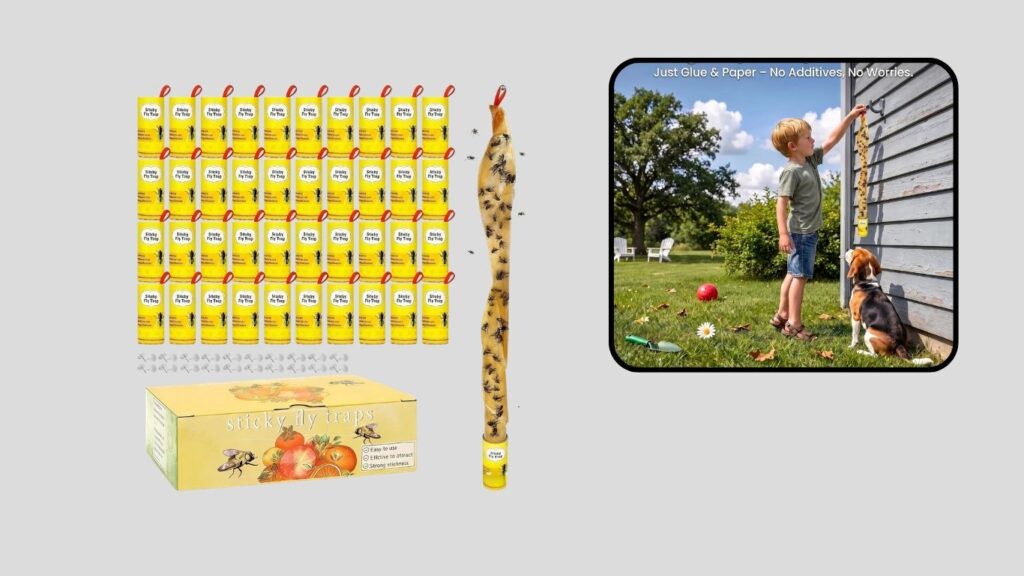
The Stingmon Outdoor Hanging Sticky Fly Trap is designed for areas where flying insects become troublesome around patios, gardens, porches, and other outdoor spaces. Its hanging format allows the adhesive surface to remain exposed to insects moving through the area while keeping the trap off tables and walking surfaces. It provides a straightforward alternative to electrical bug-control devices.
Key Features
- Hanging outdoor trap design
- Large sticky surface for flying insects
- Suitable for patios, gardens, and porches
- Requires no electricity
- Easy placement from hooks or branches
- Provides continuous passive trapping
- Useful around frequently occupied outdoor spaces
Why It’s Best for Outdoor Hanging Placement
Outdoor fly problems often occur around sitting areas, gardens, trash zones, or other places where insects regularly pass. A hanging trap can be positioned above or near these activity zones without taking up valuable ground space.
It also gives users flexibility to move the trap between different parts of a patio or yard as insect activity changes.
Outdoor Performance & Convenience
The exposed adhesive surface provides a simple mechanical trapping method. Once insects land on it, they become stuck rather than continuing to circulate around the surrounding area.
Placement in a sheltered but active location can help protect the adhesive from excessive weather exposure while still intercepting flies. Regular inspection also makes it easier to replace the trap once the surface becomes heavily covered.
Overall Verdict: Useful for Patios and Garden Areas
The Stingmon Outdoor Hanging Sticky Fly Trap is well suited for people who want an uncomplicated outdoor trapping option without cords, bulbs, or powered components.
Its hanging design works particularly well around porches, garden structures, patios, and similar spaces. For seasonal fly pressure, it offers a convenient way to establish a passive trapping point close to areas where insects are most bothersome.
6. Qualirey Outdoor Hanging Sticky Fly Traps – 3 Pack
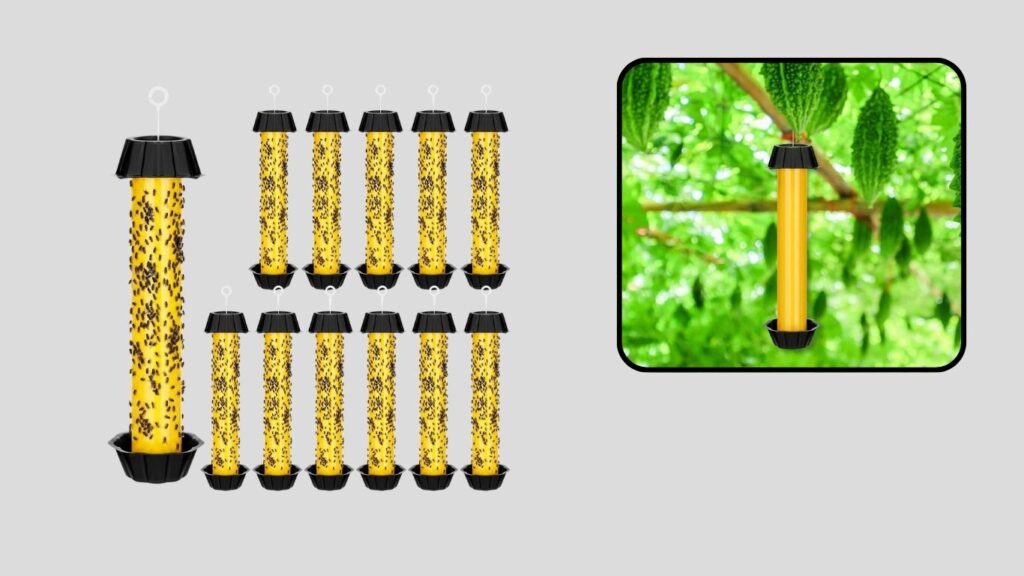
The Qualirey Outdoor Hanging Sticky Fly Traps come in a three-pack designed to provide broader coverage around patios, gardens, balconies, and outdoor living areas. Their hanging design allows them to be positioned above insect activity while the adhesive surfaces continuously capture flies and other small flying pests. The decorative styling can also make them less industrial-looking than traditional strips.
Key Features
- Three hanging sticky traps included
- Designed for outdoor use
- Broad adhesive surfaces
- No electricity or batteries needed
- Can be positioned in multiple locations
- Suitable for patios, gardens, and balconies
- Decorative hanging format
Why It’s Best for Stylish Outdoor Coverage
Traditional sticky fly traps can look utilitarian, which may be undesirable in patios or outdoor entertainment spaces. The Qualirey design offers a more presentable hanging format while still providing functional adhesive trapping.
The three-pack also lets users spread traps across several areas instead of relying on a single collection point.
Adhesive Performance & Placement Flexibility
The traps work continuously once opened and positioned. Hanging them near common fly routes can increase the likelihood that insects encounter the sticky surfaces.
Having multiple units also makes it easier to identify high-activity locations. Users can begin with traps in separate areas and later reposition them based on where the most flies are being captured.
Overall Verdict: Attractive Multi-Trap Outdoor Option
The Qualirey 3-Pack combines useful outdoor coverage with a more decorative design than basic flypaper. Its electricity-free operation and multiple hanging units make it practical for patios, balconies, gardens, and outdoor gathering areas.
For users who want passive fly control without placing obvious industrial-looking traps around their outdoor space, this set provides a convenient balance between appearance and functionality.
7. MaxGuard Non-Toxic Sticky Fly Catcher
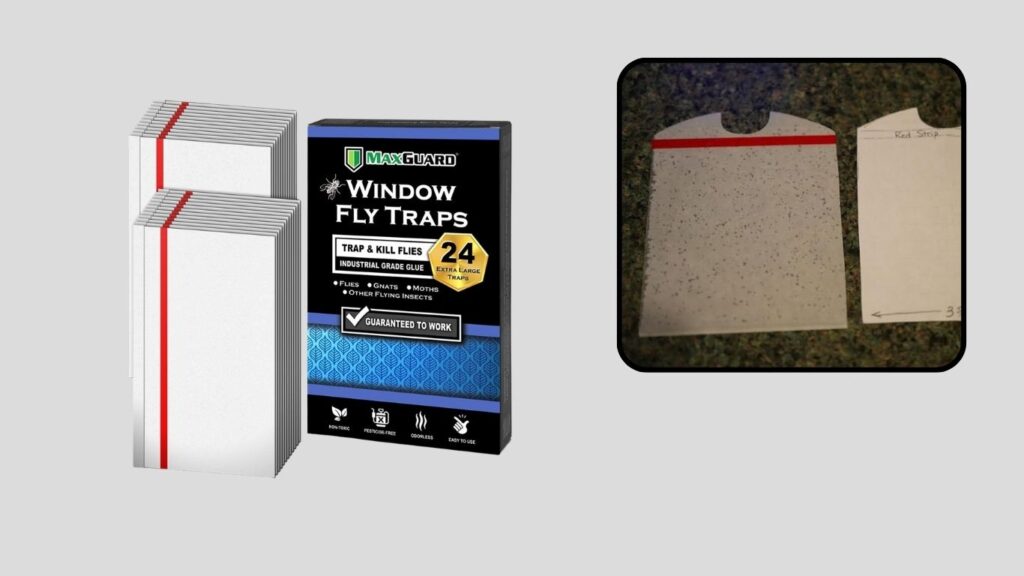
The MaxGuard Non-Toxic Sticky Fly Catcher is designed for users who want a simple trapping method for houseflies and other nuisance insects without relying on powered devices. Its adhesive surface works passively once installed, making it useful in kitchens, garages, utility rooms, porches, and other fly-prone areas. The compact format also makes it easy to place several traps around a property when fly activity is spread across multiple locations.
Key Features
- Non-electric sticky trapping design
- Suitable for houseflies and other flying insects
- Strong adhesive capture surface
- Easy to place around common fly hotspots
- No batteries or cords required
- Useful for indoor and sheltered areas
- Disposable for convenient cleanup
Why It’s Best for Low-Maintenance Fly Control
One of the main advantages of this trap is that it requires very little ongoing attention. Once positioned near an active fly area, the adhesive surface continues working without switches, refills, or electrical power.
This makes it particularly convenient in spaces where users want continuous trapping without adding another device to monitor.
Adhesive Performance & Practical Placement
The trap performs best when placed where flies already tend to travel. Windows, doors, waste areas, garages, and food-preparation zones are common examples.
Because the trap is lightweight, users can also test different locations and move it based on where activity appears strongest. Replacing the trap before the adhesive becomes overly dusty or full can help maintain capture performance.
Overall Verdict
The MaxGuard Non-Toxic Sticky Fly Catcher is a practical option for straightforward fly management. Its passive design, easy placement, and electricity-free operation make it especially suitable for homes, garages, and other areas where a simple trapping method is preferred.
8. Window Fruit Fly Trap for Indoor Use
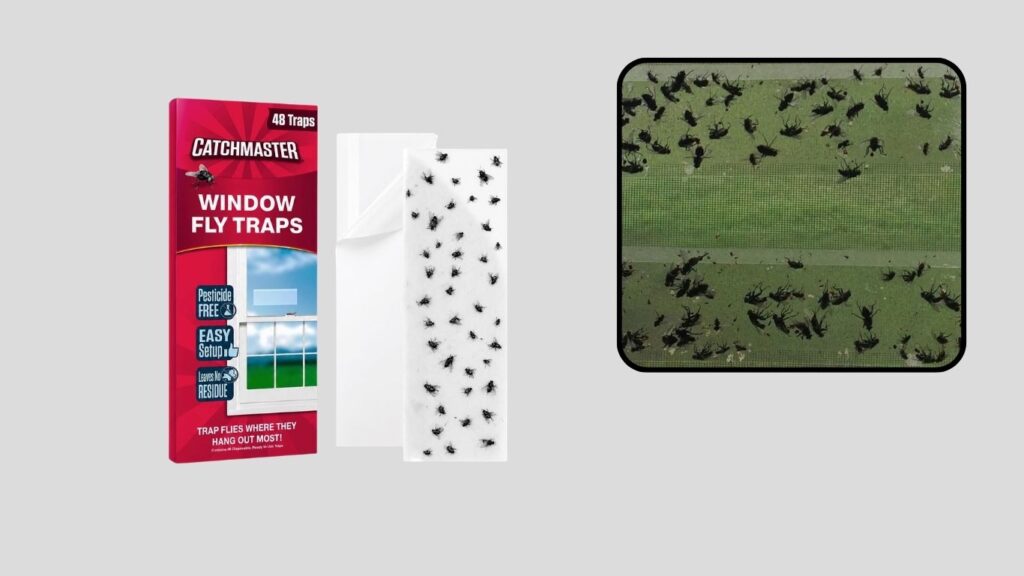
The Window Fruit Fly Trap is designed for indoor use in areas where small flies and fruit flies gather near natural light. Its compact adhesive format allows it to be placed directly on or near windows, making use of the tendency of many flying insects to move toward bright surfaces. This can make it particularly useful in kitchens, dining areas, offices, and other indoor spaces where hanging traps may feel too noticeable.
Key Features
- Designed for window placement
- Suitable for fruit flies and small flying insects
- Compact adhesive surface
- No electricity or batteries required
- Easy peel-and-place installation
- Low-profile indoor design
- Useful around kitchens and dining areas
Why It’s Best for Small Indoor Flies
Fruit flies and similar pests are often active around kitchens, sinks, produce, and windows. A window-mounted trap allows users to take advantage of where these insects naturally travel.
Its discreet design also means it can remain in place without taking up counter space or creating the appearance of a large pest-control device.
Trapping Performance & Ease of Use
The adhesive surface captures insects when they land on or cross the trap. Placement on windows with visible fly activity can significantly improve performance.
Because the trap is small and easy to install, multiple units can also be used around different windows or rooms. This makes it easier to target several indoor hotspots at the same time.
Overall Verdict
The Window Fruit Fly Trap is a convenient solution for small indoor flying pests, especially in kitchens and other areas near windows. Its low-profile format, simple installation, and electricity-free design make it well suited for homeowners who want discreet passive trapping.
9. Qualirey Blue Sticky Traps for Plants
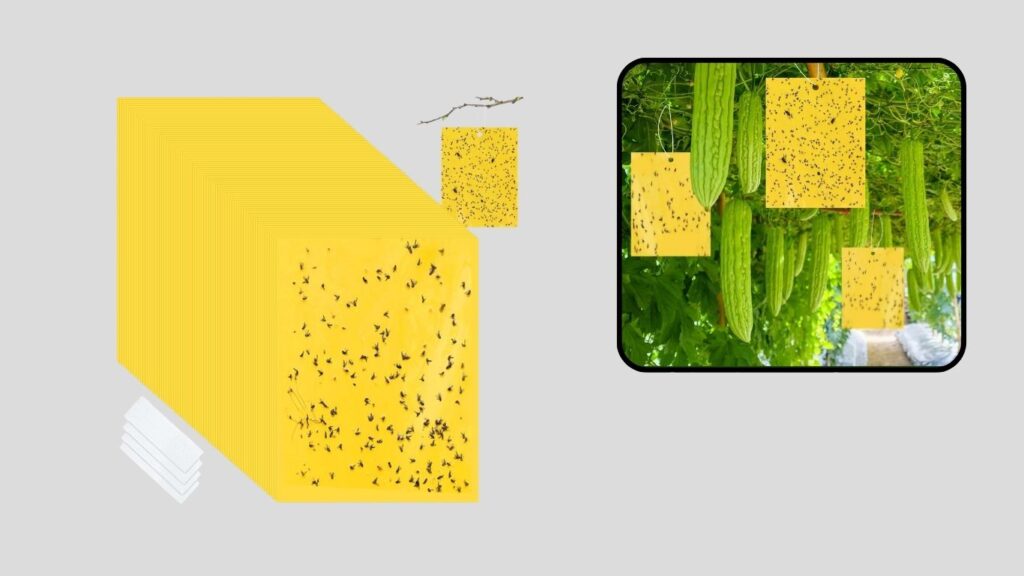
Qualirey Blue Sticky Traps are designed primarily for use around indoor plants, greenhouses, and growing areas where small flying pests may become a problem. The bright blue surface is intended to attract certain insects visually, while the adhesive coating captures them once they land. These traps are especially useful for monitoring pest activity around potted plants without adding sprays directly to leaves or soil.
Key Features
- Bright blue sticky trapping surface
- Designed for use around plants
- Suitable for indoor growing areas and greenhouses
- No electricity required
- Easy to position near pots and plant stands
- Useful for monitoring small flying pests
- Disposable and simple to replace
Why It’s Best for Plant Areas
Flying pests around houseplants can be difficult to manage because they often remain close to foliage and soil. Sticky cards provide a targeted way to intercept insects without placing a large trap elsewhere in the room.
The blue color can also help make the trap more noticeable to certain pest species, improving its usefulness as both a capture tool and a monitoring device.
Performance & Plant-Side Placement
For best results, traps should be positioned close to the affected plants without touching leaves unnecessarily. Monitoring the number of insects caught can also help indicate whether pest activity is increasing or decreasing.
Because these traps are lightweight and compact, they can be moved easily between pots or growing areas as needed.
Overall Verdict
Qualirey Blue Sticky Traps are especially useful for plant owners who need a simple way to monitor and reduce small flying pests around indoor gardens. Their compact size, visual attraction, and adhesive capture system make them practical for houseplants, greenhouses, and propagation areas.
FAQs
1. Do sticky fly traps really work?
Yes. Sticky fly traps can be effective when placed where flies regularly travel or gather. They work by capturing insects on an adhesive surface rather than killing them with chemicals or electricity. Placement usually has a major impact on how many insects are caught.
2. Where should I place sticky fly traps?
Place them near windows, doors, trash areas, kitchens, garages, patios, plant areas, and other locations where fly activity is noticeable. Avoid placing traps where people or pets are likely to brush against the adhesive.
3. How long do sticky fly traps last?
Their usable life depends on how quickly they fill with insects and how much dust or debris collects on the adhesive. A trap should generally be replaced when the sticky surface becomes full, dirty, or noticeably less effective.
4. Are sticky fly traps safe to use indoors?
Most non-toxic adhesive traps are suitable for indoor use when used according to the manufacturer’s directions. They should still be placed away from food-preparation surfaces, children, pets, and areas where accidental contact is likely.
5. Can sticky traps completely eliminate a fly problem?
Sticky traps can reduce and monitor fly activity, but they may not eliminate the source of an infestation. Better results usually come from combining traps with sanitation, removing breeding materials, covering food, cleaning drains when appropriate, and sealing common entry points.
