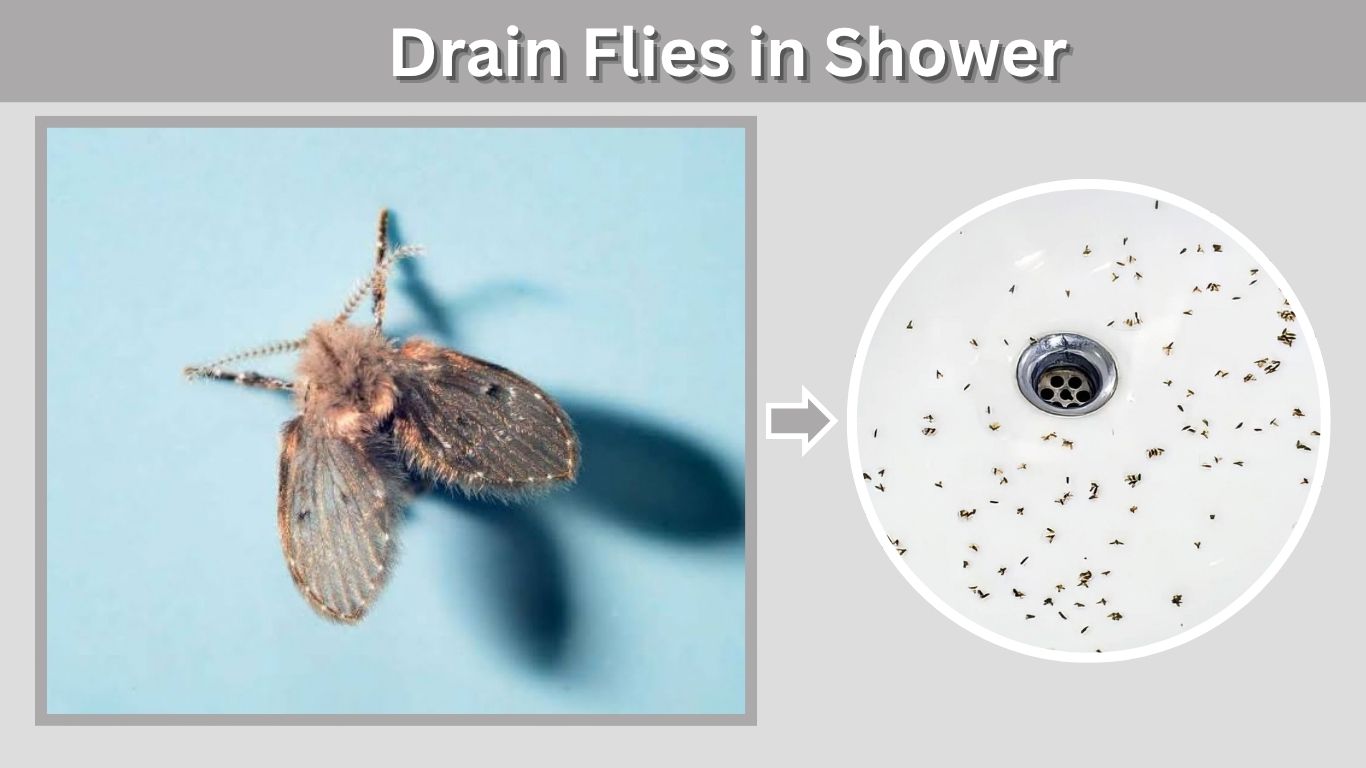
Drain flies in the shower usually appear when moist organic buildup develops inside the drain, grout, shower pan, or nearby plumbing. These tiny, fuzzy insects are also called moth flies because their broad wings give them a moth-like appearance. Adults are mostly a nuisance, but their presence often means larvae are developing somewhere damp and dirty. Understanding what causes shower drain flies, where their larvae hide, and how to remove the breeding material is the most reliable way to stop an infestation.
What Are Drain Flies in a Shower?
Drain flies are tiny flies belonging to the moth fly family. Bathrooms provide ideal conditions because they contain moisture, soap residue, hair, skin cells, and other organic material. Adults may rest on shower walls or glass, while their larvae develop inside the slimy film coating drains or other continuously wet surfaces.
What Do Shower Drain Flies Look Like?
Adult drain flies are typically very small and easy to recognize once you know their appearance.
Common features include:
- Gray, brown, or nearly black coloration
- Fuzzy bodies and wings
- Broad, rounded wings
- Moth-like appearance
- Short, weak flights
- Frequent resting on walls and tiles
- Slow movement around the shower
They often look like tiny gray moths rather than typical house flies.
Small Black Flies in the Shower
Small black flies appearing around a shower drain are often drain flies, especially when they spend most of their time close to wet plumbing.
However, not every small bathroom fly is a drain fly. Fungus gnats and fruit flies can occasionally wander into bathrooms. Drain flies are distinguished by their hairy bodies, fuzzy wings, and tendency to remain close to drains or other wet breeding areas.
What Causes Drain Flies in the Shower?
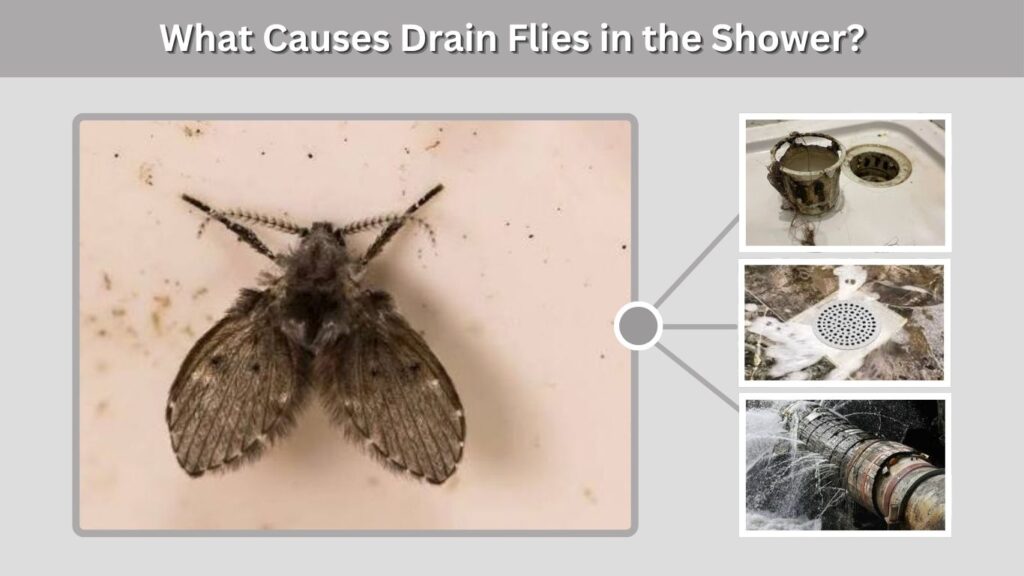
Drain flies do not appear simply because a shower is wet. They need moist organic material in which their larvae can live and feed. Over time, soap, hair, skin cells, bacteria, and other material can create a gelatinous film inside the drain. This provides both moisture and food for developing larvae.
Common Causes
Drain flies may develop because of:
- Organic slime inside the drain
- Accumulated hair and soap residue
- Slow drainage
- Standing water
- Dirty shower traps
- Leaking pipes
- Wet grout
- Poorly sealed shower pans
- Rarely used showers
- Sewage or drain problems
A drain that appears clean from the surface may still contain substantial buildup deeper inside.
Why Are Flies Coming Out of My Shower Drain?
Adult drain flies may emerge from a shower drain after completing their larval and pupal development within organic material inside the plumbing.
This can make it appear as though the insects are simply entering from the sewer. In many cases, however, the population is actually developing within the drain itself.
If numerous flies repeatedly appear around the same shower, that drain should be inspected first.
Drain Fly Larvae in the Shower
Drain fly larvae look very different from adult flies. They are small, elongated, worm-like organisms that live within wet organic matter. Finding larvae around a shower is strong evidence that a breeding site is nearby and should be cleaned rather than simply treating the visible adult flies.
What Do Drain Fly Larvae Look Like?
Typical larvae may have:
- Thin, worm-like bodies
- Pale, grayish, or translucent coloration
- Darker ends
- Slow crawling movement
- Very small size
- Preference for wet, slimy surfaces
People sometimes describe them as tiny shower worms.
Drain Fly Larvae in Shower Grout
Larvae can occasionally be found in damaged grout or cracks where moisture and organic material remain trapped.
Constantly wet grout can collect soap residue, skin cells, mildew, and other debris. If larvae repeatedly appear away from the drain, inspect grout lines and edges around the shower pan for hidden moisture.
Simply washing the visible larvae away may not solve the problem if moisture remains beneath the surface.
Drain Fly Worms on Shower Walls
Adult females normally lay eggs near suitable moist breeding material. Larvae appearing on shower walls may have moved from a nearby crack, drain opening, grout line, or other wet location.
Check the surrounding area carefully rather than assuming the wall itself is the primary source.
How to Get Rid of Drain Flies in the Shower
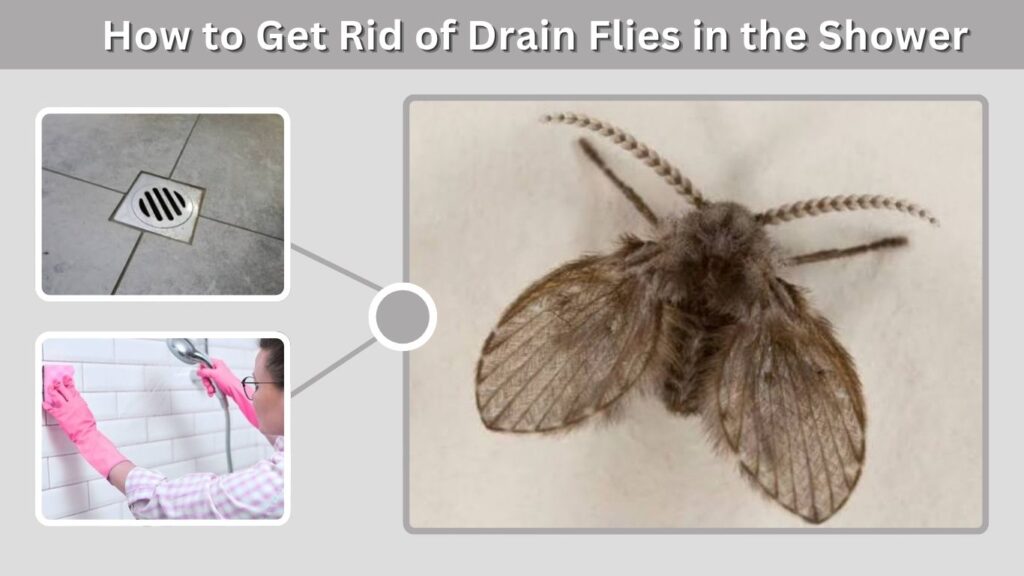
The key to controlling shower drain flies is eliminating their breeding material. Killing adult flies may temporarily reduce their numbers, but new adults can continue emerging as long as larvae remain inside the drain. Thorough mechanical cleaning is therefore more important than simply spraying insects you can see.
Clean the Shower Drain
A practical cleaning process includes:
- Remove the drain cover when possible.
- Pull out trapped hair and debris.
- Scrub accessible pipe surfaces with a drain brush.
- Clean the underside of the drain cover.
- Remove visible slime around the opening.
- Flush loosened debris away.
- Repeat the process if buildup remains.
- Clean surrounding grout and shower edges.
A long drain brush can reach organic material that normal rinsing leaves behind.
Treat Organic Buildup
An enzyme or biological drain-cleaning product may help break down organic material in difficult-to-reach sections of the pipe.
Follow the product label carefully. Avoid mixing different drain cleaners, bleach, acids, or other household chemicals because dangerous fumes or chemical reactions can result.
The goal is not merely to pour something down the drain but to remove the material supporting the larvae.
Remove Adult Flies
Adult drain flies can be reduced by vacuuming them from walls or using sticky traps close to the shower.
This helps reduce the immediate nuisance, but adult control should support rather than replace drain cleaning. An infestation usually returns when the breeding source remains untouched.
How to Kill Drain Fly Larvae in the Shower
Larvae are protected by the wet organic material in which they live. This means simply pouring water down the drain may not reach or remove them effectively. Physical cleaning works because it removes both larvae and their food source from pipe surfaces.
Focus on the Breeding Film
The most effective strategy is to physically remove slime from the inside of the drain.
Brush the walls of the drain rather than only flushing the pipe. Hair, soap residue, and bacterial film can adhere firmly to pipe surfaces even when water flows normally.
Once this material is removed, the drain becomes far less suitable for larvae.
Will Bleach Kill Drain Flies in the Shower?
Bleach may kill some insects or microorganisms it contacts, but pouring bleach into a drain does not necessarily remove the organic film where drain fly larvae develop.
The chemical may pass through the center of the pipe while leaving significant buildup on the sides.
For long-term control, cleaning and removing organic material is more important than relying on bleach alone. Never mix bleach with other cleaning chemicals.
Drain Flies in Shower Grout, Door Tracks, and Pans
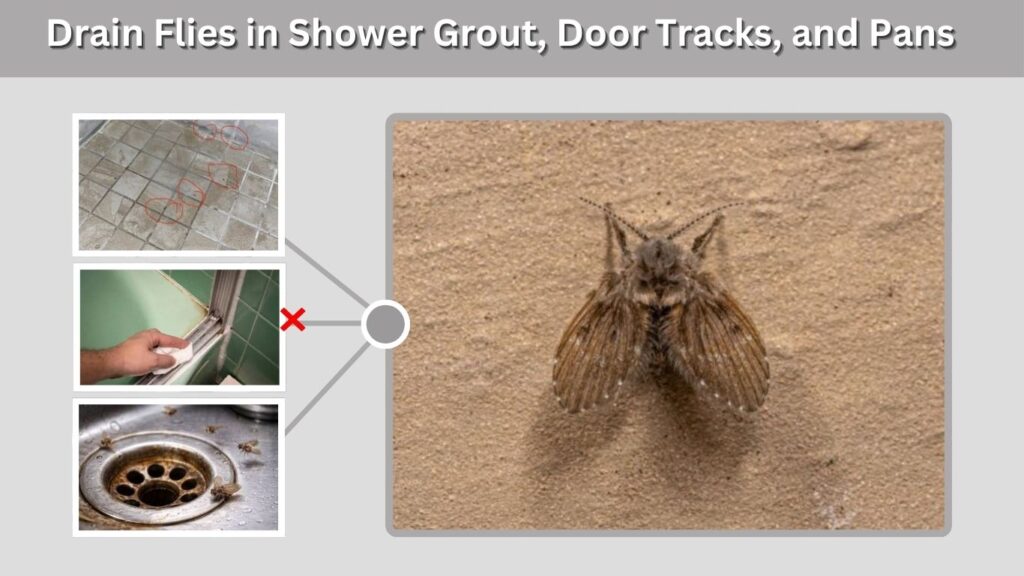
The shower drain is the most obvious breeding location, but it is not the only possibility. Modern showers contain seams, tracks, grout lines, seals, and hidden cavities where water can accumulate. Persistent drain flies after proper drain cleaning can indicate a secondary moisture source.
Drain Flies in Shower Door Tracks
Door tracks can accumulate water, soap, hair, and skin debris. If they stay wet, organic buildup may develop.
Remove trapped debris and clean the track thoroughly. Pay particular attention to drainage holes or channels that may have become blocked.
Regular drying and cleaning can make the area less suitable for small flies.
Drain Flies in Shower Pan
Flies emerging near the edges of a shower pan can indicate trapped moisture or organic contamination beneath or around the fixture.
If the area remains wet despite normal drying, damaged seals, plumbing leaks, or drainage problems may be involved.
Persistent insects coming from beneath a shower may require a plumber or pest professional to locate the hidden moisture source.
Why Drain Flies Keep Coming Back
Seeing a few drain flies immediately after cleaning does not necessarily mean treatment failed. Some larvae or pupae may already be far enough through development to emerge as adults. Continued activity for an extended period, however, usually means some breeding material remains.
Common Reasons They Return
Drain flies may keep appearing because:
- The drain was only flushed, not scrubbed.
- A second drain is infested.
- Organic residue remains deeper in the pipe.
- Shower grout stays constantly wet.
- A plumbing leak exists.
- The shower pan holds hidden moisture.
- A nearby floor drain is breeding flies.
- Sewage contamination is present.
When to Call a Professional
Consider professional assistance if drain flies remain numerous after repeated cleaning or appear to be emerging from walls, flooring, or underneath the shower.
A plumber can investigate damaged pipes, leaking traps, or drainage problems. A pest-management professional can help identify the insect and locate difficult breeding sites.
Persistent sewer odors, wet structural materials, or unexplained water damage should also be investigated.
How to Prevent Shower Drain Flies
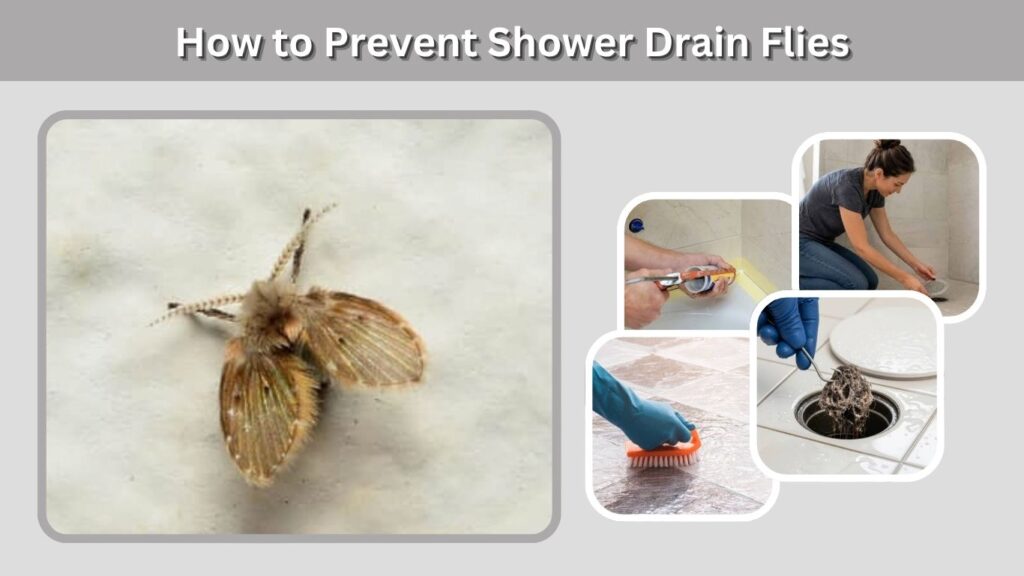
Prevention requires keeping shower areas clean and reducing the organic buildup and persistent moisture that drain fly larvae need. Routine maintenance is usually easier than eliminating a well-established infestation, especially in bathrooms that remain humid for much of the day.
Prevention Tips
To reduce future problems:
- Remove hair from drains regularly.
- Scrub shower drains periodically.
- Keep grout clean.
- Repair damaged caulk.
- Fix plumbing leaks promptly.
- Clean shower door tracks.
- Improve bathroom ventilation.
- Avoid persistent standing water.
- Clean rarely used showers.
- Investigate slow drains early.
Maintain an Unused Shower
An unused shower can still develop drain fly problems because stagnant plumbing and accumulated organic matter may remain undisturbed.
Inspect and clean rarely used drains periodically. Maintaining plumbing traps and addressing odors can also help prevent insects associated with drains and sewage systems from becoming established.
Drain Flies vs Fruit Flies in a Shower
Fruit flies are sometimes blamed when tiny insects appear around bathroom drains. Although fruit flies can enter bathrooms, they typically breed around fermenting food, sugary liquids, garbage, or similar organic materials rather than the slimy film characteristic of drain fly habitat.
How to Tell the Difference
Drain flies usually have fuzzy, broad wings and resemble miniature moths. Their flight is often weak and irregular.
Fruit flies have smoother bodies and more conventional fly-like wings. They are usually associated with kitchens, recycling containers, overripe fruit, or beverage residue.
If fuzzy insects repeatedly emerge from a shower drain, drain flies are the more likely explanation.
FAQs
1. Why do I have drain flies in my shower?
Drain flies usually appear because moist organic buildup exists inside the shower drain, grout, plumbing, or another damp area. Their larvae feed within this material.
2. How do I get rid of drain flies in a shower?
Remove hair and debris, scrub the inside of the drain thoroughly, clean surrounding wet areas, and eliminate leaks or standing water. Continue monitoring until adults stop appearing.
3. What are the worms in my shower drain?
Small worm-like organisms in a drain may be drain fly larvae. They develop in wet organic film and later transform into adult drain flies.
4. Will bleach kill drain flies in a shower?
Bleach may kill organisms it directly contacts, but it may not remove the organic buildup supporting larvae. Physical drain cleaning is generally more important for eliminating the breeding source.
5. Why are drain flies still appearing after cleaning?
Some adults may emerge from larvae or pupae that were already developing. Continued infestations can indicate incomplete cleaning, another contaminated drain, wet grout, a plumbing leak, or a hidden moisture problem.