
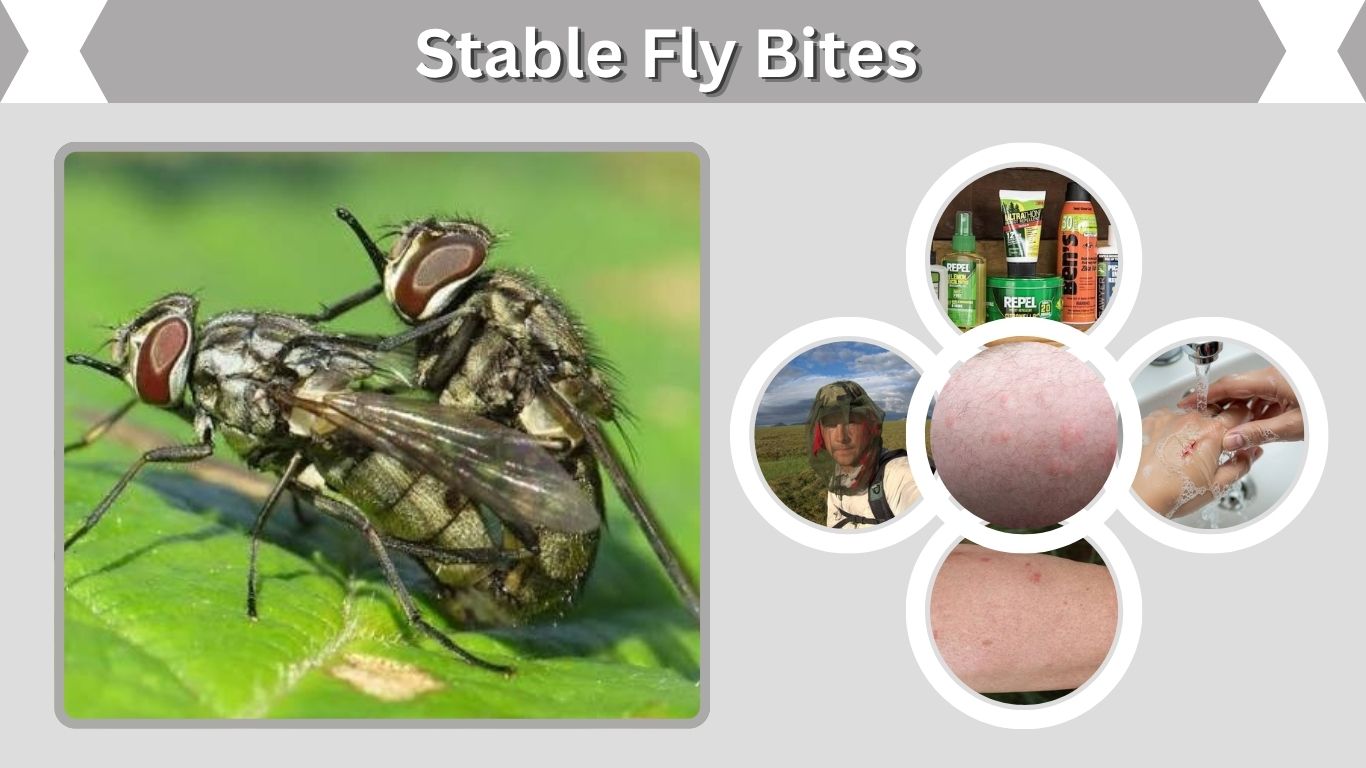
Stable fly bites are painful insect bites caused by blood-feeding flies commonly found around farms, livestock, gardens, and outdoor areas. Unlike ordinary house flies, stable flies have sharp mouthparts that pierce human skin and draw blood. Their bites usually occur around the ankles and lower legs, producing sudden pain and sometimes itching, redness, or swelling. Although most stable fly bites are not dangerous, proper care can reduce discomfort and prevent complications. Understanding what stable fly bites look like, how to treat them, and how to prevent them helps protect your skin from these persistent biting insects.
What Is a Stable Fly Bite?
A stable fly bite occurs when a stable fly (Stomoxys calcitrans) inserts its rigid, piercing mouthparts into the skin to obtain blood. Stable flies are approximately 5–7 millimeters long and resemble ordinary house flies.
However, unlike house flies, both male and female stable flies feed on blood. Their bites often cause immediate sharp pain because their mouthparts penetrate the skin directly.
Stable flies mainly attack humans around the ankles, although they may bite other exposed body parts. They are daytime feeders and often become particularly troublesome during the morning and late afternoon.
What Do Stable Fly Bites Look Like?
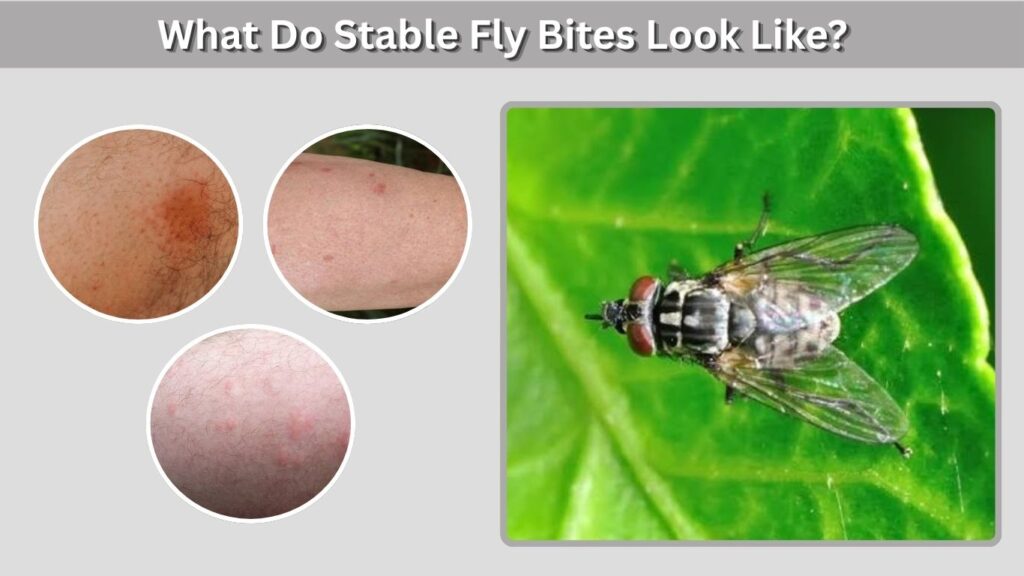
Stable fly bites may appear as small puncture marks or slightly raised spots on the skin. Some people develop mild redness, itching, or swelling, while others experience significant pain without any noticeable skin reaction.
Common Appearance of Stable Fly Bites
- Small puncture mark: A tiny mark may appear where the fly pierced the skin.
- Redness: The surrounding skin may become red or discolored.
- Mild swelling: A small raised bump can develop around the bite.
- Localized irritation: Some people experience itching, tenderness, or burning.
- Multiple bite marks: Repeated feeding attempts may produce several marks around the ankles.
Not everyone develops visible marks. The University of Florida notes that stable fly bites on humans often cause little lasting skin irritation. Therefore, identifying the fly is generally more reliable than identifying the bite mark alone.
Stable Fly Bite Symptoms
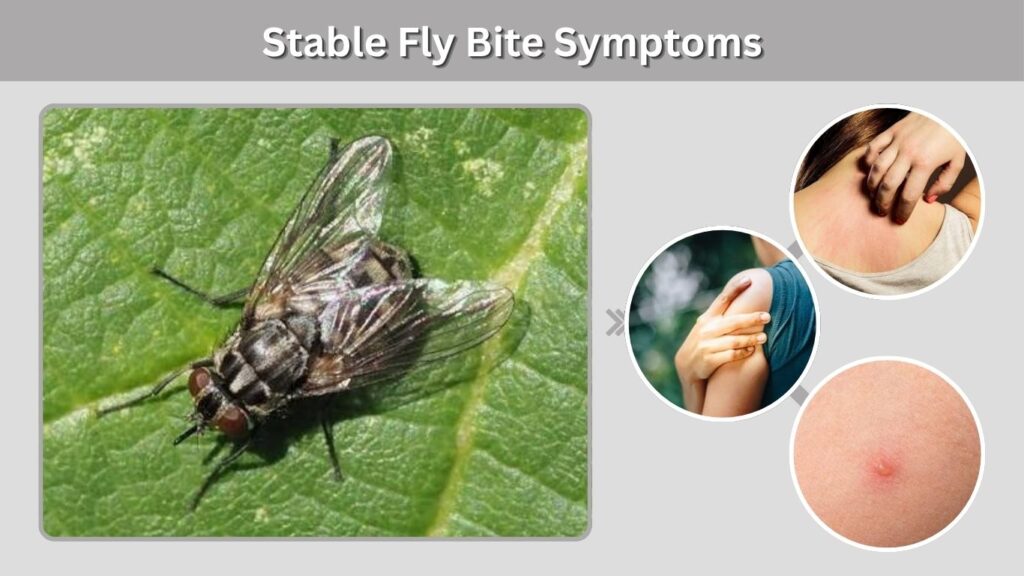
Stable fly bite symptoms vary depending on individual sensitivity, the number of bites, and the body’s response to insect saliva.
Most people experience immediate pain, but additional symptoms may develop afterward.
Common Symptoms
| Symptom | Description |
| Sharp pain | Sudden discomfort when the fly pierces the skin |
| Redness | Mild discoloration around the bite |
| Itching | Irritation that may appear after biting |
| Swelling | Localized inflammation in sensitive individuals |
| Tenderness | Discomfort when touching the affected area |
| Small bump | A slightly raised area around the puncture |
Severe Stable Fly Bite Reactions
Although uncommon, some individuals may experience more pronounced swelling, persistent pain, or an allergic reaction.
Increasing warmth, spreading redness, and pus may indicate a secondary skin infection rather than a normal bite reaction.
Seek medical attention if symptoms become severe or progressively worsen.
Why Do Stable Flies Bite Humans?
Stable flies bite humans because blood provides essential nutrients for their survival and reproduction. Unlike mosquitoes, where only females feed on blood, both male and female stable flies are blood feeders.
They use a long, rigid proboscis to pierce skin and suck blood. This feeding method explains why stable fly bites can be particularly painful.
Why Do Stable Flies Bite Ankles?
Stable flies frequently attack ankles and lower legs because they tend to feed close to the ground. These areas are also often exposed when people wear shorts, sandals, or low socks.
Stable flies can even bite through some clothing, making protective footwear and thicker fabrics especially important.
How to Treat Stable Fly Bites
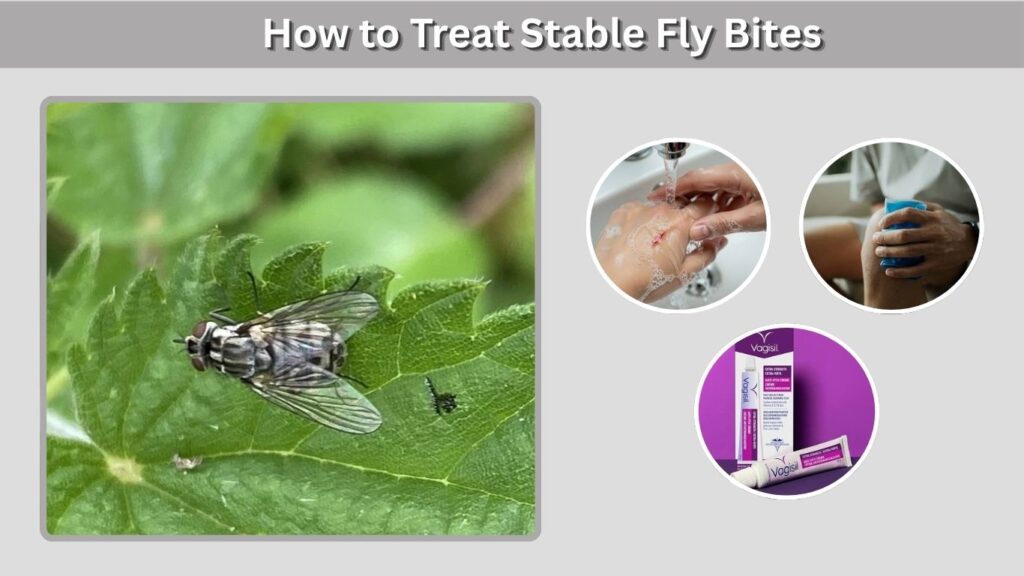
Most stable fly bites can be treated at home using basic first-aid measures. Treatment focuses on cleaning the affected skin, relieving discomfort, and preventing secondary infections.
1. Wash the Bite Area
Clean the affected area using mild soap and clean water. Gently remove any dirt or debris without scrubbing the skin.
Proper cleaning helps reduce the risk of bacteria entering damaged skin.
2. Apply a Cold Compress
Place a cold, damp cloth or an ice pack wrapped in a towel against the bite for approximately 20 minutes.
Cold compresses can help reduce swelling and relieve localized discomfort.
3. Use Anti-Itch Treatments
If itching develops, an appropriate oral antihistamine or mild hydrocortisone cream may provide relief.
Follow product directions and consult a pharmacist when choosing treatments for children or sensitive skin.
4. Take Pain Relief if Necessary
Over-the-counter pain relievers, such as acetaminophen (paracetamol) or ibuprofen, may help manage persistent discomfort when suitable for the individual.
Follow recommended dosages and avoid medications you cannot safely take.
5. Avoid Scratching
Scratching may damage the skin, worsen irritation, and introduce bacteria into the bite.
Keep the affected area clean and avoid breaking any blisters that develop.
How Long Do Stable Fly Bites Last?
Most uncomplicated stable fly bites improve within a few days. The initial sharp pain generally decreases much sooner, although tenderness, itching, or minor swelling can continue afterward.
Healing time depends on the individual’s skin sensitivity, the severity of the reaction, and whether the bite becomes infected.
If symptoms worsen, spread, or do not begin improving after several days, consult a healthcare professional. Persistent lesions may also have a cause other than stable flies.
Are Stable Fly Bites Dangerous?
Stable fly bites are generally not dangerous to healthy humans. They mainly cause pain and temporary irritation.
According to Colorado State University Extension, stable flies do not appear to be important vectors of human disease. However, their blood-feeding behavior makes them significant pests of livestock.
When Should You Seek Medical Help?
Consult a healthcare professional if you experience:
- Increasing swelling, warmth, or pain.
- Spreading redness or unusual discoloration.
- Pus or fluid draining from the bite.
- Fever or generally feeling unwell.
- Symptoms that worsen instead of improving.
A severe allergic reaction is rare but requires immediate emergency medical care. Warning signs include breathing difficulties, throat or tongue swelling, or fainting.
How to Prevent Stable Fly Bites
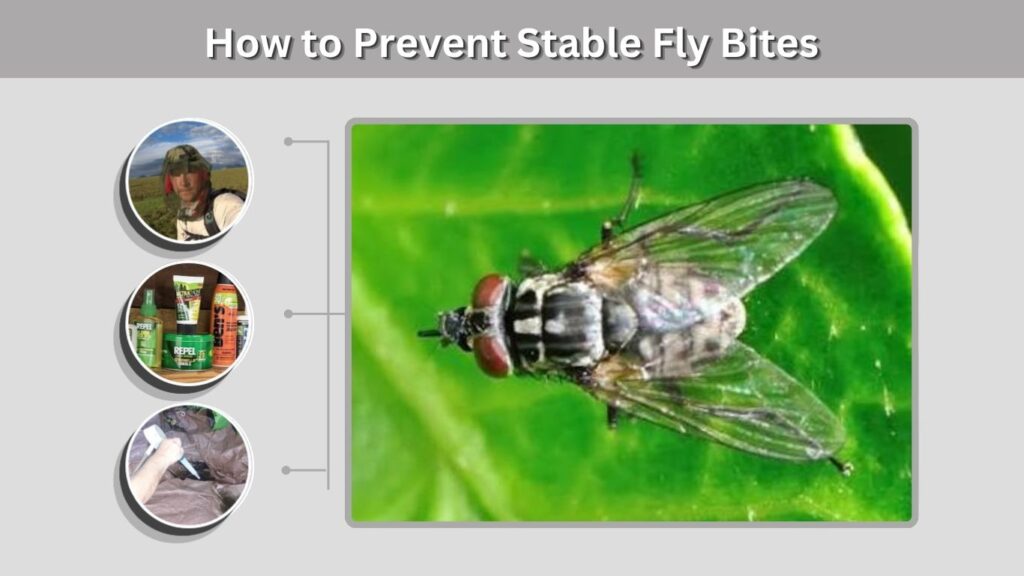
Preventing stable fly bites requires a combination of protective clothing, appropriate repellents, and breeding-site management.
Stable flies are strong fliers, so even clean properties can experience bites when flies arrive from neighboring locations.
Wear Protective Clothing
Wear long pants, thick socks, and closed shoes when working outdoors. Lightweight clothing may not provide complete protection because stable flies can sometimes bite through thin fabrics.
Use Insect Repellents
Choose an insect repellent specifically labeled for biting flies. Some registered repellents contain DEET or picaridin, although effectiveness against stable flies can vary.
Always follow the product instructions and age restrictions.
Remove Breeding Materials
Stable flies reproduce in moist, decomposing organic matter. Remove wet hay, manure mixed with bedding, rotting grass clippings, and other accumulated vegetation.
Keeping livestock areas clean and dry helps reduce their breeding opportunities.
Install Stable Fly Traps
Sticky traps specifically designed for stable flies may help capture adults and reduce biting pressure.
Place traps according to manufacturer instructions and combine them with sanitation for better results.
Stable Fly Bites vs. Other Insect Bites
Stable fly bites can resemble those from mosquitoes, fleas, and horse flies. However, their biting behavior and typical locations provide useful identification clues.
| Feature | Stable Fly | Mosquito | Horse Fly |
| Initial pain | Usually sharp | Often unnoticed | Usually sharp |
| Common reaction | Little irritation to mild swelling | Itchy raised bump | Painful swelling |
| Typical bite location | Ankles and legs | Exposed skin | Exposed skin |
| Biting time | Daytime | Varies by species | Daytime |
| Both sexes bite | Yes | No | No |
Because skin reactions overlap, bite appearance alone cannot reliably identify the responsible insect.
FAQs
1. Do Stable Fly Bites Itch?
Yes, stable fly bites can cause itching, although some people experience only sharp pain without noticeable irritation. Itching usually remains localized and improves within several days. Avoid scratching because damaged skin can increase the risk of secondary infection.
2. Can Stable Flies Bite Through Clothes?
Yes, stable flies can sometimes bite through thin clothing, especially lightweight socks and pants. Wearing thicker fabrics, long trousers, and closed footwear helps reduce exposure. Protecting the ankles is particularly important because stable flies frequently attack this area.
3. Can Stable Fly Bites Cause an Allergic Reaction?
An allergic reaction is possible but appears uncommon. Some people may experience increased swelling, redness, or itching. Severe symptoms such as difficulty breathing, fainting, or swelling of the throat require immediate emergency medical attention.
4. Do Stable Fly Bites Hurt More Than Mosquito Bites?
Stable fly bites generally cause more immediate pain because their rigid mouthparts pierce the skin. Mosquito bites are frequently unnoticed during feeding and become itchy afterward. However, pain intensity and subsequent reactions vary among individuals.
5. Do Stable Flies Bite Dogs and Horses?
Yes, stable flies bite dogs, horses, cattle, and other warm-blooded animals. Repeated bites can cause discomfort, restlessness, and skin irritation. Proper stable sanitation, animal-safe fly repellents, and effective fly management help protect livestock and pets.
