
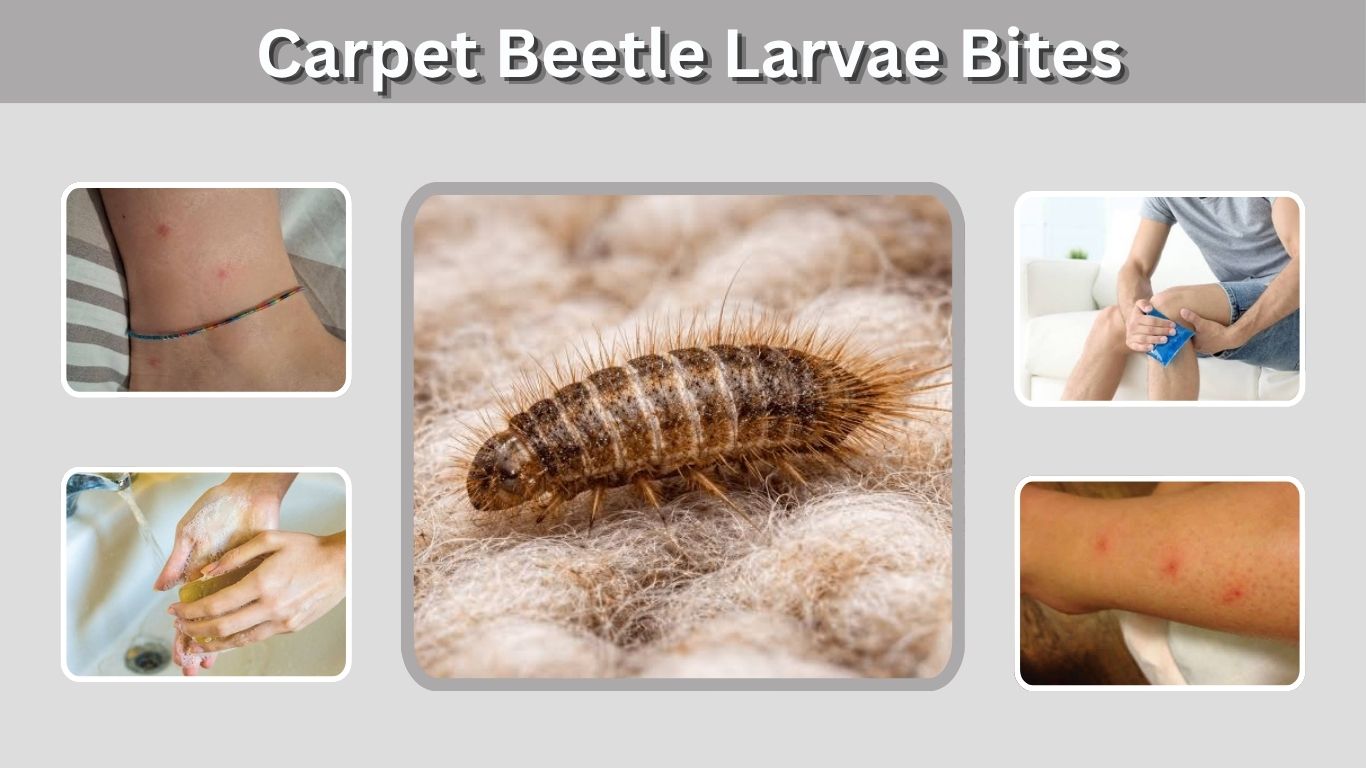
Carpet beetle larvae bites are often blamed for small, itchy bumps that appear unexpectedly on the skin. However, carpet beetle larvae do not actually bite or sting humans. Instead, their tiny body hairs can cause allergic reactions that resemble insect bites. These reactions may produce redness, itching, and uncomfortable skin rashes, especially after contact with contaminated bedding or clothing. Understanding the symptoms of carpet beetle dermatitis is important for identifying the cause and preventing further exposure. This guide explains what carpet beetle larvae rashes look like, how to treat them, and how to protect your home.
Do Carpet Beetle Larvae Bite Humans?
No, carpet beetle larvae do not bite humans. Unlike bed bugs, mosquitoes, or fleas, these larvae do not feed on blood or attack people. Their primary food sources include wool, feathers, fur, dead insects, and other animal-based materials found inside homes.
However, carpet beetle larvae have numerous tiny hairs covering their bodies. Some of these hairs can detach and settle on carpets, mattresses, clothing, and upholstered furniture.
When sensitive skin comes into contact with these hairs, an allergic or inflammatory reaction may develop. This condition is known as carpet beetle dermatitis.
Although the reaction resembles insect bites, the irritation results from contact with larval hairs rather than actual biting.
Why Do Carpet Beetle Larvae Cause Skin Irritation?
Carpet beetle larvae are covered with specialized hairs called setae. Certain species possess distinctive spear-shaped hairs known as hastisetae, which detach easily and can spread into their surroundings.
These hairs may trigger skin inflammation or an allergic response in susceptible individuals. Some people experience considerable itching, while others have no noticeable symptoms.
How Larval Hairs Affect Human Skin
When carpet beetle larvae move through fabrics or shed their outer coverings, their hairs may remain on nearby surfaces.
These hairs can contact exposed skin through bedding, clothing, blankets, or furniture. The resulting reaction may include itchy bumps, localized inflammation, and occasionally small blisters.
The irritation can continue if contaminated materials are not cleaned properly. However, the larvae do not burrow into human skin or live inside the body.
What Do Carpet Beetle Larvae Bites Look Like?
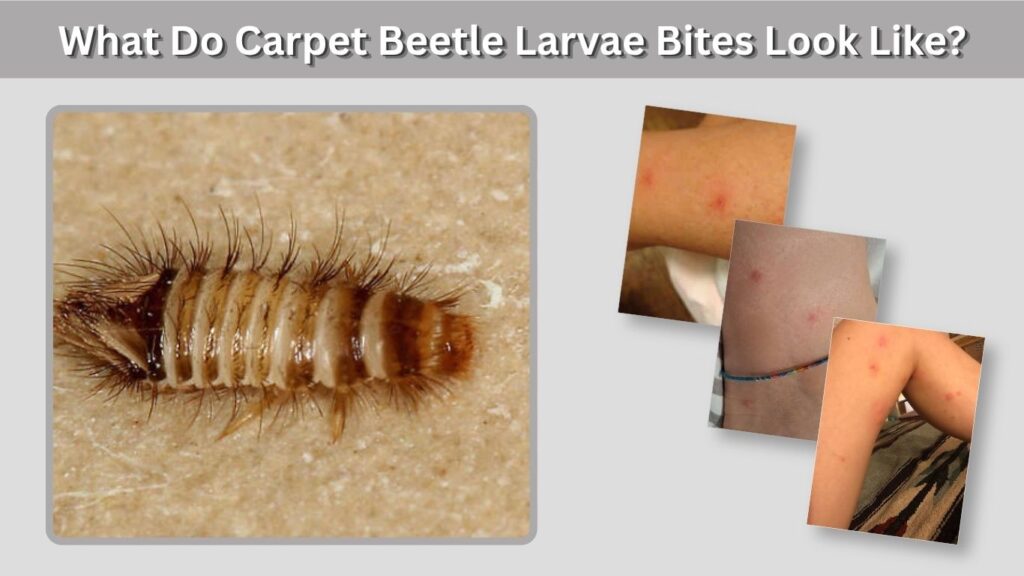
Carpet beetle larvae rashes can resemble mosquito bites, flea bites, or bed bug bites. Their appearance varies depending on individual skin sensitivity and the amount of exposure.
Some people develop isolated bumps, while others notice multiple irritated patches across exposed areas.
Common Symptoms of Carpet Beetle Larvae Rash
Common symptoms may include:
- Small itchy bumps: Raised spots that resemble ordinary insect bites.
- Red or discolored patches: Skin may become red, pink, purple, or darker than surrounding areas.
- Persistent itching: Irritation may continue after contact with the hairs ends.
- Localized swelling: Some individuals experience mild inflammation around affected areas.
- Tiny blisters: Sensitive individuals may develop small fluid-filled lesions.
These symptoms are not unique to carpet beetles. Other allergic conditions and biting insects can cause similar skin reactions.
Carpet Beetle Larvae Bites Pictures
Pictures associated with carpet beetle dermatitis typically show scattered itchy bumps or patches of inflamed skin.
The rash may appear on the arms, legs, neck, back, or other areas that contact contaminated fabrics.
However, photographs alone cannot confirm carpet beetle dermatitis. Identifying larvae or their shed skins and ruling out other causes is important for accurate diagnosis.
Can Different Carpet Beetle Larvae Cause Rashes?
Several carpet beetle species can develop inside homes. Their larvae differ in appearance, but contact with their body hairs may cause skin reactions in susceptible individuals.
Black Carpet Beetle Larvae
Black carpet beetle larvae (Attagenus unicolor) are elongated, brownish insects with short body hairs and a distinctive tuft of longer hairs near the rear.
They commonly feed on animal-derived materials and may occur in stored products or household fabrics.
Black carpet beetle larvae do not bite humans. However, their hairs may cause skin irritation in sensitive individuals.
Varied Carpet Beetle Larvae
Varied carpet beetle larvae (Anthrenus verbasci) have brown, segmented bodies covered with dense hairs.
They frequently develop in carpets, stored clothing, wool products, and other materials containing animal fibers.
Their detachable hairs can trigger allergic dermatitis, but the larvae do not bite or sting humans.
Furniture Carpet Beetle Larvae
Furniture carpet beetle larvae (Anthrenus flavipes) are hairy, brownish larvae that can infest upholstered furniture, carpets, and natural-fiber materials.
Like other carpet beetle larvae, they do not feed on humans. Nevertheless, their body hairs may contribute to skin irritation following contact.
Carpet Beetle Larvae Rash vs. Bed Bug Bites
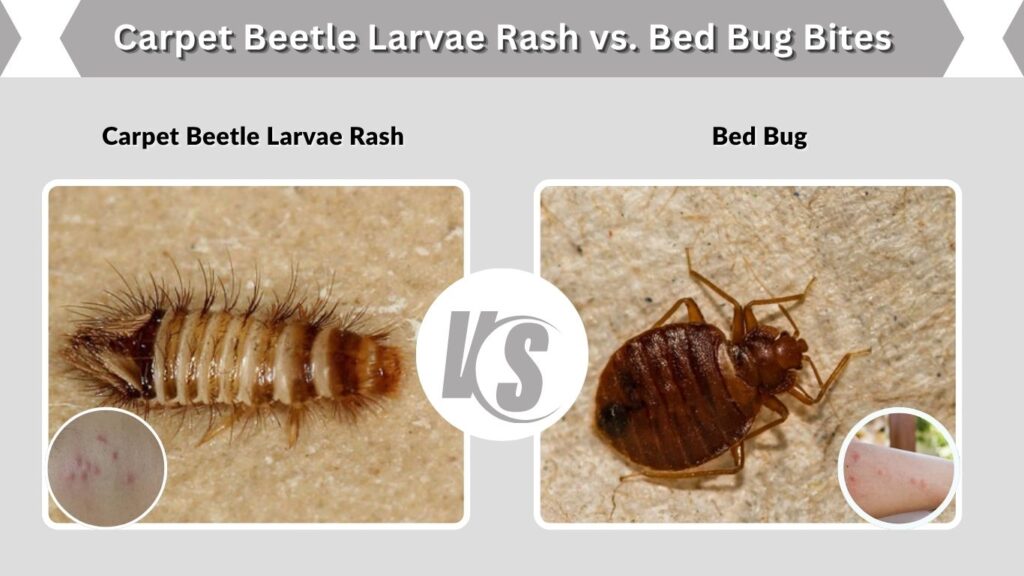
Carpet beetle dermatitis and bed bug bites can produce similar-looking skin lesions. However, they have different causes, making environmental inspection particularly important.
| Feature | Carpet Beetle Larvae Rash | Bed Bug Bites |
| Cause | Contact with larval hairs | Blood-feeding insects |
| Actual biting | No | Yes |
| Skin appearance | Itchy bumps or patches | Itchy bumps or welts |
| Main evidence | Hairy larvae and shed skins | Bed bugs and dark fecal spots |
| Typical habitat | Carpets, closets, natural fabrics | Mattresses, bed frames, furniture |
Bed bugs actively feed on human blood, usually while people are resting.
Carpet beetle larvae feed on household materials and do not seek humans for food.
Finding itchy marks after sleeping does not confirm either pest. Inspecting the surrounding environment provides more useful evidence.
How to Treat Carpet Beetle Larvae Rashes
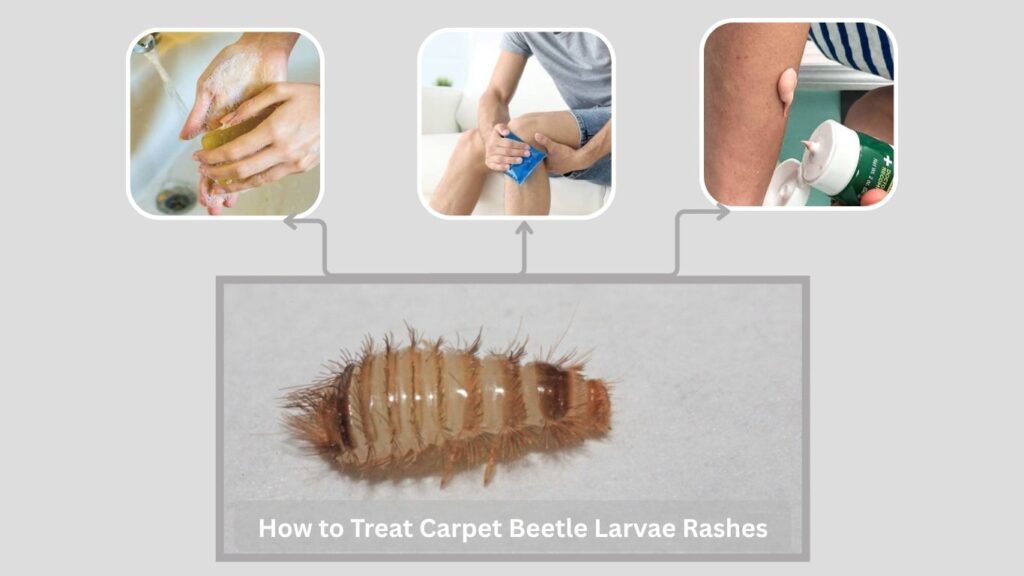
Treatment for suspected carpet beetle dermatitis focuses on relieving itching, reducing inflammation, and eliminating further exposure to larval hairs.
Most mild skin reactions can be managed with basic care, although persistent symptoms may require medical attention.
1. Wash the Affected Skin
Clean irritated areas gently with mild soap and lukewarm water.
This may help remove hairs and other debris from the skin. Avoid harsh scrubbing or strongly scented cleansers that could worsen irritation.
2. Apply a Cold Compress
Place a cool, damp cloth against the affected area for approximately 10–15 minutes.
A cold compress can temporarily reduce itching and discomfort. Repeat the process as necessary.
3. Use Anti-Itch Products
Calamine lotion or over-the-counter 1% hydrocortisone cream may relieve mild inflammation and itching.
Follow product instructions carefully. Consult a pharmacist or healthcare professional before applying steroid creams to young children, broken skin, or sensitive body areas.
4. Avoid Scratching
Scratching can damage irritated skin and increase the risk of secondary infection.
Keep fingernails short and consider using a fragrance-free moisturizer to reduce dryness.
Consult a healthcare professional if the rash is persistent, worsening, painful, or spreading. Seek urgent medical care for difficulty breathing or swelling of the throat.
How to Prevent Carpet Beetle Larvae Skin Irritation
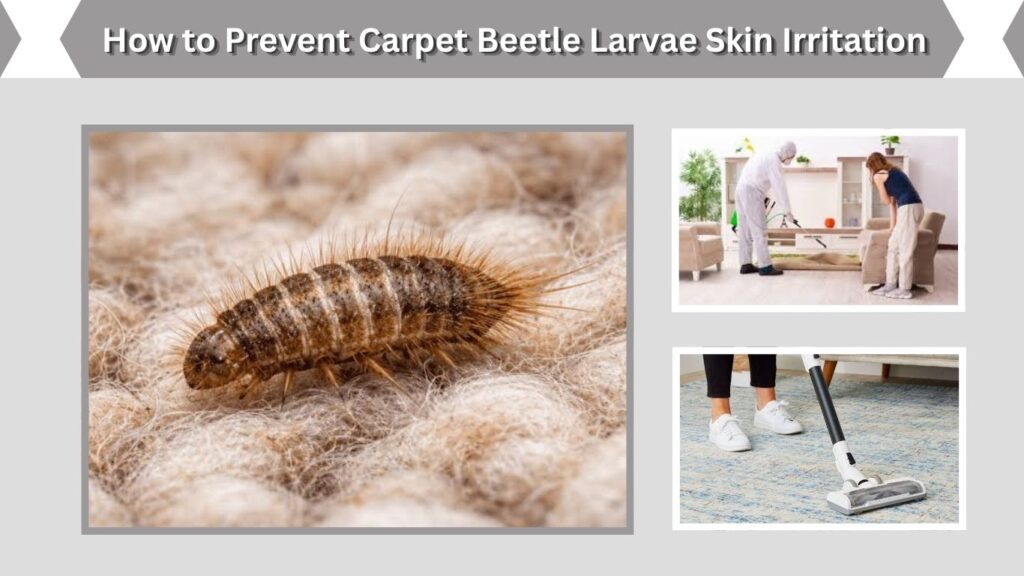
Preventing carpet beetle dermatitis requires removing larvae, shed skins, and detached hairs from the home.
Regular cleaning and proper storage are especially important because larvae often remain hidden in dark, undisturbed areas.
Inspect Common Hiding Places
Check carpets, closets, upholstered furniture, and underneath beds for hairy larvae or discarded skins.
Also inspect stored wool clothing, blankets, and other animal-fiber materials.
Vacuum Carpets and Furniture
Thoroughly vacuum carpet edges, baseboards, upholstered furniture, and hard-to-reach spaces.
Frequent vacuuming helps remove larvae, loose hairs, eggs, and potential food sources.
Dispose of vacuum debris promptly.
Wash Infested Fabrics
Wash affected clothing, bedding, and blankets according to their care labels.
Hot laundering or professional dry cleaning can eliminate carpet beetles from suitable materials.
Avoid applying insecticides directly to clothing, pillows, or bedding.
Store Clothes Properly
Keep clean wool clothing, blankets, and delicate natural fabrics in sealed containers.
Regularly remove pet hair, lint, and accumulated household debris that could support developing larvae.
If larvae continue appearing after thorough cleaning, consider professional pest control.
FAQs
1. Do Carpet Beetle Larvae Bite Humans?
No, carpet beetle larvae do not bite humans because they do not feed on blood. However, their tiny body hairs can trigger allergic skin reactions. These reactions may cause itching, redness, and raised bumps that resemble actual insect bites.
2. Can Carpet Beetle Larvae Cause Mosquito-Like Bites?
Yes, carpet beetle larvae can cause skin reactions that look similar to mosquito bites. Their detachable hairs may trigger itchy bumps or patches in sensitive individuals. However, these marks are allergic or inflammatory reactions rather than actual bites.
3. How Long Do Carpet Beetle Larvae Rashes Last?
Carpet beetle dermatitis may last several days or longer, depending on skin sensitivity and repeated exposure. Mild reactions often improve after removing the irritating hairs. Persistent or worsening symptoms should be evaluated by a healthcare professional.
4. Do Carpet Beetle Larvae Bite or Sting Humans?
Carpet beetle larvae neither bite nor sting humans. Their hairs can detach and contaminate bedding, clothing, and furniture. Contact with these hairs may cause skin irritation, itching, or allergic dermatitis, particularly in people sensitive to these materials.
5. Are Black Carpet Beetle Larvae Bites Dangerous?
Black carpet beetle larvae do not bite humans or feed on blood. Their hairs may cause uncomfortable skin reactions in susceptible individuals. Most mild irritation improves after exposure stops, but persistent or severe symptoms should receive medical evaluation.
