
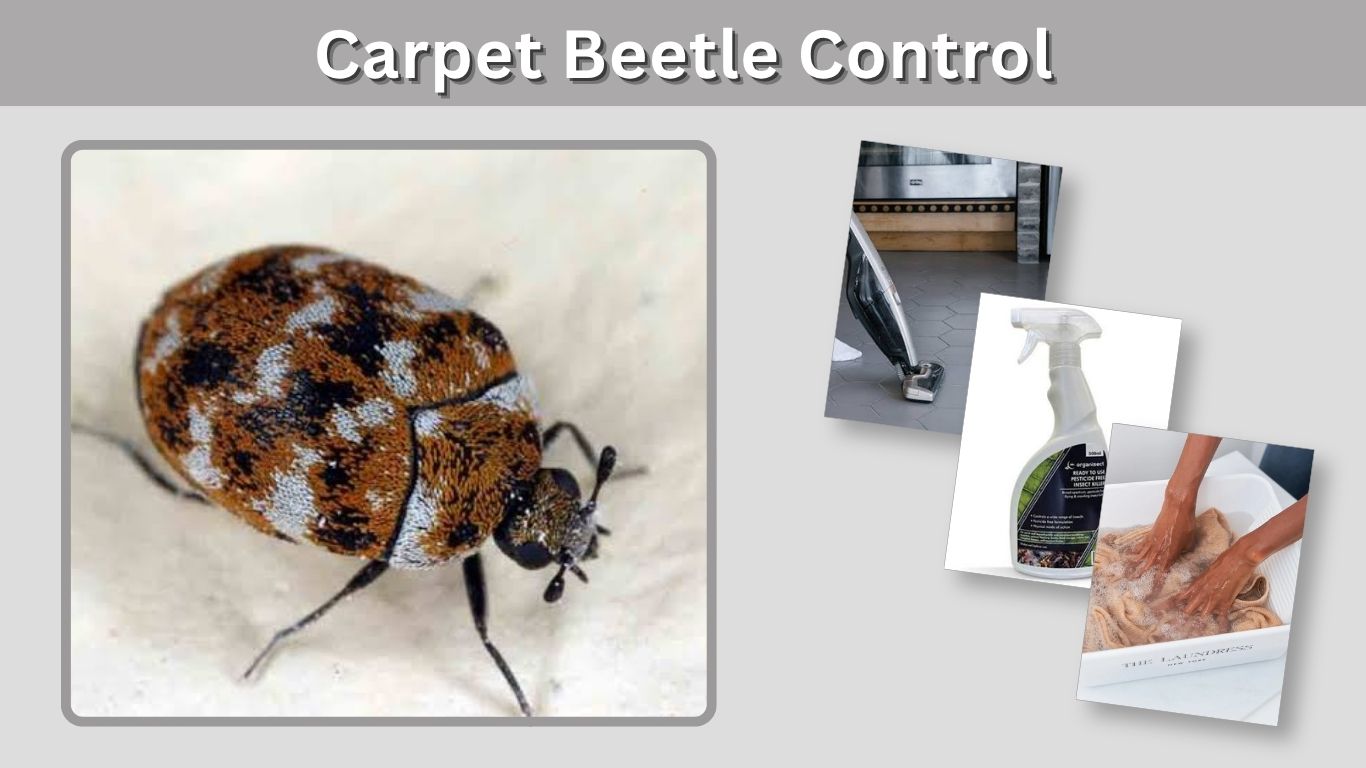
Carpet beetle control is essential when these tiny household pests begin damaging carpets, clothing, furniture, and other natural-fiber materials. Although adult carpet beetles are generally harmless, their larvae can feed on wool, fur, feathers, and accumulated organic debris. Successful control involves finding breeding areas, removing larvae, cleaning infested materials, and preventing future infestations. Whether you prefer natural methods, household treatments, or professional pest control, understanding the right approach can help protect your belongings and keep carpet beetles from becoming a recurring problem.
Why Is Carpet Beetle Control Important?
Carpet beetles are small insects commonly found in homes, warehouses, and buildings containing natural fibers. Their larvae are responsible for most household damage because they feed on various animal-derived materials.
Controlling an infestation early helps prevent damage to valuable belongings and reduces the possibility of skin irritation from larval hairs.
Signs of a Carpet Beetle Infestation
Recognizing the signs of carpet beetles is the first step toward effective pest control.
Common warning signs include:
- Damaged fabrics: Irregular holes or thinning in wool clothing, rugs, and natural-fiber upholstery.
- Hairy larvae: Small, brownish, segmented insects hiding in carpets, closets, and furniture.
- Shed larval skins: Empty brown skins accumulating near breeding areas.
- Adult beetles: Small, oval beetles appearing around windows or light sources.
- Hidden damage: Deteriorating fabric beneath furniture or inside rarely used storage areas.
A few adult beetles near a window do not necessarily indicate an established infestation. Finding actively feeding larvae is more significant.
How to Control Carpet Beetles in Your Home
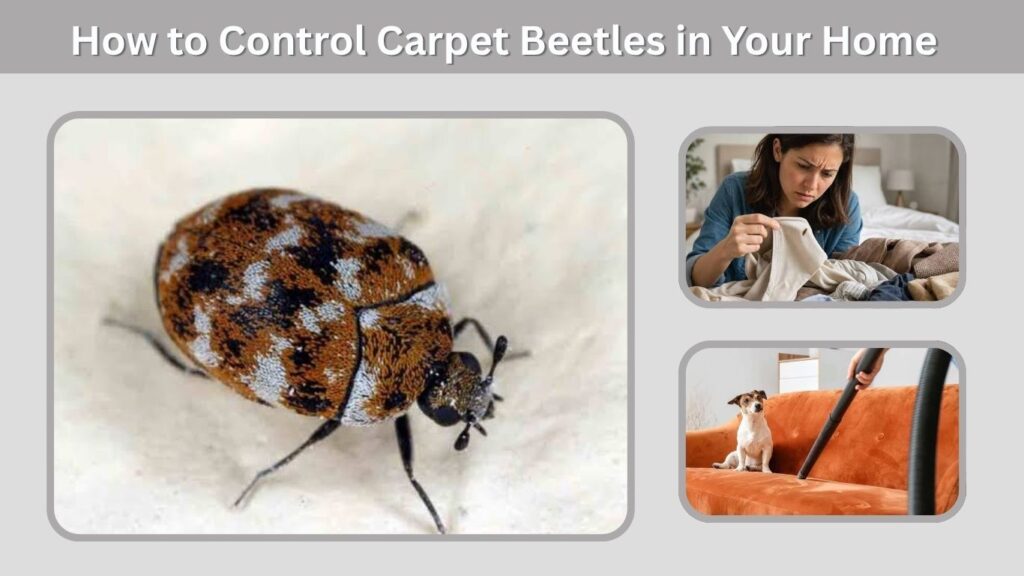
Effective carpet beetle control requires a combination of inspection, sanitation, fabric treatment, and preventive measures. Simply spraying visible adult beetles rarely solves the underlying problem.
Removing larvae and eliminating their food sources are the most important parts of successful control.
Step-by-Step Carpet Beetle Control Methods
1. Identify the infested areas: Inspect carpet edges, closets, furniture, storage boxes, and areas containing animal fibers. Look for larvae and shed skins.
2. Vacuum thoroughly: Clean carpeting, upholstery, baseboards, cracks, and areas beneath heavy furniture. Dispose of vacuum contents promptly.
3. Wash infested clothing: Launder suitable items using hot water when their care labels permit, or have delicate materials professionally dry-cleaned.
4. Remove damaged materials: Discard heavily infested items that cannot be cleaned or restored. Seal them before disposal to reduce pest movement.
5. Eliminate food sources: Remove lint, pet hair, dead insects, old spider webs, and other debris that can support larval development.
6. Monitor the infestation: Use appropriately placed sticky traps and inspect previously affected areas regularly to identify continued activity.
University of California Integrated Pest Management emphasizes thorough cleaning, food-source removal, and exclusion as the foundations of carpet beetle control.
Carpet Beetle Larvae Control
Carpet beetle larvae are more damaging than adults because they feed on natural fibers and other organic materials. They prefer dark, protected locations where food remains available.
Successful larvae control depends on locating their breeding sites rather than focusing exclusively on adult beetles.
How to Eliminate Carpet Beetle Larvae
Begin by inspecting undisturbed locations such as closets, carpet edges, furniture seams, and stored textiles. Pay special attention to areas containing pet hair, wool, feathers, and dead insects.
Thorough vacuuming removes many larvae and potential food sources. Washing or dry-cleaning affected fabrics helps eliminate insects hidden among fibers.
Some items can be treated through appropriate freezing methods. However, temperature and exposure duration must be sufficient, and delicate materials may require professional handling.
Continue inspecting previously affected areas until evidence of larval activity disappears.
Black Carpet Beetle Control
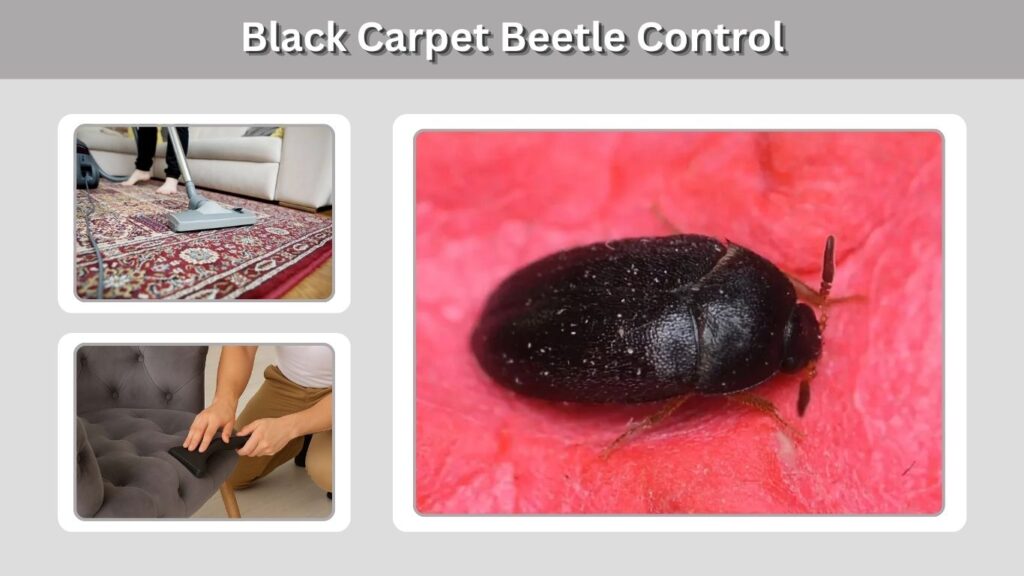
Black carpet beetles (Attagenus unicolor) are common household fabric pests. Their larvae are elongated, usually brownish, and capable of damaging wool, fur, feathers, and other susceptible materials.
Their preferred hiding places make infestations difficult to detect during their early stages.
How to Control Black Carpet Beetles
Black carpet beetle control follows the same principles used for other carpet beetle species.
Inspect stored clothing, carpets, furniture, and spaces where organic debris accumulates. Remove larvae and their food sources through thorough vacuuming and fabric cleaning.
Pay particular attention to enclosed storage areas and seldom-disturbed corners. When cleaning alone is insufficient, an appropriately labeled insecticide may be considered for targeted treatment.
Regular inspection is essential because larvae may remain hidden even when adult beetles are no longer visible.
Furniture Carpet Beetle Control
Carpet beetles can infest upholstered furniture, particularly items containing wool, animal hair, feathers, or accumulated lint.
Larvae often hide within seams, beneath cushions, and underneath furniture, making them harder to reach through ordinary surface cleaning.
How to Remove Carpet Beetles From Furniture
Start by vacuuming seams, crevices, cushion edges, and the underside of upholstered furniture using suitable attachments.
Remove washable covers and clean them according to their care instructions. Inspect furniture padding for evidence of larvae and shedding skins.
Steam or heat treatment may be appropriate for some materials, but only when temperatures reach pest-killing levels without damaging the furniture.
Severely infested feather or animal-hair stuffing may require specialized professional treatment. Spraying the outer surface alone will not reliably eliminate larvae buried deep inside.
Natural Carpet Beetle Control Methods
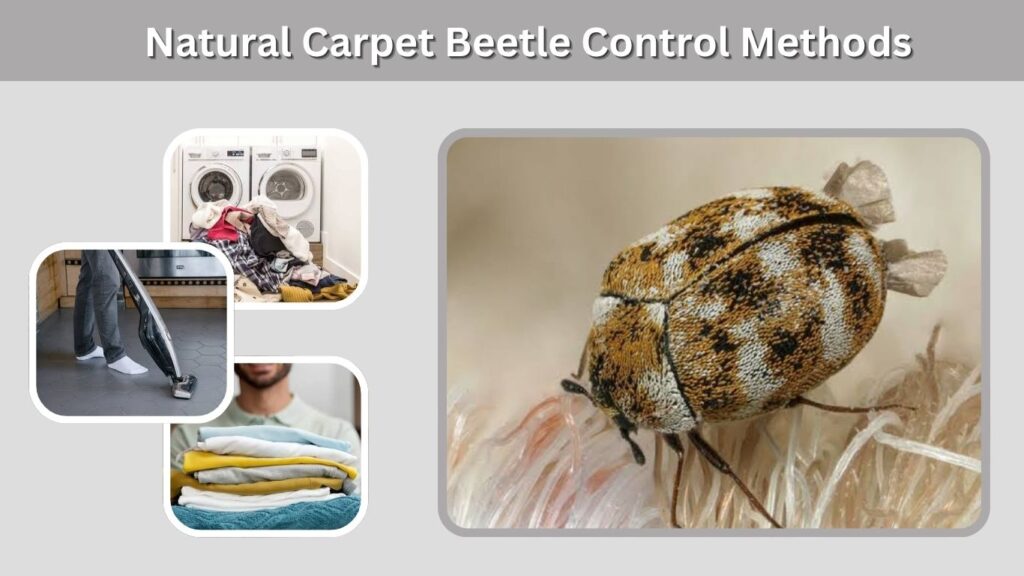
Natural and nonchemical methods are often sufficient for small infestations. They focus on removing insects, reducing food sources, and preventing access to vulnerable materials.
Unlike many home remedies promoted online, these approaches are supported by established pest-management guidance.
Effective Nonchemical Control Methods
- Frequent vacuuming: Physically removes larvae, shed skins, and debris from carpets and hidden areas.
- Hot washing or dry cleaning: Helps eliminate carpet beetles from suitable clothing, blankets, and other textiles.
- Proper storage: Airtight containers protect cleaned woolens and other vulnerable fabrics from new infestations.
- Freezing suitable items: Sustained freezing can kill insects when the correct conditions are achieved.
- Thorough housekeeping: Removing pet hair, lint, and dead insects limits breeding opportunities.
Borax and diatomaceous earth are sometimes promoted as carpet beetle control products. However, loose dust applications can create inhalation or accidental exposure risks, especially around children and pets.
Essential oils and vinegar should not be relied upon to eliminate established infestations because their effectiveness is not well demonstrated.
Best Carpet Beetle Control Products
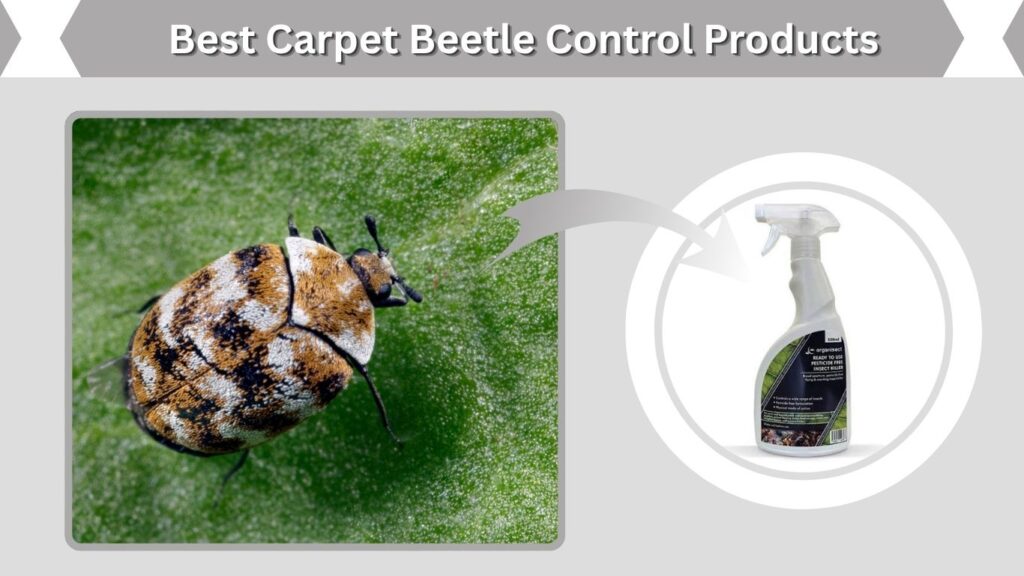
Carpet beetle control products may be useful when cleaning and prevention do not completely resolve an infestation.
The best choice depends on the location of the pests, the affected materials, and whether the product is legally approved and labeled for the intended use.
Types of Carpet Beetle Control Products
1. Targeted insecticide sprays: Products specifically labeled for carpet beetles may be applied to permitted cracks, crevices, carpet edges, and other infestation sites.
2. Insecticidal dusts: Certain registered dust formulations can treat inaccessible spaces, but applications must follow label directions and precautions against inhalation.
3. Sticky monitoring traps: These help detect beetle activity and identify areas requiring further inspection.
4. Pheromone traps: Species-specific traps can attract certain adult male beetles and assist monitoring, but cannot eliminate an infestation alone.
Avoid spraying pesticides on clothing or bedding. Household bug bombs are also not recommended for carpet beetle control because they fail to reach many hidden larvae and may introduce unnecessary exposure risks.
Professional Carpet Beetle Pest Control
Professional carpet beetle pest control can be valuable when infestations are extensive, recurring, or difficult to locate.
Trained pest management technicians can identify species, investigate hidden breeding sites, and recommend targeted treatment methods.
What Does Pest Control Do for Carpet Beetles?
Professional pest control typically begins with a detailed inspection of affected rooms, storage areas, and potential food sources.
A technician may recommend sanitation improvements, removal of infested materials, and targeted applications of suitable insecticides.
Experienced professionals also explain follow-up inspections and prevention procedures.
How Much Does Carpet Beetle Pest Control Cost?
Professional carpet beetle control costs vary according to property size, infestation severity, location, and treatment requirements.
A small, localized infestation generally requires less work than an infestation spreading through several rooms or involving inaccessible areas.
Request written estimates that explain inspection charges, treatment methods, follow-up visits, and any guarantees.
When Should You Call Pest Control?
Consider professional help when larvae repeatedly appear despite thorough cleaning, valuable furniture is affected, or the breeding source remains unidentified.
Professional treatment is especially useful for inaccessible wall cavities, contaminated insulation, or delicate materials requiring specialized handling.
How to Prevent Carpet Beetles From Returning
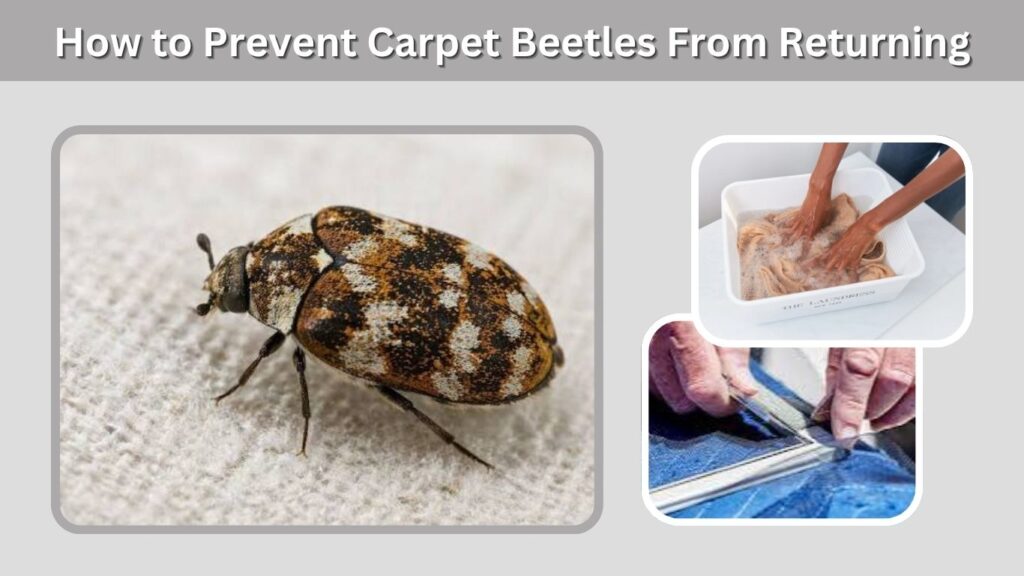
Long-term prevention is an essential part of carpet beetle control. Even after an infestation has been removed, adult beetles may enter through windows, doors, or other openings.
Keeping susceptible materials clean and reducing potential breeding sites makes reinfestation less likely.
Carpet Beetle Prevention Tips
- Vacuum carpets, closets, and upholstered furniture regularly.
- Wash or dry-clean woolens before long-term storage.
- Keep vulnerable fabrics in sealed storage containers.
- Remove pet hair and lint from concealed household spaces.
- Repair damaged window screens and seal accessible entry gaps.
- Inspect secondhand rugs, furniture, and textiles before bringing them indoors.
- Check stored clothing periodically for larvae or shed skins.
These preventive measures reduce suitable breeding sites and help limit future carpet beetle problems.
FAQs
1. Can Pest Control Get Rid of Carpet Beetles?
Yes. Professional pest control can help eliminate carpet beetles by identifying breeding sites, removing infestation sources, and applying appropriate treatments. However, long-term success also depends on proper cleaning, monitoring, and preventing future entry.
2. Do You Need Pest Control for Carpet Beetles?
Not always. Many small carpet beetle infestations can be controlled through vacuuming, laundering, and removing food sources. Professional assistance becomes more useful when infestations are widespread, repeatedly return, or involve inaccessible areas.
3. What Is the Best Way to Control Carpet Beetle Larvae?
The most effective approach combines finding breeding sites, removing food sources, vacuuming thoroughly, and treating infested fabrics through appropriate laundering or dry cleaning. Eliminating larvae is more important than simply killing visible adult beetles.
4. Are Carpet Beetle Control Sprays Effective?
Appropriately labeled insecticide sprays can help control carpet beetles when applied to permitted treatment areas. However, sprays alone rarely solve an infestation if larvae continue feeding on hidden sources of lint, wool, or other organic materials.
5. Can Carpet Beetles Return After Professional Treatment?
Yes. Carpet beetles can return when adult beetles enter from outdoors or overlooked breeding materials remain inside the home. Regular inspection, careful fabric storage, thorough cleaning, and correcting entry points help reduce the likelihood of recurrence.
