
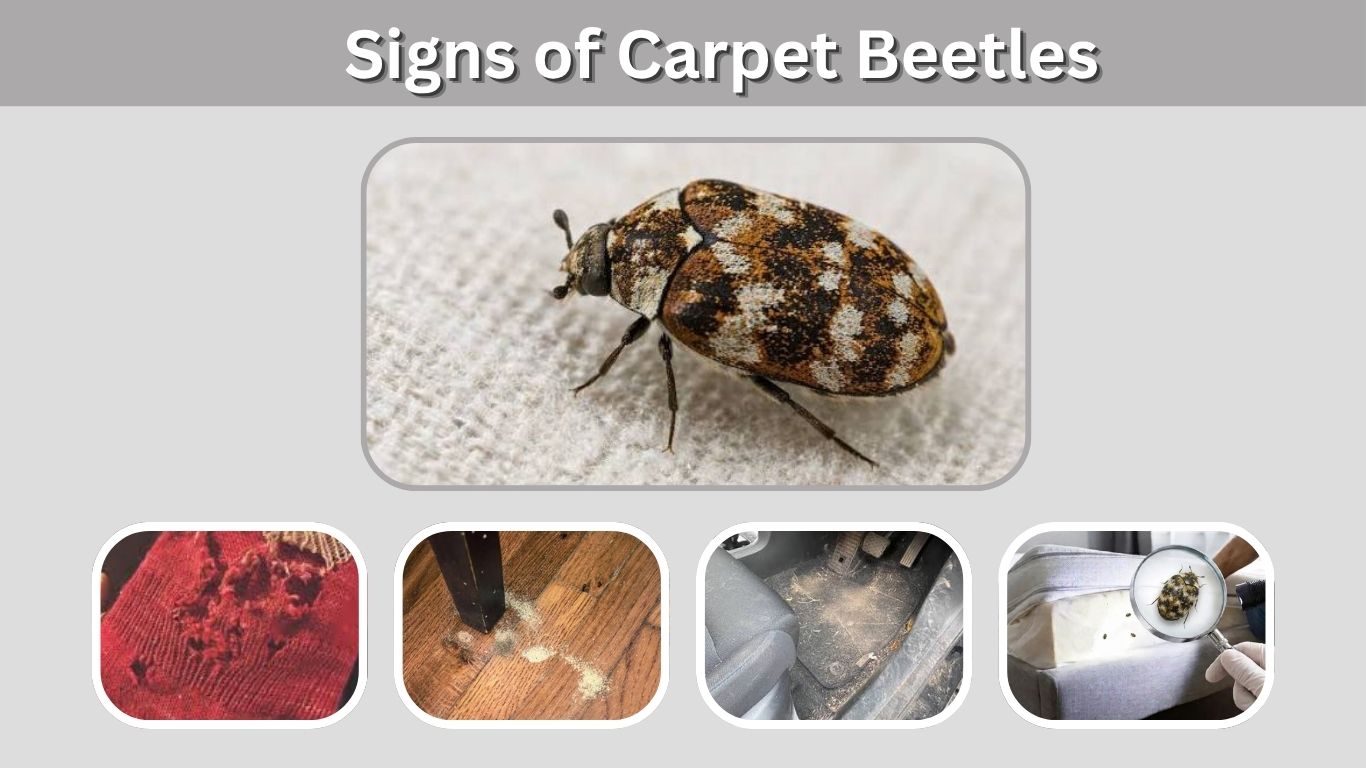
The signs of carpet beetles often go unnoticed until these tiny insects start damaging carpets, clothing, and furniture. Adult carpet beetles may appear near windows, while their larvae usually hide in dark areas where they feed on natural fibers, pet hair, and other organic materials. Common warning signs include shed skins, small holes in fabrics, and hairy larvae beneath furniture or inside closets. Recognizing these early signs of carpet beetles can help you locate an infestation, prevent further damage, and determine whether treatment is necessary.
7 Common Signs of Carpet Beetles in Your House
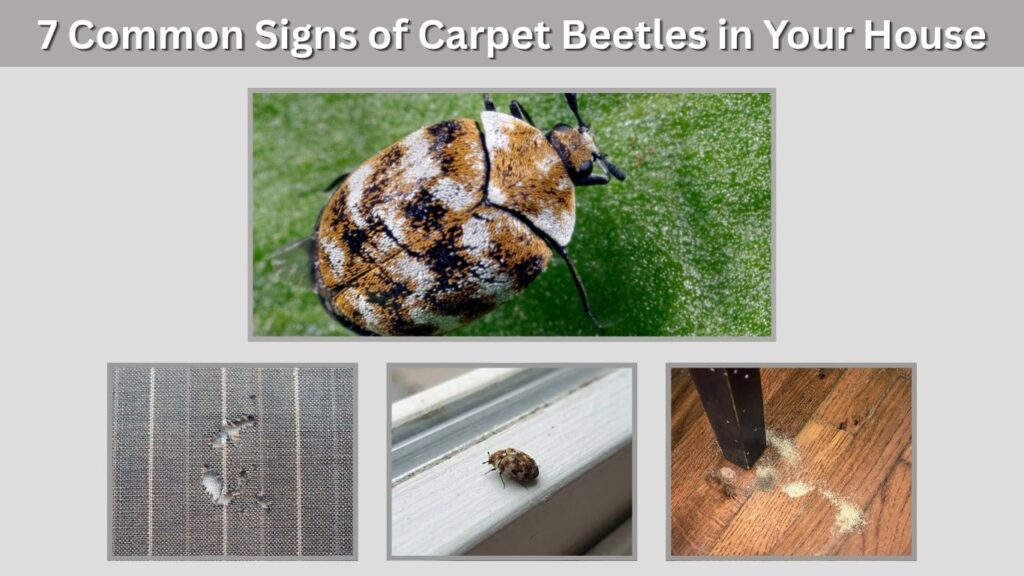
Carpet beetles can live in different areas of a home, making infestations difficult to detect. Their larvae generally prefer dark, undisturbed places containing suitable food sources. Although adults are easier to notice, larvae cause most household damage. Understanding the following warning signs can help you identify possible carpet beetle activity before it spreads.
1. Small Holes in Carpets and Clothing
Irregular holes or thinning in natural-fiber materials are common signs of carpet beetle damage. Larvae consume animal-derived materials such as wool, fur, feathers, and silk.
You may notice damaged sweaters, wool rugs, blankets, or upholstered furniture. Carpet beetles often feed in concealed areas, so damage may be concentrated beneath furniture or inside closets.
Synthetic fabrics are generally less attractive unless blended with natural fibers or contaminated with food residues.
2. Brown, Hairy Carpet Beetle Larvae
Finding small, hairy larvae is one of the strongest signs of an active carpet beetle infestation.
Larvae are usually brown or tan, with segmented bodies covered in fine bristles. Their appearance varies depending on the species.
They commonly hide along carpet edges, behind baseboards, inside storage areas, and beneath upholstered furniture.
Unlike adults, larvae tend to avoid light and may remain unnoticed for extended periods.
3. Shed Larval Skins
Carpet beetle larvae shed their outer skins as they develop. These abandoned skins are often found near feeding areas.
The skins resemble tiny, hollow, brownish shells with visible segments and bristles.
Finding several shed skins in the same location suggests that larvae have been developing nearby.
According to the Natural History Museum, cast larval skins are useful evidence when identifying carpet beetle infestations.
4. Adult Beetles Near Windows
Adult carpet beetles are small, oval-shaped insects commonly measuring approximately 2–6 millimeters, depending on the species.
Some have mottled white, brown, yellow, and black patterns, while others appear uniformly dark.
Adults are attracted to light, making windowsills and nearby walls common places to find them.
A single adult beetle may have entered from outdoors. However, repeated sightings alongside larvae or damaged fabrics suggest a possible indoor infestation.
5. Damage to Upholstered Furniture
Carpet beetle larvae sometimes infest upholstered furniture, especially pieces containing animal hair, wool, or feathers.
They may hide underneath cushions, inside seams, or around furniture padding.
Early damage often appears as small irregular patches of worn material.
Because larvae prefer protected locations, inspecting the underside of sofas, chairs, and other upholstered items is especially important.
6. Tiny Droppings Near Infested Materials
Carpet beetle larvae produce small fecal pellets while feeding. These particles may collect near infested fabrics or concealed feeding sites.
The droppings are often difficult to distinguish from ordinary dirt or debris without close inspection.
The University of Florida identifies larval cast skins and fecal pellets as useful indicators of carpet beetle activity.
However, droppings alone cannot confirm an infestation.
7. Unexplained Itchy Skin Irritation
Some people develop itchy bumps or skin irritation after contact with hairs shed by carpet beetle larvae.
This condition, sometimes called carpet beetle dermatitis, may resemble insect bites or an allergic reaction.
Carpet beetles do not bite humans. Instead, larval hairs can trigger irritation in sensitive individuals.
Because many skin conditions look similar, a rash alone should never be considered proof of carpet beetles.
Early Signs of Carpet Beetles
Early carpet beetle infestations can be difficult to recognize because larvae often remain hidden until their feeding causes noticeable damage.
One of the earliest visible clues may be an adult beetle resting near a sunny window. Another indication is discovering a single larva while cleaning an undisturbed closet or moving furniture.
Small patches of fabric damage or isolated shed skins can also suggest developing activity.
However, finding one adult beetle does not automatically indicate an infestation. Repeated discoveries of larvae, shed skins, or damage provide stronger evidence.
Mattress Signs of Carpet Beetles

Carpet beetles can occasionally occur in mattresses and bedding, particularly where lint, animal hair, feathers, or other suitable materials accumulate. Unlike bed bugs, they do not seek out people for blood meals. Their presence near a bed usually relates to available food sources or sheltered hiding places.
Signs of Carpet Beetles in a Mattress
Look for the following clues:
- Small, hairy larvae along mattress seams or edges.
- Brownish shed skins near the bed frame or underneath the mattress.
- Larvae among accumulated lint or pet hair beneath the bed.
- Damage to wool blankets, feather-filled materials, or other vulnerable bedding.
- Adult carpet beetles appearing near bedroom windows.
Modern synthetic foam mattresses are not a typical food source, although larvae may occur around them.
How to Check Your Mattress
Remove the bedding and inspect mattress seams, piping, corners, and the surrounding bed frame.
Use a flashlight to check underneath the mattress and around nearby furniture. Examine natural-fiber blankets and bedding for damage.
If you find insects, collect a specimen for identification rather than assuming they are carpet beetles.
Signs of Carpet Beetles vs. Bed Bugs
Carpet beetles and bed bugs can appear in bedrooms, but their behavior and feeding habits are very different.
Carpet beetle larvae feed on suitable animal-derived materials, while bed bugs feed on human and animal blood.
| Feature | Carpet beetles | Bed bugs |
| Appearance | Small beetles or hairy larvae | Flat, oval, reddish-brown insects |
| Feeding | Animal-derived materials | Blood |
| Bite humans | No | Yes |
| Shed skins | Bristly larval skins | Bed bug-shaped exoskeletons |
| Common clues | Fabric damage, larvae | Dark fecal spots, live bugs |
| Hiding places | Carpets, closets, furniture | Mattress seams, bed frames |
Itchy skin alone cannot reliably distinguish the two. Check for physical evidence and seek professional identification if the insects are difficult to recognize.
Signs of Carpet Beetles in a Car
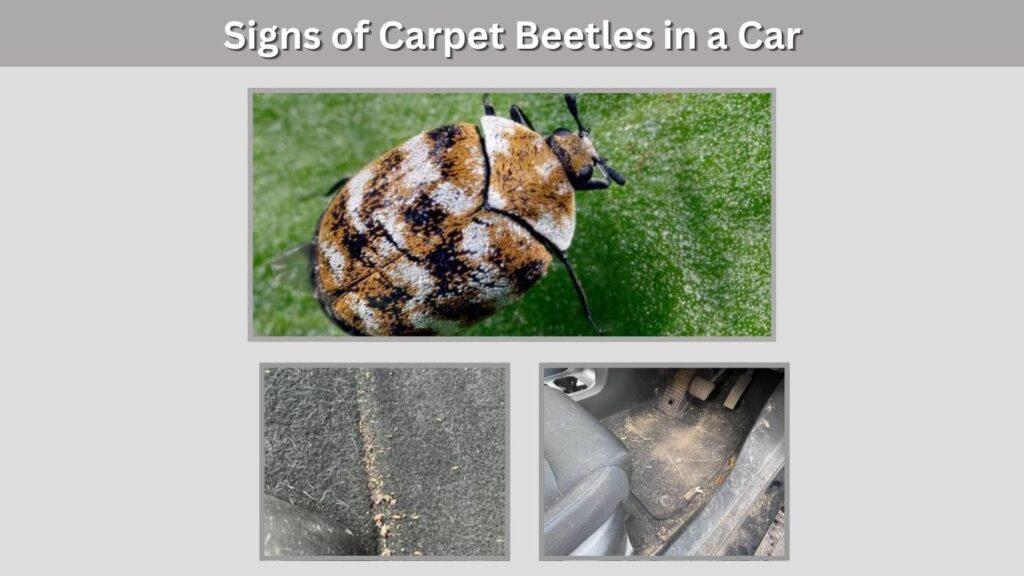
Carpet beetles can occasionally establish themselves inside vehicles when suitable food sources accumulate. Car interiors containing natural-fiber upholstery, pet hair, lint, or organic debris may provide places for larvae to develop.
How to Identify Carpet Beetles in Your Car
Watch for these signs:
- Hairy larvae beneath seats or floor mats.
- Shed larval skins around carpet edges.
- Small beetles near windows.
- Damage to vulnerable natural-fiber materials.
- Larvae among accumulated pet hair and debris.
Inspect seat tracks, storage compartments, floor mats, and difficult-to-reach corners. Finding a beetle inside a vehicle does not necessarily mean it is breeding there.
How to Check for a Carpet Beetle Infestation
Inspecting the right areas is essential because carpet beetle larvae often hide where household cleaning is infrequent.
Step-by-Step Inspection Guide
1. Check closets: Examine stored wool clothing, blankets, and other natural-fiber materials.
2. Inspect carpet edges: Look along baseboards, beneath rugs, and under heavy furniture.
3. Examine upholstery: Search furniture seams and the undersides of upholstered items.
4. Look near windows: Check windowsills for adult beetles.
5. Inspect hidden debris: Examine areas containing pet hair, lint, dead insects, or old bird-nesting materials.
6. Collect suspected insects: Photograph or preserve specimens for identification if necessary.
University extension guidance recommends inspecting concealed feeding locations rather than relying solely on visible adult beetles.
What to Do if You Find Signs of Carpet Beetles
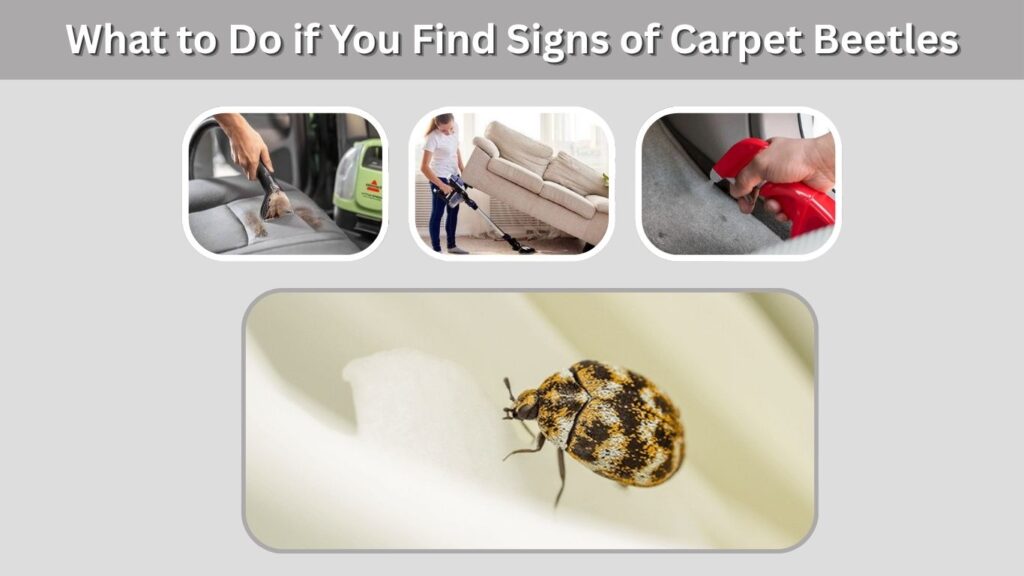
Finding larvae or repeated evidence of feeding should prompt a thorough investigation. The most effective response is to locate the breeding source and remove the materials supporting larval development.
Immediate Carpet Beetle Control Steps
- Vacuum carpets, baseboards, closets, and upholstered furniture thoroughly.
- Wash or dry-clean suitable infested fabrics.
- Remove accumulated pet hair, lint, and dead insects.
- Store cleaned woolens and vulnerable materials in sealed containers.
- Dispose of severely infested items when cleaning is impractical.
- Continue monitoring previously affected areas.
Avoid spraying household pesticides on bedding or clothing. Professional pest control may be helpful when infestations persist despite thorough cleaning.
FAQs
1. Are Carpet Beetles a Sign of a Dirty House?
Not necessarily. Carpet beetles can enter clean homes through open windows, doors, or infested belongings. However, accumulations of lint, pet hair, and organic debris can support larvae, making regular cleaning useful for preventing infestations.
2. What Are the Signs of Black Carpet Beetles?
Black carpet beetle adults are usually dark-colored and oval to elongated. Their larvae are brownish, narrow, and covered with hairs. Finding larvae, shed skins, and damaged natural-fiber materials provides stronger evidence than adult sightings alone.
3. Can Carpet Beetles Live in Your Bed?
Carpet beetle larvae may occasionally occur around bedding, mattress seams, or bed frames when suitable food sources are present. However, they do not feed on human blood and generally prefer materials containing animal fibers or organic debris.
4. Do Carpet Beetles Cause Bite Marks?
No. Carpet beetles do not bite humans. Their larvae have small hairs that can trigger itchy skin reactions in sensitive individuals. These reactions may resemble insect bites, but a rash alone cannot confirm carpet beetle exposure.
5. How Do You Know if Carpet Beetles Are Gone?
A successful cleanup should result in no new larvae, shed skins, or feeding damage. Continue inspecting vulnerable materials and monitoring potential breeding areas. Occasional adult beetles entering from outdoors do not necessarily indicate that an infestation remains.
