
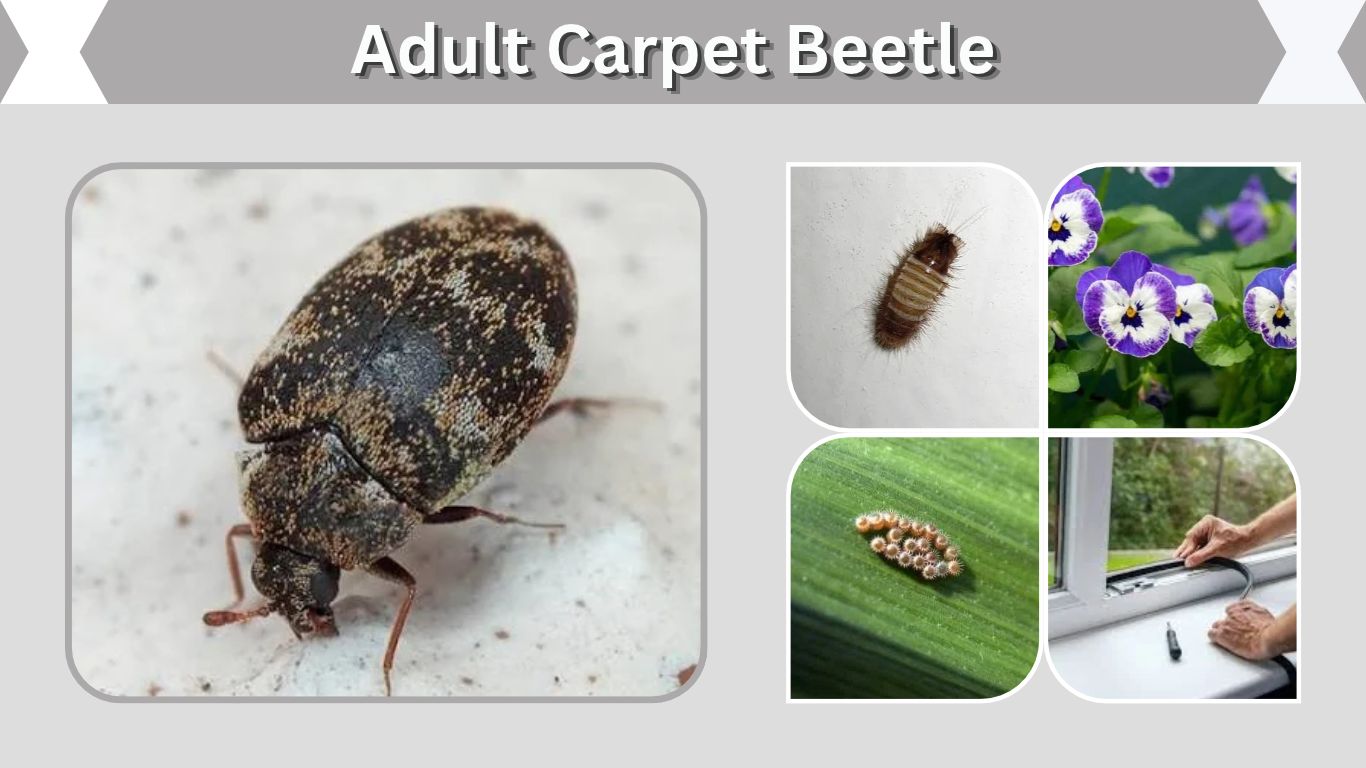
Adult carpet beetles are small, oval-shaped insects commonly found around windows, flowers, and household furniture. Although these beetles may appear harmless, their presence indoors can indicate a hidden infestation of fabric-damaging larvae. Unlike their immature stages, adult carpet beetles primarily feed on pollen and nectar rather than clothing or carpets. Understanding their appearance, behavior, diet, and lifespan can help homeowners identify them correctly and prevent infestations. This guide explains how to recognize adult carpet beetles, distinguish them from larvae, and control them effectively.
What Does an Adult Carpet Beetle Look Like?
Adult carpet beetles are small insects belonging to the family Dermestidae. Their bodies are usually oval or rounded, with hard wing covers and short antennae. Depending on the species, adults may appear black, brown, or patterned with white, yellow, and dark scales.
Adult Carpet Beetle Size and Identification
Most adult carpet beetles measure approximately 2–6 millimeters long. Their exact appearance depends on the species.
Common identification features include:
- Body shape: Small, oval, rounded, or slightly elongated.
- Body color: Black, dark brown, or mottled with lighter markings.
- Wings: Hardened outer wing covers protecting functional flight wings.
- Antennae: Short and typically clubbed near their tips.
- Legs: Six relatively short legs beneath the body.
- Movement: Adults can crawl and fly, particularly in warm conditions.
Their small size often makes them difficult to identify without a magnifying glass.
Adult Black Carpet Beetle Appearance
The adult black carpet beetle (Attagenus unicolor) usually has a dark brown to black body. It is somewhat elongated compared with the more rounded varied carpet beetle.
Adults typically measure around 3–5 millimeters, although size varies. Their relatively uniform coloration distinguishes them from patterned species.
Adult Varied Carpet Beetle Appearance
The adult varied carpet beetle (Anthrenus verbasci) measures approximately 2–3 millimeters long.
Its rounded body features irregular patterns of white, brown, yellow, and black scales. These patterns may fade as the beetle ages, making older adults appear darker and less distinctive.
Adult Carpet Beetle vs. Larvae: Key Differences
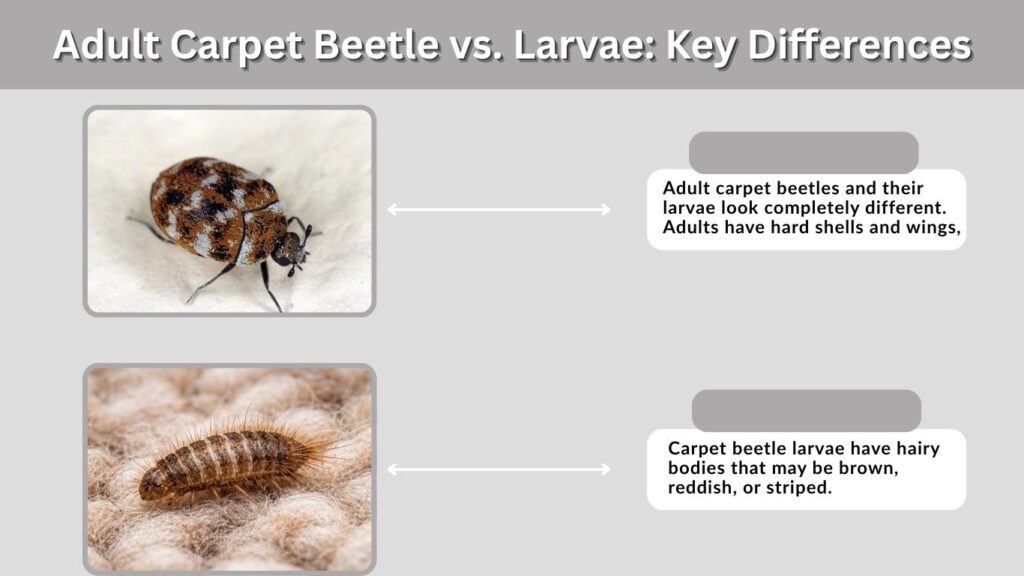
Adult carpet beetles and their larvae look completely different. Adults have hard shells and wings, while larvae are elongated, segmented, and covered with hairs. Understanding these differences helps identify which stage is present and whether household fabrics are at risk.
Physical Differences Between Adults and Larvae
Adult beetles have compact bodies, six legs, short antennae, and functional wings. They usually appear near windows or flowers.
Carpet beetle larvae have hairy bodies that may be brown, reddish, or striped. Depending on the species, mature larvae can be larger than adults.
Larvae cannot fly and generally prefer darker locations such as closets, carpet edges, and furniture.
Which Stage Causes More Damage?
Carpet beetle larvae cause most household damage because they feed on wool, fur, feathers, and other animal-derived materials.
Adult carpet beetles do not normally damage clothing or carpets. Their primary role in household infestations is reproduction, as females lay eggs near food sources suitable for developing larvae.
What Do Adult Carpet Beetles Eat?
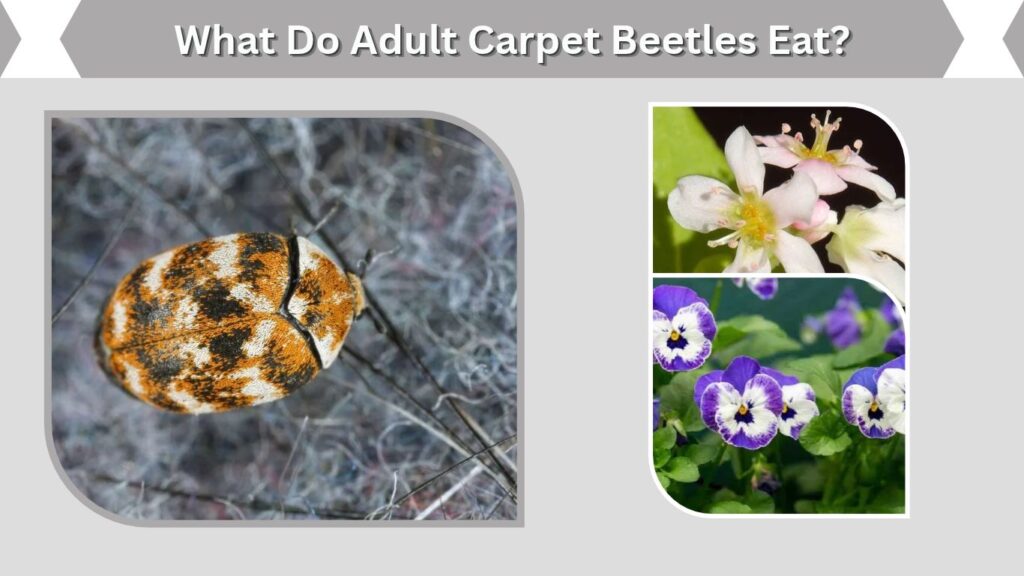
Adult carpet beetles have different feeding habits from their larvae. Most species feed primarily on pollen and nectar outdoors, while some adults feed little or not at all. This difference explains why adults are frequently discovered near flowers rather than damaged clothing.
Do Adult Carpet Beetles Eat Clothes?
No. Adult carpet beetles do not normally eat clothing, carpets, or furniture fabrics.
Their mouthparts and feeding habits differ from those of larvae. Adults generally consume pollen or nectar instead of keratin-rich materials.
However, female beetles may lay eggs near wool clothing, carpets, or other suitable materials. The developing larvae can then feed on these materials and cause damage.
What Do Adult Carpet Beetles Eat Outdoors?
Adult carpet beetles frequently visit flowering plants to feed on pollen and nectar.
They may be found on garden flowers, flowering shrubs, and plants producing abundant pollen.
Their feeding activity outdoors is generally harmless to household belongings. Problems arise when adults enter buildings and reproduce near suitable larval food sources.
Do Adult Carpet Beetles Fly?
Yes, adult carpet beetles can fly. Unlike their crawling larvae, adults have functional wings and can travel between flowers, buildings, and other environments. Flying allows them to disperse and locate suitable places for reproduction.
Why Are Adult Carpet Beetles Near Windows?
Adult carpet beetles are attracted to sunlight and frequently gather around windowsills, glass panes, and curtains.
They may enter through open windows or doors and later attempt to return outdoors.
Finding several adult carpet beetles near a window does not automatically mean an infestation is established. However, repeated sightings should encourage an inspection for hidden larvae.
Can Adult Carpet Beetles Fly Into Houses?
Adult carpet beetles can enter houses through windows, doors, vents, and damaged screens.
They may also arrive accidentally on cut flowers, secondhand furniture, or other household belongings.
Once indoors, females may search for protected areas containing materials that support larval development.
Adult Carpet Beetle Lifespan and Life Cycle
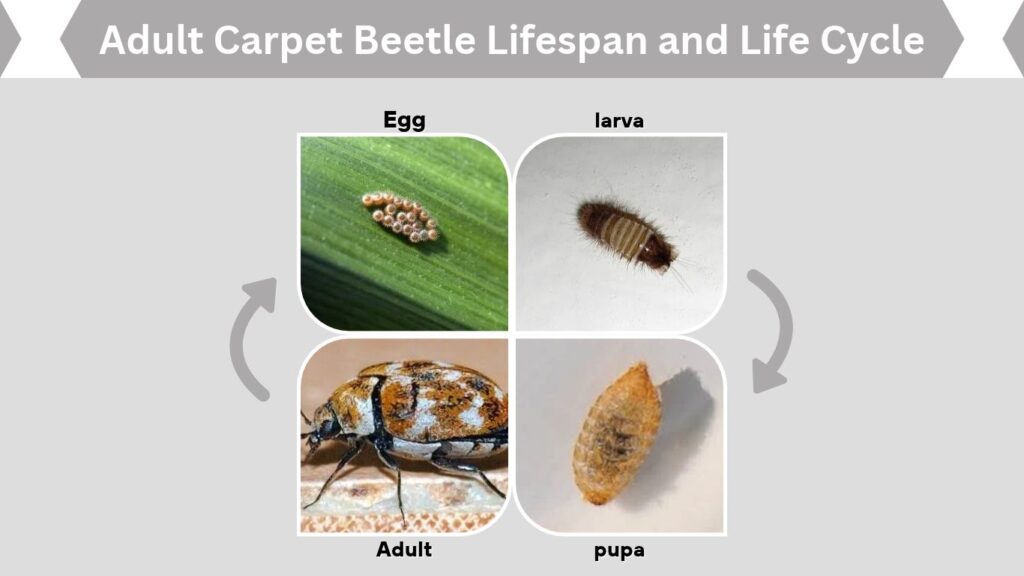
The adult carpet beetle lifespan varies depending on species, temperature, and environmental conditions. Adults generally live for several weeks, while the larval stage may last several months or longer. Carpet beetles undergo complete metamorphosis, passing through four developmental stages.
How Long Do Adult Carpet Beetles Live?
Adult carpet beetles commonly live for approximately two to eight weeks, depending on the species.
For example, female varied carpet beetles may survive two to six weeks, while males often live two to four weeks.
During adulthood, beetles focus primarily on feeding, dispersal, mating, and reproduction.
Carpet Beetle Life Cycle Explained
Carpet beetles develop through four stages: egg, larva, pupa, and adult.
Females lay eggs near suitable larval food sources. After hatching, larvae feed and grow through multiple molts.
The larval stage is usually the longest part of the life cycle. Once development is complete, larvae pupate before emerging as winged adults.
Environmental conditions strongly influence how quickly each stage develops.
Why Am I Finding Adult Carpet Beetles in My House?
Finding adult carpet beetles indoors can have several explanations. Some adults enter accidentally from nearby plants, while others emerge from larvae developing inside the building. Their presence becomes more concerning when accompanied by damaged fabrics, shed larval skins, or recurring sightings.
Finding Adult Carpet Beetles but No Larvae
If you only see adult carpet beetles, they may have entered from outdoors.
Adults are attracted to light and are often more visible than larvae. Therefore, a few sightings do not necessarily indicate an active infestation.
However, hidden larvae may still be present in closets, rugs, or furniture. Inspect these locations before assuming the house is free from infestation.
Finding Carpet Beetle Larvae but No Adults
Finding larvae without adults is also common. Carpet beetle larvae remain hidden in dark areas and can survive for extended periods before becoming adults.
Adult beetles may have already left the building or died after reproducing.
Check nearby materials for feeding damage, discarded larval skins, and accumulated organic debris.
Adult Carpet Beetle vs. Bed Bug
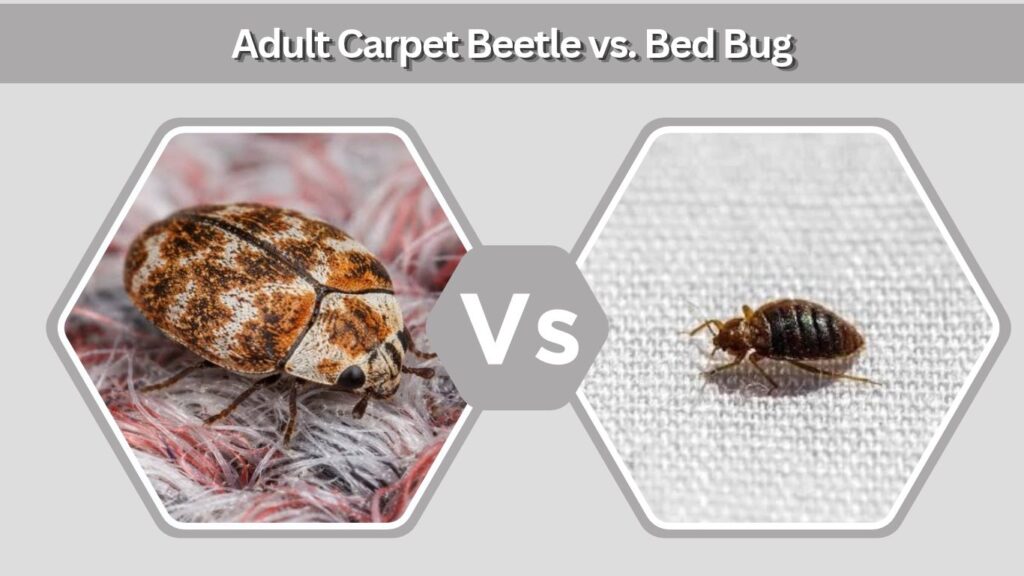
Adult carpet beetles and bed bugs are sometimes confused because both are small household insects. However, their body shapes, feeding habits, and behavior are different. Correct identification is essential because the two pests require different control strategies.
How to Tell Adult Carpet Beetles From Bed Bugs
Important differences include:
- Body shape: Carpet beetles are rounded or oval, while bed bugs are broader and noticeably flattened.
- Color: Carpet beetles may be patterned or dark; bed bugs are generally reddish brown.
- Wings: Adult carpet beetles can fly, but bed bugs cannot.
- Feeding: Carpet beetle adults primarily feed on pollen; bed bugs feed on blood.
- Location: Carpet beetles often gather near windows, while bed bugs hide near sleeping areas.
A close examination or professional identification can confirm the insect species.
How to Get Rid of Adult Carpet Beetles
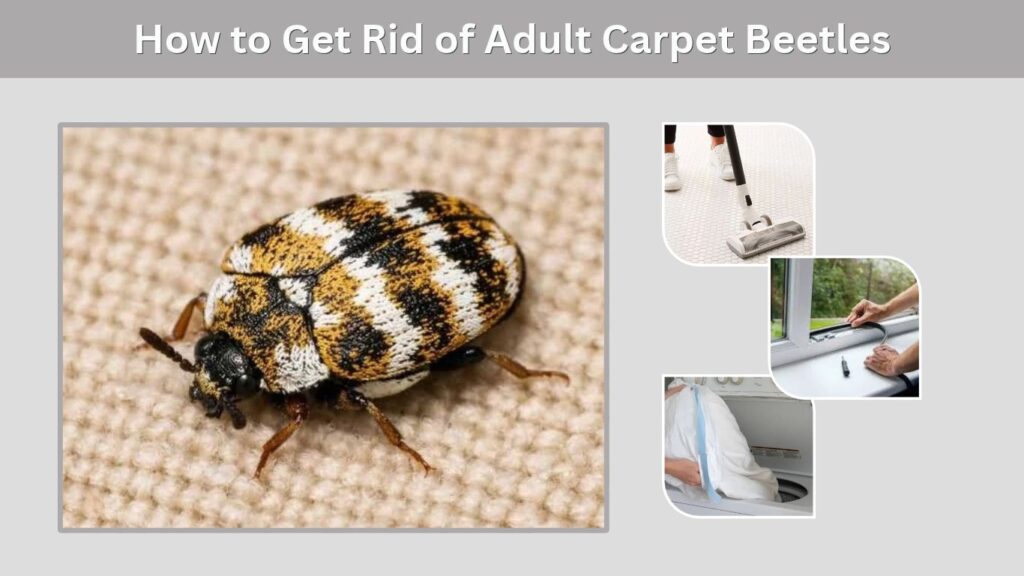
Controlling adult carpet beetles requires more than removing visible insects. Adults may continue appearing if hidden larvae are developing inside carpets, furniture, or stored belongings. Effective control focuses on eliminating larvae and their food sources.
Effective Carpet Beetle Control Methods
Follow these practical steps:
- Vacuum regularly: Clean carpets, windowsills, furniture, and baseboards.
- Inspect natural fabrics: Check wool clothing, rugs, blankets, and upholstery.
- Remove food sources: Eliminate accumulated lint, pet hair, and dead insects.
- Clean infested clothing: Wash or dry-clean fabrics according to care instructions.
- Seal entry points: Repair damaged screens and close gaps around windows.
- Store vulnerable items properly: Use airtight containers for clean wool and other susceptible materials.
These methods help reduce existing populations and prevent future infestations.
When Is Professional Treatment Necessary?
Professional treatment may be appropriate when adult carpet beetles repeatedly appear alongside numerous larvae or significant fabric damage.
A pest control specialist can locate hidden breeding sites and recommend targeted treatments.
Spraying visible adults without addressing larvae and their food sources may fail to eliminate the infestation.
FAQs
1. Do Adult Carpet Beetles Bite Humans?
No. Adult carpet beetles do not bite or sting humans. However, some people experience allergic skin reactions after contact with irritating hairs from carpet beetle larvae. These reactions can resemble insect bites, making the actual cause difficult to identify.
2. Are Adult Carpet Beetles Harmful?
Adult carpet beetles are not directly harmful to people or clothing. However, they can reproduce indoors, producing larvae that damage wool, fur, feathers, and other animal-based materials. Finding numerous adults may indicate the need to inspect hidden household areas.
3. Are Carpet Beetle Larvae Bigger Than Adults?
Yes, mature carpet beetle larvae can be larger than adult beetles, depending on the species. Some larvae reach approximately 5–8 millimeters long, while adults may measure only 2–5 millimeters. Their elongated, hairy bodies also make them appear noticeably different.
4. How Many Adult Carpet Beetles Indicate an Infestation?
There is no specific number that confirms a carpet beetle infestation. One or two adults may have entered accidentally. However, repeated sightings combined with larvae, discarded skins, or damaged fabrics provide stronger evidence of active indoor reproduction.
5. Why Do I Keep Finding Adult Carpet Beetles on Windowsills?
Adult carpet beetles are attracted to sunlight, which explains why they commonly gather near windows. Some enter from outdoors, while others emerge from hidden indoor breeding areas. Frequent sightings should prompt an inspection of carpets, stored fabrics, and furniture.
Adult carpet beetles are small, oval-shaped insects commonly found around windows, flowers, and household furniture. Although these beetles may appear harmless, their presence indoors can indicate a hidden infestation of fabric-damaging larvae. Unlike their immature stages, adult carpet beetles primarily feed on pollen and nectar rather than clothing or carpets. Understanding their appearance, behavior, diet, and lifespan can help homeowners identify them correctly and prevent infestations. This guide explains how to recognize adult carpet beetles, distinguish them from larvae, and control them effectively.
What Does an Adult Carpet Beetle Look Like?
Adult carpet beetles are small insects belonging to the family Dermestidae. Their bodies are usually oval or rounded, with hard wing covers and short antennae. Depending on the species, adults may appear black, brown, or patterned with white, yellow, and dark scales.
Adult Carpet Beetle Size and Identification
Most adult carpet beetles measure approximately 2–6 millimeters long. Their exact appearance depends on the species.
Common identification features include:
- Body shape: Small, oval, rounded, or slightly elongated.
- Body color: Black, dark brown, or mottled with lighter markings.
- Wings: Hardened outer wing covers protecting functional flight wings.
- Antennae: Short and typically clubbed near their tips.
- Legs: Six relatively short legs beneath the body.
- Movement: Adults can crawl and fly, particularly in warm conditions.
Their small size often makes them difficult to identify without a magnifying glass.
Adult Black Carpet Beetle Appearance
The adult black carpet beetle (Attagenus unicolor) usually has a dark brown to black body. It is somewhat elongated compared with the more rounded varied carpet beetle.
Adults typically measure around 3–5 millimeters, although size varies. Their relatively uniform coloration distinguishes them from patterned species.
Adult Varied Carpet Beetle Appearance
The adult varied carpet beetle (Anthrenus verbasci) measures approximately 2–3 millimeters long.
Its rounded body features irregular patterns of white, brown, yellow, and black scales. These patterns may fade as the beetle ages, making older adults appear darker and less distinctive.
Adult Carpet Beetle vs. Larvae: Key Differences
Adult carpet beetles and their larvae look completely different. Adults have hard shells and wings, while larvae are elongated, segmented, and covered with hairs. Understanding these differences helps identify which stage is present and whether household fabrics are at risk.
Physical Differences Between Adults and Larvae
Adult beetles have compact bodies, six legs, short antennae, and functional wings. They usually appear near windows or flowers.
Carpet beetle larvae have hairy bodies that may be brown, reddish, or striped. Depending on the species, mature larvae can be larger than adults.
Larvae cannot fly and generally prefer darker locations such as closets, carpet edges, and furniture.
Which Stage Causes More Damage?
Carpet beetle larvae cause most household damage because they feed on wool, fur, feathers, and other animal-derived materials.
Adult carpet beetles do not normally damage clothing or carpets. Their primary role in household infestations is reproduction, as females lay eggs near food sources suitable for developing larvae.
What Do Adult Carpet Beetles Eat?
Adult carpet beetles have different feeding habits from their larvae. Most species feed primarily on pollen and nectar outdoors, while some adults feed little or not at all. This difference explains why adults are frequently discovered near flowers rather than damaged clothing.
Do Adult Carpet Beetles Eat Clothes?
No. Adult carpet beetles do not normally eat clothing, carpets, or furniture fabrics.
Their mouthparts and feeding habits differ from those of larvae. Adults generally consume pollen or nectar instead of keratin-rich materials.
However, female beetles may lay eggs near wool clothing, carpets, or other suitable materials. The developing larvae can then feed on these materials and cause damage.
What Do Adult Carpet Beetles Eat Outdoors?
Adult carpet beetles frequently visit flowering plants to feed on pollen and nectar.
They may be found on garden flowers, flowering shrubs, and plants producing abundant pollen.
Their feeding activity outdoors is generally harmless to household belongings. Problems arise when adults enter buildings and reproduce near suitable larval food sources.
Do Adult Carpet Beetles Fly?
Yes, adult carpet beetles can fly. Unlike their crawling larvae, adults have functional wings and can travel between flowers, buildings, and other environments. Flying allows them to disperse and locate suitable places for reproduction.
Why Are Adult Carpet Beetles Near Windows?
Adult carpet beetles are attracted to sunlight and frequently gather around windowsills, glass panes, and curtains.
They may enter through open windows or doors and later attempt to return outdoors.
Finding several adult carpet beetles near a window does not automatically mean an infestation is established. However, repeated sightings should encourage an inspection for hidden larvae.
Can Adult Carpet Beetles Fly Into Houses?
Adult carpet beetles can enter houses through windows, doors, vents, and damaged screens.
They may also arrive accidentally on cut flowers, secondhand furniture, or other household belongings.
Once indoors, females may search for protected areas containing materials that support larval development.
Adult Carpet Beetle Lifespan and Life Cycle
The adult carpet beetle lifespan varies depending on species, temperature, and environmental conditions. Adults generally live for several weeks, while the larval stage may last several months or longer. Carpet beetles undergo complete metamorphosis, passing through four developmental stages.
How Long Do Adult Carpet Beetles Live?
Adult carpet beetles commonly live for approximately two to eight weeks, depending on the species.
For example, female varied carpet beetles may survive two to six weeks, while males often live two to four weeks.
During adulthood, beetles focus primarily on feeding, dispersal, mating, and reproduction.
Carpet Beetle Life Cycle Explained
Carpet beetles develop through four stages: egg, larva, pupa, and adult.
Females lay eggs near suitable larval food sources. After hatching, larvae feed and grow through multiple molts.
The larval stage is usually the longest part of the life cycle. Once development is complete, larvae pupate before emerging as winged adults.
Environmental conditions strongly influence how quickly each stage develops.
Why Am I Finding Adult Carpet Beetles in My House?
Finding adult carpet beetles indoors can have several explanations. Some adults enter accidentally from nearby plants, while others emerge from larvae developing inside the building. Their presence becomes more concerning when accompanied by damaged fabrics, shed larval skins, or recurring sightings.
Finding Adult Carpet Beetles but No Larvae
If you only see adult carpet beetles, they may have entered from outdoors.
Adults are attracted to light and are often more visible than larvae. Therefore, a few sightings do not necessarily indicate an active infestation.
However, hidden larvae may still be present in closets, rugs, or furniture. Inspect these locations before assuming the house is free from infestation.
Finding Carpet Beetle Larvae but No Adults
Finding larvae without adults is also common. Carpet beetle larvae remain hidden in dark areas and can survive for extended periods before becoming adults.
Adult beetles may have already left the building or died after reproducing.
Check nearby materials for feeding damage, discarded larval skins, and accumulated organic debris.
Adult Carpet Beetle vs. Bed Bug
Adult carpet beetles and bed bugs are sometimes confused because both are small household insects. However, their body shapes, feeding habits, and behavior are different. Correct identification is essential because the two pests require different control strategies.
How to Tell Adult Carpet Beetles From Bed Bugs
Important differences include:
- Body shape: Carpet beetles are rounded or oval, while bed bugs are broader and noticeably flattened.
- Color: Carpet beetles may be patterned or dark; bed bugs are generally reddish brown.
- Wings: Adult carpet beetles can fly, but bed bugs cannot.
- Feeding: Carpet beetle adults primarily feed on pollen; bed bugs feed on blood.
- Location: Carpet beetles often gather near windows, while bed bugs hide near sleeping areas.
A close examination or professional identification can confirm the insect species.
How to Get Rid of Adult Carpet Beetles
Controlling adult carpet beetles requires more than removing visible insects. Adults may continue appearing if hidden larvae are developing inside carpets, furniture, or stored belongings. Effective control focuses on eliminating larvae and their food sources.
Effective Carpet Beetle Control Methods
Follow these practical steps:
- Vacuum regularly: Clean carpets, windowsills, furniture, and baseboards.
- Inspect natural fabrics: Check wool clothing, rugs, blankets, and upholstery.
- Remove food sources: Eliminate accumulated lint, pet hair, and dead insects.
- Clean infested clothing: Wash or dry-clean fabrics according to care instructions.
- Seal entry points: Repair damaged screens and close gaps around windows.
- Store vulnerable items properly: Use airtight containers for clean wool and other susceptible materials.
These methods help reduce existing populations and prevent future infestations.
When Is Professional Treatment Necessary?
Professional treatment may be appropriate when adult carpet beetles repeatedly appear alongside numerous larvae or significant fabric damage.
A pest control specialist can locate hidden breeding sites and recommend targeted treatments.
Spraying visible adults without addressing larvae and their food sources may fail to eliminate the infestation.
FAQs
1. Do Adult Carpet Beetles Bite Humans?
No. Adult carpet beetles do not bite or sting humans. However, some people experience allergic skin reactions after contact with irritating hairs from carpet beetle larvae. These reactions can resemble insect bites, making the actual cause difficult to identify.
2. Are Adult Carpet Beetles Harmful?
Adult carpet beetles are not directly harmful to people or clothing. However, they can reproduce indoors, producing larvae that damage wool, fur, feathers, and other animal-based materials. Finding numerous adults may indicate the need to inspect hidden household areas.
3. Are Carpet Beetle Larvae Bigger Than Adults?
Yes, mature carpet beetle larvae can be larger than adult beetles, depending on the species. Some larvae reach approximately 5–8 millimeters long, while adults may measure only 2–5 millimeters. Their elongated, hairy bodies also make them appear noticeably different.
4. How Many Adult Carpet Beetles Indicate an Infestation?
There is no specific number that confirms a carpet beetle infestation. One or two adults may have entered accidentally. However, repeated sightings combined with larvae, discarded skins, or damaged fabrics provide stronger evidence of active indoor reproduction.
5. Why Do I Keep Finding Adult Carpet Beetles on Windowsills?
Adult carpet beetles are attracted to sunlight, which explains why they commonly gather near windows. Some enter from outdoors, while others emerge from hidden indoor breeding areas. Frequent sightings should prompt an inspection of carpets, stored fabrics, and furniture.
