
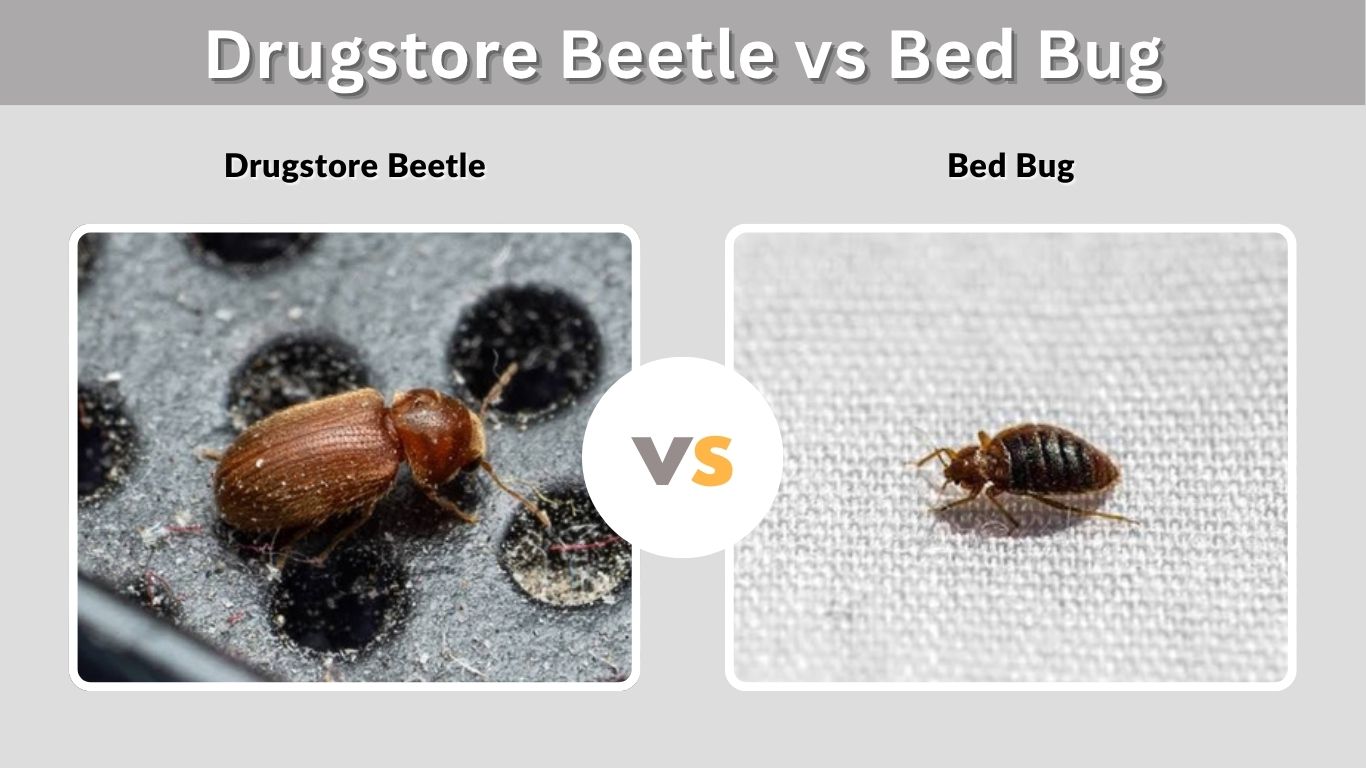
Drugstore beetles and bed bugs are small, brown household insects that can look surprisingly similar at first glance. However, their feeding habits, body shapes, hiding places, and potential risks are very different. Drugstore beetles typically infest dried foods, while bed bugs feed on human and animal blood. Other insects, including cigarette beetles and carpet beetles, can also cause identification confusion. Understanding these differences is important for choosing the correct pest control methods. This guide compares drugstore beetles with similar household pests, covering appearance, behavior, infestation signs, and removal techniques.
Drugstore Beetle vs Bed Bug: What’s the Difference?
Drugstore beetles and bed bugs differ significantly in their appearance, diet, and behavior. Although both are brown and relatively small, drugstore beetles have hard wing covers and can fly, while bed bugs have flattened bodies and cannot fly.
Drugstore Beetle vs Bed Bug Comparison
| Feature | Drugstore Beetle | Bed Bug |
| Scientific Name | Stegobium paniceum | Cimex lectularius |
| Size | 2.25–3.5 mm | 5–7 mm (adults) |
| Body Shape | Rounded, cylindrical | Flat, oval |
| Color | Brown to reddish-brown | Brown to reddish-brown |
| Wings | Functional wings | No functional wings |
| Can Fly | Yes | No |
| Diet | Dried food and stored products | Blood |
| Bites Humans | No, not normally | Yes |
| Common Location | Pantry, kitchen | Beds, furniture |
| Main Problem | Food contamination | Bites and irritation |
How to Identify Them Quickly
A drugstore beetle has a rounded, slightly humpbacked appearance. Its head is usually hidden beneath the thorax when viewed from above.
Bed bugs have broad, flattened bodies with visible abdominal segments. After feeding, their bodies become swollen and more elongated.
If the insect flies, it is not a bed bug.
Drugstore Beetle Identification
Drugstore beetles are small pantry pests belonging to the family Ptinidae. Their reddish-brown bodies, downward-facing heads, and grooved wing covers distinguish them from many other household insects.
Common Drugstore Beetle Characteristics
- Body Length: Approximately 2.25–3.5 mm
- Color: Brown or reddish-brown
- Shape: Oval and cylindrical
- Head: Mostly hidden when viewed from above
- Antennae: End in a three-segmented club
- Wing Covers: Fine longitudinal grooves
- Larvae: Small, creamy-white, C-shaped grubs
- Habitat: Pantries, kitchens, and stored food areas
Do Drugstore Beetles Bite Like Bed Bugs?
Drugstore beetles do not normally bite humans. Their mouthparts are adapted for feeding on dried materials rather than piercing skin.
Bed bugs possess specialized mouthparts for taking blood meals. Their bites can cause itching, swelling, and skin irritation.
Finding a drugstore beetle in your bedroom does not necessarily mean you have a bed bug infestation.
Cigarette Beetle vs Drugstore Beetle
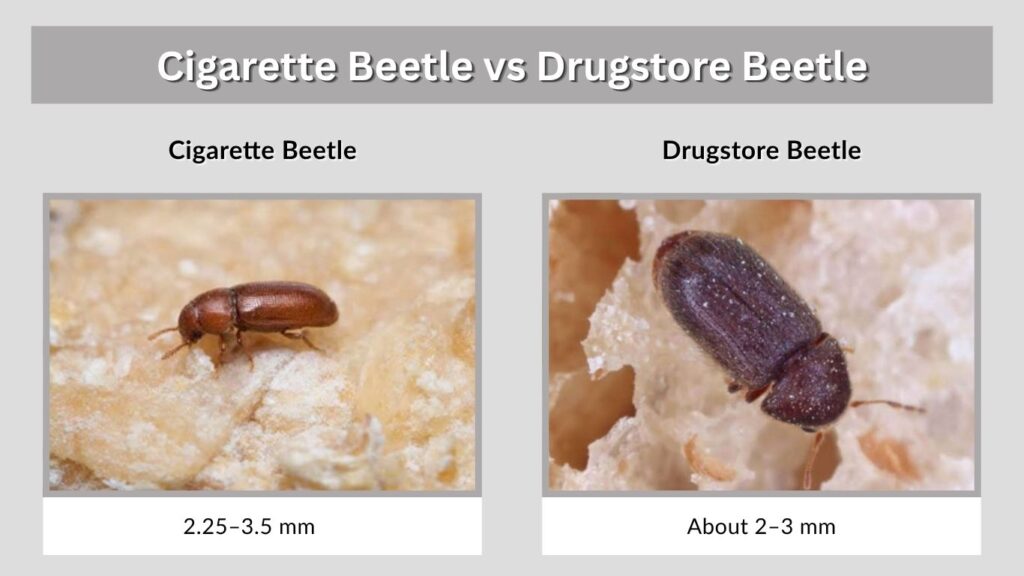
Cigarette beetles and drugstore beetles are closely related pantry pests. Both have small reddish-brown bodies, rounded thoraxes, and similar feeding habits.
However, their antennae and wing-cover textures provide reliable identification differences.
Cigarette Beetle vs Drugstore Beetle Comparison
| Feature | Drugstore Beetle | Cigarette Beetle |
| Scientific Name | Stegobium paniceum | Lasioderma serricorne |
| Size | 2.25–3.5 mm | About 2–3 mm |
| Body Shape | More elongated | More rounded |
| Antennae | Three-segmented club | Saw-like segments |
| Wing Covers | Grooved | Relatively smooth |
| Color | Brown to reddish-brown | Reddish-brown |
| Main Food | Flour, spices, dried foods | Tobacco, spices, dried foods |
| Flight Ability | Can fly | Can fly |
How Can You Tell Them Apart?
The easiest identification method is examining the antennae under magnification.
Drugstore beetles have three enlarged segments near the antenna tips. Cigarette beetles have serrated antennae resembling tiny saw blades.
Drugstore beetles also have visible lines running lengthwise along their wing covers. Cigarette beetles lack these distinct grooves.
Both species require similar sanitation and stored-food management practices.
Drugstore Beetle vs Carpet Beetle
Drugstore beetles and carpet beetles occasionally appear in the same rooms, particularly near windows and storage areas. However, their larvae have different feeding preferences and appearances.
Carpet beetles commonly damage natural fibers and other animal-derived materials, while drugstore beetles mainly infest dried products.
Drugstore Beetle vs Carpet Beetle Comparison
| Feature | Drugstore Beetle | Carpet Beetle |
| Family | Ptinidae | Dermestidae |
| Adult Color | Uniform brown | Black, brown, or patterned |
| Adult Body | Cylindrical | Oval or rounded |
| Larvae | Creamy-white, curved | Brownish, hairy |
| Common Food | Dry pantry products | Wool, fur, feathers, some stored foods |
| Main Damage | Food contamination | Fabric and stored-material damage |
| Can Fly | Yes | Yes |
| Bites Humans | No | No |
Carpet Beetle Larva vs Drugstore Beetle Larva
Drugstore beetle larvae are small, pale, curved grubs with short hairs.
Carpet beetle larvae are usually darker, elongated, and covered with noticeable bristles. Some species have distinctive tufts of hairs near the rear of their bodies.
Carpet beetle larval hairs can cause skin irritation in sensitive individuals, even though these insects do not bite.
Drugstore Beetle vs Weevil and Furniture Beetle
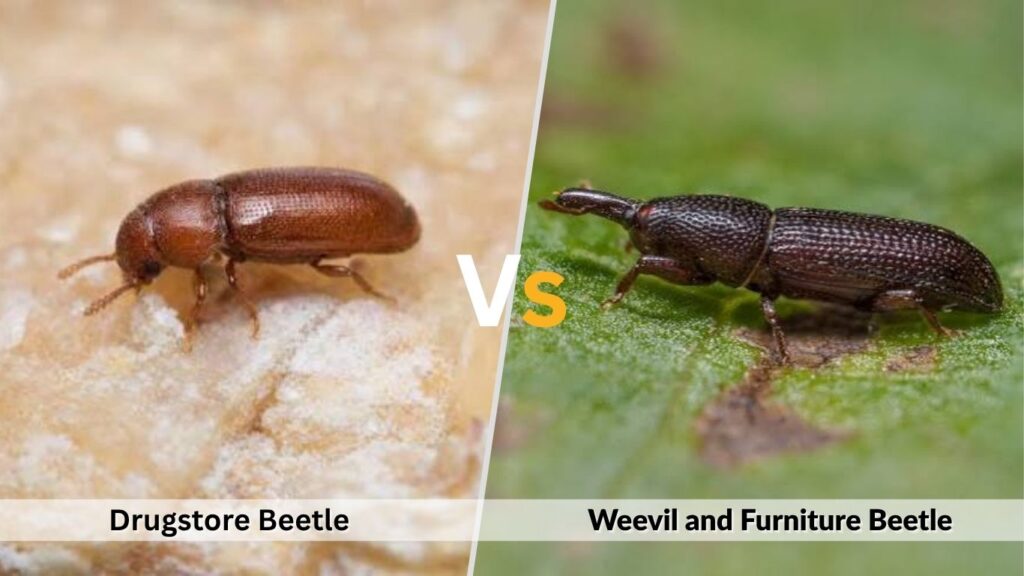
Drugstore beetles can also resemble grain weevils and certain wood-boring beetles. Identifying their feeding habits and physical characteristics helps determine which pest is present.
Drugstore Beetle vs Weevil
Many grain weevils have an elongated snout that distinguishes them from drugstore beetles.
Rice and granary weevils commonly develop inside whole grains. Drugstore beetles infest a wider range of dried materials, including flour, spices, and pet food.
Drugstore Beetle vs Furniture Beetle
The common furniture beetle (Anobium punctatum) is a wood-boring species associated with timber damage.
Drugstore beetles primarily infest stored products, although they may occasionally damage books and other dry materials.
Repeated emergence holes in structural wood suggest a different pest problem requiring proper identification.
Signs of Drugstore Beetles vs Bed Bugs
Infestation signs provide useful clues when insects are difficult to identify. Drugstore beetles usually leave evidence in stored products, while bed bugs produce signs around sleeping and resting areas.
Signs of Drugstore Beetles
- Small brown beetles crawling inside cupboards
- Tiny holes in food packaging
- Cream-colored larvae inside dried products
- Damaged spices, flour, or pet food
- Flying adults gathering near windows
- Fine food debris inside contaminated containers
Signs of Bed Bugs
Bed bugs commonly hide in mattress seams, bed frames, furniture joints, and cracks near sleeping areas.
Typical signs include dark fecal spots, shed skins, and occasional blood stains on bedding.
Live bed bugs may also be found hiding near mattresses. However, itchy skin alone cannot confirm an infestation because many conditions cause similar reactions.
How to Get Rid of Drugstore Beetles and Similar Pests

Different insects require different treatments. Using the wrong pest control method may allow an infestation to continue.
Proper identification should always come before applying insecticides.
Effective Household Pest Control Steps
- Identify the insect: Examine its body shape, antennae, wings, and hiding location.
- Inspect affected materials: Check pantry products for drugstore beetles and bedding for bed bugs.
- Remove infested products: Discard contaminated dry foods and other heavily infested materials.
- Vacuum thoroughly: Clean cabinets, cracks, furniture edges, and other affected areas.
- Use secure containers: Store vulnerable food products in airtight glass, metal, or sturdy plastic containers.
- Monitor activity: Use appropriate traps or inspections to determine whether insects remain.
- Contact a professional: Seek qualified assistance when bed bugs or persistent infestations are suspected.
How to Prevent Drugstore Beetles and Other Household Pests
Regular cleaning, appropriate storage, and early identification help reduce household insect problems.
Keep pantry shelves free from spilled food and inspect newly purchased dry products.
Vacuum carpets and furniture regularly to reduce materials that support carpet beetle larvae.
For bed bugs, inspect luggage and sleeping areas when traveling, and avoid bringing unidentified infested furniture indoors.
FAQs
1. Can Drugstore Beetles Be Mistaken for Bed Bugs?
Yes, drugstore beetles may be mistaken for bed bugs because both are small and brown. However, drugstore beetles have rounded bodies and can fly, while bed bugs are flatter, larger as adults, and lack functional wings.
2. What Is the Difference Between Cigarette and Drugstore Beetles?
Drugstore beetles have grooved wing covers and antennae ending in three enlarged segments. Cigarette beetles have smoother wing covers and saw-like antennae. Both species infest dried products and can spread through stored food areas.
3. Are Drugstore Beetles More Dangerous Than Carpet Beetles?
Neither insect normally bites humans. Drugstore beetles primarily contaminate stored food, while carpet beetle larvae can damage fabrics and cause irritation through their hairs. The severity of a problem depends on the infestation and affected materials.
4. Why Are Drugstore Beetles Found in My Bed?
Drugstore beetles may accidentally enter bedrooms because adults can fly toward lights. Hidden snacks, pet treats, or dried decorative materials may also attract them. Their presence in a bed does not automatically indicate an infestation originating there.
5. How Can You Tell a Drugstore Beetle From a Bed Bug?
Examine the insect’s shape and behavior. Drugstore beetles are small, cylindrical, and capable of flying. Bed bugs are flattened, wingless, and feed on blood. Checking pantry products and mattress seams can provide additional identification clues.
