
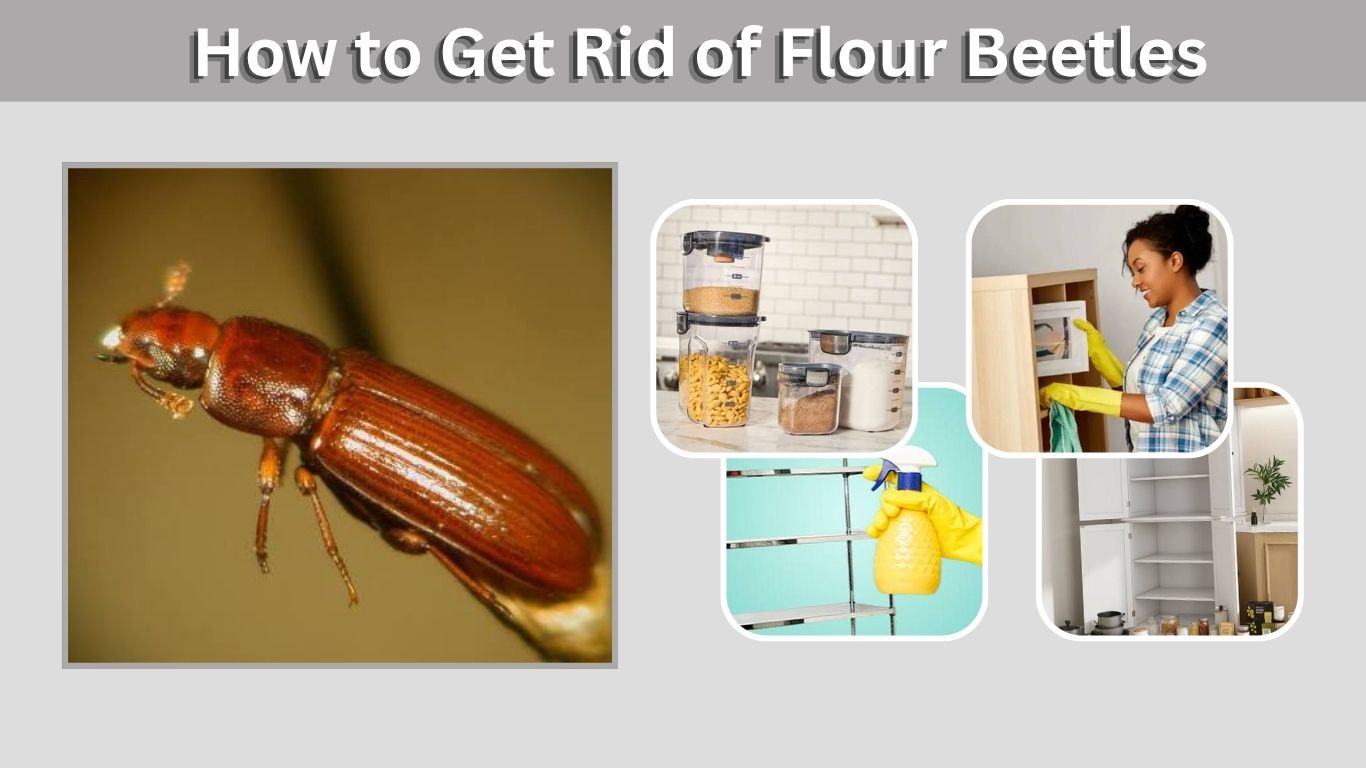
Flour beetles are common pantry pests that infest flour, cereals, rice, pasta, and other stored food products. Finding these tiny reddish-brown insects crawling through your kitchen cabinets can be frustrating, especially when they spread between food packages. Getting rid of flour beetles requires more than killing the visible adults. You must locate contaminated food, remove hidden eggs and larvae, clean storage areas, and prevent new infestations. Fortunately, several practical methods can help eliminate these pests without relying on chemical sprays.
Why Are Flour Beetles in Your House?
Flour beetles usually enter homes through contaminated food packaging. Eggs or larvae may already be present in flour, cereal, grains, and other dried products when they are purchased. Once inside, the insects reproduce and spread to nearby food packages, making an infestation difficult to detect initially.
Common Foods That Attract Flour Beetles
Flour beetles feed on processed grain products and other dry foods. Check these items carefully when searching for an infestation:
- Flour: Wheat flour, cornmeal, and other milled grain products.
- Cereal: Breakfast cereals, oatmeal, and grain-based snacks.
- Rice and pasta: Broken rice, macaroni, and other stored grain products.
- Baking ingredients: Cake mixes, breadcrumbs, crackers, and baking powders.
- Dried foods: Nuts, seeds, dried fruits, and chocolate.
- Pet food: Dry dog food, cat food, and birdseed.
- Spices: Dried herbs, seasoning powders, and chili products.
How Do Flour Beetles Get Into Your House?
Most flour beetle infestations begin with contaminated food products purchased from grocery stores, supermarkets, or warehouses. Small eggs and larvae can remain hidden inside packaging and develop after the products enter your home.
Adult beetles may also crawl from one package to another through cabinet cracks, food debris, and storage areas. They can eventually appear in bedrooms, bathrooms, and other rooms while searching for food.
How to Get Rid of Flour Beetles Step by Step
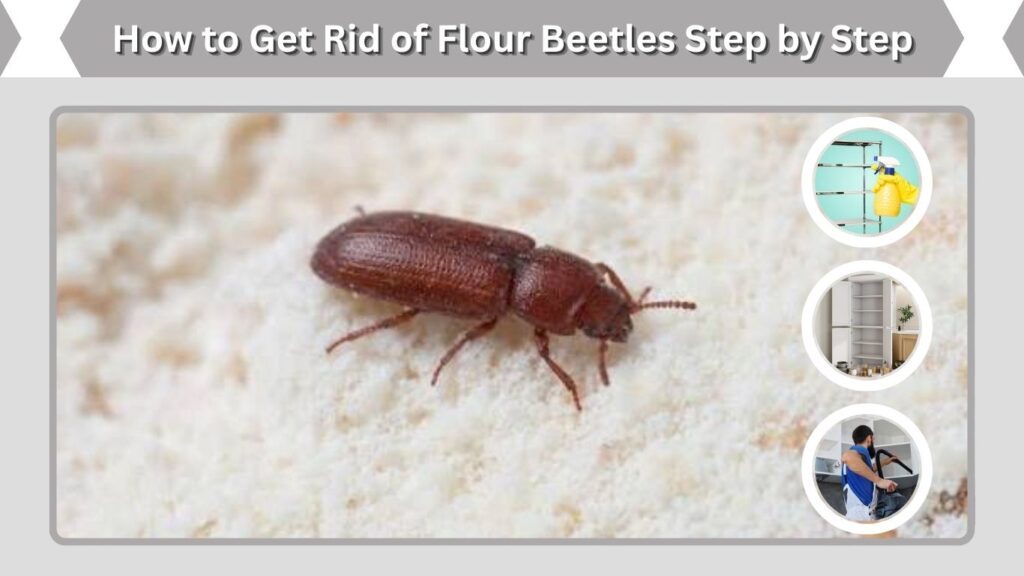
The most effective way to eliminate flour beetles is to remove their food source and clean the surrounding storage areas. Adult beetles, larvae, and eggs can hide inside food packages and cabinet corners. Following a systematic cleanup process helps eliminate the existing population and reduces the possibility of another infestation.
1. Find and Remove Infested Food
Start by emptying your pantry, kitchen cabinets, and food storage shelves. Examine every package carefully, including unopened products, because flour beetles can remain hidden inside packaging.
Look for live beetles, small larvae, shed insect skins, and unusual movement in flour or cereal. Place heavily infested products in sealed plastic bags and discard them in an outdoor garbage container.
Do not simply remove the visible beetles and continue using contaminated food. Removing the infested products is the most important step in controlling these pests.
2. Vacuum Kitchen Cabinets and Shelves
After removing contaminated food, thoroughly vacuum the storage areas. Pay particular attention to corners, shelf joints, cabinet hinges, cracks, and small openings where flour particles and insects accumulate.
Use a narrow vacuum attachment to reach difficult areas. Empty the vacuum canister or discard its bag outdoors immediately after cleaning so that surviving insects cannot return.
3. Wash Pantry Surfaces
Once vacuuming is complete, wash the shelves, drawers, and storage containers with warm, soapy water. Remove spilled flour, grain dust, and other food particles that could support surviving insects.
Allow everything to dry completely before replacing food products. Cleaning removes food residues and helps eliminate insects that remain on accessible surfaces.
4. Freeze Susceptible Dry Foods
Freezing can kill flour beetles and their immature stages in suitable stored food products. If you have an unaffected product that you want to protect, place it in a freezer at approximately 0°F (-18°C) for at least one week.
However, heavily infested or contaminated food should be discarded rather than salvaged. Keep products sealed during freezing to reduce moisture problems when they are removed.
5. Store Remaining Food Properly
Transfer unaffected flour, rice, cereals, and other susceptible products into airtight containers. Glass jars, metal canisters, and sturdy plastic containers with tightly fitting lids help prevent insects from entering or spreading between packages.
Avoid relying on thin plastic bags, paper packaging, or loosely closed cardboard boxes for long-term storage.
Natural Ways to Get Rid of Flour Beetles
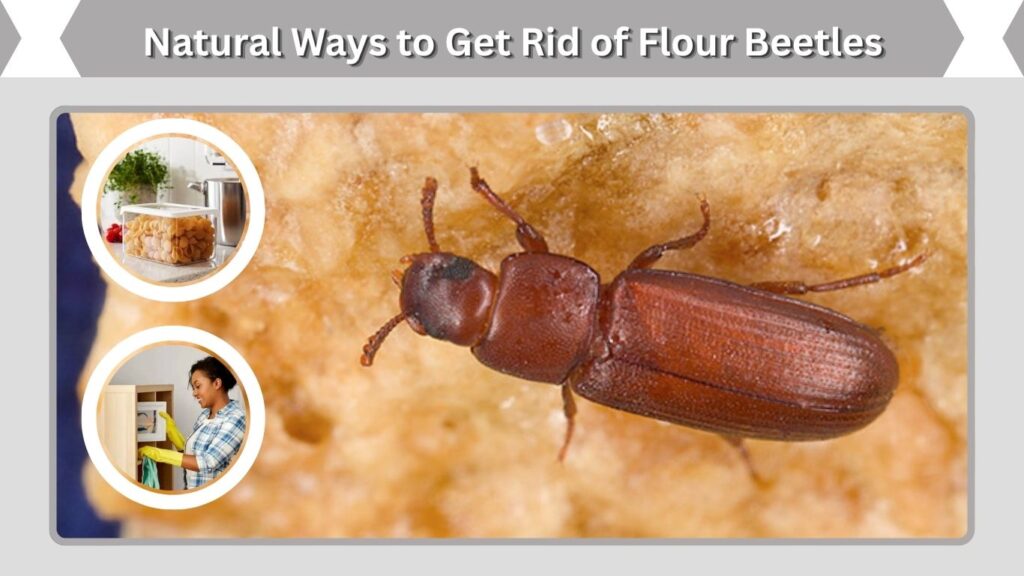
Natural control methods can help manage flour beetles without exposing food storage areas to unnecessary pesticides. However, home remedies are not a substitute for removing contaminated products and cleaning hidden food debris. The most effective approach combines sanitation, physical removal, and proper food storage.
Use a Vacuum Cleaner
Vacuuming is one of the most useful nonchemical methods for removing adult beetles, larvae, and loose food particles. Focus on cabinet corners, cracks, shelf edges, and areas beneath appliances.
Use Airtight Food Containers
Keeping food in sealed glass or hard plastic containers prevents surviving beetles from reaching new food sources. Wash containers before refilling them, especially if they previously held contaminated flour or cereals.
Use Sticky Beetle Traps
Stored-product beetle monitoring traps can help detect adult flour beetles and identify areas where activity continues. Choose traps specifically labeled for the target beetle species.
Remember that traps cannot eliminate eggs and larvae inside infested food. They work best alongside food removal and thorough cleaning.
Keep the Pantry Dry and Clean
Remove spilled flour, cereal crumbs, and other food residues regularly. Store dry products in a cool, dry location and avoid overcrowding shelves with forgotten packages.
How to Prevent Flour Beetles From Coming Back
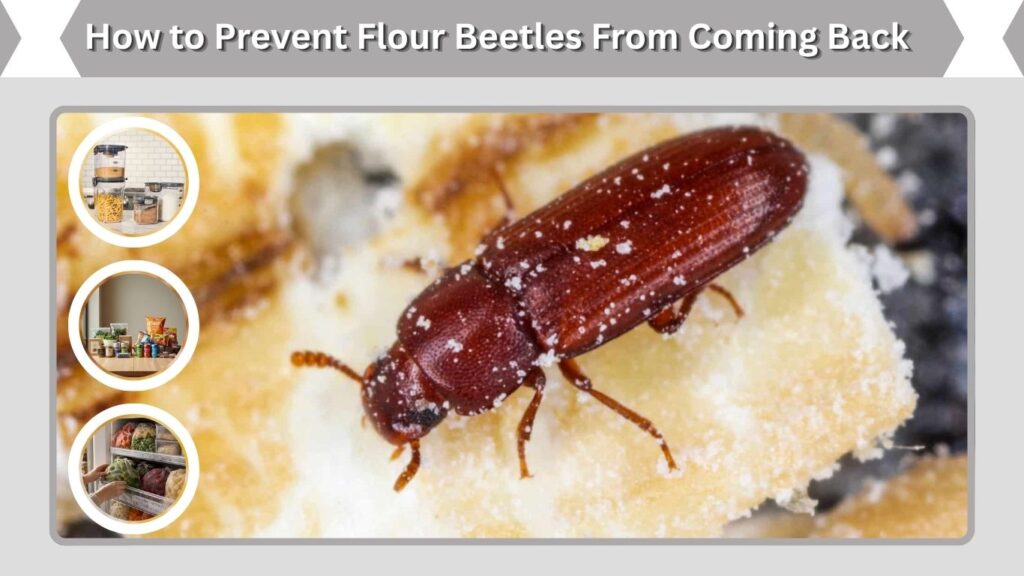
Preventing another infestation requires consistent food storage and pantry maintenance. Even after removing the original source, a few insects may remain hidden in cracks or overlooked food packages. Regular inspections and appropriate storage practices help reduce the chances of flour beetles returning.
Effective Prevention Tips
- Inspect new packages: Examine flour, cereals, grains, and pet food before bringing them into your pantry.
- Use airtight containers: Keep susceptible dry foods in sealed glass, metal, or sturdy plastic containers.
- Clean shelves regularly: Remove crumbs, spilled flour, and accumulated food dust.
- Rotate stored products: Use older food before opening newer packages.
- Avoid excessive storage: Purchase quantities that you can use within a reasonable period.
- Check pet food: Inspect dry pet food and birdseed for signs of beetle activity.
- Monitor pantry areas: Use suitable monitoring traps to detect continuing adult activity.
- Maintain dry storage: Keep food storage areas clean, cool, and dry.
When Should You Consider Professional Pest Control?
Most household flour beetle infestations can be controlled through food removal, vacuuming, and improved storage. However, persistent activity may indicate an overlooked infestation source.
If beetles continue appearing after thorough cleaning, inspect areas behind appliances, under cabinets, and inside forgotten food storage containers. Consider professional pest control if the source remains difficult to locate or the infestation repeatedly returns.
Avoid spraying household insecticides directly into food cabinets or onto food packaging. University extension guidance recommends nonchemical control methods for pantry pests because pesticide contamination can create additional risks.
FAQs
1. How Long Does It Take to Get Rid of Flour Beetles?
A small flour beetle infestation may decline considerably after contaminated food is removed and storage areas are cleaned. However, hidden insects can remain in overlooked packages or cabinet cracks. Continue inspecting pantry products and monitoring for adult beetles for several weeks.
2. Can Flour Beetles Live in Your Bedroom?
Yes. Adult flour beetles may wander away from infested food and appear in bedrooms or other rooms. However, they do not normally reproduce in mattresses or feed on human blood. Finding them in a bedroom should prompt an inspection of nearby stored food sources.
3. Does Vinegar Get Rid of Flour Beetles?
Vinegar can help clean certain household surfaces, but it should not be considered a reliable treatment for flour beetle eggs, larvae, or adults. Vacuuming, removing infested food, and washing shelves with warm, soapy water are more dependable control methods.
4. Can Flour Beetles Infest Unopened Food Packages?
Yes. Flour beetles may already be present in food products before they are purchased. Some insects can also enter packages through small openings or damaged packaging. Inspect unopened products when investigating an infestation rather than checking only opened packages.
5. What Is the Fastest Way to Get Rid of Flour Beetles?
The fastest practical approach is to locate and discard infested food, vacuum cabinet corners and cracks, wash storage surfaces, and transfer unaffected products into airtight containers. This removes their primary food source and helps prevent surviving insects from spreading.
