
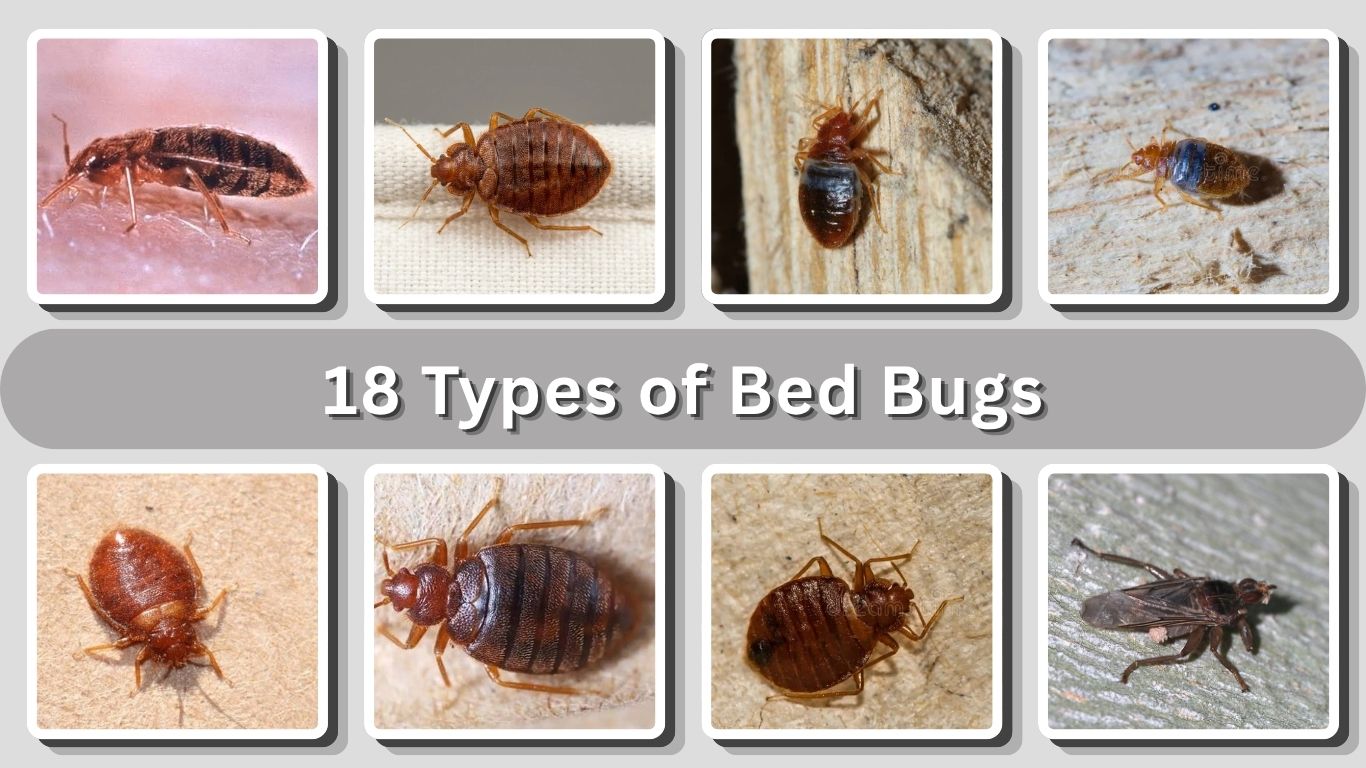
Bed bugs are small, blood-feeding insects found in homes, hotels, caves, and animal nesting areas worldwide. While common and tropical bed bugs primarily feed on humans, many related species depend on bats and birds for survival. Different types of bed bugs vary in appearance, habitat, feeding behavior, and geographical distribution. Understanding these differences can help you identify species and recognize potential infestations. In this guide, we’ll explore 18 types of bed bugs and their identification features, habitats, feeding habits, and lifespans.
1. Common Bed Bug (Cimex lectularius)
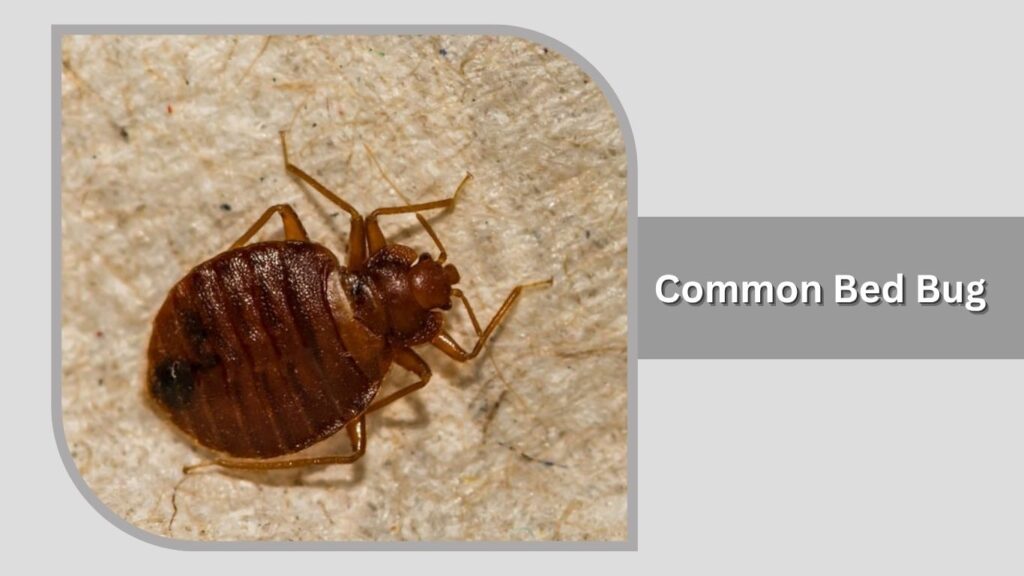
The common bed bug (Cimex lectularius) is a small, reddish-brown, blood-feeding insect commonly found in homes, hotels, apartments, and other indoor environments. These nocturnal pests hide in mattresses, bed frames, furniture, and narrow cracks during the day. They emerge mainly at night to feed on human blood. Although common bed bugs are not known to transmit diseases, their bites can cause itching, irritation, and sleep disturbances.
Identification
- Scientific Name: Cimex lectularius
- Size: Approximately 4–7 mm long as adults.
- Color: Reddish-brown, becoming darker after feeding.
- Body Shape: Flat, oval, and wingless.
- Legs: Six short legs.
- Appearance: Small head, visible antennae, and segmented abdomen.
Habitat and Distribution
Common bed bugs occur worldwide, particularly in areas where people sleep or rest. They frequently hide along mattress seams, behind headboards, inside furniture joints, and beneath loose wallpaper. Their flattened bodies allow them to squeeze into extremely narrow spaces.
Feeding Habits and Behavior
Common bed bugs feed exclusively on blood, primarily from humans. They are most active at night but may feed during daylight when hungry. Their bites sometimes appear in clusters or lines, although bite patterns alone cannot confirm an infestation.
Lifespan and Reproduction
Adult common bed bugs can survive for several months under favorable conditions. Females lay small, whitish eggs in protected hiding places. Young bed bugs pass through five nymphal stages before reaching adulthood, requiring blood meals to develop.
2. Eastern Bat Bug (Cimex adjunctus)
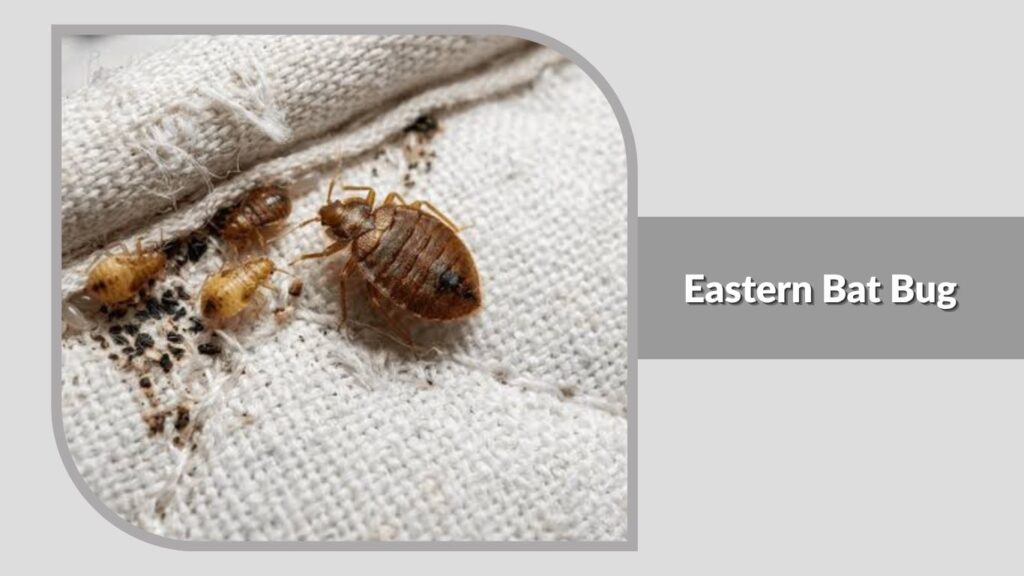
The eastern bat bug (Cimex adjunctus) is a blood-feeding insect closely related to the common bed bug. It primarily feeds on bats and is commonly found in eastern North America. These insects occasionally enter homes when bats establish colonies inside buildings. Although they resemble ordinary bed bugs, their preferred hosts and natural habitats are different.
Identification
- Scientific Name: Cimex adjunctus
- Size: Approximately 4–6 mm long.
- Color: Reddish-brown to dark brown.
- Body Shape: Flattened, oval, and wingless.
- Legs: Six legs with fine hairs.
- Appearance: Longer hairs around the pronotum than common bed bugs.
Habitat and Distribution
Eastern bat bugs are widespread across eastern North America. They typically inhabit bat roosts inside caves, hollow trees, attics, and roof spaces. Buildings containing bat colonies may occasionally develop infestations in nearby rooms.
Feeding Habits and Behavior
These insects primarily feed on the blood of insect-eating bats. They remain hidden in cracks and crevices between meals. When their usual hosts disappear, eastern bat bugs may move into occupied rooms and bite humans.
Lifespan and Reproduction
Eastern bat bugs develop through egg, nymph, and adult stages. Like other members of the bed bug family, they undergo five nymphal stages, requiring blood meals for development. Their reproductive success depends heavily on access to suitable hosts.
3. Western Bat Bug (Cimex pilosellus)
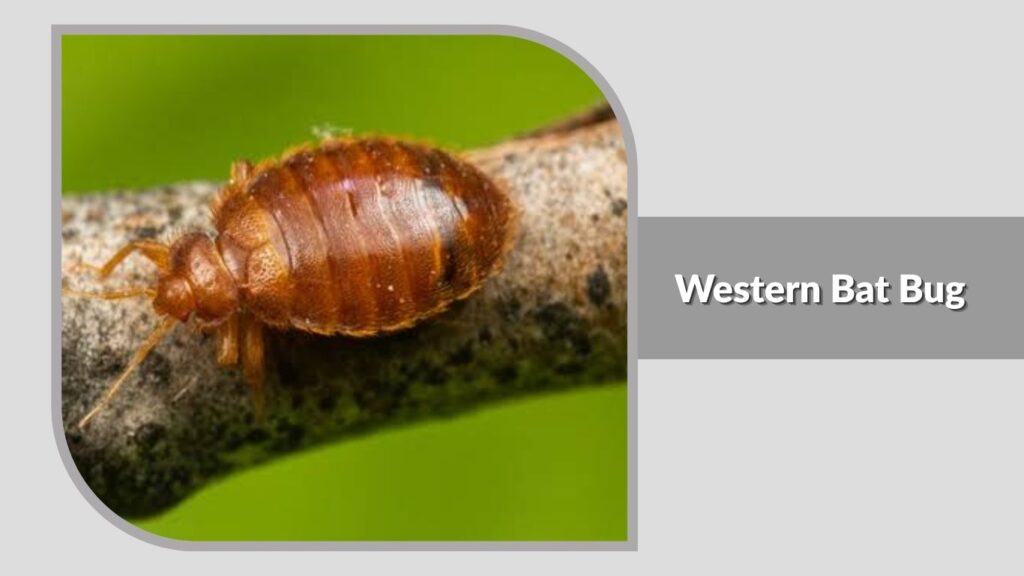
The western bat bug (Cimex pilosellus) is a small parasitic insect that feeds mainly on bats. It resembles the common bed bug but has longer body hairs and different host preferences. These insects are associated with bat colonies throughout parts of North America. Occasionally, they enter residential buildings and cause confusion with ordinary bed bug infestations.
Identification
- Scientific Name: Cimex pilosellus
- Size: Approximately 4–5 mm long.
- Color: Reddish-brown or mahogany.
- Body Shape: Broad, oval, and flattened.
- Legs: Six relatively short legs.
- Appearance: Noticeable long hairs around the body and thorax.
Habitat and Distribution
Western bat bugs occur across parts of the United States and Canada. Their preferred habitats include caves, hollow trees, and buildings containing bat colonies. They frequently hide within cracks near roosting sites, where blood sources are readily available.
Feeding Habits and Behavior
Western bat bugs feed mainly on the blood of resting bats. They usually emerge when their hosts are inactive and return to protected hiding places afterward. When bats abandon a roost, some bugs may enter nearby living spaces and occasionally bite people.
Lifespan and Reproduction
Females deposit eggs within sheltered roosting areas. Newly hatched nymphs resemble smaller, paler adults and develop through five stages. Their development depends on obtaining regular blood meals and maintaining suitable environmental conditions.
4. European Bat Bug (Cimex pipistrelli)
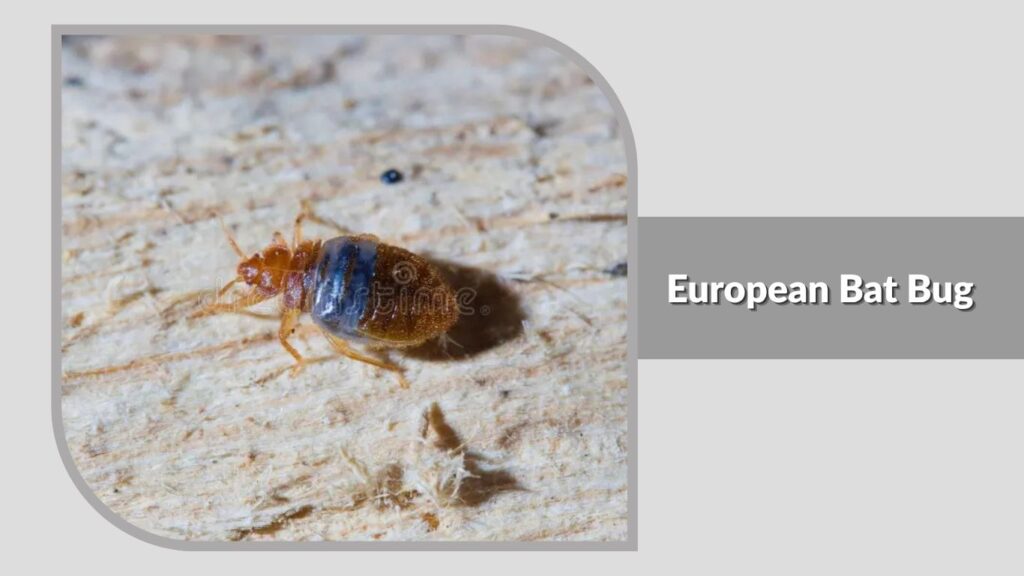
The European bat bug (Cimex pipistrelli) is a blood-feeding insect commonly associated with bat colonies throughout Europe and other parts of the Palearctic region. It closely resembles the common bed bug but primarily depends on bats for survival. These insects usually remain inside bat roosts, although they may occasionally enter homes when their preferred hosts become unavailable.
Identification
- Scientific Name: Cimex pipistrelli
- Size: Small, generally around 4–5 mm long.
- Color: Reddish-brown to dark brown.
- Body Shape: Oval, flattened, and wingless.
- Legs: Six short legs.
- Appearance: Long bristles around the pronotum and abdominal margins.
Habitat and Distribution
European bat bugs inhabit caves, tree cavities, attics, and buildings where bats establish colonies. They are particularly associated with crevice-roosting bat species. These insects prefer sheltered spaces near their hosts rather than remaining permanently attached to the bats.
Feeding Habits and Behavior
European bat bugs feed on bat blood, usually when their hosts are resting. They spend most of their time hidden in narrow crevices. When bats disappear, hungry insects may occasionally enter nearby rooms and bite humans.
Lifespan and Reproduction
Their life cycle includes eggs, five nymphal stages, and adulthood. Blood meals are essential for growth and reproduction. Temperature, suitable hiding places, and host availability influence their development and survival.
5. Pigeon Bug (Cimex columbarius)
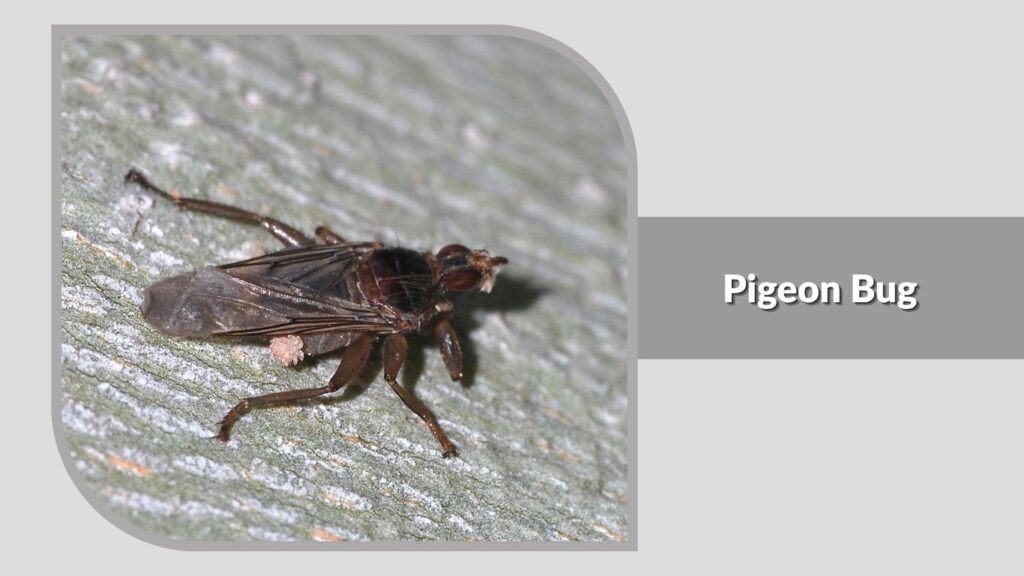
The pigeon bug (Cimex columbarius) is a small blood-feeding insect primarily associated with pigeons and their nesting areas. It belongs to the same family as common bed bugs and shares several physical characteristics with them. Unlike typical household bed bugs, pigeon bugs mainly depend on birds for their blood meals. They occasionally appear in buildings where pigeons nest nearby.
Identification
- Scientific Name: Cimex columbarius
- Size: Approximately 3.5–4.75 mm long.
- Color: Reddish-brown.
- Body Shape: Small, oval, and flattened.
- Legs: Six short legs.
- Appearance: Similar to common bed bugs but generally smaller, with distinctive antennal proportions.
Habitat and Distribution
Pigeon bugs are mainly found in western and northwestern Europe. They inhabit pigeon lofts, nesting spaces, rooftops, and sheltered building structures. Their presence is often associated with established pigeon colonies around residential and commercial properties.
Feeding Habits and Behavior
These insects primarily feed on pigeon blood and occasionally use other bird hosts. They hide near nesting materials between feeding periods. Although they may wander into buildings, they are not typical human-infesting bed bugs.
Lifespan and Reproduction
Pigeon bugs reproduce in protected nesting environments. Females deposit eggs near suitable hosts, while developing nymphs require blood meals. Their population growth is influenced by host availability, temperature, and nesting conditions.
6. Cimex antennatus
Cimex antennatus is a lesser-known species belonging to the bed bug family, Cimicidae. It was formally described in 1965 by Usinger and Ueshima. Unlike the common bed bug, this species is not recognized as a widespread household pest. It is an important species in the scientific study of bed bug diversity, particularly because historical specimens have been recovered from North American cave deposits.
Identification
- Scientific Name: Cimex antennatus
- Family: Cimicidae.
- Order: Hemiptera.
- Body Shape: Flattened and oval, as is typical of the genus.
- Wings: Lacks functional flying wings.
- Appearance: Similar to other Cimex species; reliable identification requires specialist examination.
Habitat and Distribution
Cimex antennatus has been documented in North America, including fossil specimens recovered from the Paisley Caves in Oregon. Its occurrence in cave deposits provides valuable evidence about the ancient history and distribution of bed bug relatives.
Feeding Habits and Behavior
Like other members of the Cimicidae family, this species is considered a blood-feeding insect. However, detailed information about its preferred hosts and daily feeding behavior remains limited in readily available research.
Lifespan and Reproduction
Specific reproductive studies on Cimex antennatus are limited. As a member of the bed bug family, it is expected to develop through egg, nymph, and adult stages. Its precise lifespan and reproductive rate have not been well established.
7. Cimex brevis
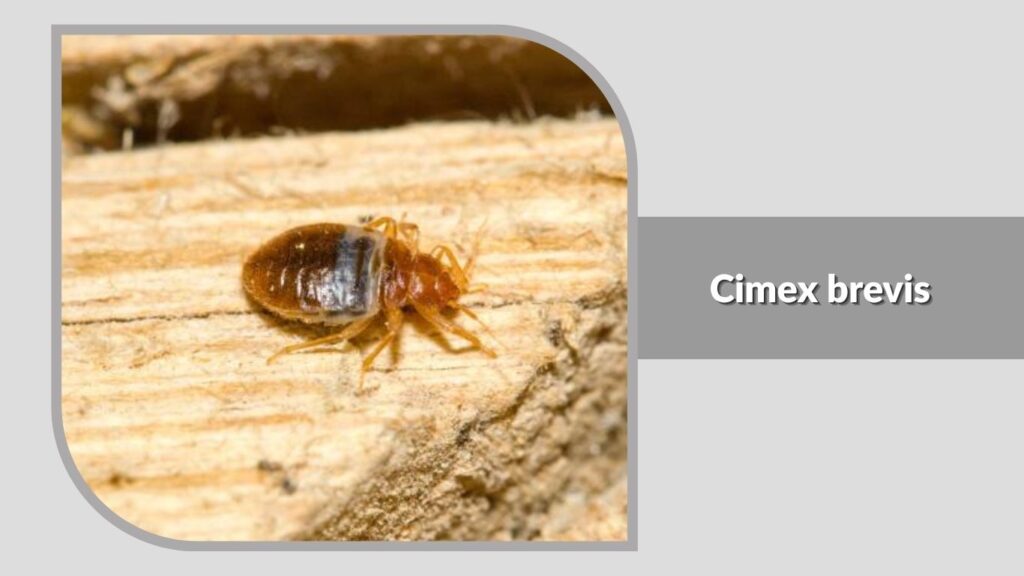
Cimex brevis is a small, blood-feeding insect belonging to the bed bug family, Cimicidae. It is closely related to the eastern bat bug and primarily associated with bats. This species occurs in parts of North America and is less commonly encountered than ordinary household bed bugs. Its physical characteristics make it particularly interesting for studying the diversity of bat-associated parasites.
Identification
- Scientific Name: Cimex brevis
- Family: Cimicidae.
- Color: Generally reddish-brown.
- Body Shape: Small, oval, and flattened.
- Wings: Wingless and unable to fly.
- Appearance: Smaller than the eastern bat bug, with relatively long bristles on its hind legs.
Habitat and Distribution
Cimex brevis has been recorded in the Midwestern and Northeastern regions of North America, including Canada. As a bat-associated species, it occupies sheltered environments connected with bat activity. Its distribution is less thoroughly documented than that of common bed bugs.
Feeding Habits and Behavior
This species primarily relies on bats for blood meals. Like related bat bugs, it is adapted to feeding on resting hosts and remaining concealed between meals. Human infestations are not a recognized characteristic of this species.
Lifespan and Reproduction
Detailed information about its lifespan is limited. Like other cimicids, it develops through eggs, five nymphal stages, and adulthood. Successful development requires blood meals and suitable environmental conditions.
8. Cimex burmanus
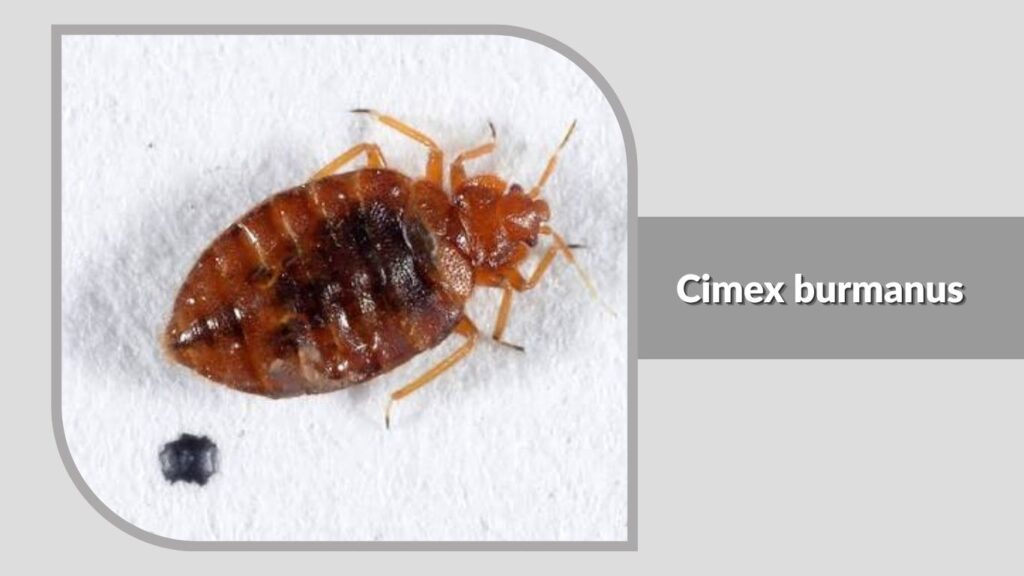
Cimex burmanus is a relatively little-known species of blood-feeding bug in the family Cimicidae. It was described by Robert Usinger in 1966 and belongs to a group of bed bug relatives primarily associated with bats. Unlike the common bed bug, this species has not been widely documented as a household pest. Its distinctive leg and antenna structures help researchers distinguish it from related species.
Identification
- Scientific Name: Cimex burmanus
- Family: Cimicidae.
- Body Shape: Flattened and oval.
- Wings: Lacks functional flying wings.
- Antennae: Relatively short, including a short third segment.
- Appearance: Stout hind femora, approximately 2.36 times as long as they are wide.
Habitat and Distribution
Cimex burmanus has been recorded in Myanmar, formerly known as Burma. Its broader geographical distribution remains poorly understood. As a member of the bat-associated Cimex pipistrelli group, it is likely connected with sheltered roosting environments, although detailed habitat records are limited.
Feeding Habits and Behavior
The species belongs to a family of insects that obtain nutrition through blood feeding. Its exact host preferences and feeding schedule have not been thoroughly described. It is not recognized as a common human-feeding bed bug.
Lifespan and Reproduction
Specific lifespan and reproductive measurements are unavailable in widely accessible studies. Its expected development follows the typical cimicid pattern of eggs, five nymphal stages, and adults, with blood meals supporting growth and reproduction.
9. Cimex cavernicola
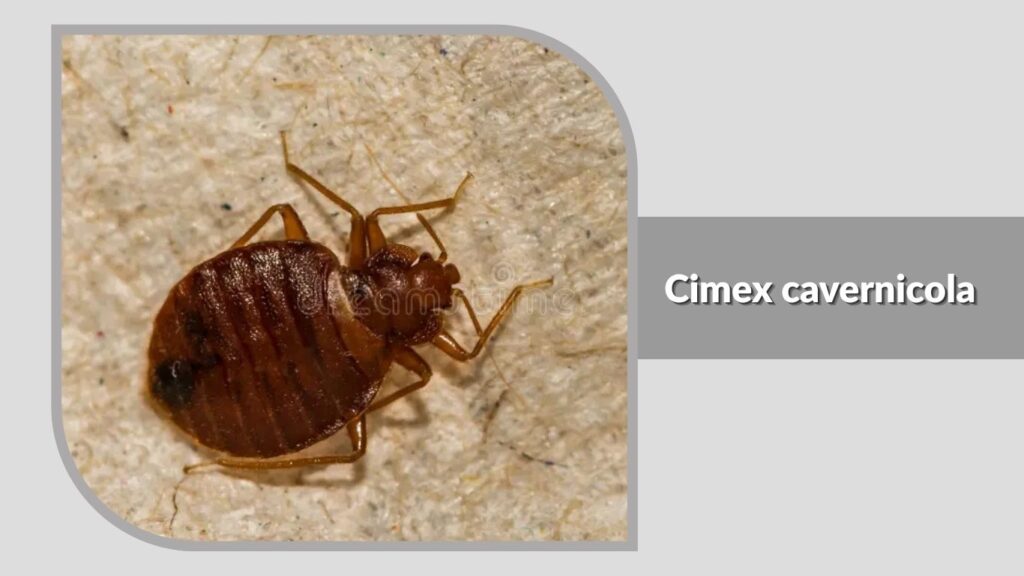
Cimex cavernicola is an uncommon species belonging to the family Cimicidae. It was described in 1966 and is classified among the bat-associated relatives of common bed bugs. This insect is distinguished by its elongated antennae and slender hind legs. Although its scientific classification is established, relatively little information is available about its ecology, natural hosts, and population distribution.
Identification
- Scientific Name: Cimex cavernicola
- Family: Cimicidae.
- Body Shape: Broad, oval, and flattened.
- Wings: Wingless.
- Antennae: Relatively long compared with several related species.
- Appearance: Slender hind femora, at least 3.4 times as long as they are wide.
Habitat and Distribution
Cimex cavernicola has been reported from Russia and Turkmenistan. Information about its precise living environments remains limited. Its classification among bat-associated bugs suggests an ecological connection with bat habitats, but specific roosting preferences require further investigation.
Feeding Habits and Behavior
This species is considered a blood-feeding insect, like other members of its family. Detailed observations of its natural feeding behavior are scarce. It is not recognized as a regular household pest or a major human-biting species.
Lifespan and Reproduction
Its exact lifespan, egg production, and developmental duration have not been well documented. Based on the general biology of cimicid insects, its development is expected to involve five nymphal stages before adulthood.
10. Cimex dissimilis
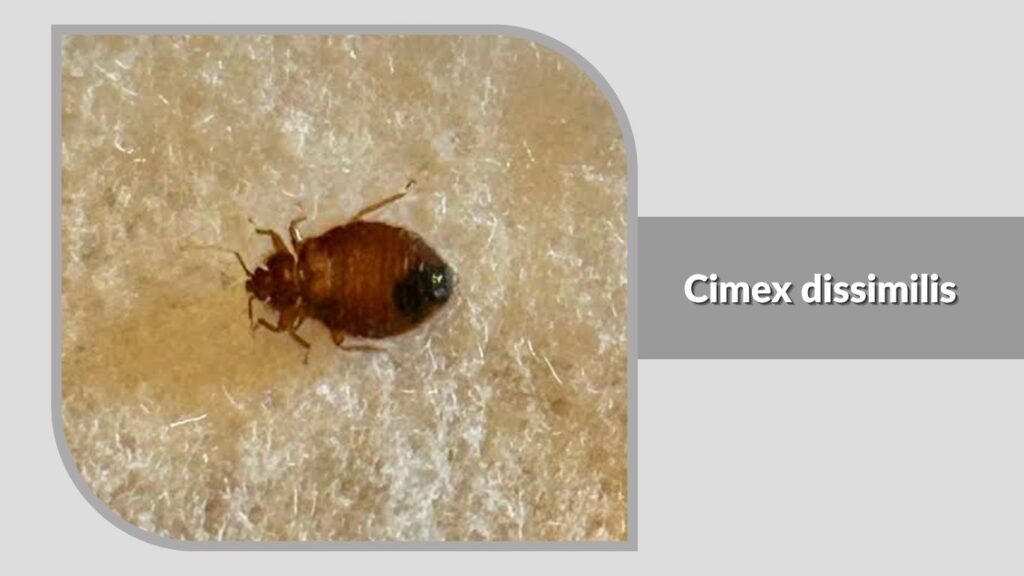
Cimex dissimilis is a blood-feeding insect primarily associated with bats across Europe and neighboring regions. It belongs to the bed bug family and shares several physical characteristics with common household bed bugs. However, its natural hosts are mainly bats rather than humans. This species has attracted scientific interest because of its geographic distribution, host relationships, and occasional movement between bat populations.
Identification
- Scientific Name: Cimex dissimilis
- Family: Cimicidae.
- Color: Generally reddish-brown.
- Body Shape: Oval, flattened, and wingless.
- Legs: Six legs adapted for crawling.
- Appearance: Distinctive bristles on the small wing pads, useful for microscopic identification.
Habitat and Distribution
Cimex dissimilis has been recorded in several European countries, including Germany, Hungary, Poland, France, and the United Kingdom. It inhabits environments associated with bats, particularly sheltered roosting places. Recorded hosts include noctule bats and several Myotis species.
Feeding Habits and Behavior
This insect primarily feeds on bat blood. It usually remains concealed near roosting sites and approaches hosts when feeding opportunities arise. It has also been reported to bite humans occasionally, although people are not its preferred hosts.
Lifespan and Reproduction
Like related cimicids, Cimex dissimilis develops through eggs, nymphs, and adults. Nymphs require blood meals to progress through their developmental stages. Its precise lifespan depends on environmental conditions and host availability.
11. Cimex emarginatus
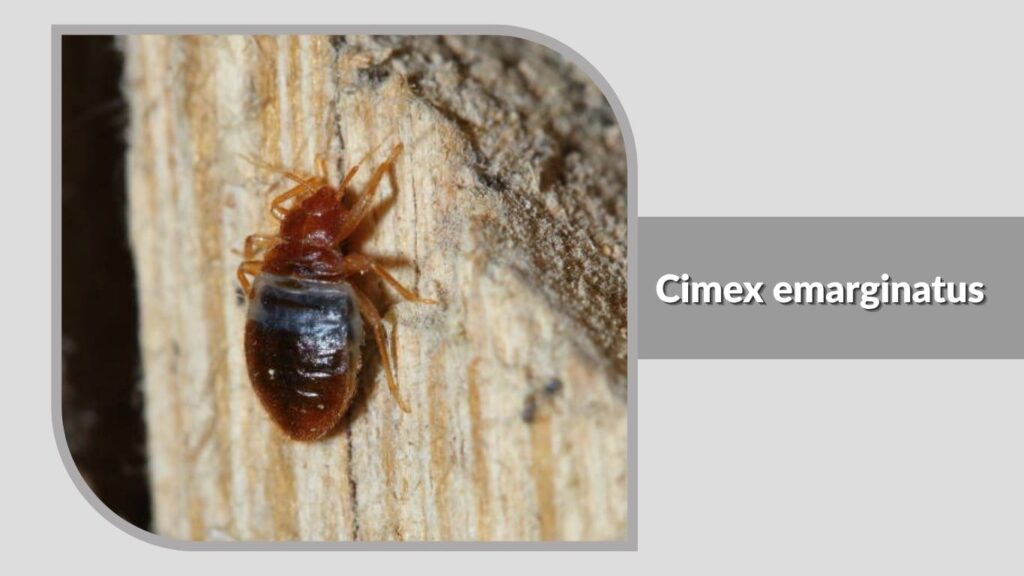
Cimex emarginatus is a relatively uncommon bat-associated bed bug species described in 2006. It belongs to the family Cimicidae and was initially discovered in Bulgaria. Unlike common bed bugs, which frequently infest human sleeping areas, this species primarily parasitizes bats. Its discovery has contributed to scientific understanding of the diversity and evolution of blood-feeding insects in southeastern Europe.
Identification
- Scientific Name: Cimex emarginatus
- Family: Cimicidae.
- Color: Generally reddish-brown.
- Body Shape: Flattened and oval.
- Wings: Lacks functional flying wings.
- Appearance: Distinguished from related species through specialized reproductive structures, hind-leg proportions, and microscopic examination.
Habitat and Distribution
Cimex emarginatus was originally identified in a bat roost inside a building near Primorsko, Bulgaria. Subsequent research documented additional occurrences in southeastern Europe. The species is associated with bats, including Geoffroy’s bats (Myotis emarginatus) and Alcathoe bats (Myotis alcathoe).
Feeding Habits and Behavior
This insect feeds on bat blood and is generally associated with sheltered roosting environments. Like other bat bugs, it spends much of its time hidden near its hosts rather than permanently attached to them. Regular human feeding has not been established.
Lifespan and Reproduction
Detailed reproductive information remains limited. Its development is expected to include eggs, five nymphal stages, and adulthood. Host availability and environmental conditions influence survival and reproductive success.
12. Cimex himalayanus
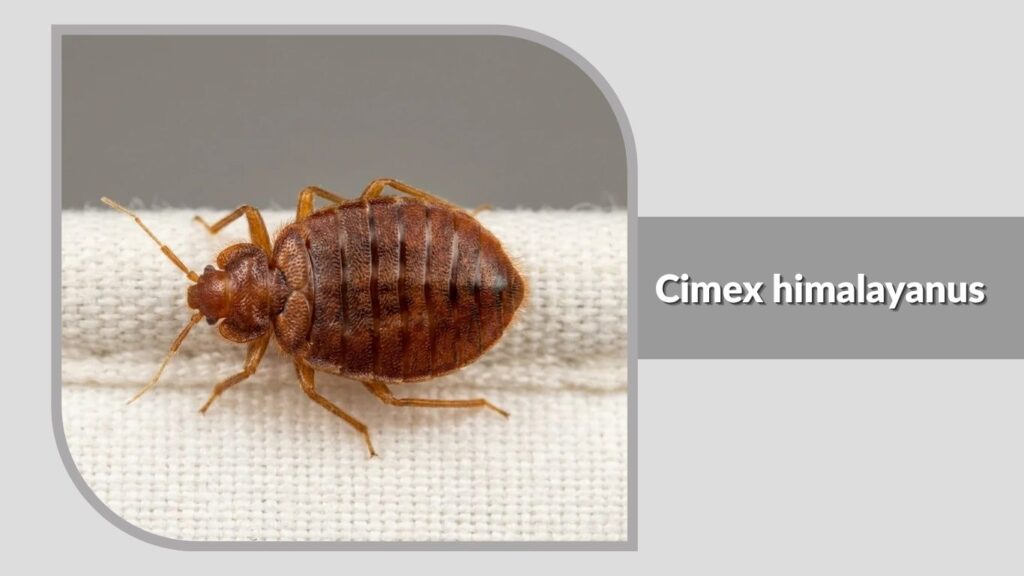
Cimex himalayanus is a rare blood-feeding insect belonging to the bed bug family, Cimicidae. It was scientifically described in 1974 by H. R. Bhat from the Himalayan region of India. Unlike common household bed bugs, this species is associated with bats. Its discovery helped researchers understand the diversity of parasitic insects inhabiting mountainous environments.
Identification
- Scientific Name: Cimex himalayanus
- Family: Cimicidae.
- Color: Exact coloration is not well documented.
- Body Shape: Flattened and oval.
- Wings: Lacks functional flying wings.
- Appearance: Distinctive serrated hairs on the antennae and body margins.
Habitat and Distribution
Cimex himalayanus was originally discovered in the Himalayan region of Uttar Pradesh, India. The original specimen was collected from a bat identified as Myotis siligorensis. Its complete geographical distribution and preferred roosting environments remain poorly documented.
Feeding Habits and Behavior
This species feeds on bat blood rather than regularly targeting humans. Its flattened body and piercing-sucking mouthparts are suited to parasitic feeding. Detailed observations of its daily activity and feeding frequency remain unavailable.
Lifespan and Reproduction
The reproductive biology of Cimex himalayanus has not been extensively studied. Like other cimicids, it is expected to develop through eggs, five nymphal stages, and adulthood. Blood meals are necessary for development and reproduction.
13. Cimex incrassatus
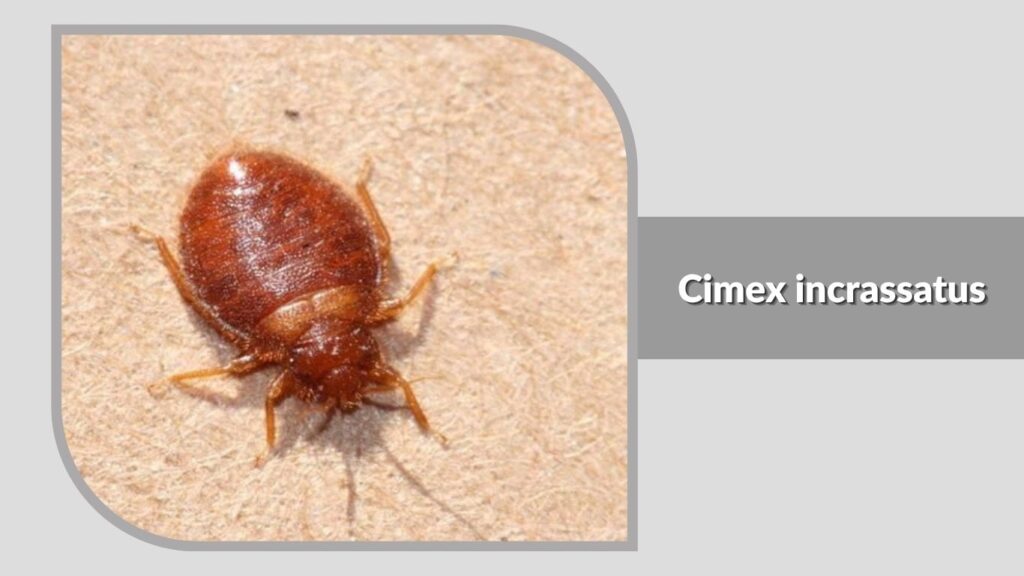
Cimex incrassatus is a species of bat bug found in parts of North America. It belongs to the family Cimicidae and feeds primarily on the blood of bats. This species resembles other bed bugs but has distinctive body hairs and leg structures. It is generally associated with bat roosting environments rather than human sleeping areas.
Identification
- Scientific Name: Cimex incrassatus
- Family: Cimicidae.
- Color: Generally brown to reddish-brown.
- Body Shape: Oval and flattened.
- Legs: Six legs, with noticeably thickened hind femora.
- Appearance: Long bristles around the thorax and wing pads.
Habitat and Distribution
Cimex incrassatus has been recorded in California, Arizona, and Mexico. It has been collected from caves, mine tunnels, and bat roosting sites. The pallid bat (Antrozous pallidus) is one of its documented hosts. These environments provide shelter and access to blood meals.
Feeding Habits and Behavior
This insect feeds on bats while they rest inside sheltered roosts. Between meals, it may remain hidden in cracks or nearby surfaces. Unlike common bed bugs, Cimex incrassatus is not recognized as a widespread household pest.
Lifespan and Reproduction
Detailed lifespan measurements are unavailable for this species. Its development follows the general cimicid pattern of eggs, nymphs, and adults. Young bugs must obtain blood meals to progress through successive developmental stages.
14. Cimex insuetus
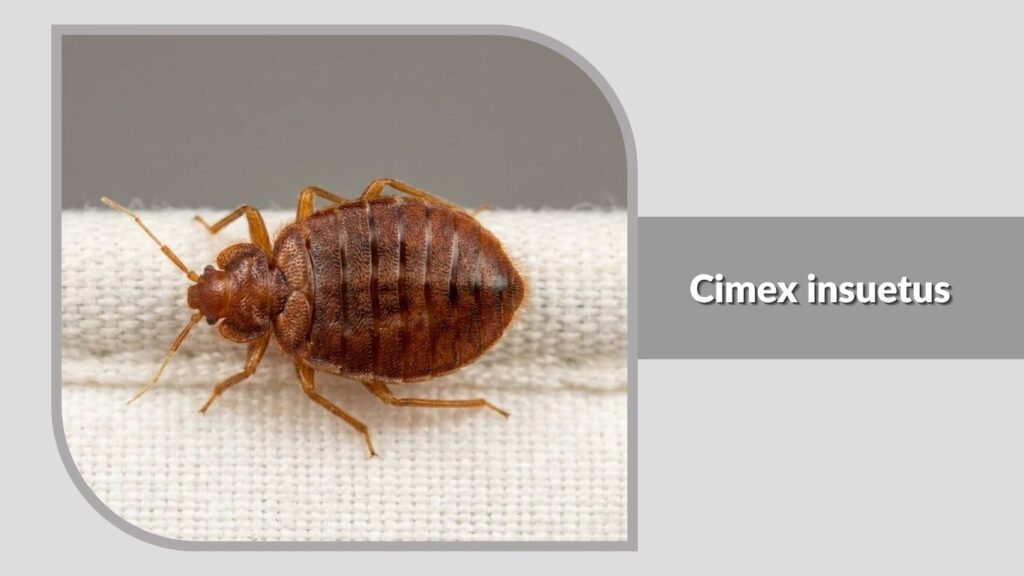
Cimex insuetus is a blood-feeding insect primarily associated with bats in tropical and subtropical parts of Asia. It was described in 1968 and belongs to the family Cimicidae. Unlike most bat bugs, this species has also been reported biting humans who enter bat-inhabited caves. Its biological characteristics make it an important subject for research involving cave-dwelling parasites.
Identification
- Scientific Name: Cimex insuetus
- Family: Cimicidae.
- Color: Relatively pale compared with several related species.
- Body Shape: Flattened and oval.
- Wings: Lacks functional flying wings.
- Appearance: Developed pronotum, elongated head, and scattered long bristles.
Habitat and Distribution
Cimex insuetus has been documented in Thailand, China, and India. It primarily inhabits caves occupied by bat colonies. These sheltered environments offer suitable conditions for survival, reproduction, and regular feeding.
Feeding Habits and Behavior
This species mainly feeds on bats, possibly including wrinkle-lipped free-tailed bats (Mops plicatus). It may also bite humans entering occupied caves, including workers collecting bat guano. Such encounters can cause skin irritation and discomfort.
Lifespan and Reproduction
Its exact lifespan and egg production remain insufficiently studied. Like other members of the bed bug family, Cimex insuetus develops through five nymphal stages before becoming an adult. Access to blood meals supports growth and reproductive activity.
15. Cimex japonicus
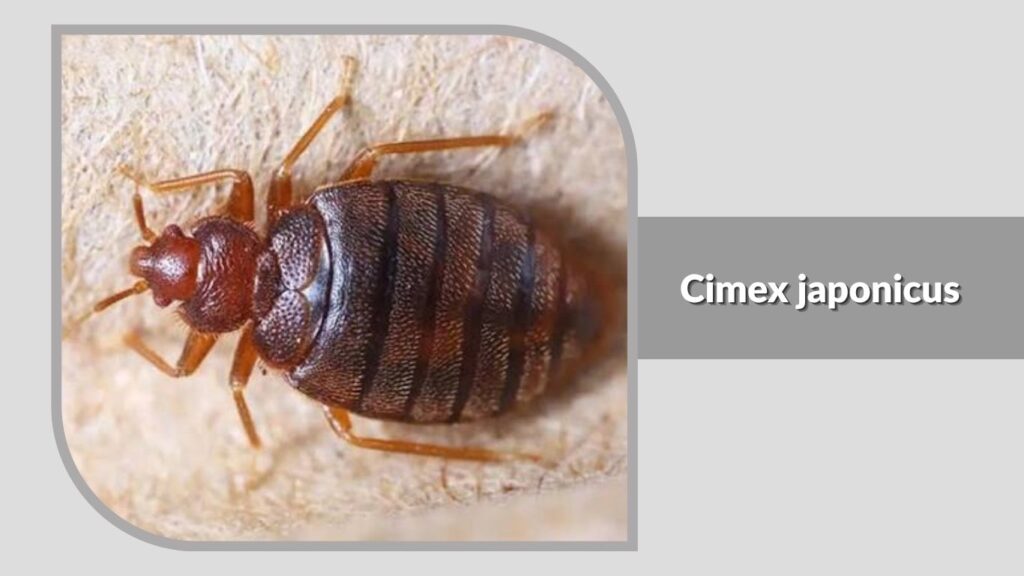
Cimex japonicus is a bat-associated bed bug species native to Japan. It was described in 1966 and belongs to the family Cimicidae. This insect feeds on the blood of various bat species rather than regularly infesting human homes. Its presence in different Japanese regions provides valuable information about the relationship between bats and their external parasites.
Identification
- Scientific Name: Cimex japonicus
- Family: Cimicidae.
- Color: Brownish, typical of many related bat bugs.
- Body Shape: Broad, oval, and flattened.
- Legs: Six crawling legs.
- Appearance: Wingless, with small bristles and specialized blood-feeding mouthparts.
Habitat and Distribution
Cimex japonicus occurs in Japan, including Hokkaido, Honshu, and Shikoku. Researchers have collected it from several bat species, including the birdlike noctule (Nyctalus aviator), Asian parti-colored bat (Vespertilio sinensis), and eastern water bat (Myotis petax).
Feeding Habits and Behavior
This species obtains nourishment from bat blood. It is associated with bat habitats where hosts gather or rest. Like other cimicids, it is adapted to remaining concealed between feeding periods. Regular human infestations have not been established.
Lifespan and Reproduction
Specific information about its lifespan and reproductive rate remains limited. Its expected life cycle includes eggs, five nymphal stages, and adults. Successful development depends on available blood sources and suitable environmental conditions.
16. Cimex latipennis
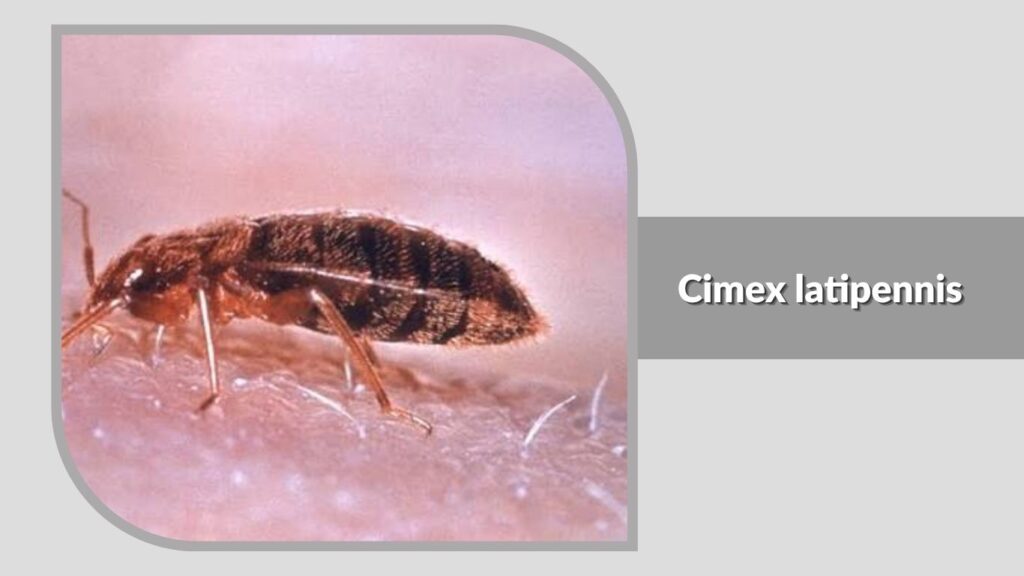
Cimex latipennis is a North American bat bug species belonging to the family Cimicidae. It is closely related to several other bat-associated bed bugs and primarily feeds on bats. Unlike the common bed bug, this species is not recognized as a typical household pest. Its presence in bat populations makes it relevant to scientific research on parasites and wildlife ecology.
Identification
- Scientific Name: Cimex latipennis
- Family: Cimicidae.
- Color: Generally reddish-brown.
- Body Shape: Flattened and oval.
- Wings: Lacks functional flying wings.
- Appearance: Similar to other bat bugs, requiring microscopic examination for reliable identification.
Habitat and Distribution
Cimex latipennis has been documented in Canada and the northwestern United States. It is associated with bat species such as the little brown bat (Myotis lucifugus) and long-legged myotis (Myotis volans). Its preferred environments are places where these bats roost.
Feeding Habits and Behavior
This insect feeds primarily on bat blood. It is adapted to parasitic feeding and may remain concealed near its hosts between meals. Its association with bats distinguishes it from bed bug species commonly found in human bedrooms.
Lifespan and Reproduction
Detailed reproductive studies are limited. Like related species, Cimex latipennis is expected to pass through eggs, five nymphal stages, and adulthood. Blood meals and suitable environmental conditions are essential for successful development.
17. Tropical Bed Bug (Cimex hemipterus)
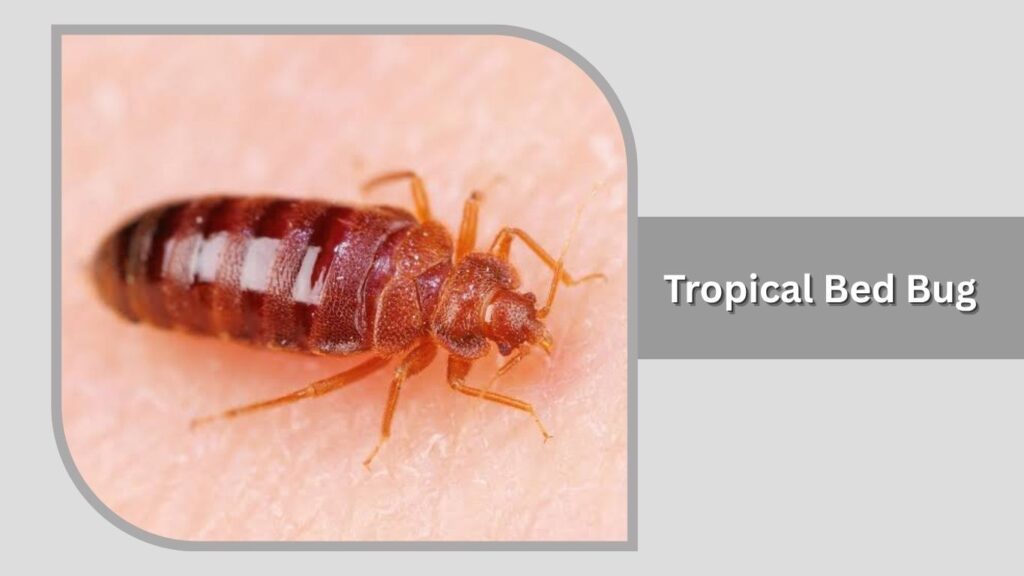
The tropical bed bug (Cimex hemipterus) is a blood-feeding insect commonly found in warm tropical and subtropical regions. It closely resembles the common bed bug and is one of the two major bed bug species that infest human homes. These insects hide in mattresses, furniture, and narrow cracks, emerging mainly at night to feed on sleeping people.
Identification
- Scientific Name: Cimex hemipterus
- Size: Approximately 5–7 mm long as adults.
- Color: Reddish-brown, becoming darker after feeding.
- Body Shape: Flattened, oval, and wingless.
- Legs: Six short crawling legs.
- Appearance: Narrower pronotum than the common bed bug, requiring close examination to distinguish.
Habitat and Distribution
Tropical bed bugs are widespread throughout tropical and subtropical regions, particularly in Asia, Africa, and Australia. They frequently inhabit bedrooms, hotels, apartments, and other sleeping environments. Warm temperatures support their development and reproduction.
Feeding Habits and Behavior
These insects primarily feed on human blood, usually during nighttime hours. Their bites may cause itching, redness, and allergic reactions. They hide near sleeping areas between meals and can survive extended periods without feeding.
Lifespan and Reproduction
Tropical bed bugs develop through eggs, five nymphal stages, and adulthood. Females deposit eggs in protected cracks and crevices. Their development is influenced by temperature, humidity, and blood availability.
18. Cimex pulveratus
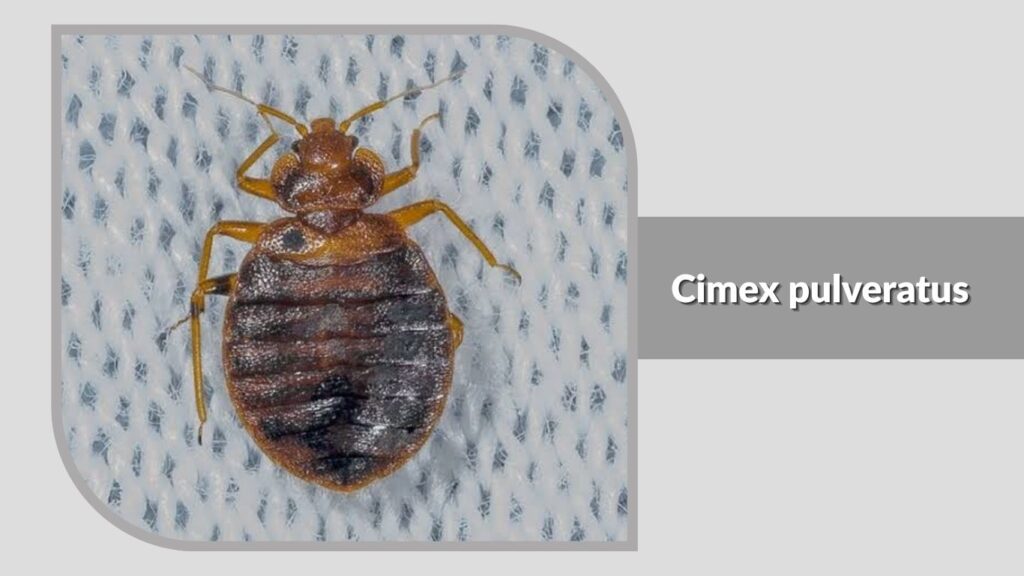
Cimex pulveratus is a rare bat-associated bed bug species scientifically described in 2018. It belongs to the family Cimicidae and was discovered in Vietnam. Unlike common household bed bugs, this insect has been documented on bats rather than humans. Its discovery provided valuable information about the evolutionary relationships between bat-associated insects and human-feeding bed bugs.
Identification
- Scientific Name: Cimex pulveratus
- Family: Cimicidae.
- Size: Approximately 3.8 mm long.
- Color: Brown head and body with golden-yellow wing pads.
- Body Shape: Small, oval, and flattened.
- Appearance: Dense, short body hairs and a broad pronotum.
Habitat and Distribution
Cimex pulveratus was discovered in Thanh Hoa Province, Vietnam. The original specimens were collected from Chinese pipistrelle bats (Hypsugo pulveratus). Its wider geographical distribution remains unknown because very few specimens have been studied.
Feeding Habits and Behavior
This species is associated with bats and is presumed to feed on their blood. Its precise feeding schedule and behavior remain poorly documented. There is currently no established evidence that it regularly infests human homes.
Lifespan and Reproduction
Detailed information about its lifespan and reproduction is unavailable. Based on related cimicid species, it is expected to develop through eggs and five nymphal stages before reaching adulthood. Further research is needed to establish its reproductive characteristics.
FAQs
1. What Are the Most Common Types of Bed Bugs?
The two most common human-infesting bed bug species are the common bed bug (Cimex lectularius) and tropical bed bug (Cimex hemipterus). Both feed on human blood and live near sleeping areas. Other related species primarily feed on bats or birds.
2. What Is the Difference Between Common and Tropical Bed Bugs?
Common bed bugs occur worldwide, while tropical bed bugs are especially prevalent in warmer climates. Both have flattened, reddish-brown bodies. Their main physical difference involves the shape and proportions of the pronotum, the shield-like structure behind the head.
3. Can All Types of Bed Bugs Bite Humans?
Not all bed bug relatives regularly feed on humans. Common and tropical bed bugs frequently infest human sleeping areas. Bat bugs and bird-associated species may occasionally bite people, particularly when their preferred hosts become unavailable, but they generally depend on animals.
4. Are Bed Bugs Dangerous to Human Health?
Bed bugs are not known to transmit infectious diseases to humans under natural conditions. However, their bites may cause itching, redness, allergic reactions, and sleep disturbances. Repeated scratching can also increase the risk of secondary skin infections.
5. How Can You Identify Different Types of Bed Bugs?
Bed bug identification involves examining body size, shape, coloration, antennae, and hairs around the thorax. Common and tropical bed bugs look extremely similar, while bat bugs often have longer body hairs. Accurate species identification may require microscopic examination by an entomologist.
