
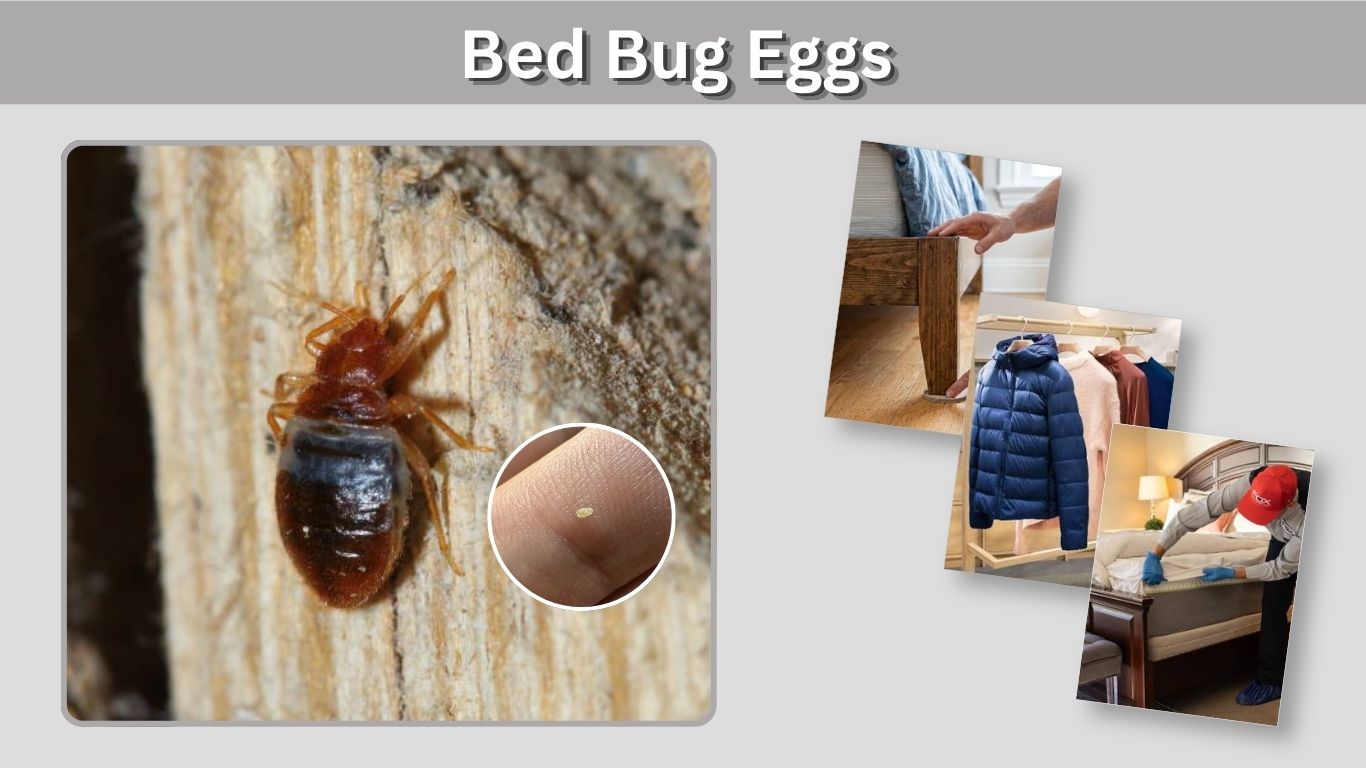
Bed bug eggs are tiny, pearl-white structures that can be difficult to notice without careful inspection. Female bed bugs deposit their eggs in hidden areas around mattresses, furniture, and bedding, allowing new insects to develop close to sleeping hosts. Understanding what bed bug eggs look like, where they are found, and how long they take to hatch is essential for identifying an infestation. This guide explains their appearance, size, life cycle, common hiding places, and effective methods for eliminating eggs before they develop into adult bed bugs.
What Do Bed Bug Eggs Look Like?
Bed bug eggs are extremely small, elongated, and usually white or translucent. They resemble miniature grains of rice, although their actual size is much smaller. Female bed bugs attach the eggs to surfaces using a sticky substance, making them difficult to brush away. Recognizing their distinctive appearance can help homeowners identify an infestation before the population increases significantly.
Bed Bug Eggs Size and Shape
Bed bug eggs measure approximately 1 millimeter in length. They have an elongated, slightly curved shape with rounded ends and a small cap at one end.
Although visible to the naked eye, their tiny size makes them difficult to identify without good lighting or magnification. A flashlight and magnifying glass can help reveal eggs hidden in furniture cracks.
What Color Are Bed Bug Eggs?
Freshly deposited bed bug eggs are generally pearl-white or creamy white. Their surfaces may appear slightly shiny or translucent under bright light.
As an embryo develops, small internal features may become visible under magnification. Egg color alone cannot reliably determine whether an egg is viable.
Dried Bed Bug Eggs vs. Hatched Egg Shells
Hatched bed bug egg shells usually appear pale, translucent, and empty. Under magnification, the opened cap at one end helps distinguish them from intact eggs.
Old or dried eggs may become discolored or damaged. However, appearance alone cannot reliably establish whether an intact egg is dead or capable of hatching.
Where Do Bed Bugs Lay Eggs?
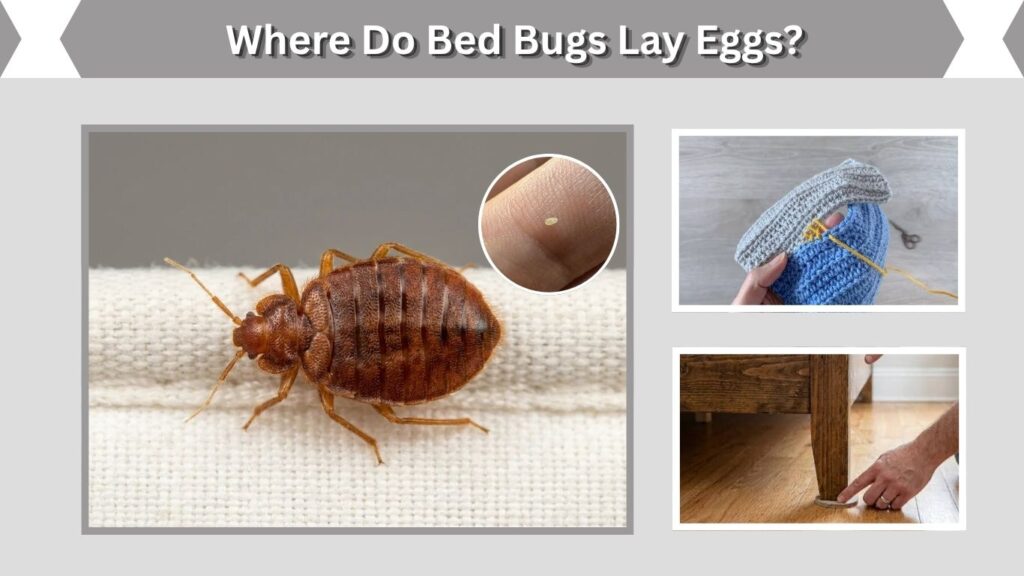
Female bed bugs typically deposit eggs in protected locations close to places where people sleep or rest. These insects prefer narrow cracks, fabric seams, and other concealed surfaces that provide shelter. Because the eggs adhere to their surroundings, they may remain hidden during ordinary cleaning. Understanding common egg-laying locations makes inspections more effective.
Bed Bug Eggs on Mattresses and Sheets
Mattresses and surrounding bed structures are common places to discover bed bug eggs. The eggs are more likely to be attached to seams and protected crevices than exposed on smooth sheets.
Inspect these locations carefully:
- Mattress seams: Eggs may be attached along stitching, piping, and folded edges.
- Box springs: Wooden joints and fabric-covered corners provide hiding places.
- Bed frames: Screws, joints, and narrow cracks can contain eggs.
- Headboards: Crevices behind and beneath headboards may conceal eggs.
- Sheets and blankets: Eggs can occasionally be found attached to fabric, particularly within folds or seams.
Bed Bug Eggs on Clothes, Couches, and Furniture
Bed bug eggs can also occur on upholstered furniture, clothing, luggage, and other belongings. Couch seams, cushion edges, and concealed furniture joints offer protected locations.
Although clothing is not always a preferred egg-laying site, bed bugs can attach eggs to fabric and personal items. This contributes to their ability to spread between rooms and buildings.
Can Bed Bugs Lay Eggs in Your Hair or Skin?
Bed bugs do not normally live or reproduce on the human body. Unlike lice, they generally return to nearby hiding places after feeding.
They do not lay eggs beneath human skin. Finding small white particles in hair is therefore not sufficient evidence of bed bug eggs.
Bed Bug Egg Life Cycle and Hatching Time
Understanding the bed bug life cycle helps explain why infestations can become difficult to eliminate. Female bed bugs reproduce repeatedly when suitable conditions and blood meals are available. Eggs develop into immature insects called nymphs, which must feed and molt before reaching adulthood. Temperature and environmental conditions influence the speed of development.
How Long Do Bed Bug Eggs Take to Hatch?
Bed bug eggs commonly hatch within approximately 6 to 10 days under favorable conditions. Cooler temperatures may delay development and extend the incubation period.
Once the egg hatches, a small, pale nymph emerges and begins searching for a blood meal. Because eggs can survive some treatments, follow-up inspections are essential.
How Many Eggs Do Bed Bugs Lay?
Female bed bugs may lay approximately one to five eggs per day under favorable conditions. Their total lifetime production can reach several hundred eggs.
The actual number depends on factors such as temperature, access to blood meals, and lifespan. Even a relatively small infestation can expand when reproduction continues unchecked.
What Happens After Bed Bug Eggs Hatch?
Newly hatched bed bugs are called first-stage nymphs. They are much smaller and lighter in color than adults, making them difficult to notice.
Nymphs undergo five growth stages before becoming adults. Each stage requires at least one blood meal before the insect can molt and continue developing.
How to Identify Bed Bug Eggs in Your Home
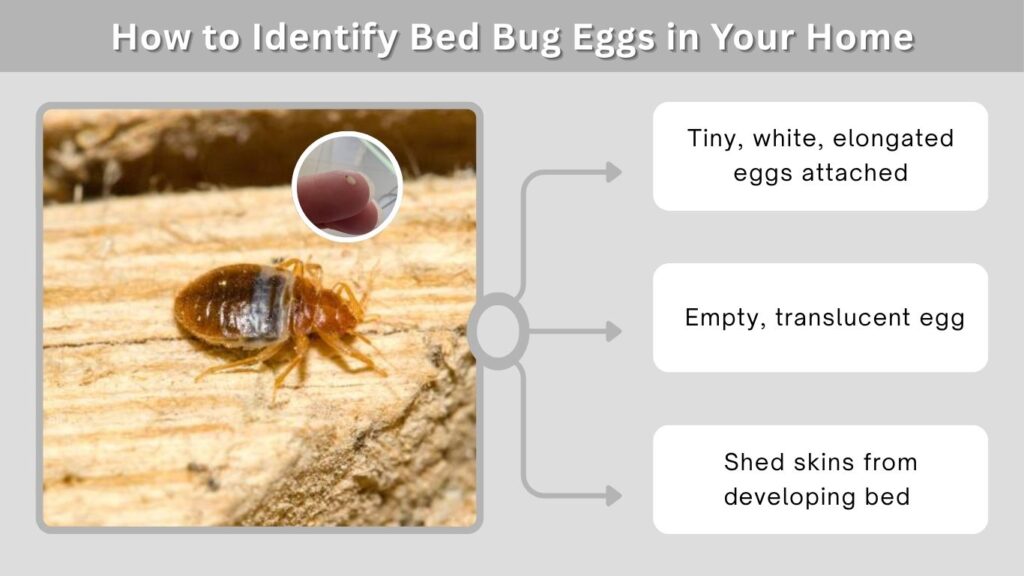
Finding bed bug eggs requires careful inspection because their small size and pale color allow them to blend into many household surfaces. Eggs are often located near other evidence of infestation, including adult insects, shed skins, and dark fecal markings. A systematic search is more reliable than checking only visible bedding surfaces.
Common Signs of Bed Bug Eggs
Several clues can indicate that bed bugs are reproducing nearby:
- Tiny, white, elongated eggs attached to furniture or fabric seams.
- Empty, translucent egg shells around hiding places.
- Dark brown or black fecal spots on mattresses and bed frames.
- Shed skins from developing bed bug nymphs.
- Live bed bugs hiding around joints, cracks, and upholstery.
These signs are useful collectively. Unidentified white particles alone should not be considered confirmation of an infestation.
How to Inspect for Bed Bug Eggs
Begin by removing bedding and examining mattress seams with a flashlight. Check the underside of the mattress, box spring, bed frame, and nearby furniture.
Pay particular attention to narrow gaps and areas containing dark fecal spots. If you discover suspicious eggs, consider having a pest management professional confirm their identity.
What Kills Bed Bug Eggs Effectively?
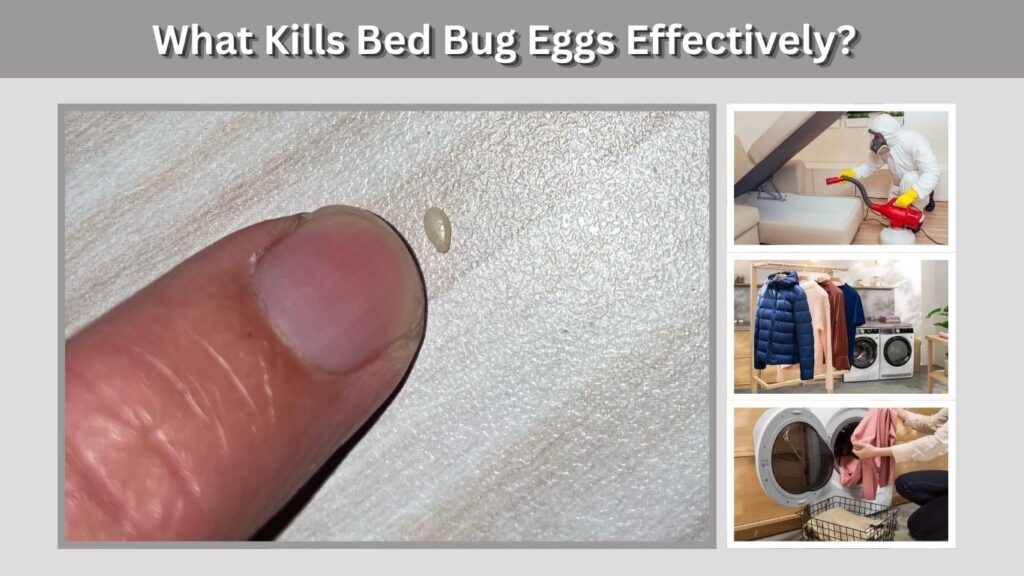
Eliminating bed bug eggs requires methods capable of reaching them in concealed locations. Although many household substances are advertised as natural treatments, they are not necessarily effective or safe. Proper heat treatment, careful cleaning, and suitable pest-control products are generally more reliable. Multiple methods may be necessary because eggs can survive treatments that kill adult insects.
Heat Treatment for Bed Bug Eggs
Heat is one of the most effective methods of destroying bed bug eggs when the required temperature reaches the insects.
Recommended approaches include:
- Clothes dryer: Place suitable clothing and bedding in a dryer on high heat for at least 30 minutes.
- Professional heat treatment: Specialized equipment can heat infested rooms or belongings sufficiently to kill bed bugs and eggs.
- Controlled heating: Infested items must reach appropriate temperatures throughout, not merely become warm on the surface.
Washing alone may not eliminate eggs. Never attempt whole-room heating using household space heaters, ovens, or improvised equipment.
Steam Cleaning and Vacuuming
Appropriate steam cleaning can kill exposed eggs in mattress seams, furniture joints, and certain upholstered surfaces when sufficient heat reaches them.
Vacuuming helps remove visible insects, eggs, and debris but may not capture every egg attached to a surface. Immediately seal and dispose of collected material outside the home.
Does Alcohol or Bleach Kill Bed Bug Eggs?
Rubbing alcohol and bleach are not recommended solutions for eliminating bed bug eggs. Alcohol is highly flammable, while bleach can damage materials and create chemical exposure hazards.
Pesticides specifically registered for bed bug control may form part of a treatment plan. However, not every insecticide kills eggs, and some infestations require appropriately timed follow-up treatments.
How to Prevent Bed Bug Eggs From Returning
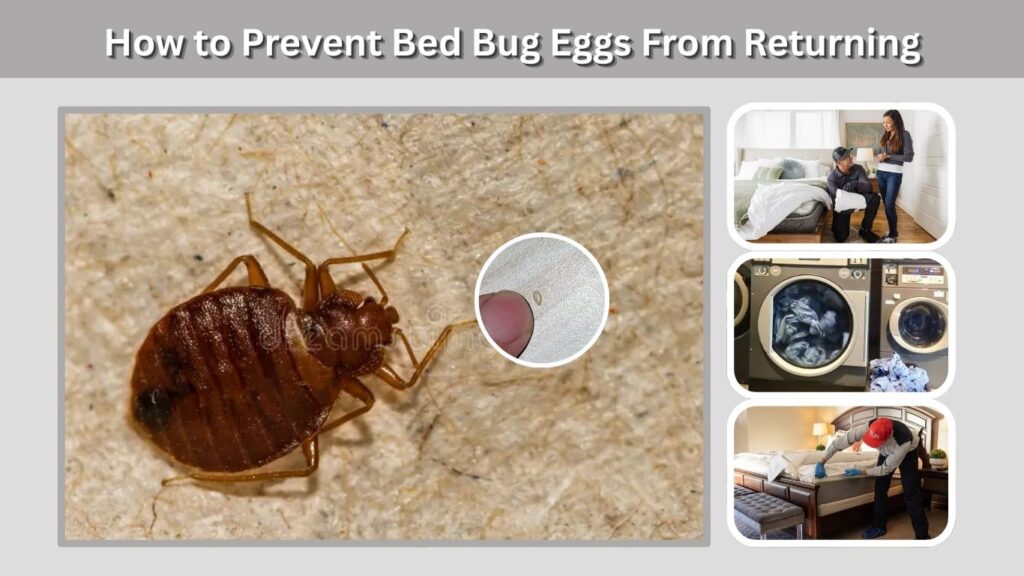
Preventing new eggs requires controlling the entire bed bug population rather than simply removing visible eggs. Surviving adults can reproduce, while overlooked eggs can hatch after treatment. Ongoing inspection, careful handling of belongings, and suitable protective measures help reduce the risk of reinfestation. Persistent infestations often benefit from professional pest management.
Practical Prevention Methods
Several measures can make your home less suitable for bed bugs:
- Inspect mattress seams, bed frames, and nearby furniture regularly.
- Use protective bed bug encasements on mattresses and box springs.
- Reduce clutter around sleeping areas to limit hiding places.
- Heat-dry suitable bedding and clothing after suspected exposure.
- Inspect secondhand furniture and travel luggage before bringing them indoors.
When Should You Contact Pest Control?
Professional assistance is advisable when eggs or live bed bugs appear repeatedly despite cleaning and treatment.
An experienced pest management professional can inspect concealed areas, recommend suitable control methods, and arrange follow-up treatment to address surviving insects or newly hatched nymphs.
FAQs
1. Can You See Bed Bug Eggs With the Naked Eye?
Yes. Bed bug eggs are visible without magnification, but they measure only about 1 millimeter long. Their pale coloring and hidden placement make them difficult to notice. Bright lighting and a magnifying glass improve identification.
2. Are Bed Bug Eggs Hard or Soft?
Bed bug eggs have a delicate outer shell rather than a hard, rigid covering. They are attached to surfaces with a sticky substance. Avoid crushing suspected eggs by hand, because this is not an effective infestation-control method.
3. Can Male Bed Bugs Lay Eggs?
No. Only female bed bugs produce eggs. After mating and obtaining suitable blood meals, females can continue laying eggs. Their reproductive capacity allows infestations to expand when conditions remain favorable.
4. How Long Can Bed Bug Eggs Survive Without Hatching?
Bed bug egg development depends on temperature and environmental conditions. Under favorable conditions, eggs commonly hatch within 6 to 10 days, while cooler conditions can delay hatching for several weeks.
5. Does Killing Bed Bug Eggs Eliminate an Infestation?
Not necessarily. Adult bed bugs and nymphs may remain hidden after visible eggs are destroyed. Successful treatment must address every life stage and include follow-up inspections to identify surviving insects and prevent further reproduction.
