
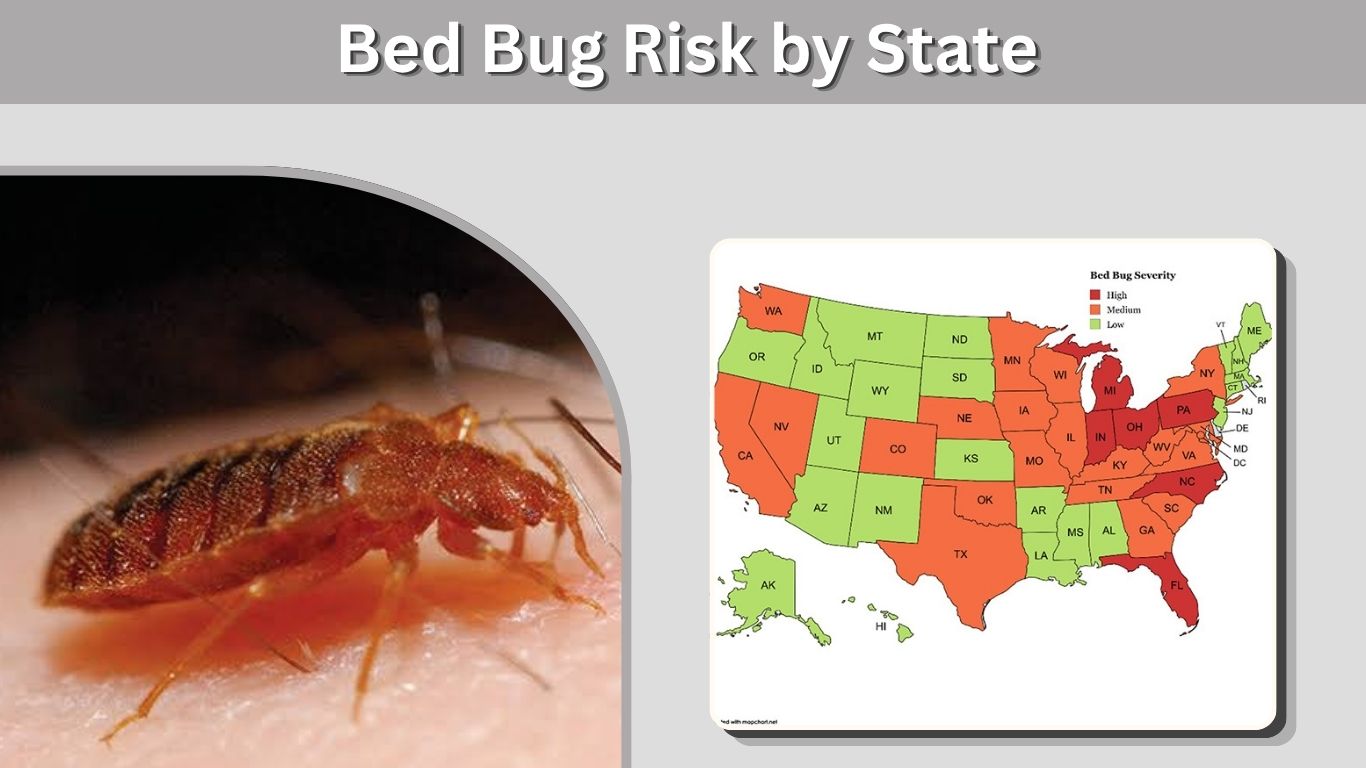
Bed bugs are a growing concern for homeowners, renters, and travelers across the United States. These small, blood-feeding insects can infest houses, apartments, hotels, and other places where people sleep. However, bed bug activity is not equally documented throughout the country.
Understanding bed bug risk by state can help residents identify areas with substantial reported treatment activity and take preventive measures. According to Orkin’s 2026 rankings, Ohio has the most cities on the company’s top 50 list, while Chicago remains the highest-ranked city. This guide explores the latest rankings, regional patterns, and ways to prevent infestations.
What Is Bed Bug Risk by State?
Bed bug risk by state refers to the likelihood of encountering infestations in different parts of the United States. Although bed bugs occur nationwide, reports of activity vary between locations. Population density, travel, housing turnover, and pest-control reporting all influence observed patterns.
There is no comprehensive federal ranking measuring the actual percentage of infested households in every state. Private pest-control companies publish treatment-based rankings, which provide useful information but cannot establish precise statewide infestation risk.
How Bed Bug Risk Is Measured
Pest-control companies commonly analyze service records to identify cities receiving substantial numbers of bed bug treatments. Orkin’s 2026 rankings use residential and commercial treatment data collected between May 12, 2025, and May 12, 2026.
Terminix also publishes rankings based on service visits from its customer base. However, these results can differ because each company serves different customers and geographic areas.
A city’s position on these lists reflects recorded treatment activity rather than a scientifically measured infestation rate.
Bed Bug Activity by State
The latest Orkin report identifies 50 U.S. metropolitan markets with substantial bed bug treatment activity. Ohio leads in the number of listed cities, followed by several states with three entries each.
The following table groups all 50 ranked markets by state. These figures describe how frequently states appear on the company’s list—not the percentage of households with bed bugs.
| State | Cities in Top 50 | Examples |
| Ohio | 6 | Cleveland, Columbus, Cincinnati |
| California | 3 | Los Angeles, San Francisco, San Diego |
| Illinois | 3 | Chicago, Springfield, Peoria |
| Indiana | 3 | Indianapolis, South Bend, Fort Wayne |
| Michigan | 3 | Detroit, Grand Rapids, Flint |
| New York | 3 | New York City, Buffalo, Syracuse |
| Florida | 2 | Tampa, Miami |
| Iowa | 2 | Davenport, Cedar Rapids |
| Missouri | 2 | St. Louis, Kansas City |
| North Carolina | 2 | Raleigh, Charlotte |
| Pennsylvania | 2 | Pittsburgh, Philadelphia |
| South Carolina | 2 | Greenville, Myrtle Beach |
| Tennessee | 2 | Nashville, Knoxville |
| Virginia | 2 | Richmond, Norfolk |
| Colorado | 1 | Denver |
| Connecticut | 1 | Hartford |
| Georgia | 1 | Atlanta |
| Maryland | 1 | Baltimore |
| Minnesota | 1 | Minneapolis |
| Nebraska | 1 | Omaha |
| Nevada | 1 | Las Vegas |
| Oklahoma | 1 | Oklahoma City |
| Texas | 1 | Dallas |
| Washington | 1 | Seattle |
| West Virginia | 1 | Charleston |
| Wisconsin | 1 | Milwaukee |
Washington, D.C., also appears on the list, ranking seventh, but it is not a state.
The remaining 24 states do not have cities represented in Orkin’s 2026 top 50. This does not establish that they have fewer infestations per resident or that bed bugs are absent.
Which States Have the Most Reported Bed Bug Activity?
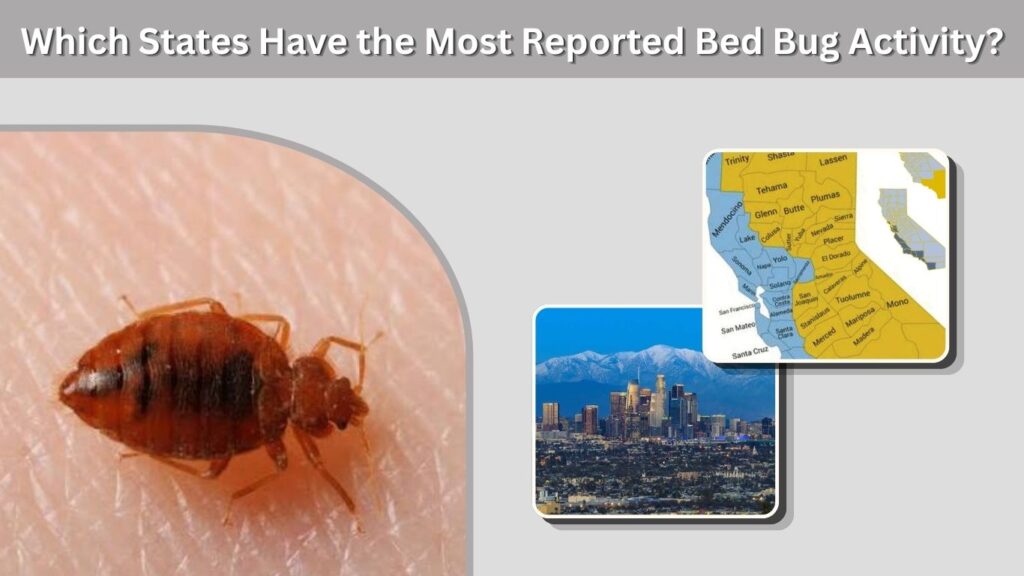
Several states consistently appear in major pest-control company rankings. Their large urban populations, transportation networks, and frequent movement of residents and travelers create opportunities for bed bugs to spread.
However, the number of ranked cities alone should not be interpreted as an official statewide risk score.
Ohio
Ohio has six cities in Orkin’s 2026 top 50, more than any other state. Cleveland ranks fourth nationally, while Columbus ranks eighth. Cincinnati, Youngstown, Dayton, and Toledo also appear.
These results demonstrate substantial bed bug treatment activity in multiple Ohio metropolitan markets. Residents should remain alert to infestation signs, particularly in shared housing and buildings experiencing frequent occupant turnover.
Illinois
Illinois has three cities on the 2026 list, including Chicago, Springfield, and Peoria. Chicago ranks first nationally for the sixth consecutive year in Orkin’s annual assessment.
Chicago’s large population, extensive visitor activity, and numerous shared residential environments create opportunities for bed bugs to move between locations. Nevertheless, the city’s ranking reflects the company’s treatment records, not the percentage of Chicago homes affected.
California
California has three ranked cities: Los Angeles, San Francisco, and San Diego. Los Angeles holds second place nationally, making it one of the most prominent markets in Orkin’s latest report.
Bed bugs can occur throughout California because they live in indoor environments and travel with personal belongings. Both residential properties and visitor accommodations can experience infestations, regardless of their cleanliness or price.
Michigan
Michigan is represented by Detroit, Grand Rapids, and Flint. Detroit ranks third, Grand Rapids tenth, and Flint twentieth in the 2026 list.
This pattern shows significant treatment activity across several Michigan cities. Bed bugs are capable of surviving indoors throughout the year, so cold winters do not automatically protect heated homes and apartments against infestations.
Top 10 U.S. Cities for Bed Bugs in 2026
Although statewide rankings are limited, city-level service data offers a clearer view of where pest-control companies report substantial treatment demand.
Orkin’s latest ranking identifies these ten metropolitan markets as its highest-ranked locations.
| Rank | City | State |
| 1 | Chicago | Illinois |
| 2 | Los Angeles | California |
| 3 | Detroit | Michigan |
| 4 | Cleveland | Ohio |
| 5 | Indianapolis | Indiana |
| 6 | Springfield | Illinois |
| 7 | Washington, D.C. | District of Columbia |
| 8 | Columbus | Ohio |
| 9 | Pittsburgh | Pennsylvania |
| 10 | Grand Rapids | Michigan |
The results indicate that Midwestern cities are strongly represented among the highest-ranked markets.
However, even cities outside this list can experience serious bed bug infestations. Rankings also change depending on the company, year, and reporting method.
Why Does Bed Bug Risk Vary Between States?

Bed bugs do not depend on dirty environments or particular climates to survive. Their ability to hide inside buildings and travel with people makes them widespread.
Differences in reported infestations are influenced by human activity, housing conditions, and access to professional pest-control services.
Population Density and Shared Housing
Apartment buildings, dormitories, and other multi-unit properties can provide opportunities for bed bugs to spread between rooms and neighboring units.
High occupant turnover may increase the frequency of introductions. However, infestations can also occur in isolated single-family homes, especially when bed bugs arrive through luggage or secondhand furniture.
Travel and Transportation
Bed bugs frequently spread by hiding in luggage, backpacks, clothing, and personal belongings. Hotels, short-term rentals, and transportation-related facilities may encounter infestations through the movement of visitors.
Busy travel destinations therefore deserve attention. However, a highly ranked city does not mean that every hotel or property within it has bed bugs.
Pest-Control Reporting Differences
Treatment rankings are influenced by how many customers use a particular provider and where that company operates.
A city with extensive pest-control coverage may generate more recorded treatments than a comparable city with fewer reporting branches. For this reason, treatment totals cannot be directly converted into an individual’s chance of encountering bed bugs.
Are States Without Ranked Cities Safe From Bed Bugs?
No state should be considered completely free of bed bugs. These insects are found throughout the United States and can be introduced into properties by travel, visitors, and contaminated belongings.
States such as Alaska, Arizona, Massachusetts, New Jersey, and Oregon do not have entries in Orkin’s 2026 top 50, but this does not establish that their residents face no risk.
Individual properties can experience infestations regardless of statewide reporting patterns.
How to Reduce Bed Bug Risk in Any State
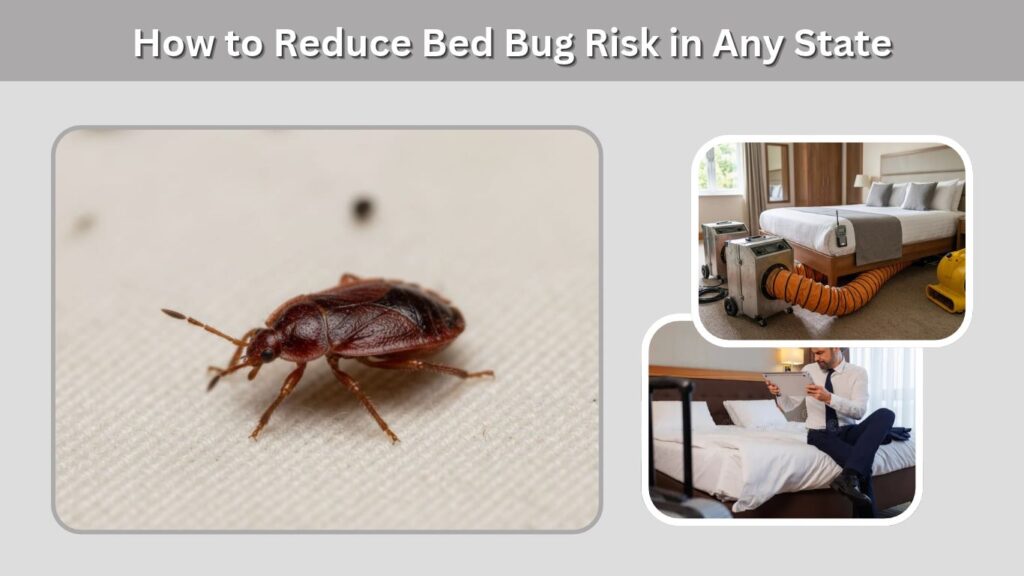
Preventing infestations is important whether someone lives in a highly ranked city or an area with relatively few reported treatments. Bed bugs can spread without being noticed, particularly when they hide inside luggage, furniture, or clothing.
Early inspection and prompt action are among the most useful protective measures.
Inspect Hotels and Temporary Accommodations
Before unpacking, examine mattress seams, headboards, bed frames, and nearby upholstered furniture. Look for live insects, dark fecal spots, shed skins, and tiny pale eggs.
Keep luggage on an inspected luggage rack rather than placing it directly on the bed or floor. If clear evidence of bed bugs appears, notify the accommodation provider and request a different room.
Check Secondhand Furniture
Used mattresses, couches, bed frames, and upholstered furniture can introduce bed bugs into homes. Thoroughly inspect secondhand belongings before bringing them indoors.
Pay attention to seams, joints, cracks, and fabric folds. Avoid collecting discarded furniture when its infestation history is unknown.
Use Heat and Monitor for Infestations
After traveling, placing dryer-safe clothing in a high-heat dryer for approximately 30 minutes can kill bed bugs and their eggs.
Vacuuming, reducing clutter, and using mattress encasements may also improve detection and control. If an infestation is confirmed, consult a qualified pest-control professional rather than relying on unverified home remedies.
FAQs
1. What State Has the Highest Bed Bug Risk?
There is no definitive national ranking of statewide bed bug infestation risk. However, Ohio has the greatest number of cities in Orkin’s 2026 top 50, with six. This indicates substantial recorded treatment activity across several Ohio cities, not necessarily the highest infestation rate per household.
2. Which City Has the Most Bed Bugs in 2026?
Chicago ranks first on Orkin’s 2026 list of U.S. cities with the most bed bug treatments. Los Angeles, Detroit, Cleveland, and Indianapolis complete the top five. These rankings measure service activity and do not determine how many homes are currently infested in each city.
3. Are Bed Bugs More Common in Warm States?
Not necessarily. Bed bugs can survive in heated buildings throughout the year, including in states with extremely cold winters. Travel, housing turnover, and movement of contaminated belongings influence their distribution. Several Midwestern cities appear near the top of national treatment rankings.
4. Which States Have the Fewest Bed Bugs?
Reliable data identifying the states with the lowest bed bug infestation rates is not available from the national treatment rankings. States without cities in a top 50 list should not automatically be considered low-risk, because reporting coverage and population differences affect the results.
5. Can Bed Bugs Spread Between States?
Yes. Bed bugs can travel across state lines inside luggage, clothing, furniture, and other belongings. They do not need to fly or jump to spread. Inspecting accommodations, checking belongings, and using appropriate heat treatments after travel can help reduce the risk of introducing them into homes.
