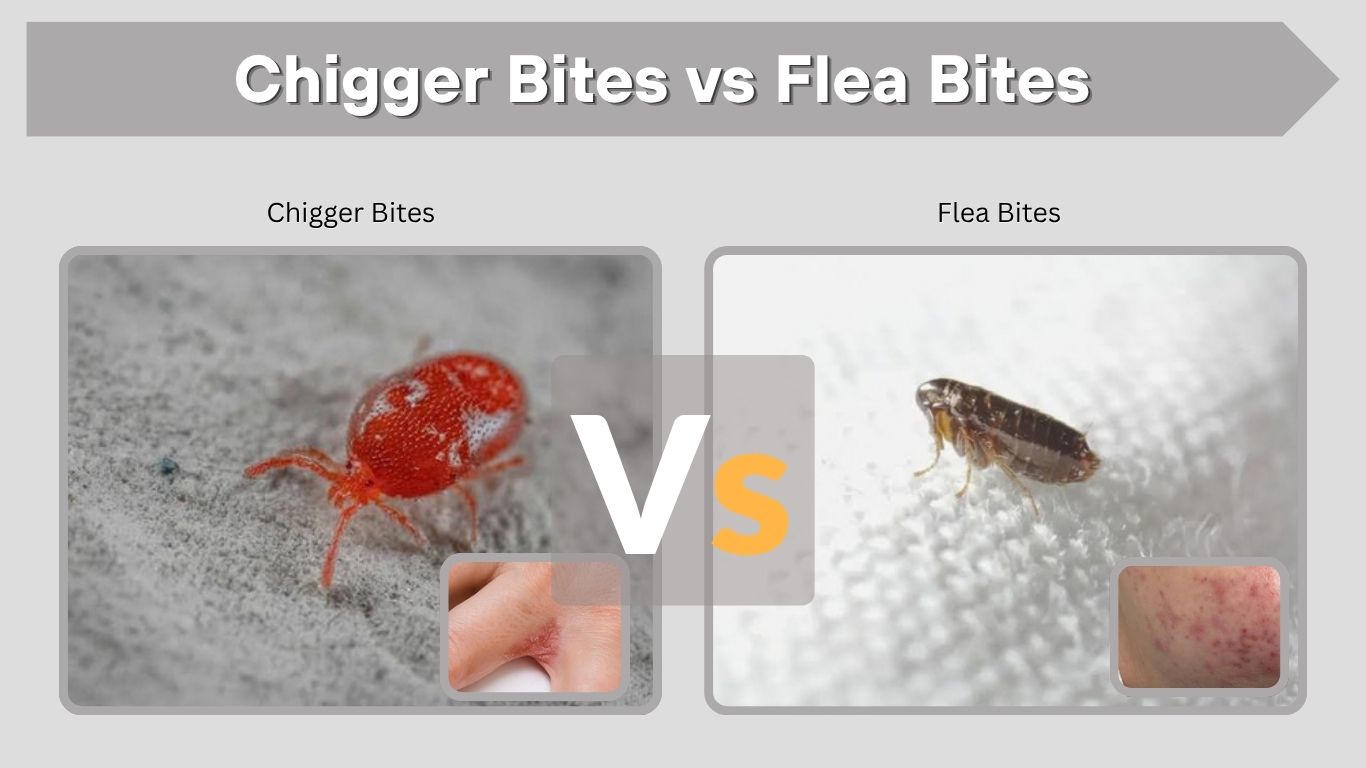
Chigger bites vs flea bites can look surprisingly similar because both may cause clusters of small, red, intensely itchy bumps. The biggest clues are usually where the bites appear, what you were doing before they developed, and how long the itching lasts. Chiggers are tiny mite larvae associated mainly with grassy and wooded outdoor areas, while fleas are blood-feeding insects commonly linked to pets and infested homes. This guide compares their appearance, location, symptoms, treatment, prevention, and differences from other common bug bites.
Chigger Bites vs Flea Bites: Quick Comparison
Both flea and chigger bites can produce itchy red bumps, so appearance alone may not provide a definite answer. Exposure history and bite location are often more useful. Chigger bites frequently develop where clothing presses against the skin, whereas flea bites commonly concentrate around the ankles and lower legs.
Chigger vs Flea Bites Comparison Table
| Feature | Chigger Bites | Flea Bites |
| Cause | Larval mites | Blood-feeding insects |
| Common exposure | Tall grass, weeds, woods | Pets, carpets, bedding, wildlife |
| Common location | Ankles, waist, groin, behind knees | Feet, ankles, calves |
| Appearance | Red pimples, welts, sometimes blisters | Small red/discolored bumps |
| Pattern | Lines or groups, often at clothing edges | Clusters or lines |
| Itching | Often extremely intense | Usually strongly itchy |
| Duration | Can last up to about 2 weeks | Often several days |
| Feeding | Skin tissue/cells | Blood |
The Fastest Way to Tell Them Apart
Consider what happened before the rash appeared. Bites developing after walking through tall grass, weeds, a garden, or wooded terrain—especially around waistbands, sock lines, or skin folds—favor chiggers.
Bites concentrated around the feet and ankles, especially when pets are scratching or fleas are present indoors, favor fleas.
What Do Chigger Bites Look Like?
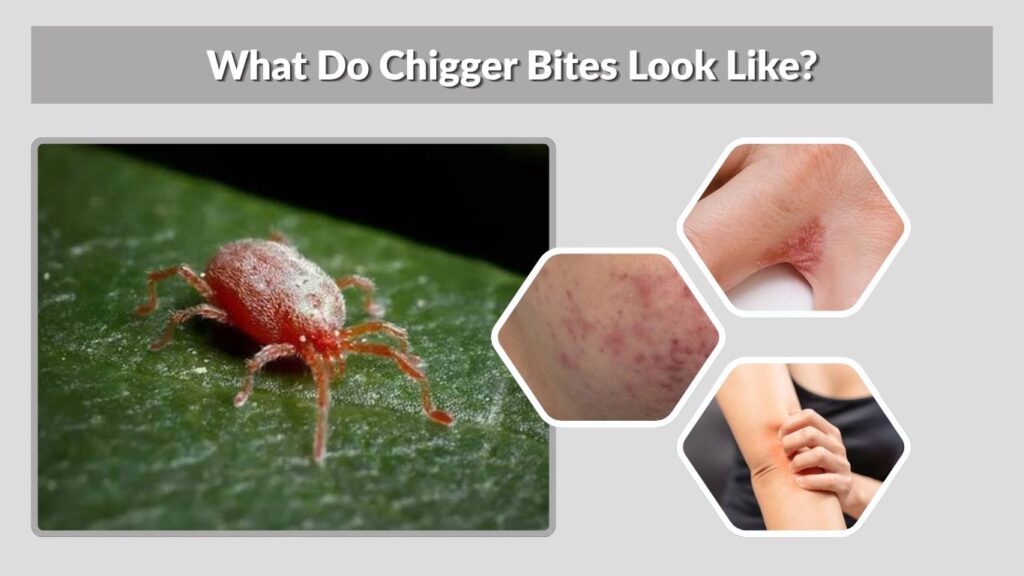
Chigger bites result from the larval stage of certain mites. Contrary to a common myth, chiggers do not burrow deep into human skin. Their feeding causes a strong inflammatory response that can produce intensely itchy bumps. Symptoms may not become obvious immediately after outdoor exposure, making the connection with chiggers easy to miss.
Common Signs of Chigger Bites
- Small red or discolored bumps
- Pimple-like spots or welts
- Possible small blisters
- Severe itching
- Multiple bites grouped together
- Bites around sock lines
- Bites beneath waistbands
- Spots behind the knees or in skin folds
MedlinePlus notes that chigger bites commonly occur around the waist, ankles, and warm skin folds.
When Does Chigger Itching Start?
Chigger bites are often painless initially. Itching usually begins several hours after exposure and may become particularly intense during the first 24–48 hours.
The irritation gradually improves, but symptoms can sometimes continue for up to approximately two weeks.
What Do Flea Bites Look Like?
Fleas are small wingless insects that feed on blood. Humans are commonly exposed when fleas are present on pets, wildlife, carpeting, furniture, or bedding. Their bites typically create small itchy bumps and may occur repeatedly as a flea moves across accessible skin. Location and evidence of an infestation can therefore provide important identification clues.
Common Signs of Flea Bites
- Small itchy bumps
- Red or discolored spots
- A reddish or discolored halo around some bites
- Several bites clustered together
- Bumps arranged roughly in a line
- Frequent bites on ankles
- Bites on feet and lower legs
Flea bites generally remain smaller than typical mosquito welts and frequently occur below the knees.
Why Flea Bites Itch
Fleas pierce the skin and feed on blood. During feeding, flea saliva enters the skin and triggers an immune response.
Histamine released during this reaction contributes to itching and swelling. Individual reactions vary, so two people exposed to the same fleas may develop noticeably different-looking bites.
Chigger vs Flea Bites by Body Location
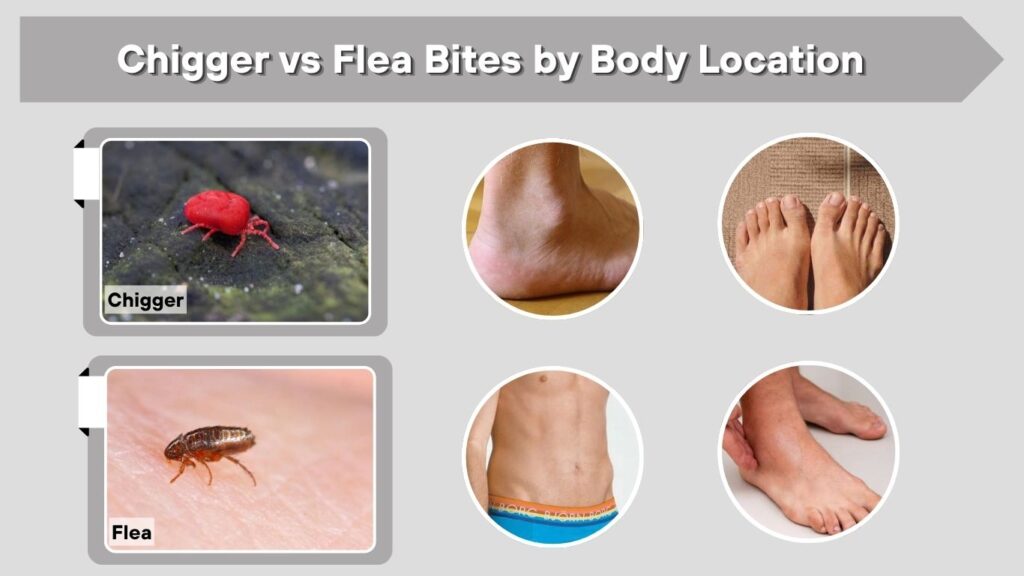
The location of itchy bumps can provide a useful clue because the two pests reach people differently. Chiggers attach after contact with infested outdoor vegetation and often move until their progress is restricted by clothing. Fleas jump onto hosts and commonly reach the lowest exposed parts of the body first.
Chigger Bites Commonly Appear Around
- Ankles
- Sock lines
- Lower legs
- Behind the knees
- Waistbands
- Groin
- Areas beneath tight clothing
- Skin folds
Flea Bites Commonly Appear Around
Flea bites are particularly common on the feet, ankles, and calves. They can occur elsewhere, especially when a person sits or lies in an infested environment, but lower-leg bites are particularly characteristic.
Neither location nor appearance alone proves which insect or mite caused a rash.
Chigger Bites vs Flea Bites: Which Itches More?
Both can itch considerably, but chigger bites are particularly known for intense, persistent itching. Flea bite reactions vary more depending on individual sensitivity. Scratching either type of bite can damage the skin barrier, leading to additional inflammation and potentially a secondary bacterial infection.
Chigger Bite Itching
Chigger itching can become extremely strong during the first day or two. The affected areas may remain uncomfortable for days even though the mites are no longer attached.
Trying to dig a chigger out of the skin is unnecessary because ordinary chiggers do not remain buried underneath the skin.
Flea Bite Itching
Flea bites also produce strong itching, although uncomplicated bites usually resolve within several days.
The bigger problem can be repeated exposure. If fleas remain in carpeting, pet bedding, furniture, or on animals, new bites may continue appearing even while older ones heal.
How to Treat Chigger and Flea Bites

Treatment for ordinary chigger and flea bites is similar because the goal is primarily to reduce itching and protect damaged skin. Most uncomplicated bites can be cared for at home. Persistent, increasingly painful, infected, or unusually severe skin reactions should be assessed by a healthcare professional.
Basic Treatment Steps
- Wash affected skin gently with soap and water.
- Apply a cold compress.
- Avoid scratching the bumps.
- Consider calamine lotion for itching.
- An appropriate OTC hydrocortisone cream may help.
- An antihistamine may provide additional itch relief.
- Keep scratched or broken skin clean.
- Seek medical advice if infection develops.
Follow medication labels carefully, particularly for children, pregnancy, existing medical conditions, or other medications.
Signs of Infection
Repeated scratching can introduce bacteria through broken skin. Increasing pain, warmth, swelling, spreading redness or discoloration, pus, or worsening tenderness warrants medical attention.
Antibiotics are not routinely required for ordinary chigger or flea bites; they may be needed when a healthcare professional determines that a secondary bacterial infection has developed.
Chigger vs Flea vs Bed Bug Bites
Bed bug bites add another challenge because all three can appear in groups or lines. The surrounding circumstances are therefore important. Chiggers usually follow outdoor exposure, fleas commonly correlate with pets or household infestations, and bed bug bites are typically noticed after sleeping in an infested environment.
Key Differences
Chigger bites strongly favor areas beneath tight clothing and may itch intensely for many days. Fleas particularly target ankles and lower legs.
Bed bug bites commonly occur on exposed skin during sleep. However, bite appearance can overlap substantially, and even healthcare professionals may need exposure history rather than photographs alone to identify the cause accurately.
Chigger vs Flea vs Mosquito Bites
Mosquito bites commonly develop as somewhat larger, puffy itchy welts on exposed skin. Flea bites tend to be smaller and grouped around the lower legs, while chigger bites often concentrate where clothing presses against the body.
Do Not Diagnose by Pictures Alone
Images are useful for recognizing general patterns, but insect bites do not always have a unique visual appearance. Skin color, immune response, scratching, age of the bites, and previous exposure can substantially change their appearance.
If the rash is unexplained, rapidly worsening, painful, or accompanied by illness, professional evaluation is more reliable than visual comparison alone.
How to Prevent Chigger and Flea Bites
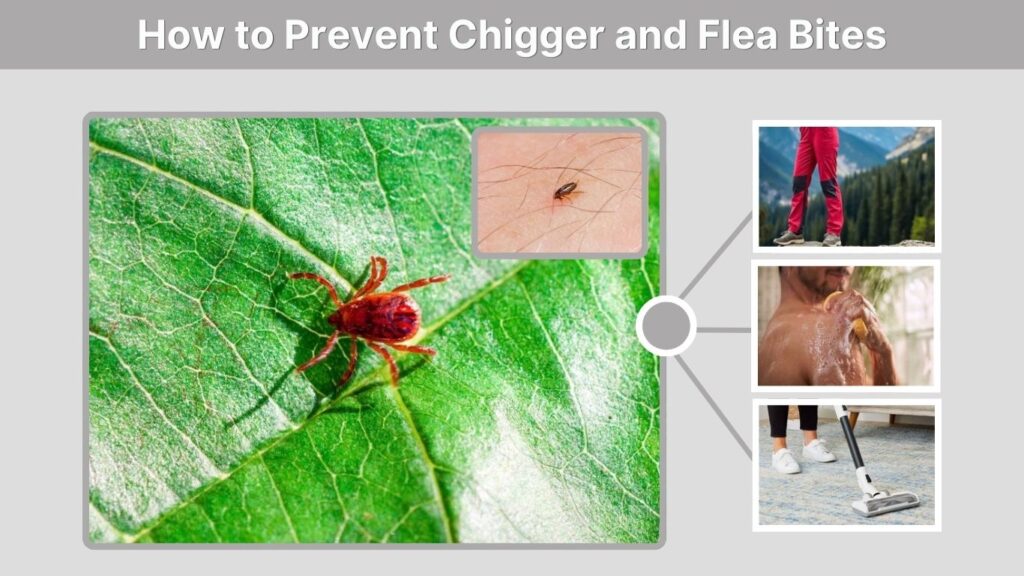
Prevention differs because chiggers are primarily an outdoor exposure problem, whereas fleas often require control of animals and the home environment. Identifying where the bites originated helps determine whether you need personal outdoor protection, household flea treatment, veterinary flea control, or a combination of measures.
Chigger and Flea Prevention Tips
- Avoid heavily overgrown grass when possible.
- Wear long pants during outdoor activities.
- Consider an appropriate insect repellent.
- Shower and change clothes after high-risk outdoor exposure.
- Keep pets on veterinarian-recommended flea prevention.
- Check pets regularly for fleas.
- Wash pet bedding regularly.
- Vacuum carpeting, upholstery, and pet-resting areas thoroughly.
MedlinePlus recommends DEET-containing repellent for preventing chigger bites, while effective flea prevention also requires eliminating the infestation source.
When Should You See a Doctor?
Most bites cause only localized irritation. However, both fleas and certain chiggers can be associated with infectious diseases in some regions. This makes systemic symptoms more important than the appearance of the bumps alone. Fleas can transmit several pathogens, and infected chiggers can transmit scrub typhus in parts of the Asia-Pacific region.
Symptoms That Need Medical Attention
Seek medical advice if you develop fever, severe headache, body aches, worsening rash, significant swelling, pus, or other signs of infection after suspected bites. Prompt assessment is particularly important after possible chigger exposure if fever or an unusual dark scab-like lesion develops in a region where scrub typhus occurs.
FAQs
How can I tell flea bites from chigger bites?
Chigger bites often follow exposure to tall grass or wooded areas and commonly occur around waistbands, sock lines, ankles, groin, and skin folds. Flea bites are usually small clustered bumps concentrated around feet, ankles, and calves, especially when pets or an indoor flea infestation are present.
Which is worse, chigger bites or flea bites?
Neither is automatically worse. Chigger bites are often associated with particularly intense itching that may persist for up to two weeks. Flea bites commonly improve within several days but may continue appearing if an infestation remains untreated. Both can become infected when repeated scratching damages the skin.
Can chigger and flea bites appear in a line?
Yes. Both can produce multiple bumps arranged in groups or somewhat linear patterns, so a line of bites does not reliably distinguish them. Location and exposure history are more useful: tight-clothing areas suggest chiggers, while repeated ankle or lower-leg bites combined with pet or indoor flea evidence suggest fleas.
Do chiggers burrow under your skin?
No. Ordinary chiggers do not burrow underneath human skin. Their larvae attach and feed at the skin surface, and the inflammatory reaction can continue after the chigger has detached. Therefore, attempting to dig, squeeze, or otherwise remove a supposedly buried chigger is unnecessary and may damage the skin.
When should I worry about chigger or flea bites?
Get medical advice if bites become increasingly painful, warm, swollen, infected, or fail to improve. Fever, headache, body aches, widespread rash, breathing difficulty, or other systemic symptoms also warrant medical evaluation. In regions where scrub typhus occurs, illness following chigger exposure deserves particular attention.