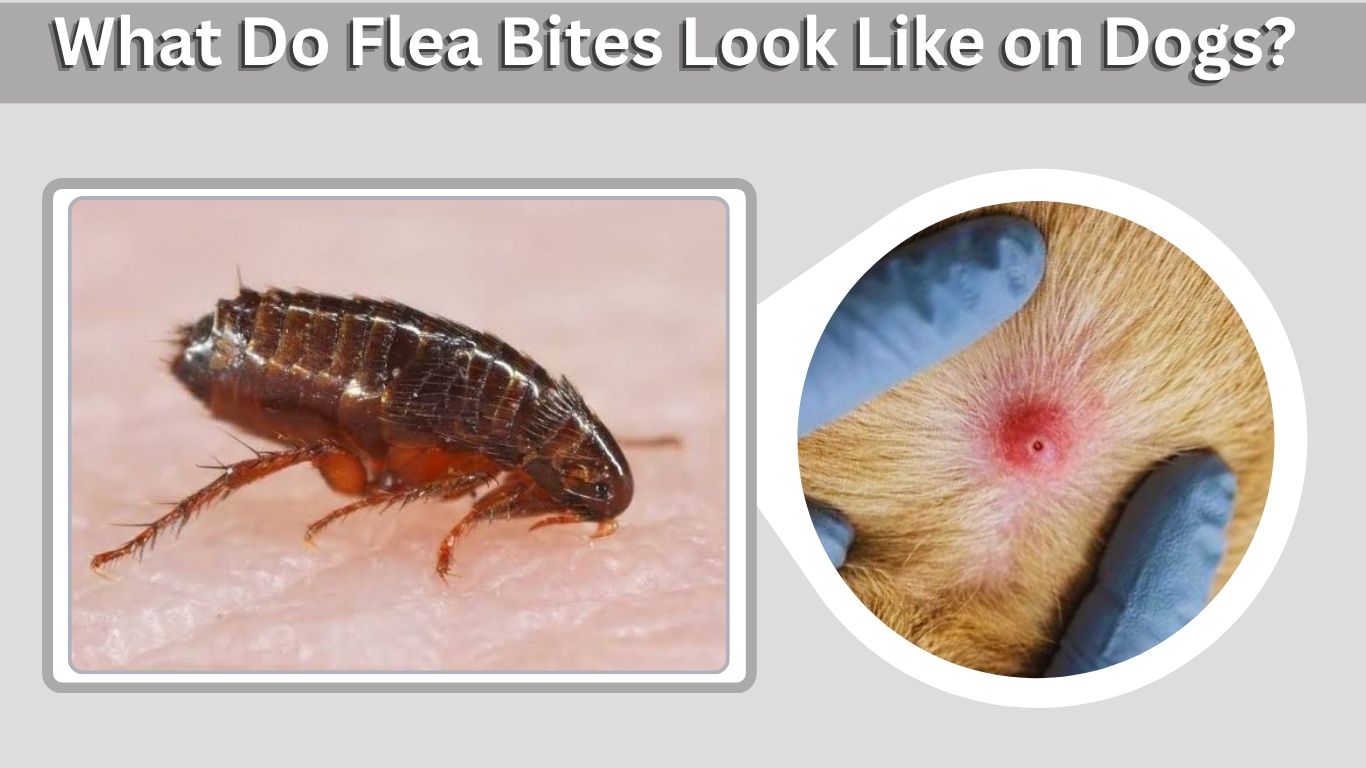
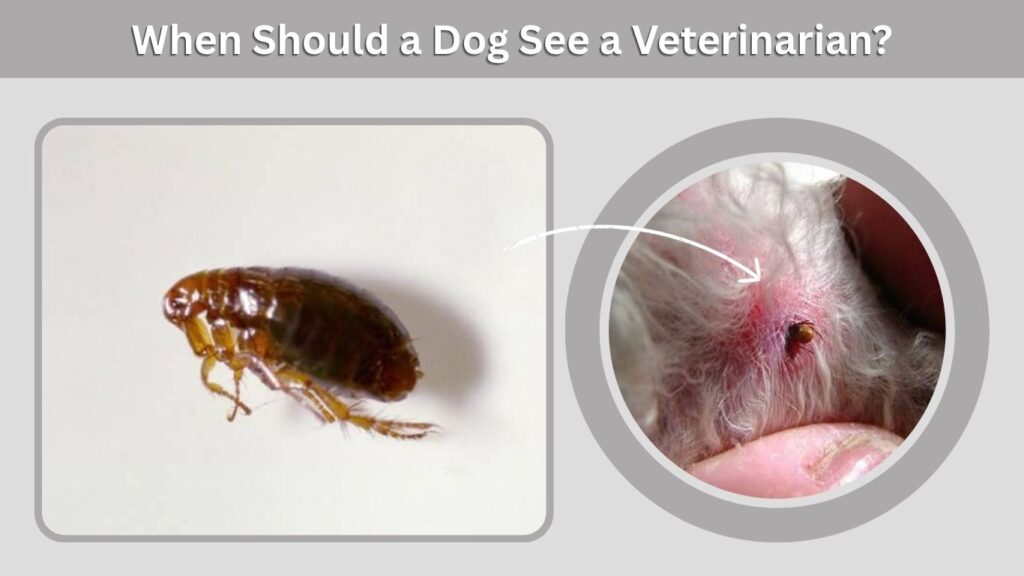
What do flea bites look like on dogs? They often appear as small red or irritated bumps, crusty spots, scabs, or areas of inflamed skin. Because a dog’s coat can hide individual bites, owners may first notice scratching, chewing, hair loss, or dark “flea dirt” rather than obvious bite marks. Flea reactions commonly affect the lower back, base of the tail, thighs, groin, and belly. Dogs allergic to flea saliva may develop much stronger skin reactions from even a small number of bites.
What Do Flea Bites Look Like on a Dog?
Flea bites can be difficult to see because fur covers much of a dog’s skin. Individual bites may resemble tiny raised spots, but repeated biting and scratching can quickly change their appearance. Some dogs show only mild irritation, while dogs with flea allergy dermatitis may develop extensive redness, crusting, hair loss, and inflamed skin.
Common Appearance of Flea Bites
When you part your dog’s fur, you may notice:
- Small red or pink bumps
- Tiny crusted spots
- Scabs caused by scratching
- Red or inflamed skin
- Areas of hair thinning or hair loss
- Darkened skin in chronic cases
- Moist or irritated patches
- Tiny black particles known as flea dirt
The actual flea bite may be very small. Much of the visible damage can result from the dog’s reaction to the bite and repeated scratching or chewing.
What Do Flea Bites Look Like at First?
A fresh bite may begin as a small raised bump surrounded by mild redness. On dogs with dense coats, these early marks are easy to miss.
Over time, scratching can turn a tiny bite into a scab, crust, or larger irritated patch. A flea-allergic dog may develop much more severe inflammation than a dog without an allergy.
Can Flea Bites Look Like a Rash?
Yes. Multiple flea bites or an allergic reaction can make the skin look generally red and rash-like rather than showing clearly separated bumps.
Flea allergy dermatitis is especially likely to produce widespread itching and skin lesions around the back, tail base, and hindquarters.
Where Do Flea Bites Usually Appear on Dogs?
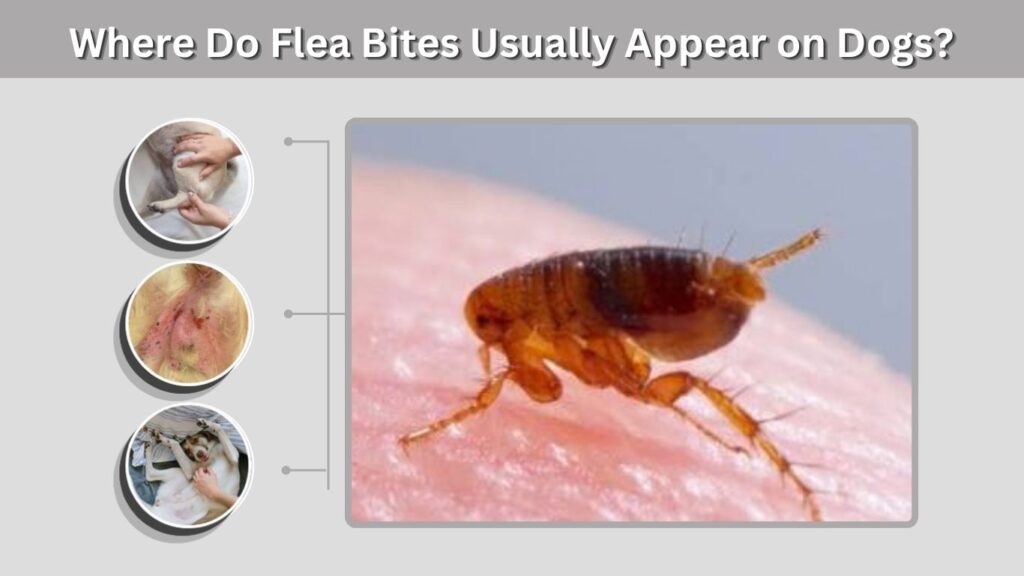
Flea-related irritation follows some recognizable patterns. Fleas may move throughout the coat, but skin changes are frequently concentrated around the dog’s rear half and areas where the coat is relatively thin. Checking these locations carefully can help reveal flea dirt, adult fleas, crusting, or inflamed skin that might otherwise remain hidden.
Common Areas to Check
Look closely around the:
- Base of the tail
- Lower back
- Rump
- Back of the thighs
- Groin
- Belly
- Inner legs
- Neck in some dogs
Cornell notes that flea infestations commonly cause redness, itching, and hair loss around the back near the tail and along the hind legs.
What Do Flea Bites Look Like on a Dog’s Belly?
The belly has thinner fur, so flea-related skin irritation may be easier to see there. You may notice scattered red bumps, small scabs, or areas of generalized redness.
However, a belly rash is not automatically caused by fleas. Contact allergies, bacterial infections, mites, environmental allergies, and other skin conditions can produce a similar appearance.
Flea Bites Near the Tail
The tail base and lower back are classic areas for flea allergy dermatitis. Dogs may chew intensely at these areas, causing broken hairs, bald patches, crusts, and darkened skin.
Merck identifies the tailhead, rear back, and thighs as common areas affected by flea allergy dermatitis in dogs.
What Is Flea Dirt on a Dog?
Flea dirt is often easier to find than flea bites themselves. It consists largely of flea feces containing digested blood and can look like tiny black or reddish-black specks scattered through the coat. Finding flea dirt is strong evidence that fleas are present or have recently been feeding on the dog.
How to Identify Flea Dirt
Try the following:
- Part the fur around the tail and lower back.
- Look for tiny black pepper-like particles.
- Collect several specks on a white tissue or paper towel.
- Add a little water.
- Watch for a reddish-brown stain.
The reddish color appears because flea dirt contains digested blood. Merck describes flea excrement as reddish-black material that produces a reddish-brown color when wet.
Can a Dog Have Fleas Without Visible Fleas?
Yes. Fleas move quickly and can hide deep within the coat.
Dogs that are very itchy may also remove fleas through excessive grooming, meaning you may find skin irritation without seeing a live flea.
Use a Flea Comb
A fine-toothed flea comb can help detect adult fleas and flea dirt. Concentrate on the tail base, lower back, groin, and belly.
Finding even a small amount of flea dirt is worth taking seriously because most of the flea life cycle occurs in the surrounding environment rather than directly on the dog.
Flea Bites and Flea Allergy Dermatitis
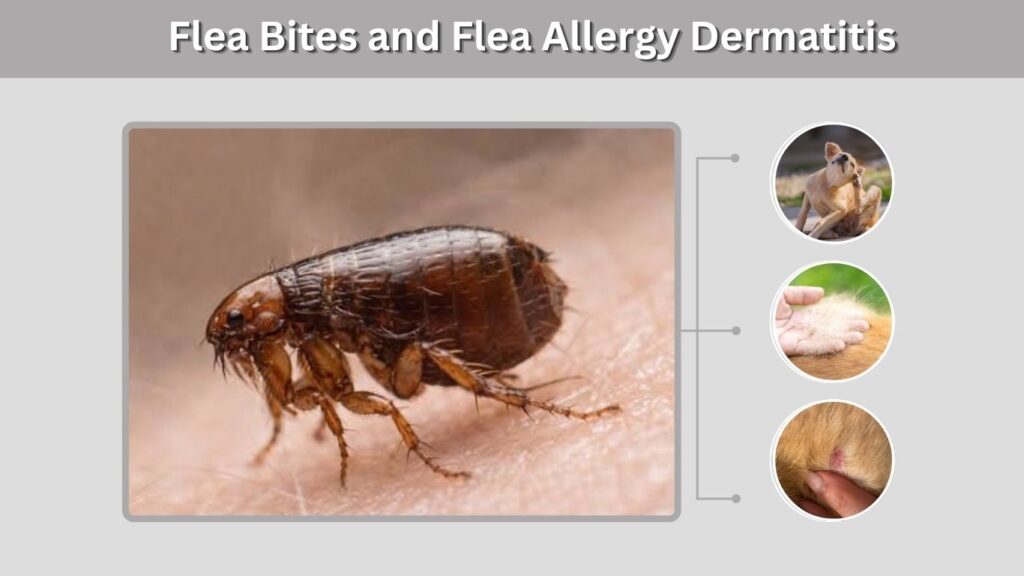
Some dogs are hypersensitive to proteins in flea saliva. This condition is called flea allergy dermatitis, or FAD. A sensitive dog may develop intense itching and substantial skin damage even when only a few fleas are present. This explains why an apparently mild infestation can sometimes produce severe symptoms.
Signs of Flea Allergy Dermatitis
Possible signs include:
- Intense scratching
- Constant licking or chewing
- Hair loss
- Crusted bumps
- Red or inflamed skin
- Thickened skin in chronic cases
- Darkened skin pigmentation
- Hot spots
- Secondary bacterial or yeast infections
Merck reports that chronic FAD can result in alopecia, hyperpigmentation, thickened skin, and secondary infections.
Why One Dog May Look Worse Than Another
Two dogs exposed to the same fleas may react very differently.
A nonallergic dog may show only mild scratching, while a flea-allergic dog can develop severe itching after limited exposure. The intensity of visible skin lesions therefore does not always reflect the number of fleas present.
Can Flea Bites Become Infected?
Yes. Flea bites themselves are tiny, but scratching and chewing can damage the skin barrier. Bacteria or yeast may then cause secondary infections.
Signs such as pus, unpleasant odor, worsening redness, moist sores, tenderness, or rapidly spreading lesions deserve veterinary attention.
Flea Bites vs. Tick Bites on Dogs
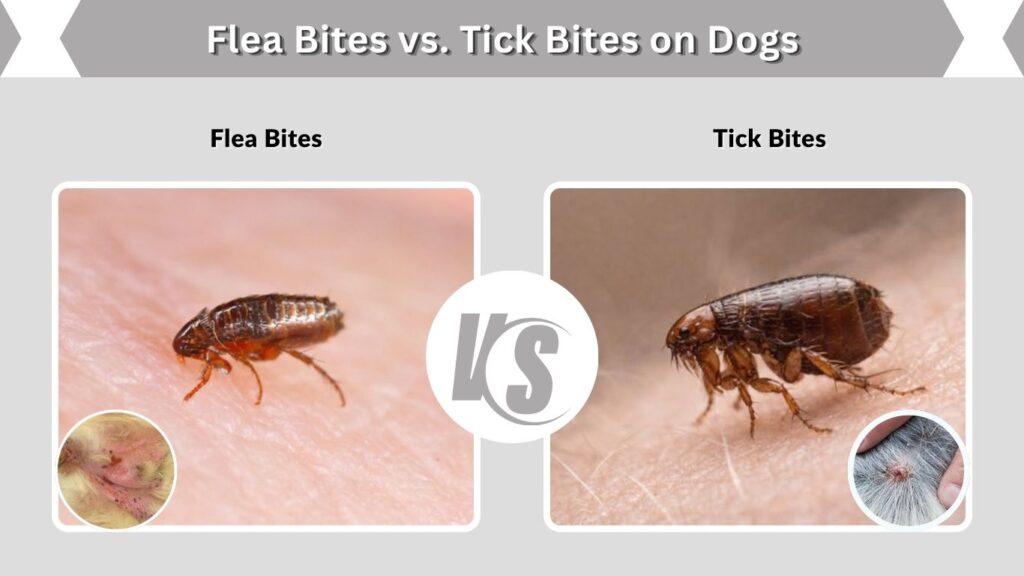
Flea and tick bites can both irritate a dog’s skin, but they usually present differently. Fleas are tiny jumping insects that move through the coat and frequently produce multiple itchy areas. Ticks attach to the skin and remain in place while feeding, sometimes becoming visibly enlarged.
Main Differences
Typical differences include:
- Flea bites: Often numerous and intensely itchy.
- Tick bites: Usually associated with an attached tick or a single attachment site.
- Fleas: Frequently cause irritation near the tail and hindquarters.
- Ticks: Can attach almost anywhere.
- Fleas: May leave flea dirt in the coat.
- Ticks: Remain attached for extended feeding periods.
Ticks also transmit several important diseases, including Lyme disease, ehrlichiosis, anaplasmosis, and Rocky Mountain spotted fever.
Do Not Diagnose by Bumps Alone
Many skin conditions cause similar-looking red bumps.
Mites, allergies, bacterial infections, insect bites, and fungal diseases can mimic flea-related lesions. Evidence of fleas or flea dirt makes the diagnosis more likely, but persistent skin problems may require veterinary examination.
How to Treat Flea Bites on Dogs
Successful treatment involves more than soothing the visible bite marks. Fleas have multiple life stages, and most immature fleas live in carpets, bedding, furniture, and other parts of the environment. Effective flea management therefore needs to address the dog, other pets, and the surroundings at the same time.
Treat the Dog
A veterinarian can recommend an appropriate flea preventive based on your dog’s:
- Age
- Weight
- Health
- Lifestyle
- Other medications
- Local parasite risks
Do not use flea products intended for a different species or combine treatments unless a veterinarian confirms that doing so is safe.
Clean the Environment
Wash pet bedding and vacuum carpets, furniture, cracks, and areas where pets spend time. Flea eggs fall from animals into their surroundings, so environmental control is an important part of breaking the flea life cycle.
Treat Every Pet in the Household
Untreated pets can continue carrying fleas and allow the infestation to persist.
Merck recommends controlling fleas on affected animals, other pets in the household, and the environment when treating flea allergy dermatitis.
When Should a Dog See a Veterinarian?
Mild flea irritation may improve once effective flea control begins, but severe skin damage or ongoing itching requires closer attention. Some dogs develop flea allergy dermatitis, secondary infections, or anemia, while others may actually have a different skin condition that only resembles flea bites.
Seek Veterinary Advice If You Notice
Contact a veterinarian if your dog has:
- Severe or constant itching
- Large areas of hair loss
- Bleeding or open sores
- Pus or foul-smelling skin
- Significant swelling
- Extreme weakness
- Pale gums
- Large numbers of fleas
- Persistent symptoms despite flea control
Heavy flea infestations can contribute to anemia, particularly in young or small dogs.
Puppies Need Extra Attention
Puppies have less blood volume than adult dogs and may become seriously affected by heavy flea infestations.
If a puppy is heavily infested, weak, unusually sleepy, or has pale gums, prompt veterinary evaluation is important.
FAQs
Flea bites are not always easy to identify because the dog’s coat hides small lesions and many other conditions cause similar skin changes. Checking the tail base, belly, thighs, and lower back for itching, flea dirt, and live fleas can provide stronger evidence than looking at bite marks alone.
1. What do flea bites look like on a dog’s skin?
They commonly look like small red bumps, irritated spots, scabs, or crusts. Dogs with flea allergies may develop larger areas of inflammation and hair loss.
2. What do flea bites look like on a dog’s belly?
They may appear as scattered red bumps, tiny scabs, or patches of irritated skin. Because belly fur is often thin, lesions can be easier to see there.
3. What do infected flea bites look like on dogs?
Infected areas may become increasingly red, swollen, moist, painful, crusted, or filled with discharge. A bad odor can also indicate secondary skin infection.
4. Can my dog have flea bites without seeing fleas?
Yes. Fleas can be difficult to spot, particularly in thick fur or on dogs that groom frequently. Flea dirt, typical skin lesions, and itching may be present even when no live fleas are immediately visible.
5. How can I tell if my dog has flea bites or allergies?
Flea allergy dermatitis often concentrates around the lower back, tail base, and hind thighs, but other allergies can produce similar symptoms. Finding fleas or flea dirt supports flea involvement, while persistent or severe itching should be evaluated by a veterinarian.