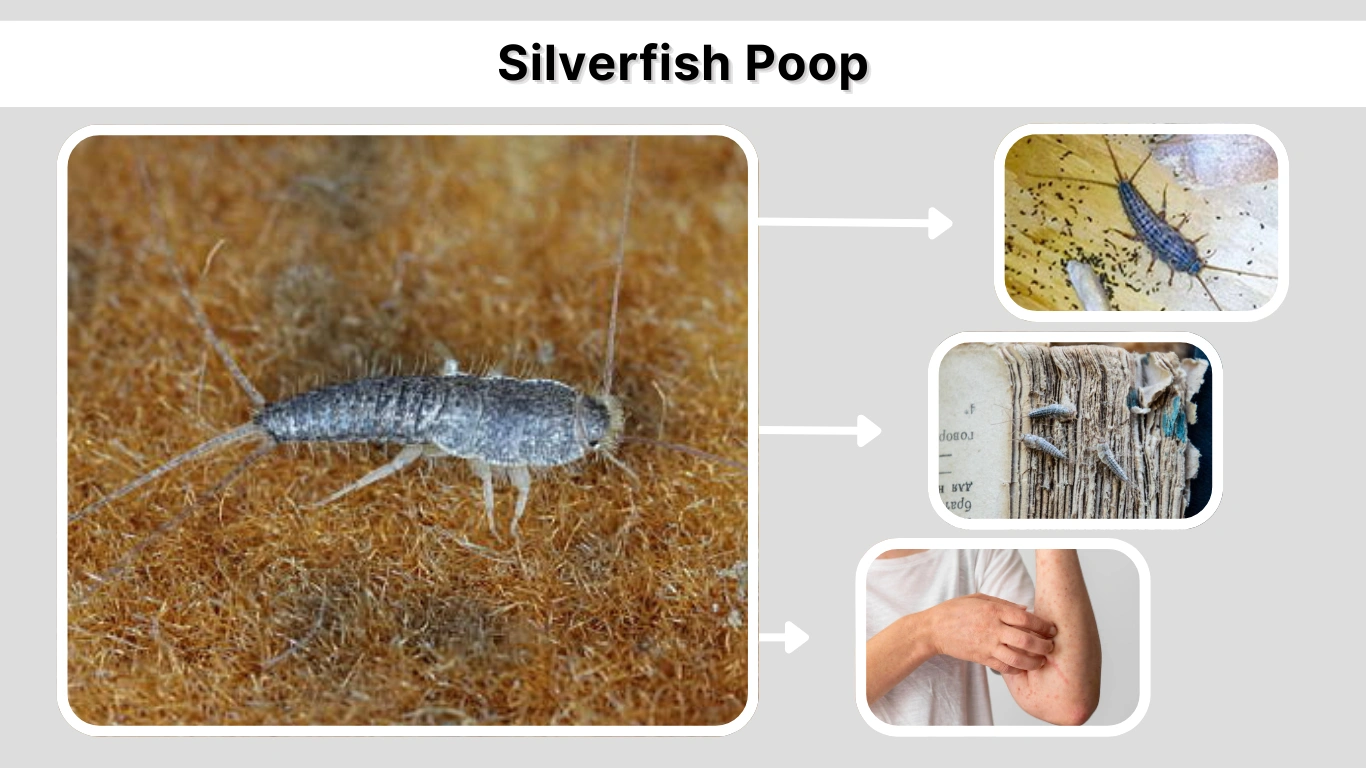
Silverfish poop is often one of the first unnoticed clues that these fast-moving, moisture-loving insects are living inside a home. Because silverfish avoid light and hide in narrow cracks, people rarely see them during the day. Instead, their droppings may appear near sinks, bookshelves, storage boxes, or wallpaper. Learning how to recognize silverfish feces helps homeowners confirm activity early, understand where silverfish are feeding, and take steps before serious damage occurs.
What Is Silverfish Poop?
Silverfish poop refers to the tiny waste particles left behind after silverfish feed. These insects survive on materials rich in starches and sugars, including paper, book bindings, cardboard, wallpaper glue, cotton fabrics, food crumbs, and even dead insects. As they digest these materials, they excrete extremely fine droppings that are often mistaken for ordinary dust.
Unlike rodent droppings, silverfish feces are not large enough to be picked up easily. They tend to accumulate slowly and blend into surfaces, which is why infestations can continue for months before homeowners realize insects are present. The droppings are usually dry, lightweight, and scattered loosely rather than deposited in neat piles.
Because silverfish often move between feeding and hiding spots at night, their feces may appear in several locations throughout a room. This scattered pattern is one reason silverfish poop is commonly confused with dirt, pepper grains, or debris falling from shelves or walls.
What Does Silverfish Poop Look Like?

Silverfish poop is extremely small, usually appearing as tiny black or dark brown specks. Many people describe it as resembling finely ground pepper, soot particles, or gritty dust. The individual pieces are so tiny that they rarely have a clear shape when viewed with the naked eye.
In good lighting, silverfish droppings may appear as:
- Very fine dots rather than pellets
- Dark grains no larger than sand
- Dry, non-smeared particles
- Lightly scattered instead of grouped
Because of its size, silverfish poop often goes unnoticed on dark surfaces. It is more easily spotted on white shelves, inside bathtubs, on paper stacks, or around sinks and baseboards. A flashlight or phone light held at a low angle can help reveal the texture and distribution of the specks.
Silverfish feces may also be found mixed with other signs such as shed skins, yellow stains, or tiny scratches on paper and cardboard. These combinations are often more reliable indicators than droppings alone.
How to Identify Silverfish Droppings
Correct identification is important because many household pests leave behind small debris. While silverfish poop is subtle, several characteristics can help confirm it.
- Extremely small size – usually smaller than a grain of sand and much finer than roach or mouse droppings
- Dark, pepper-like appearance – black or deep brown specks rather than tan pellets
- Dry, gritty texture – not sticky, smeared, or ink-like
- Location near feeding materials – books, cardboard, wallpaper, fabrics, pantry edges
- Presence of other silverfish signs – shed skins, yellow stains, or tiny holes in paper
If specks repeatedly reappear after cleaning, especially in damp or dark locations, silverfish activity becomes much more likely.
Where Is Silverfish Poop Commonly Found?

Bathrooms and Kitchens
Bathrooms and kitchens are some of the most common places to find silverfish droppings. These rooms provide steady moisture, warmth, and hidden cracks where silverfish can survive. Droppings may appear under sinks, around drains, inside cabinets, behind toilets, or along baseboards. In kitchens, silverfish feces may be found near pantries, food containers, dishwashers, and wall gaps.
The combination of humidity and food sources makes these rooms ideal feeding grounds. If silverfish poop is present in bathrooms or kitchens, it often indicates insects are nesting nearby in wall voids or under flooring.
Bedrooms, Closets, and Storage Areas
Silverfish frequently infest areas where paper, fabrics, and stored materials are kept. Bedrooms and closets often contain books, clothing, cardboard boxes, and wallpaper — all attractive food sources. Droppings may appear on shelves, inside drawers, under beds, or along the edges of stored boxes.
Storage spaces that are rarely disturbed provide ideal shelter. Silverfish feces found in closets or on bookcases often point to long-term, hidden activity.
Basements, Attics, and Wall Voids
Basements and attics are classic silverfish environments due to darkness, higher humidity, and limited airflow. Droppings may be seen near foundation walls, floor drains, insulation, old files, or stored household items. In many homes, the main population lives in wall voids and spreads outward, leaving feces near cracks, electrical outlets, and baseboards.
What Does Finding Silverfish Poop Indicate?

Finding silverfish poop almost always means there is current or recent silverfish activity. A few isolated specks could result from a single wandering insect, but repeated droppings in the same area usually signal that silverfish are feeding nearby and possibly nesting.
Consistent droppings often indicate:
- Ongoing feeding on paper, glue, or fabrics
- Hidden harborages inside walls or cabinets
- Moisture problems creating a suitable habitat
- A population large enough to leave visible traces
Over time, droppings tend to spread outward from nesting zones. This can help homeowners locate where silverfish are entering rooms or where environmental conditions favor their survival.
Silverfish Poop vs Other Pest Droppings
Silverfish droppings are often mistaken for debris from other insects or pests. Understanding the differences helps prevent misidentification and unnecessary treatments.
- Silverfish vs cockroach droppings: Cockroach droppings are larger and often cylindrical or ridged, while silverfish feces are much finer and resemble pepper dust. Roach droppings are commonly found near food scraps, whereas silverfish droppings appear near paper, fabrics, and damp walls.
- Silverfish vs termite frass: Termite droppings are uniform pellets that look like tiny grains of wood or sand and are often light brown. Silverfish poop is darker, irregular, and scattered rather than piled beneath holes.
- Silverfish vs ant debris: Ants rarely leave visible feces. What appears to be “ant droppings” is often soil, wood fragments, or food remains. Silverfish droppings are true waste specks left near feeding sites.
- Silverfish vs mouse droppings: Mouse droppings are clearly visible, rice-shaped pellets. Silverfish feces are microscopic by comparison and never elongated.
- Silverfish vs bed bug stains: Bed bug droppings look like black ink spots and often smear when wiped. Silverfish droppings remain dry and grainy.
Are Silverfish Droppings Harmful?

Silverfish droppings are not toxic, but they are still considered unsanitary. Over time, feces mixed with shed skins can contribute to poor indoor hygiene and may aggravate allergies or respiratory sensitivity, especially in people who react to dust or insect debris.
The greater concern is what droppings represent rather than the droppings themselves. They signal ongoing insect activity that can damage household items. Silverfish feed on books, important documents, wallpaper, clothing, upholstery, and even food packaging. Left unaddressed, infestations can quietly destroy stored belongings long before live insects are frequently seen.
Droppings also tend to appear in humid environments, which can support mold growth. This combination of moisture, mold, and insect debris can worsen air quality inside a home.
Common Signs That Appear Along With Silverfish Poop
Shed Skins and Yellow Stains
As silverfish grow, they shed their skins multiple times. These pale, translucent skins are often found near droppings. Yellow stains may also appear on paper, fabrics, or walls where silverfish have been feeding or traveling.
Material Damage
Irregular holes in paper, notches along book edges, thinning fabric, and scraped wallpaper glue are all classic silverfish damage signs. When droppings appear alongside this type of damage, silverfish activity becomes much more likely.
Live Silverfish Sightings
Silverfish are most active at night. Seeing them in sinks, bathtubs, basements, or laundry rooms after dark, combined with droppings, usually confirms an infestation.
How to Clean Silverfish Poop Safely
Silverfish droppings should be removed carefully to prevent spreading fine particles into the air. Vacuuming with a HEPA or fine-particle filter is one of the safest ways to collect droppings from shelves, baseboards, and corners.
After vacuuming, surfaces can be wiped with vinegar solutions, mild disinfectants, or warm soapy water. Areas should then be dried thoroughly, because moisture encourages silverfish survival. Avoid dry sweeping, which can scatter particles and increase airborne dust.
Cleaning alone will not eliminate silverfish, but it helps remove allergenic debris and makes it easier to monitor whether new droppings continue to appear.
How to Prevent Silverfish Droppings in Your Home
Preventing silverfish poop means removing the conditions that allow silverfish to survive and feed.
- Reduce indoor humidity using dehumidifiers, fans, and proper ventilation
- Seal cracks and crevices around baseboards, pipes, and wall openings
- Store books, papers, and clothing in airtight plastic containers
- Fix plumbing leaks quickly to remove moisture sources
- Vacuum dark, hidden areas regularly including closets and storage rooms
- Remove food residue and clutter that provide feeding opportunities
Long-term prevention focuses on dryness, cleanliness, and reducing hiding places.
When to Worry About a Silverfish Infestation
If silverfish droppings reappear shortly after cleaning, spread into multiple rooms, or are accompanied by visible insects and material damage, an infestation is likely. Persistent activity often means silverfish are nesting inside walls, under flooring, or behind cabinets.
Professional pest inspection may be needed when home moisture problems cannot be easily corrected or when valuable items such as books, archives, or fabrics are at risk. The sooner activity is addressed, the easier it is to control.
FAQs
What does silverfish poop look like exactly?
Silverfish poop appears as extremely tiny black or dark brown specks that resemble finely ground pepper or soot. The particles are dry and grainy rather than solid pellets. They are often scattered near books, paper, fabrics, sinks, and baseboards where silverfish commonly feed and hide.
Where do silverfish usually leave droppings?
Silverfish droppings are most often found in damp, dark, and undisturbed areas. Common locations include bathrooms, kitchens, basements, closets, bookcases, under sinks, behind wallpaper, and inside storage boxes containing paper or clothing.
Can silverfish droppings make you sick?
Silverfish droppings are not poisonous, but they may contribute to poor indoor hygiene and trigger allergies or mild respiratory irritation in sensitive individuals. Their presence mainly indicates insect activity and moisture problems that can lead to additional health and property concerns.
How can I tell silverfish poop from cockroach droppings?
Silverfish droppings are extremely fine and dust-like, while cockroach droppings are larger, darker, and often cylindrical or ridged. Roach droppings usually appear near food waste, whereas silverfish droppings are more common near paper, fabrics, and damp wall areas.
Does finding silverfish poop mean I need pest control?
Occasional specks may come from a single insect, but repeated droppings, spreading locations, or visible damage often indicate an infestation. In those cases, moisture control, thorough cleaning, and sometimes professional pest treatment may be necessary.