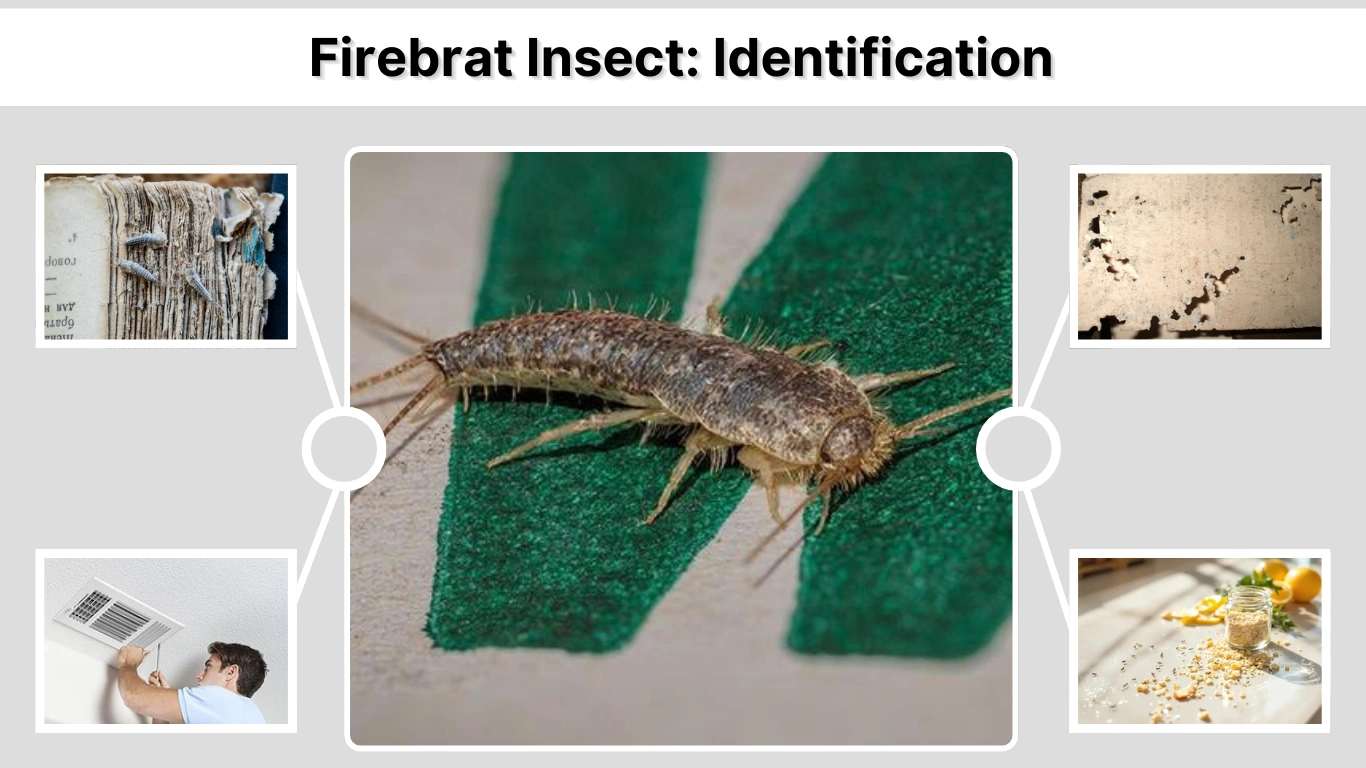
Firebrats are small, fast-moving household insects often mistaken for silverfish. While they may look alarming when spotted in kitchens or near heat sources, they are not harmful to humans. However, they can damage paper goods, fabrics, and stored items. Understanding what firebrats are, how they live, and why they appear in homes is the first step toward preventing infestations and eliminating them effectively.
What Is a Firebrat Insect?

A firebrat insect is a small, wingless household pest belonging to the same primitive insect group as silverfish. Its scientific name is Thermobia domestica, and it thrives in warm environments — which is why it’s commonly found near ovens, boilers, furnaces, and hot water pipes.
Firebrats have existed for millions of years and are considered one of the most ancient insect species still alive today.
Firebrat Scientific Name (Thermobia domestica)
The firebrat’s scientific name, Thermobia domestica, reflects its heat-loving nature.
- “Thermo” refers to heat
- “Domestica” refers to its tendency to live indoors
It belongs to the order Zygentoma, the same order as silverfish.
What Does a Firebrat Look Like?
Firebrats are often confused with silverfish, but they have distinct features.
Firebrat size:
- About ½ inch (12–15 mm) long
- Flattened, elongated body
Color:
- Mottled brown and gray
- Slightly darker and more patterned than silverfish
Body Features:
- Three long bristle-like appendages at the rear
- Long antennae
- No wings
Unlike silverfish, firebrats do not have a shiny, metallic appearance. Their body pattern looks more speckled or scaled.
Firebrat vs Silverfish: Key Differences
Although closely related, firebrats and silverfish prefer different environments.
| Feature | Firebrat | Silverfish |
| Color | Brown/gray mottled | Silvery metallic |
| Preferred Temperature | Warm (90°F+) | Cooler, damp areas |
| Common Location | Near heat sources | Bathrooms, basements |
| Activity | Nocturnal | Nocturnal |
The easiest way to tell the difference is location. If the insect is found near heat-producing appliances, it’s likely a firebrat.
Firebrat Life Cycle and Reproduction

Firebrats reproduce steadily in warm indoor environments, which allows infestations to grow unnoticed over time.
Firebrat Eggs
Female firebrats lay small white eggs in cracks, crevices, and hidden spaces.
- Eggs hatch in approximately 10–14 days
- Warm temperatures accelerate development
Because the eggs are tiny and well-hidden, they often go unnoticed until adults are seen.
Firebrat Larvae & Juvenile Stage
Firebrats do not undergo complete metamorphosis like butterflies or beetles. Instead, they develop gradually.
Newly hatched firebrats:
- Look like smaller, pale versions of adults
- Shed their skin multiple times as they grow
- Darken in color over time
Juvenile firebrats remain close to warm hiding areas.
Firebrat Life Cycle Timeline
The firebrat life cycle includes three main stages:
- Egg
- Juvenile (nymph)
- Adult
Under ideal warm conditions, firebrats can live 2–3 years. Unlike many insects, they continue molting even after reaching adulthood.
Firebrat Reproduction Rate
Firebrats reproduce faster in temperatures above 85–90°F. A single female can lay dozens of eggs during her lifetime. Because they hide well and are active at night, populations may grow significantly before detection.
Firebrat Habitat and Location

Firebrats are strongly attracted to warmth. Unlike silverfish, they are not primarily drawn to dampness.
Where Do Firebrats Live?
Common firebrat habitats include:
- Near ovens and stoves
- Around furnaces and boilers
- Behind refrigerators
- Attics with poor ventilation
- Near hot water heaters
They prefer temperatures between 90–110°F, which makes heated areas ideal breeding zones.
Firebrats in House: Why They Appear
If you find firebrats in your house, it usually means:
- There is a steady heat source
- Food materials are available (paper, starch, glue)
- Cracks or crevices provide shelter
They often hide during the day and emerge at night to feed.
Firebrat Diet and Behavior

Firebrats feed primarily on starchy materials and carbohydrates.
What Do Firebrats Eat?
Their diet includes:
- Paper and books
- Wallpaper paste
- Cardboard
- Flour and cereals
- Fabric containing starch
- Glue and adhesives
They may also feed on crumbs and food residue in kitchens.
Firebrat Culture (Ideal Growth Conditions)
Firebrats thrive in:
- High temperatures
- Low to moderate humidity
- Dark, undisturbed spaces
Unlike silverfish, they prefer heat over moisture.
Are Firebrats Dangerous?
One of the most common concerns is whether firebrats pose any risk to people.
Are Firebrats Dangerous to Humans?
Firebrats are not dangerous to humans. They:
- Do not spread disease
- Are not venomous
- Do not damage the structure of your home
They are considered nuisance pests rather than harmful insects.
Do Firebrats Bite?
No, firebrats do not bite.
They lack the mouthparts required to pierce human skin. If you see one crawling nearby, it may look unsettling, but it cannot bite or sting.
Do Firebrats Bite Humans?
Firebrats do not bite humans under any circumstances. Reports of “firebrat bites” are usually caused by other insects such as bed bugs or fleas.
Firebrat Infestation Signs

Because firebrats are nocturnal and hide during the day, infestations can develop quietly. However, there are several warning signs to watch for.
Common signs of a firebrat infestation include:
- Sightings at night near heat sources
- Small holes in paper, books, or cardboard
- Damage to wallpaper paste or glue
- Yellowish stains on paper materials
- Shed skins in hidden areas
If you regularly see firebrats in your house, especially near ovens or furnaces, the population may already be established.
How to Get Rid of Firebrats

Eliminating firebrats requires reducing their heat access, removing food sources, and applying targeted treatments if necessary.
1. Reduce Heat and Access
Since firebrats thrive in high temperatures, lowering heat exposure can make your home less attractive.
- Improve ventilation in attics and utility rooms
- Seal cracks around boilers and heaters
- Insulate hot pipes where possible
- Avoid storing cardboard near heat sources
Reducing their preferred temperature range disrupts breeding conditions.
2. Remove Food Sources
Firebrats feed on starches and carbohydrates. Eliminate easy access to food by:
- Storing flour, cereals, and dry goods in airtight containers
- Removing old newspapers and cardboard
- Vacuuming crumbs and debris regularly
- Repairing peeling wallpaper
The less available starch in your home, the harder it is for firebrats to survive.
3. Seal Entry Points
Firebrats hide in tiny crevices. Seal cracks and gaps around:
- Baseboards
- Utility lines
- Wall voids
- Floorboards
Use caulk or sealant to block hiding spaces and egg-laying areas.
Firebrat Pest Control Methods
If preventive measures are not enough, treatment options can help control larger infestations.
Natural Control Options
- Diatomaceous earth: Apply lightly in cracks and behind appliances
- Boric acid: Effective when applied carefully in hidden areas
- Sticky traps: Help monitor activity
These options work best for light infestations.
Chemical Firebrat Killer Options
For heavier infestations, consider:
- Residual insecticide sprays labeled for crawling insects
- Pyrethroid-based treatments
- Professional pest control services
Always follow label instructions carefully. If infestations persist, professional treatment may be necessary.
Firebrat Treatment for Severe Infestations
When firebrats spread throughout multiple rooms, professional pest control may be required. A licensed technician can:
- Identify hidden nesting areas
- Apply targeted residual treatments
- Provide long-term prevention recommendations
Professional intervention is especially helpful if firebrats are reproducing rapidly in warm utility spaces.
How to Prevent Firebrats in the Future
Prevention focuses on temperature control, sanitation, and sealing entry points.
Prevention tips:
- Keep storage areas clean and organized
- Avoid storing paper goods near heat sources
- Maintain good ventilation in attics
- Seal wall cracks and floor gaps
- Conduct periodic inspections around appliances
Consistent prevention is the most effective long-term solution.
Firebrat vs Silverfish: Quick Comparison
| Feature | Firebrat | Silverfish |
| Scientific Name | Thermobia domestica | Lepisma saccharinum |
| Preferred Climate | Warm | Damp |
| Typical Location | Near heat | Bathrooms & basements |
| Color | Brown/gray | Silvery |
| Bite Risk | None | None |
Both insects are nuisance pests, but their preferred environments differ significantly.
FAQs
What is a firebrat bug?
A firebrat bug is a small, wingless insect known scientifically as Thermobia domestica. It resembles a silverfish but prefers warm environments. Firebrats are commonly found near ovens, furnaces, and boilers where temperatures remain high. They feed on starches, paper, and glue-based materials.
Are firebrats dangerous?
Firebrats are not dangerous to humans. They do not spread disease, bite, or sting. However, they can damage paper goods, cardboard, wallpaper paste, and stored food products. While harmless physically, they can become a nuisance if populations grow inside the home.
Do firebrats bite humans?
No, firebrats do not bite humans. They lack the mouthparts necessary to pierce skin. If you experience insect bites in your home, the cause is likely another pest such as bed bugs, fleas, or mosquitoes.
What does a firebrat look like?
Firebrats are about half an inch long with a flattened, elongated body. They are mottled brown and gray rather than shiny silver. Like silverfish, they have long antennae and three tail-like bristles at the rear.
How do I get rid of firebrats permanently?
To get rid of firebrats permanently, reduce heat exposure, eliminate food sources, seal cracks, and apply targeted treatments if necessary. Improving ventilation and storing paper goods away from heat sources are essential for long-term prevention.
What’s the difference between firebrats and silverfish?
Firebrats prefer hot environments and have a mottled brown appearance, while silverfish prefer damp areas and have a shiny silver color. Both feed on starch-based materials, but their habitat preferences are the easiest way to tell them apart.